Why go
Lecce sets the tone for Salento: a compact historic centre built largely from a warm-coloured local stone that seems to shift shade from hour to hour in the afternoon sun. The national tourism portal describes it as a lively city, with Roman monuments and above all the seventeenth-century buildings that made the so-called Lecce Baroque famous, and with the sea only a few kilometres beyond the walls.
The reason to stay longer than half a day lies in the details. The façades of Santa Croce, the cathedral or San Matteo reward close reading: flowers, animals, cherubs, twisted columns, rose windows. Alongside stone there is papier-mâché, the city's other material, shaped for centuries in workshops and now presented in a museum inside the Castle of Charles V.
Lecce also works well as a base. From the centre the Adriatic coast, the villages of the Grecìa Salentina and Otranto are all within easy reach; in the evening you return to stroll between small squares and lanes, with a cuisine that mixes peasant dishes and pastry-shop sweets.
Beneath the Baroque lies a Roman city that can still be seen: in Piazza Sant’Oronzo the amphitheatre, probably of the Augustan age, about a third of which is visible today, and a few steps away the theatre, brought to light in 1938. Lecce is also a university city, home to the University of Salento, and its municipal territory reaches the Adriatic: at San Cataldo, with its Roman pier, and along the coast of the Bosco e Paludi di Rauccio regional nature park.
Sources: Italia.it — Lecce · Italia.it — Weekend a Lecce · Ministero della Cultura — Museo della cartapesta · Ministero della Cultura — Teatro e Anfiteatro romano di Lecce · Direzione regionale Musei nazionali Puglia — Anfiteatro e Teatro romano di Lecce · Università del Salento — La Storia · Comune di Lecce, Parco naturale regionale Bosco e Paludi di Rauccio — La storia del Parco · CNR, UNIFIND — The Roman pier of San Cataldo: from archaeological data to 3D reconstruction
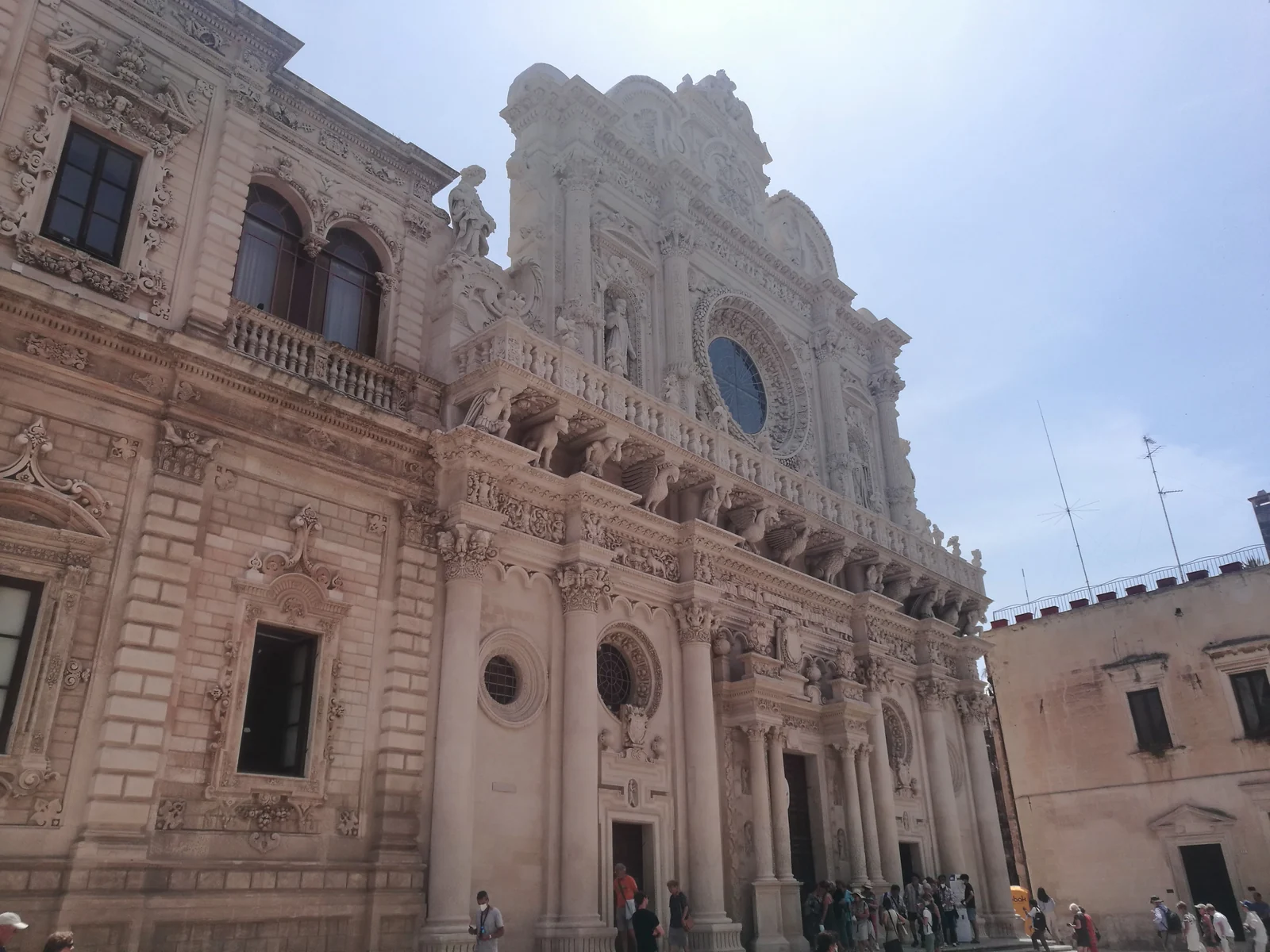
Photo: Patrice78500 / Wikimedia Commons — CC BY-SA 4.0 · Resized and converted to WebP.
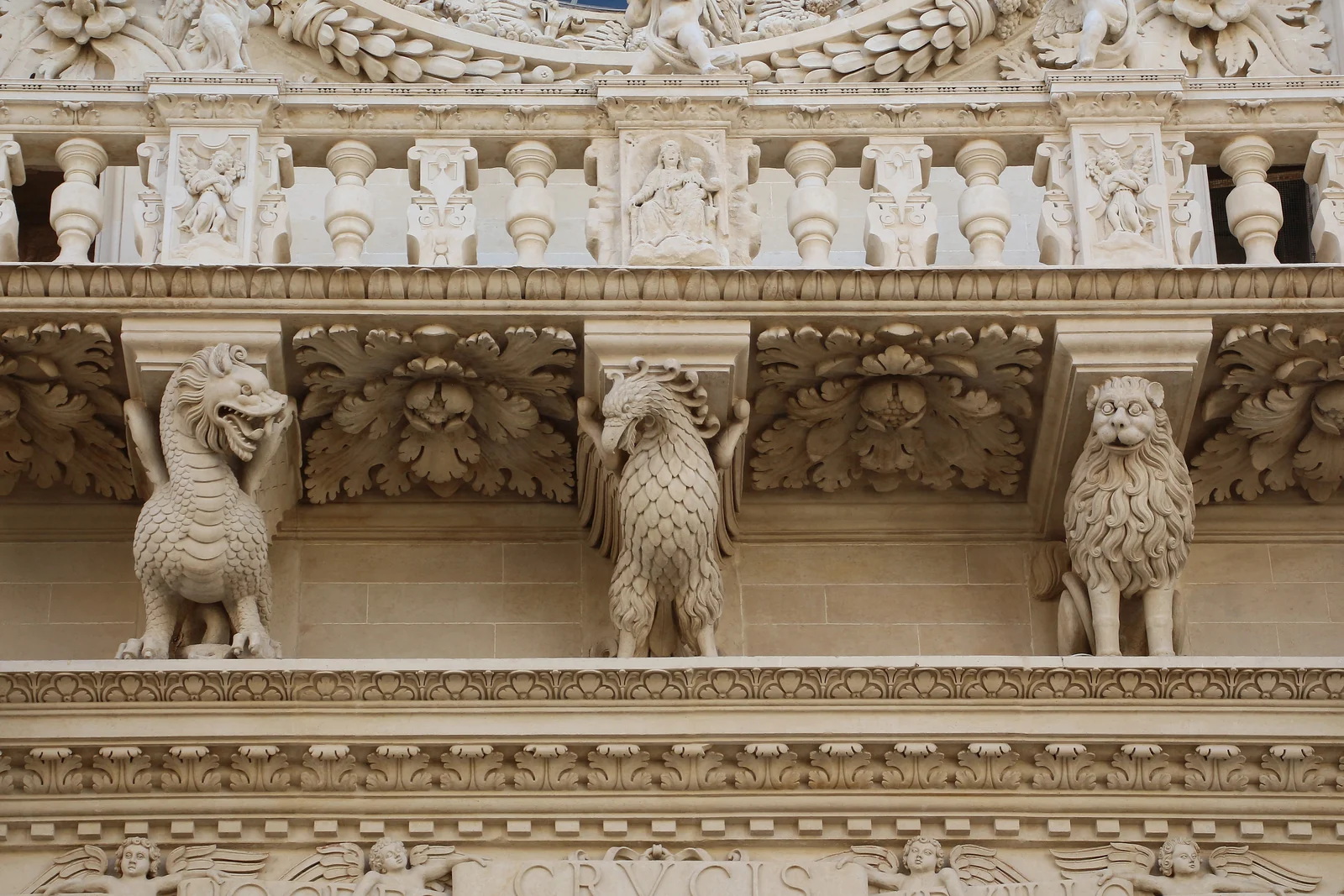
Photo: Bernard Gagnon / Wikimedia Commons — CC0 · Resized and converted to WebP.
History
Lecce's origins are placed around the fifth century BC, although a legend credits its foundation to Malennius at an even earlier date. Under Rome the city grew economically and architecturally: the amphitheatre in Piazza Sant'Oronzo and the Roman theatre, tucked among the buildings of the centre, survive from that era. A long decline followed, until the Normans made it a county and later the capital of Salento.
From 1463 Lecce belonged to the Kingdom of Naples and became an important cultural and trading centre. Sixteenth-century raids from the sea led Charles V to give it new walls and a castle; in that same period began the long building season that shaped Lecce Baroque, the decorative language that still identifies the city today.
The seventeenth century belongs to Bishop Luigi Pappacoda and the architect Giuseppe Zimbalo: the cathedral was rebuilt from 1659, after Saint Orontius had been invoked against a plague and proclaimed patron saint; the bell tower was completed in 1682. After Italian unification the city spread beyond its walls with new districts in neoclassical, neo-Moorish and neo-Gothic styles.
According to the Ministry of Culture, the Roman amphitheatre was elliptical, about 102 by 82 metres, and held between 12,000 and 14,000 spectators; the arena, the lower walkway and the radial galleries are cut directly into the bed of Lecce stone. In the early Middle Ages its remains probably became part of the town’s fortifications, and from the eleventh century some decorative elements were reused in the crypt of Otranto cathedral. Excavations, begun in 1900 by the archaeologist Cosimo De Giorgi, continued with interruptions until 1940; it has been a national monument since 1906. The Roman theatre was discovered in 1928 during work on a private house and excavated by 1938: its auditorium was about 75 metres across and held at least 6,000 people.
The column of Saint Orontius comes from Brindisi: it is one of the two columns that marked the end of the Appian Way, which collapsed on 20 November 1528. After the plague of 1656, from which the city believed it had been spared through the saint’s intercession, the viceroy of Naples ordered on 2 November 1659 that the drums be sent to Lecce, where from 1681 Giuseppe Zimbalo turned them into the column, 11.75 metres high. The statue of the saint, made in Venice of copper sheets over a wooden core, was set up in 1686; the present one arrived in 1739, after a rocket on the last day of the feast, 26 August 1737, had set the first one on fire.
The castle began in the Norman period, in the mid-twelfth century, as the residence of the counts of Lecce. Between 1539 and 1549 it was enclosed in a fortress with thick walls, spear-shaped bastions and a new moat, the work of the engineer Giangiacomo dell’Acaya for the viceroy Don Pedro de Toledo, within the defensive overhaul promoted by Charles V; dell’Acaya himself was later locked in its prisons. Higher education had a broken history: in 1869 an Athenaeum of Legal Sciences was founded and lasted two years, and only in 1955 did a university consortium with the Province and most of the municipalities found the Teacher Training Institute, a state institution from 1967-68; in 2006 the University of Lecce became the University of Salento.
Sources: Italia.it — Lecce, storia e curiosità · LeccEcclesiae — Duomo di Lecce · LeccEcclesiae — Campanile del Duomo · Ministero della Cultura — Teatro e Anfiteatro romano di Lecce · Direzione regionale Musei nazionali Puglia — Anfiteatro e Teatro romano di Lecce · Università del Salento, Dipartimento di Matematica e Fisica — Cronistoria del monumento di S. Oronzo · Ministero della Cultura — Castello Carlo V di Lecce · Castello Carlo V di Lecce — Orari e biglietti · Università del Salento — La Storia
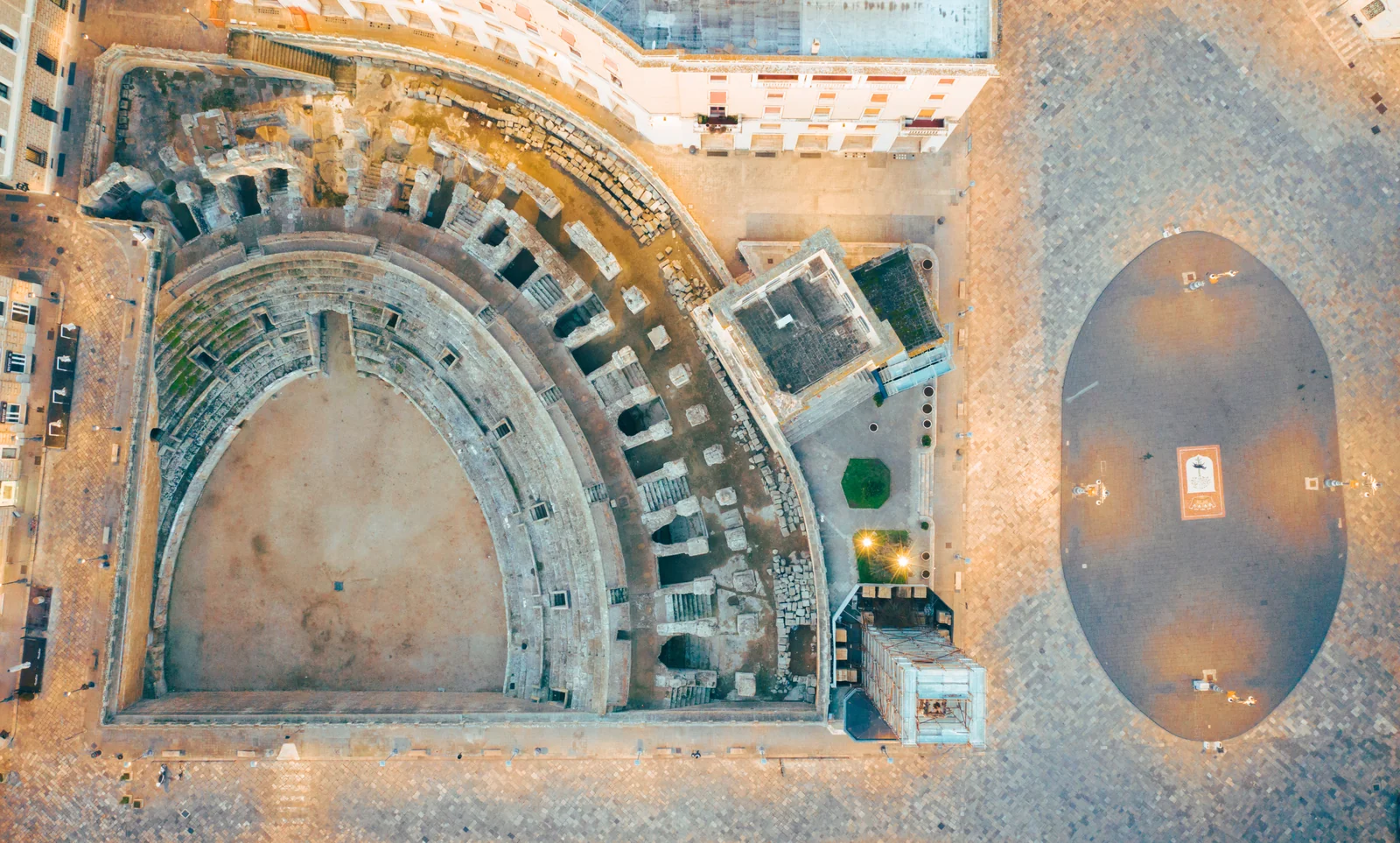
Photo: Paolo Damiano Dolce / Wikimedia Commons — CC BY-SA 4.0 · Resized and converted to WebP.
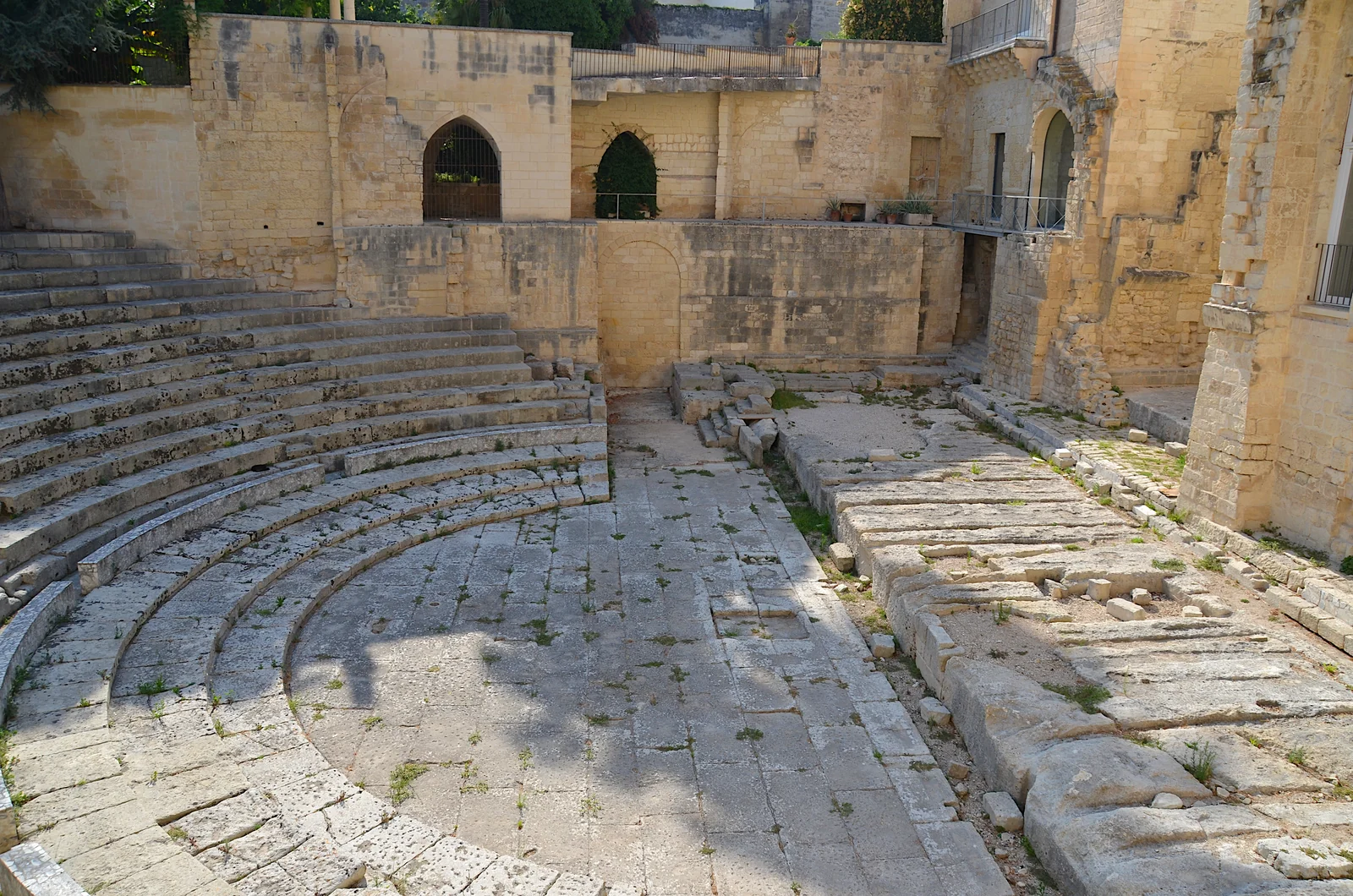
Photo: Ipiovesan / Wikimedia Commons — CC BY-SA 4.0 · Resized and converted to WebP.
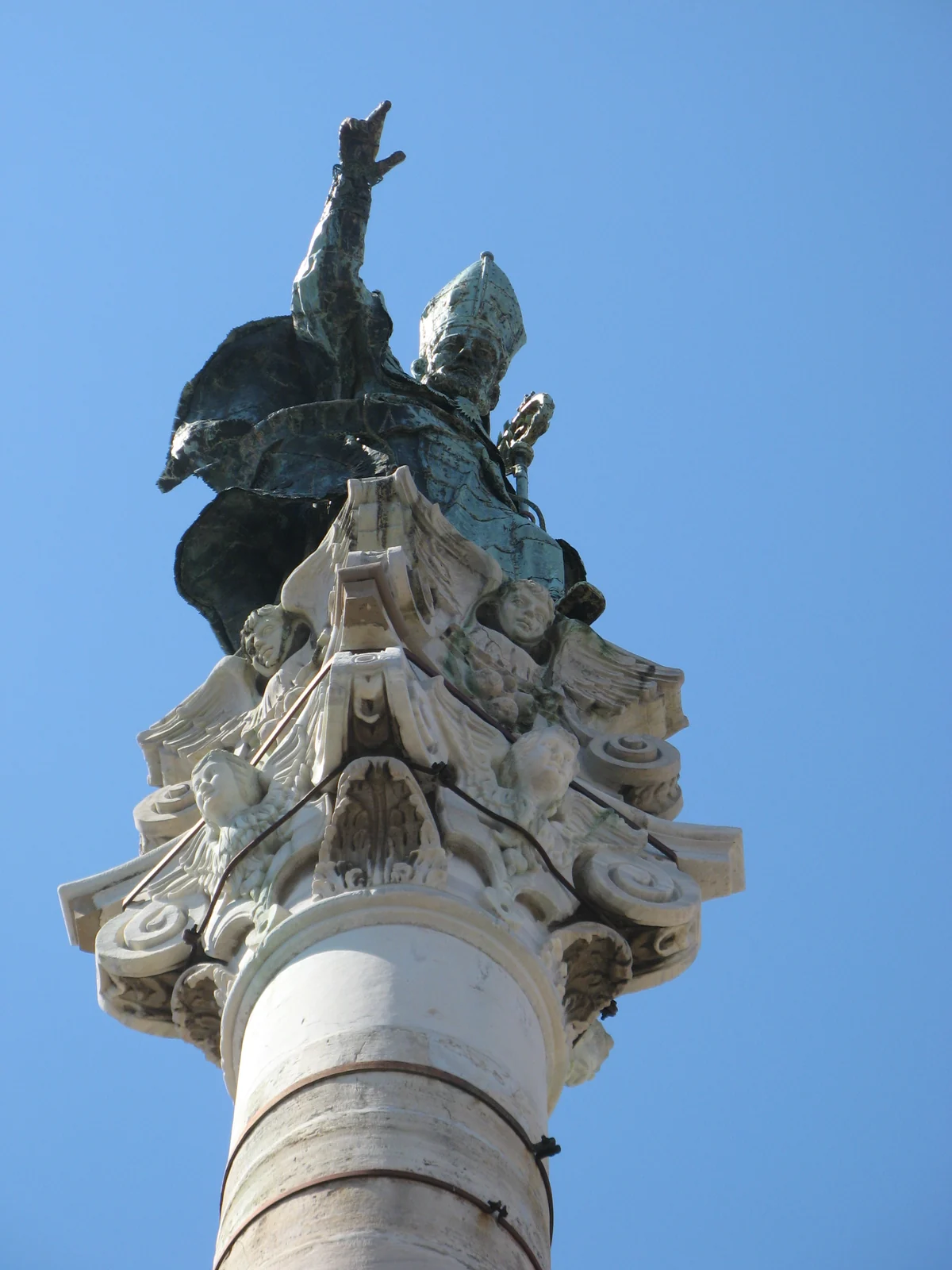
Photo: Terrasque / Wikimedia Commons — CC BY-SA 3.0 · Resized and converted to WebP.
What to see
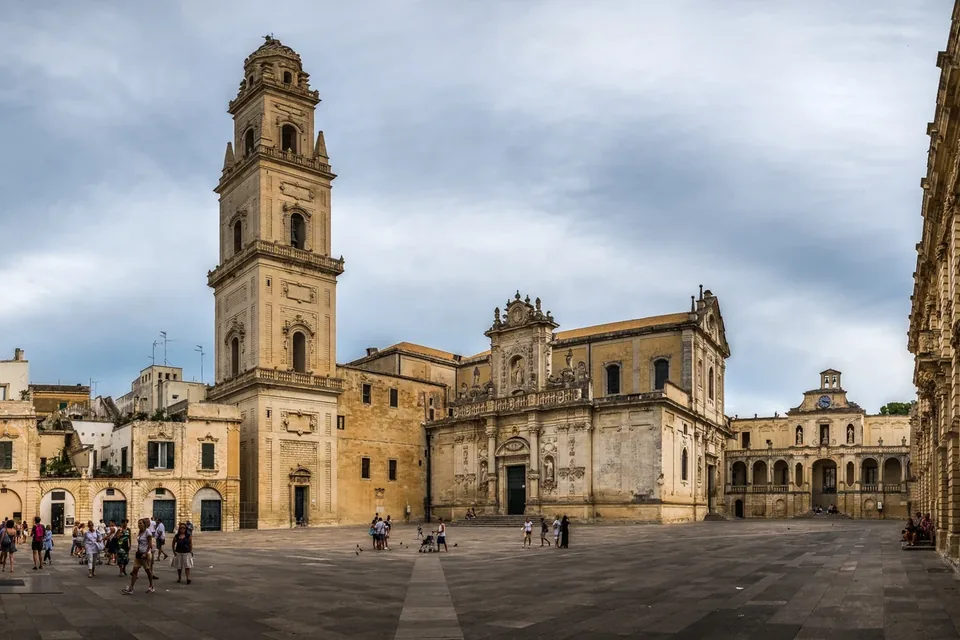
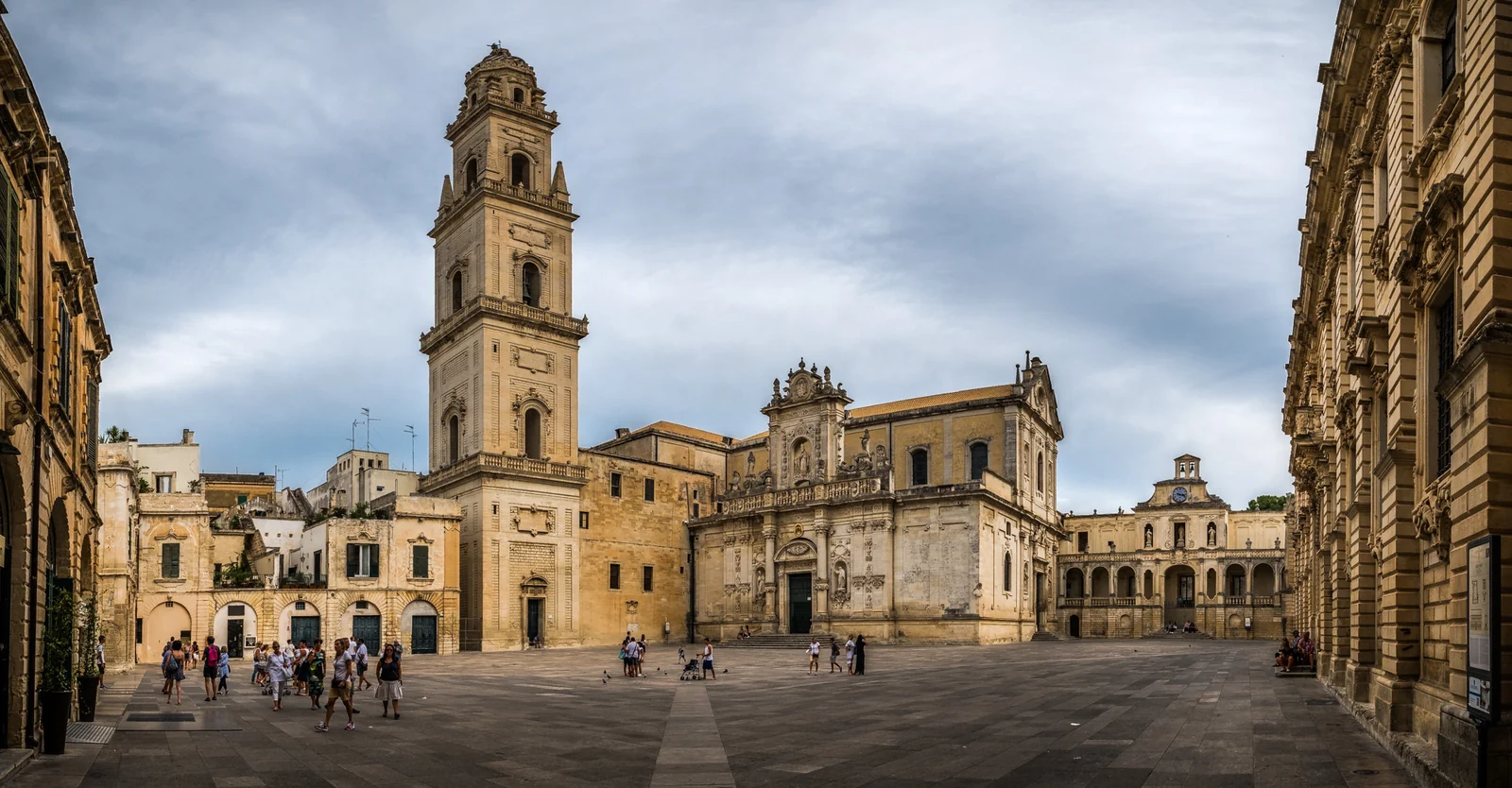
Piazza del Duomo is an enclosed space, almost an open-air room: the cathedral of the Assumption presents itself sideways, with a richly decorated side façade and statues of the patron saints, next to the five-storey bell tower, 72 metres high, the Bishop's Palace and the Old Seminary. From here the LeccEcclesiae circuit, run in collaboration with the Archdiocese, links the cathedral, the Basilica of Santa Croce, Santa Chiara, San Matteo, the Old Seminary and the Museum of Sacred Art on a single ticket; the panoramic bell tower is added with a fuller ticket.
Santa Croce is considered the city's first Baroque building: its façade, with the great rose window and the carved pediment and balcony, is the outcome of a building site that lasted almost two centuries. Santa Chiara holds an eighteenth-century ceiling made of papier-mâché, built from more than three hundred modules; San Matteo surprises with a façade that is convex below and concave above, recalling Roman Baroque.
Other stops include Piazza Sant'Oronzo with the Roman amphitheatre and the patron saint's column, the Roman theatre, Porta Rudiae and Porta Napoli, the Politeama Greco theatre, inaugurated on 15 November 1884, and the Castle of Charles V, now a cultural centre that also houses the Papier-mâché Museum.
Charles V’s Castle can be visited only on a guided tour of about 50 minutes; the inner courtyard, where recent excavations show remains of the oldest structures, is open free of charge. Around the courtyard rise the medieval quadrangle with the Torre Magistra, the Papier-mâché Museum on the ground floor and, on the first floor, the medieval and Renaissance rooms, among them the hall named after Maria d’Enghien, the countess who governed the city from the late fourteenth to the mid-fifteenth century; the route also takes in the galleries cut into the medieval moat, the bastions and the walkways along the walls.
Santa Croce was built between 1549 and 1646 in the old San Martino quarter, after the first church of the Celestines, who had come to Lecce in the fourteenth century, was pulled down to enlarge the castle; Gabriele Riccardi, Cesare Penna and Francesco Antonio Zimbalo all worked on it. The balustrade between the two orders of the façade, with thirteen cherubs, rests on brackets carved as Eastern soldiers and real and fantastic animals, usually read as a reference to the battle of Lepanto in 1571; inside, a painting with verses in Lecce dialect tells how Saint Orontius saved the city from the earthquake of 20 February 1743. In the cathedral the seventeenth-century ceiling of carved and gilded wood holds three canvases on the life of the patron saint, and the crypt of Santa Maria della Scala, from the first half of the sixteenth century, has a dense series of columns whose capitals are all different. By agreement the LeccEcclesiae circuit also includes the Sigismondo Castromediano archaeological museum and the Convitto Palmieri.
The amphitheatre in Piazza Sant’Oronzo is a Ministry of Culture site with its own ticket: the lower walkway keeps many elements of its sculptural decoration, among them the relief with hunting scenes, the venationes, that ran along the parapet of the arena.
Sources: LeccEcclesiae — Duomo di Lecce · LeccEcclesiae — Campanile del Duomo · Italia.it — Basilica di Santa Croce · LeccEcclesiae — Chiesa di Santa Chiara · LeccEcclesiae — Chiesa di San Matteo · LeccEcclesiae — informazioni e tariffe · Italia.it — Weekend a Lecce · Italia.it — Teatro Politeama Greco · Ministero della Cultura — Castello Carlo V di Lecce · Castello Carlo V di Lecce — Orari e biglietti · Ministero della Cultura — Museo della cartapesta · LeccEcclesiae — Basilica di Santa Croce · Ministero della Cultura — Teatro e Anfiteatro romano di Lecce · Direzione regionale Musei nazionali Puglia — Anfiteatro e Teatro romano di Lecce
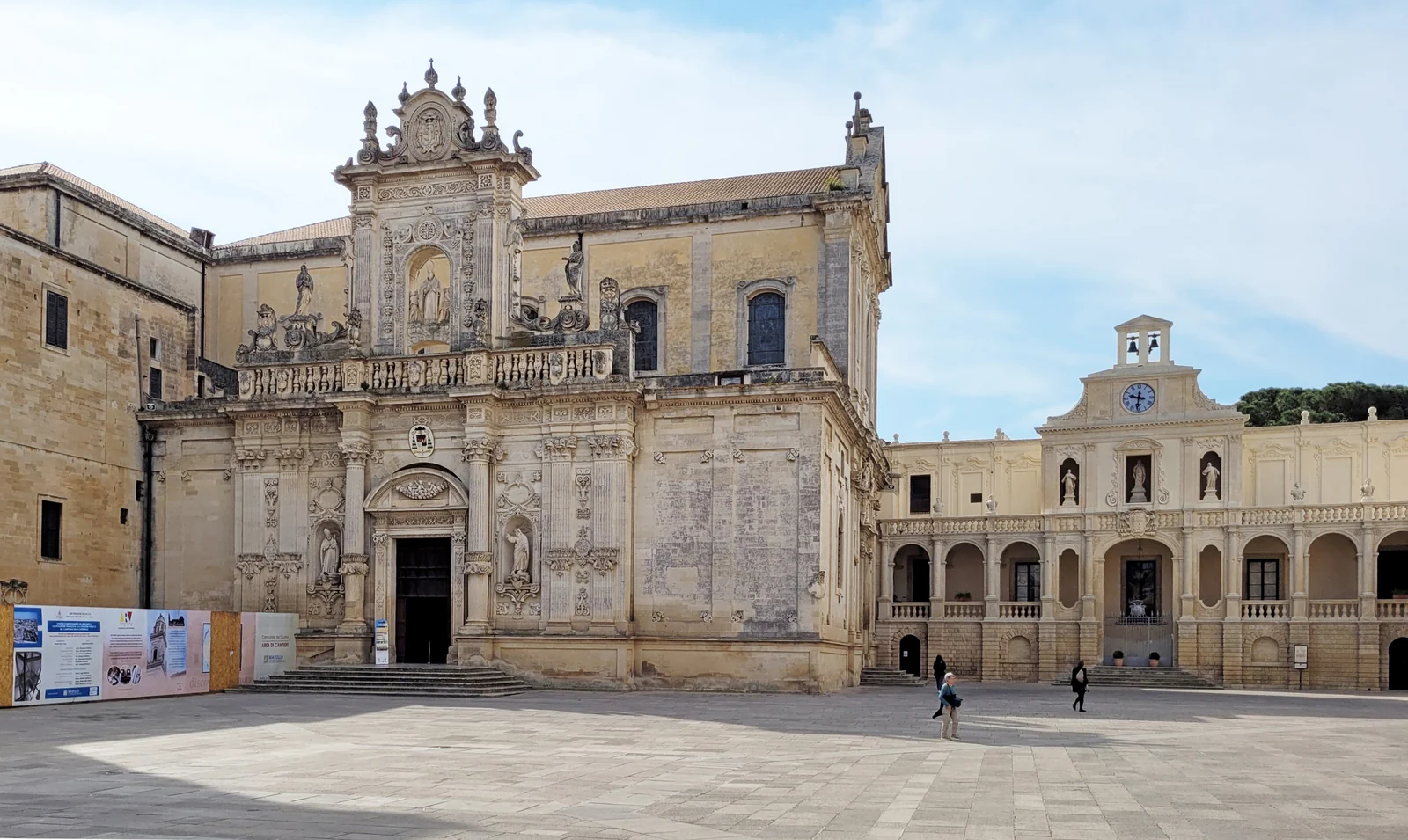
Photo: Bernard Gagnon / Wikimedia Commons — CC0 · Resized and converted to WebP.
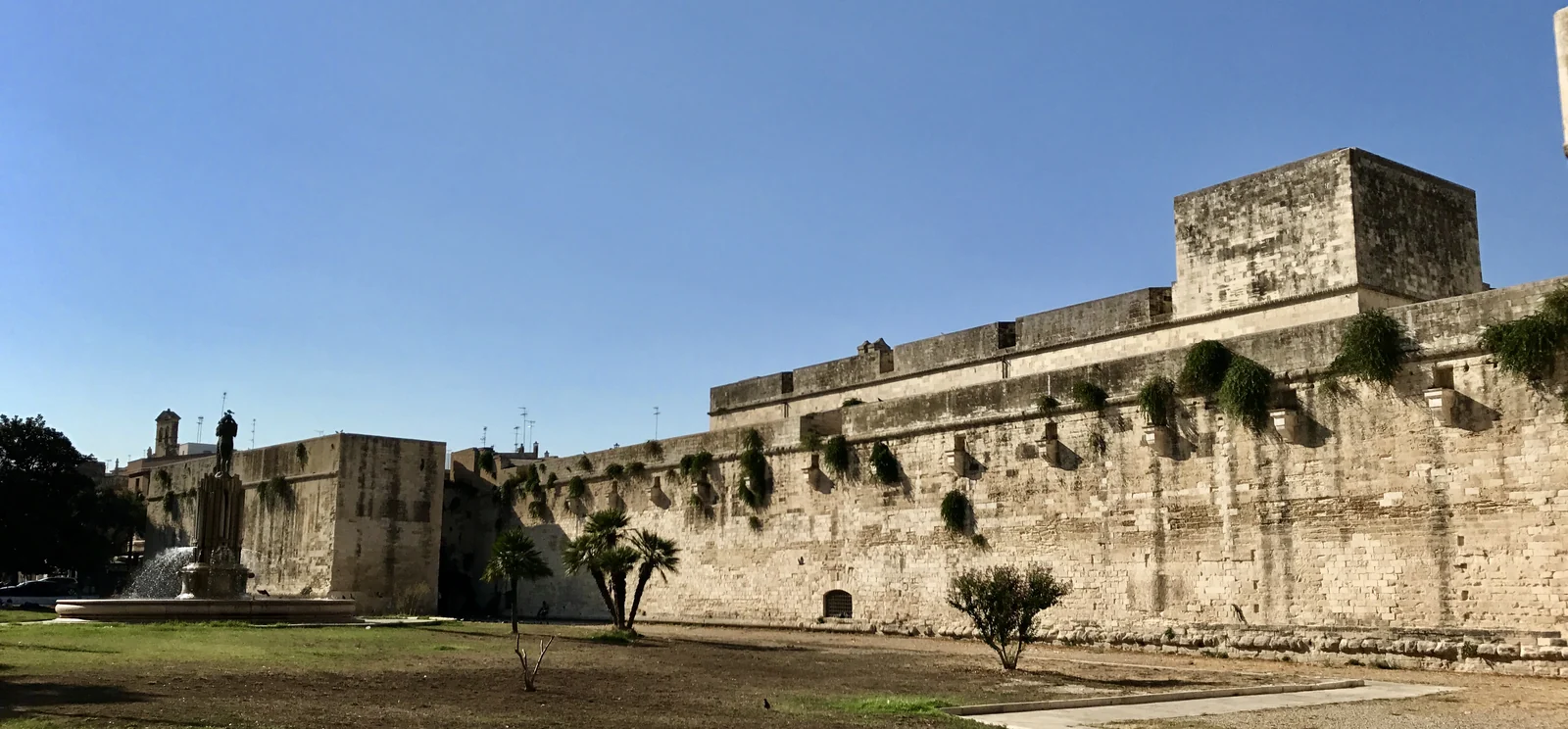
Photo: Sergio Spolti / Wikimedia Commons — CC BY-SA 4.0 · Resized and converted to WebP.
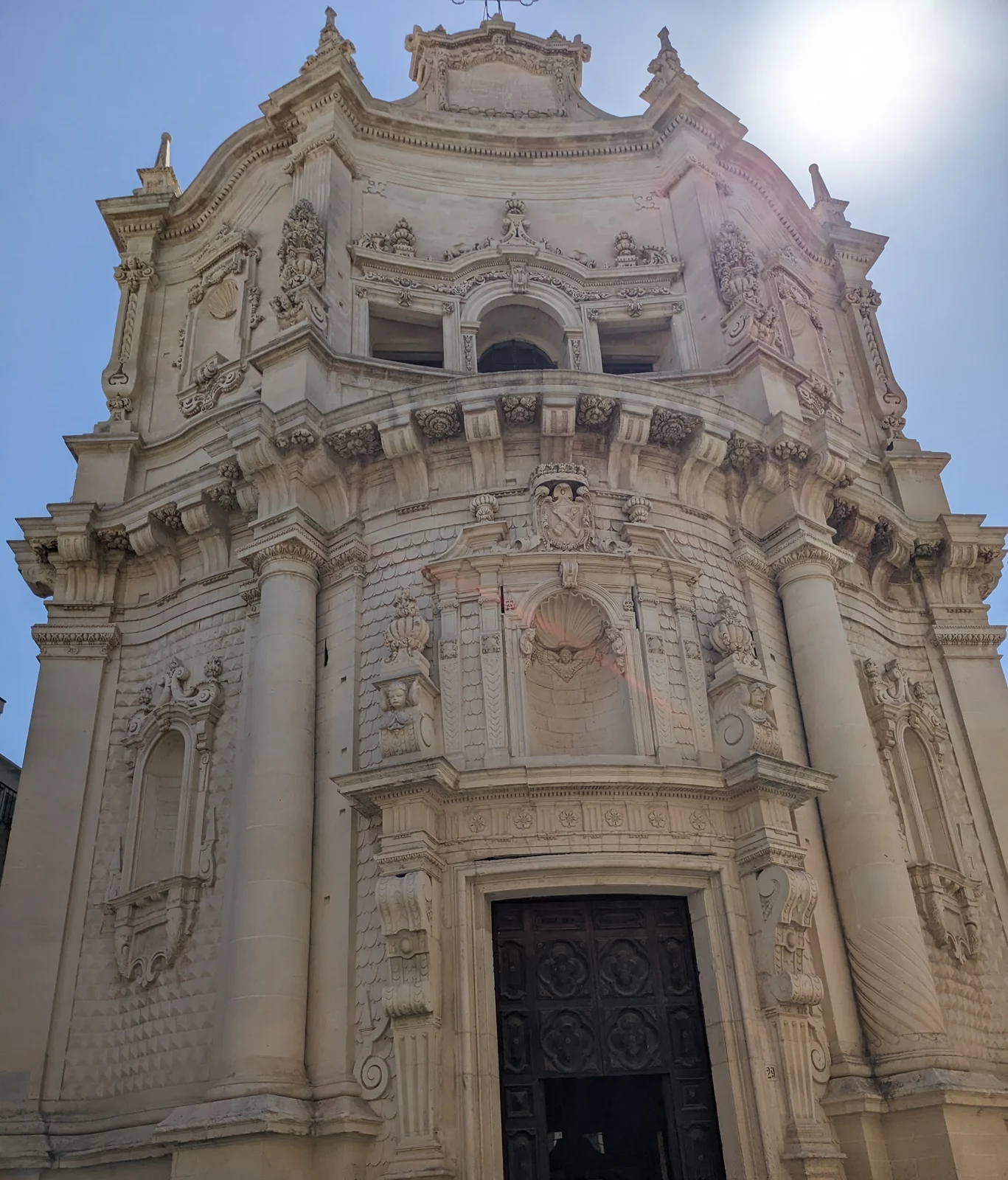
Photo: LIL.PAOLO / Wikimedia Commons — CC BY-SA 4.0 · Cropped, resized and converted to WebP.
Food and wine
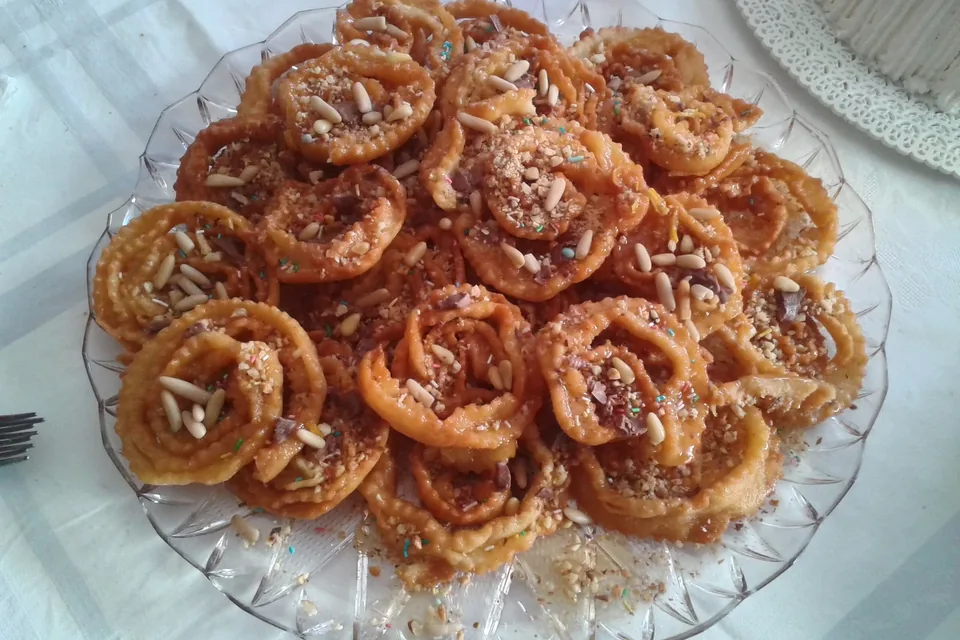
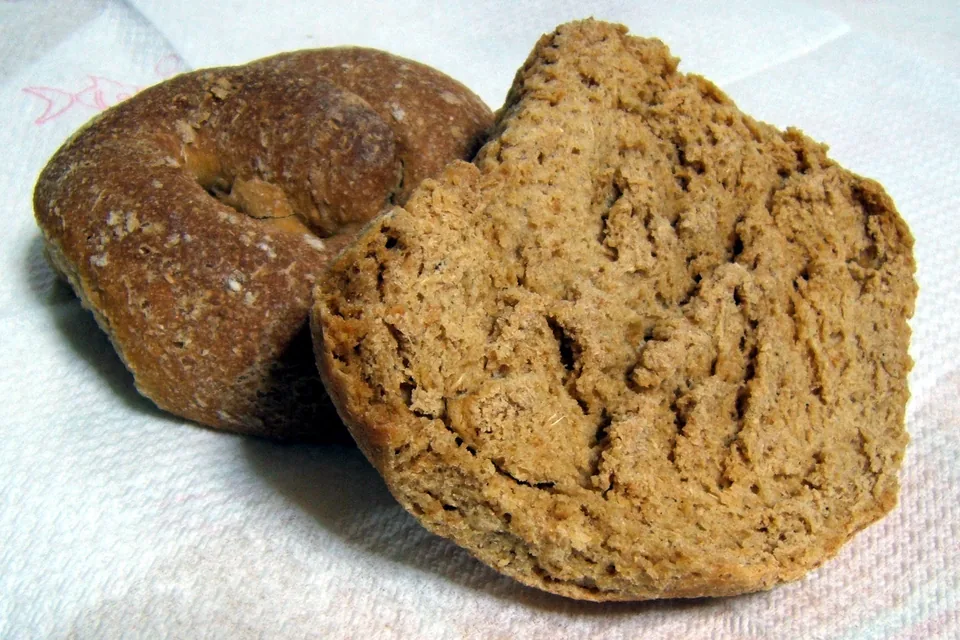
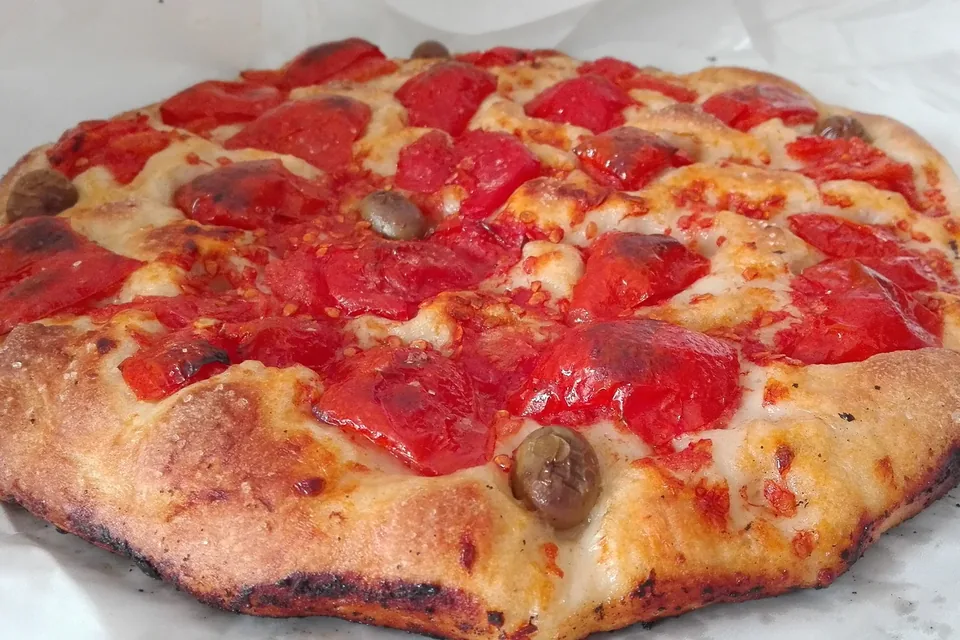
Lecce's cooking brings together country dishes and city preparations. The first to look for is ciceri e tria: chickpeas and a broad durum-wheat ribbon, partly boiled and partly fried, so that soft and crisp sit together on the same plate. The Atlas of traditional Apulian products links it to the feast of Saint Joseph on 19 March. Alongside it come sagne 'ncannulate, twisted ribbons of pasta dressed with tomato and ricotta.
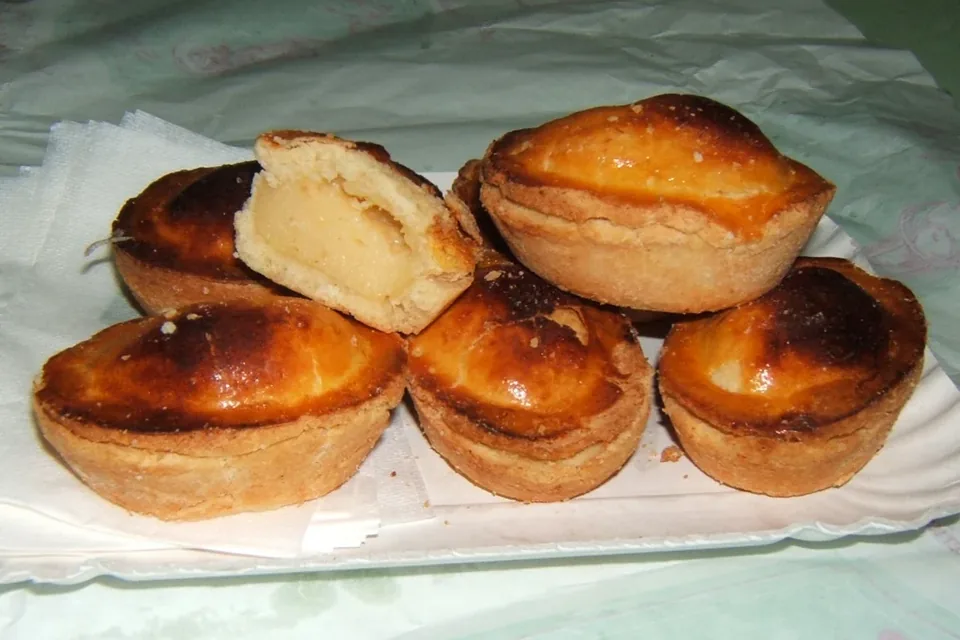
The rustico leccese is the city's snack: two discs of puff pastry filled with béchamel, tomato and mozzarella and baked. According to the Atlas it does not come from peasant cooking but from the noble households of late eighteenth-century Lecce. The pasticciotto, a shortcrust shell filled with custard, is the breakfast pastry; the fruttone is a variation on it, with almond paste, jam and a dark chocolate topping.
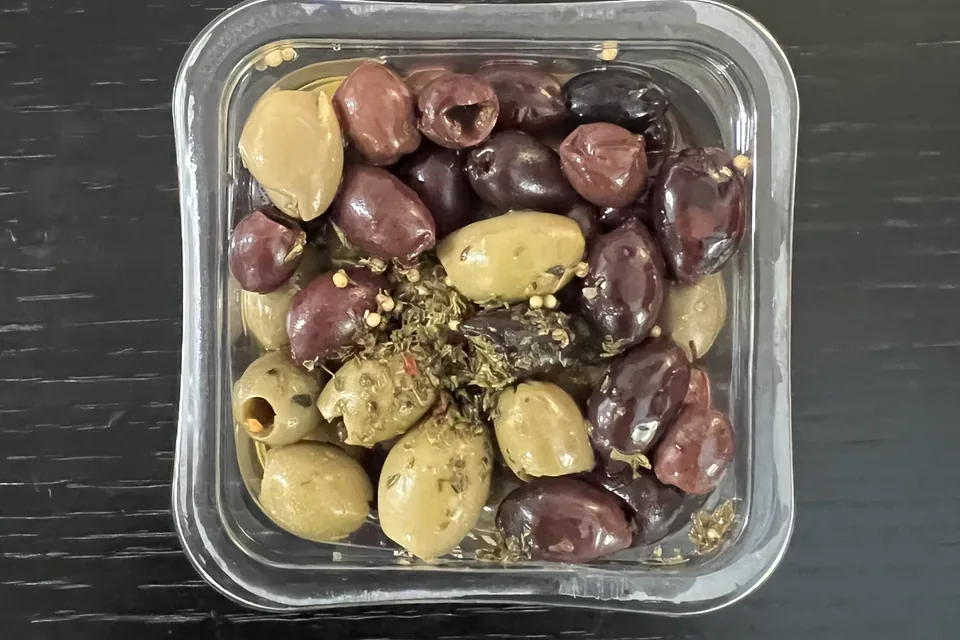
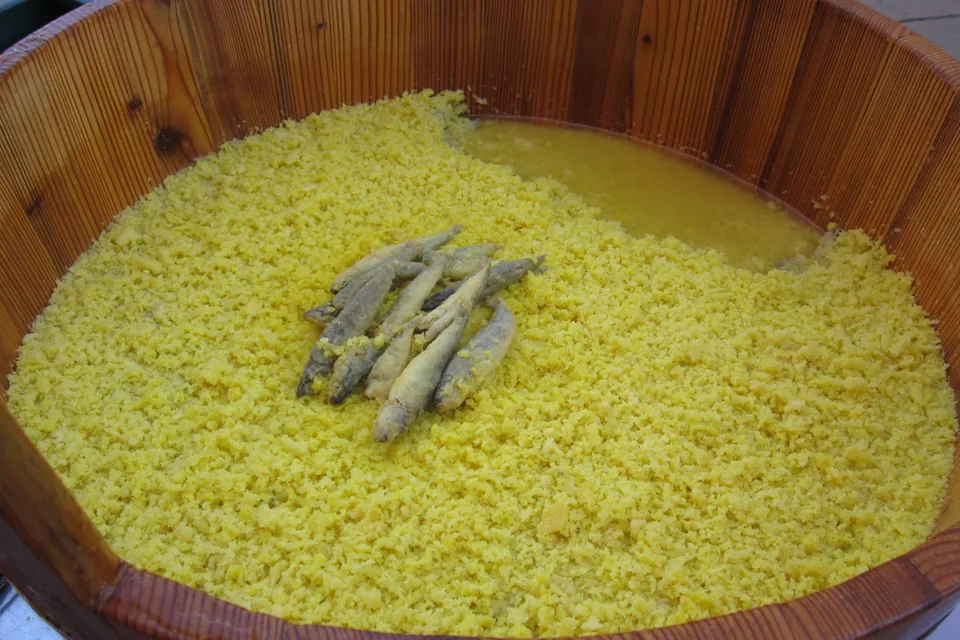
For a seafood lunch the national portal points to scapece, small fish fried and marinated with bread, vinegar and saffron. Behind everything stands the extra virgin olive oil of the Terra d'Otranto PDO, produced across the whole province. And in summer coffee is drunk over ice with almond milk.
Sources: Atlante dei PAT di Puglia — Ciciri e tria · Atlante dei PAT di Puglia — Rustico leccese · Atlante dei PAT di Puglia — Pasticciotto · Atlante dei PAT di Puglia — Fruttone · Italia.it — Lecce, storia e curiosità · Qualigeo — Terra d'Otranto DOP
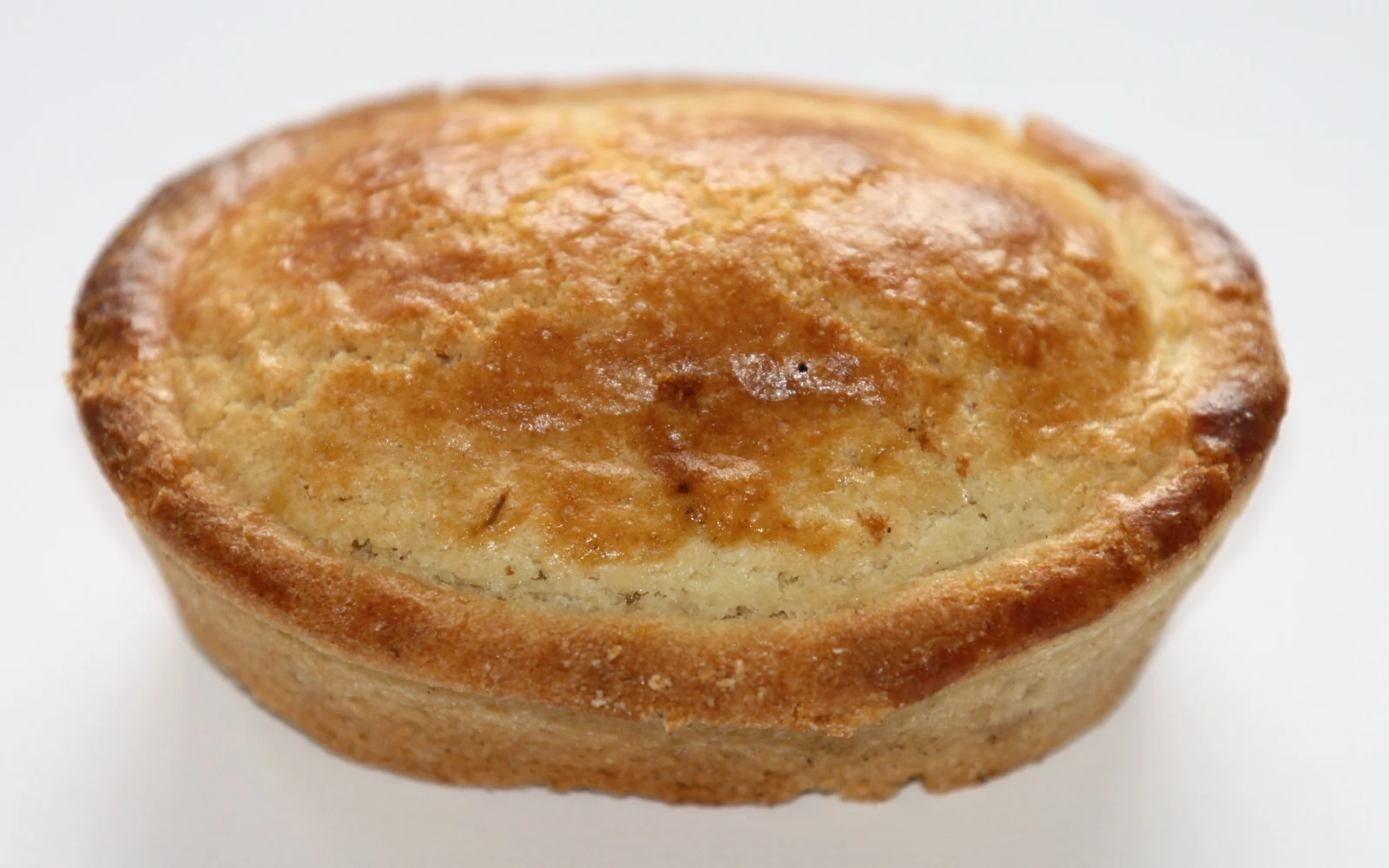
Photo: Renano / Wikimedia Commons — CC BY-SA 3.0 · Resized and converted to WebP.
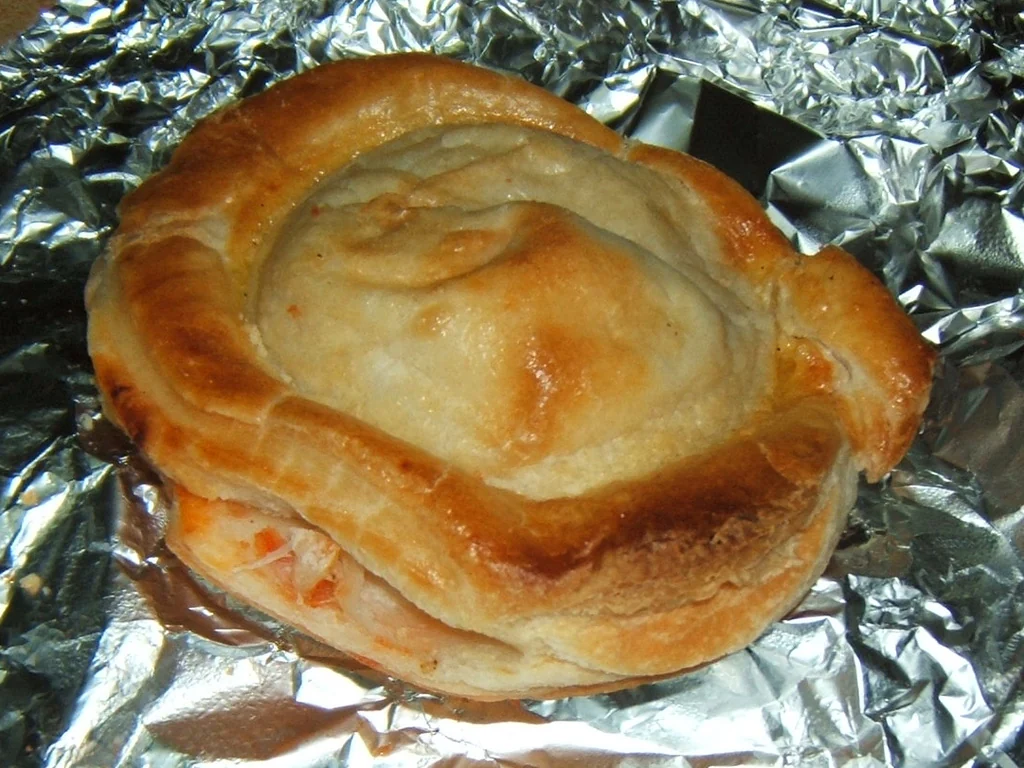
Photo: Calcagnile Floriano / Wikimedia Commons — CC BY-SA 3.0 · Resized and converted to WebP.
Things to do
The best way to experience Lecce is on foot and at a slow pace. The national portal suggests entering through the historic gates, Porta Rudiae or Porta San Biagio, and letting the lanes guide you past workshops of wrought iron, terracotta, Lecce stone and papier-mâché. Watching a craftsman at work helps you tell a handmade object from a souvenir.
Climbing the cathedral bell tower, the tallest in Salento, lets you see the city from above and understand how domes and façades are arranged around the squares. The church circuit also runs guided tours and themed routes, useful for those who want to go beyond a simple stroll.
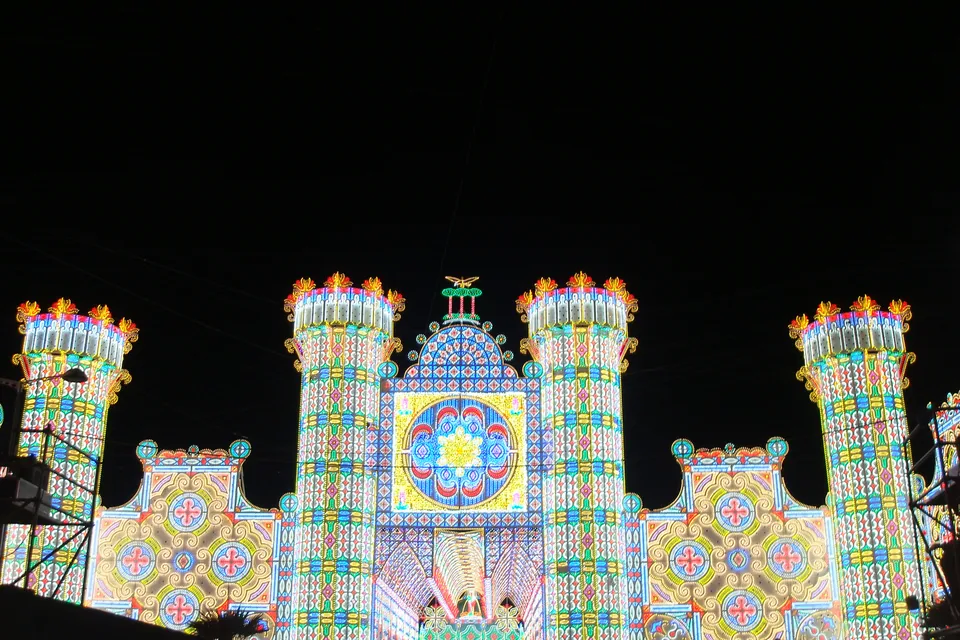
In the evening the city gathers around Porta San Biagio, Piazzetta Santa Chiara and Piazza Sant'Oronzo; the illuminated Piazza del Duomo is one of the most striking moments. The Politeama Greco theatre hosts the opera and symphony season, as well as drama, concerts and theatre tours. By day, those who want the sea will find beaches a few kilometres from the city on the Adriatic.
Papier-mâché has a documented history: according to the Ministry of Culture, from the eighteenth century Lecce became one of the main centres of this craft, with a style of its own, and in the nineteenth century its masters were known throughout Italy, with works commissioned from abroad as well. Statues are still made with a straw-stuffed frame, hands and heads in papier-mâché or terracotta, and paper shaped with red-hot irons. The Politeama Greco theatre was inaugurated on 15 November 1884, as the Politeama «Principe di Napoli», with Verdi’s Aida; the tenor Tito Schipa made his debut here in 1911 and became its artistic director in the early 1920s.
For football there is the Via del Mare – Ettore Giardiniero stadium, home of US Lecce, on the provincial road to San Cataldo: opened on 11 September 1966, it was almost entirely rebuilt in 1985, when Lecce were first promoted to Serie A, and today it seats 31,445; on 24 June 1967 Pelé’s Santos played a friendly there. For home Serie A matches the city transport company runs the «Stadio in bus» service from the Porta Napoli terminus, with departures every 10 minutes starting three hours before kick-off, on ordinary urban tickets.
Sources: Italia.it — Weekend a Lecce · LeccEcclesiae — Campanile del Duomo · Italia.it — Teatro Politeama Greco · Italia.it — Lecce · Ministero della Cultura — Museo della cartapesta · Teatro Politeama Greco — Storia del Teatro Politeama Greco · US Lecce — Lo Stadio Via del Mare – Ettore Giardiniero · SGM Lecce — Stadio in bus, servizio navetta per il Via del Mare
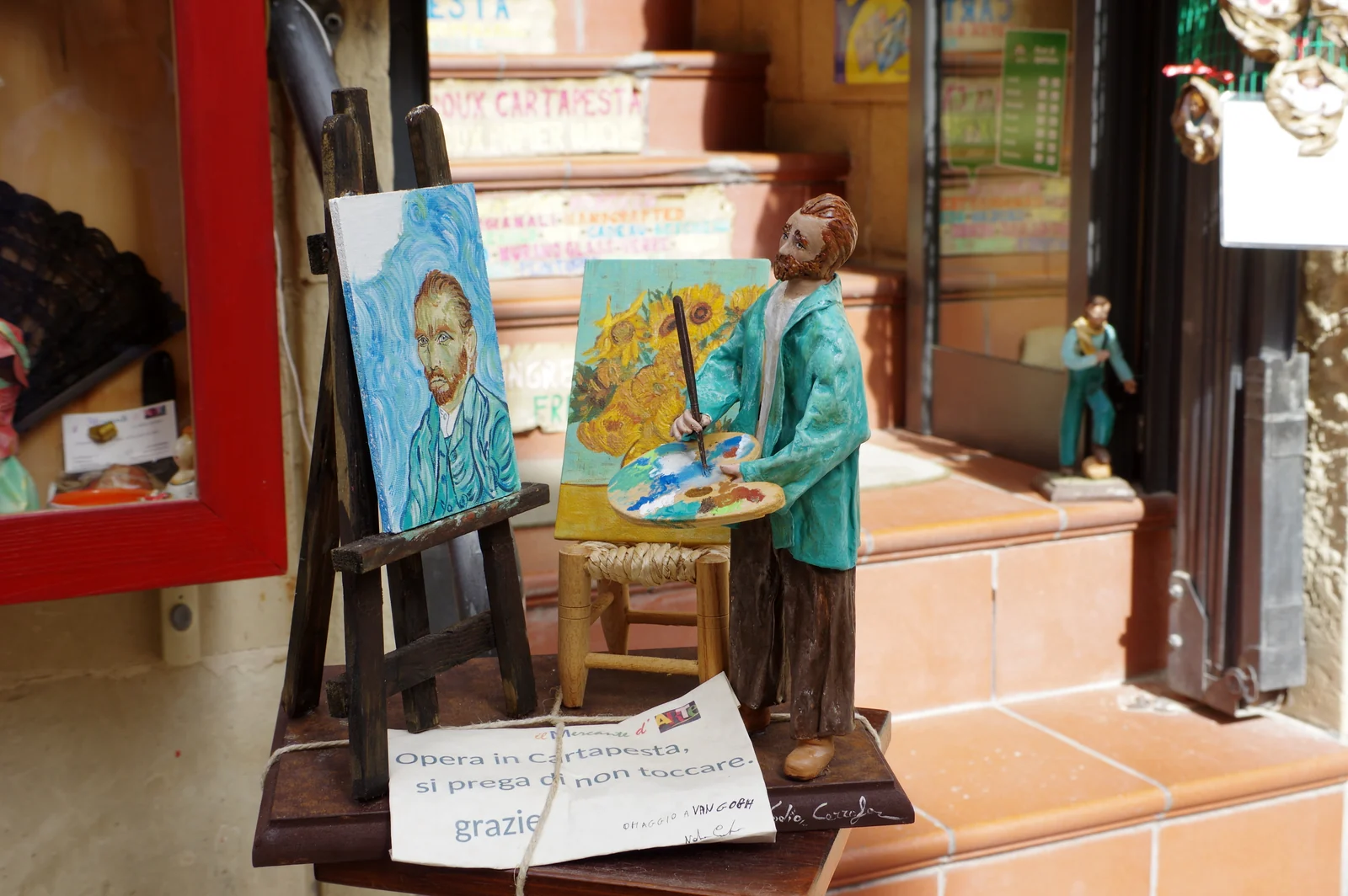
Photo: Berthold Werner / Wikimedia Commons — CC BY-SA 3.0 · Resized and converted to WebP.
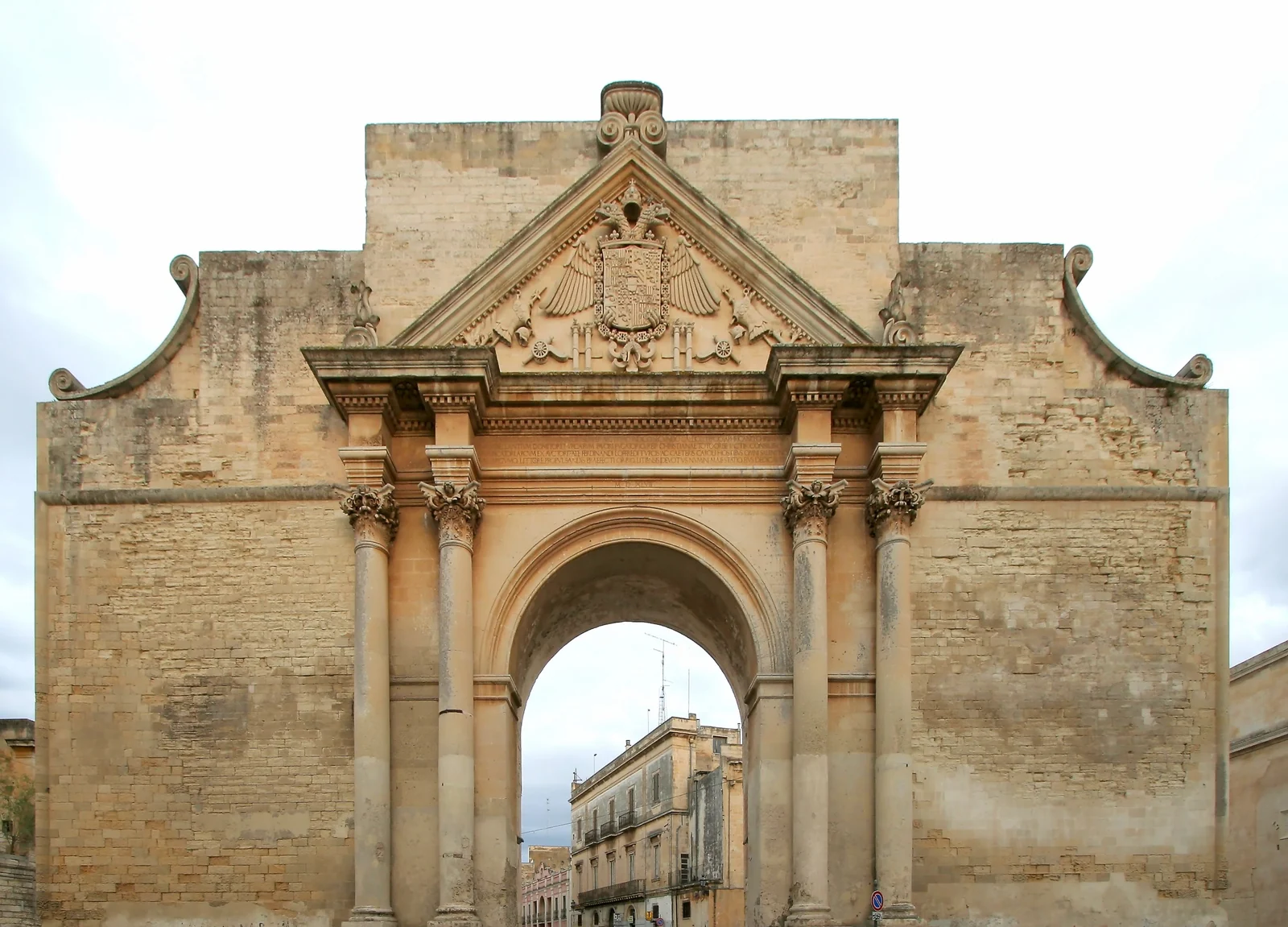
Photo: User:MatthiasKabel / Wikimedia Commons — CC BY-SA 3.0 · Cropped, resized and converted to WebP.
When to go
Lecce is pleasant in every season: the national portal notes that the climate is mild all year round, not only in summer. Spring and autumn are the most comfortable times for long walks in the historic centre and for combining the city with trips to nearby villages, when days are still long and temperatures gentle.
In summer it is best to plan the visit around the cooler hours. Sunset is the recommended time for Piazza del Duomo and the façades, when low light sets the stone aglow; the middle of the day can go to the sea, a few kilometres away, or to church and museum interiors. Winter brings fewer visitors and a more everyday city, with liturgical services and the cultural calendar carrying on.
The church circuit's online calendar flags celebrations and special openings: it is worth checking before planning a visit on a feast day. Saint Orontius, the city's patron, is bound up with the history of the cathedral and of the column that bears his name in the main square.
The three patron saints, Orontius, Justus and Fortunatus, are celebrated from 24 to 26 August. According to the tradition told in the cathedral, Orontius and his nephew Fortunatus met Justus, a disciple of Saint Paul on his way to Rome, at San Cataldo and were converted; Orontius, held to be the first bishop of Lecce, was martyred in Nero’s time. The church circuit sites are open every day, with longer evening hours in summer than in winter.
Sources: Italia.it — Lecce · Italia.it — Weekend a Lecce · LeccEcclesiae — informazioni e tariffe · LeccEcclesiae — Duomo di Lecce · Università del Salento, Dipartimento di Matematica e Fisica — Cronistoria del monumento di S. Oronzo
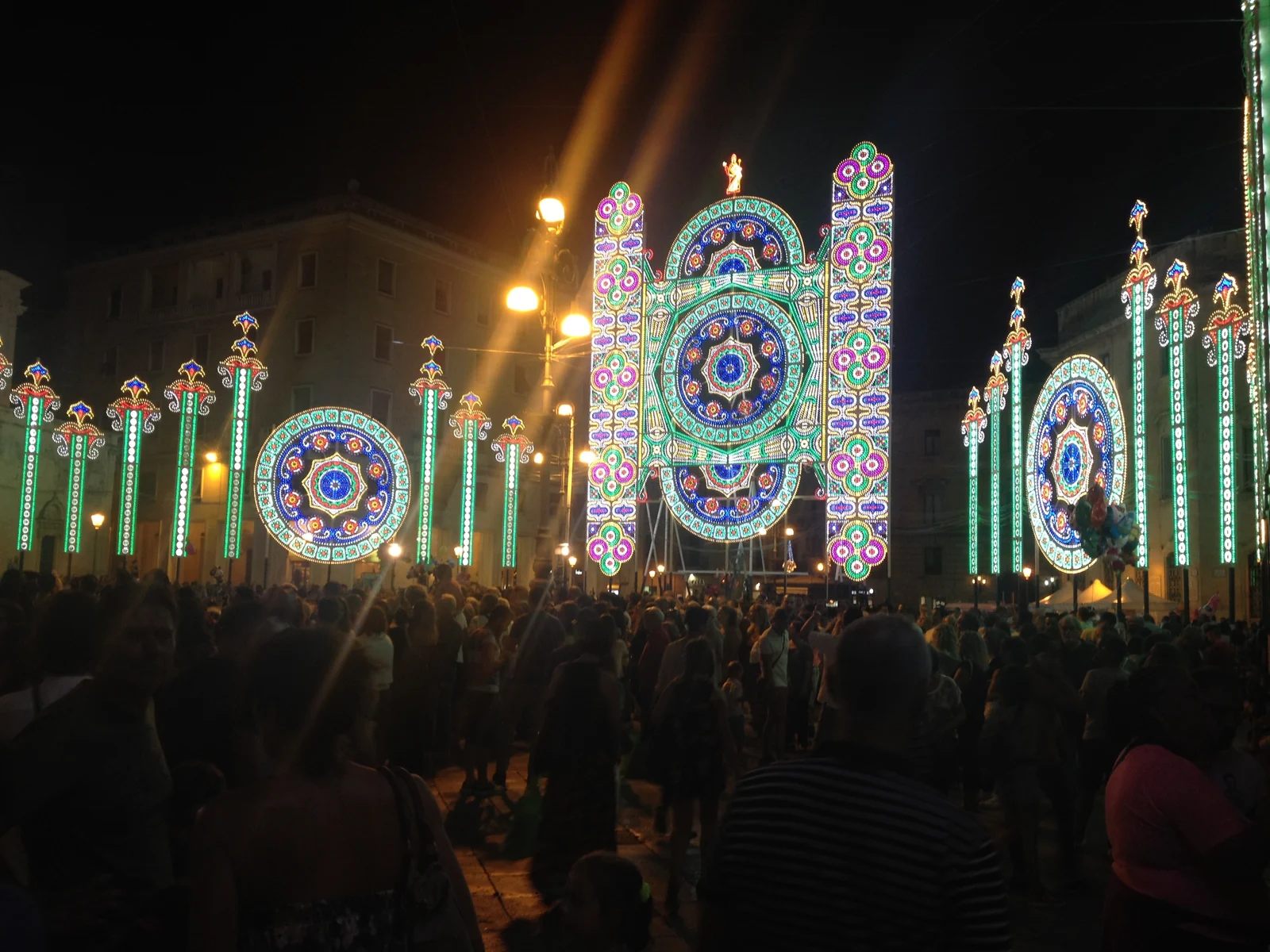
Photo: Felix Kepp / Wikimedia Commons — CC BY-SA 4.0 · Resized and converted to WebP.
Getting there and around
Lecce is served by the national railway network: the station, run by RFI, has eight passenger tracks, assistance for people with disabilities and reduced mobility through the Sala Blu based in Bari, and integrated mobility services such as a bus stop, bike sharing and car rental. The historic centre is easy to reach from the station.
The nearest airport is Brindisi, run by Aeroporti di Puglia, whose connections section lists buses, taxis, car and bike hire for reaching towns in the area. Alternatively you can fly into Bari and continue by train along the coast.
In town the historic centre is best explored on foot: distances between Piazza del Duomo, Santa Croce, Piazza Sant'Oronzo and the Castle of Charles V are short. For inland Salento villages and the coast you will need the local train, buses or a car; for days with many stops your own vehicle or an organised service makes travel simpler.
The station is also the starting point of the regional lines of Ferrovie del Sud Est, entrusted to them by the Puglia Region until 2032: Martina Franca–Lecce, Lecce–Gallipoli, Lecce–Zollino–Gagliano and Lecce–Novoli–Nardò–Gagliano, while Otranto is served by the Maglie–Otranto line; check the day’s timetable on the company’s website. In town, buses and blue-line parking are run by SGM, a company wholly owned by the Municipality. Parking costs most in the historic centre (Red Zone) and the shopping district (Orange Zone) and less in the surrounding zones; it is charged on weekdays, Monday to Saturday. Three park-and-ride car parks, at the former Foro Boario, Torre del Parco and Largo Cimitero, let you leave the car outside the centre.
In an emergency the single European number 112 is free, even from a phone without a SIM card or credit; where the single answering centre is not active, the Carabinieri answer.
Sources: RFI — Stazione di Lecce · Aeroporti di Puglia — Aeroporto di Brindisi, collegamenti bus · Italia.it — Weekend a Lecce · Regione Puglia — Avviso di post-informazione, affidamento a Ferrovie del Sud Est 2023-2032 · SGM, Società Gestione Mobilità Lecce — Chi siamo · SGM Lecce — Mappe delle aree tariffate · Ministero della Salute — Numero unico europeo per le emergenze NUE 112
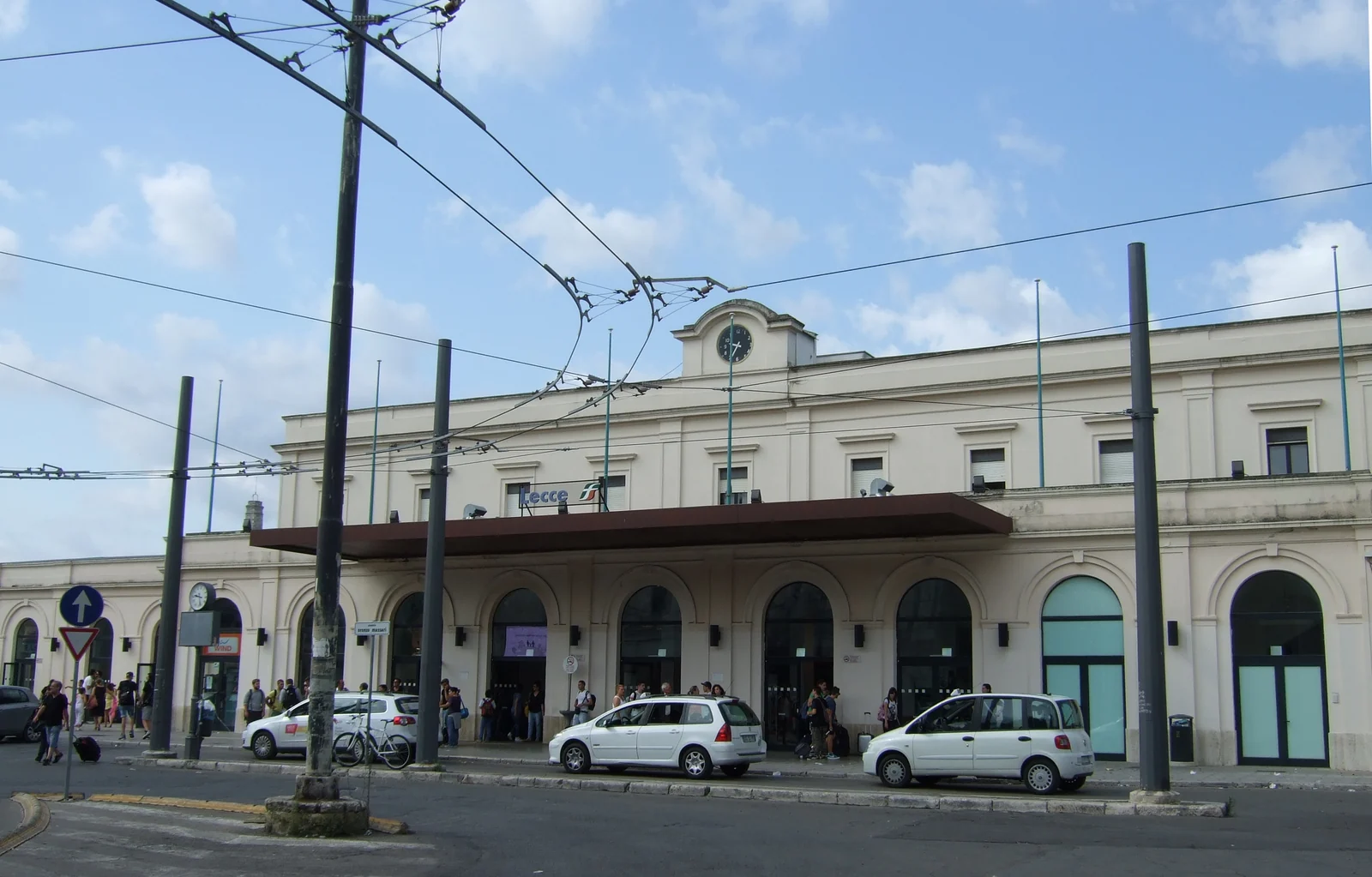
Photo: Haragayato / Wikimedia Commons — CC BY-SA 4.0 · Resized and converted to WebP.
Tourism
Lecce’s tourist info point, part of the Pugliapromozione regional network, is in Via Rubichi; according to the official list updated on 8 July 2026 it can be reached on 0832 242099 and 351 9547230 and at [email protected].
“Come to Lecce as a guest, not as a tourist: that is how these places truly let you know them.”
Where to stay
For those who want to experience the city on foot, the natural choice is to sleep in the historic centre or just outside the walls: evening walks between the squares, the illuminated Piazza del Duomo and the venues around Porta San Biagio and Santa Chiara become part of the stay with no need to travel. In the centre the offer consists mostly of small places such as B&Bs.
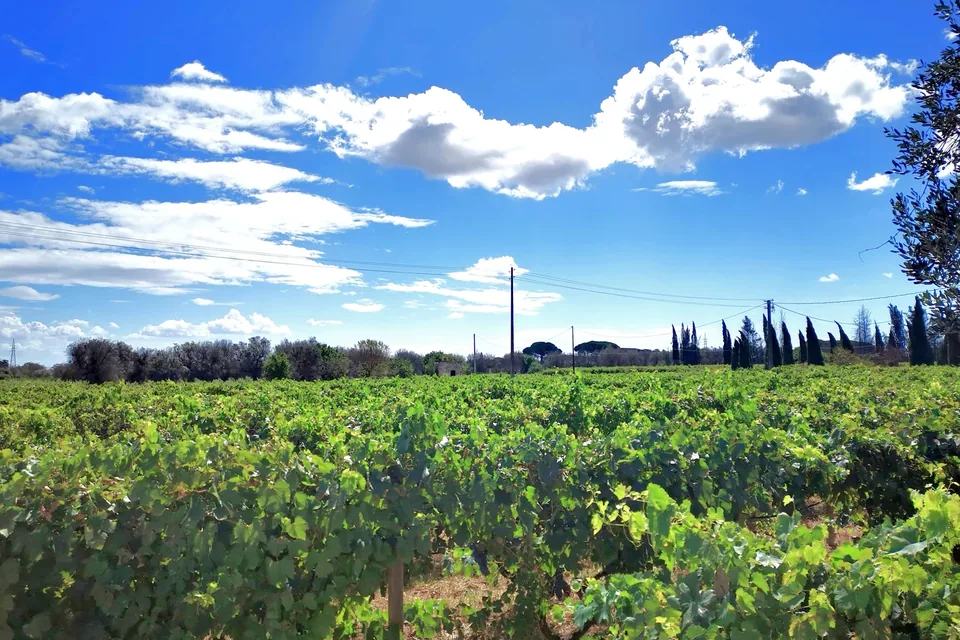
Those planning many car trips to the coast or the inland villages may prefer accommodation outside the centre, easier to reach and with parking. In the countryside around the city there are also masserie, fortified farmhouses turned into places to stay, in keeping with the olive-grove landscape that surrounds Lecce and stretches as far as the abbey of Cerrate.
Either way it pays to choose the base according to the pace of the trip: one fixed centre for several nights, with one excursion a day, lets you see Lecce calmly and reach Otranto, the Grecìa Salentina or the sea without changing lodgings every evening.
Sources: Italia.it — Weekend a Lecce · FAI — Abbazia di Santa Maria di Cerrate
Nearby
North of the city, along the road to Casalabate, the Abbey of Santa Maria di Cerrate is one of the most moving places in the area. Founded between the late eleventh and early twelfth centuries for a community of Greek monks, it stood on the ancient road linking Brindisi, Lecce and Otranto. After being sacked in 1711 it became a farm producing oil and tobacco; today it is in the care of FAI and shows the Romanesque church with its Byzantine frescoes, the fourteenth-century portico, two underground olive presses and a restored mill.
Heading out of the city towards Otranto lies the Grecìa Salentina, the group of villages where Griko survives: Calimera and Martano are close by and suit a half-day devoted to language, rural culture and local produce. Further on you reach Otranto, with its cathedral and floor mosaic, overlooking the Adriatic.
The sea is only a few kilometres away: the national portal mentions the beaches of the Lecce coast, easy to reach for a rest day between visits.
Within the municipal territory, in the rural landscape of the Valle della Cupa, the Rudiae archaeological park preserves the town where the poet Quintus Ennius (239-169 BC), regarded as the father of Latin literature, was born: rock-cut tombs, stretches of the Messapian walls, paved roads and Roman public buildings, and above all the amphitheatre of Trajan’s reign, almost intact, whose existence was confirmed only by the excavations carried out between 2011 and 2017.
On the coast, at San Cataldo, about 10 kilometres east-northeast of ancient Lupiae, lies the Roman pier that research published by the CNR describes as the best-preserved Roman-age harbour structure in Apulia: topographers of the University of Salento studied it between 2004 and 2007 and since 2013 have excavated a further part and documented the underwater remains. The Bosco e Paludi di Rauccio regional nature park, established in 2002, lies entirely within the municipality, 13 kilometres from the city: 1,600 hectares with a holm-oak wood of about 18 hectares, a wetland, the Idume and Fetida coastal basins and about 4 kilometres of sandy shore with dunes between Torre Rinalda, Spiaggiabella and Torre Chianca. It is managed by the Municipality of Lecce.
Sources: FAI — Abbazia di Santa Maria di Cerrate · Italia.it — Lecce · Italia.it — Lecce, storia e curiosità · Ministero della Cultura — Parco archeologico di Rudiae · CNR, UNIFIND — The Roman pier of San Cataldo: from archaeological data to 3D reconstruction · Comune di Lecce, Parco naturale regionale Bosco e Paludi di Rauccio — La storia del Parco
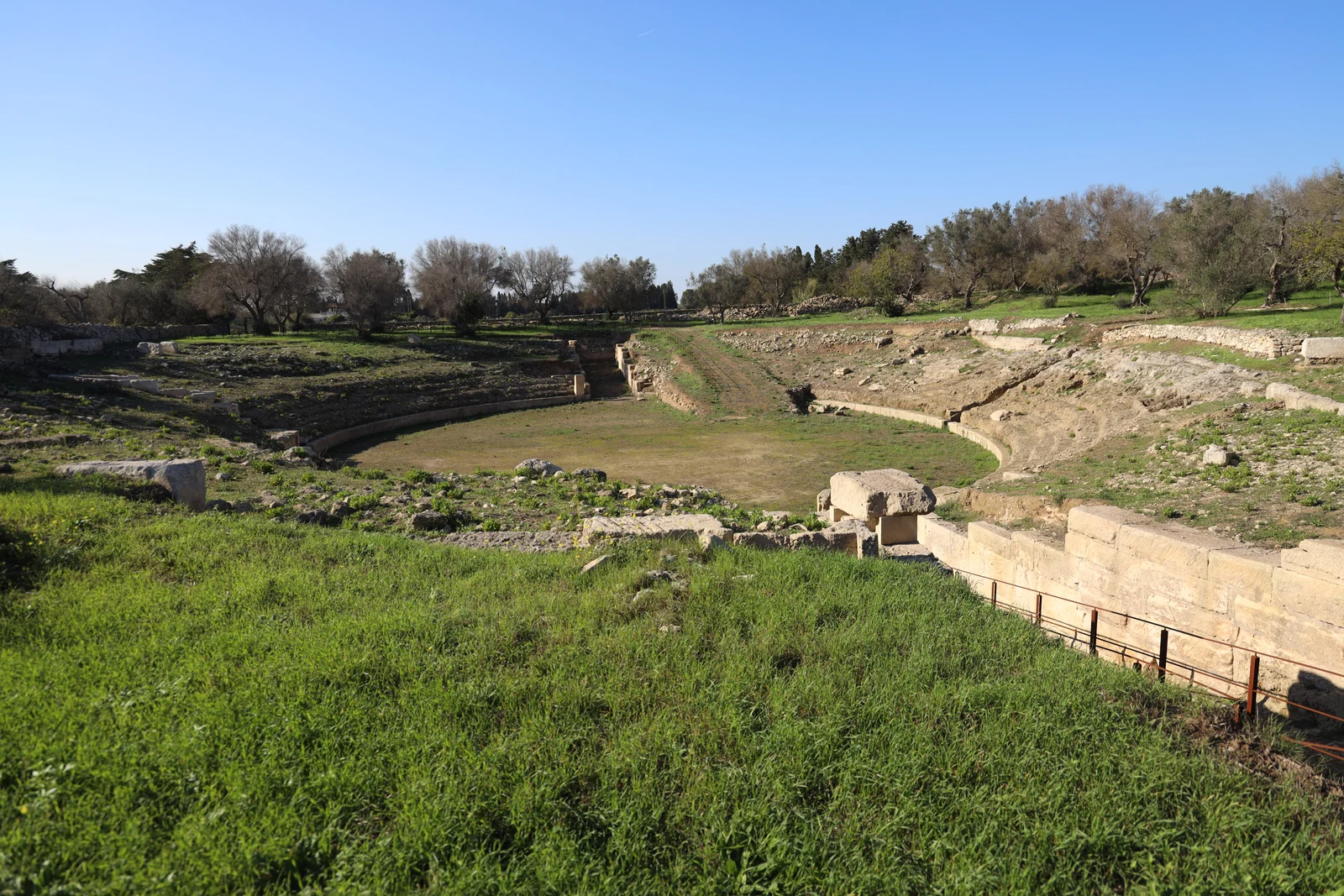
Photo: Fabrizio Garrisi / Wikimedia Commons — CC BY-SA 4.0 · Resized and converted to WebP.
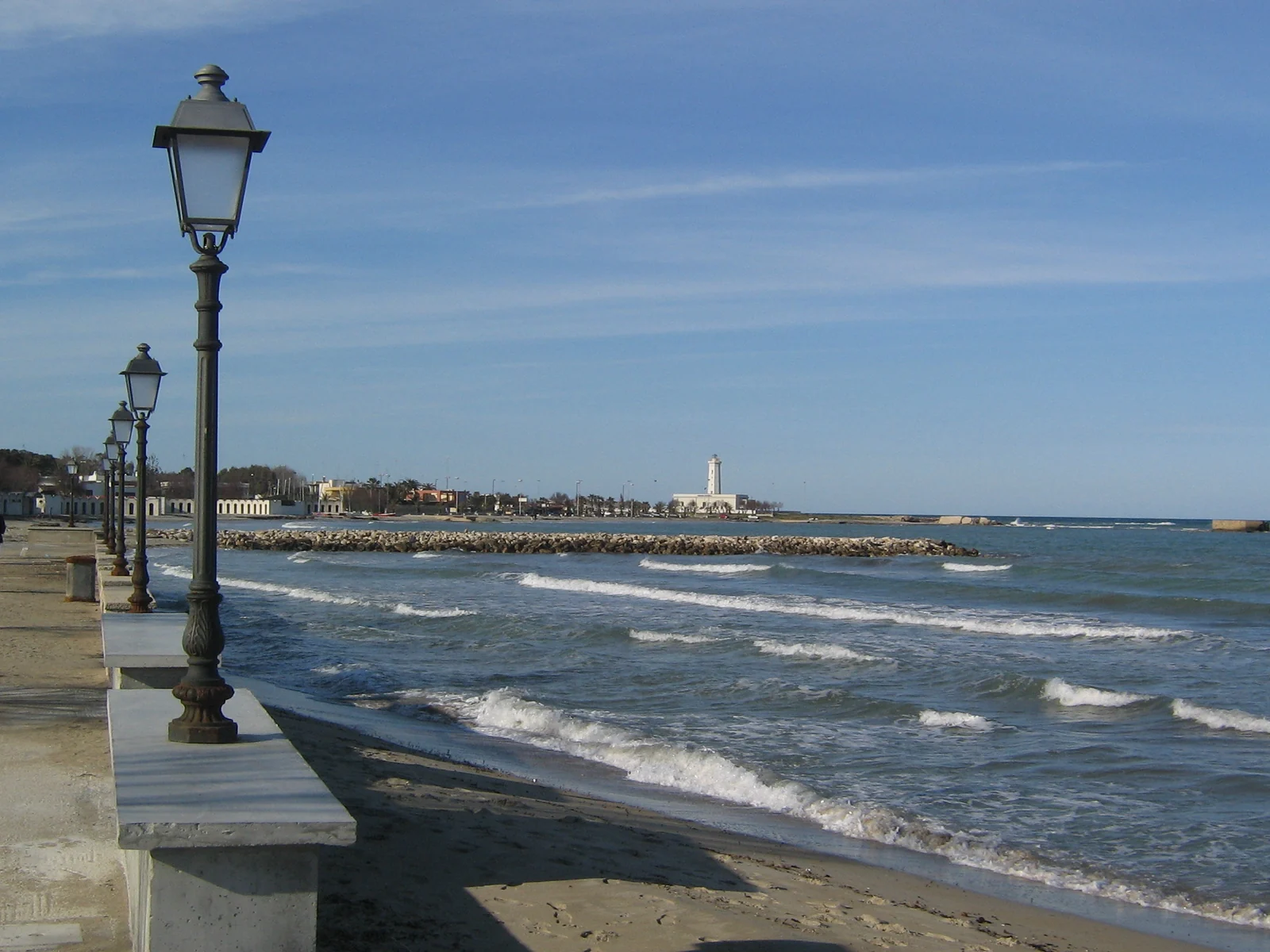
Photo: Colar / Wikimedia Commons — Public domain · Resized and converted to WebP.
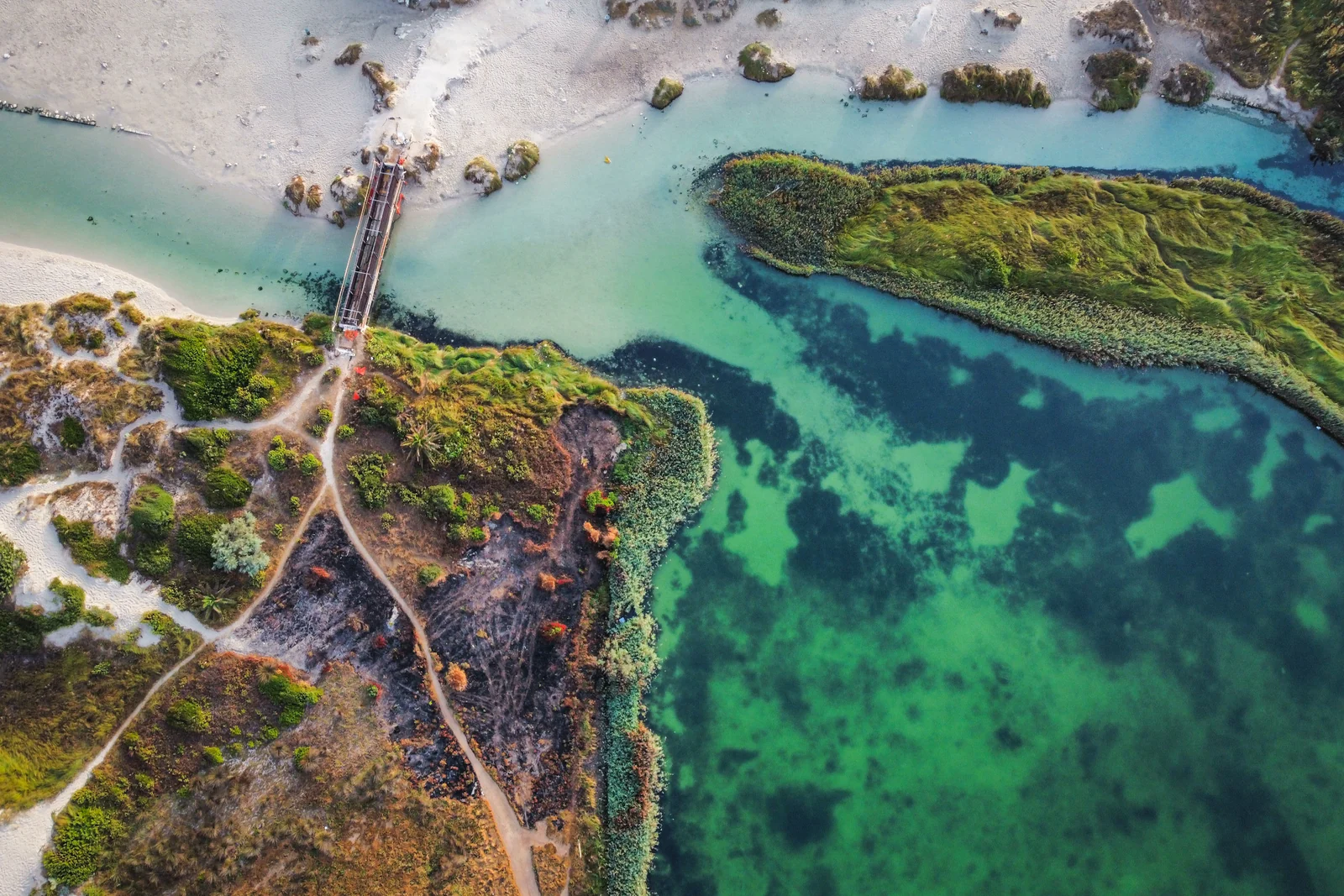
Photo: Cesare Barillà / Wikimedia Commons — CC BY-SA 4.0 · Resized and converted to WebP.
Events
Verified events linked to this page: dates, place, organiser and official source. The status of each one is worked out from the days it is open, in the Rome time zone.
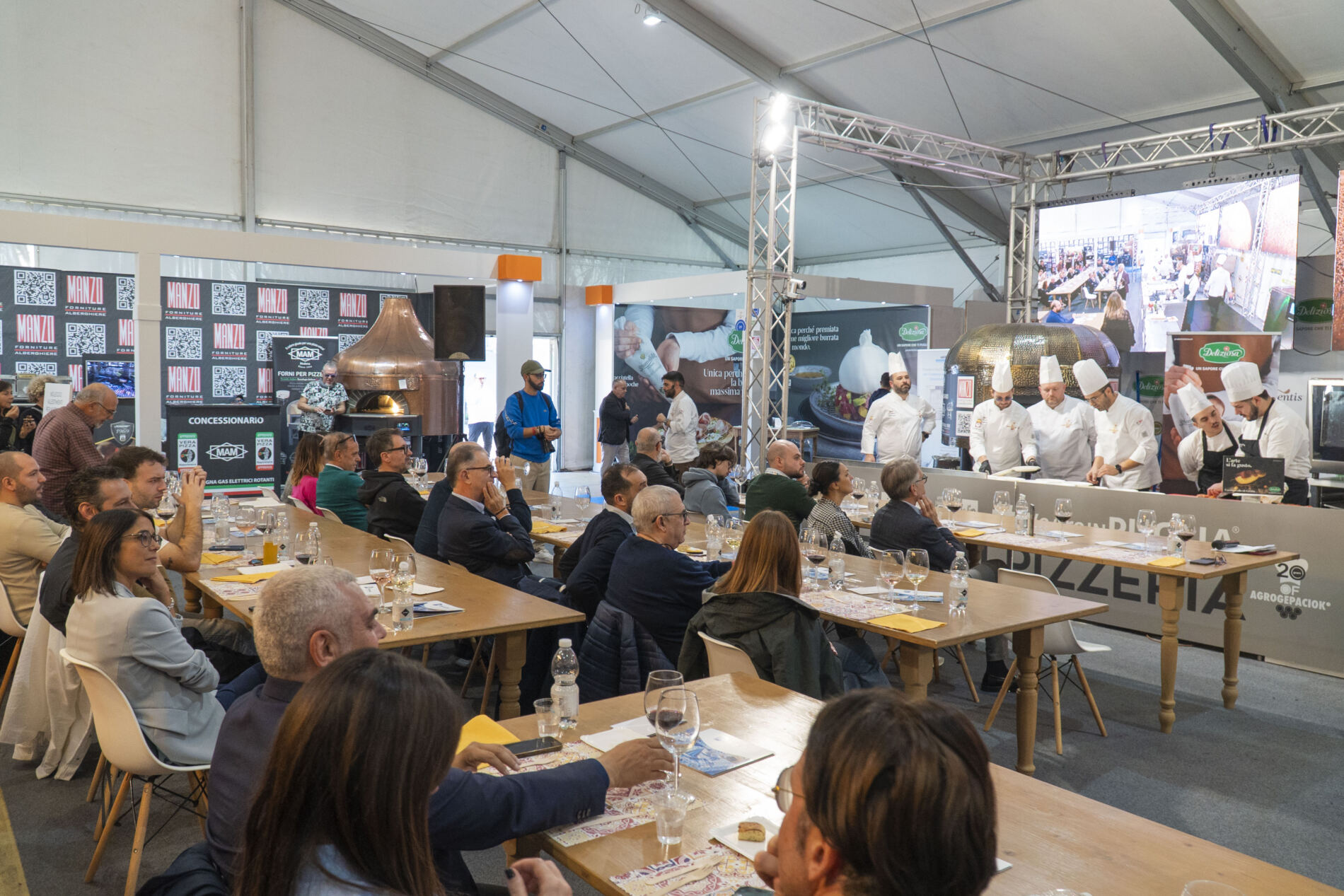
Photo: AgroGePaCiok (Eventi Marketing & Communication) · source EndedNext edition to be confirmed
AgroGePaCiok 2026 in Lecce
7–10 November 2026, from 10:00 to 19:00; 11 November 2026, from 10:00 to 18:00
Where: Lecce Fiere, Piazza Palio, 73100 Lecce · Puglia
Organiser: Eventi Marketing & Communication
AgroGePaCiok is a trade show for the food, gelato, pastry, bakery, pizza, chocolate and catering sectors, held at Lecce Fiere in Piazza Palio. The 2026 edition runs from Saturday 7 to Wednesday 11 November. Alongside the exhibition areas there are themed forums on cooking, pastry, bread-making and pizza, plus competitions. The show is reserved for trade professionals, who can apply for free accreditation.
- Admission: Trade-only event. Free professional accreditation, not valid on Sunday (accredited visitors get 50% off the ticket that day). Prices being updated: ask the organiser's office.
- Times: Saturday to Tuesday 10:00–19:00; Wednesday 10:00–18:00.
Source of the practical details
Source: agrogepaciok.it, checked on 28 October 2026
Where to stay
In the municipality of Lecce the national database of the Ministry of Tourism lists 2002 accommodation businesses with a verified CIN code: 35 hotels, 493 other licensed accommodation and 1474 other types such as B&Bs and private rentals.
Licensed businesses from the official list of accommodation named as the source in this section. Where the list gives it, the property's official identification code appears next to its name: the national CIN code, or the code assigned by the Region or by the body that keeps the list. Private individuals are not listed. This list is the official census of licensed businesses, not a list of Apulica partners: to stay in Lecce you do not have to check one property after another yourself; write to Apulica and we look for the stay that suits your journey, checking availability and conditions before any confirmation.
LA FIERMONTINA
Hotel · ★★★★★
CIN IT075035A100023983
Glass House
Residence
CIN IT075035B400091314
AGRITURISMO NAMASTE'
Farm stay
CIN IT075035B500031877
2 Santi - Suite and Rooms
B&B
CIN IT075035B400082081
4 Balconi Family House
Guest rooms
CIN IT075035B400070094
3G BAROQUE APARTMENTS
Holiday home
CIN IT075035B400049796
Madre Santina
Hostel
CIN IT075035B600097671
Casa per Ferie 'S.S. dei S.C.'
Holiday house
CIN IT075035B700100700
PALAZZO SANT'ANNA
Hotel · ★★★★★
CIN IT075035A100123911
IDRIA RESIDENCE
Residence
CIN IT075035B400103467
First the places that presented themselves to Apulica, the latest first; then one place of each type in turn, by official category and stars, then by name. No position is paid for.
All 336 entries in alphabetical order
Page 1 of 34
| Name | Type | CIN |
|---|---|---|
| 2 Santi - Suite and Rooms | B&B | IT075035B400082081 |
| 3G BAROQUE APARTMENTS | Holiday home | IT075035B400049796 |
| 4 Balconi Family House | Guest rooms | IT075035B400070094 |
| 4 Balconi House | Guest rooms | IT075035B400070093 |
| 4 BALCONI LO RE 38 APARTMENTS | Holiday home | IT075035B400088221 |
| 4 Balconi Paladini Rooms | B&B | IT075035B400070081 |
| 8 PIU HOTEL | Hotel | IT075035A100022703 |
| ACQUAVIVA Apartment e Rooms | Guest rooms | IT075035B400127191 |
| ADA SUITES | B&B | IT075035B400026167 |
| AEDES B&B - IL GIARDINO DEI SOGNI | B&B | IT075035B400059269 |
Ask Apulica for a stay in Lecce We reply shortly, within a few hours at most, with a proposal for you to consider.
Sources: Regione Puglia – ARET Pugliapromozione (DMS), CC BY 4.0, 2026-10-12 · Ministero del Turismo – Banca Dati Strutture Ricettive (dashboard pubblica), 2026-10-12
YOUR JOURNEY
How to shape a journey here
Journey idea: make Lecce a cultural anchor for Salento, then choose a coastal contrast. Otranto brings mosaics and the Adriatic; Gallipoli offers an island town on the Ionian side. Explore one side properly rather than crossing them all in a day.
Plan your tripKeep exploring
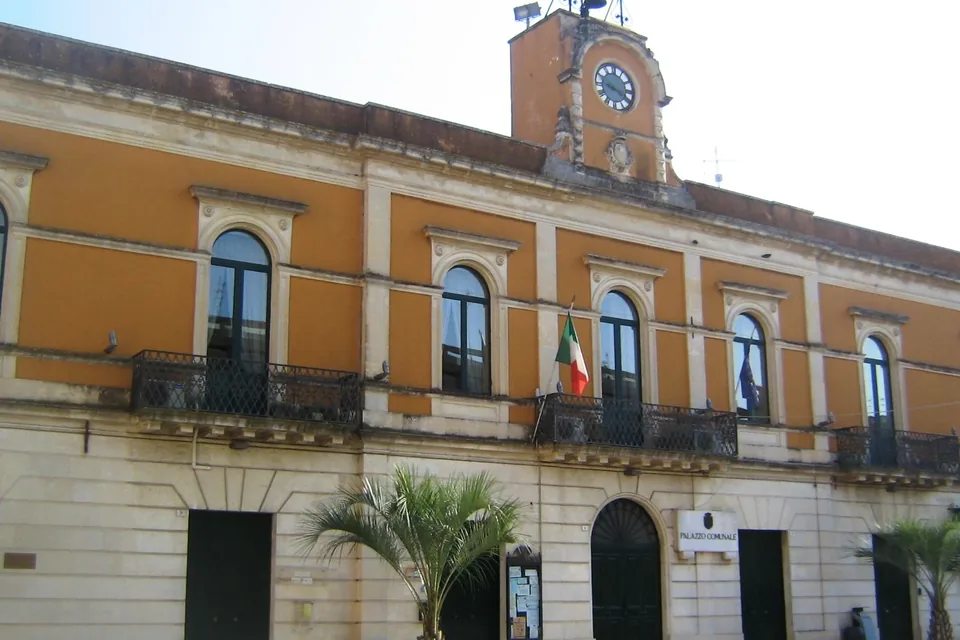
Calimera
Griko culture, rural memory and a connection with Athens in inland Salento.
Read the guide →Photo: Lupiae / Wikimedia Commons — Public domain · Resized and converted to WebP.
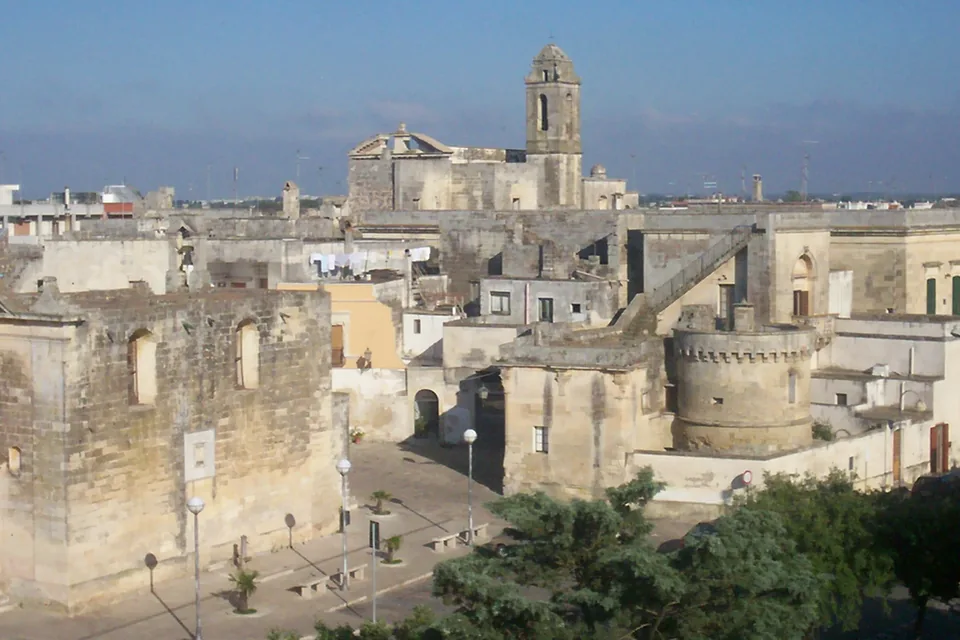
Martano
Courtyards, megalithic heritage and Cistercian culture in Grecìa Salentina. In the Terra, the old centre with its regular blocks, the Aragonese castle, the mother church of 1596 and the early eighteenth-century palaces; in the countryside the Teofilo menhir, 4.70 metres tall, the Specchia dei Mori and the medieval village of Apigliano.
Read the guide →Photo: Freddyballo / Wikimedia Commons — CC BY-SA 3.0 · Resized and converted to WebP.
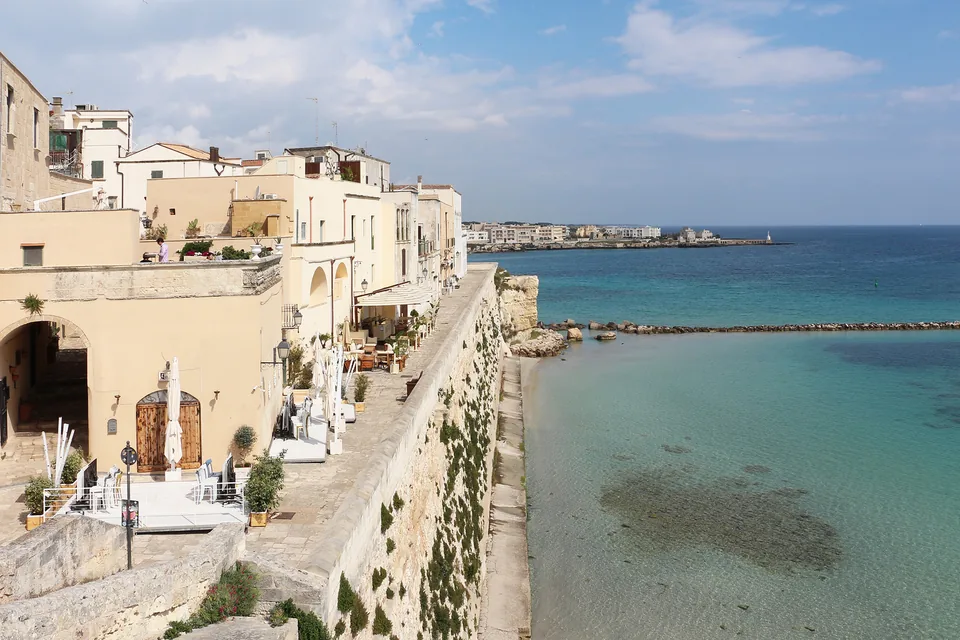
Otranto
The cathedral, Adriatic landscape and time to explore the historic centre. Inside and around the walls: Pantaleone’s mosaic of 1163-1165, the crypt with its forty-two columns, the Byzantine church of San Pietro, the Aragonese castle of Walpole’s novel, the Punta Palascìa lighthouse and the Grotta dei Cervi at Porto Badisco.
Read the guide →Photo: Bernard Gagnon / Wikimedia Commons — CC0 · Resized and converted to WebP.
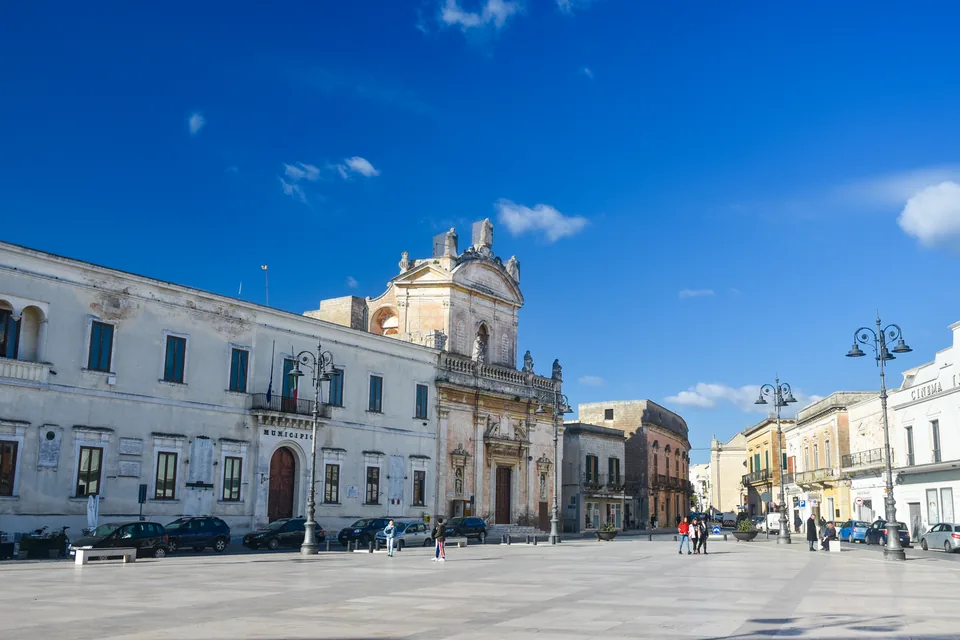
Manduria
The Messapian city of three wall circuits and the Fonte Pliniano, the home of Primitivo and an Ionian coast of reserves, submerged Roman sarcophagi and towers.
Read the guide →Photo: Andrea Fistetto / Wikimedia Commons — CC BY-SA 4.0 · Resized and converted to WebP.
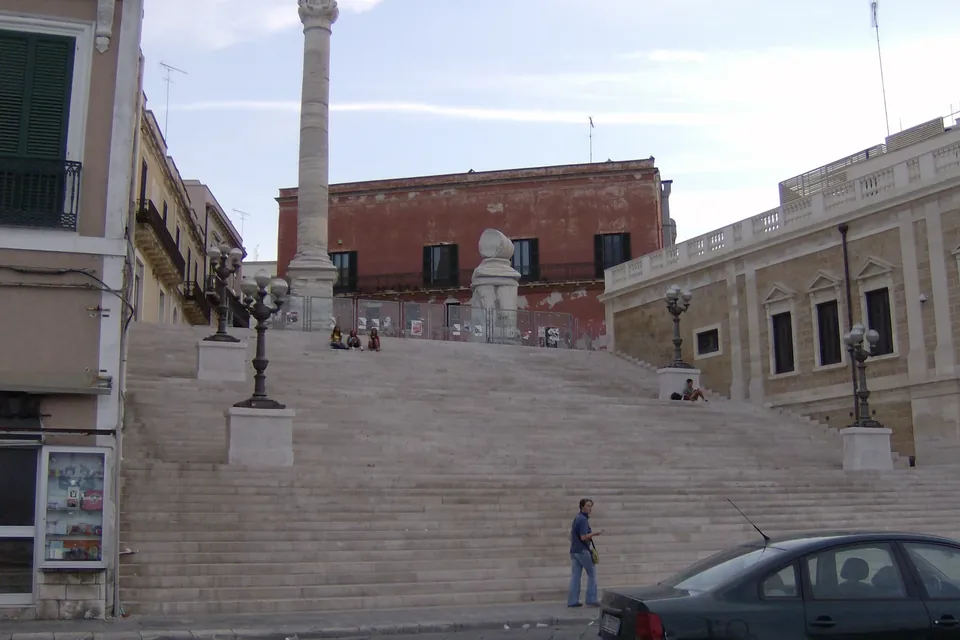
Brindisi
Brindisi: reading the city from its harbour. The Roman Columns above the Virgilian Steps, the castles built to defend the harbour and the Brindisi artichoke.
Read the guide →Photo: Zappuddu / Wikimedia Commons — Public domain · Resized and converted to WebP.
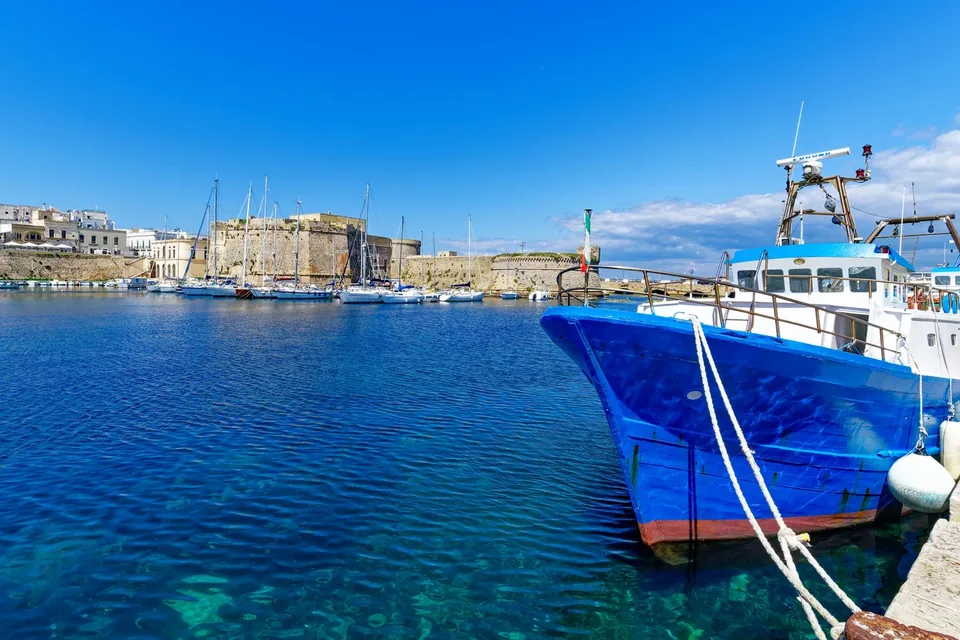
Gallipoli
The bridge, churches and Ionian townscape beyond a beach holiday. An old town on a fortified island, linked by a masonry bridge, and the local scapece.
Read the guide →Photo: Holger Uwe Schmitt / Wikimedia Commons — CC BY-SA 4.0 · Resized and converted to WebP.
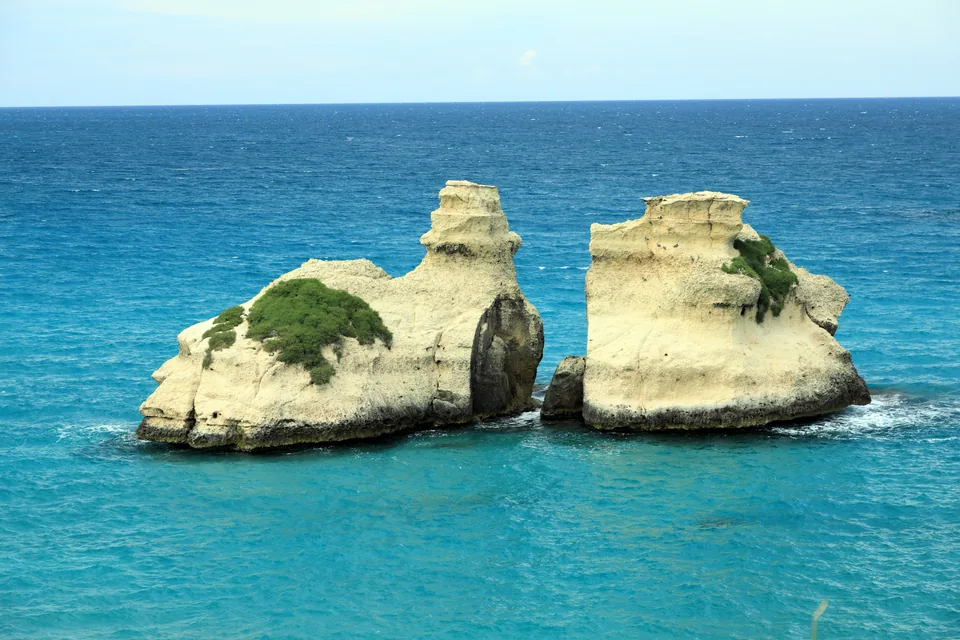
Torre dell’Orso
Sea stacks, pine woodland and a contrast with Melendugno’s inland villages. The bay holds the 2026 Blue Flag: to the north stands the 1568 coastal tower that gave it its name, at the other end the cave of San Cristoforo, a seaside sanctuary from the fourth century BC, and the Two Sisters sea stacks.
Read the guide →Photo: Falk2 / Wikimedia Commons — CC BY-SA 4.0 · Resized and converted to WebP.
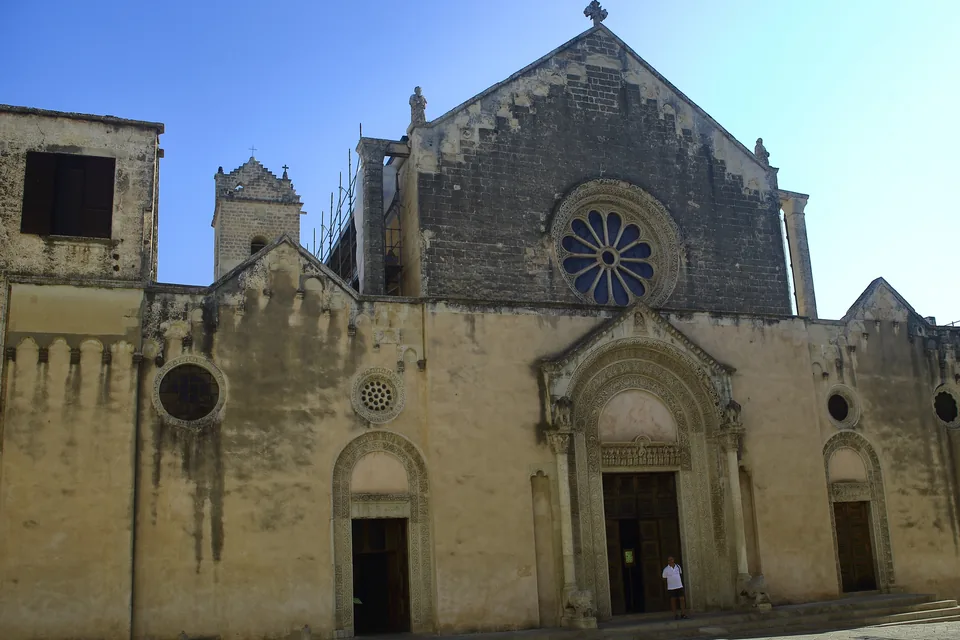
Galatina
Galatina (LE), Puglia: 25,319 residents, 82.65 km². The official facts of the municipality, its town council website and its registered accommodation. The basilica of Santa Caterina d’Alessandria and its frescoes, the Chiesa Madre of Saints Peter and Paul, the Chapel of Saint Paul and tarantism, the “Galatina” DOC wine and the “Patata novella di Galatina” PDO.
Read the guide →Photo: Eletto Luigi / Wikimedia Commons — CC BY-SA 4.0 · Resized and converted to WebP.
Porto Cesareo
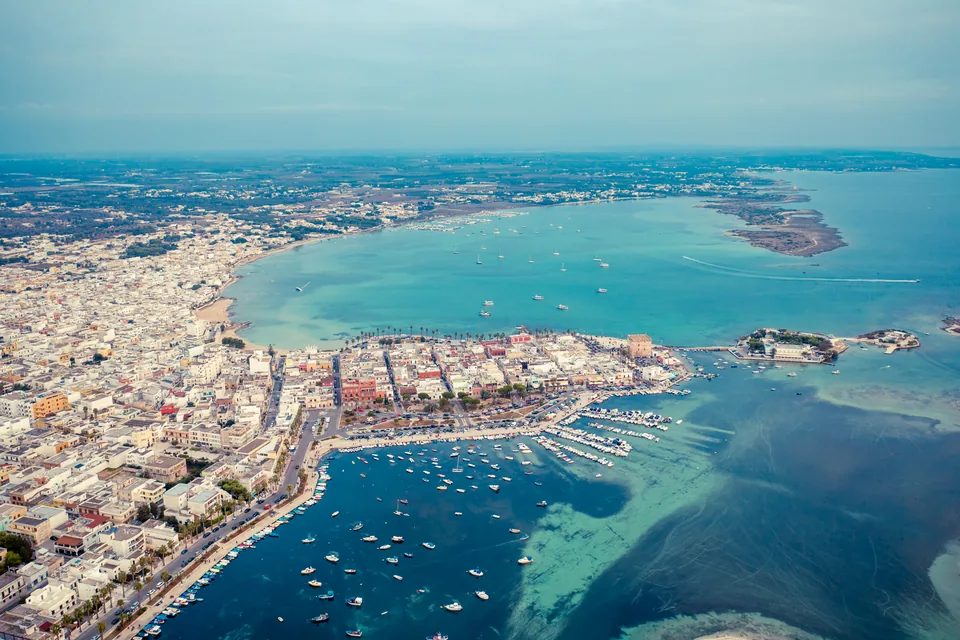
Porto Cesareo (LE), Puglia: 6,486 residents, 35.16 km². The official facts of the municipality, its town council website and its registered accommodation. On the sea of the Porto Cesareo Marine Protected Area, a state marine reserve since 1997 with 16,654 protected hectares: the Cesarea tower rebuilt in 1622, the coastal towers, the Isola Grande known as the rabbits’ island and the “Pietro Parenzan” Marine Biology Museum.
Read the guide →Photo: Paolo Damiano Dolce / Wikimedia Commons — CC BY-SA 4.0 · Resized and converted to WebP.
Squinzano
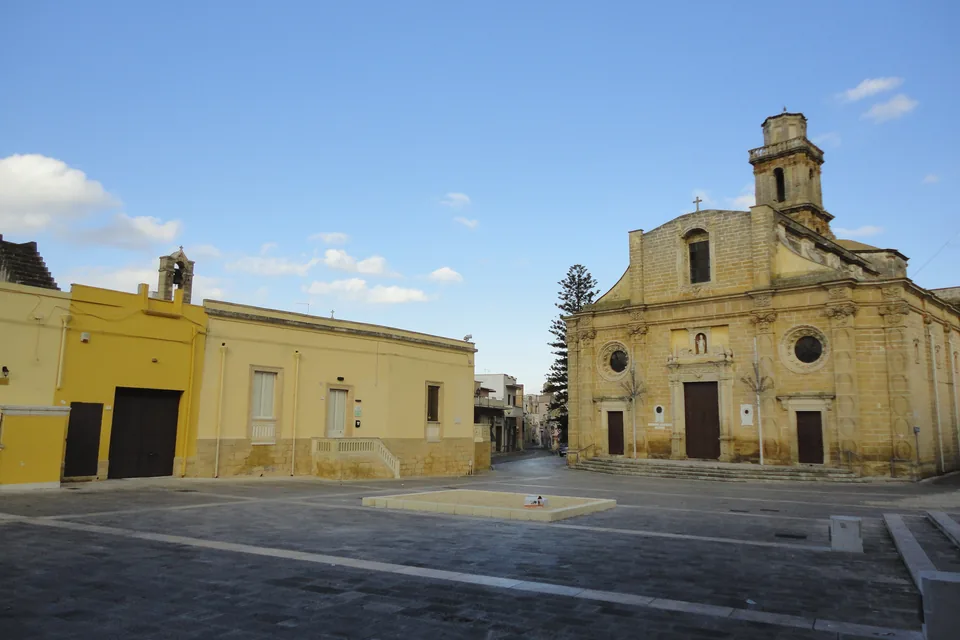
Squinzano (LE), Puglia: 13,320 residents, 31.16 km². The official facts of the municipality, its town council website and its registered accommodation. The “Squinzano” DOC wine made mainly from Negroamaro, the town band founded in 1876, the mother church of San Nicola, the sanctuary of the Madonna del Garofano and the seaside village of Casalabate.
Read the guide →Photo: Lupiae / Wikimedia Commons — CC BY-SA 3.0 · Resized and converted to WebP.