
APULICA / FRESH PASTA, BREAD AND PASTRY
Fruttone
PAT · Fresh pasta, bread and pastry · Puglia
In brief
- A single-serving pastry from the province of Lecce: shortcrust filled with almond paste and pear, apricot or quince jam, topped with dark chocolate. (Atlante dei PAT di Puglia (Regione Puglia, Università di Bari) — Fruttone)
- It bakes at 180 °C for fifteen to twenty minutes and is glazed with chocolate only once cool. (Atlante dei PAT di Puglia (Regione Puglia, Università di Bari) — Fruttone)
- It is seen as the pasticciotto's unlike twin and is said to derive from a round cake called barchiglia. (Atlante dei PAT di Puglia (Regione Puglia, Università di Bari) — Fruttone)
History and origin
The fruttone is a sweet from the province of Lecce, listed among Puglia's traditional products. It is considered the different twin of the pasticciotto, and its history, handed down from generation to generation, is very old: in the Salento some date both sweets to the first half of the eighteenth century, a theory supported by the existence, even then, of the special metal moulds.
For a long time these sweets were reserved for the banquets of the nobility, and became popular only when the first cafés and pastry shops opened. The fruttone is said to derive from the barchiglia, a round cake, of which it is the single-portion version.
The name comes from the word frutto, fruit, because the jam is the heart of the sweet, with a suffix that intensifies its meaning. In the Salento the word is attested from the mid-twentieth century: the Lecce-born writer De Sanctis, in 1958, described it as a delicacy of chocolate and jam.
Sources: Atlante dei PAT di Puglia (Regione Puglia, Università di Bari) — Fruttone · Masaf — Elenco nazionale dei prodotti agroalimentari tradizionali, XXVI revisione (2026)
Area and method of production
The base is a shortcrust pastry made with flour, sugar and butter, to which egg yolks, raising agent and vanilla are added until the dough is smooth and even.
The rolled pastry lines the bottom of the moulds. Inside goes a layer of jam, pear, apricot or quince, and a layer of almond paste, then it is closed with another disc of pastry, pressing the edges well so that a small dome forms in the centre.
The fruttone bakes at 180 degrees for fifteen to twenty minutes. Only once it has cooled is the top glazed with melted dark chocolate, which gives it its unmistakable look.
Sources: Atlante dei PAT di Puglia (Regione Puglia, Università di Bari) — Fruttone
How to recognise it
The fruttone is a single-portion sweet, with a domed shape from the pastry top and the glossy, dark surface of its dark chocolate coating.
In each bite there are three textures: crumbly shortcrust, firm, sweet almond paste and fruit jam, which may be pear, apricot or quince. The chocolate on top completes the whole, and it is precisely this union of chocolate and jam that the writer De Sanctis celebrated in 1958.
Compared with the pasticciotto, which is oval and filled with custard, the fruttone stands out for its fruit and almond in place of custard and for its chocolate coating.
Sources: Atlante dei PAT di Puglia (Regione Puglia, Università di Bari) — Fruttone · Atlante dei PAT di Puglia — Pasticciotto
In the kitchen
The fruttone belongs to the great family of Salento pastries, together with the pasticciotto, with which it shares shortcrust and moulds. Like the pasticciotto, it was long a sweet of noble banquets before becoming popular with the spread of cafés and pastry shops.
Its recipe brings together some of the emblematic ingredients of Lecce pastry-making: almond, worked into paste, fruit turned into jam, and chocolate. Since 2007 the collective mark Dolce in Salento, promoted by Salento pastry cooks, has included the fruttone and guarantees the use of the right ingredients in the artisan preparation of typical sweets handed down from generation to generation.
Sources: Atlante dei PAT di Puglia (Regione Puglia, Università di Bari) — Fruttone · Atlante dei PAT di Puglia — Pasticciotto
Where to taste it
The fruttone's area of origin is the province of Lecce, and that is where to look for it, in the pastry shops of the Salento where it is made all year round and sold at retail. The Dolce in Salento mark helps identify artisan preparation following tradition.
Lecce is the natural starting point: in the city and the towns of the province the fruttone sits alongside the pasticciotto, its custard-filled twin, which has a similar history and is also made all year round. A trip to the Salento, in any season, is a chance to taste them side by side.
Sources: Atlante dei PAT di Puglia (Regione Puglia, Università di Bari) — Fruttone · Atlante dei PAT di Puglia — Pasticciotto
Protection
- Traditional agri-food product (PAT) — Puglia, n. 231, 26th revision (Masaf — Elenco nazionale dei prodotti agroalimentari tradizionali, XXVI revisione (2026))
When
- Production: all year round (Atlante dei PAT di Puglia (Regione Puglia, Università di Bari) — Fruttone)
Where
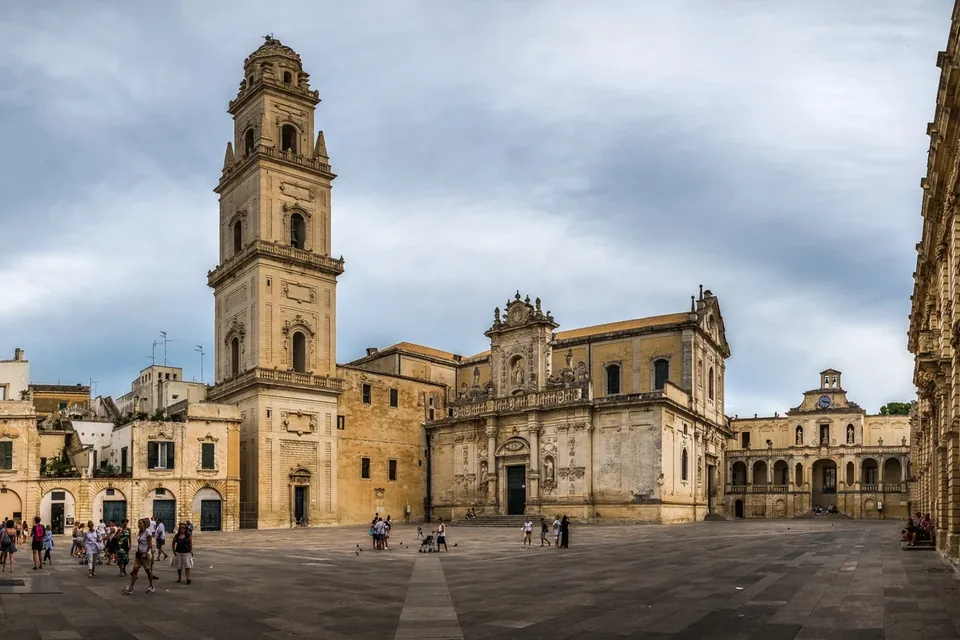
Lecce
Baroque architecture, papier-mâché and Salento food: a city of telling details.
Read the guide →Photo: Giuseppe Milo / Wikimedia Commons — CC BY 3.0 · Resized and converted to WebP.
.jpeg)
Read more
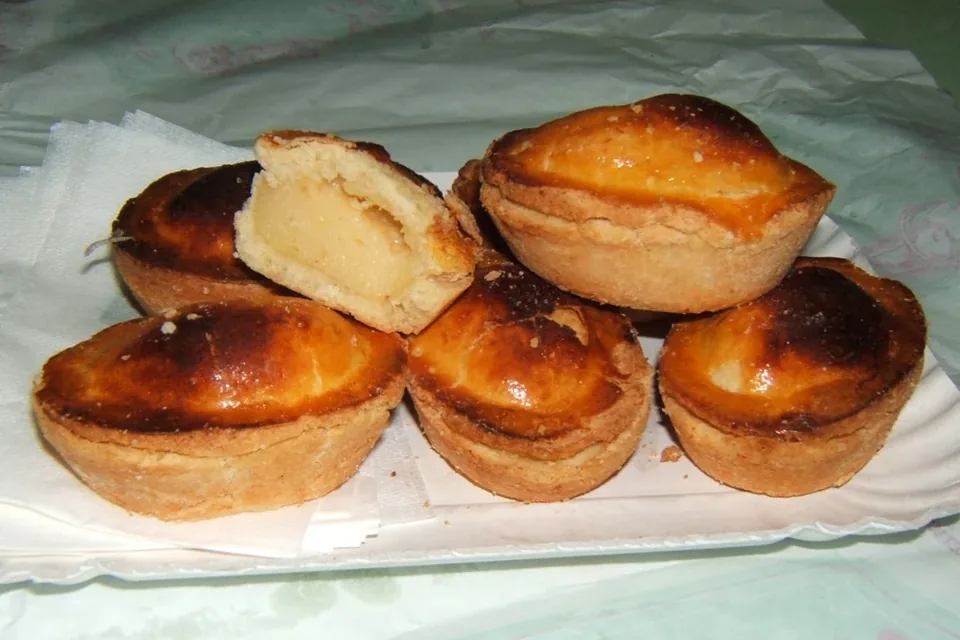
Pasticciotto from Lecce
The Salento breakfast pastry: how it is made, what the records say about its history, its twin the fruttone and a day between Lecce and Galatina.
Read the guide →Photo: Floriano Calcagnile / Wikimedia Commons — CC BY-SA 3.0 · Resized and converted to WebP.
