
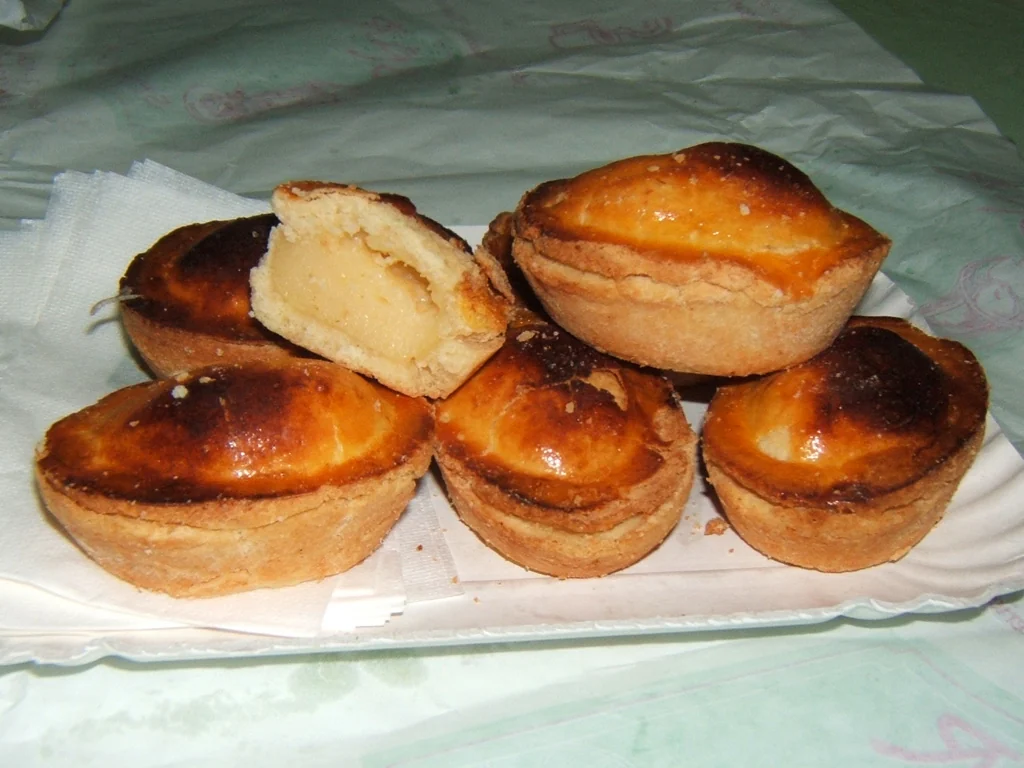
A pastry from the province of Lecce
The Atlas of Apulian traditional food products lists the pasticciotto as a typical Salento sweet, with its area of origin in the province of Lecce, added to the national PAT list in 2004. It describes a shortcrust pastry filled with custard, oval in shape, with a double texture: firm outside and soft inside. It is available all year and sold in pastry shops, traditional stores and supermarkets. Italia.it, in its guide to Lecce, names it among the city's specialities as a much-loved custard-filled shortcrust, and its guide to Salento food itineraries lists it among the region's desserts. The PAT record adds that many variants of this pastry have since been proposed, and that it has helped make Salento cooking known.
Sources: Atlante dei PAT di Puglia — Pasticciotto · Italia.it — Lecce: guide, history and facts · Italia.it — Salento itinerary: traditional dishes
Shortcrust, custard and a little dome
The PAT record lists the ingredients of the reference version. The shortcrust is made with flour, butter or margarine, sugar, egg yolks, raising agent and vanilla, worked into a smooth, even dough. The custard starts with eggs, sugar and vanillin, to which sifted flour and then boiling milk are added; it is cooked to the boil and left to cool. The pastry is pressed against the sides of oval moulds, the custard goes in the centre, a disc of pastry covers it and the two layers are sealed with the thumbs, forming a small dome. Then it is baked. The result, according to the record, is a pastry firm outside and soft inside: this contrast, more than any decoration, is what to look for when tasting, along with a smooth custard and a pastry that does not crumble at the first bite.
The Galatina legend and the documents
The most popular story, also reported in the PAT record, places its birth in 1745 in Galatina, in the Ascalone family's shop, during the feast of Saint Paul, protector of the tarantate: Nicola Ascalone supposedly used leftover pastry and custard for a small tart baked in a copper dish, which he called pasticcio. The record, however, separates the documented facts: the custard recipe was probably adopted in the Salento in the late 19th century and spread most widely among artisans from the economic boom onward. The record explicitly calls the 1745 version legend and tradition, and its bibliography lists cookery treatises such as Il Cuoco Galante and Lo Scalco alla Moderna. Italia.it simply says the pastry was born in a pastry shop in central Galatina.
Sources: Atlante dei PAT di Puglia — Pasticciotto · Italia.it — Galatina
Protection: PAT, a collective mark and a dedicated day
The pasticciotto has no PDO or PGI: its institutional recognition is its listing among traditional food products, which the Ministry of Agriculture collects in a national list updated every year on the regions' recommendation. The Apulian record adds other tools. The Municipality of Galatina recognised it as a municipal-designation product, De.Co., despite the dispute with Lecce over its origin. In 2007 the collective mark Dolce in Salento was registered, promoted by the Salento pastry makers' association of Confartigianato Lecce, guaranteeing traditional ingredients in artisan production. In June 2020 Pasticciotto Day was created to celebrate the restart of business activity in the Salento; in 2021 it was repeated with participants from outside the region and abroad. The record mentions no later editions.
Sources: Atlante dei PAT di Puglia — Pasticciotto · Masaf — Aggiornamento dell'elenco nazionale dei prodotti agroalimentari tradizionali (2025)
The different twin: the fruttone
Alongside the pasticciotto, Lecce's shop windows hold the fruttone, a PAT since 2001 and also from the province of Lecce. The record calls it the pasticciotto's different twin: the same shortcrust of flour, sugar, butter or margarine, yolks and vanillin, but filled with almond paste and pear, apricot or quince jam, closed in a dome and baked at 180 degrees for fifteen to twenty minutes in metal cases. Once cool it is glazed with dark chocolate. It is said to derive from the barchiglia, a round cake; some trace it too to the first half of the 18th century, first reserved for noble tables and then popularised by cafés and pastry shops. The fruttone is also covered by the Dolce in Salento mark. The record also explains the name: fruttone comes from frutto, fruit, because the fruit of the jam is the main ingredient, with a suffix that intensifies the trait; in the Salento the word is attested in the mid-20th century, when the Lecce writer De Sanctis described it in 1958 as a delicacy of chocolate and jam.
Sources: Atlante dei PAT di Puglia — Fruttone
Galatina: the basilica and the church of Saints Peter and Paul
Italia.it presents Galatina as a little Apulian Assisi. The name comes from the Greek gala, milk, for its fertile pastures; in the Middle Ages it hosted a Greek community and reached its peak in the 14th and 15th centuries, when it was enlarged and walled. Its jewel is the Franciscan basilica of Santa Caterina d'Alessandria, from 1384, with three naves covered in mostly 15th-century frescoes: the Apocalypse, the Seven Sacraments, Genesis, the life of Christ, stories of the Virgin and, in the presbytery, of Saint Catherine, plus a 15th-century octagonal chapel. Nearby stands the Mother Church of Saints Peter and Paul, rebuilt in the 18th century in Lecce Baroque: Paul is the saint the pasticciotto legend links to the feast of the tarantate. In the centre, the same guide says, is the pastry shop where the sweet was supposedly born.
Sources: Italia.it — Galatina · Atlante dei PAT di Puglia — Pasticciotto
Lecce: Baroque and coffee with almond milk
In Lecce the pasticciotto is part of a wider ritual. Italia.it's city guide recommends Lecce-style coffee for the morning, espresso or moka served over ice with almond milk, and alongside the pasticciotto mentions the rustico, two puff-pastry discs filled with béchamel, tomato, fior di latte and pepper. The historic centre is described as stunning Baroque, full of 17th-century buildings in honey-coloured Lecce stone. The Basilica of Santa Croce, on Via Umberto I, is named as the city's first Baroque building, with its façade rose window and sixteen altars; Piazza del Duomo is the centre's theatrical heart, and Piazza Sant'Oronzo bears the patron saint's name. Among the historic sites the guide also lists the Roman amphitheatre and the castle of Charles V.
Sources: Italia.it — Lecce: guide, history and facts · Italia.it — Lecce
How and when to taste it
The right time is the morning, at the counter of a café-pastry shop, when batches come out continuously: ask whether there is one just out of the oven, because when warm the custard and pastry blend better. Eat it with your hands in a few bites, ideally with a Lecce iced coffee in summer or a plain espresso in other months. A good exercise is to try one in Lecce and one in Galatina on the same day, comparing pastry, custard and dome: the comparison makes the rivalry concrete. Avoid sweet wine, which smothers it; water or unsweetened coffee is better. The richer fruttone suits the afternoon. In a group, a mixed tray of pasticciotti, fruttoni and seasonal variants lets everyone taste without overdoing it.
Taking it home, and festivals
The custard pasticciotto is a fresh pastry: it lasts a few hours in a pastry box but not a long journey without cooling, and we would not recommend it as a suitcase gift. The glazed, drier fruttone travels a little better. If you want to take the sweet Salento home, choose dry products from the same pastry shops, or make pasticciotti yourself from the PAT record: above all you need oval moulds and patience sealing the dome. We give no festival dates: the Pasticciotto Day documented in the record concerns 2020 and 2021, and we found no stable calendar on official sources. In Galatina the feast of Saints Peter and Paul is the traditional reference linked to the legend; programme and dates must be checked each year with the town.
A thread for your journey
Journey idea: breakfast in Lecce with a pasticciotto and almond-milk coffee, a morning between Santa Croce and Piazza del Duomo, then on to Galatina for the frescoes of Santa Caterina d'Alessandria and a second pasticciotto to compare; in the afternoon, return through the villages of the Grecìa Salentina. Any pastry-shop workshop to be arranged with operators.
Talk to us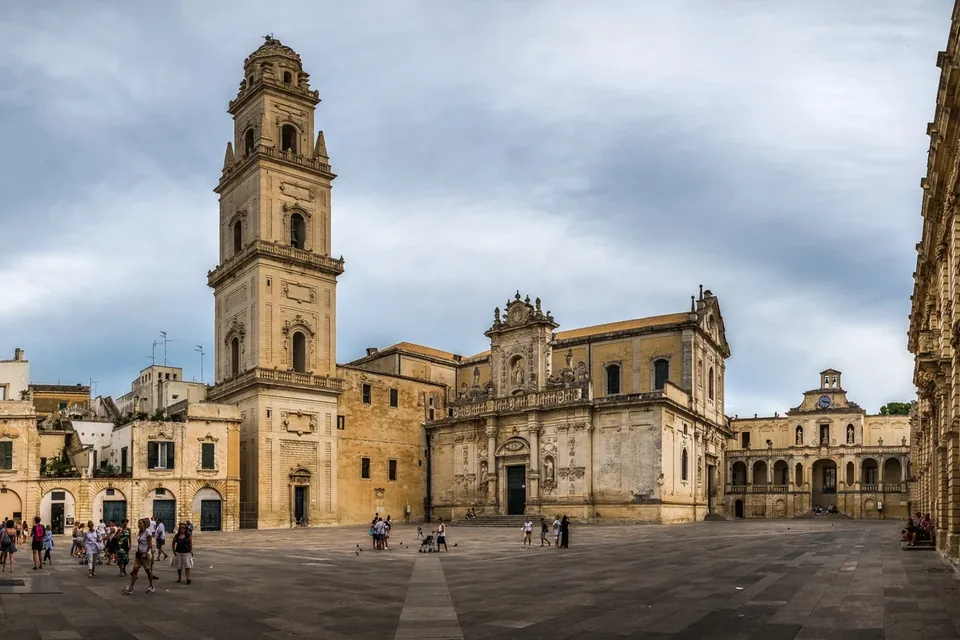

.jpeg)

