
Why go
Sternatia, Chóra in Griko, is the village of the Grecìa Salentina where the Greek-origin language is most alive: the national tourism portal names it as the place with the highest proportion of Griko speakers. But it is not only about language. The compact, clearly defined historic centre long kept its walls, and beneath its streets runs a network of tunnels and galleries linking many underground olive presses, used until the mid-twentieth century.
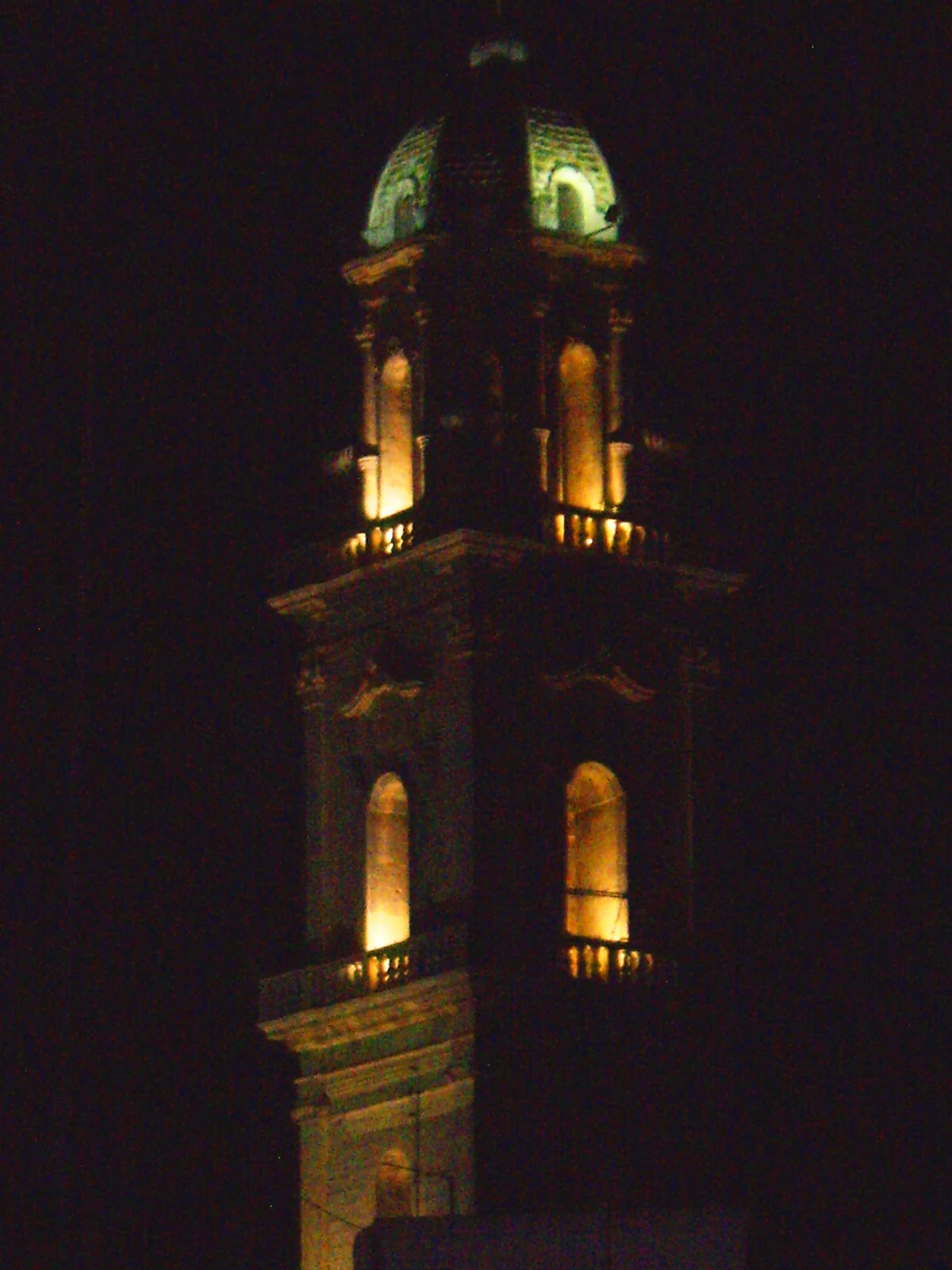
Walking along Via Platea, the village's broad street, you pass sixteenth-century houses with decorated windows, long balconies called mignani, the eighteenth-century mother church with a bell tower visible for kilometres and, at the end, Porta Filìa, the last gate of the walls, which the municipality calls the soul of the village. In Piazza Castello, Palazzo Granafei glows in golden Lecce stone.
Sternatia is also a stage of the Cammino del Salento, which arrives here from Lecce, and one of the villages hosting the travelling Notte della Taranta festival. It is the right place to understand how language, oil and architecture shaped life in the Grecìa.
Sources: Italia.it — Cammino del Salento in 6 tappe · Comune di Sternatia — Centro storico · Unione dei Comuni della Grecìa Salentina — Sternatia · Fondazione La Notte della Taranta — Festival itinerante
History
The origin of the name is uncertain. According to the Union of Municipalities of the Grecìa Salentina, pottery finds date the first settlement to the Roman imperial period; after the fall of Rome the area passed to the Byzantines and Sternatia became one of the main centres of the Greek-speaking area, with walls, a fortified castle and towers. An important centre of learning was the Basilian abbey of San Zaccaria, where books of the Greek heritage were copied and reproduced.
In 1480 the village was almost razed during the Ottoman invasion, the municipality recalls, which is why older buildings are hard to identify. From the Middle Ages there remain a stretch of the walls, remains of the Byzantine castle between Via Giudèca and Piazza Castello and, outside the walls, the Basilian crypts of San Pietro and San Sebastiano and the chapel of the Holy Trinity. Sixteenth-century rebuilding kept the courtyard house of Greek tradition but laid the village out on two perpendicular axes.
In the sixteenth century the Jesuits were active in Sternatia, sent with Franciscans and Dominicans to replace the Greek rite: the Dominican convent was founded between 1491 and 1513. The eighteenth century brought the mother church of the Assumption, on the site of a Greek church dedicated to Saint George, the bell tower completed in 1790 and Palazzo Granafei.
Sources: Unione dei Comuni della Grecìa Salentina — Sternatia · Comune di Sternatia — Centro storico · Unione dei Comuni della Grecìa Salentina — Cenni storici
What to see
The municipality proposes a walking route starting from Piazza Umberto I, with its 1588 column topped by a cross and decorated with basilisks and angels. You then follow Via Platea: at the start a column inscribed «Virtutis caedit invidia» and dated 1575, the Jesuit house with the IHS monogram, the mother church and its bell tower, a sixteenth-century single-storey house with an underpass and two palazzo-style houses with arched windows. At the end stands Porta Filìa, gate of peace and friendship, the last remnant of the walls.
From here Via Pizzo leads to the entrance of a large underground olive press, among the long balconies called mignani from which women once watched the street; Via Forgia, nicknamed Sciakùddhi after a mischievous sprite, zigzags in a way that may recall the layout before 1480. The chapel of San Giovanni Battista shows on its corner a relief of the basilisk, the village emblem. At the end of Via Giudèca, the old Jewish street, the remains of the Byzantine castle have a Catalan-Durazzo arched doorway and diamond-point rustication.
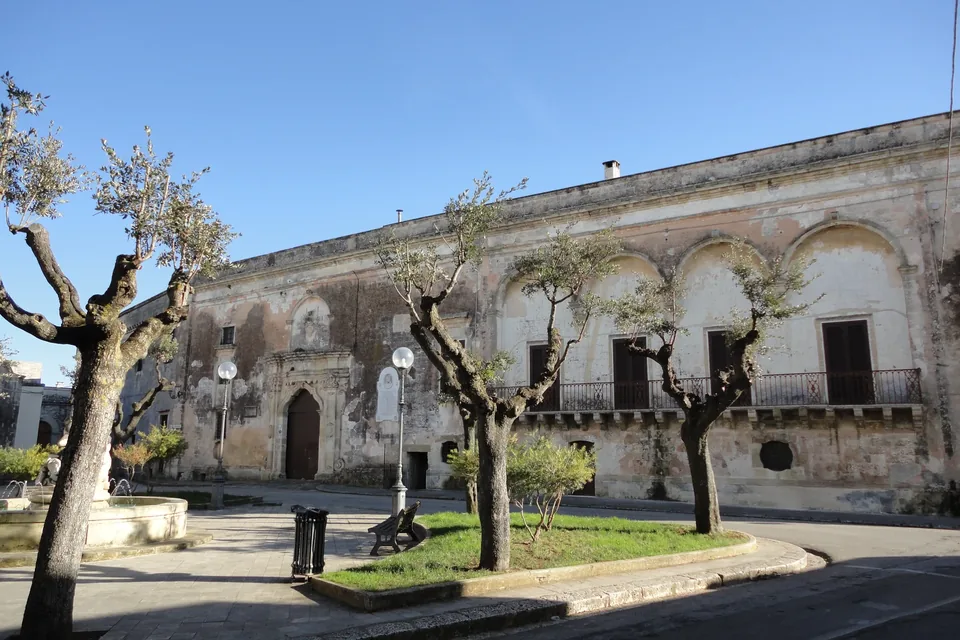
Piazza Castello is dominated by Palazzo Granafei, from the early eighteenth century, with Rococo frescoes on the first floor; grain was once stored here in silos cut into the rock. The restored underground press near Porta Filìa can be visited.
Sources: Comune di Sternatia — Centro storico · Unione dei Comuni della Grecìa Salentina — Sternatia · Comune Sternatia — Frantoio Granafei
Food and wine
Sternatia's underground tells what kept the village alive: olive growing and oil production, used not only for cooking but also for lighting. The municipality describes the underground press near Porta Filìa, formed from two installations later merged, owned by the feudal lords and active until the nineteenth century; in the eighteenth century the Dominican friars built a semi-underground one near their convent. The Ministry of Culture's record describes millstones turned by animals and screw presses of several kinds.
Today the area's oil is part of the Terra d'Otranto PDO, produced across the province of Lecce from Cellina di Nardò and Ogliarola Leccese with olives picked by mid-November.
The cooking of the Grecìa Salentina is built on pulses and garden produce. The Slow Food Foundation protects the dwarf pea of Zollino, grown in the Grecìa villages, eaten only dried and raised without irrigation. Among Salento home dishes, the Atlas of traditional Apulian products lists ciceri e tria, pasta partly boiled and partly fried with chickpeas, for Saint Joseph's feast. In Piazza Castello, the grain silos cut into the rock recall the importance of cereals.
Sources: Comune Sternatia — Frantoio Granafei · Ministero della Cultura — Frantoio ipogeo di Palazzo Granafei · Qualigeo — Terra d'Otranto DOP · Fondazione Slow Food — Piselli tradizionali salentini · Atlante dei PAT di Puglia — Ciciri e tria · Comune di Sternatia — Centro storico
Things to do
Sternatia is the ideal place to approach Griko. The Union of Municipalities of the Grecìa Salentina notes that its inhabitants still speak it and that this language, born and handed down orally, now survives also through writing, study and teaching. Hearing it in the streets or during a festival is an experience few places in Italy can offer.
The Cammino del Salento, described by the national portal, reaches Sternatia at the end of the first stage of the Via dei Borghi, which starts at Porta Napoli in Lecce and passes through San Cesario, San Donato and Galugnano; here the portal points to the fifteenth-century underground olive press. The next stage continues towards Soleto, Galatina and Corigliano d'Otranto, with the de' Monti castle and the tree-of-life mosaic.
In summer Sternatia is one of the Grecìa villages hosting stages of the travelling Notte della Taranta festival, born in 1998 in the squares of the Union and closed each year by the final concert in nearby Melpignano. Visiting the press, walking up Via Platea and passing through Porta Filìa at sunset rounds off the day.
Sources: Unione dei Comuni della Grecìa Salentina — Sternatia · Unione dei Comuni della Grecìa Salentina — Il Griko · Italia.it — Cammino del Salento in 6 tappe · Fondazione La Notte della Taranta — Festival itinerante · Comune di Sternatia — Centro storico
When to go
Sternatia can be visited all year. The historic centre, the presses and the churches do not depend on the season, and the mild months of spring and autumn are the best for the walking route proposed by the municipality and for the stages of the Cammino del Salento that pass through the village.
In summer, the municipality notes, Palazzo Granafei's golden Lecce stone glows in the afternoon sunset light: the best time for Piazza Castello. Summer is also the season of the travelling Notte della Taranta festival, which brings folk music to the squares of the Grecìa Salentina villages, Sternatia included, before the final concert in Melpignano.
Autumn, with the olive harvest that for the Terra d'Otranto PDO must end by 15 November, is the season that best explains the underground presses. Before planning a visit to the press it is wise to check access arrangements with the municipality.
Sources: Comune di Sternatia — Centro storico · Italia.it — Cammino del Salento in 6 tappe · Fondazione La Notte della Taranta — Festival itinerante · Qualigeo — Terra d'Otranto DOP · Comune Sternatia — Frantoio Granafei
Getting there and around
Sternatia is reached from Lecce. Those arriving by train on the national network get off at Lecce station, run by RFI, which offers assistance to passengers with reduced mobility and integrated mobility services such as a bus stop, bike sharing and car rental; from there you continue to the Grecìa Salentina by car or local connections.
Those arriving by air usually land at Brindisi: the airport website lists buses, taxis and car hire for reaching towns in the area. For walkers, the first stage of the Cammino del Salento links Lecce and Sternatia on foot along back roads marked with orange arrows, as the national portal describes.
The historic centre is visited on foot following the municipality's route, from Piazza Umberto I to Porta Filìa and Piazza Castello; the town hall is housed in the former Dominican convent. The Basilian crypts of San Pietro and San Sebastiano and the chapel of the Holy Trinity lie outside the old walls. To visit Martignano, Calimera, Melpignano, Soleto or Corigliano d'Otranto a car or a bicycle is best.
Sources: RFI — Stazione di Lecce · Aeroporti di Puglia — Aeroporto di Brindisi, collegamenti bus · Italia.it — Cammino del Salento in 6 tappe · Comune di Sternatia — Centro storico · Unione dei Comuni della Grecìa Salentina — Sternatia
Where to stay
In the municipality of Sternatia the national database of the Ministry of Tourism lists 25 accommodation businesses with a verified CIN code: 0 hotels, 3 other licensed accommodation and 22 other types such as B&Bs and private rentals.
Licensed businesses from the official list of Regione Puglia, each with a checked national CIN code: matching municipality and category. Private individuals are not listed. Check directly with the property before booking.
MASSERIA CHICCO RIZZO
Farm stay
CIN IT075080B500021930
Sources: Regione Puglia – ARET Pugliapromozione (DMS), CC BY 4.0, 2026-10-12 · Ministero del Turismo – Banca Dati Strutture Ricettive (dashboard pubblica), 2026-10-12
YOUR JOURNEY
How to shape a journey here
The town and olive-oil history. The mill is privately owned, so access needs arranging before a visit.
Talk to us about it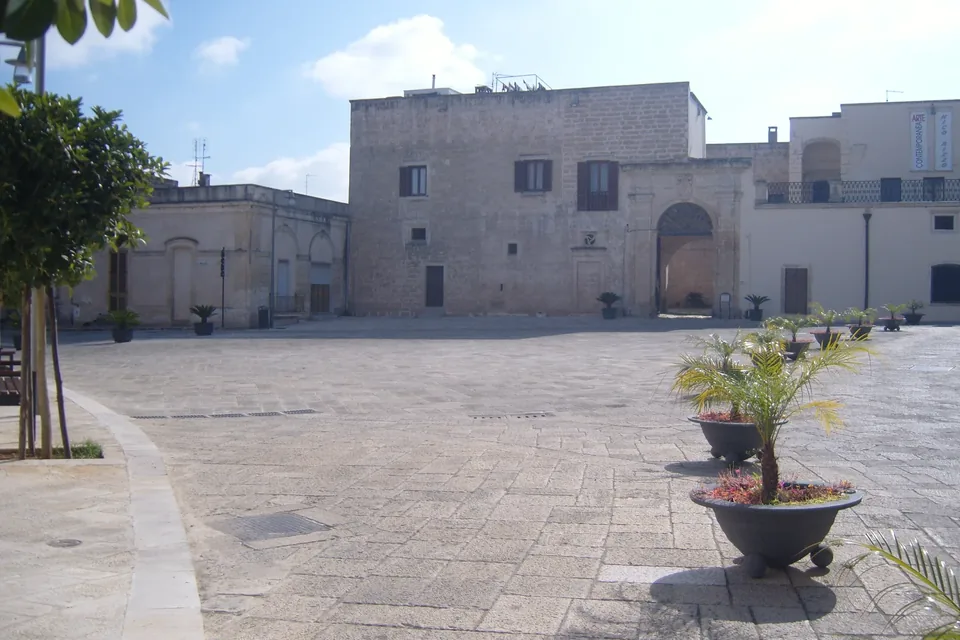

_-_piazza.JPG)

