
APULICA / FRESH PASTA, BREAD AND PASTRY
Pasticciotto
PAT · Fresh pasta, bread and pastry · Puglia
In brief
- A pastry from the province of Lecce: an oval shortcrust shell filled with custard, firm outside and soft within. (Atlante dei PAT di Puglia (Regione Puglia, Università di Bari) — Pasticciotto)
- Legend places its birth in Galatina in 1745, but records date the spread of the recipe in Salento to the late nineteenth century. (Atlante dei PAT di Puglia (Regione Puglia, Università di Bari) — Pasticciotto)
- Galatina has recognised it as a municipal designation product (De.Co.). (Atlante dei PAT di Puglia (Regione Puglia, Università di Bari) — Pasticciotto)
- It joined the national list of traditional products in 2004 and is made all year round. (Atlante dei PAT di Puglia (Regione Puglia, Università di Bari) — Pasticciotto)
History and origin
The pasticciotto is the emblematic sweet of the province of Lecce, and its birth has two versions. Legend places it in 1745 in Galatina, in the pastry shop of the Ascalone family, during the feast of Saint Paul, the saint linked to the healing of the "tarantate". Nicola Ascalone is said to have been left with some dough and custard, too little for another cake; he baked them in a small copper mould and out came a little custard tart that he himself called a "pasticcio", a muddle.
Historical documents tell instead that the recipe for the custard pasticciotto took hold in Salento probably at the end of the nineteenth century, and reached its widest spread among craft bakers in the province of Lecce from the economic boom years and through the second half of the twentieth century.
Galatina has recognised it as a product of municipal denomination, De.Co. The pasticciotto has been on the national list of traditional food products since 2004.
Sources: Atlante dei PAT di Puglia (Regione Puglia, Università di Bari) — Pasticciotto · Masaf — Elenco nazionale dei prodotti agroalimentari tradizionali, XXVI revisione (2026)
Area and method of production
The traditional production area is the province of Lecce, where the pasticciotto is made all year round. The recipe described by the regional record has two parts. For the shortcrust pastry the flour is heaped into a well, the fat, butter or margarine, is worked into the centre, and sugar, egg yolks, raising agent and vanilla are added until the dough is smooth and even.
For the custard, eggs, sugar and vanilla are mixed, sifted flour is added a little at a time and then boiling milk; the mixture goes back on the heat and is stirred until it boils, then left to cool.
The pastry is pressed firmly into small oval moulds, filled with custard and closed with a second layer of pastry. The two layers are sealed with the thumbs, forming a small dome in the centre, and the sweet goes into the oven.
Sources: Atlante dei PAT di Puglia (Regione Puglia, Università di Bari) — Pasticciotto
How to recognise it
The pasticciotto is recognised by its oval shape, given by the mould, and by the small dome in the centre that forms when the two layers of pastry are sealed with the thumbs.
Its defining feature is a double texture: firm outside, where the shortcrust acts as a shell, and soft inside, where the custard stays creamy.
Alongside the classic custard version, many variations have appeared over the decades, which the regional record counts as part of the success of the sweet and of Salento cooking. The collective mark "Dolce in Salento", registered in 2007 by the Salento pastry makers' association of Confartigianato Lecce, includes the pasticciotto among the Lecce sweets made with traditional ingredients.
Sources: Atlante dei PAT di Puglia (Regione Puglia, Università di Bari) — Pasticciotto
Where to taste it
The pasticciotto is found throughout the province of Lecce: the regional record lists direct sale at bakeries, traditional and specialist shops and supermarkets. Two towns keep its history.
Galatina, in the heart of Salento, is the town of the Ascalone shop legend and of the feast of Saint Paul, and has given the sweet its De.Co. recognition. Lecce, the provincial capital, lies at the centre of the province where the recipe spread: the national tourism portal describes it for its Roman monuments and its seventeenth-century buildings in honey-coloured Lecce stone, starting with the basilica of Santa Croce, the city's first Baroque building.
Since 2020 "Pasticciotto Day", created in June to mark the restart of activity in Salento, has involved bakeries in the area and in other regions too.
Sources: Atlante dei PAT di Puglia (Regione Puglia, Università di Bari) — Pasticciotto · Italia.it (Ministero del Turismo) — Lecce
Protection
- Traditional agri-food product (PAT) — Puglia, n. 263, 26th revision (Masaf — Elenco nazionale dei prodotti agroalimentari tradizionali, XXVI revisione (2026))
When
- Production: all year round (Atlante dei PAT di Puglia (Regione Puglia, Università di Bari) — Pasticciotto)
Where
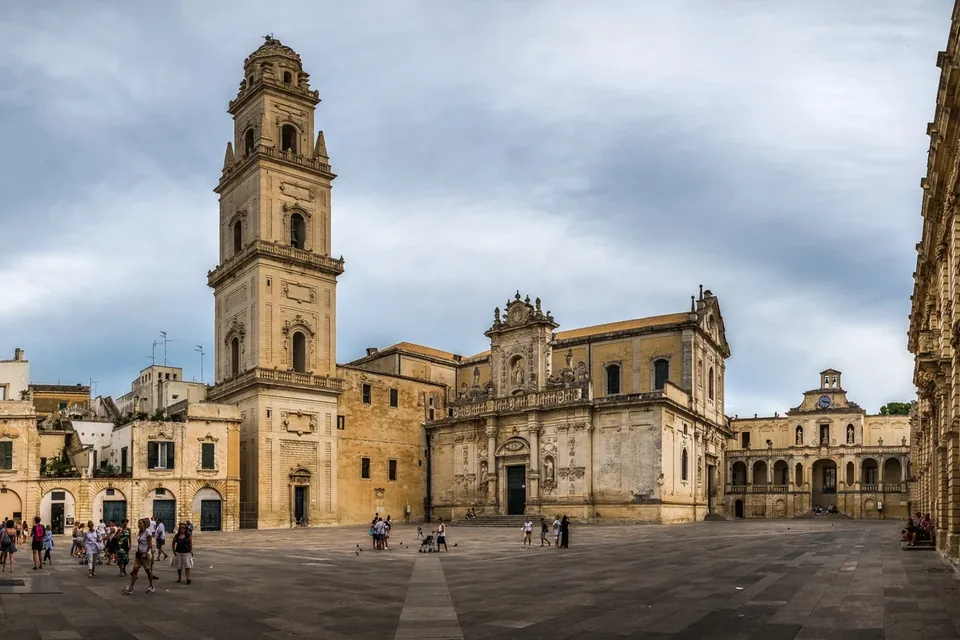
Lecce
Baroque architecture, papier-mâché and Salento food: a city of telling details.
Read the guide →Photo: Giuseppe Milo / Wikimedia Commons — CC BY 3.0 · Resized and converted to WebP.
.jpeg)
Read more
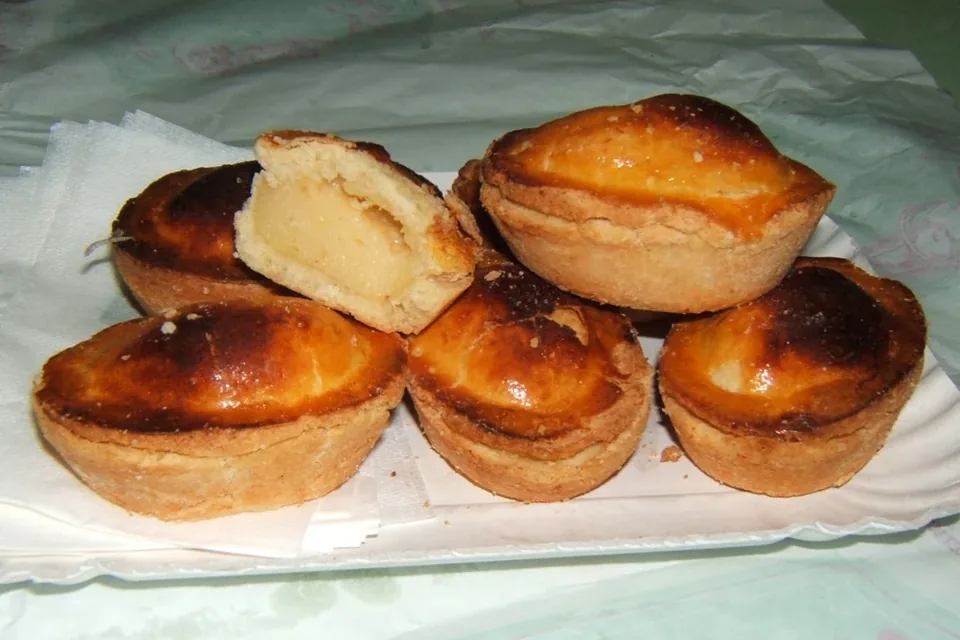
Pasticciotto from Lecce
The Salento breakfast pastry: how it is made, what the records say about its history, its twin the fruttone and a day between Lecce and Galatina.
Read the guide →Photo: Floriano Calcagnile / Wikimedia Commons — CC BY-SA 3.0 · Resized and converted to WebP.
