
The Bari area: bakery, pasta and tiella
Italia.it, in its guide to Puglian flavours, associates the Bari area with focaccia topped with tomatoes, salt, oregano and olives, along with panzerotto and spaghetti all’assassina. It also mentions the Bari-style tiella, which bakes rice, potatoes and mussels together, and raw seafood, including small cuttlefish known as “allievi”.
The same guide names orecchiette as the region’s most distinctive pasta shape, at its best with turnip tops. These are three different ways into local cooking: baked doughs, fresh pasta and seafood, which in Bari sit within a short walk of each other.
Italia.it also suggests where to look for them: bakeries in the old centres, dairies and wineries, but also agriturismi and masserie for home cooking tied to the seasons, and the trabucchi, old fishing structures now used to serve fresh fish. For travellers it is an invitation to choose the place according to the dish, not the other way round.
Sources: Italia.it — La Puglia dei sapori
Salento changes the accent
In the same guide, Salento appears with different dishes, from land to sea: rustico leccese, Gallipoli’s scapece and the quatàra of Porto Cesareo. Linking them to Lecce, Gallipoli and the Ionian coast respectively helps build a food route that changes with each stop.
Italia.it also dwells on Salento’s sweets and their names. The pasticciotto is shortcrust pastry filled with custard; it becomes a fruttone when filled with almond paste and quince jam and covered in chocolate. In Bisceglie, further north, sospiri are small sponge cakes filled with cream and topped with icing.
Finally, the guide notes that many dishes have local names that change from one area to another: gnummariddo, a roll of liver and offal for grilling, is called turcineddo in the Itria Valley. For travellers, learning two or three of these names is a simple way to read a menu and understand what is on the plate, and often starts a conversation with the cook.
Sources: Italia.it — La Puglia dei sapori
A bakery in central Bari
Panificio Adriatico stands at Via Nicola de Giosa 113 in Bari’s Murat district. Its website describes focaccia made with flour and remilled durum-wheat semolina, sourdough, tomato, olives, oregano and extra-virgin oil; it also presents bread, taralli and friselle. Reference checked on 2026-10-06: a concrete stop for comparing baked products, without treating one portion as a lunch price.
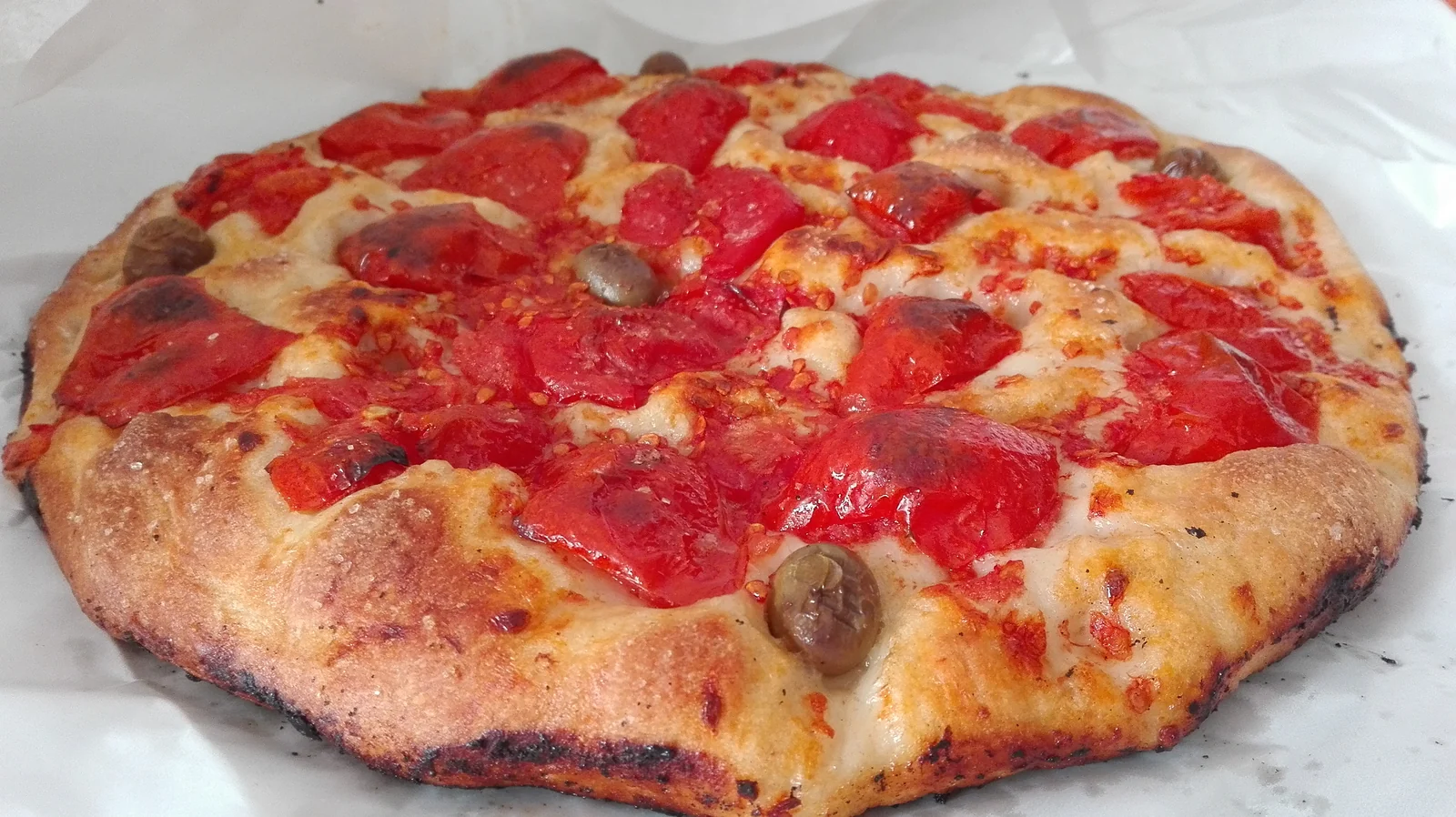
Bari focaccia
Puglia’s atlas of traditional foods describes Bari focaccia as a round of about thirty centimetres topped with fresh tomatoes: crisp outside, soft and juicy inside. The profile calls it the Bari snack par excellence, eaten for lunch, for dinner or simply on a whim, often while walking, taking care not to drop the tomatoes.
The very soft dough is spread with oiled hands into a tin without pressing it down, covered with halved cherry tomatoes and left to rise again before baking. Salt and oregano finish the surface.
On its origin the atlas offers a theory linked to the wood-fired oven: focaccia may have been born in Altamura or Laterza as a variation on durum wheat bread, to make use of the very strong heat of a freshly lit oven before it settled to the right temperature for loaves. The name comes from the Latin focus, fire. The profile also mentions a Bari focaccia consortium founded in 2010, which promotes the traditional recipe.
Sources: Atlante dei PAT di Puglia (Regione Puglia, Università di Bari) — Focaccia barese
Panzerotto and tiella
The panzerotto, according to the atlas, is a half-moon of pizza dough filled with mozzarella and tomato, or with variations of meat, turnip tops, ricotta or onion. It is fried but can also be baked, and should be eaten hot but not scalding. The name may come from “panza”, belly, which at some point splits to reveal the filling; the profile dates its origins to the sixteenth century, with the spread of the tomato, and mentions a festival devoted to it in Terlizzi.
The baked dish of potatoes, rice and mussels is instead a dish for the table. The atlas describes it in layers: onions, tomatoes, pecorino, potatoes, rice and mussels opened raw, with garlic and parsley, oil and cold water, then baked until the rice is cooked. It can also be served warm.
The profile lists much written evidence, from a 1967 regional cookbook to Bari cookery books of the 1980s and 1990s, with the dialect names “tiedde” and “réise, patêne e cuozze”. It is one of the commonest dishes in trattorias and agriturismi throughout the region.
Sources: Atlante dei PAT di Puglia (Regione Puglia, Università di Bari) — Panzerotto fritto · Atlante dei PAT di Puglia (Regione Puglia, Università di Bari) — Teglia al forno con patate, riso e cozze
Rustico leccese and Gallipoli scapece
In Salento the atlas records two very different preparations. Rustico leccese is a disc of puff pastry baked with a filling of béchamel, tomato and mozzarella. The profile notes that it does not come from peasant cooking, since puff pastry and béchamel were not common ingredients: it more likely comes from aristocratic households in late eighteenth-century Lecce, and some see it as a local version of the vol-au-vent. Surano dedicates a summer festival to it.
Gallipoli’s scapece is instead a seafood preserve. Small fish such as picarel, sand smelt and young bogue are cleaned and fried in olive oil, then layered with dried, grated durum wheat breadcrumbs in chestnut tubs called “calette”. Vinegar coloured with saffron is poured over the top and slowly seeps through the layers: after one or two days the fish is ready, with its characteristic lemon-yellow colour.
The recipe is handed down by the “scapeciari”, and the linguist Gerhard Rohlfs suggested an Arab origin because of the saffron. It is served at food festivals and patron saint celebrations.
Sources: Atlante dei PAT di Puglia (Regione Puglia, Università di Bari) — Rustico leccese · Atlante dei PAT di Puglia (Regione Puglia, Università di Bari) — Scapece gallipolina
Ciciri e tria, the dish of Saint Joseph
For the province of Lecce the atlas records ciciri e tria, presented as a symbol of Salento cooking and almost as “archaeological gastronomy”. The dish combines, in a wide pan, slowly cooked chickpeas, boiled tria and part of the same pasta fried in oil, the “frizzuli”, which add crunch. Some chickpeas are crushed to form a cream, and it is served with black pepper.
Tria is a kind of thick, sometimes irregular ribbon pasta, made by hand from wholemeal durum wheat flour, often with barley or spelt. It is the traditional dish for 19 March, Saint Joseph’s day, as a Salento saying quoted in the profile recalls.
The atlas also traces the history of the name. Horace, in his Satires, recalled the pleasure of going home to a dish of “lagane” and chickpeas; the word tria may instead come from the Arabic “itriyah” and, further back, from Greek terms for doughs of flour and water. Once a dish of modest families made with local ingredients, today it is found mainly in agriturismi and restaurants.
Sources: Atlante dei PAT di Puglia (Regione Puglia, Università di Bari) — Ciciri e tria
A journey begins at the bakery
In Bari, try focaccia as a pause in its own right, sitting down long enough to look at the piece before moving on. A comparison with a panzerotto at another moment changes the question: from crumb and crust to the relationship between dough and filling. Two small chapters are more interesting than ordering a huge assortment.
For lunch, choose a dish that reveals two elements: the pasta and its accompaniment. First a bite with little sauce, then a complete one, looking at how textures and flavours hold together. Turnip tops suggest a link with the vegetable garden; a rice and mussel tiella opens another, towards the sea.
There is no need to multiply courses: the explanation of one dish can leave more memories than a long menu. Walks between tastings help separate flavours and leave time to look at the city. Noting the local name of what you ate, even in dialect, makes it easier to find again at later stops and to compare versions.
Lecce and Gallipoli change the question
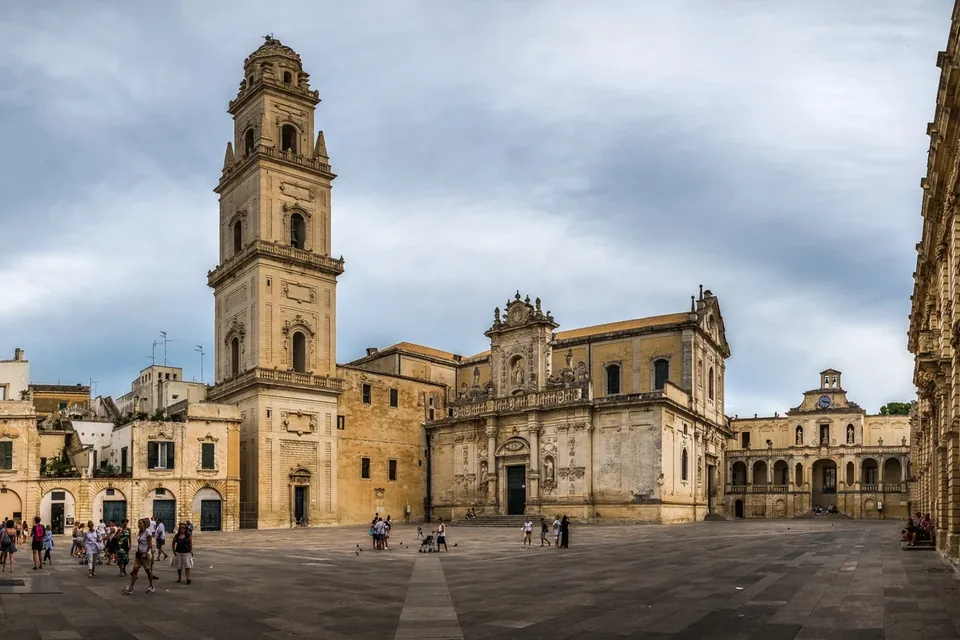
Continuing into Salento, take Lecce as the chapter of rustico and baked sweets. Italia.it describes a city with a Baroque historic centre built of pale golden local stone, with Roman monuments and great seventeenth-century buildings such as the Basilica of Santa Croce. A warm rustico or a pasticciotto can accompany a walk through its squares.
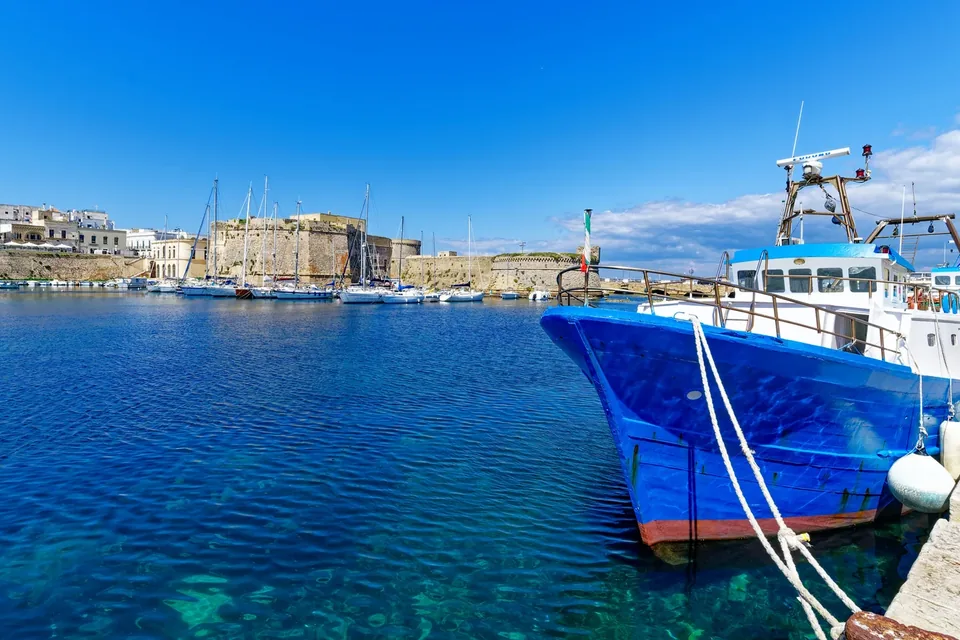
Gallipoli offers the sea chapter instead. Italia.it recalls the historic centre on an island joined by a bridge to the newer town, with the Angevin Castle and the Cathedral of Sant’Agata, and a long coastline. Here scapece, with its saffron yellow, tells of an old way of preserving small fish.
The aim is not to find one recipe that represents every town, but to notice how the journey changes the way you eat. One day can be devoted to a dough and another to a preserve or a seafood dish. To choose the route, start from the traveller’s curiosity: baking, pasta, vegetables or fish, and let the places follow.
Sources: Italia.it (Ministero del Turismo) — Lecce · Italia.it (Ministero del Turismo) — Gallipoli · Atlante dei PAT di Puglia (Regione Puglia, Università di Bari) — Scapece gallipolina
A thread for your journey
Journey idea: Bari, Lecce and Gallipoli as three culinary chapters, without concentrating tastings in one meal. The route connects dough, vegetables and sea while leaving time to explore the places themselves.
Talk to us


.jpeg)
