
APULICA / FISH AND SEAFOOD
Scapece gallipolina
PAT · Fish and seafood · Puglia
In brief
- Small young fish such as picarel, sand smelt and bogue are fried and layered with breadcrumbs in chestnut-wood tubs. (Atlante dei PAT di Puglia — Scapece gallipolina)
- The layers are soaked with vinegar coloured yellow by saffron, and the fish is ready after one or two days of marinating. (Atlante dei PAT di Puglia — Scapece gallipolina)
- Its stated area of origin is Gallipoli; it has been on the national list since 2001, under its current name since 2002. (Atlante dei PAT di Puglia — Scapece gallipolina · Masaf — Elenco nazionale dei prodotti agroalimentari tradizionali, XXVI revisione (2026))
History and origin
Gallipoli and the sea are inseparable. The old town stands on an island linked to the mainland, and the Pro Loco recalls that its Ionian landing place was for centuries a hub of fishing, seafaring and trade: the Greek name Kallipolis means "beautiful city". Nets drying in the sun and colourful boats in the harbour still speak of crafts handed down through generations.
Scapece was born in this world of fishermen, a recipe kept by the scapeciari, as its makers are called in Gallipoli, and handed down from generation to generation. According to some scholars, including the German linguist Gerhard Rohlfs, the dish may have Arab origins, as the use of saffron suggests.
Scapece has been on the national list of traditional food products since 2001, when it appeared simply as "scapece"; since 2002 it has been listed under its current name, scapece gallipolina. Its traditional character, the regional profile explains, lies in the local origin of the fish, its distinctive taste and a recipe handed down with skill.
Sources: Pro Loco Gallipoli — Cenni storici · Pro Loco Gallipoli — Arti marinaresche · Italia.it — Gallipoli · Atlante dei PAT di Puglia — Scapece gallipolina · Masaf — Elenco nazionale dei prodotti agroalimentari tradizionali, XXVI revisione (2026)
Area and method of production
The fish used are young and small, between 2 and 10 centimetres: picarel, male and female, garizzi, sand smelt and small bogue, mostly oily fish. The fish is sorted, cleaned of seaweed and impurities, gutted, washed and fried in plenty of olive oil.
The fried fish is laid in calette, chestnut-wood tubs with a tap at the bottom for draining, alternating the layers with breadcrumbs. The bread is durum wheat, left to dry until it turns yellowish and then grated. The last layer is always bread.
Then the vinegar is poured in and seeps slowly down to the lower layers. The vinegar is prepared beforehand: it is mixed with flour and left to settle until clear, while saffron threads are steeped separately, in a quantity that dyes it a bright lemon yellow. The tub is covered and after one or two days of marinating the scapece is ready. It must be kept in the fridge.
How to recognise it
Scapece gallipolina is recognisable at a glance by its lemon-yellow colour, given by the saffron that tints the vinegar and the breadcrumbs. In the tub you can see the alternating layers of small fried fish and breadcrumbs, compact and moist with marinade.
The taste combines fried oily fish with the sharpness of vinegar and the scent of saffron, with the bread soaking up and binding everything. When it is served, the fish may be sprinkled with a little fresh vinegar to liven up the flavour.
The regional profile says it is made all year round. It is a Gallipoli speciality, tied to its home town even in its name, and is recognised precisely by this combination of colour, layers and marinade.
In the kitchen
Scapece is eaten just as it is, taken from the tub with its bread and marinade, and is one of the most characteristic flavours of Gallipoli's festivals. The regional profile notes that it is prepared and served at many food festivals and patron saint feasts, as well as in restaurants.
Alongside it, Gallipoli's seafood cooking has another signature dish, also listed among Puglia's traditional products: fish soup alla gallipolitana. It is made with soup fish such as scorpionfish, stargazer, wrasse and gurnard, with cuttlefish, mussels and prawns, tomato, onion, garlic, white wine and extra virgin olive oil; the fish are added from the firmest to the most tender. What sets it apart is, as with scapece, vinegar: a final splash that freshens the taste. It is served on slices of toasted bread.
Among the specialities enjoyed at the town's summer festivals, the municipality also mentions mixed fried fish, grilled cuttlefish and octopus cooked in the pignata.
Sources: Atlante dei PAT di Puglia — Scapece gallipolina · PAT Puglia — Zuppa di pesce alla gallipolitana · Comune di Gallipoli — Feste patronali
Where to taste it
The home of scapece is Gallipoli, the "Pearl of the Ionian". The old town, on its island ringed by fortifications, keeps the Angevin Castle, the Cathedral of Sant'Agata in Lecce Baroque style and many churches a few steps from one another; a masonry bridge links it to the new town. At the harbour at sunset, fishermen return with their nets and prepare the fish for sale, and the brightly painted paranze and gozzi boats can still be seen.
The most typical occasion to taste it is the Feast and Fair of Santa Cristina, the patron saint, which according to the municipality is held from 23 to 25 July: the saint's icon goes out in a sea procession aboard a fishing boat, followed by the fishermen's boats, and the food stalls serve local specialities, scapece among them.
In summer the municipality also lists the Sagra del pesce spada, a festival of the sea in mid-August. Along the coast, from the beaches of Rivabella to Baia Verde, the town offers its sea to those who come to discover it.
Sources: Italia.it — Gallipoli · Pro Loco Gallipoli — Arti marinaresche · Comune di Gallipoli — Feste patronali
Protection
- Traditional agri-food product (PAT) — Puglia, n. 408, 26th revision (Masaf — Elenco nazionale dei prodotti agroalimentari tradizionali, XXVI revisione (2026) · Atlante dei PAT di Puglia — Scapece gallipolina)
When
- Production: all year round (Atlante dei PAT di Puglia — Scapece gallipolina)
Where
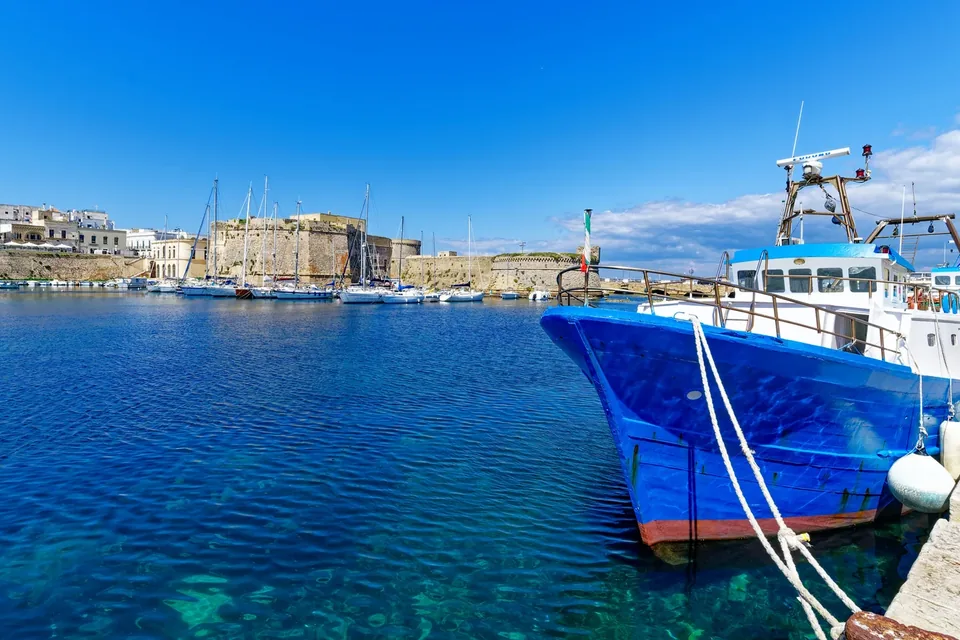
Gallipoli
The bridge, churches and Ionian townscape beyond a beach holiday.
Read the guide →Photo: Holger Uwe Schmitt / Wikimedia Commons — CC BY-SA 4.0 · Resized and converted to WebP.

Read more
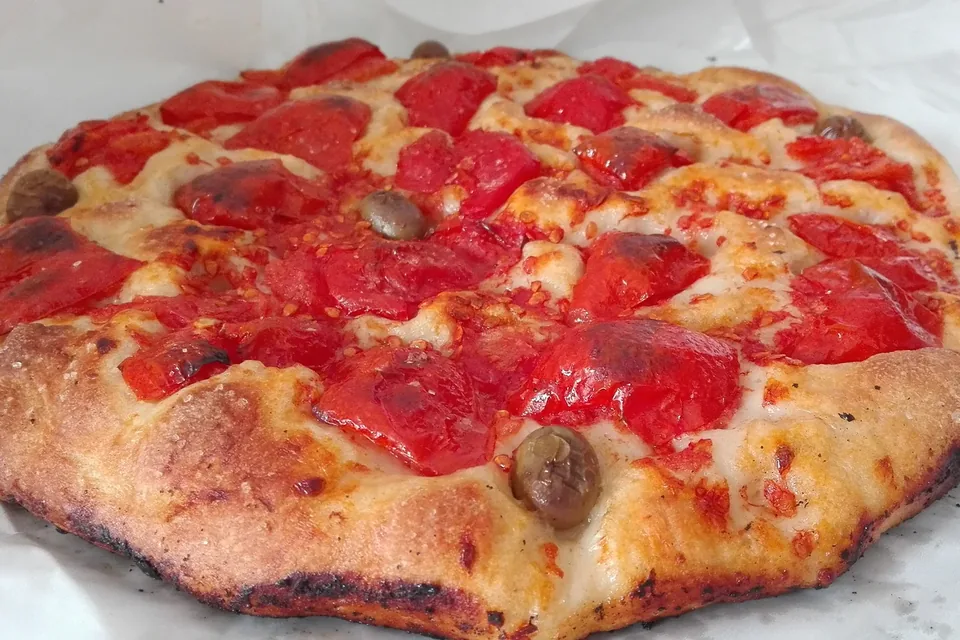
Traditional Puglian dishes
Orecchiette, focaccia, panzerotti, tiella and Salento cooking: connecting dishes with places.
Read the guide →Photo: Elfmir / Wikimedia Commons — CC BY-SA 4.0 · Resized and converted to WebP.

Gallipoli scapece
Gallipoli's fish preserve: small fish, chestnut tubs, saffron and scapece makers; the feast of Santa Cristina, Salento fish soups and the other scapece of the South.
Read the guide →