
APULICA / Food guides
Gallipoli scapece: fried fish, breadcrumbs and saffron vinegar
In Gallipoli scapece is a festival and street food: small fried fish, layered with breadcrumbs in wooden tubs and soaked in saffron vinegar, which turns them a deep lemon yellow. It is bought from stalls at patron saint feasts and in specialist shops, served by the spoonful. It has been a recognised traditional food product since 2001 and has an Apulian relative on the Gargano, the scapece of Lesina. This guide explains the recipe according to the Apulian Atlas, its place in the feast of Santa Cristina and the fish soups of the same coast.
Small fish, humble species
The Atlas of Apulian traditional products has listed Gallipoli scapece as a PAT since 2001, with Gallipoli as its area of origin; on first listing it appeared simply as scapece, and since 2002 it has carried its current name. It uses young fish two to ten centimetres long, of oily and mixed species: picarel, pupigddrhu in dialect, with males called masculari and females fimminegddrhe; garizzo; sand smelt, known as minocia or trenula; and small bogue, called ope. The fish is sorted, cleaned of seaweed and impurities, gutted, washed and fried in plenty of olive oil. The record ties the product's traditional status to local raw material, to taste and to a recipe handed down through generations by the scapeciari, the artisans who make it.
Chestnut tubs and saffron vinegar
The PAT record describes the preparation. The bread is hulled durum wheat, dried and grated, taking on a yellowish tint. The vinegar is prepared in advance: it is mixed with type 00 flour and left to settle until it clears, while saffron stigmas steep in it separately, giving it a deep lemon yellow. The fried fish is placed in the caletta, a chestnut tub with a tap at the bottom to let liquid drain, alternating layers of fish and breadcrumbs; the top layer is bread. The saffron vinegar is poured over and slowly seeps down, the tub is covered and the fish marinates for one or two days. When serving, a little fresh vinegar can revive the flavour. The result is lemon yellow, with layers of fish alternating with crumbs, and must be kept refrigerated.
Saffron, vinegar and an Arab hypothesis
On its origins the PAT record reports the view of some scholars, including the German linguist Gerhard Rohlfs: the presence of saffron would suggest Arab ancestry. It is a hypothesis, and the record presents it as such. What is certain is the role of the two ingredients that set the recipe apart: vinegar, clarified with flour and left to settle, and saffron stigmas steeped in it until it turns a bright lemon yellow. Together they preserve the fried fish and give it the colour that makes it recognisable on festival stalls.
Vinegar also links other Gallipoli seafood recipes. In zuppa di pesce alla gallipolitana, a traditional product of the same town, a final splash of vinegar freshens the flavour, and the Atlas considers it the feature that sets it apart from other red fish soups. The same record presents this soup as a descendant of the ancient Greeks' broth, enriched with tomato in recent centuries.
Finally, the scapece record notes that in 2001 the product was listed simply as scapece and only from 2002 as scapece gallipolina: the town's name has become part of the dish's identity.
Sources: Atlante dei PAT di Puglia — Scapece gallipolina · Atlante dei PAT di Puglia — Zuppa di pesce alla gallipolitana
The other Apulian scapece: Lesina
Scapece is not only from Gallipoli. Within Puglia the Atlas lists the scapece of Lesina, on the Gargano, a traditional product since 2001. Here the fish is eel: hand-selected, cleaned, gutted and rinsed, it is prepared in two ways. In the first it is cut into six-to-eight-centimetre pieces, floured and fried in olive oil; in the second it is roasted whole and only then cut. Either way it is dressed with mint and garlic and kept in glass jars with extra virgin olive oil and vinegar.
The result, according to the record, is light yellowish-brown, firm, with a very distinctive sweet-and-sour taste. Production follows the season: from September to December.
Its history is well documented too. The record notes that tradition links the dish to Emperor Frederick II of Swabia, said to have been very fond of it, as the Liber de coquina, a recipe book dated between 1230 and 1250, records; the church historian Michelangelo Manicone mentions it in the fifth volume of his Fisica Appula, of 1807. Two coasts, two different fish, the same habit of preserving the catch in vinegar.
Santa Cristina: the feast at sea
The PAT record notes that scapece is prepared and served at many festivals and patron saint feasts. In Gallipoli the main occasion is the feast and fair of Santa Cristina, the town's patron, which the Municipality describes as the most important religious event of the year, from 23 to 25 July. The devotion dates back to 1876, when, the faithful believe, the saint freed the town from cholera. At dawn on the first day there are fireworks; in the afternoon the icon travels on a fishing boat around the perimeter of the walls, followed by the fishermen's boats, as Santa Cristina is their protector; then the statue is carried through the streets until evening. In the market area the fair brings together stalls, concerts and shows, and among the food stands the Municipality names scapece itself, a fish dish tied to local tradition.
Sources: Atlante dei PAT di Puglia — Scapece gallipolina · Comune di Gallipoli — Feste patronali
The island town and its fish soups
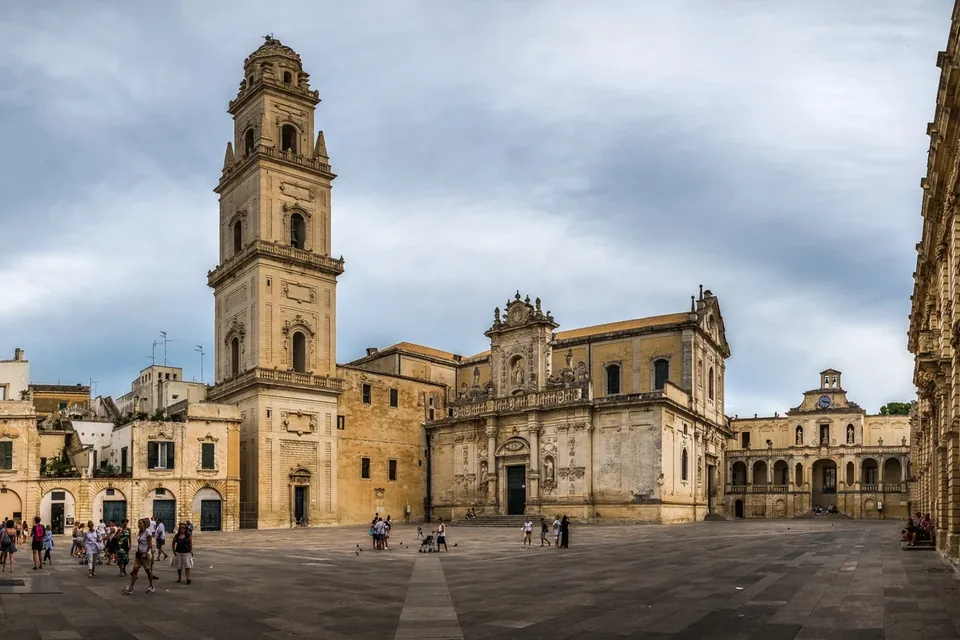
Italia.it describes Gallipoli's historic centre on an island, ringed by Roman and Byzantine fortifications and linked to the new town by a masonry bridge; among the sights it lists the Angevin castle, the Baroque cathedral of Sant'Agata in Lecce style and the church of Santa Maria della Purità. The same coast has other fish recipes recognised by the Atlas. Zuppa di pesce alla gallipolitana, a PAT since 2006, combines scorpionfish, stargazer, wrasse, gurnard, skate, monkfish, grouper, conger, sea bream and pandora with cuttlefish, mussels and prawns in a broth of tomato, onion, garlic and white wine, finished with a splash of vinegar that sets it apart from other red fish soups; it is served on toasted bread. On the same Ionian coast, the quatàra of Porto Cesareo, a PAT since 2009, was the fishermen's soup, cooked aboard in a small copper cauldron with water half from the sea and half from a spring.
Sources: Italia.it — Gallipoli · Atlante dei PAT di Puglia — Zuppa di pesce alla gallipolitana · Atlante dei PAT di Puglia — Quatàra di Porto Cesareo
How to taste it
Scapece has a sharp, assertive taste that not everyone loves at first bite: try a small amount, asking for a portion with both fish and bread, because the crumbs soaked in vinegar and saffron are half the dish. The small fish are eaten whole. The ideal setting is a festival evening, bought by weight at a stall and eaten standing, or as a starter in a fish trattoria before a Gallipoli-style soup. With the vinegar's acidity, choose a fresh Salento white or rosé, or a beer. If you are short of time, a useful comparison is to taste scapece and plain fried fish on the same outing: you immediately see what marinating and saffron add.
Taking it home
Scapece began as a preserve, but the PAT record says it must be refrigerated, so treat it as a fresh product. For a short trip it can travel in a well-sealed container in a cool bag, bought from a specialist shop that states the preparation date; for longer journeys or flights, better to forgo it. The most practical souvenir is a recipe to recreate: with very fresh small fish, dry durum-wheat bread, vinegar and saffron you can try it at home following the record, without forgetting the one-to-two-day marinade. To see it at its best, the date to mark is the feast of Santa Cristina at the end of July, with the programme to be checked every year on the Municipality's website.
A thread for your journey
Journey idea: an afternoon in Gallipoli between the bridge, the Angevin castle and the cathedral of Sant'Agata, with a taste of scapece in an old-town shop and a dinner of Gallipoli-style fish soup; at the end of July the day can coincide with the feast of Santa Cristina, following the Municipality's programme. Any visit to a scapece maker's workshop to be arranged with operators.
Talk to us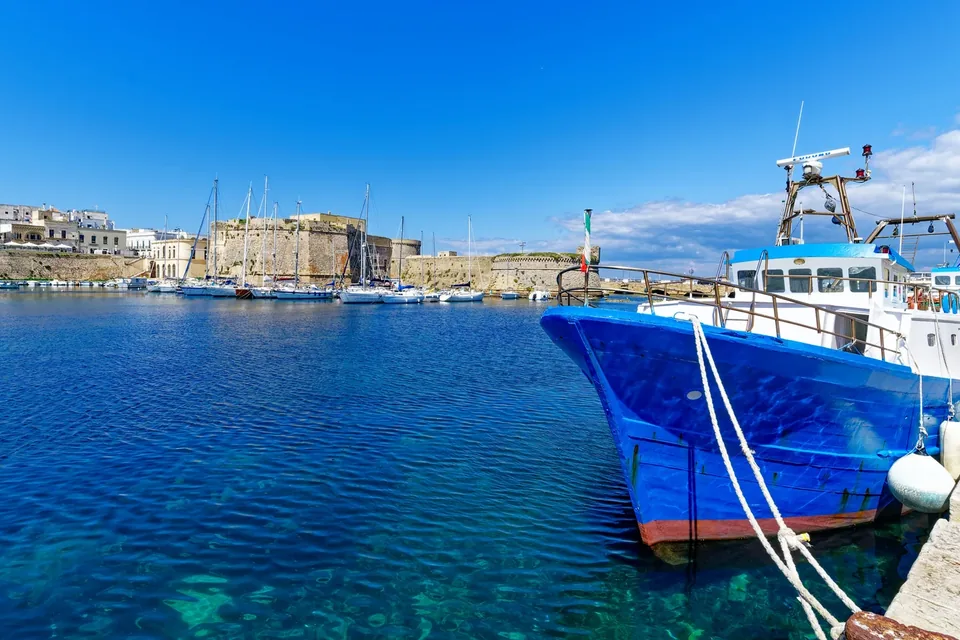

.jpeg)