Why go
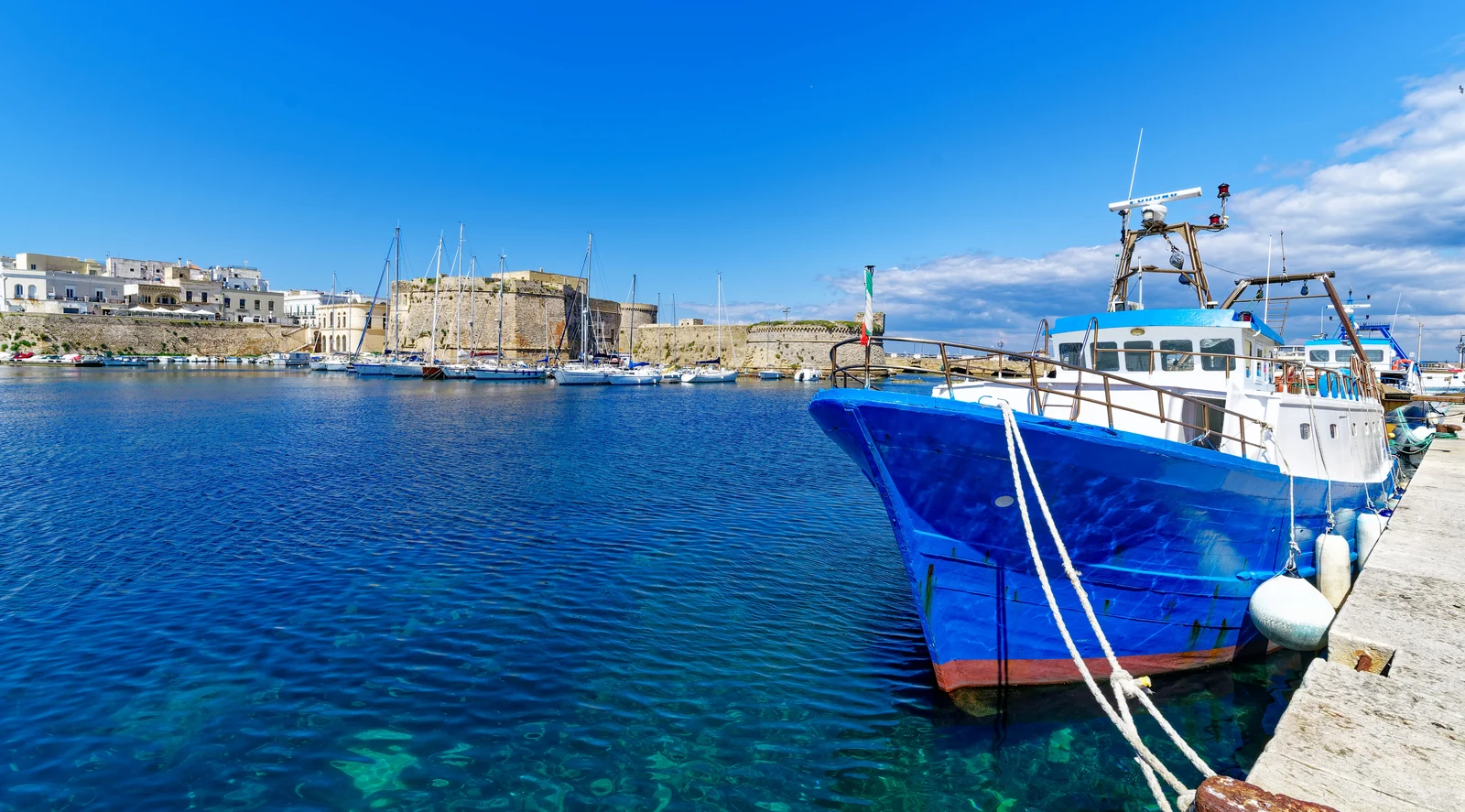
Gallipoli has two souls, as the national tourism portal puts it: on one side the sun, the long Ionian shoreline and the evening life; on the other a historic centre that has lived through many centuries. The old town stands on an island, ringed by fortifications and linked by a masonry bridge to the new town. Crossing that bridge means entering another rhythm, made of lanes, churches a few metres apart, palaces and sea views.
The second reason is the relationship with the sea as work. The Pro Loco describes the maritime crafts still visible in the harbour: nets mended in the sun, fishing boats painted red, blue and yellow, the fishermen's vocabulary of winds and gestures. Beneath the houses, underground olive presses recall that the town's wealth also came from oil.
Finally there is nature: in front of the town, the island of Sant'Andrea and the Punta Pizzo shoreline form a regional nature park, with coastal habitats, Mediterranean scrub and a gull colony that is rare on these coasts. Gallipoli is a seaside destination, but also a town worth visiting out of season.
Sources: Italia.it — Gallipoli · Pro Loco Gallipoli — Arti marinaresche · Comune di Gallipoli — Parco naturale regionale Isola di S. Andrea e litorale di Punta Pizzo · Pro Loco Gallipoli — portale turistico
History
According to the historical notes written for the Pro Loco, the area was inhabited as early as the Neolithic, and for centuries the Messapians prevailed, using the landing place for fishing, trade towards the East and defence. Pliny the Elder records the oldest name, Anxa, meaning narrow, linked to the isthmus later turned into an island. The town became Greek under Archytas of Tarentum in the fourth century BC and took the name Kallipolis, beautiful city.
An ally of Taranto and later of Hannibal, it was punished by Rome and became a Roman municipium, a hub of trade on the eastern routes. Sacked by Vandals and Goths, it passed to the Byzantines, who cut the isthmus and rebuilt the settlement as an island fortress; the Greek-Byzantine rite survived there for centuries, partly thanks to Basilian monks. In 1071 it became part of the Norman domains.
Under the Swabians it received privileges and fortifications; rebellious towards the Angevins, who nevertheless strengthened the castle, it was destroyed in 1284 and its inhabitants took refuge inland for about a century. In later centuries the town grew through the oil trade: a cultural notice from the municipality recalls the production and export of lamp oil and the seafaring culture as features of its identity.
Sources: Pro Loco Gallipoli — Cenni storici · Comune Gallipoli — patrimonio della città, comunicato 2019
What to see
The bridge is the first monument: it links the new town to the island, and just before it stands the sixteenth-century Greek Fountain, decorated with mythological scenes. Beyond the bridge is the Angevin Castle with its round bastions, now open to visitors, overlooking Piazza Imbriani.
At the highest point of the old town stands the Cathedral Basilica of Sant'Agata, in Lecce Baroque style and so rich in paintings that it is compared to a picture gallery. Among the churches not to miss, the national portal lists Santa Maria della Purità and Santa Teresa; along the seafront stand the confraternity churches, such as Santa Maria degli Angeli. The municipality's notice on the town's heritage also mentions San Francesco, a church linked to the fishing community.
The Pro Loco lists the places to visit in the centre: the Emanuele Barba Civic Museum, the Sea Museum and the Sala Coppola in Via Sant'Angelo, the underground olive press of Palazzo Granafei, which shows how oil was worked beneath the houses, and the Diocesan Museum, currently closed. For those who see the sea as culture there is also a centre devoted to maritime culture on the seafront.
Sources: Italia.it — Gallipoli, cosa vedere · Italia.it — Gallipoli · Pro Loco Gallipoli — Musei e luoghi di visita · Comune Gallipoli — patrimonio della città, comunicato 2019
Food and wine
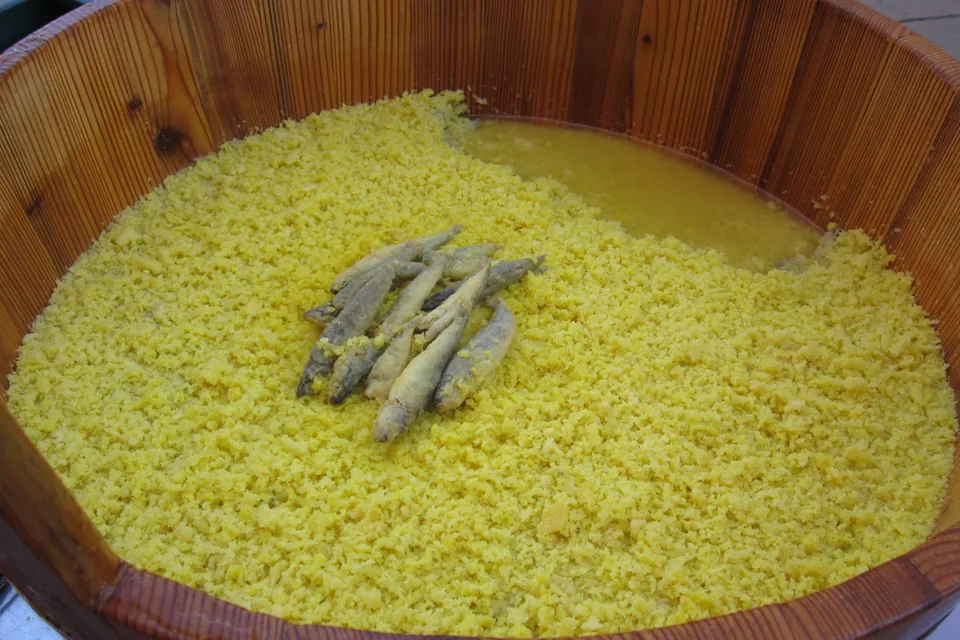
The dish that bears the town's name is scapece gallipolina. The Atlas of traditional Apulian products describes it like this: small young fish such as picarel, sand smelt and bogue are fried and layered with breadcrumbs in chestnut-wood tubs, then soaked in vinegar coloured yellow with saffron and left to marinate for one or two days. It is a preserve born of the sea and of the need to make the catch last, and it has been on the national list of traditional products since 2001.
Fish remains the heart of the town's cooking. The Pro Loco describes the harbour at sunset, when the fishermen come back with their nets and prepare the catch for sale: the best moment to understand what reaches the table and where it comes from.
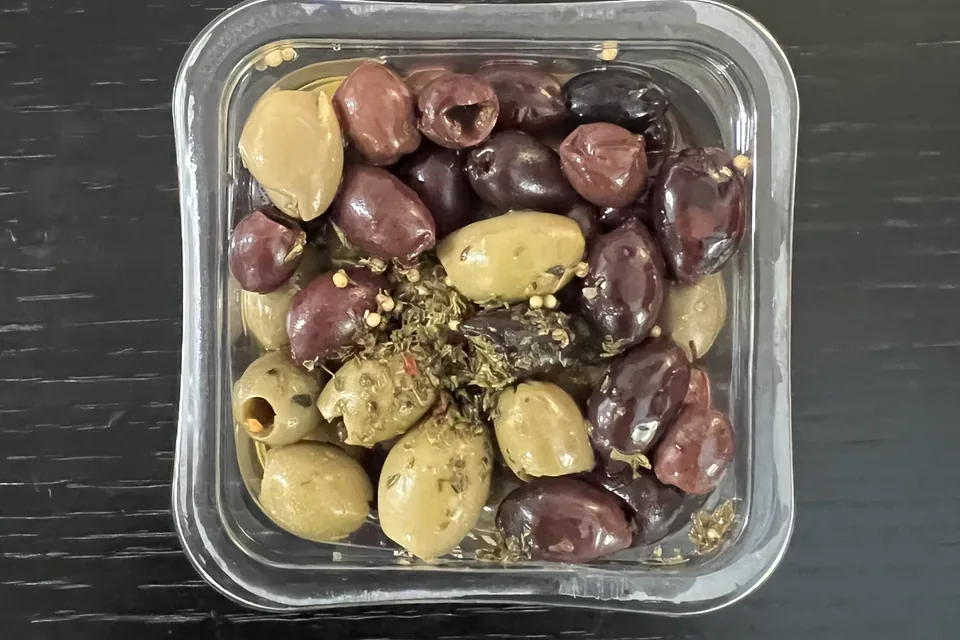
The other thread is oil. For centuries Gallipoli was the shipping port for Salento's oil, and today the area is part of the Terra d'Otranto PDO, the extra virgin oil produced across the province of Lecce from Cellina di Nardò and Ogliarola Leccese. The Pro Loco also lists farms and wineries and the weekly markets, useful for anyone wanting to take local products home.
Sources: Atlante dei PAT di Puglia — Scapece gallipolina · Pro Loco Gallipoli — Arti marinaresche · Qualigeo — Terra d'Otranto DOP · Pro Loco Gallipoli — portale turistico · Comune Gallipoli — patrimonio della città, comunicato 2019
Things to do
Gallipoli's coastline alternates long sandy beaches and stretches of rocky shore. The national portal mentions Lido Conchiglie, Rivabella beach, Lido San Giovanni and Baia Verde, as well as Punta della Suina and Lido Pizzo; the sea changes colour with the light at different hours. Many beach establishments offer sports and, in the evening, music and entertainment.
The Punta Pizzo stretch and the island of Sant'Andrea are protected by the regional nature park established in 2006. The municipality describes a mosaic of Mediterranean scrub, pseudo-steppe and wetlands, with rare orchids, shrubs whose only station in the Salento peninsula is here and, on the island, the only nesting colony of Audouin's gull along Italy's Adriatic and Ionian coasts. It is a place to explore with respect.
The Pro Loco offers boat trips along the coast, excursions and rentals, and a virtual tour of the old town. Those with a car can visit the masserie in the surrounding countryside, old farm estates now partly turned into agriturismi, where local products can often be bought.
Sources: Italia.it — Gallipoli · Italia.it — Gallipoli, cosa vedere · Comune di Gallipoli — Parco naturale regionale Isola di S. Andrea e litorale di Punta Pizzo · Pro Loco Gallipoli — portale turistico
When to go
Summer is the season when Gallipoli welcomes the most visitors, drawn by the sea and the evening life. The national portal stresses, however, that the town is never empty even outside the beach season, and the Pro Loco presents it as a place to enjoy all year, with Carnival and the Gallipoli Christmas among the off-season events.
Spring and autumn are the best times to explore the old town calmly, step into the cathedral and museums and walk in the Punta Pizzo park, when the scrub is in flower or the heat has eased. In autumn olive-oil work resumes, a historic thread of the town.
The sea's religious feasts are a special occasion: the Pro Loco recalls that fishermen's boats are blessed during the celebrations for Saint Christina and the Madonna del Canneto. Holy Week is also deeply felt, with the Good Friday procession in the old town. Events in Salento, the national portal notes, peak in summer with the Notte della Taranta festival.
Sources: Italia.it — Gallipoli · Pro Loco Gallipoli — portale turistico · Pro Loco Gallipoli — Arti marinaresche · Italia.it — Gallipoli, cosa vedere
Getting there and around
On its travel page the Pro Loco gathers the official references for arriving and getting around: urban transport, the municipality's limited-traffic-zone rules, the coach lines between Lecce and Gallipoli and between Lecce and Brindisi airport, and the Salento rail timetable, served by the Ferrovie del Sud Est network.
Those flying in usually land at Brindisi: the airport website lists buses, taxis, car and bike hire for reaching towns in the area, and from Lecce you continue to Gallipoli. Those arriving by train on the national network get off at Lecce station, run by RFI, and continue on regional services or by bus.
In town the old island centre is explored on foot and is governed by a limited-traffic zone: it is best to leave the car in the new town and walk across the bridge. For the beaches along the shore and the Punta Pizzo park you need urban buses, a bicycle or your own vehicle, and the Pro Loco publishes the urban transport references to check before setting out.
Sources: Pro Loco Gallipoli — Muoversi a Gallipoli · Aeroporti di Puglia — Aeroporto di Brindisi, collegamenti bus · RFI — Stazione di Lecce
Where to stay
The Pro Loco organises the accommodation offer by type, covering every need: hotels, bed and breakfasts, apartments, residences, hostels, holiday villages and homes, campsites and camper areas. In the countryside around the town there are also the masserie turned into agriturismi mentioned by the national portal.
Staying in the old town, on the island, puts the cathedral, the castle and the seafront within a few steps and lets you enjoy the town in the evening, when the streets come alive; it is the best choice for those who want to walk everywhere and visit Gallipoli out of season too. The new town is convenient for those arriving by car or bus who want easy access to both the centre and the beaches.
Along the shore, towards Baia Verde and Punta Pizzo, are the places geared to beach holidays, including villages and campsites. The masserie and agriturismi inland suit those with a car who want to alternate the sea with visits to nearby villages and the Grecìa Salentina.
Sources: Pro Loco Gallipoli — portale turistico · Italia.it — Gallipoli, cosa vedere · Italia.it — Gallipoli
Local tourist information
Local tourist offices help with opening times, events and transport on the day.
- Pro Loco Gallipoli · Via Kennedy, 73014 Gallipoli (LE) · +39 0833 264283 · [email protected] · Official website
Source: Pro Loco Gallipoli — portale turistico · Comune di Gallipoli — Siti tematici (Pro Loco) · checked on
Where to stay
In the municipality of Gallipoli the national database of the Ministry of Tourism lists 2348 accommodation businesses with a verified CIN code: 29 hotels, 786 other licensed accommodation and 1533 other types such as B&Bs and private rentals.
Licensed businesses from the official list of accommodation named as the source in this section. Where the list gives it, the property's official identification code appears next to its name: the national CIN code, or the code assigned by the Region or by the body that keeps the list. Private individuals are not listed. This list is the official census of licensed businesses, not a list of Apulica partners: to stay in Gallipoli you do not have to check one property after another yourself; write to Apulica and we look for the stay that suits your journey, checking availability and conditions before any confirmation.
Biancodonda Lifestyle and SPA Hotel
Hotel · ★★★★★
CIN IT075031A100081818
IL GIARDINO DELLA REGINA
Residence
CIN IT075031B400032964
BAIA DI GALLIPOLI
Campsite · ★★★★
CIN IT075031B100021990
AGRICAMPEGGIO @ GLAMPING
Farm stay
CIN IT075031B500052581
ANTICO PALAZZO SPINOLA
B&B
CIN IT075031B400025590
ACQUA MARINA
Guest rooms
CIN IT075031B400126979
ACERI HOUSE
Holiday home
CIN IT075031B400082069
PALAZZO DEL CORSO
Hotel · ★★★★★
CIN IT075031A100022230
MONACELLE
Residence
CIN IT075031B400027119
LA MASSERIA
Campsite · ★★★★
CIN IT075031B100021589
First the places that presented themselves to Apulica, the latest first; then one place of each type in turn, by official category and stars, then by name. No position is paid for.
All 256 entries in alphabetical order
Page 1 of 26
| Name | Type | CIN |
|---|---|---|
| ACERI HOUSE | Holiday home | IT075031B400082069 |
| ACQUA MARINA | Guest rooms | IT075031B400126979 |
| Affittacamere Alli Patuli | Guest rooms | IT075031B400069973 |
| AFFITTACAMERE DUOMO APARTMENT GALLIPOLI | Guest rooms | IT075031B400069737 |
| AFFITTACAMERE LAURA LUXURY ROOM | Guest rooms | IT075031B400069736 |
| AFFITTACAMERE "NONNA CIA" | Guest rooms | IT075031B400077047 |
| AFFITTACAMERE VILLA GINEVRA | Guest rooms | IT075031B400069267 |
| AGRICAMPEGGIO @ GLAMPING | Farm stay | IT075031B500052581 |
| AGRICAMPING PARCO DEGLI ULIVI | Farm stay | IT075031B500023385 |
| AGRITURISMO VIVINATURA | Farm stay | IT075031B500050042 |
Ask Apulica for a stay in Gallipoli We reply shortly, within a few hours at most, with a proposal for you to consider.
Sources: Regione Puglia – ARET Pugliapromozione (DMS), CC BY 4.0, 2026-10-12 · Ministero del Turismo – Banca Dati Strutture Ricettive (dashboard pubblica), 2026-10-12
YOUR JOURNEY
How to shape a journey here
Journey idea: explore Gallipoli and Lecce separately, comparing an island town with a city of carved stone. Leuca can complete the story at the cape, where Salento ends between the Adriatic and the Ionian, giving the landscape a role beyond a day by the sea.
Plan your tripKeep exploring

Sternatia
Grinding stones and presses beneath the town: the Granafei mill and historic centre tell the story of olive oil.
Read the guide →Photo: Freddyballo / Wikimedia Commons — CC BY-SA 3.0 · Resized and converted to WebP.
Lecce
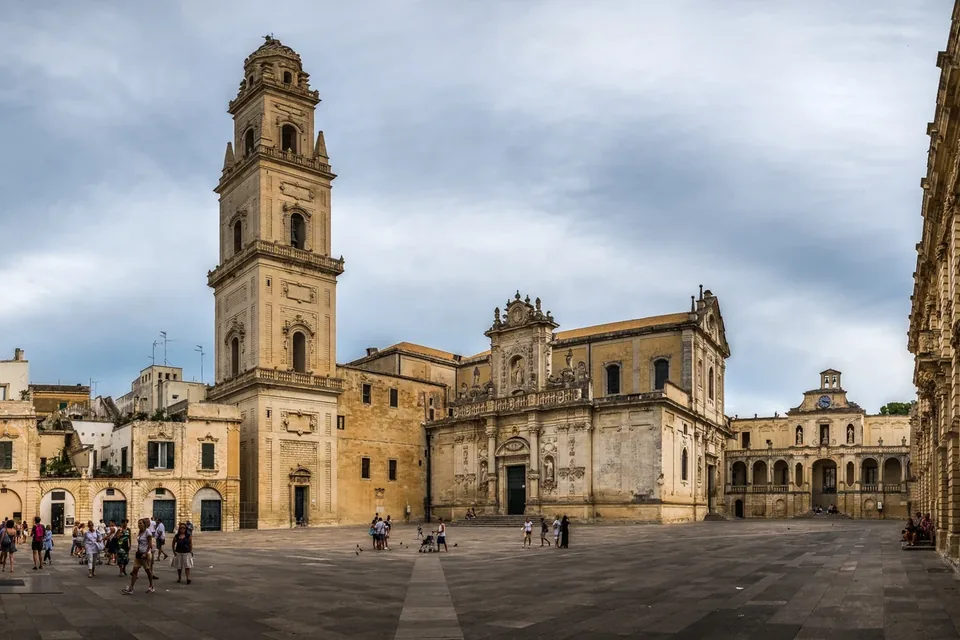
Baroque architecture, papier-mâché and Salento food: a city of telling details.
Read the guide →Photo: Giuseppe Milo / Wikimedia Commons — CC BY 3.0 · Resized and converted to WebP.
Galatina
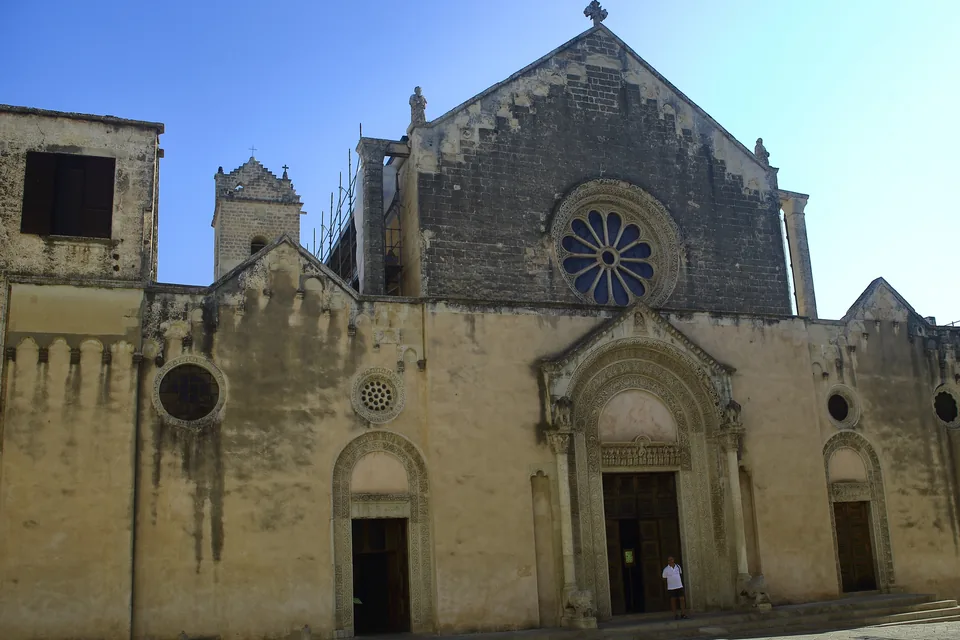
Galatina (LE), Puglia: 25,319 residents, 82.65 km². The official facts of the municipality, its town council website and its registered accommodation. The basilica of Santa Caterina d’Alessandria and its frescoes, the Chiesa Madre of Saints Peter and Paul, the Chapel of Saint Paul and tarantism, the “Galatina” DOC wine and the “Patata novella di Galatina” PDO.
Read the guide →Photo: Eletto Luigi / Wikimedia Commons — CC BY-SA 4.0 · Resized and converted to WebP.
“Come to Gallipoli as a guest, not as a tourist: that is how these places truly let you know them.”