
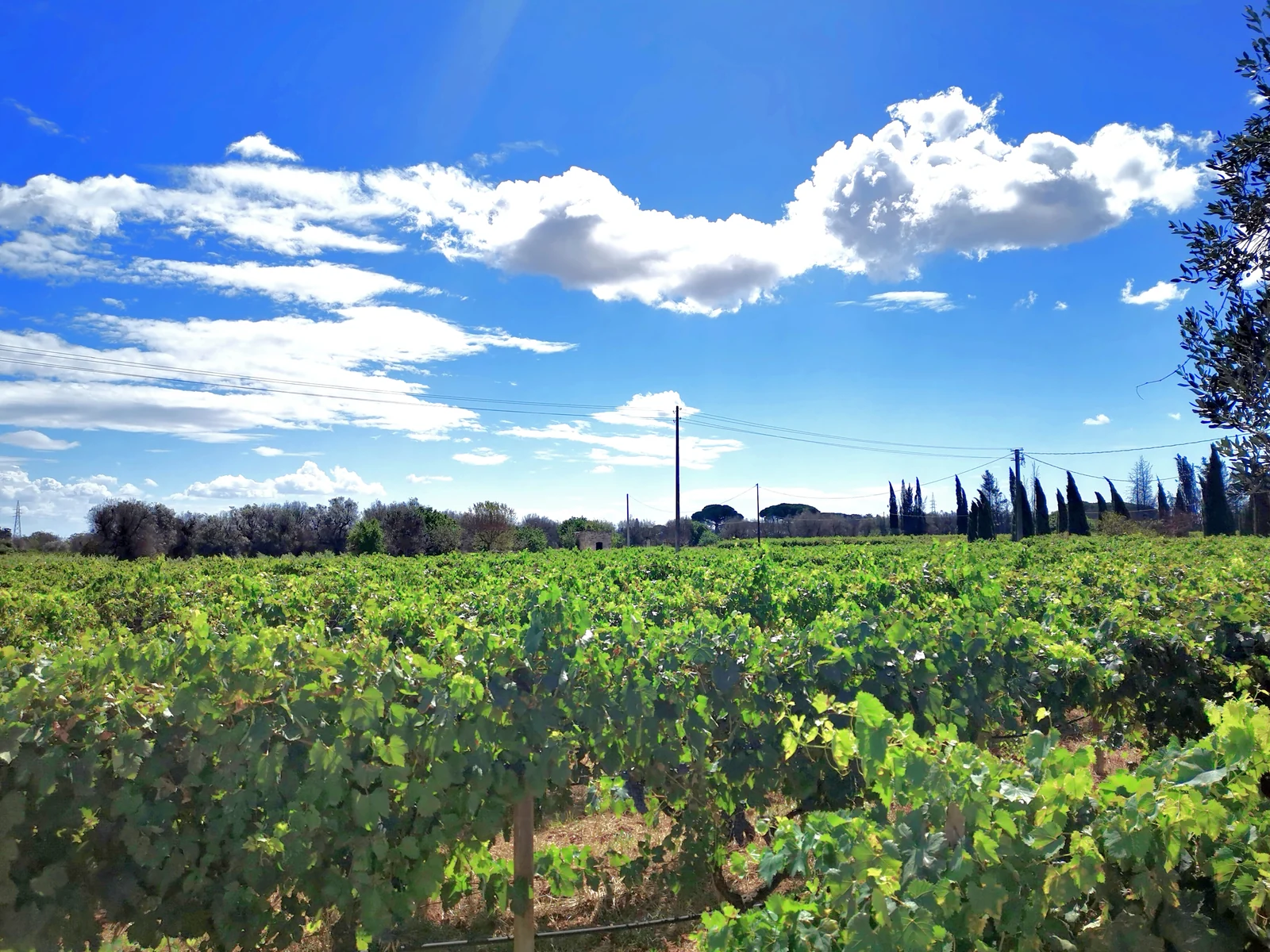
From Primitivo to Negroamaro
The regional guide to flavours, published on the Region’s tourism portal, presents Manduria, in the province of Taranto, as the capital of Primitivo. Its wines are described as dark, rich in tannin and full-bodied; most are dry, but there is also a sweet version, Primitivo di Manduria Dolce Naturale, one of Puglia’s few DOCG wines. The guide also suggests visiting the museum devoted to Primitivo wine culture, to understand the vine’s place in local life.
In Salento the same guide proposes a simple pairing: a dark Negroamaro, perhaps a Salice Salentino, with a bowl of taralli. It also mentions Susumaniello, one of the region’s lesser-known grapes, used for reds, rosés and sparkling rosés and often blended with Negroamaro, with aromas of cherry and raspberry; it can be discovered at wineries in the provinces of Brindisi and Lecce.
For those with a sweet tooth, the guide cites Moscato di Trani, naturally sweet or fortified, to try with almond pastries or stuffed dried figs. It is a first overview showing how many different paths wine takes in Puglia.
Sources: Regione Puglia — Food & Wine
From north to south along the region
The same regional guide proposes a wine itinerary from one end of Puglia to the other. It starts in San Severo, in the Foggia area, where underground cellars dug beneath the town have been used for centuries; here sparkling wines are made from Bombino Bianco and robust reds from Nero di Troia. Not far away, Lucera is linked to Cacc’e Mmitte, a red made mainly from Nero di Troia with Montepulciano and Sangiovese.
Further south, Trani offers its dessert Moscato. Inland, on the Murge, the guide describes vineyards of Nero di Troia, Bombino Nero and Aglianico beside white grapes such as Bombino Bianco, Greco and Malvasia Bianca. Three DOCG wines linked to Castel del Monte come from here: Bombino Nero, Nero di Troia and Rosso Riserva, best enjoyed with a view of Frederick II’s castle.
Further south still lie Manduria and Primitivo, then Negroamaro country in Salento. Following this thread shows how grapes and landscapes change within a few days of travel, without the need to pile up tastings at a single stop.
Sources: Regione Puglia — Food & Wine
Primitivo di Manduria
The protection consortium explains that the name Primitivo comes from its early ripening compared with other grapes in the area. The vine has medium vigour, five-lobed leaves and compact or winged bunches; the berries have thin skins, are sweet when fully ripe and rich in the pigment that gives the wine its deep colour. The wine is described as intense red, purple-tinged when young, with aromas of red fruit and berries over a spicy background, and long persistence.
The designation covers more than five thousand hectares of vineyards in eighteen municipalities across the provinces of Taranto and Brindisi, from Manduria to Sava, from Lizzano to Maruggio, as far as Oria, Erchie and Torre Santa Susanna. The soil ranges from iron-rich red earth with limestone outcrops to the sand of the districts near the sea.
The consortium also stresses the training system: Primitivo is often grown as a bush vine, the oldest form, with low vines spreading on three arms. Sun, wind and sea on the Ionian arc create the microclimate in which this grape expresses its character.
Sources: Consorzio di Tutela del Primitivo di Manduria — Terroir e territorio
Dolce Naturale, a wine apart
The rules for the Primitivo di Manduria Dolce Naturale DOCG, published by the consortium, show how distinctive this wine is. It is made only from Primitivo, grown in the designation’s municipalities between Taranto and Brindisi, trained as Apulian bush vines or on low trellises.
The rules are strict. Only bunches from the first fruiting may be used, excluding the secondary clusters known as “femminelle”. Grapes may be dried on the vine, on racks or in crates, outdoors or in controlled rooms, and must reach a very high natural strength. Enrichment of the must is prohibited, and the wine cannot be released before the first of June of the year following the harvest.
Labels may not carry terms such as “riserva” or “superiore”, while the vintage is compulsory; the mention “vigna” followed by a place name is allowed if the vineyard is registered and vinified separately. For travellers, this is the wine to save for a separate moment, after comparing the dry wines, perhaps with a dry pastry or some nuts.
Sources: Consorzio di Tutela del Primitivo di Manduria — Disciplinare DOCG Dolce Naturale
Salice Salentino and Negroamaro
The regional profile of the Salice Salentino PDO sets out the production area: the whole territory of Salice Salentino, Veglie and Guagnano and part of Campi Salentina, in the province of Lecce, together with San Pancrazio Salentino, San Donaci and part of Cellino San Marco, in the province of Brindisi. The designation covers several types, including Aleatico in sweet and fortified versions.
The protection consortium tells a story going back to ancient Greece, but ties its modern reputation to the 1930s, when a group of growers began to promote Negroamaro and Malvasia Nera. The DOC rules arrived in 1976, the consortium in 2003, and today it represents most of the production chain.
On the territory, the consortium stresses two elements: the red soils and the sea, which tempers the climate, makes coastal soils more savoury and brings winds and scents. It also mentions its commitment to protecting old bush vines. Negroamaro and Malvasia Nera remain the leading grapes, and a glass of Salice is the most direct way to get to know them.
Sources: Regione Puglia — Produzioni di qualità: Salice Salentino DOP · Consorzio di Tutela Vini DOP Salice Salentino — La nostra storia · Consorzio di Tutela Vini DOP Salice Salentino — Territorio
The Murgia side: Gioia del Colle
Gioia del Colle is also wine country. The regional profile of the PDO sets out a wide area in the province of Bari: besides Gioia del Colle, municipalities such as Acquaviva delle Fonti, Casamassima, Castellana Grotte, Conversano, Noci, Putignano, Rutigliano, Sammichele di Bari, Santeramo in Colle and Turi, and part of Altamura.
There are many types. Red and rosé combine Primitivo, around half or a little more, with grapes such as Montepulciano, Sangiovese, Negroamaro and Malvasia Nera; the white is based on Trebbiano. Gioia del Colle Primitivo is made only from Primitivo, with a red colour shading to violet and, with age, to orange, and a full flavour that becomes velvety. Then there is Aleatico, in sweet and fortified versions, with violet glints and a delicate aroma.
For travellers, the link with the inland dairy tradition is natural: Gioia del Colle is also home to a PDO mozzarella. Tasting the local wine on its own first, before looking for a pairing, helps you understand what each brings to the meal.
Sources: Regione Puglia — Gioia del Colle DOP
Choosing samples to understand
For a first tasting, compare a Primitivo and a Negroamaro, then consider a rosé as a third step. Keep perceived fruit, sense of structure and persistence separate: three notes are enough to remember a difference without turning the table into a technical exam.
If you taste a sweet wine, such as a Primitivo Dolce Naturale or an Aleatico, give it a separate moment after the dry wines. The sequence then stays readable and the palate is not confused by sweetness. A glass of water between samples helps.
Always ask the producer where the grapes come from, whether the vines are bush-trained or on trellises, and which vintage you are drinking. These simple questions link the glass to the landscape you have just crossed. The outcome need not be a ranking: it can simply explain which wine you would like with a certain dish or at a certain time of day.
The dish is part of the tasting
To look for a pairing, make two tests: one sip on its own and one after a bite of the same dish. The point is to notice what changes in the perceived flavour, not to declare a perfect match valid for everyone.
Choose a simple preparation, avoiding three sauces or too many seasonings that crowd the comparison: a dish of pulses, a local cheese, taralli or bread. With a structured red you may notice how the tannin changes beside an aged cheese; with a rosé, how freshness accompanies a vegetable dish.
At the end, note which wine you would like to find again with a real dinner, and why. That is a more useful memory than a list of labels, and it helps you choose what to take home. If you are travelling by car, plan the day so that tastings do not coincide with long drives: wine is best enjoyed at leisure, perhaps where you are staying.
Gioia del Colle, Taranto and Lecce
Gioia del Colle, Taranto and Lecce offer different chapters. In Gioia del Colle, the regional museums directorate describes the Norman-Swabian castle, one of Frederick II’s fortresses that best preserves its original layout, with a square courtyard and massive towers, set on the old roads between Bari and Taranto. Since 1977 it has housed the archaeological museum with Peucetian finds from the settlement of Monte Sannace.
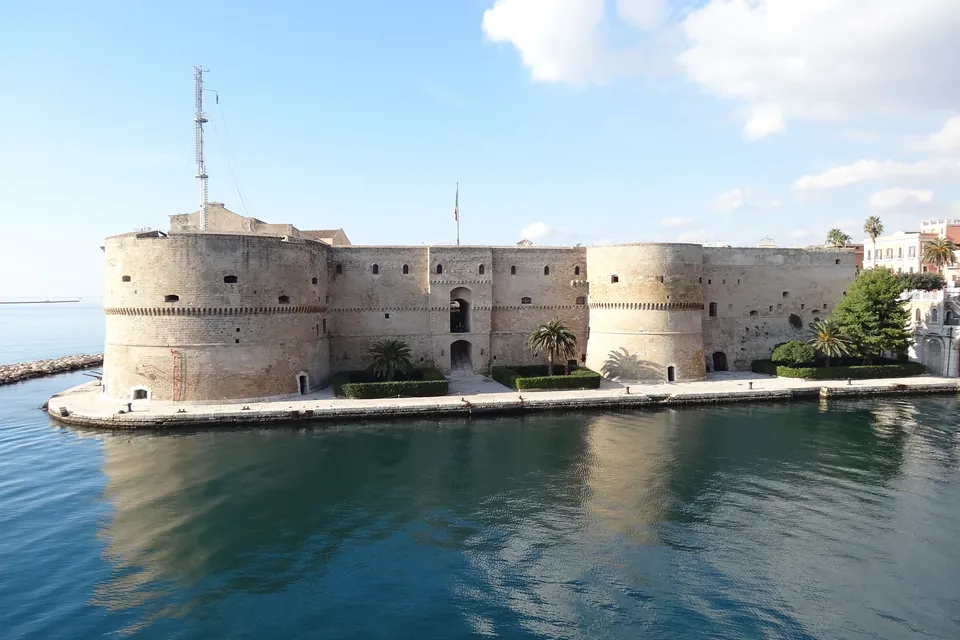
Taranto, according to Italia.it, lies at the innermost point of its gulf and was founded by Spartan colonists; the old town on the island preserves the Doric Temple, the Aragonese Castle and the cathedral of San Cataldo, while the newer town houses MArTA, the national archaeological museum. Primitivo country is close by.
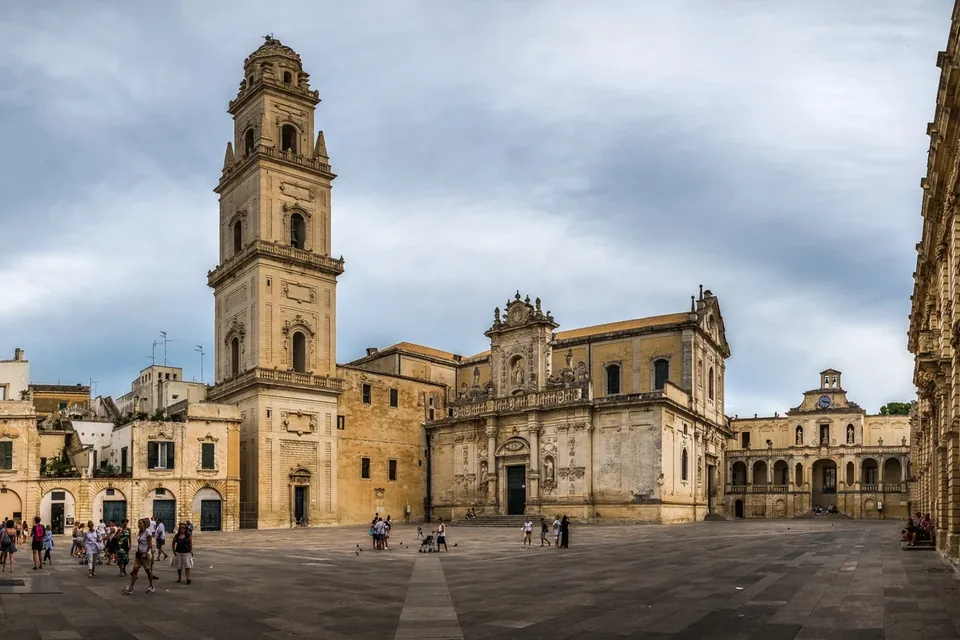
Lecce closes the route in Negroamaro’s Salento, with its Baroque centre of pale stone. Choose the period according to what you want: to discover finished wines, two meals and two towns are enough; if the harvest interests you, the producer’s situation will determine the moment.
Sources: Direzione regionale Musei Puglia (Ministero della Cultura) — Museo archeologico nazionale e Castello di Gioia del Colle · Italia.it (Ministero del Turismo) — Taranto · Italia.it (Ministero del Turismo) — Lecce
A thread for your journey
Journey idea: a Gioia del Colle chapter combining wine and mozzarella, followed by a Salento comparison. Separate moments help retain differences and landscapes; a clear meal anchors the programme rather than a winery marathon.
Talk to us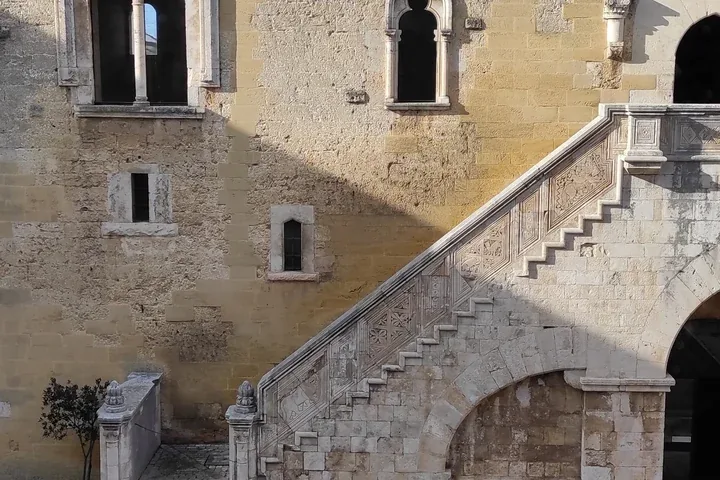


.JPG)
.jpeg)