
APULICA / WINES
Salice Salentino
DOC · Wines · Puglia
In brief
- The area brings together Salice Salentino, Veglie, Guagnano and part of Campi Salentina near Lecce, with San Pancrazio Salentino, Sandonaci and part of Cellino San Marco near Brindisi. (Qualigeo — Salice Salentino DOP)
- The red and rosé are made with at least 75% Negroamaro; the white and the sparkling wine are based on Chardonnay. (Qualigeo — Salice Salentino DOP)
- The red Riserva ages for at least 24 months, six of them in wooden casks. (Qualigeo — Salice Salentino DOP)
History and origin
The consortium traces vine growing in this part of the Salento back to ancient times, as far as the Greek period, and tells the story of Salice Salentino as that of a farming community that handed its vineyards down from generation to generation, starting with the old bush vines.
As early as the 1930s a group of local growers began to make the wines from Negroamaro and Malvasia nera known beyond the area. Recognition came in 1976, with the production rules that created the Salice Salentino controlled designation of origin, now entered in the European register of designations of origin.
The protection consortium was founded in 2003 by a group of producers and since 2013, with its erga omnes mandate, it oversees the use of the name and defends it from misuse. It represents about 80% of the designation's supply chain and also looks after the Salento IGP; among its tasks it puts first the protection of native grape varieties, starting with Negroamaro and Malvasia nera.
Sources: Consorzio di Tutela Vini DOP Salice Salentino — La nostra storia · Consorzio di Tutela Vini DOP Salice Salentino — Territorio · eAmbrosia — Salice Salentino (PDO-IT-A0567)
Area and method of production
The production area straddles two provinces. In the province of Lecce it covers the whole of Salice Salentino, Veglie and Guagnano and part of Campi Salentina; in the province of Brindisi, San Pancrazio Salentino, Sandonaci and part of Cellino San Marco. It is a landscape of red earth and vineyards where the sea tempers the climate, brings wind and makes the soils nearest the coast more saline.
The production rules allow white, red, rosé, sparkling and sparkling rosé wines, as well as many varietal versions and Aleatico, including sweet and fortified styles. The red and the rosé are made with at least 75% Negroamaro; with the variety's name on the label the share rises to 90%. The white and the sparkling wine are based on Chardonnay, at least 70%; Pinot bianco and Fiano are also among the white varietal mentions.
The red, and the Negroamaro too, becomes a Riserva after at least 24 months of ageing, six of them in wooden casks. The sparkling wines are made by natural refermentation, in the bottle or in pressurised tanks, without added carbon dioxide and only within the area.
Sources: Qualigeo — Salice Salentino DOP · Regione Puglia — Produzioni di qualità: Salice Salentino DOP · Consorzio di Tutela Vini DOP Salice Salentino — Territorio
How to recognise it
The red is the designation's signature wine. It has an intense ruby colour, sometimes with violet hints, that turns towards garnet with age. The nose brings ripe red fruit and berries, plum, leather and liquorice; on the palate it is full, warm and robust yet velvety, with tannin and freshness and a slightly bitter finish.
According to the consortium, the Negroamaro rosé is the style where this area's story begins: some growers still make it with the traditional "a lacrima" method. It is coral pink, with scents of rose and blood orange, and a light, savoury taste.
The white ranges from straw yellow to golden, with aromas of white-fleshed fruit, flowers and herbs, and a fresh, balanced taste, dry or off-dry. The sparkling wines have a fine, persistent bead, fruity notes and hints of yeast or bread crust, and range from extra brut to extra dry.
Sources: Qualigeo — Salice Salentino DOP · Consorzio di Tutela Vini DOP Salice Salentino — Il Salice Salentino
In the kitchen
The consortium suggests pairing the red with meat and with aged or medium-aged cheeses: its structure and tannin stand up to the bold flavours of inland Salento cooking.
The rosé is the most versatile wine at the table. It goes with starters, first courses, fresh vegetables and medium-aged cheeses, and its savoury taste calls for the next glass.
The white, fresh and persistent, goes with fish, raw fish included, with starters and with fresh cheeses.
In the varietal versions, from Negroamaro to Fiano, the production rules recognise the typical traits of the grape and of the soil it comes from: the choice of dish then follows the variety, with the more structured reds for meat and the whites for seafood cooking.
Sources: Consorzio di Tutela Vini DOP Salice Salentino — Il Salice Salentino · Qualigeo — Salice Salentino DOP
Where to taste it
The heart of the designation is the town that gives it its name, Salice Salentino, inland between Lecce and Brindisi, where the consortium is based. Around it, the member wineries' vineyards cover some 1,200 hectares across Salice Salentino, Guagnano, Veglie and Campi Salentina in the province of Lecce and Cellino San Marco, San Pancrazio Salentino and San Donaci in the province of Brindisi.
A route through these towns crosses countryside of red earth and bush vines, the same countryside where vines have been grown and handed down for generations. It is here, in the local wineries, that the wine can be tasted where it is made, and the range of styles, from rosé to Riserva, shows the many sides of the area.
For travellers starting from Lecce or Brindisi, the towns of the designation are a natural stop on the way into inland Salento, to combine with the traditional cooking the consortium recommends with these wines, from meat to aged cheeses.
Sources: Consorzio di Tutela Vini DOP Salice Salentino — Cantine · Consorzio di Tutela Vini DOP Salice Salentino — Territorio · Consorzio di Tutela Vini DOP Salice Salentino — Il Salice Salentino · Qualigeo — Salice Salentino DOP
Protection
- DOC, PDO wine — PDO-IT-A0567 (eAmbrosia — Salice Salentino (PDO-IT-A0567) · Qualigeo — Salice Salentino DOP)
When
- The sources consulted give no months.
Where
Read more
The wines of Brindisi
The designations around Brindisi, from Negroamaro to Susumaniello and Ostuni's Ottavianello, and a day between the Appian Way's port, the countryside and the White City.
Read the guide →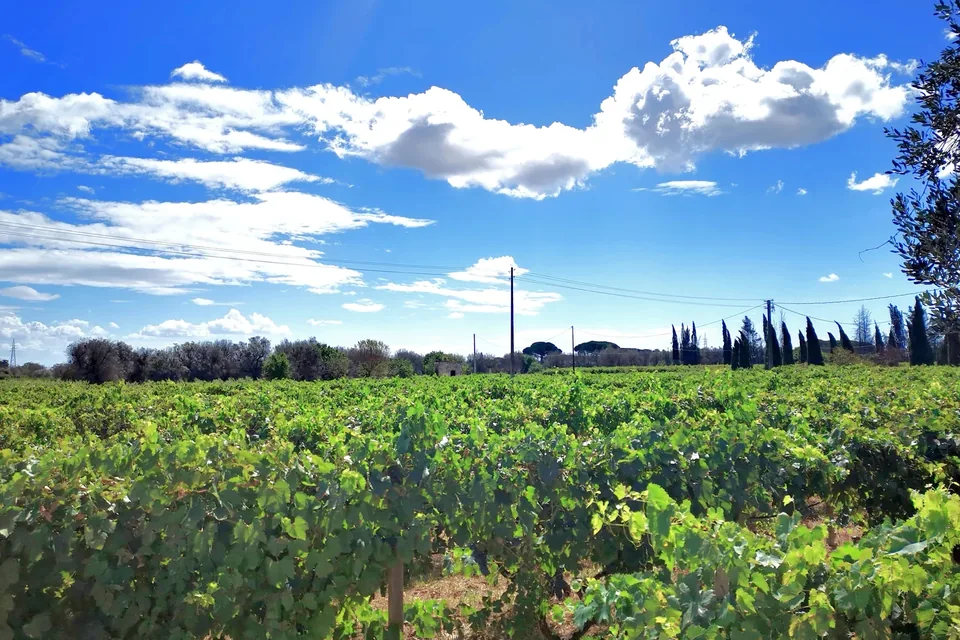
Puglian wines
Exploring wine across the Murgia, Manduria and Salento through flavour and landscape.
Read the guide →Photo: Saggittarius A / Wikimedia Commons — CC BY-SA 4.0 · Resized and converted to WebP.
