
APULICA / WINES
Primitivo di Manduria
DOC · DOCG · Wines · Puglia
In brief
- A red from at least 85% Primitivo, made in Manduria and other municipalities of the province of Taranto, as well as Erchie, Oria and Torre Santa Susanna near Brindisi. (Qualigeo — Primitivo di Manduria DOP)
- It goes on sale after 31 March of the year following the harvest; the Riserva matures for 24 months, at least nine in wood. (Qualigeo — Primitivo di Manduria DOP)
- The Dolce Naturale DOCG uses Primitivo alone, from grapes that may be dried on the vine or on racks, and is not sold before 1 June of the following year. (Qualigeo — Primitivo di Manduria Dolce Naturale DOP)
History and origin
Primitivo owes its name to one specific trait: it ripens earlier than the other grape varieties of the area. Between Taranto and Brindisi, in the strip of land facing the Ionian Sea, the grape found surroundings where it shows its character at its best, and one of Puglia's best-known designations grew from there. The bond with the vine is old: Italy's national tourism portal recalls that Pliny the Elder called Manduria "viticulosa", rich in vines, and that the vineyards were probably brought here by the Messapians, who founded the town.
Protection came step by step. The Consorzio di Tutela del Primitivo di Manduria was founded in 1998 by ten wineries, cooperatives and private estates alike, and was recognised by law in 2002; the Ministry later gave it the exclusive task of protecting, promoting and supervising the designation. In 2011 Primitivo di Manduria Dolce Naturale became the first Apulian wine classified as a DOCG.
Today the designation has two tiers, both entered in the European register: the Primitivo di Manduria DOC, with the red and the Riserva, and the Primitivo di Manduria Dolce Naturale DOCG. Since 1 January 2023 bottles of the DOC and the Riserva carry the State seal, a neck band that guarantees their authenticity.
Sources: Italia.it — Manduria · Consorzio di Tutela del Primitivo di Manduria — Terroir e territorio · Consorzio di Tutela del Primitivo di Manduria — Evoluzioni · eAmbrosia — Primitivo di Manduria (PDO-IT-A0565) · eAmbrosia — Primitivo di Manduria Dolce Naturale (PDO-IT-A0535)
Area and method of production
The production area brings together eighteen municipalities. In the province of Taranto they are Manduria, Carosino, Monteparano, Leporano, Pulsano, Faggiano, Roccaforzata, San Giorgio Jonico, San Marzano di San Giuseppe, Fragagnano, Lizzano, Sava, Torricella, Maruggio and Avetrana, plus the hamlet of Talsano and Taranto's administrative enclaves; in the province of Brindisi, Erchie, Oria and Torre Santa Susanna join them. The vineyards cover more than 5,000 hectares.
The soils change a great deal within a few kilometres: from iron-rich red earth with limestone outcrops to the sand of the districts close to the sea. The vine also grows here as an alberello, or bush vine, the oldest training system, with plants on three arms no taller than a metre and a half, helped by sun, wind and Ionian breezes.
The DOC red uses at least 85% Primitivo and goes on sale after 31 March of the year following the harvest; the Riserva matures for 24 months, at least nine of them in wood. The Dolce Naturale DOCG is made from Primitivo alone, and the grapes may dry on the vine, on racks or in crates, also in rooms with temperature and humidity control; the wine is released from 1 June of the following year.
Sources: Qualigeo — Primitivo di Manduria DOP · Qualigeo — Primitivo di Manduria Dolce Naturale DOP · Consorzio di Tutela del Primitivo di Manduria — Terroir e territorio
How to recognise it
Primitivo di Manduria DOC is a very deep ruby red that turns towards garnet with age. The nose is broad: plum and cherry jam, then tobacco and a light spiciness. On the palate it is soft and full-bodied, with fine tannins, and finishes on notes of cocoa, coffee and vanilla. The consortium also points to a scent of lentisk, the Mediterranean scrub shrub that grows among the vineyards.
The Riserva, after its time in wood, gains complexity and softness: the colour stays a deep, bright ruby, and balsamic, toasted and spicy notes join the ripe fruit on the nose.
The Dolce Naturale DOCG is recognised by its garnet red with intense purple glints and its aromas of morello cherry, plum, sour cherry jam and dried fruit, with a cocoa finish. The taste is warm, soft and velvety, with a long finish. The consortium notes that its character comes from drying the grapes on the vine, followed by hand picking.
Sources: Qualigeo — Primitivo di Manduria DOP · Qualigeo — Primitivo di Manduria Dolce Naturale DOP · Consorzio di Tutela del Primitivo di Manduria — Vino e abbinamenti
In the kitchen
The consortium suggests local traditional dishes as the natural match, starting with orecchiette in tomato sauce with cacioricotta cheese. The DOC red also suits medium-bodied dishes such as meat ragù and tomato-based fish soups, and stands up to richly spiced food.
The Riserva, with more structure, goes with game, roasts and grilled meat: it is the wine for important tables, the bottle to open for a festive lunch.
The Dolce Naturale DOCG is a dessert wine. It is served with dry pastries and dark chocolate, and also with blue cheeses or long-aged cheeses; the consortium also presents it as a meditation wine, to be sipped at the end of the meal.
Sources: Consorzio di Tutela del Primitivo di Manduria — Vino e abbinamenti
Where to taste it
The most direct way to get to know it is to travel through the municipalities of the designation, from Manduria towards the Ionian coast at Maruggio, Torricella and Pulsano and inland as far as Oria and the other towns in the Brindisi area. Manduria, a town of Messapian origin with its megalithic walls, is regarded as the home of Primitivo, and also has a museum devoted to the history and making of this wine.
In summer the consortium takes Primitivo di Manduria to the squares of its towns, with tasting points and talks. Among the events it lists are La Notte della Pecora Nera in the old town of Maruggio, La Notte del Vino at Torre Ovo, Torricella's seaside hamlet, the Sagra di San Domenico at Uggiano Montefusco, a hamlet of Manduria, Calici di Stelle in Sava, the Wine Tour Fest in Lizzano, the Festa della Vendemmia in Faggiano and Uve Primitive, the festival of Apulian grapes and wine in Oria.
They are a chance to pair the wine with the landscape, the historic centres and the Ionian Sea, a short distance from Taranto and the Salento.
Sources: Italia.it — Manduria · Consorzio di Tutela del Primitivo di Manduria — Terroir e territorio · Consorzio di Tutela del Primitivo di Manduria — Il Primitivo protagonista dell'estate · Qualigeo — Primitivo di Manduria DOP
Protection
- DOC, PDO wine — PDO-IT-A0565 (eAmbrosia — Primitivo di Manduria (PDO-IT-A0565) · Qualigeo — Primitivo di Manduria DOP)
- DOCG, PDO wine — PDO-IT-A0535 (eAmbrosia — Primitivo di Manduria Dolce Naturale (PDO-IT-A0535) · Qualigeo — Primitivo di Manduria Dolce Naturale DOP)
When
- The sources consulted give no months.
Where
Read more
Primitivo di Manduria
The red between Taranto and Brindisi: grape and land, DOC rules, the Dolce Naturale DOCG, fifty years of protection, summer in the villages and a day in Manduria.
Read the guide →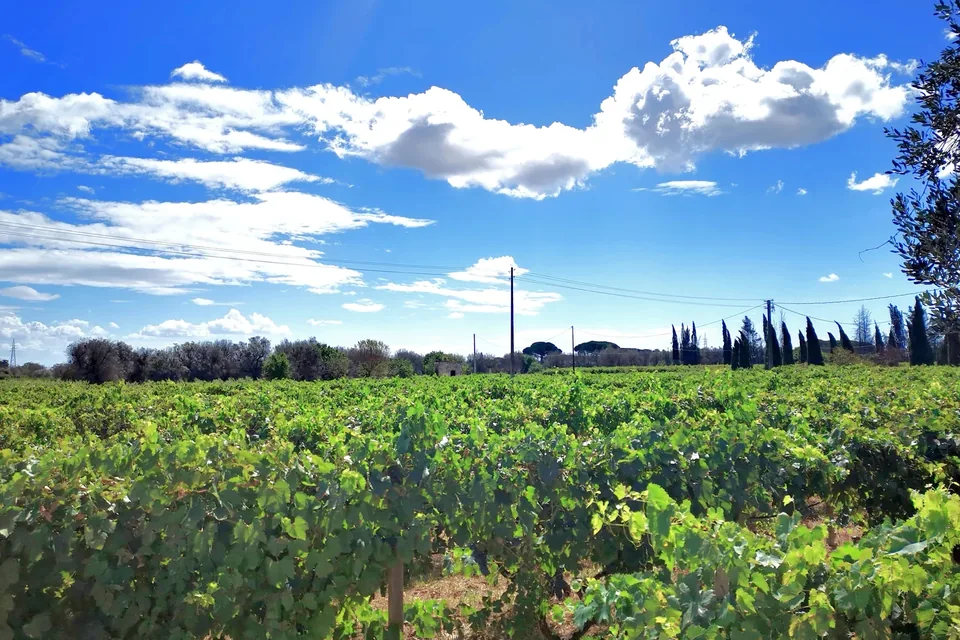
Puglian wines
Exploring wine across the Murgia, Manduria and Salento through flavour and landscape.
Read the guide →Photo: Saggittarius A / Wikimedia Commons — CC BY-SA 4.0 · Resized and converted to WebP.
