
APULICA / Food guides
Primitivo di Manduria: bush vines, red earth and a rare sweet wine
Primitivo di Manduria comes from a ring of towns across the provinces of Taranto and Brindisi, inland from the Ionian coast. It is a wine shaped by an early-ripening grape, low bush-trained vines and soils that shift from red earth to sand. Alongside the dry red there is a sweet version made from dried grapes, protected as a DOCG. This guide keeps the rules written in the production regulations apart from travel impressions.
A grape that ripens early
The protection consortium explains that the name Primitivo comes from the grape ripening earlier than the area's other varieties, and Italia.it confirms it: it is so called because its grapes ripen early. The vine has medium vigour, five-lobed leaves with toothed edges and clusters that may be winged or compact; the berries have thin skins, a sweet taste when fully ripe and plenty of anthocyanins, which give the wine its deep colour.
Yields are moderate, which lets the grape develop intense aromas. According to the consortium, Primitivo has found a particularly happy home in the Manduria area.
The history of the vine here is old. Italia.it recalls that Pliny the Elder described Manduria as 'viticulosa', rich in vines, and that the grape was probably brought by the Messapians, the town's founders. Today Primitivo is grown mainly in the countryside south-east of Taranto and in a small part of the province of Brindisi.
Sources: Consorzio di Tutela del Primitivo di Manduria — Terroir e territorio · Italia.it — Itinerario da Taranto a Manduria · Italia.it — Manduria
Eighteen municipalities between red earth and sand
The consortium describes a designation of more than 5,000 hectares of vineyards in eighteen municipalities. In the province of Taranto they are Manduria, San Giorgio Jonico, Carosino, Monteparano, Leporano, Pulsano, Faggiano, Roccaforzata, Lizzano, Fragagnano, San Marzano di San Giuseppe, Sava, Torricella, Maruggio and Avetrana, plus the Talsano district and some administrative enclaves of the city of Taranto; in the province of Brindisi, Oria, Erchie and Torre Santa Susanna.
The soil varies greatly: from the iron red of soils with limestone breaking through from below, to the sand of the districts nearest the sea. The climate is shaped by sun, wind and the Ionian, and the consortium notes that drought concentrates sugar in the grapes.
Many vines are still bush-trained, the oldest training system, with three arms and low plants. The specification allows the Apulian alberello and the vertical trellis, with the fruiting cane no more than one metre off the ground and at least 3,500 vines per hectare in new plantings.
Sources: Consorzio di Tutela del Primitivo di Manduria — Terroir e territorio · Consorzio di Tutela del Primitivo di Manduria — Disciplinare DOC
What the DOC requires
The DOC has two types, Primitivo di Manduria and Primitivo di Manduria Riserva. Primitivo grapes must make up at least 85%; the rest may come from other non-aromatic black grapes suited to the provinces of Taranto and Brindisi. Only clusters from the first fruiting are used, never those from secondary shoots.
The maximum yield is 9 tonnes of grapes per hectare, the grapes must give at least 13% natural alcohol, 13.5% for the Riserva, and the wine yield may not exceed 70%. Winemaking takes place inside the area. The red may be released after 31 March following the harvest; the Riserva ages for 24 months, at least nine of them in wood, starting from 1 November of the harvest year.
The vintage must appear on the label, bottles are glass up to 15 litres and corks are flush stoppers. Since 2023, the consortium notes, the DOC and Riserva also carry the State seal, a further guarantee of authenticity.
Sources: Consorzio di Tutela del Primitivo di Manduria — Disciplinare DOC · Qualigeo — Primitivo di Manduria DOP · Consorzio di tutela del Primitivo di Manduria — Evoluzioni
Dolce Naturale, a DOCG from dried grapes
Primitivo di Manduria Dolce Naturale has its own specification. The consortium recalls that in 2011 it became the first DOCG recognised in Puglia, and it is the only one of the region's four DOCGs devoted solely to a sweet red. The grapes are 100% Primitivo, with a maximum yield of 7 tonnes per hectare and a wine yield of no more than 60%.
The grapes may dry on the vine, on racks, in crates outdoors or in equipped rooms. The consortium stresses the most typical case: thanks to the sun and the Ionian breezes, the berries shrivel on the vine and lose about half their water, while hand picking protects them from crushing. Enrichment of the must is banned.
The wine must reach at least 16% total alcohol, 13 of it actual, with residual sugar of no less than 50 grams per litre. It may not be released before 1 June of the year after the harvest, and adjectives such as riserva, superiore or extra are not allowed on the label.
Sources: Consorzio di Tutela del Primitivo di Manduria — Disciplinare DOCG Dolce Naturale · Consorzio di tutela del Primitivo di Manduria — Vino e abbinamenti · Consorzio di tutela del Primitivo di Manduria — Evoluzioni
Half a century of protection
The history of the designation can be read in the timeline published by the consortium. On 30 October 1974 the Ministry of Agriculture recognised the Primitivo di Manduria DOC, by a decree published in the Official Gazette on 4 March 1975; Qualigeo gives 1976 as the registration year. Italia.it notes that the DOC has passed fifty years.
The protection consortium was founded in 1998 with ten firms, cooperatives and private wineries, and obtained legal recognition in 2002. It later received from the Ministry the exclusive task of coordinating protection, promotion, oversight and consumer information for the whole designation. In 2011 the Dolce Naturale became a DOCG.
More recently the consortium introduced the State seal for DOC and Riserva from 1 January 2023, registered its trademark and logo internationally and approved rules on using the name Primitivo di Manduria on products containing it as an ingredient, to protect the designation and inform buyers.
Sources: Consorzio di tutela del Primitivo di Manduria — Evoluzioni · Qualigeo — Primitivo di Manduria DOP · Italia.it — Itinerario da Taranto a Manduria
In the glass, according to the official profiles
Qualigeo describes the dry red as a very deep ruby turning garnet with age, with broad aromas of plum, cherry jam, tobacco and light spice; on the palate it is soft and full-bodied, with fine tannins and a finish of cocoa, coffee and vanilla. The consortium adds a note that leads back to the landscape: the scent of mastic, the Mediterranean scrub shrub that grows among the vines, and a balance between the chalky red earth and the saltiness of the Ionian.
The Riserva, thanks to the wood, gains complexity and softness: the consortium speaks of balsamic, minty, toasty and spicy notes alongside ripe fruit. The Dolce Naturale is garnet with purple glints according to Qualigeo, with notes of morello cherry, plum and sour-cherry jam; the consortium also mentions jam and dried figs, and a sweet, velvety taste.
Qualigeo's profiles give 2011 as the Dolce Naturale's registration year, the same as the DOCG.
Sources: Qualigeo — Primitivo di Manduria DOP · Qualigeo — Primitivo di Manduria Dolce Naturale DOP · Consorzio di tutela del Primitivo di Manduria — Vino e abbinamenti
Gioia del Colle, the other Primitivo
Primitivo does not stop at Manduria. Further north, on the Murge in the province of Bari, the Gioia del Colle PDO includes, according to Qualigeo, a Gioia del Colle Primitivo made solely from Primitivo grapes, alongside white, red, rosé and two sweet versions of Aleatico. The red of the same designation uses Primitivo for half or a little more, together with montepulciano, sangiovese, negroamaro or malvasia nera.
Qualigeo describes Gioia del Colle Rosso as an intense ruby turning garnet, with aromas of plums, blueberries and herbs and well-integrated tannins; the Aleatico Dolce is garnet with violet glints, soft and velvety, and can become a Riserva after two years, one of them in cask.
For anyone travelling between Taranto and Bari, comparing a Primitivo di Manduria with a Gioia del Colle Primitivo is a simple way to see how much soil and altitude matter: the Ionian coast on one side, the Murgia plateau on the other.
Sources: Qualigeo — Gioia del Colle DOP
From Taranto to Manduria, between coast and Messapian walls
The Italia.it itinerary starts from Taranto, a city founded by Spartan colonists and home to the National Archaeological Museum, follows the coast through Leporano, Pulsano and Lizzano to San Pietro in Bevagna, the Chidro river mouth reserve, the Salina dei Monaci and Torre Colimena, then heads back inland among the farmsteads to Avetrana, with its castle, and Manduria.
Manduria keeps the legacy of the Messapians: the megalithic walls and about 1,200 rock-cut tombs form the Messapian Walls Archaeological Park, which also includes the Fonte Pliniano, a cave with a basin fed by a spring described by Pliny, and the church of San Pietro Mandurino, with an 8th-9th century underground chamber. Destroyed in 547, the town was refounded in 1090 under the name Casalnuovo and took back its ancient name in 1789.
In the old town you find the mother church of the Holy Trinity, Palazzo Imperiali-Filotico and the Museum of the Civilisation of Primitivo Wine, devoted to the history of winemaking.
Sources: Italia.it — Itinerario da Taranto a Manduria · Italia.it — Manduria
Primitivo's summer in the designation's towns
For summer 2026 the protection consortium announced a real tour of the designation's towns, with tasting areas, talks and moments devoted to the DOC, Riserva and Dolce Naturale. The calendar began on 24 July in the old town of Maruggio with the Night of the Black Sheep and, from 24 to 26 July, in Pulsano with the T-Fest.
On 2 August the square at Torre Ovo, Torricella's seaside village, hosted the fifth Night of Wine; on 3 and 4 August, in Uggiano Montefusco, a district of Manduria, the San Domenico festival included a Primitivo masterclass. On 10 August it was Sava's turn with Calici di Stelle, and from 11 to 13 August the Wine Tour Fest in the old town of Lizzano.
The tour continued in Faggiano on 28 and 29 August with the fourteenth Grape Harvest Festival and closed on 5 and 6 September in Oria with Uve Primitive, a festival of Apulian grapes and wine. For later years it is best to check the consortium's updated calendar.
Sources: Consorzio di tutela del Primitivo di Manduria — L'estate 2026 tra eventi e degustazioni
At the table and in the suitcase
The dry red, full and high in alcohol, calls for substantial dishes: the consortium suggests orecchiette in tomato sauce with cacioricotta, meat ragùs and tomato-based fish soups, and for the Riserva game, roasts and grills. I would serve it not too warm, as a high temperature emphasises its heat. Dolce Naturale is another matter: a wine for the end of the meal or for sipping, with dry pastries, dark chocolate or blue and long-aged cheeses.
Tasting dry and sweet one after the other is the quickest way to grasp how much the same grape changes when dried. Winery visits, in any season, should be arranged with the operators.
To recognise the designation's wine, read the label carefully: Primitivo di Manduria, Riserva and Dolce Naturale are distinct types, while the word Primitivo alone may indicate wines from other areas. In summer I would not leave bottles in a car in the sun, and I would choose a few after tasting them on the spot.
Sources: Consorzio di tutela del Primitivo di Manduria — Vino e abbinamenti · Consorzio di Tutela del Primitivo di Manduria — Disciplinare DOC
A thread for your journey
Journey idea: from Taranto along the Ionian coast to Manduria, with a walk past the Messapian walls and the Fonte Pliniano and a winery visit arranged with operators, tasting the dry red and the Dolce Naturale side by side.
Talk to us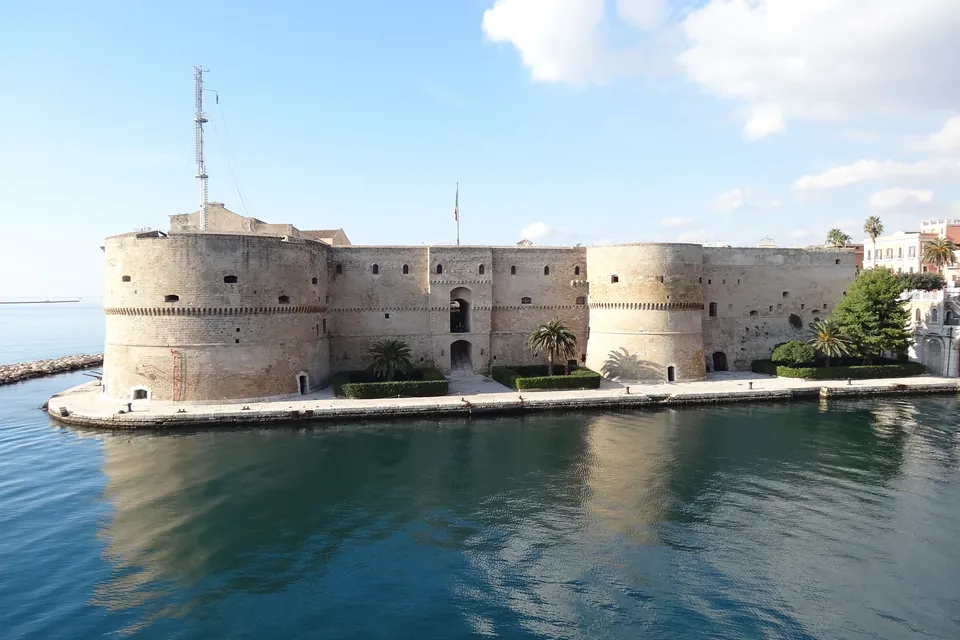
.JPG)
