
APULICA / FISH AND SEAFOOD
Marinated anchovies
PAT · Fish and seafood · Puglia, Campania, Calabria
In brief
- They are anchovies opened up, with head and backbone removed, left to rest in vinegar or lemon, then dressed with oil. (Regione Puglia — Atlante dei PAT: Alici marinate · Regione Campania — Alici marinate (prodotto tradizionale))
- For raw or marinated use the fish must first be frozen, as health rules require against Anisakis. (Regione Puglia — Atlante dei PAT: Alici marinate)
- The Calabrian record calls for very fresh fish, processed within five or six hours of being caught. (Regione Calabria — Schede PAT: preparazioni di pesci, molluschi e crostacei (237-257))
- They are a recognised traditional product in Puglia, Campania and Calabria. (Masaf — Elenco nazionale dei prodotti agroalimentari tradizionali, XXVI revisione (2026))
History and origin
Marinating fish to make it last is an old practice. Puglia's atlas of traditional products traces it back to the Greeks and explains that a brine of seawater was originally used, which is where the word marinata comes from; over time white wine vinegar replaced the salt water, often together with lemon juice. For Puglia, marinated anchovies are a dish of the fishermen's poor cooking, turning a few ingredients into a real delicacy.
The Calabria Region's record notes that the technique is also called scapece, and that some see a Spanish origin in escabeche while others derive the name from Apicius, the Roman gastronome. Either way it describes a way of preserving with vinegar, used above all for fish, born among fishermen and later taken up by other producers.
The Campania Region also calls it a very old recipe. Today marinated anchovies are listed as traditional products in three regions: Puglia, Campania and Calabria, where they are called acciughe marinate.
Sources: Regione Puglia — Atlante dei PAT: Alici marinate · Regione Calabria — Schede PAT: preparazioni di pesci, molluschi e crostacei (237-257) · Regione Campania — Alici marinate (prodotto tradizionale) · Masaf — Elenco nazionale dei prodotti agroalimentari tradizionali, XXVI revisione (2026)
Area and method of production
In Puglia the stated area of origin is the province of Lecce. The anchovies, about ten centimetres long, must first be blast-chilled or frozen for at least 96 hours at -18 °C, as the Ministry of Health guidelines require against the risk of Anisakis. Head and backbone are then removed, the fish are rinsed well under running water and laid in layers, moistened with lemon or, to keep them longer, with white wine vinegar. Salt, pepper and oil complete the preparation, which rests for at least six hours.
In Campania the anchovies, cleaned of head, guts and bone, are rinsed, left to dry in baskets for two or three hours and seasoned with vinegar, lemon and salt; after a day's rest they are drained at length and dressed with oil and chilli.
The Calabrian record, which covers the whole region, describes manual work only, between March and June. The cleaned fish is rinsed three times in running water in glass containers and marinated for eighteen to twenty-four hours in a liquid of vinegar and salt, before going into jars.
Sources: Regione Puglia — Atlante dei PAT: Alici marinate · Regione Campania — Alici marinate (prodotto tradizionale) · Regione Calabria — Schede PAT: preparazioni di pesci, molluschi e crostacei (237-257)
How to recognise it
Marinated anchovies are recognised by their fillets, lightly cooked by the acidity: Puglia's atlas explains that vinegar and lemon gently cook the flesh of the fish. According to the Calabrian record they are long and tapered, nine or ten centimetres in length, with a slightly sour fish flavour and a very pleasant smell; they are sold in packs of one hundred to two hundred and fifty grams.
Marinating times change the result. In Puglia about twelve hours are reckoned with vinegar alone, three or four with lemon and five or six with a mix of the two, which is the classic recipe. Salt is generally left out of the marinade, because it draws the juices from the flesh, but it can be used to extend keeping time in the fridge.
Anchovies are oily fish: Puglia's atlas notes they are very rich in polyunsaturated fatty acids. In Puglia the product is also called alicette.
Sources: Regione Puglia — Atlante dei PAT: Alici marinate · Regione Calabria — Schede PAT: preparazioni di pesci, molluschi e crostacei (237-257)
In the kitchen
Marinated anchovies are served above all as a starter: the Campania Region notes that they are found in every restaurant along the Campanian coast. The Puglia recipe finishes them with extra virgin olive oil, parsley and oregano; the Campanian one with oil and chilli.
In Calabria acciughe marinate can be flavoured in different ways, with olives, capers, sun-dried tomatoes and oregano. Choosing between lemon and vinegar is not only a matter of taste: according to Puglia's atlas, anchovies in lemon keep for just a few days in the fridge, while vinegar makes them last longer. Before closing them in sterilised glass jars or airtight tubs, more oil and vinegar are added.
Anyone making them at home should remember the health rule: fish to be eaten raw or marinated must be frozen for at least 96 hours at -18 °C in a domestic freezer with three or more stars.
Sources: Regione Campania — Alici marinate (prodotto tradizionale) · Regione Puglia — Atlante dei PAT: Alici marinate · Regione Calabria — Schede PAT: preparazioni di pesci, molluschi e crostacei (237-257)
Where to taste it
In Puglia the atlas of traditional products names the province of Lecce as the area of origin. Here marinated anchovies are bought at fishmongers and specialist shops, ordered in restaurants and, in summer, served at village festivals and food fairs. Fishing, mostly at night with lampara lights or pelagic trawl nets, runs from March to September.
In Campania they are on the menu of every restaurant in the seaside towns of the provinces of Naples and Salerno, such as the Amalfi Coast and the Cilento, and are sold in local shops.
In Calabria the regional record assigns the product to the whole region and places production between March and June. Spring and summer are therefore the right time to taste them along the coasts, when the anchovies come in fresh from the boats.
Sources: Regione Puglia — Atlante dei PAT: Alici marinate · Regione Campania — Alici marinate (prodotto tradizionale) · Regione Calabria — Schede PAT: preparazioni di pesci, molluschi e crostacei (237-257)
Protection
- Traditional agri-food product (PAT) — Puglia, n. 400, 26th revision (Masaf — Elenco nazionale dei prodotti agroalimentari tradizionali, XXVI revisione (2026))
- Traditional agri-food product (PAT) — Campania, n. 584, 26th revision (Masaf — Elenco nazionale dei prodotti agroalimentari tradizionali, XXVI revisione (2026))
- Traditional agri-food product (PAT) — Calabria, n. 239, 26th revision (Masaf — Elenco nazionale dei prodotti agroalimentari tradizionali, XXVI revisione (2026))
When
- Harvest: March–September (Regione Puglia — Atlante dei PAT: Alici marinate)
- Spring
- Summer
- Autumn
Where
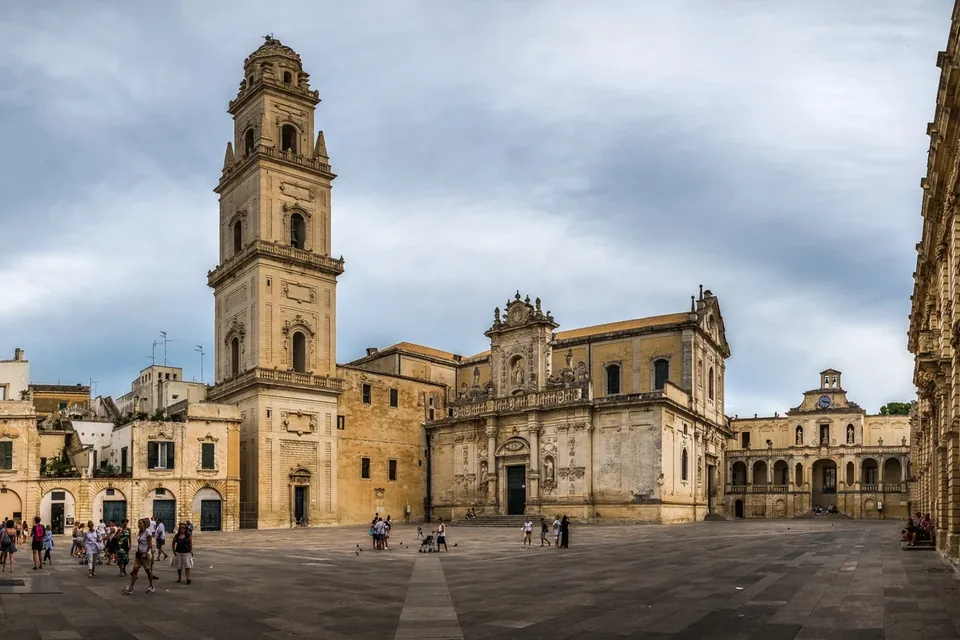
Lecce
Baroque architecture, papier-mâché and Salento food: a city of telling details.
Read the guide →Photo: Giuseppe Milo / Wikimedia Commons — CC BY 3.0 · Resized and converted to WebP.
.jpeg)
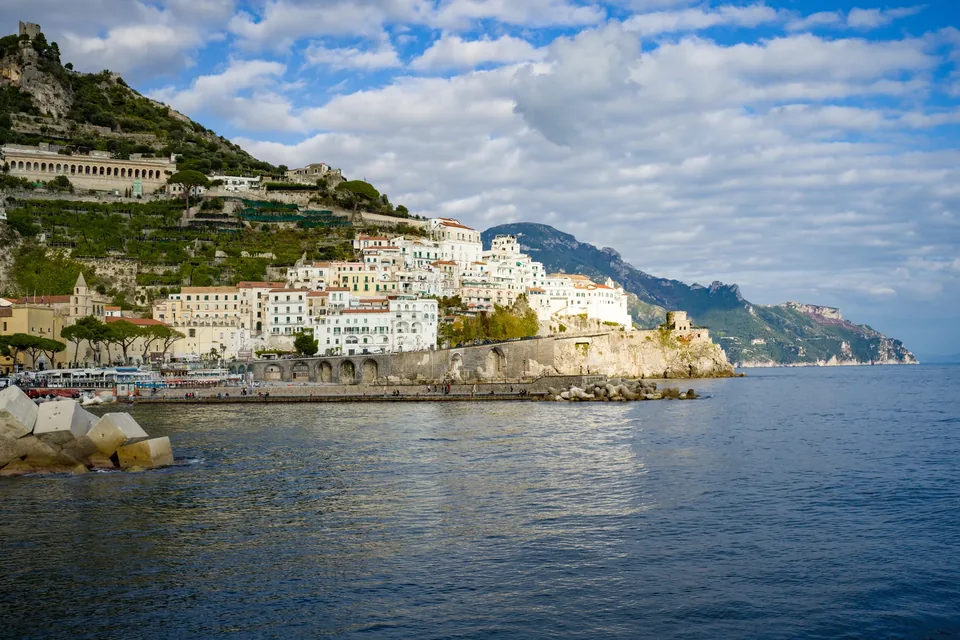
Amalfi Coast
The UNESCO cultural landscape between Positano and Vietri sul Mare: citrus terraces, footpaths, inland valleys and the history of a maritime republic.
Read the guide →Photo: Wolfgang Moroder / Wikimedia Commons — CC BY-SA 3.0 · Resized and converted to WebP.


Cilento
The Cilento, Vallo di Diano and Alburni National Park: coastline, karst mountains, Paestum, Velia and the Padula Charterhouse.
Read the guide →Photo: PaestumPaestum / Wikimedia Commons — CC BY-SA 4.0 · Resized and converted to WebP.
,_East_view.jpg)