
Why go
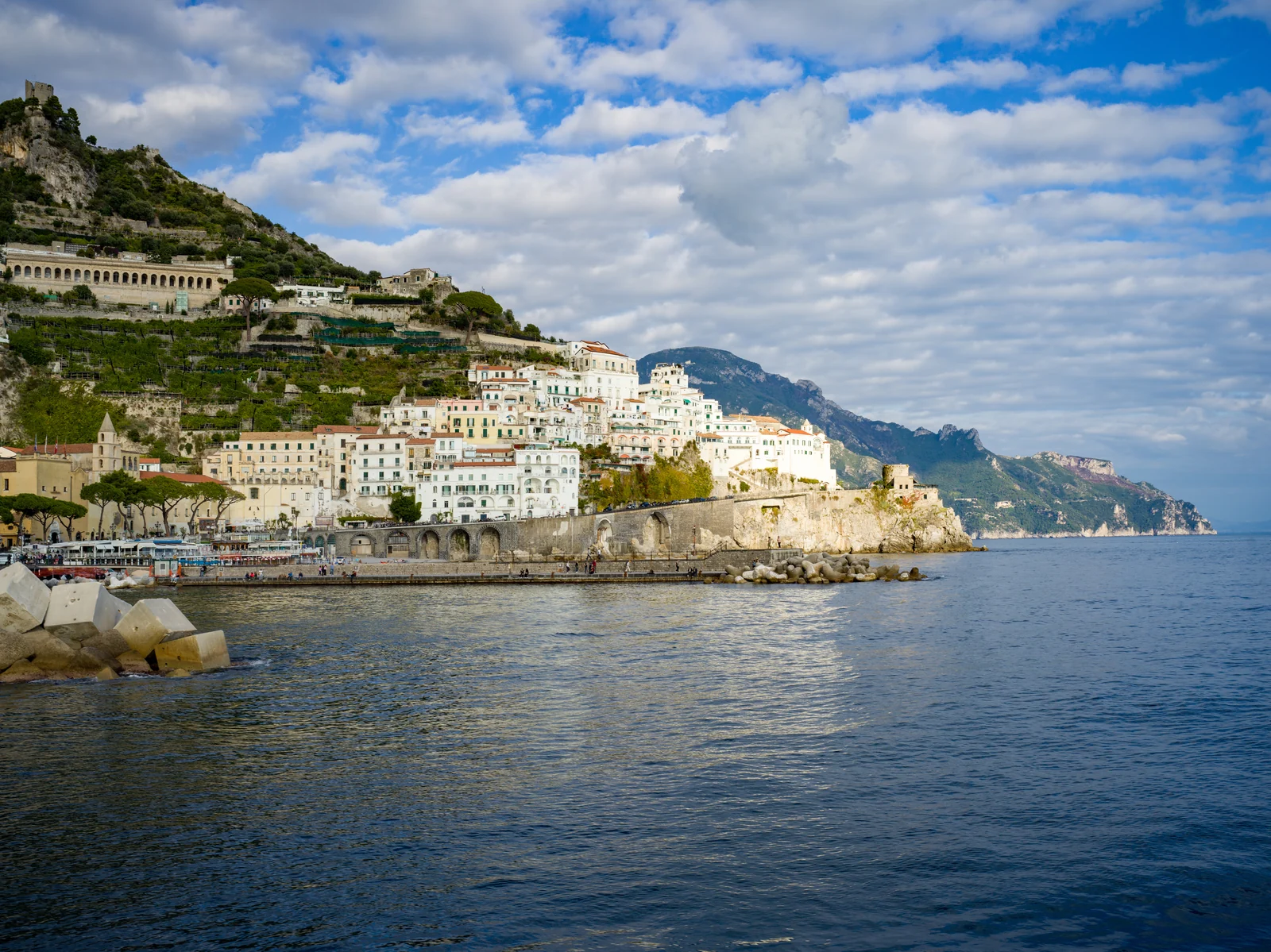
The Amalfi Coast runs along the southern side of the Sorrento peninsula, from Positano to Vietri sul Mare, with the Gulf of Salerno in front and the Lattari Mountains behind. UNESCO inscribed it in 1997 as a cultural landscape: more than eleven thousand hectares, fifteen municipalities and three nature reserves, where rock, woodland and scrub sit alongside citrus groves and vineyards laid out wherever people could find a foothold.
That is the strongest reason to go: here the landscape is a work built over centuries, terrace by terrace, held up by dry-stone walls and by farming that still keeps it standing. The towns follow the shape of the coast, with narrow lanes and steep stairways that UNESCO likens to eastern souks, and they preserve churches and palaces born in the years of the Amalfi maritime republic.
Apulica approaches it from its less hurried side. Beyond the sea and the famous sights there are the Lattari footpaths, the valleys behind the towns, the gardens of Ravello and the ceramic workshops of Vietri. Choosing a single base and moving on foot or by sea lets you see the Coast as its residents live it: a sequence of vertical villages tied together by old paths.
Sources: UNESCO World Heritage Centre — Costiera Amalfitana · Italia.it — Costiera Amalfitana: cosa vedere nel patrimonio UNESCO · Italia.it — Costiera Amalfitana
History
UNESCO notes that human presence on the Coast goes back to prehistory, as shown by Palaeolithic and Mesolithic remains found at Positano, and that the area was densely settled above all from the early Middle Ages onwards. Roman patrician villas point to an earlier presence, however: in Positano the Roman archaeological museum preserves part of a 1st-century AD villa buried by the eruption of Vesuvius.
The great chapter is Amalfi’s. The national tourism portal calls it the oldest of the four maritime republics: allied with the Byzantines during the Gothic War, it became a duchy in the 10th century and reached its greatest extent between the late 10th and early 11th centuries under Duke Mansone I. For UNESCO, much of the Coast’s architecture reflects the blend of eastern and western influences tied to the republic’s economic power between the 9th and 11th centuries, the so-called Arab-Norman style.
The Normans brought revolts and slow decline; later Amalfi became a district seat in the Kingdom of the Two Sicilies and in 1861 joined the Kingdom of Italy. In the 20th century the Coast also became a film set: Italia.it recalls that Roberto Rossellini shot part of Paisà in Maiori and that in 1953 John Huston filmed scenes of Beat the Devil at Villa Cimbrone in Ravello.
Sources: UNESCO World Heritage Centre — Costiera Amalfitana · Italia.it — Positano · Italia.it — Costiera Amalfitana: cosa vedere nel patrimonio UNESCO · Italia.it — La Costiera Amalfitana d’inverno
What to see
In Amalfi the heart is the Cathedral of Sant’Andrea Apostolo, which dominates the square from the top of its great stairway: Romanesque in origin and rebuilt several times, it has an Arab-Sicilian façade and leads inside to the Cloister of Paradise, with interlaced Moorish-style arches. The town itself, with houses pressed together and a maze of lanes, tells the story of the merchant city. Seven hundred metres away lies Atrani, the smallest municipality in Italy.
Ravello stands on a hill more than 350 metres up. Villa Rufolo, built in the Middle Ages by the family of that name, mixes Arab, Sicilian and Norman styles and has gardens on several levels; the gardens of Villa Cimbrone are open to the public and end at the Terrace of Infinity. On Piazza Vescovado stands the basilica of Santa Maria Assunta e San Pantaleone, with a bronze door of eighty panels.
Positano descends to the sea among white houses and stairways; the church of Santa Maria Assunta has a dome of yellow, green and blue majolica. Along the coast you find the Emerald Grotto at Conca dei Marini, the Furore fjord, Maiori and Minori with the remains of a Roman villa, the fishing village of Cetara, and Vietri sul Mare with its tradition of artistic ceramics.
Sources: Italia.it — Amalfi · Italia.it — Costiera Amalfitana · Italia.it — Ravello · Italia.it — Positano · Italia.it — Costiera Amalfitana: cosa vedere nel patrimonio UNESCO
Food and wine
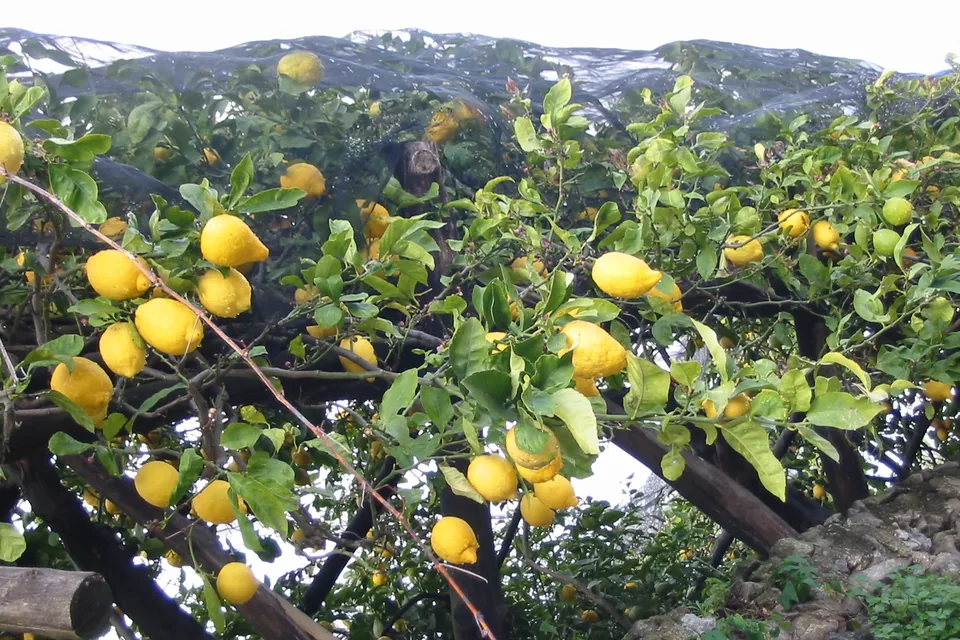
The signature product is the lemon. Limone Costa d’Amalfi PGI belongs to the Sfusato Amalfitano variety, tapered and fragrant, and is grown on terraces held up by walls known as macere, with the trees trained under traditional pergolas. The area covers all of Atrani and parts of twelve other municipalities, from Positano to Vietri sul Mare. Its peel, cold-macerated in alcohol, becomes Liquore di limone della Costa d’Amalfi, a geographical indication that ties production to the Coast’s municipalities.
The sea gives Colatura di alici di Cetara PDO: a clear amber sauce made by maturing anchovies under salt, caught with the traditional purse-seine net in the waters off the province of Salerno. The sources link it to the Roman garum; the classic dish is spaghetti with colatura, and the sauce often replaces salt on vegetables.
Italia.it also mentions the Costa d’Amalfi wine, in white, red and rosé, and ’ndunderi, large semolina and ricotta dumplings. In Amalfi pasta is the simplest way to taste the place: scialatielli with seafood, paccheri with lemon, a tomato and basil scarpariello; lemon returns in pastries and ice cream.
Sources: Qualigeo (Fondazione Qualivita) — Limone Costa d’Amalfi IGP · Qualigeo (Fondazione Qualivita) — Liquore di limone della Costa d’Amalfi IG · Qualigeo (Fondazione Qualivita) — Colatura di alici di Cetara DOP · Italia.it — Costiera Amalfitana: cosa vedere nel patrimonio UNESCO · Italia.it — Amalfi
Things to do
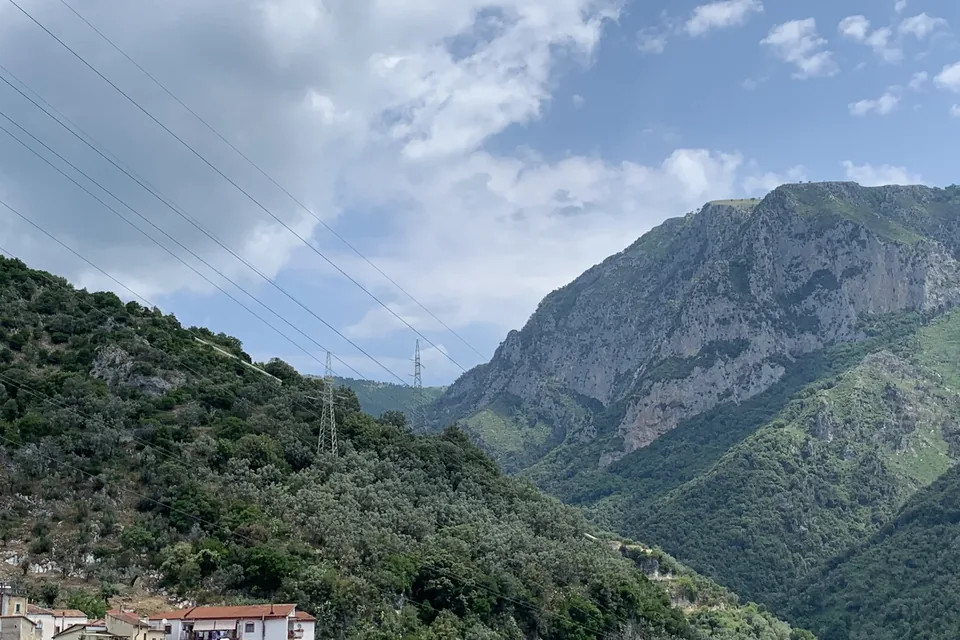
Walking is the best way to understand the Coast. The Path of the Gods runs along the Lattari ridge for about nine or ten kilometres, from Agerola to the upper part of Positano: for a long time it was one of the routes linking the villages, before the coast road, and it passes holm-oak woods, springs, caves and the Pistillo spire before reaching the hamlet of Nocelle. From Maiori and Minori the Path of the Lemons climbs through terraced citrus groves.
Behind Amalfi the Valle delle Ferriere nature reserve offers an easy walk of about three hours among woods, streams and waterfalls, past the ruins of the ironworks that supplied the republic and the old Amalfi paper mills; along the way you pass the village of Pogerola.
The sea can also be enjoyed by boat. From Positano you reach the Li Galli islets, three small islands in a marine reserve; in Amalfi the Duoglio beach is reached down some four hundred steps or by small boat, and Santa Croce only from the sea. The Emerald Grotto is visited by lift or by boat. In Ravello, in July, Villa Rufolo hosts the concerts of the Ravello Festival, which the Fondazione Ravello has run together with the villa since 2002.
Sources: Italia.it — Costiera Amalfitana: cosa vedere nel patrimonio UNESCO · Italia.it — La Costiera Amalfitana d’inverno · Italia.it — Positano · Italia.it — Costiera Amalfitana · Italia.it — Amalfi · Italia.it — Ravello · Fondazione Ravello — Ravello Festival e Villa Rufolo
When to go
Spring, summer and autumn are the classic seasons, but each has its own character. Amalfi Coast lemons are sold fresh from February to October, and in spring the terraces are in full season: it is the ideal time for the footpaths, before the heat. In July Ravello holds its music festival at Villa Rufolo, and in summer the sea and the beaches take centre stage.
Summer is also the busiest season. The Municipality of Amalfi warns that in high season strict traffic measures apply, such as one-way systems, alternate number plates and vehicle size limits, and advises using alternatives to the car. Some beaches, such as Duoglio in Amalfi or the one at Castiglione below Ravello, are best in the morning, as they fall into shade in the afternoon.
Autumn extends the good period for walking and for the sea on milder days. Winter, the national portal notes, brings mild temperatures at least until the end of the Christmas holidays, quieter roads and villages in their everyday guise: in Amalfi the cathedral is lit up, in Ravello you can attend a concert at the Oscar Niemeyer Auditorium, and in Minori local folk groups parade.
Sources: Qualigeo (Fondazione Qualivita) — Limone Costa d’Amalfi IGP · Italia.it — Ravello · Comune di Amalfi, Visit Amalfi — Come arrivare · Italia.it — Amalfi · Italia.it — La Costiera Amalfitana d’inverno
Getting there and around
The Municipality of Amalfi advises reaching the Coast without your own car. From Naples Capodichino international airport you can travel by taxi, transfer or seasonal direct bus, or by train to Salerno and then by ferry or bus. From Salerno Costa d’Amalfi airport there are links to Salerno and a direct line to Amalfi; from Salerno Travelmar runs ferries to Amalfi, while SITA Sud buses leave from the railway station. Salerno station is on the RFI network.
By sea, Travelmar and Alicost serve Amalfi throughout the day; by land public transport is run by SITA Sud, and a sustainable mobility consortium offers services with reserved seats to the main towns. Bus and regional train tickets can also be bought with the Unico Campania app.
Those who still choose to drive take the SS163 coast road, leaving the motorway at Vietri sul Mare or, alternatively, at Castellammare di Stabia via Agerola. Amalfi’s historic centre is a limited traffic zone with a broad pedestrian area around Piazza Duomo and the main streets; in high season traffic restrictions apply and the municipal site shows parking availability in real time. Within the towns you move on foot, along stairways and lanes.
Sources: Comune di Amalfi, Visit Amalfi — Come arrivare · Comune di Amalfi, Visit Amalfi — Come muoversi e infopoint · RFI — Stazione di Salerno
Where to stay
Amalfi’s official tourism website, run by the town’s destination organisation, divides the offer by type: hotels of various categories, bed and breakfasts, holiday homes and apartments, guest rooms, short lets, agriturismi and tourist residences. The range is wide: from hotels to smaller places in village houses, as far as agriturismi.
In Amalfi the central pedestrian area is closed to vehicles, with exceptions for hotel guests at check-in and check-out: it is worth agreeing in advance with your accommodation how to reach it with luggage. Positano, the national portal notes, is a vertical town of stairways and lanes, and there as elsewhere it pays to ask how to reach your accommodation.
The choice of base depends on the trip. Amalfi is the hub for sea and road connections; Ravello, on its hill, is close to the gardens of its villas; Positano is the natural starting point for the Path of the Gods and boat trips to Li Galli; the eastern villages such as Maiori, Minori and Cetara are convenient for Vietri and Salerno. Concrete arrangements are made with local operators, according to the season.
Sources: Comune di Amalfi — Visit Amalfi, sito turistico ufficiale · Comune di Amalfi, Visit Amalfi — Come muoversi e infopoint · Italia.it — Positano · Italia.it — Ravello · Comune di Amalfi, Visit Amalfi — Come arrivare
Nearby
To the west the Coast borders the Sorrento peninsula, which UNESCO describes as the Lattari range stretching between the Gulf of Naples and the Gulf of Salerno; from the terraces of the Path of the Gods, on clear days, the view reaches Capri. To the east, beyond Vietri sul Mare, lies Salerno, the arrival point for trains and ferries.
According to UNESCO the Lattari range branches off from the peaks of the Picentini Mountains, the range between Salerno and Avellino that suits a few extra days in the mountains. Further south along the gulf lies the Cilento, with Paestum, Velia and a national park also on the World Heritage List.
Within the Coast itself, do not overlook the hill villages UNESCO lists, such as Scala, Tramonti, Conca dei Marini and Furore, and the hamlet of Pogerola above Amalfi. These are places where cultivated terraces and woods are closer than the beach, and where footpaths still link the hamlets to one another.
Sources: UNESCO World Heritage Centre — Costiera Amalfitana · Italia.it — Positano · Comune di Amalfi, Visit Amalfi — Come arrivare · Italia.it — Amalfi · UNESCO World Heritage Centre — Cilento and Vallo di Diano National Park with Paestum, Velia and the Certosa di Padula
Local tourist information
Local tourist offices help with opening times, events and transport on the day.
- Infopoint di Amalfi (Comune di Amalfi) · Arsenale della Repubblica, 84011 Amalfi (SA) · Official website
Source: Comune di Amalfi, Visit Amalfi — Come muoversi e infopoint · checked on
Where to stay
In the municipality of Amalfi the national database of the Ministry of Tourism lists 636 accommodation businesses with a verified CIN code: 27 hotels, 251 other licensed accommodation and 358 other types such as B&Bs and private rentals.
Sources: Ministero del Turismo – Banca Dati Strutture Ricettive (dashboard pubblica), 2026-10-12
YOUR JOURNEY
How to shape a journey here
Three days based in one Amalfi Coast village: a high footpath, the Valle delle Ferriere and an afternoon between Ravello and the Vietri workshops. Routes and accommodation to be arranged with local operators.
Talk to us about it

,_East_view.jpg)


