
APULICA / FISH AND SEAFOOD
Colatura di alici di Cetara (anchovy sauce)
PDO · Fish and seafood · Campania
In brief
- An amber liquid seasoning obtained by maturing anchovies under salt. (Qualigeo — Colatura di alici di Cetara DOP)
- The anchovies are caught by purse seine within 12 miles of the Salerno coast; all processing takes place in the province of Salerno. (Qualigeo — Colatura di alici di Cetara DOP)
- Cleaned by hand, they are layered with sea salt in wooden containers called terzigni and mature for nine months before the liquid is drawn off through the bottom. (Qualigeo — Colatura di alici di Cetara DOP)
- Its origins are traced to Roman garum and to Cistercian monks near Amalfi in the 13th century. (Qualigeo — Colatura di alici di Cetara DOP)
History and origin
Colatura di alici descends from a sauce the Romans called garum, described by authors such as Pliny and Horace. It was made in an earthenware jar with chopped herbs, such as dill, rocket, mint, thyme and oregano, small whole fish and larger fish in pieces, all covered with a thick layer of coarse salt.
Colatura proper was probably born in the second half of the 13th century, thanks to the Cistercian monks of the Canonica di San Pietro a Toczolo, near Amalfi. They kept anchovies in barrels with loose staves and noticed that, once the fish was fully matured, a pleasant-smelling liquid seeped out. They collected it and gave it to the brother cook to taste, who at once used it to dress boiled vegetables.
In Cetara, an old fishing village on the Amalfi Coast, the process has been passed down from father to son. Long considered poor food, a substitute for fresh fish, colatura is now a Protected Designation of Origin.
Sources: Qualigeo — Colatura di alici di Cetara DOP · Regione Campania — Colatura di Alici di Cetara DOP · eAmbrosia — Colatura di alici di Cetara (PDO-IT-02440)
Area and method of production
The anchovies are caught in the sea off the province of Salerno, within 12 miles of the coast, by the traditional cianciolo method, purse-seine fishing with a large rectangular net. All later stages, from processing to tapping, must take place in the province of Salerno.
On arrival the anchovies are headed and gutted by hand; they may be left in brine for up to 24 hours. Within eight hours of delivery to the workshop they are laid by hand, in alternating layers with sea salt, in terzigni, wooden containers of 20 kilos, or in barrels of up to 200 kilos. The Region describes the classic head-to-tail arrangement. The containers are covered with a wooden disc weighed down with weights, and maturing lasts nine months in cool, airy rooms.
At the end the liquid flows out through a hole made in the bottom of the terzigno or, for barrels, is filtered through cloths. The specification also allows further ageing, in workshops or restaurants in the municipality of Cetara, in which case the label may carry the word invecchiata with its length.
Sources: Qualigeo — Colatura di alici di Cetara DOP · Regione Campania — Colatura di Alici di Cetara DOP
How to recognise it
Colatura di alici di Cetara PDO is a clear, bright liquid, amber in colour verging on mahogany brown. The aroma is lasting and intense, recalling salted anchovies, fresh anchovies and sea air. The taste is umami, strong and very savoury, since anchovies and salt are its only ingredients.
It is sold in clear, transparent glass bottles from 50 millilitres to one litre. Unopened, it keeps at room temperature; once opened, store it in the least cold part of the fridge or in a cool place away from light.
Qualivita stresses that the product's character depends greatly on how skilfully the barrels are filled: the anchovies must be laid in neat, tight layers completely covered with salt.
Sources: Qualigeo — Colatura di alici di Cetara DOP · Regione Campania — Colatura di Alici di Cetara DOP
In the kitchen
The signature dish is spaghetti with colatura di alici. In Cetara it is the traditional dressing for spaghetti on the vigilie, the eves of feast days, but the Region also lists other uses: on bruschetta, on Christmas broccoli and on other vegetables.
Thanks to its saltiness colatura is often used instead of salt, to season fresh or boiled vegetables and some fish dishes. It is, after all, the same use the first Cistercian cook made of it, trying it on boiled vegetables.
Born as poor food, a substitute for fresh fish, colatura has become, the Region notes, a sought-after dressing appreciated at every level, and Qualivita describes it as a much-loved element of Italian cooking.
Sources: Qualigeo — Colatura di alici di Cetara DOP · Regione Campania — Colatura di Alici di Cetara DOP
Where to taste it
The home of colatura is Cetara, a fishing village on the Amalfi Coast that seems suspended in time. The Coast, a UNESCO site since 1997, runs from Positano to Vietri, with cliffs, coves and terraces of citrus, vines and olives, and is the setting in which both anchovy fishing and the colatura tradition were born.
In Cetara colatura can be found in the village's processing workshops and in its restaurants, where the specification also allows ageing. The most traditional time to taste it is the year-end holiday season, when, according to the Region, the product is ready and accompanies the spaghetti of the vigilie and Christmas broccoli.
A visit to Cetara fits easily into a route along the Coast, from Amalfi to Ravello and on to Vietri sul Mare, with its ceramics.
Sources: Regione Campania — Colatura di Alici di Cetara DOP · Italia.it (Ministero del Turismo) — Costiera Amalfitana · Qualigeo — Colatura di alici di Cetara DOP
Protection
- Protected designation of origin (PDO) — PDO-IT-02440 (eAmbrosia — Colatura di alici di Cetara (PDO-IT-02440))
When
- The sources consulted give no months.
Where
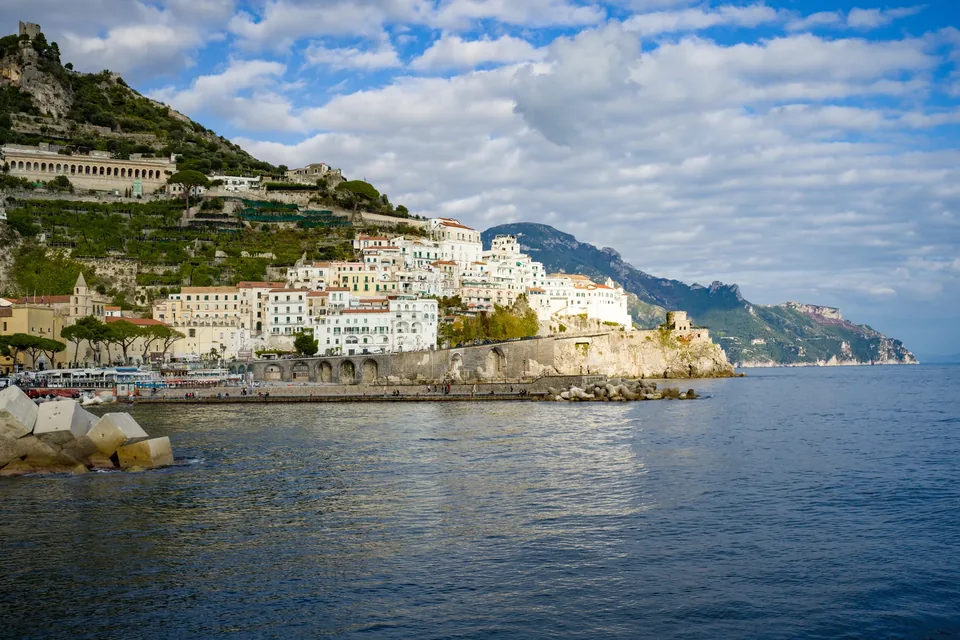
Amalfi Coast
The UNESCO cultural landscape between Positano and Vietri sul Mare: citrus terraces, footpaths, inland valleys and the history of a maritime republic.
Read the guide →Photo: Wolfgang Moroder / Wikimedia Commons — CC BY-SA 3.0 · Resized and converted to WebP.

Read more
Colatura di alici di Cetara PDO
From Roman garum to the monks of Amalfi, salting in terzigni, the PDO rules, Cetara as a fishing village and the Christmas Eve dish.
Read the guide →