APULICA / Food guides
Limoncello and citrus rosolios: from protected peel to the small glass
Limoncello is drunk all over the South, but its name is not protected: it can be made anywhere. What is protected are the citrus fruits it comes from and two lemon liqueurs with a geographical indication, from the Amalfi Coast and from Sorrento. Arancello and mandarinello have no designation of their own. This guide follows the peel: the PGI lemons of the Amalfi Coast and the Sorrento peninsula, the PGI oranges and lemons of the Gargano, the citrus liqueurs listed as traditional products in Campania, Calabria and Puglia, and the old custom of home-made rosolio.
From home-made rosolio to lemon liqueur
The technical sheet for Liquore di Limone della Costa d'Amalfi traces the product's history. The liqueur made by infusing peel in alcohol, water and sugar is presented as an heir of the rosolios of medieval Arab pharmacy. During the nineteenth century many homes on the Amalfi Coast, especially in Minori, made a lemon liqueur served at the end of large meals to aid digestion; at first they used the lima or limetta, a small thin-skinned lemon picked before it was fully ripe, then other lemons, especially the sfusato. The document notes that families owning or farming citrus groves have made rosolio for almost two centuries with the same lemons sold on the markets, and that the invention of the recipe is disputed between Minori and Capri.
Limoncello is a free name, two liqueurs are not
A widespread idea needs correcting: it is true that limoncello has no designation, but it is not true that no Southern lemon liqueur is protected. By a decree of 2 September 2014, published in the Official Gazette on 12 September, the Ministry of Agriculture approved the technical sheet of the geographical indication Liquore di Limone della Costa d'Amalfi, under the European regulation on spirit drinks. A decree of 8 June 2016, published on 16 June, amended the technical sheet of the geographical indication Liquore di limone di Sorrento, first approved in 2012. These are designations for the drink, distinct from the PGIs of the fresh lemons. Arancello and mandarinello, on the other hand, have no geographical indication.
Sources: Gazzetta Ufficiale — Decreto 2 settembre 2014, scheda tecnica dell'indicazione geografica «Liquore di Limone della Costa d'Amalfi» · Gazzetta Ufficiale — Decreto 8 giugno 2016, modifica della scheda tecnica del «Liquore di limone di Sorrento»
The rules of the Amalfi Coast liqueur
The sheet reserves the name for liqueur made by cold maceration in ethyl alcohol of the peel of Limone Costa d'Amalfi PGI, the Sfusato Amalfitano ecotype. The lemons are peeled removing, as far as possible, only the yellow layer, and the peel infuses for at least 36 hours. Each litre requires the peel of at least 250 grams of whole lemons, a figure that must appear on the label; sugars are between 200 and 350 grams per litre and alcohol is at least 25%. Colourings, emulsifiers, stabilisers and flavourings are banned. Production takes place in the thirteen towns of the coast, from Positano to Vietri sul Mare, while bottling may happen elsewhere; glass bottles hold no more than two litres. The liqueur starts opalescent and may clear over time.
The Sfusato amalfitano and the terraced gardens
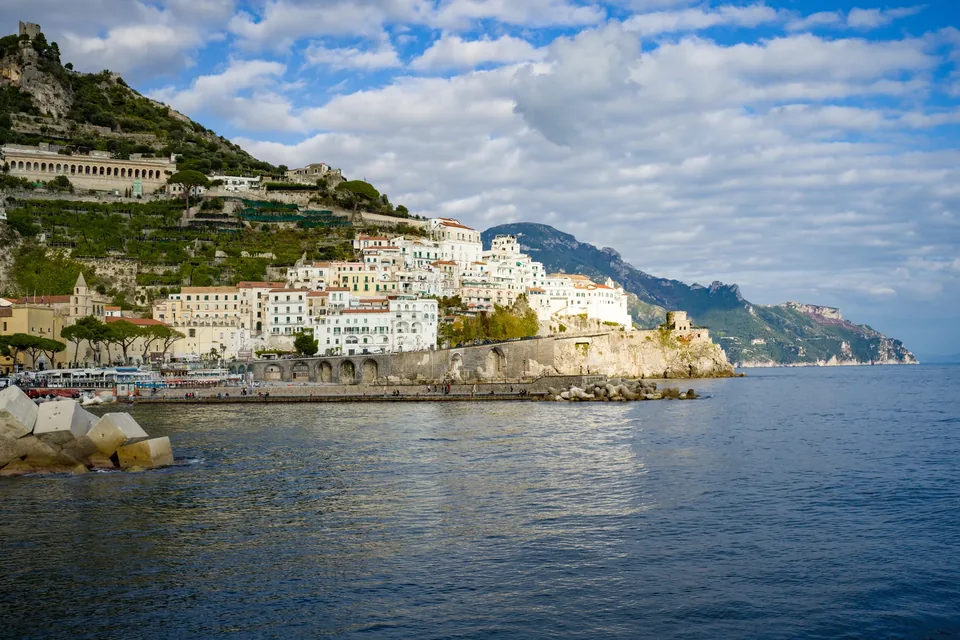
Limone Costa d'Amalfi has been a PGI since 4 July 2001 and comes from the Sfusato Amalfitano variety: an elliptical, tapering fruit with a medium-thick yellow skin, an intense scent from its essential oils, seedless flesh and very acidic juice. Qualigeo describes cultivation on terraces held by walls called macere, under chestnut pergolas at least 180 centimetres high, sometimes covered to shelter the trees and delay ripening; picking is by hand only, generally from February to October. The lemon groves, called giardini, also protected the slopes from landslides. From the fifteenth century maritime trade leaving Minori spread the crop, and lemons travelled aboard ships against scurvy. Among the uses Qualigeo lists lemon liqueur and limoncello.
Sources: Qualigeo (Fondazione Qualivita) — Limone Costa d'Amalfi IGP
Sorrento and Capri: the Ovale under straw mats
Limone di Sorrento has been a PGI since 6 November 2000 and is grown in parts of Vico Equense, Meta, Piano di Sorrento, Sant'Agnello, Sorrento, Massa Lubrense, Capri and Anacapri. The ecotype is the Ovale di Sorrento, also called the Massa Lubrense or massese lemon: an elliptical fruit of at least 85 grams with peel rich in essential oils. The trees grow on terraces under the Sorrento pergola of poles, preferably chestnut, covered with cane mats called pagliarelle. The tree flowers several times a year and harvest generally runs from 1 January to 31 October. Qualigeo recalls the specialised cultivation begun by the Jesuits in the seventeenth century, the grove known as il Gesù between Sorrento and Massa Lubrense, and among the specialities limoncello, made by infusing the peel in alcohol.
Sources: Qualigeo (Fondazione Qualivita) — Limone di Sorrento IGP
Gargano: oranges, femminello lemons and limoncello
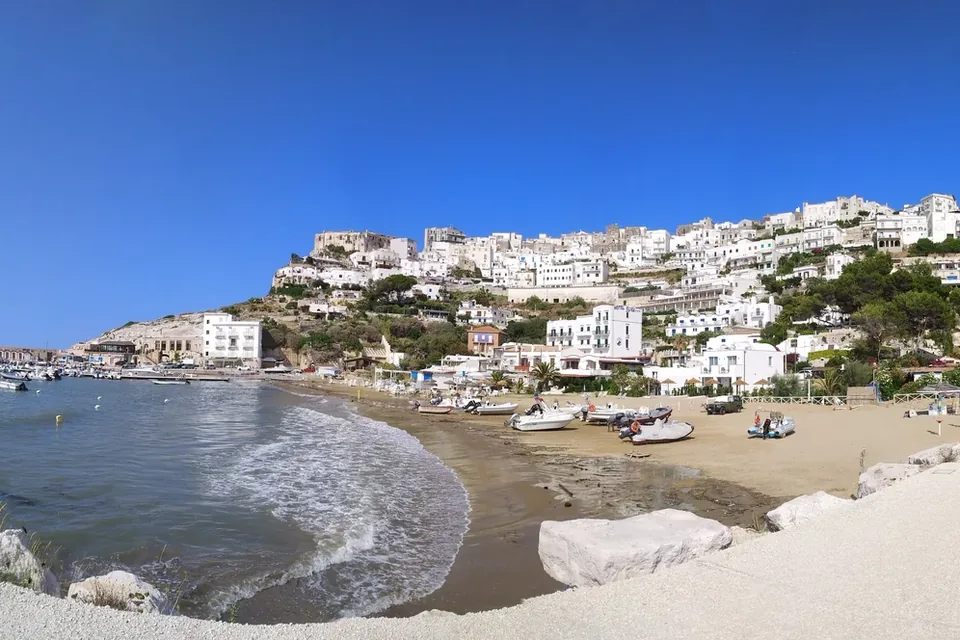
On the Gargano two citrus fruits are protected: Arancia del Gargano PGI, Biondo comune and Duretta varieties, and Limone Femminello del Gargano PGI, both in Vico del Gargano, Ischitella and Rodi Garganico. Qualigeo lists drinks and liqueurs among the orange's uses and calls the femminello an excellent base for liqueurs; thanks to local conditions the lemon can be picked practically all year. The Slow Food Presidium for Gargano citrus, supported by the National Park, notes that Rodi is the lemon town and Vico and Ischitella the orange towns, that around 1870 some 800 hectares produced about 150,000 quintals of citrus, and that fruit was shipped wrapped in coloured tissue to the United States and England. Producers' products include marmalades, candied peel and limoncello.
Sources: Qualigeo (Fondazione Qualivita) — Arancia del Gargano IGP · Qualigeo (Fondazione Qualivita) — Limone Femminello del Gargano IGP · Fondazione Slow Food — Presidio Agrumi del Gargano
Mandarin, citron, bergamot: what the traditional product lists say
Arancello and mandarinello have no specification; the closest official record is the national list of traditional food products. In the 2022 version, Campania lists mandarin liqueur from the Campi Flegrei and lemon cream liqueur, alongside fresh fruit such as the common Vesuvian mandarin, the mandarin and lemon of the Campi Flegrei and the Procida lemon. Calabria lists citrus liqueur, made from lemons or limetta, bergamot liqueur and citron liqueur. Puglia lists limoncello and ambrosia di limone. Traditional product status documents a local custom, but it does not set minimum ingredients or controls as the two Campanian lemon liqueur indications do.
Sources: Masaf — Elenco nazionale dei prodotti agroalimentari tradizionali 2022, allegato I (copia pubblicata dal progetto regionale Biodiversità Puglia) · Gazzetta Ufficiale — Decreto 2 settembre 2014, scheda tecnica dell'indicazione geografica «Liquore di Limone della Costa d'Amalfi»
How to drink them and use them in cooking
Rosolio was born to close an important meal, and that is where I would keep it: a small, cold glass, not frozen to the point of losing its scent. I would compare, on the same evening, a lemon liqueur with a geographical indication and a rosolio made with another citrus, mandarin or orange, to sense how much the peel's essential oil changes. In cooking, a drop of lemon liqueur perfumes a custard, a fruit salad or a baked dough; mandarin liqueur goes well with chocolate. Often, though, the fresh fruit is more interesting than the liqueur: a sliced sfusato with a pinch of salt and a few mint leaves tells the story of the coast as much as a small glass does.
Reading the label and taking it home
Facing a shelf of yellow bottles, I would ask a single question: does it say Liquore di Limone della Costa d'Amalfi or Liquore di limone di Sorrento, or just limoncello? In the first case the label must also give the minimum quantity of lemons per litre; in the second the name guarantees nothing about where the fruit came from. A craft limoncello can be excellent, but it is worth asking where the peel came from. For the journey I would choose small bottles, well wrapped and packed in hold luggage according to the airline's rules; fresh lemons keep for a few days somewhere cool and are the most faithful souvenir, especially when bought directly from the growers.
When to go and see the lemons
The liqueur is available all year, but the trip changes a great deal with the fruit season. On the Amalfi Coast the sfusato harvest runs, broadly, from February to October; in Sorrento from 1 January to 31 October; on the Gargano the femminello is picked almost all year, while the oranges follow two calendars, the Duretta in winter and spring and the Biondo from spring into summer. To see laden pergolas and walk through the terraced gardens I would choose spring, when the heat does not make the Amalfi Coast's steps and the Gargano's paths tiring. Visits to citrus groves must be arranged with the operators: they are working land, often private, not gardens open to the public.
Sources: Qualigeo (Fondazione Qualivita) — Limone Costa d'Amalfi IGP · Qualigeo (Fondazione Qualivita) — Limone di Sorrento IGP · Qualigeo (Fondazione Qualivita) — Arancia del Gargano IGP · Qualigeo (Fondazione Qualivita) — Limone Femminello del Gargano IGP
A thread for your journey
Journey idea: two trips for different seasons. In spring, the Amalfi Coast on foot between Minori, Maiori and the terraced gardens, with a citrus grove visit to be arranged with the operators and a small glass after dinner; in winter, the northern Gargano around Rodi Garganico, Vico and Ischitella, when the Duretta is being harvested and the walled gardens are easier to read.
Talk to us