
APULICA / SOFT DRINKS, SPIRITS AND LIQUEURS
Liquore di limone della Costa d'Amalfi (Amalfi Coast lemon liqueur)
IG · Soft drinks, spirits and liqueurs · Campania
In brief
- A liqueur made by cold-steeping the peel of Limone Costa d'Amalfi PGI lemons, Sfusato Amalfitano variety, in alcohol. (Qualigeo — Liquore di limone della Costa d'Amalfi IG)
- It is made in the thirteen municipalities of the Amalfi Coast, from Positano to Vietri sul Mare; bottling may also take place outside the area. (Qualigeo — Liquore di limone della Costa d'Amalfi IG)
- The peel steeps for at least 36 hours, each litre needs the peel of at least 250 g of lemons, and the liqueur is at least 25% alcohol by volume. (Qualigeo — Liquore di limone della Costa d'Amalfi IG)
History and origin
The story of this liqueur begins with the lemon. According to the Campania Region's sheet, the Arabs brought the lemon to Spain and Sicily, and from there to Campania; in Amalfi it spread above all because its seafarers needed citrus fruit against scurvy. As early as the eleventh century the Republic of Amalfi decreed that ships should always carry a supply of lemons, and between the fifteenth and nineteenth centuries the coast's fruit was in strong demand abroad as well.
To meet this demand the inhabitants won steep land from the rock, building the terraces of the «lemon gardens» that shape the landscape today. The name of the variety, Sfusato Amalfitano, recalls the tapering shape of the fruit and the area where it was selected.
The liqueur made from the peel belongs to this tradition: its quality and reputation have been documented without interruption for at least two centuries, and today it is a Geographical Indication for spirit drinks.
Sources: Regione Campania, Assessorato Agricoltura — Limone Costa d'Amalfi IGP · Qualigeo — Liquore di limone della Costa d'Amalfi IG
Area and method of production
Every stage of production takes place in the thirteen towns of the Amalfi Coast: Amalfi, Atrani, Cetara, Conca dei Marini, Furore, Maiori, Minori, Positano, Praiano, Ravello, Scala, Tramonti and Vietri sul Mare. Only packaging and bottling may also take place outside the area.
Only Limone Costa d'Amalfi PGI lemons of the Sfusato Amalfitano type are used. The fruit is peeled by hand or by machine, taking care to remove only the yellow, fragrant part of the peel, the flavedo. The peel, fresh, chilled or frozen, macerates cold in alcohol for at least 36 hours; the infusion is filtered and blended with water and sugar, or with a syrup prepared separately.
The specification requires the peel of at least 250 grams of whole lemons for every litre of liqueur, a figure that must be stated on the label. Additives, colourings, emulsifiers, stabilisers and flavourings are forbidden, and the liqueur is packed only in glass, in bottles of up to two litres.
Sources: Qualigeo — Liquore di limone della Costa d'Amalfi IG · eAmbrosia — Liquore di limone della Costa d'Amalfi (PGI-IT-01907)
How to recognise it
The liqueur has at least 25% alcohol by volume and a sugar content between 200 and 350 grams per litre. When freshly made it is opalescent and clears naturally over time; traces of essential oils may appear on the neck of the bottle, which the specification regards as a sign of authenticity.
The intense aroma comes from the fruit. The Sfusato Amalfitano has a peel of medium thickness, a particularly pale yellow and rich in essential oils and terpenes, a feature the Region describes as especially valuable for the liqueur. The lemon weighs at least 100 grams, with juicy flesh and few seeds.
To recognise the protected product it is worth reading the label: the name Liquore di Limone della Costa d'Amalfi, or Liquore di Limone Costa d'Amalfi, and the amount of lemons used per litre.
Sources: Qualigeo — Liquore di limone della Costa d'Amalfi IG · Regione Campania, Assessorato Agricoltura — Limone Costa d'Amalfi IGP
In the kitchen
On the Amalfi Coast the lemon goes with almost every dish: fish, seafood starters, pasta and meat, and the Region notes that some bars even serve lemon coffee. The liqueur made from its peel closes the meal, but it also finds its way into local pastry.
The aroma of the Sfusato flavours lemon delizie, limoncello babà, cakes, profiteroles and chocolates. The same area also makes crema di limone, or cremoncello, listed among the traditional products of Campania: the peel macerates in alcohol as for the classic liqueur, then syrup, milk boiled with sugar and cream are added. The result is a white, creamy rosolio of around 30% alcohol, often made at home.
Sources: Regione Campania, Assessorato Agricoltura — Limone Costa d'Amalfi IGP · Regione Campania, Assessorato Agricoltura — Liquore crema di limone (prodotto tradizionale)
Where to taste it
The place to taste it is the Amalfi Coast itself, in the thirteen towns of the production area, from Positano to Vietri sul Mare by way of Amalfi, Minori, Maiori and Cetara. Here the lemon groves, called lemon gardens, cover even the steepest slopes and protect the soil from erosion: they were traditionally covered with pagliarelle, straw mats now often replaced by shade nets.
The best time to see the gardens in full activity runs from spring to summer: the fruit is picked several times a year, but the finest lemons are harvested between March and the end of July. Walking among the terraces of Amalfi, Ravello or Tramonti and then tasting the liqueur in the town the lemons come from is the most direct way to understand its link with the land.
Sources: Regione Campania, Assessorato Agricoltura — Limone Costa d'Amalfi IGP · Qualigeo — Liquore di limone della Costa d'Amalfi IG
Protection
- Geographical indication (spirit drink) — PGI-IT-01907 (eAmbrosia — Liquore di limone della Costa d'Amalfi (PGI-IT-01907))
When
- The sources consulted give no months.
Where
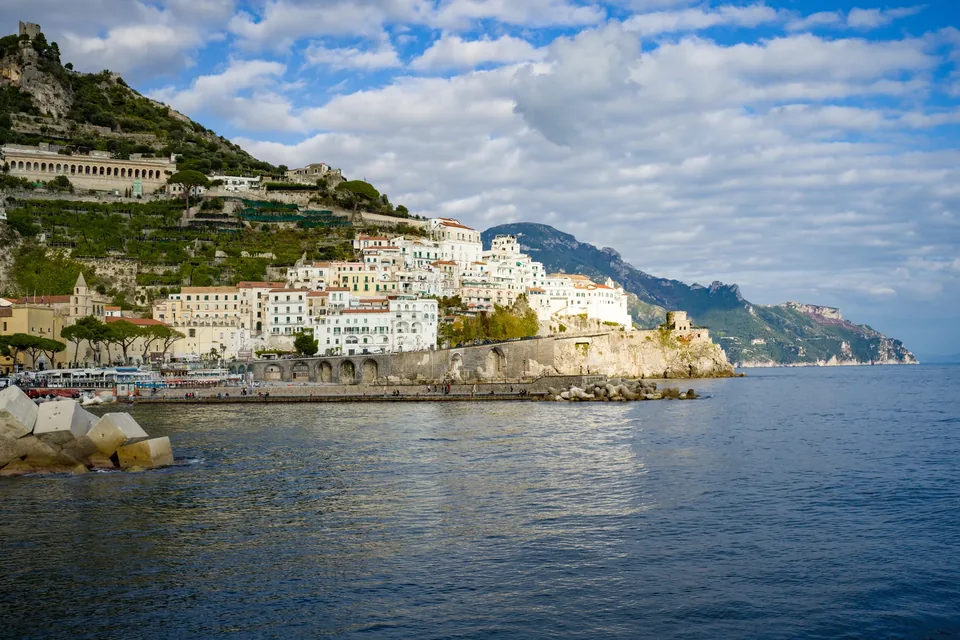
Amalfi Coast
The UNESCO cultural landscape between Positano and Vietri sul Mare: citrus terraces, footpaths, inland valleys and the history of a maritime republic.
Read the guide →Photo: Wolfgang Moroder / Wikimedia Commons — CC BY-SA 3.0 · Resized and converted to WebP.

Read more
Southern citrus rosolios: limoncello, arancello, mandarinello
Limoncello is a generic name, but the lemon liqueurs of Amalfi and Sorrento are geographical indications. PGI citrus, traditional products and family customs across the Amalfi Coast, the Sorrento peninsula and the Gargano.
Read the guide →