
A cheese born of the marshes
According to the Protection Consortium, buffalo mozzarella begins with the arrival of buffalo in southern Italy, which one of the most accepted hypotheses places in the Norman period. Around the 11th century the Volturno and Sele plains turned to marsh, creating the ideal habitat for the animals. The first records of production date from the 12th century: the monks of San Lorenzo in Capua offered pilgrims a 'mozza' or a smoked 'provatura' with a piece of bread. In the 14th century the cheese reached the markets of Naples and Salerno, the first buffalo dairies appeared in the 15th, and in 1570 the word 'mozzarella' was first written down, in Bartolomeo Scappi's cookery treatise. After Unification, Aversa opened the 'Taverna', a wholesale market with daily prices.
Sources: Consorzio di tutela Mozzarella di Bufala Campana DOP — Storia
Buffalo dairies and the Bourbon court
The Campania Region's profile notes that buffalo dairies, or bufalare, are circular masonry buildings with a central hearth for working the milk and small rooms along the walls where the herdsmen lived; examples survive in the Volturno and Sele plains, and a particularly characteristic one stands at Improsta, the Region's experimental farm in Eboli. The Consortium explains that the bufalare separated cheesemaking from milking: animals stayed outside, and inside were only the tools for provola, caciocavallo, butter, ricotta and mozzarella. In the 18th century the Bourbons raised buffalo on the royal estate of Carditello, in the province of Caserta, and set up a dairy there; according to the Consortium this step made the cheese a product of wide consumption.
Sources: Regione Campania, Assessorato Agricoltura — Mozzarella di bufala campana DOP · Consorzio di tutela Mozzarella di Bufala Campana DOP — Storia
Cizza, stretching and hand-cutting
The production rules, as summarised by Qualigeo, require milk to reach the dairy filtered and be processed within 60 hours of milking. A natural whey starter from the previous day's work is added, the 'cizza', which the Consortium likens to a sourdough starter, followed by calf rennet. The curd, broken with a tool called the 'spino' into walnut-sized lumps, matures under whey for a few hours. Before stretching, the cheesemaker tests it: boiling water is added to about half a kilo of curd to check that it stretches without breaking. The real stretching happens in a vat called the 'cumpecina' with a wooden stick, the 'menacaso', and very hot water. Then comes the mozzatura: with thumb and forefinger the cheesemaker pinches off each mozzarella, which rests in cold water and then in brine.
Sources: Qualigeo (Fondazione Qualivita) — Mozzarella di Bufala Campana DOP · Consorzio di tutela Mozzarella di Bufala Campana DOP — Allevamento e produzione
Shapes, look and flavour
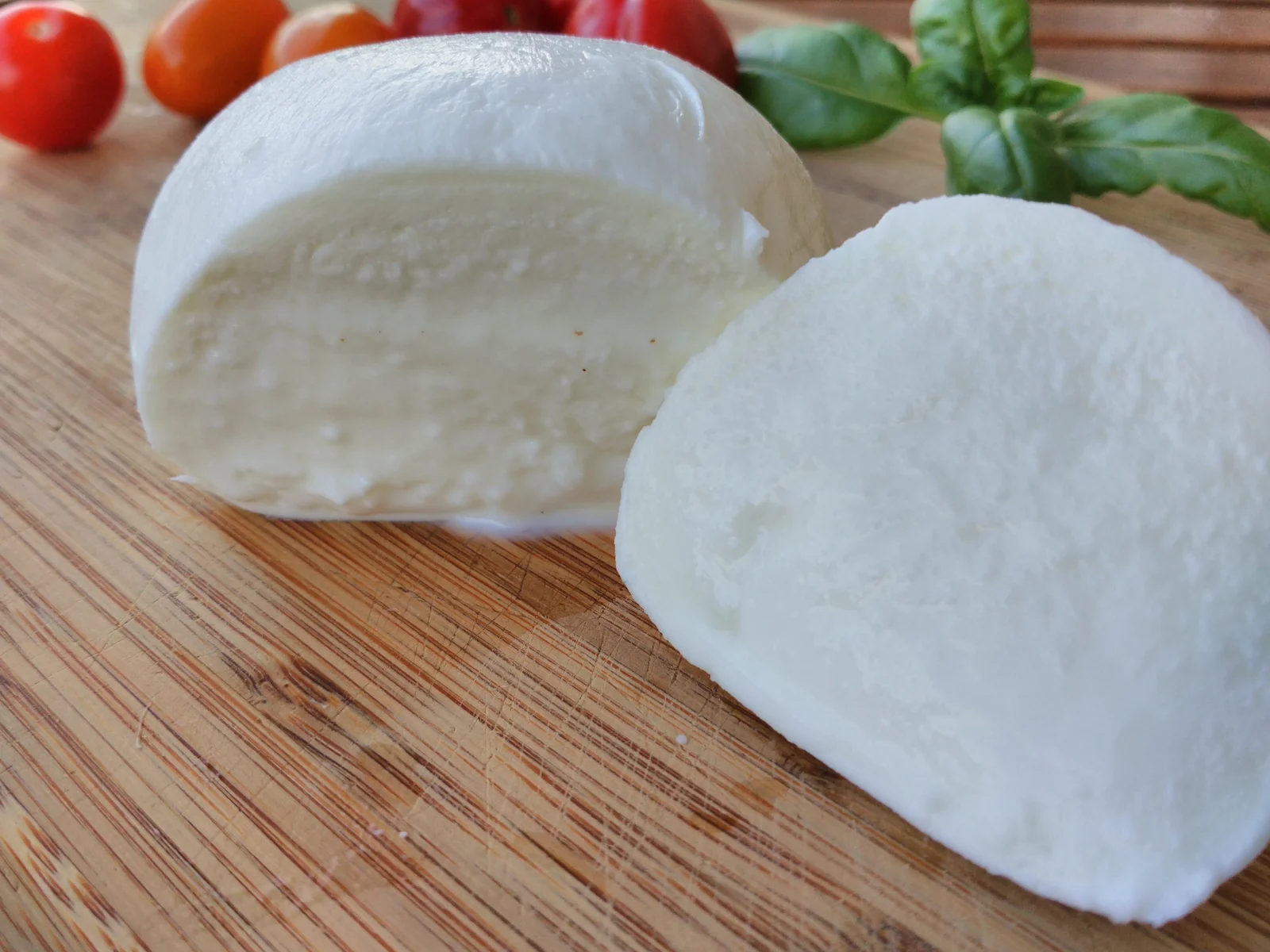
Besides the round shape, the Campania Region lists bocconcini, ciliegine, perline, nodini, ovolini and plaits: weights range from 10 to 800 grams, up to 3 kilos for plaits. Smoking is allowed, provided the name is followed by the word 'affumicata'. On average 4.2 litres of buffalo milk make one kilo of mozzarella. The rind is very thin and porcelain white; the paste has no holes and is slightly elastic for the first eight to ten hours, then increasingly melting. Qualigeo describes thin layers inside, a delicate flavour with a faint musky note and an aroma recalling lactic ferments. The Consortium points out that the PDO requires buffalo of the Italian Mediterranean breed, kept in open-air paddocks with water pools, because the animal loves wet ground.
Sources: Regione Campania, Assessorato Agricoltura — Mozzarella di bufala campana DOP · Qualigeo (Fondazione Qualivita) — Mozzarella di Bufala Campana DOP · Consorzio di tutela Mozzarella di Bufala Campana DOP — Allevamento e produzione
What the PDO guarantees
According to the Campania Region the designation was recognised by Regulation (EC) No 1107/96, published in the Official Journal of the European Communities on 21 June 1996; Qualigeo places it in the cheese category. The Campania Region recalls national recognition by presidential decree of 10 May 1993 and the 2008 amendments to the specification, which also enlarged the area. The Consortium, based in the Regie Cavallerizze of the Royal Palace of Caserta, stresses exactly this point: in international food law 'mozzarella' is a generic word, like pizza or pasta, whereas 'Mozzarella di Bufala Campana DOP' identifies an area of origin, a specification and a product to be told apart from imitations.
Sources: Regione Campania, Assessorato Agricoltura — Mozzarella di bufala campana DOP · Qualigeo (Fondazione Qualivita) — Mozzarella di Bufala Campana DOP · Consorzio di tutela Mozzarella di Bufala Campana DOP — Territorio
Four regions and the supply chain in figures
The production area covers the provinces of Caserta and Salerno and some municipalities of Naples and Benevento in Campania; some municipalities in the provinces of Latina, Frosinone and Rome in Lazio; the single municipality of Venafro in Molise; and some municipalities in the central part of the province of Foggia in Apulia. According to the Consortium, certified production reached 57,574 tonnes in 2025, 36% of it exported, mainly to France, Germany, Spain and Britain. About 1,600 farms are involved and the supply chain employs around 11,000 people. The area contains three national parks, Circeo, Cilento and Gargano, and ten regional parks: a reminder of how many different landscapes lie behind the same cheese.
Sources: Qualigeo (Fondazione Qualivita) — Mozzarella di Bufala Campana DOP · Consorzio di tutela Mozzarella di Bufala Campana DOP — I numeri della DOP
Where mozzarella meets the journey
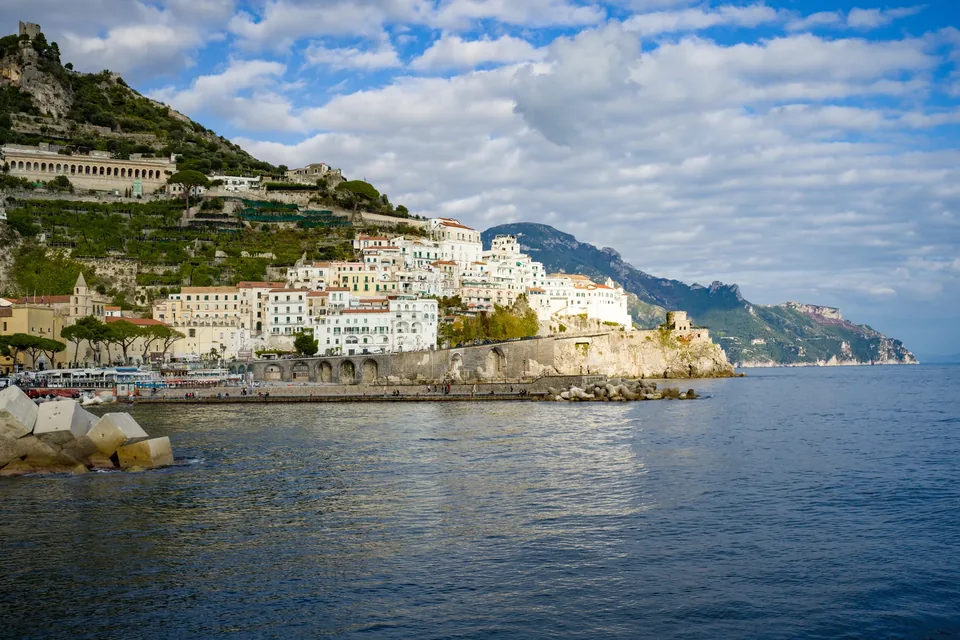
The Consortium presents the PDO's places as territories worth visiting: the area around Caserta with its Royal Palace; the Domitian coast; the Cilento, with the National Park and the archaeological site of Paestum; southern Lazio with the Aurunci mountains, Ciociaria and Circeo; and the Amalfi Coast, from Sorrento to Vietri sul Mare by way of Amalfi, Cetara and Positano. The Campania Region adds a valuable clue for travellers: the old buffalo dairies survive in the Volturno and Sele plains. For a trip in the province of Salerno, the Sele plain between Eboli and Paestum is where farming landscape, the history of land reclamation and archaeology come together. Dairy visits should always be arranged with the operators.
Sources: Consorzio di tutela Mozzarella di Bufala Campana DOP — Territorio · Regione Campania, Assessorato Agricoltura — Mozzarella di bufala campana DOP
Keeping it and taking it home
Qualigeo advises keeping mozzarella in a cool place, in a glass or ceramic container, always covered by its own liquid; if it goes into the fridge, take it out ahead of time and eat it at room temperature. It is sold all year, pre-packed at origin in sealed bags, tubs or cups, with the word 'affumicata' where relevant. The Consortium recalls that it once left the production sites, the 'pagliare' or 'difese', wrapped in rush or myrtle leaves and packed in wicker or chestnut crates. For pizza, Qualigeo suggests draining it and leaving it in the fridge for a few hours so it loses excess liquid. If you are carrying it on a trip, plan a short journey and bring a cool bag.
Sources: Qualigeo (Fondazione Qualivita) — Mozzarella di Bufala Campana DOP · Consorzio di tutela Mozzarella di Bufala Campana DOP — Storia
In the kitchen: on its own first, then in dishes
I would taste it first with nothing around it, at room temperature, cutting it in half to see the milk run and the layered texture. Then I would pair it with a few ingredients that do not cover it: ripe tomato, a drizzle of Campanian oil, basil and fresh bread. An instructive test is comparing the same mozzarella freshly made and a few hours later: elasticity changes, and so does the perception of flavour. In cooking it works on Neapolitan pizza and in baked pasta, but travellers who want to understand it would do well to leave elaborate dishes for later. For wine, I would choose a fresh Campanian white that is not too aromatic, so as not to overwhelm its delicacy.
No single festival: plan around visits instead
In the institutional sources we consulted we found no official buffalo mozzarella festival with fixed dates, and we do not name one rather than invent it. The cheese is made all year anyway: it is better to build the day around a visit arranged with a dairy in the PDO area, ideally in the morning when the milk is worked, then move on to Paestum or the coast. In summer, expect heat and a crowded seaside rhythm; in spring and autumn the Sele plain and the Cilento are easier to enjoy at a slower pace. For PDO-related events, the safest approach is to check the Consortium's calendar around the time of travel.
A thread for your journey
Journey idea: a morning in the Sele plain with a visit, to be arranged with a dairy in the PDO area, while the milk is being worked; taste the mozzarella on its own at room temperature, then spend the afternoon among the temples of Paestum before a slow return towards the Cilento or the Amalfi Coast.
Talk to us

,_East_view.jpg)
