Why it is called sfusato
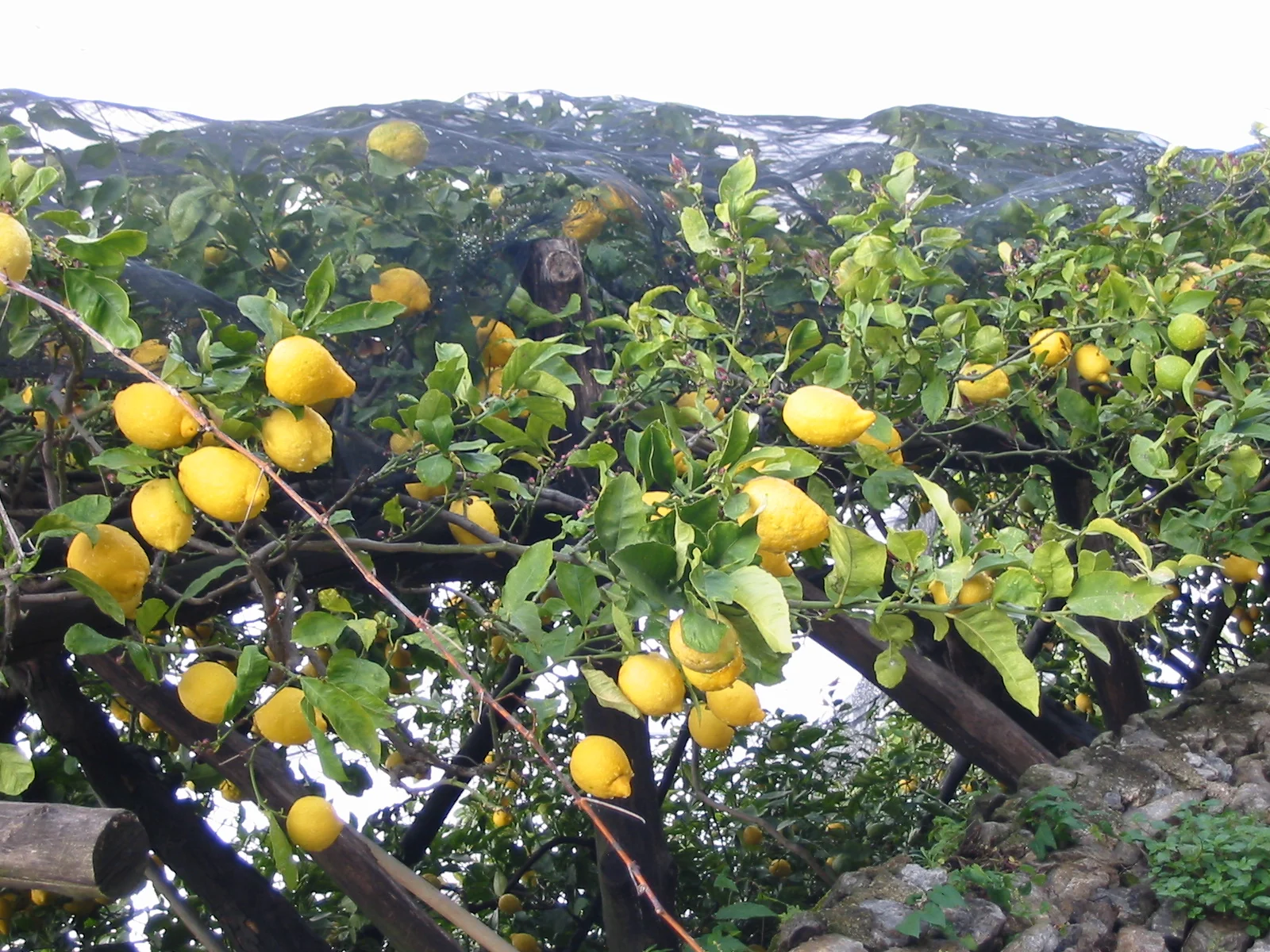
The Campania Region's profile explains that the variety's name, Sfusato Amalfitano, carries two pieces of information: the tapered shape of the fruit and the area where it developed over time, the Amalfi Coast. It is a medium-to-large lemon of at least 100 grams, with a medium-thick, particularly pale yellow peel. Its aroma is intense thanks to abundant essential oils and terpenes, a trait prized for lemon liqueur. The flesh is juicy and moderately acidic, with few seeds. The Region also notes that studies by the University of Naples Federico II place it among the varieties richest in vitamin C, and that it is valued both fresh and for limoncello.
Sources: Regione Campania, Assessorato Agricoltura — Limone Costa d'Amalfi IGP
A seafaring story
According to the Protection Consortium, lemon groves appear on the coast from the 11th century and were called 'gardens' for the care lavished on them; they also protected the slopes from landslides. For a seafaring people, lemons on board meant a remedy against scurvy. The Campania Region adds that in the 11th century the Amalfi Republic required ships to carry supplies of the fruit, and that between the 15th and 19th centuries Amalfi lemons were in great demand, including from northern Europe. In the 17th century the historian Matteo Camera wrote of lemons shipped from Minori together with 'cetrangoli', bitter oranges; a text from the same century mentions a 'limon amalphitanus' very similar to today's sfusato. In the 20th century shipments also reached the Americas.
Sources: Consorzio di tutela Limone Costa d'Amalfi IGP — Storia · Regione Campania, Assessorato Agricoltura — Limone Costa d'Amalfi IGP
Terraces, straw covers and repeated harvests
The typical cultivation, the Campania Region explains, is on terraces along the steepest slopes. Plants were once covered with 'pagliarelle', straw mats now largely replaced by shade nets. The lemon flowers and fruits several times, so harvesting is repeated during the year, but the finest crop comes between March and the end of July. About 400 hectares are cultivated, with an average harvest of around 8,000 tonnes. The same profile flags a serious problem: the abandonment of the most inaccessible groves, due to tiny farm sizes and difficult access. Carrying fruit in baskets on the head, as local women used to do, is no longer realistic, and cable lifts or monorails have not yet solved the issue.
Sources: Regione Campania, Assessorato Agricoltura — Limone Costa d'Amalfi IGP
Twelve towns and PGI protection
The Campania Region's product page recalls that the Limone Costa d'Amalfi protected geographical indication was recognised by Regulation (EC) No 1356 of 4 July 2001, published the next day in the Official Journal of the European Communities. The Campania Region lists the twelve towns of the area: Amalfi, Cetara, Conca dei Marini, Furore, Maiori, Minori, Positano, Praiano, Ravello, Scala, Tramonti and Vietri sul Mare. The Protection Consortium was formed on 3 October 2002 and recognised by ministerial decree on 29 July 2003; the Region places its registered office in Amalfi and its operational office in Minori. Its tasks include protecting the name, promoting the product and preserving traditional growing techniques.
Sources: Regione Campania, Assessorato Agricoltura — Limone Costa d'Amalfi IGP · Consorzio di tutela Limone Costa d'Amalfi IGP — Il Consorzio
A UNESCO cultural landscape
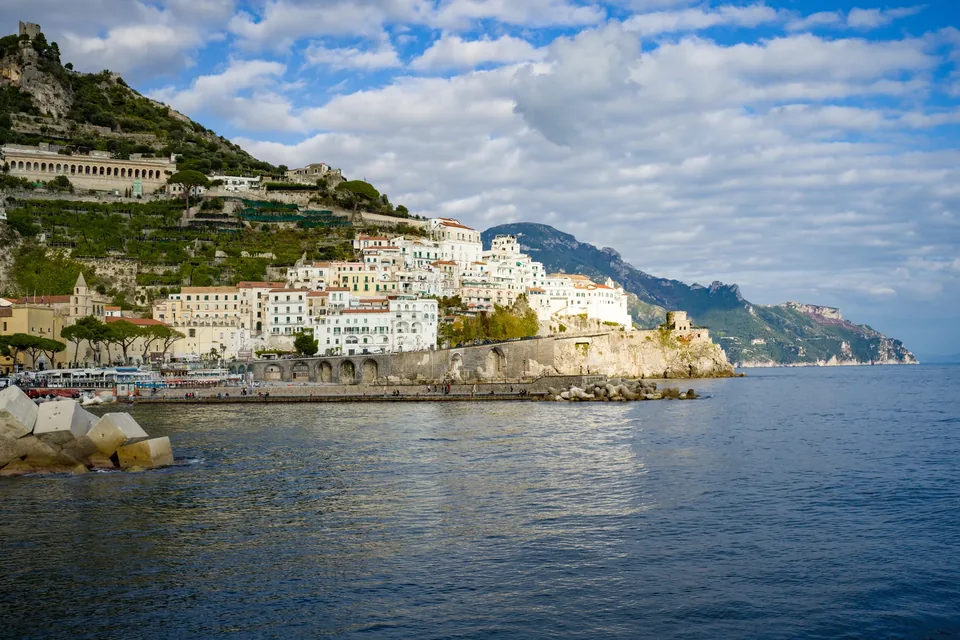
The Amalfi Coast has been on the World Heritage List since 1997. UNESCO's description calls it a Mediterranean landscape of exceptional value, born of dramatic topography and a long history: alongside rock, woods and scrub there are citrus groves and vineyards, planted wherever people found a suitable spot. Communities developed terraced vineyards and orchards on the lower slopes and grazing on the upper ones. Italia.it notes that the coast stretches from Positano to Vietri sul Mare, between the Gulf of Salerno and the Lattari Mountains, and that its terraces hold citrus, vines and olives. Looking at the lemon groves this way helps you see that every dry-stone wall is part of the heritage, not just a photo backdrop.
Sources: UNESCO World Heritage Centre — Costiera Amalfitana · Italia.it — Costiera Amalfitana
On foot between Maiori and Minori
The Touring Club Italiano, in a guided visit organised by its Salerno club, describes the Lemon Path as a footpath between Maiori and Minori that reaches the hamlet of Torre, high on the headland between the two towns, skirting groves where the sfusato amalfitano PGI is grown. The programme started from the Collegiate Church of Santa Maria a Mare in Maiori, passed the church of San Michele in Torre and descended towards the centre of Minori, with explanations of growing techniques and the history of citrus on the coast. It ended with a visit to the Roman Villa of Minori. It is a concrete way to see the terraced groves up close, rather than only from the sea or the road.
In the kitchen: from salad to coffee
Thanks to its thick peel, juicy semi-sweet flesh and near absence of seeds, writes the Campania Region, the sfusato is widely used in cooking. Locally it is often served raw as a salad and used as a seasoning: with fish, seafood starters, pasta dishes and meat, whole, sliced or as an ingredient. Some bars even serve 'lemon coffee'. Then there is limoncello, peel infused in alcohol, which here, as in Sorrento and Capri, found its natural home. The sfusato's aroma underpins many local sweets: 'delizie', limoncello babà, cakes, profiteroles and chocolates. Among the products to try on the coast, Italia.it also lists 'ndunderi, large semolina and ricotta gnocchi that suit a citrus dressing well.
Sources: Regione Campania, Assessorato Agricoltura — Limone Costa d'Amalfi IGP · Italia.it — Costiera Amalfitana
How to really taste it
The most instructive way to understand the sfusato is to taste it in three forms on the same day. First sliced and raw, perhaps with a pinch of salt: you notice how gentle the acidity is compared with an ordinary lemon. Then in a dish where the zest matters more than the juice, such as pasta or simply cooked fish: that is where the essential oils come through. Finally in a dessert, which shows how the same scent stands up to sugar. I would leave limoncello for last and in small amounts, because alcohol tends to mask nuances. With fish I would choose a fresh, savoury white from the Costa d'Amalfi. If you have a kitchen, try grating the zest over buffalo mozzarella: a Campanian pairing that needs nothing else.
Season, festivals and what to take home
Based on the season indicated by the Region, spring and early summer are when the groves show their best crop and the paths are still walkable before the full heat; in summer the coast is crowded and it is best to walk early in the morning. In the institutional sources we consulted we found no lemon festival with official, fixed dates, so we do not name one: before leaving, it is worth checking the town and Consortium websites. To take home, fresh lemons travel well if not crushed and kept cool for a few days; choose limoncello by reading the label and looking for a reference to Limone Costa d'Amalfi PGI, because the name of the liqueur alone does not guarantee where the fruit comes from.
A thread for your journey
Journey idea: an early morning on the Lemon Path from Maiori to Minori, stopping at Torre to look down on the terraces; in Minori the Roman Villa and a lunch where lemon appears raw, in a pasta dish and in a dessert. In the afternoon, a visit to a lemon grove can be arranged with operators to see the covers and the work on the terraces up close.
Talk to us