

Why go
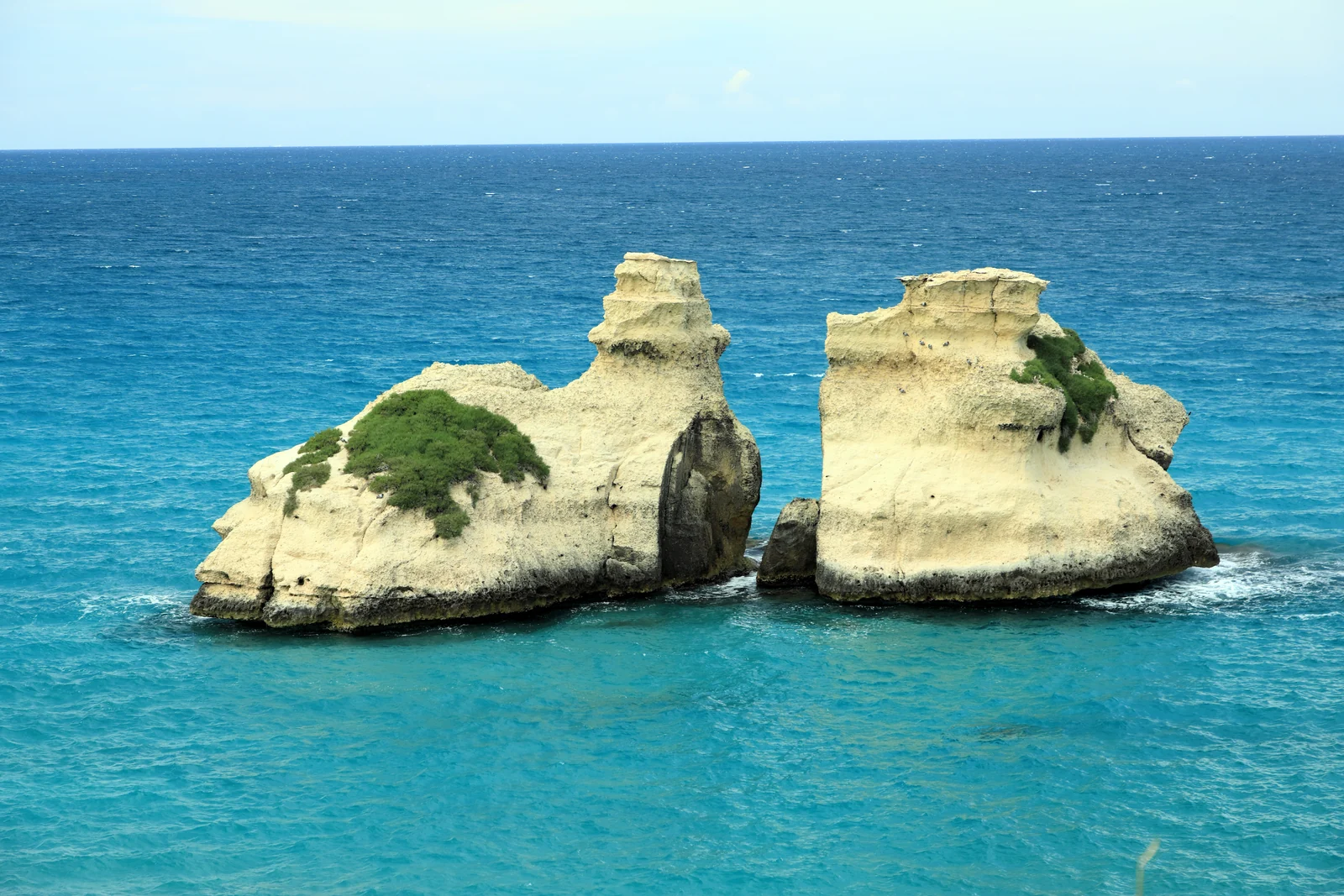
Torre dell'Orso is one of the seaside villages of Melendugno, on Salento's Adriatic coast, and its signature is the bay: a long crescent of sandy beach, closed by cliffs on both sides and backed by a pine wood. It takes its name from the old watchtower overlooking the shore, and offshore the two sea stacks known as the Two Sisters give the landscape its familiar profile.
The national tourism portal presents it as one of Puglia's finest beaches and a much-loved holiday base, with a compact village, benches overlooking the sea from the belvedere and blue water suited to swimming, kayaking and, on windy days, surfing.
But the reason to choose it goes beyond the sand. Less than three kilometres away lies Roca Vecchia, one of Italy's most important protohistoric sites, with the Grotta della Poesia; inland, Melendugno and Borgagne keep courtyard houses and underground olive presses, and a little further on the fortified village of Acaya and the Cesine reserve round off a day that combines sea, history and nature.
The beach at Torre dell'Orso is among the Melendugno beaches holding the 2026 Blue Flag, together with Roca, San Foca with Torre Specchia and Torre Sant'Andrea. The town council's tourist guide describes a long beach of very fine sand surrounded by a rocky ridge full of hollows and caves: on the northern headland stands the tower built in 1568, at the other end the bay is closed by Punta Matarico, where the cave of San Cristoforo opens, used as a sanctuary from the fourth century BC to the thirteenth century AD, and a few metres away rise the Two Sisters.
Sources: Italia.it — Acaya, Roca Vecchia e Torre dell'Orso: una gita di un giorno · Viaggiare in Puglia — Torre dell’Orso · Italia.it — Melendugno · Fondazione per l’Educazione Ambientale (FEE) Italia — Spiagge Bandiera Blu 2026 · Comune di Melendugno, Assessorato al Turismo — Visit Melendugno: Lo Spazio della Scoperta, Torre dell’Orso · Comune di Melendugno, Assessorato al Turismo — Visit Melendugno: La torre di Torre dell’Orso · Comune di Melendugno, Assessorato al Turismo — Visit Melendugno: Grotta di San Cristoforo · Comune di Melendugno, Assessorato al Turismo — Visit Melendugno: Leggenda de «Le due sorelle» a Torre dell’Orso
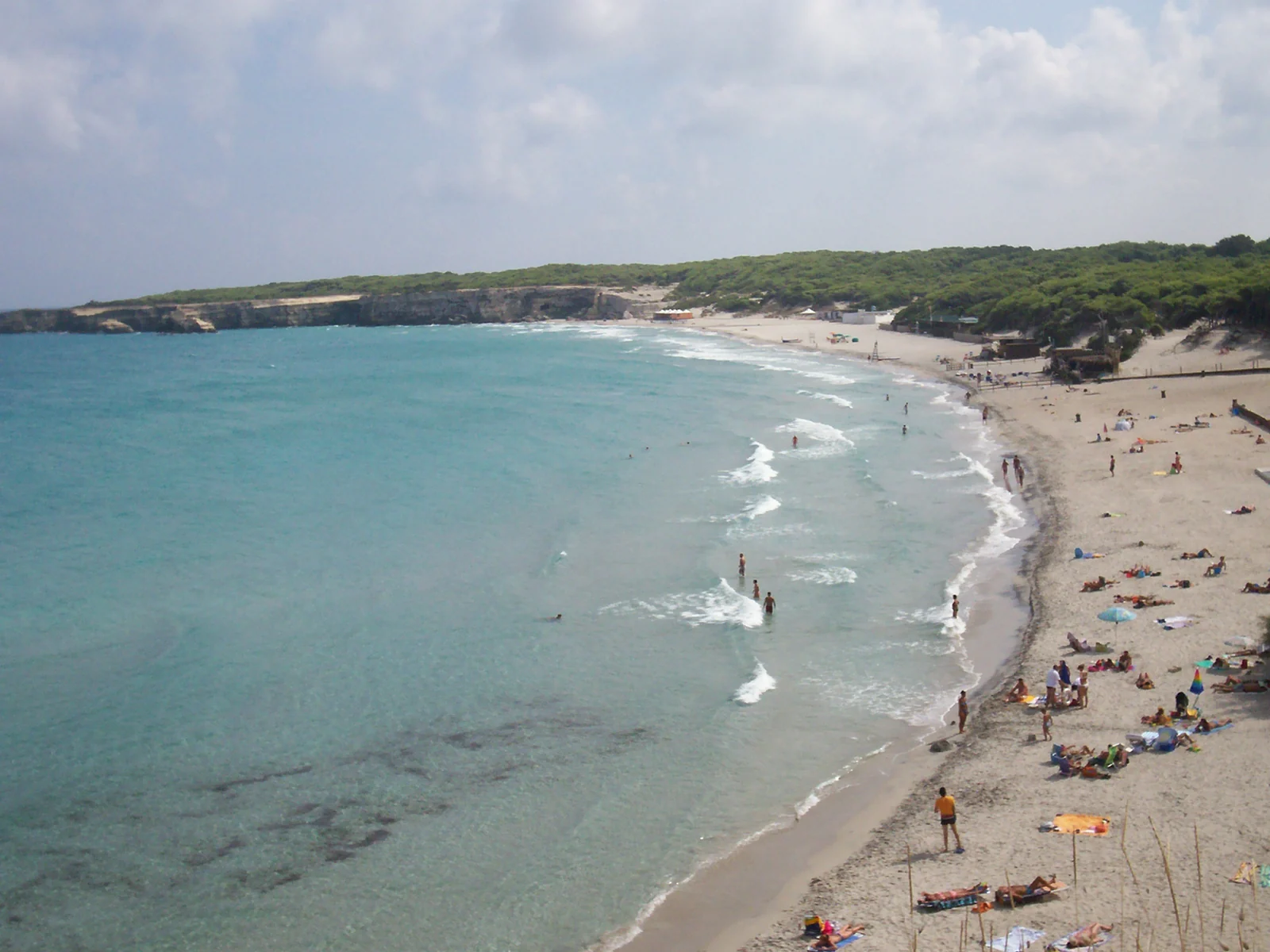
Photo: Freddyballo / Wikimedia Commons — CC BY-SA 3.0 · Resized and converted to WebP.
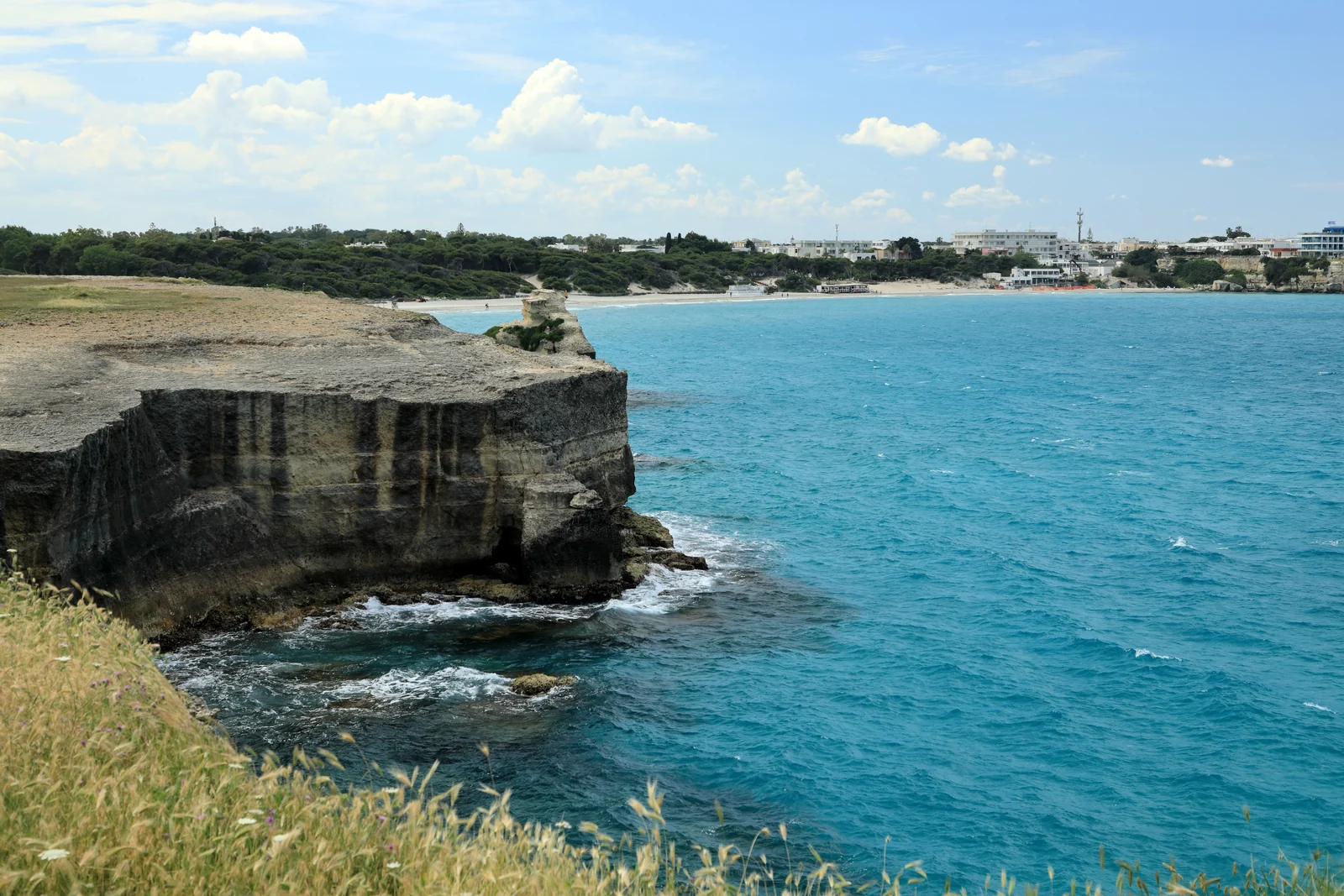
Photo: Falk2 / Wikimedia Commons — CC BY-SA 4.0 · Resized and converted to WebP.
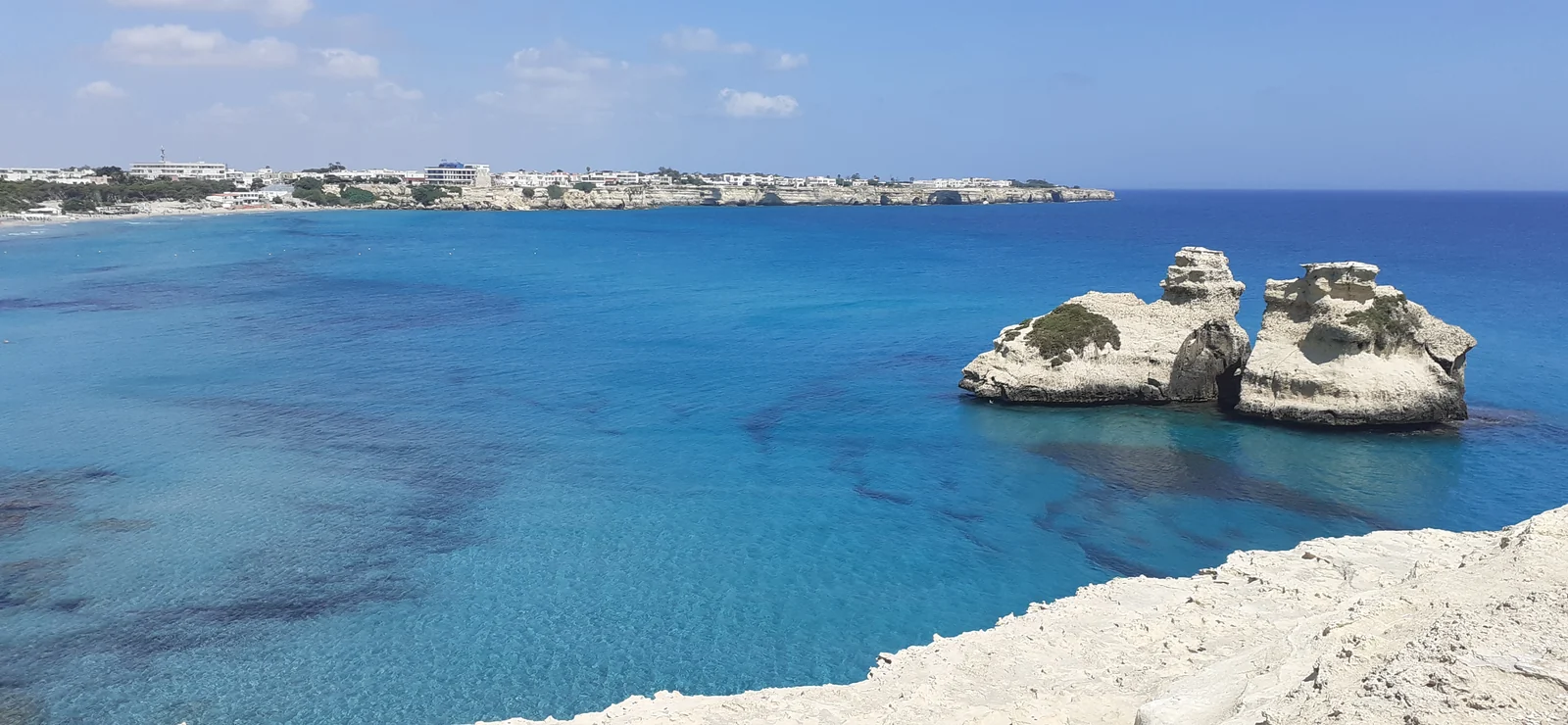
Photo: Patrice78500 / Wikimedia Commons — CC BY-SA 4.0 · Resized and converted to WebP.
History
The Melendugno coast has been inhabited and defended for many centuries. University of Salento research at Roca Vecchia describes Bronze Age fortifications, with the earliest phases between the mid-seventeenth and mid-fourteenth centuries BC, and a monumental gate preserved with walls over three metres high in places. The national portal notes that the site was inhabited from the Neolithic to the second century BC and was a place of refuge and exchange for those crossing the Adriatic from Greece and Illyria.
The discovery that changed the site's story dates from 1983, when the collapse of a sea-cave vault revealed walls covered with inscriptions and carvings from different civilisations. Investigations have continued ever since; in 2019 the area was fenced and turned into a protected archaeological site, to continue the excavations and protect the heritage from erosion and wear.
Fear of raids from the sea left other marks: the coastal tower that gives Torre dell'Orso its name, the tower and fort of Roca linked to the defences ordered by Charles V, and inland the fortified village of Acaya, redesigned by Gian Giacomo dell'Acaya and completed in 1536.
The tower of Torre dell'Orso was built in 1568, like the neighbouring towers, and armed with artillery in 1576: the task of arming it fell to Bartolomeo Petruzzo, procurator of the community of Borgagne. Its job was to spot ships and signal danger to the towers of Sant'Andrea and Roca Vecchia and to the inland villages. Before the tower the place was called L'urso or Urso, and in dialect it is still l'Ursu; today's name already appears on a map of 1693. In the second half of the nineteenth century the tower was abandoned but still in good condition: a topographic survey of the time notes that from there one could see “all the Greek islands and Albania very well”.
Far older is the cave of San Cristoforo, in the ridge that closes the bay at the opposite end from the tower. It was a coastal sanctuary from the fourth century BC to the thirteenth century AD; between the fourth and third centuries BC the cave and the space in front of it were rearranged, in the same years in which the Messapian village of Roca was growing, and for this reason the two sites are thought to have been closely linked. On the walls, those setting out carved invocations to ancient deities for the crossing to the bays of Albania: a third-century BC inscription records one Felicior Hispanus asking the god to cross the mouth of the strait safely and without fear. With Christianity the cave took the name of San Cristoforo, protector of travellers, and the drawing of a cargo ship and many crosses appeared on the walls. Many carvings were removed at the end of the nineteenth century; some are on display at the “Sigismondo Castromediano” archaeological museum in Lecce.
Sources: Università Salento — Roca Vecchia, ricerche archeologiche · Italia.it — Acaya, Roca Vecchia e Torre dell'Orso: una gita di un giorno · Comune di Melendugno, Assessorato al Turismo — Visit Melendugno: La torre di Torre dell’Orso · Comune di Melendugno, Assessorato al Turismo — Visit Melendugno: Grotta di San Cristoforo
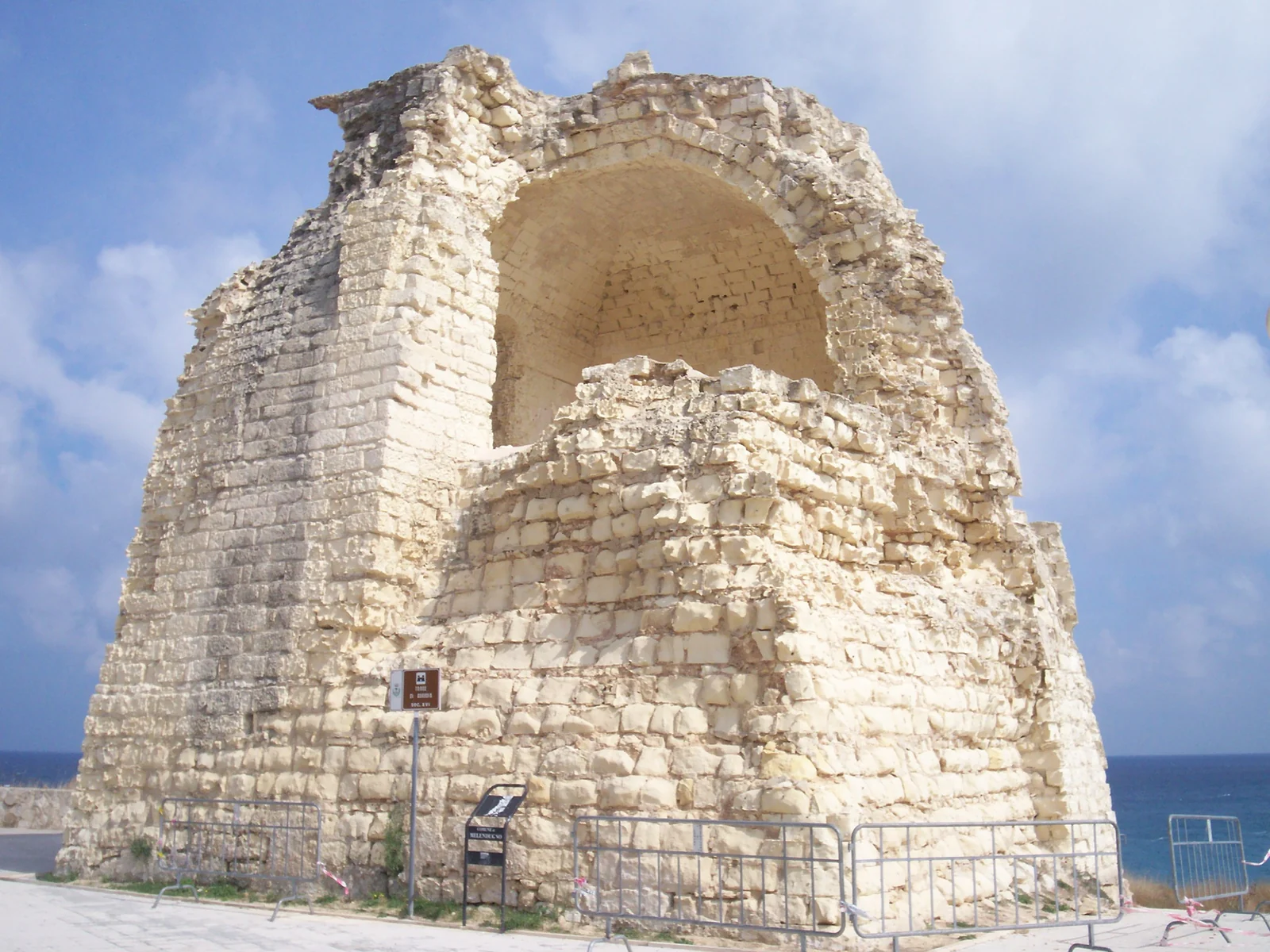
Photo: Freddyballo / Wikimedia Commons — CC BY-SA 3.0 · Resized and converted to WebP.
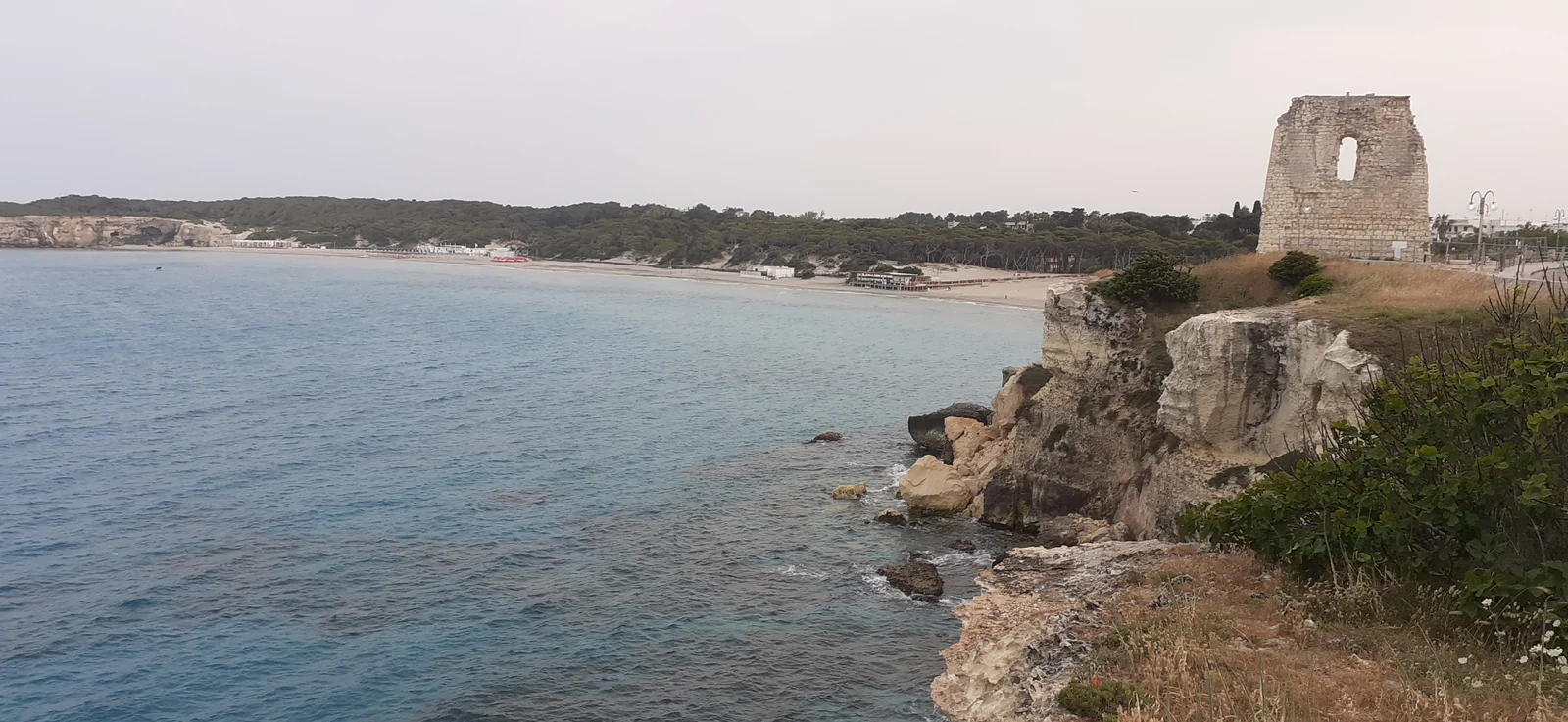
Photo: Patrice78500 / Wikimedia Commons — CC BY-SA 4.0 · Resized and converted to WebP.
What to see
The bay is the first thing to look at slowly: sand, rocks, dunes and pine wood form a precise landscape, with the Two Sisters offshore and the San Cristoforo rock face among the coast's landmarks. From the belvedere on Via Bellavista you take in the whole beach; the Two Sisters viewpoint, reached on foot from the beach by a steep stretch or by car, is especially striking at sunset.
At Roca Vecchia the route recommended by the national portal is split into two areas: first the Grotta della Poesia and the smaller Grotta della Poesia Piccola, the tower of the Madonna di Roca and the fort; then the larger area with the foundations of the Bronze Age fortifications and the Messapian walls. Guided tours help make sense of a site recording three and a half thousand years of settlement. Swimming in the cave is no longer allowed.
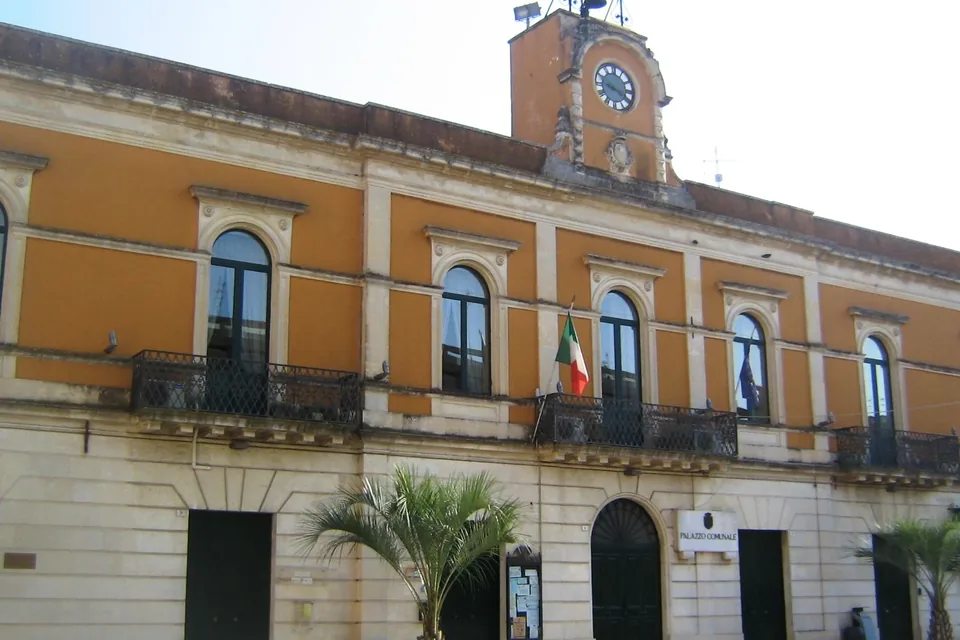
Inland, Melendugno and Borgagne keep historic centres with courtyard houses, the D'Amely baronial palace, the castle at Borgagne, the clock tower and many churches; the underground olive presses recall an intensely agricultural past. Out of season the abandoned village of Roca Nuova is also worth a stop.
The coastal tower stands on the northern headland of the bay, on Via Camillo Cavour; according to the town council it is now in poor condition, worn by the weather. Below the tower, in the soft stone of the ridge, several hollows open up, forming a rock-cut site used since antiquity.
At the other end of the beach the ridge of Punta Matarico, whose name may come from the Greek madarós, “bald”, for its flat, rocky tip, holds the cave of San Cristoforo, set above the level of the beach. A few metres from the cave, detached from the ridge and very like each other, rise the Two Sisters: the town council describes them as the edge of the bay on that side and explains that their shape shows the slow erosion that makes the coast retreat, in the contrast between white limestone and blue sea.
Sources: Viaggiare in Puglia — Torre dell’Orso · Italia.it — Acaya, Roca Vecchia e Torre dell'Orso: una gita di un giorno · Italia.it — Melendugno · Comune di Melendugno, Assessorato al Turismo — Visit Melendugno: La torre di Torre dell’Orso · Comune di Melendugno, Assessorato al Turismo — Visit Melendugno: Grotta di San Cristoforo · Comune di Melendugno, Assessorato al Turismo — Visit Melendugno: Leggenda de «Le due sorelle» a Torre dell’Orso
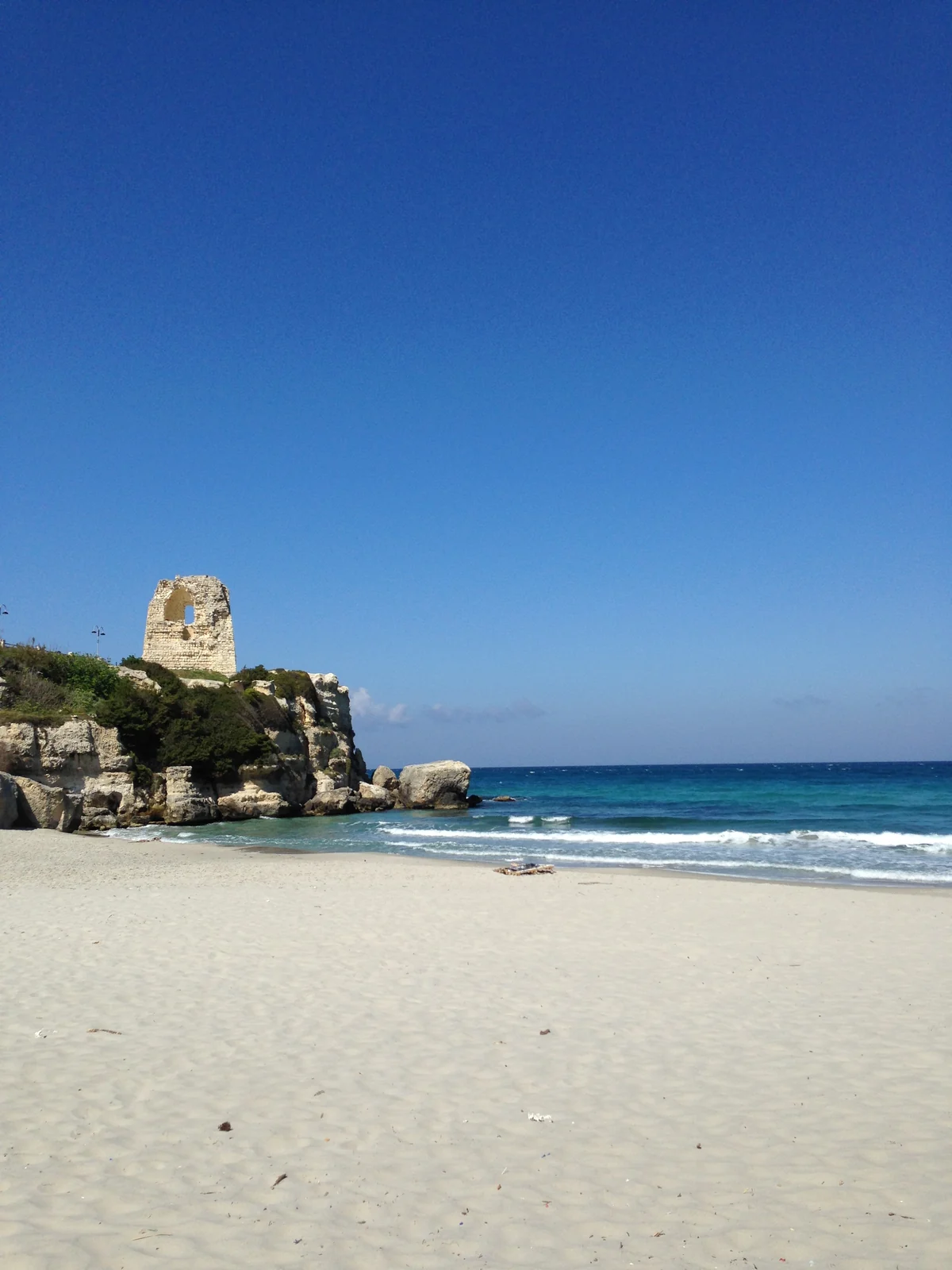
Photo: paolo dagani / Wikimedia Commons — CC BY 3.0 · Resized and converted to WebP.
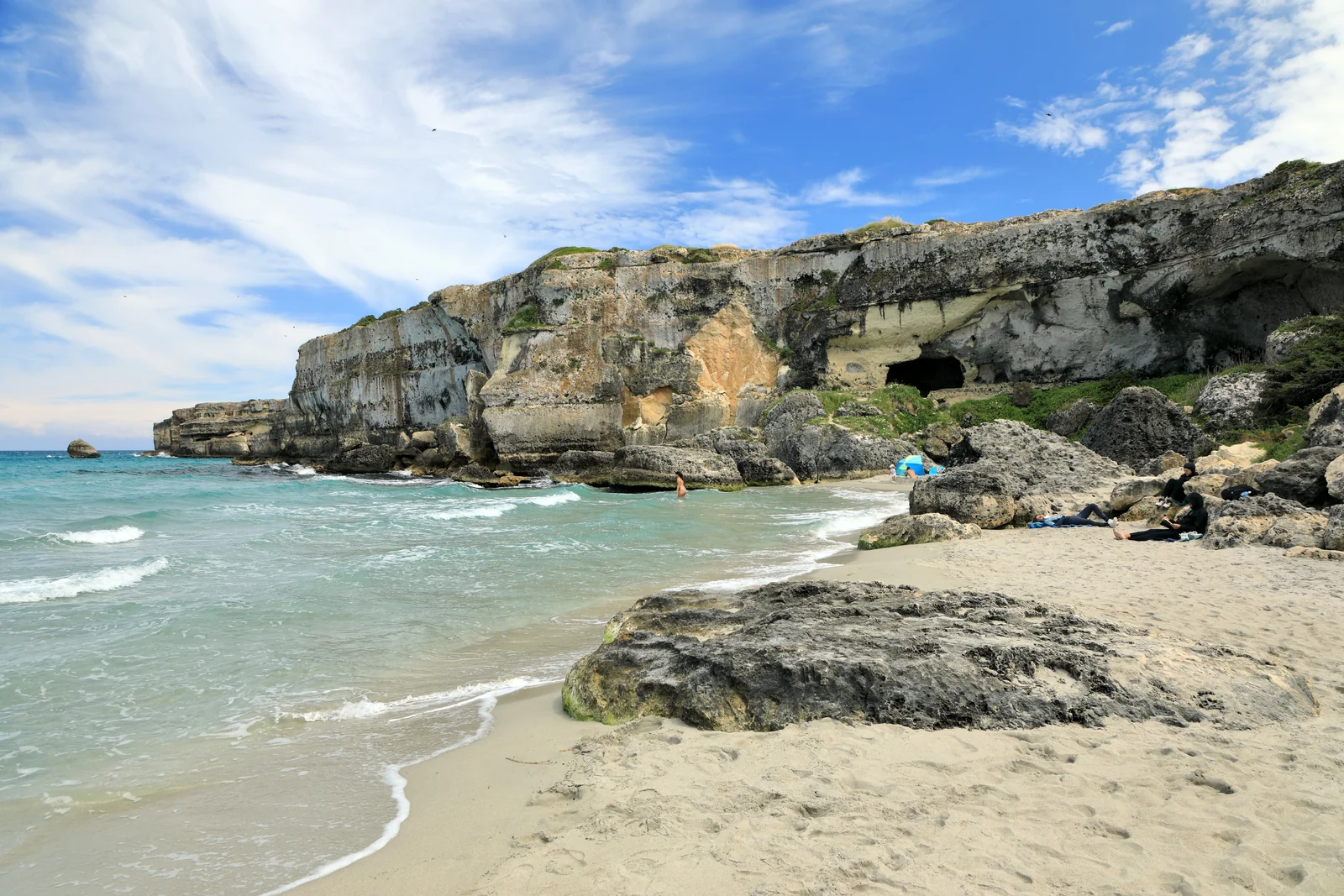
Photo: Falk2 / Wikimedia Commons — CC BY-SA 4.0 · Resized and converted to WebP.
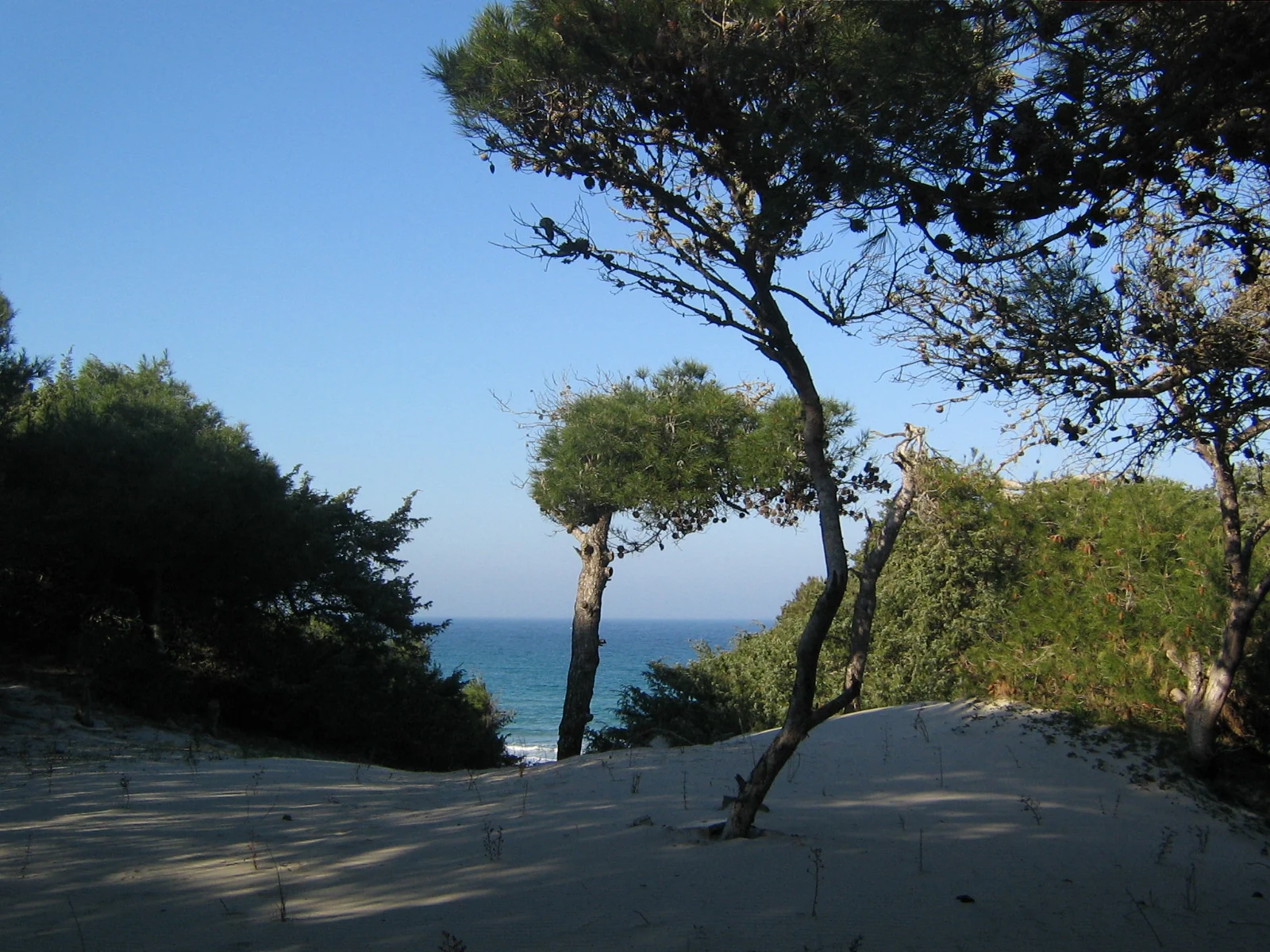
Photo: Colar / Wikimedia Commons — Public domain · Resized and converted to WebP.
Food and wine
Melendugno's agricultural past can be read in the underground olive presses mentioned by the national portal: rock-cut rooms where olives were processed. The oil is that of the Terra d'Otranto PDO, which covers the whole province of Lecce, made from Cellina di Nardò and Ogliarola Leccese with olives picked by mid-November; the designation's profile traces the spread of the olive tree in Salento to the Messapians.
Oil dresses the frisella, the round barley or wheat bread baked twice, which the Atlas of traditional Apulian products describes as softened in water and topped with tomato: a simple lunch well suited to a beach day. Among Salento dishes to look for is ciceri e tria, pasta partly boiled and partly fried with chickpeas, linked to the feast of Saint Joseph.
The national portal lists local sweets among the things not to miss in Torre dell'Orso: the most widespread in the province is the pasticciotto, a shortcrust shell filled with custard, which the Atlas places in the Lecce tradition. In the small village, the portal notes, there are bakeries and spots for street food.
Sources: Italia.it — Melendugno · Qualigeo — Terra d'Otranto DOP · Atlante dei PAT di Puglia — Friselle di orzo e grano · Atlante dei PAT di Puglia — Ciciri e tria · Italia.it — Acaya, Roca Vecchia e Torre dell'Orso: una gita di un giorno · Atlante dei PAT di Puglia — Pasticciotto
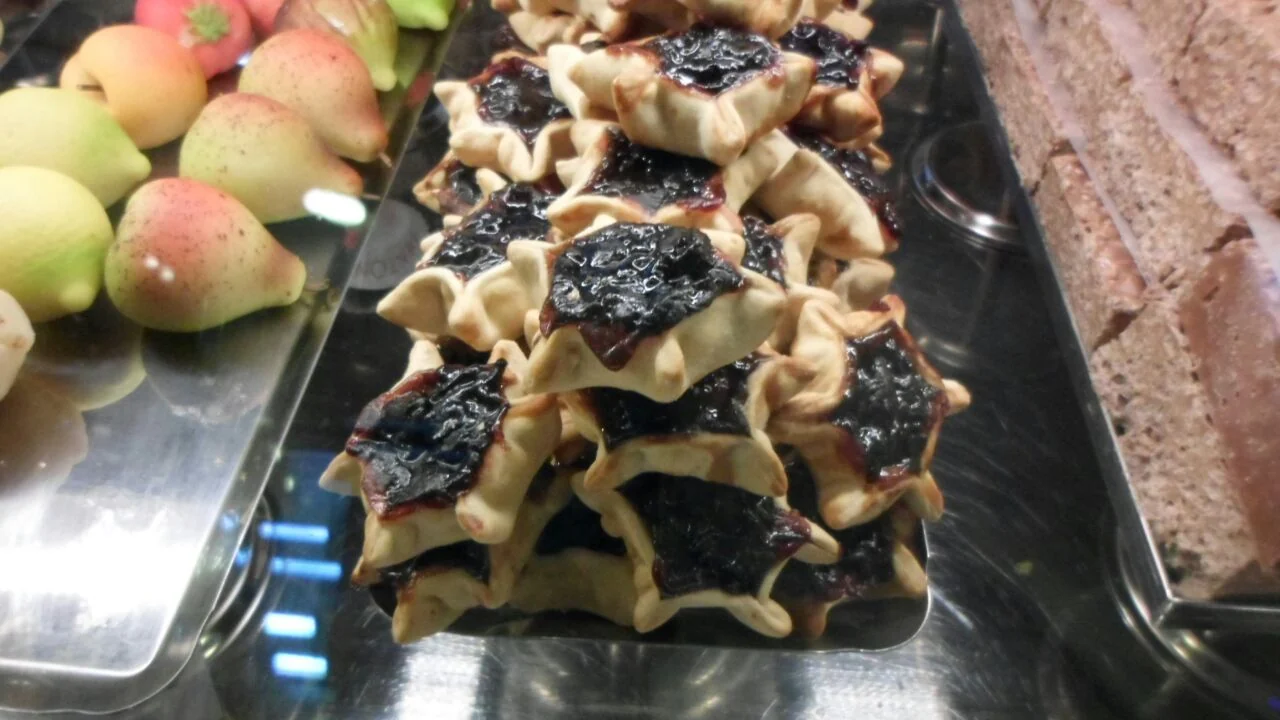
Photo: Florixc / Wikimedia Commons — CC0 · Resized and converted to WebP.
Things to do
The sea at Torre dell'Orso can be enjoyed in many ways. The national portal mentions several lidos and some free beach areas, kayak hire and other water sports; swimming conditions are usually excellent, and when the wind picks up you can surf and bodyboard. A kayak trip towards the Two Sisters shows the coast from a different angle.
For walkers, the coastal path from the Two Sisters viewpoint is pleasant and scenic, and a coastal trail links the sites of Roca Vecchia. A little further on, along the coast towards Otranto, the Sant'Andrea sea stacks and the Baia dei Turchi are other destinations on the same coast.
Nature lovers can visit the WWF Le Cesine nature reserve, 348 hectares of wetlands and scrub home to many birds including flamingos: according to the national portal it can be visited all year with an official guide, ideally booked in advance. A day by bike can link Acaya, Roca Vecchia and Torre dell'Orso, and Acaya's restored castle hosts exhibitions and cultural events.
The Two Sisters also have a legend, which the town council's tourist guide tells like this: two sisters came down from the countryside to the bay to cool off; one went into the water near the rocks and was caught by the sea, the other threw herself in to save her, and both drowned in each other's arms. The sea god, moved to pity, turned them into two sea stacks standing side by side for ever.
In summer the town council runs Mare in bus, the public transport that links the seaside villages every day along the Adriatic coast road, with stops at Torre Specchia, San Foca, Roca, Torre dell'Orso, Torre Saracena and Sant'Andrea: you can leave the car and move from one bay to the next during the day.
Sources: Italia.it — Acaya, Roca Vecchia e Torre dell'Orso: una gita di un giorno · Viaggiare in Puglia — Torre dell’Orso · Comune di Melendugno, Assessorato al Turismo — Visit Melendugno: Leggenda de «Le due sorelle» a Torre dell’Orso · Comune di Melendugno, Assessorato al Turismo — Visit Melendugno: Come muoversi (servizi estivi di trasporto)
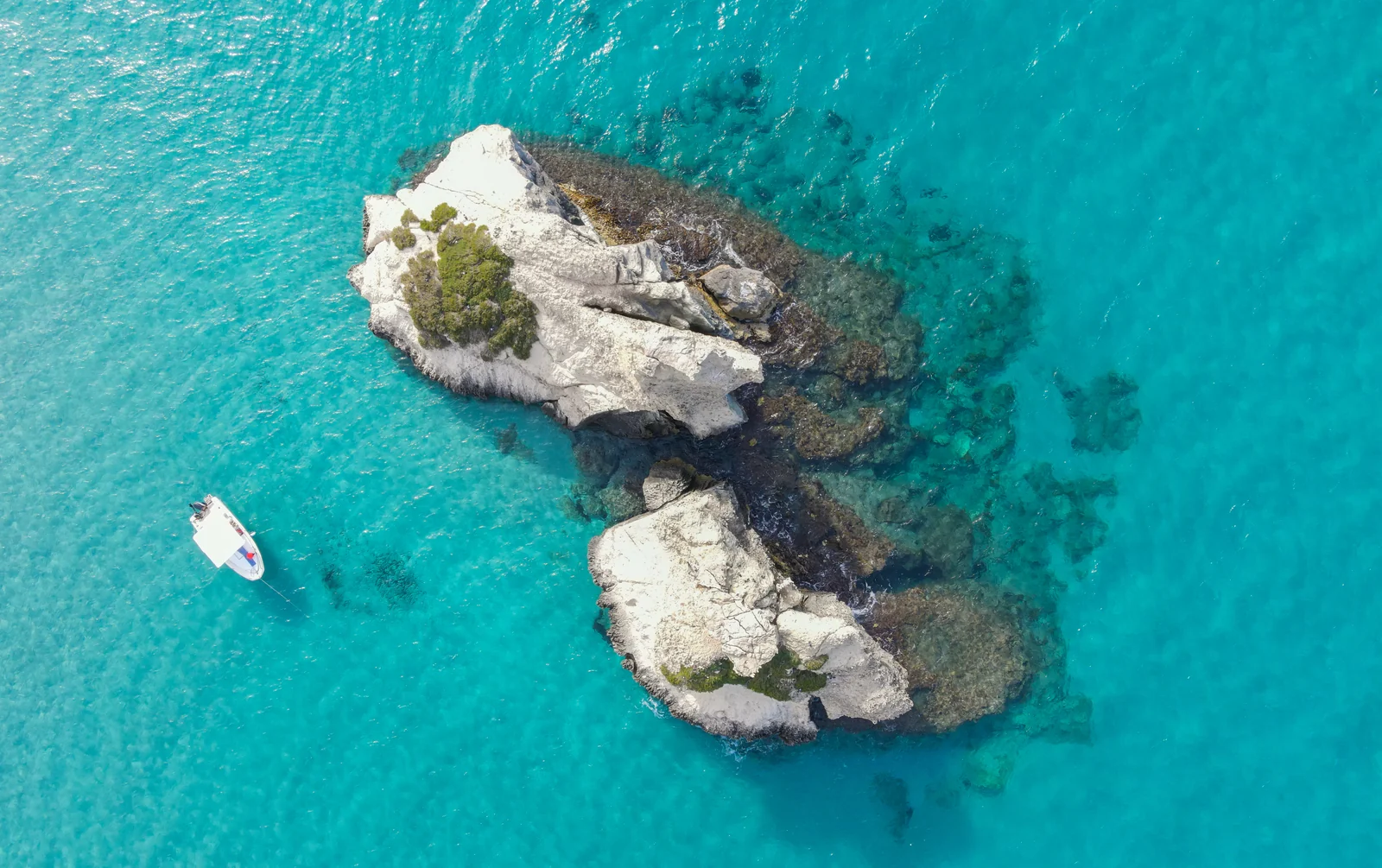
Photo: Raffaele Martano / Wikimedia Commons — CC BY-SA 4.0 · Resized and converted to WebP.
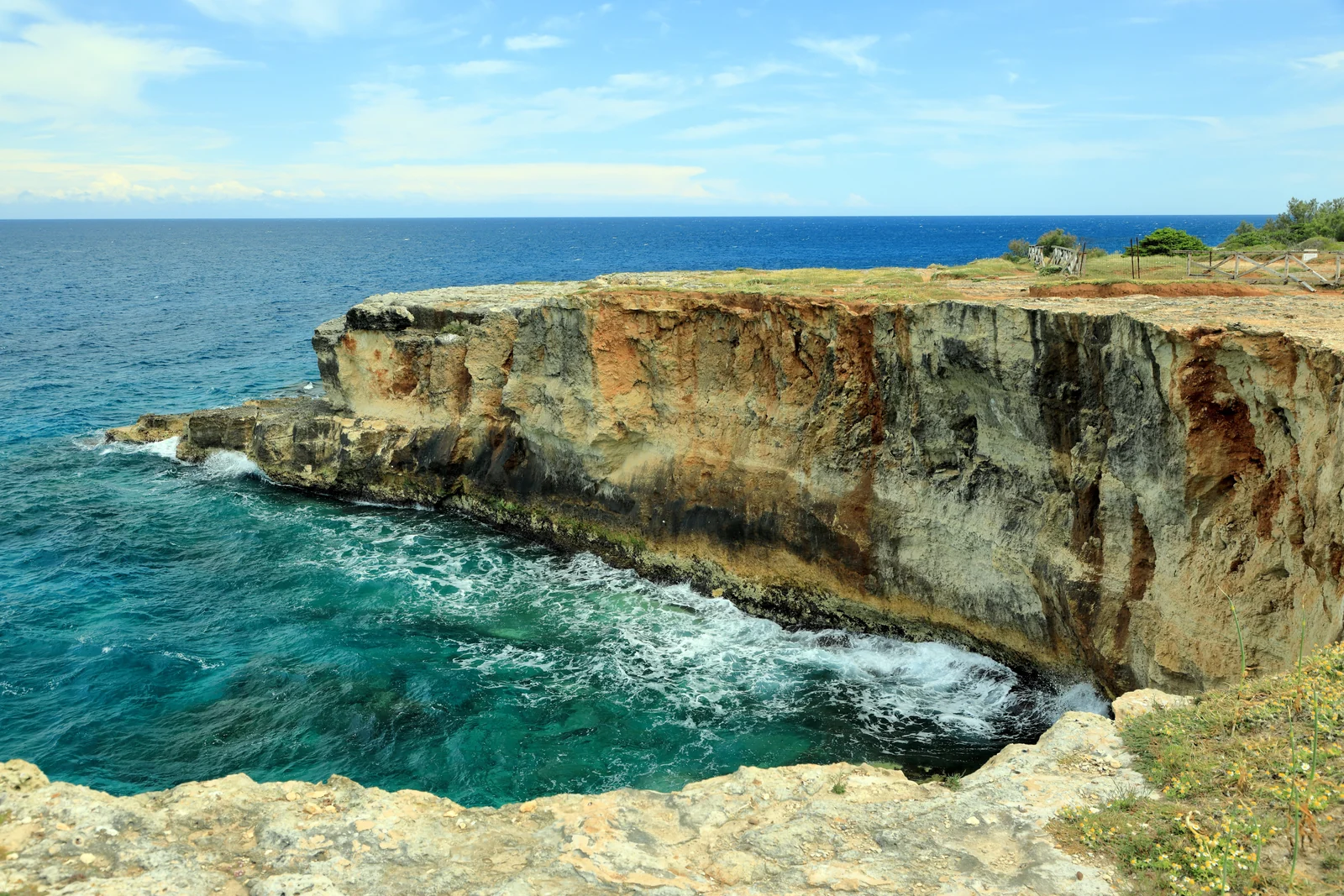
Photo: Falk2 / Wikimedia Commons — CC BY-SA 4.0 · Resized and converted to WebP.
When to go
Summer is Torre dell'Orso's season: July and August are the peak months, when the village lives on the comings and goings of beachgoers. The national portal points out, however, that May, June and September still offer excellent beach conditions with fewer crowds.
For Roca Vecchia and coastal walks, the cooler months of spring and autumn let you enjoy the open-air site at a gentler pace, without the summer heat. This is also the best time for Roca Nuova and a bike trip between Acaya and the sea. The Cesine reserve, according to the portal, can be visited every day of the year with a guide.
Sunset is the recommended time for the Two Sisters viewpoint, in any month. In autumn, with the olive harvest, the Melendugno hinterland shows its agricultural face, tied to the oil production that the underground presses have recorded for centuries.
Visitor services follow the season: according to the town council's guide the Torre dell'Orso info point is open from July to September, Mare in bus runs in summer and Terra Mare in bus, which links Melendugno and Borgagne with the seaside villages, in July and August.
Sources: Italia.it — Acaya, Roca Vecchia e Torre dell'Orso: una gita di un giorno · Italia.it — Melendugno · Qualigeo — Terra d'Otranto DOP · Comune di Melendugno, Assessorato al Turismo — Visit Melendugno: Numeri utili (info point, farmacie, assistenza sanitaria) · Comune di Melendugno, Assessorato al Turismo — Visit Melendugno: Come muoversi (servizi estivi di trasporto)
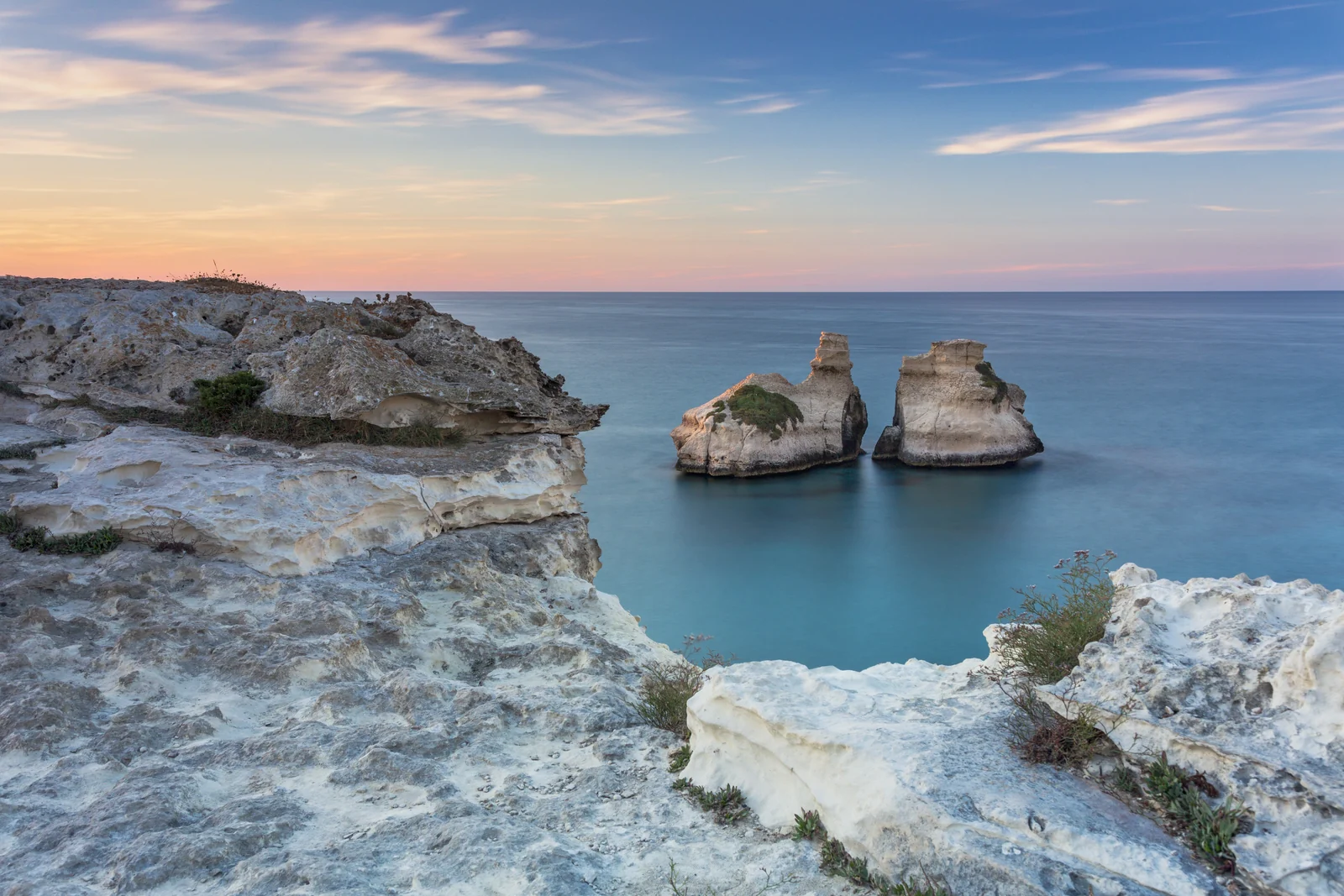
Photo: Cesare Barillà / Wikimedia Commons — CC BY-SA 4.0 · Resized and converted to WebP.
Getting there and around
Torre dell'Orso is reached from Lecce, served by the national rail network: the station, run by RFI, offers assistance to passengers with reduced mobility and integrated mobility services such as a bus stop and car rental. From Lecce, according to the national portal, Acaya is about twenty minutes by car, Roca Vecchia about the same from Acaya, and Torre dell'Orso under five minutes from Roca.
Those arriving by air usually land at Brindisi: the airport website lists buses, taxis and car hire for reaching towns in the area. To move along the coast between the Melendugno marinas, Otranto and Lecce, a car remains the most flexible option; near the Two Sisters viewpoint there are car parks behind the pine wood.
Alternatively, the portal suggests linking Acaya, Roca Vecchia and Torre dell'Orso by bike, for a slow day in the countryside and along the coast. The small village is easily walked, and from the beach a path climbs to the viewpoint over the sea stacks.
Without a car, in summer the town council's guide points to the Salento in Bus lines promoted by the Province of Lecce: the 101 Lecce–Torre dell'Orso–Otranto and the 112 Soleto–Torre dell'Orso, connected with the municipal buses Mare in bus, between the seaside villages, and Terra Mare in bus, from Melendugno and Borgagne. Periods, timetables and fares change every year and should be checked before setting out.
On site, the municipal info point is based on the Lungomare Matteotti, near the municipal amphitheatre (+39 376 0223021), open from July to September; the Torre dell'Orso pharmacy is in Piazza Salvo D'Acquisto and medical assistance for tourists in Piazza della Luna. Melendugno town hall is at Piazza Risorgimento 24, switchboard +39 0832 832111.
Sources: RFI — Stazione di Lecce · Italia.it — Acaya, Roca Vecchia e Torre dell'Orso: una gita di un giorno · Aeroporti di Puglia — Aeroporto di Brindisi, collegamenti bus · Comune di Melendugno, Assessorato al Turismo — Visit Melendugno: Come muoversi (servizi estivi di trasporto) · Comune di Melendugno, Assessorato al Turismo — Visit Melendugno: Numeri utili (info point, farmacie, assistenza sanitaria) · Comune di Melendugno — sito istituzionale (sede, centralino, guida turistica ufficiale Visit Melendugno)
Nearby
Melendugno, with its hamlet of Borgagne, is the municipality to which Torre dell'Orso and the seaside villages of San Foca, Roca Vecchia and Torre Sant'Andrea belong. The national portal describes an area of sea and land: dunes, pine woods, sea stacks and white sandy beaches on the coast, medieval historic centres with courtyard houses and underground olive presses inland. Melendugno belongs, with neighbouring towns, to the Union of Municipalities Terre di Acaya e Roca.
Acaya is one of the few fortified villages left in Puglia: straight streets meeting at right angles, walls with bastions and a trapezoidal castle set in one corner of the village. After a long period of neglect the castle has been restored and its rooms, roofs and underground spaces can be visited. Between Acaya and the sea, the WWF Le Cesine reserve is a refuge for many birds, flamingos among them.
Inland you enter the Grecìa Salentina, with Calimera and Martano a short drive away; along the Adriatic shore the coast continues to Otranto, with the Baia dei Turchi and Alimini. Lecce is close enough to alternate beach days with days of art.
Along the same coast the 2026 Blue Flag has also been awarded to the beaches of Roca, San Foca North and Centre with Torre Specchia, and Torre Sant'Andrea, all in the municipality of Melendugno; from the tower of Torre dell'Orso danger was signalled to the towers of Sant'Andrea and Roca Vecchia, part of the same lookout line. In summer Salento in Bus line 101 runs from Torre dell'Orso to Otranto and Lecce.
Sources: Italia.it — Melendugno · Unione dei Comuni Terre di Acaya e Roca · Italia.it — Acaya, Roca Vecchia e Torre dell'Orso: una gita di un giorno · Fondazione per l’Educazione Ambientale (FEE) Italia — Spiagge Bandiera Blu 2026 · Comune di Melendugno, Assessorato al Turismo — Visit Melendugno: La torre di Torre dell’Orso · Comune di Melendugno, Assessorato al Turismo — Visit Melendugno: Come muoversi (servizi estivi di trasporto)
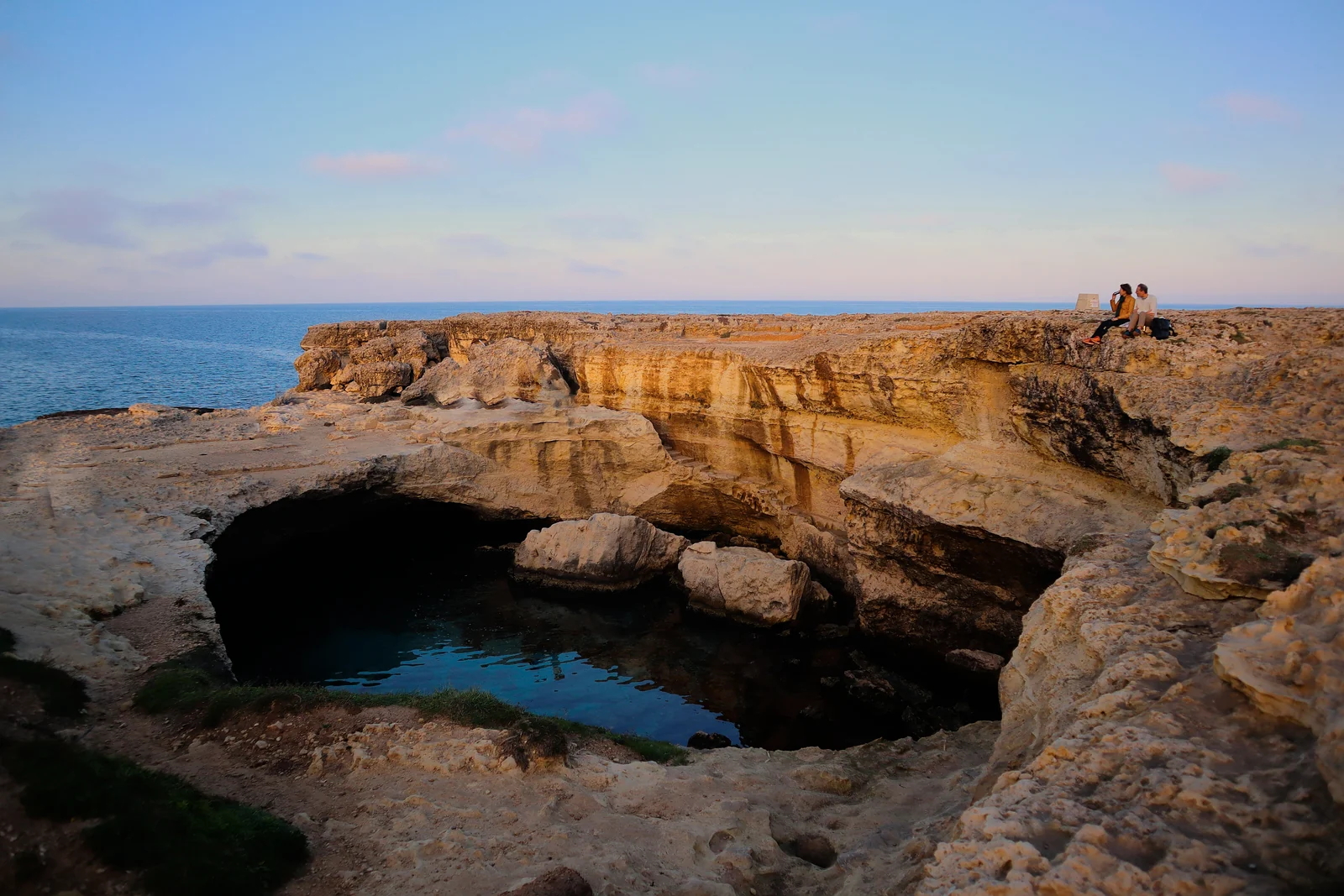
Photo: Colorbambu / Wikimedia Commons — CC BY-SA 4.0 · Resized and converted to WebP.
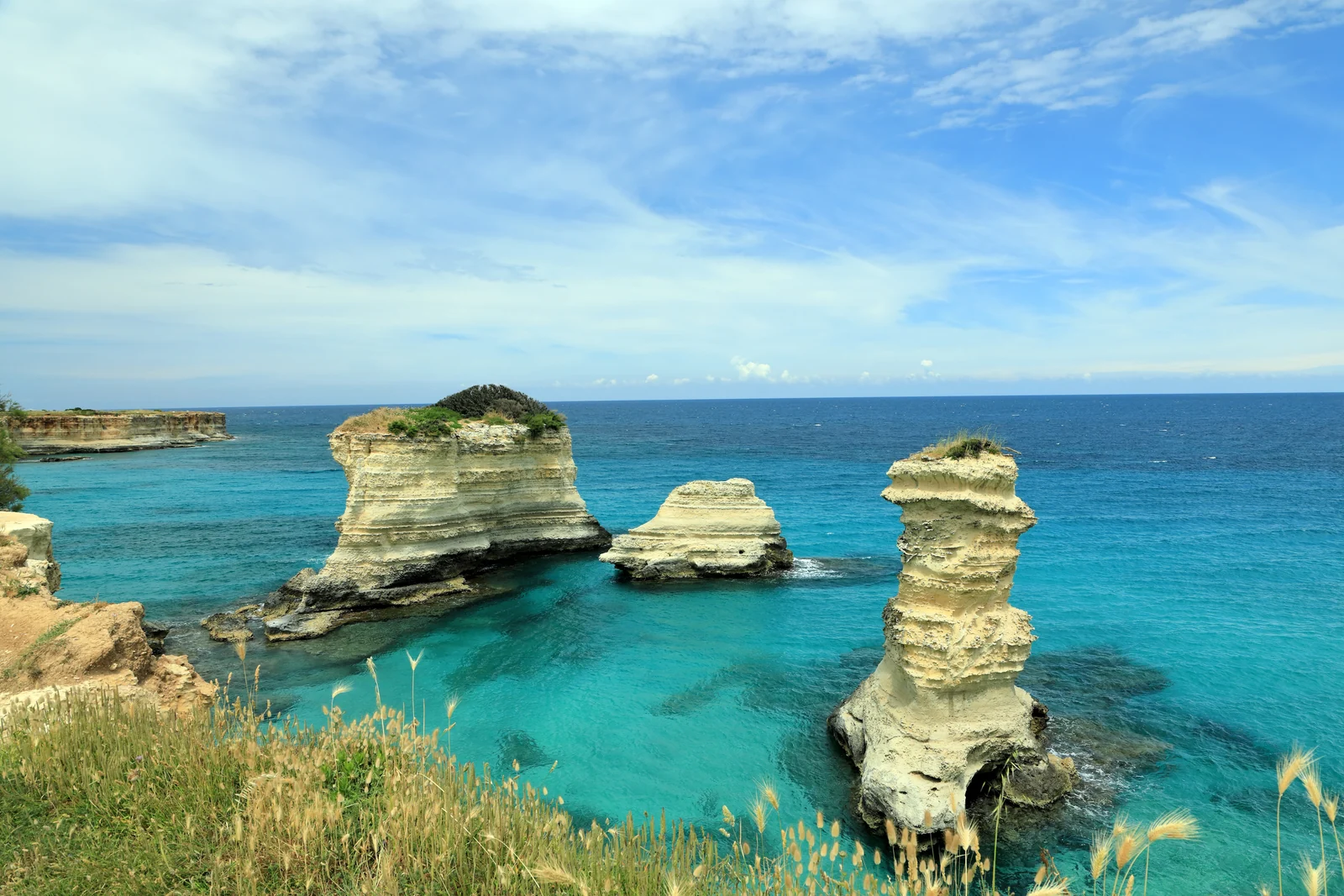
Photo: Falk2 / Wikimedia Commons — CC BY-SA 4.0 · Resized and converted to WebP.
Local tourist information
Local tourist offices help with opening times, events and transport on the day.
- Info point IAT di Torre dell’Orso (Comune di Melendugno), aperto da luglio a settembre · Lungomare Matteotti, nei pressi dell’Anfiteatro Comunale, 73026 Torre dell’Orso, Melendugno (LE) · +39 376 0223021 · Official website
Source: Comune di Melendugno, Assessorato al Turismo — Visit Melendugno: Numeri utili (info point, farmacie, assistenza sanitaria) · checked on
Where to stay
In the municipality of Melendugno the national database of the Ministry of Tourism lists 1223 accommodation businesses with a verified CIN code: 22 hotels, 323 other licensed accommodation and 878 other types such as B&Bs and private rentals.
Licensed businesses from the official list of accommodation named as the source in this section. Where the list gives it, the property's official identification code appears next to its name: the national CIN code, or the code assigned by the Region or by the body that keeps the list. Private individuals are not listed. This list is the official census of licensed businesses, not a list of Apulica partners: to stay in Melendugno you do not have to check one property after another yourself; write to Apulica and we look for the stay that suits your journey, checking availability and conditions before any confirmation.
Posia Retreat & SPA | UNA ESPERIENZE
Hotel · ★★★★★
CIN IT075043A100103286
BORGO SENTINELLA
Residence
CIN IT075043B400025444
SENTINELLA
Campsite · ★★★
CIN IT075043B100021445
AGRICOLA BELLISARIO OSPITALITA' RURALE
Farm stay
CIN IT075043B500104884
ALBA
B&B
CIN IT075043B400020662
ACQUAMARINA
Guest rooms
CIN IT075043B400042833
Appartamenti Eneide
Holiday home
CIN IT075043B400086409
ARABA FENICE
Hotel · ★★★★
CIN IT075043A100020502
BriaMar Residence
Residence
CIN IT075043B400128199
PARCO CAMPER LA TORRE
Campsite · ★
CIN IT075043B100055275
First the places that presented themselves to Apulica, the latest first; then one place of each type in turn, by official category and stars, then by name. No position is paid for.
All 140 entries in alphabetical order
Page 1 of 14
| Name | Type | CIN |
|---|---|---|
| ACQUAMARINA | Guest rooms | IT075043B400042833 |
| AGRICOLA BELLISARIO OSPITALITA' RURALE | Farm stay | IT075043B500104884 |
| AGRICOLA CHIANI | Farm stay | IT075043B500099591 |
| AGRITURISMO COSTARELLA | Farm stay | IT075043B500022745 |
| AGRITURISMO KARRARES | Farm stay | IT075043B500051001 |
| AGRITURISMO "LA PAIARA" | Farm stay | IT075043B500049991 |
| AGRITURISMO LANGELA | Farm stay | IT075043B500024535 |
| AGRITURISMO LE SCERZE | Farm stay | IT075043B500024540 |
| Agriturismo Masseria Berzario | Farm stay | IT075043B500078958 |
| AGRITURISMO TENUTA DON GIOVANNI | Farm stay | IT075043B500026218 |
Ask Apulica for a stay in Melendugno We reply shortly, within a few hours at most, with a proposal for you to consider.
Sources: Regione Puglia – ARET Pugliapromozione (DMS), CC BY 4.0, 2026-10-12 · Ministero del Turismo – Banca Dati Strutture Ricettive (dashboard pubblica), 2026-10-12
YOUR JOURNEY
How to shape a journey here
Journey idea: pair Torre dell’Orso with Otranto or Lecce, choosing one narrative anchor. The coastal landscape then becomes a meaningful pause rather than an addition made to lengthen the programme.
Plan your tripKeep exploring
Calimera
Griko culture, rural memory and a connection with Athens in inland Salento.
Read the guide →Photo: Lupiae / Wikimedia Commons — Public domain · Resized and converted to WebP.

Otranto
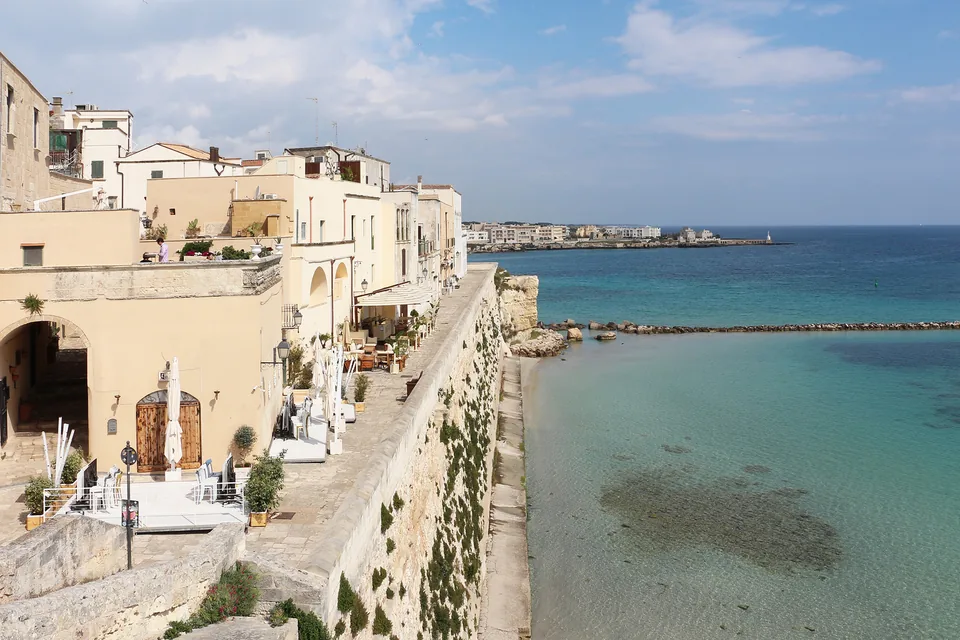
The cathedral, Adriatic landscape and time to explore the historic centre. Inside and around the walls: Pantaleone’s mosaic of 1163-1165, the crypt with its forty-two columns, the Byzantine church of San Pietro, the Aragonese castle of Walpole’s novel, the Punta Palascìa lighthouse and the Grotta dei Cervi at Porto Badisco.
Read the guide →Photo: Bernard Gagnon / Wikimedia Commons — CC0 · Resized and converted to WebP.

Melendugno
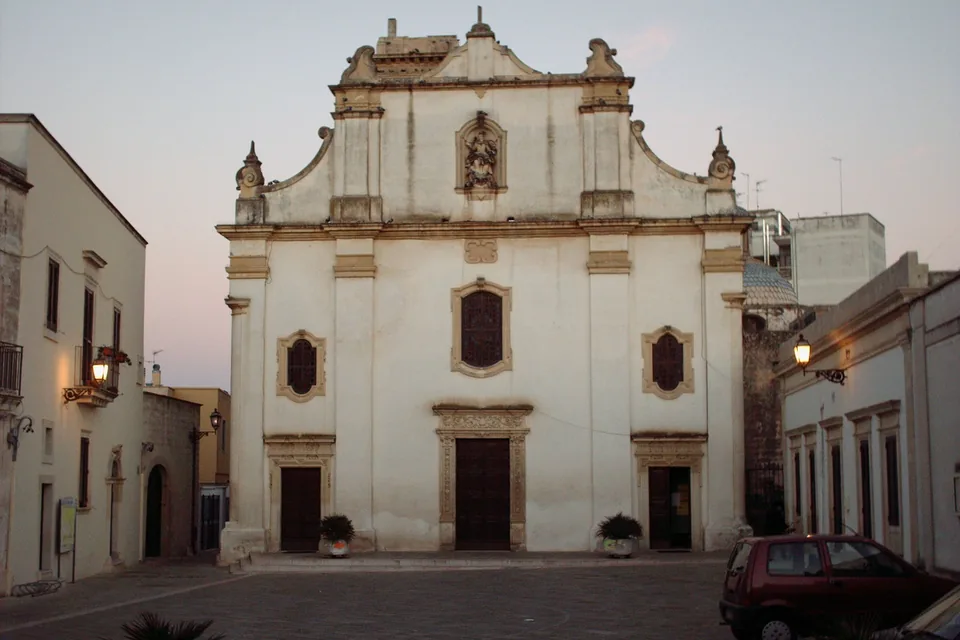
Melendugno (LE), Puglia: 10,055 residents, 92.33 km². The official facts of the municipality, its town council website and its registered accommodation.
Read the guide →Photo: Emanuele Petrachi / Wikimedia Commons — CC BY 3.0 · Resized and converted to WebP.

Lecce
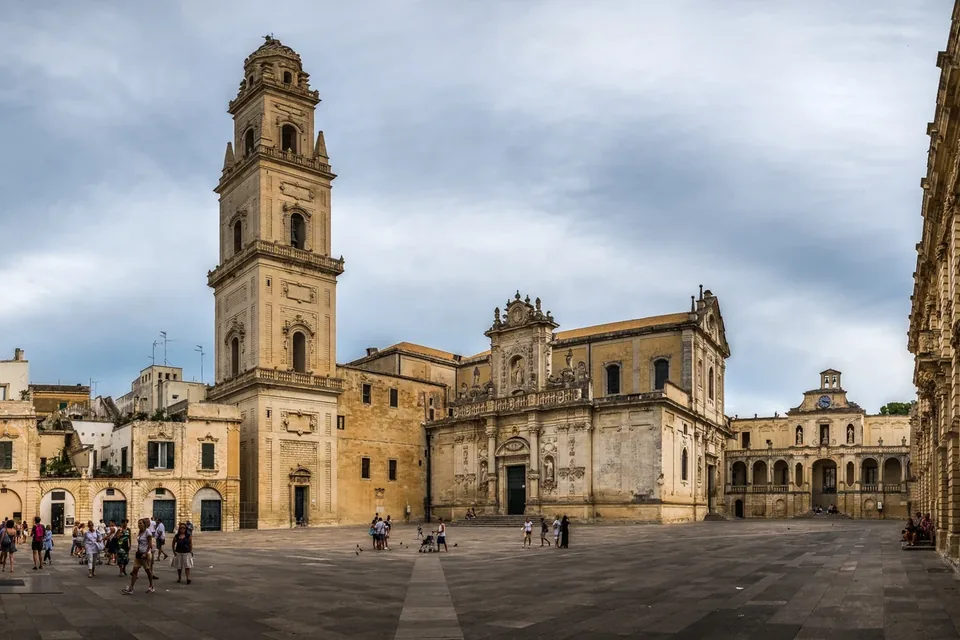
Baroque architecture, papier-mâché and Salento food: a city of telling details.
Read the guide →Photo: Giuseppe Milo / Wikimedia Commons — CC BY 3.0 · Resized and converted to WebP.

Martano
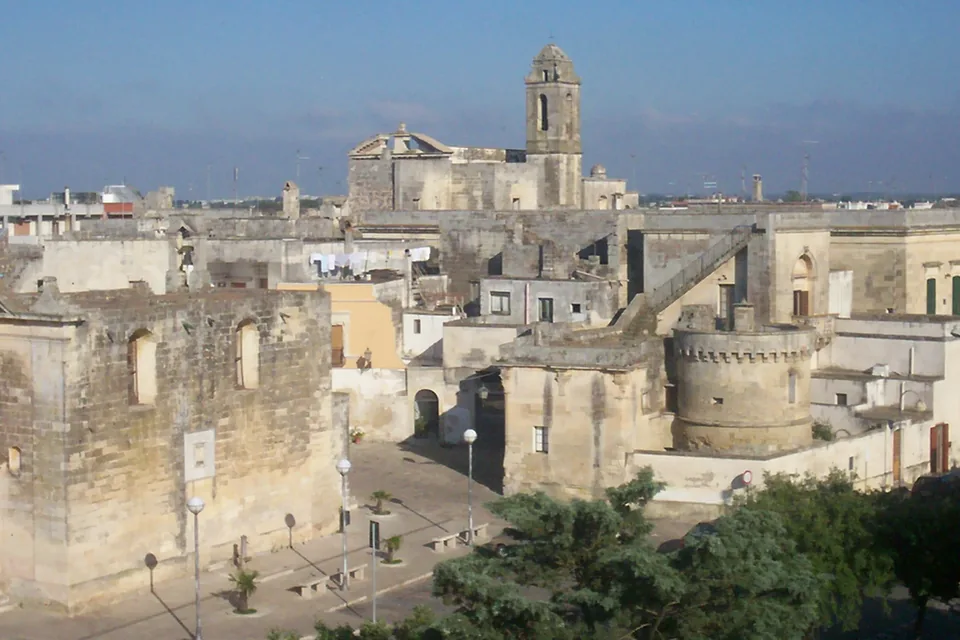
Courtyards, megalithic heritage and Cistercian culture in Grecìa Salentina. In the Terra, the old centre with its regular blocks, the Aragonese castle, the mother church of 1596 and the early eighteenth-century palaces; in the countryside the Teofilo menhir, 4.70 metres tall, the Specchia dei Mori and the medieval village of Apigliano.
Read the guide →Photo: Freddyballo / Wikimedia Commons — CC BY-SA 3.0 · Resized and converted to WebP.

“Come to Torre dell’Orso as a guest, not as a tourist: that is how these places truly let you know them.”