
APULICA / Food guides
Caciocavallo Silano: stretched-curd cheese hung astride a pole, from the Sila to five regions
Caciocavallo Silano is one of the oldest stretched-curd cheeses of Southern Italy. The name recalls the Sila plateau, home of the Protection Consortium, but the PDO covers seventeen provinces in Calabria, Campania, Molise, Puglia and Basilicata. It is a cow's milk cheese, mild when young and sharp with age, recognisable by cheeses tied in pairs. This guide explains the technique, the marking rules, the difference from podolico caciocavalli and the places where tasting it makes sense.
A name that tells how it ages
Qualigeo places Caciocavallo Silano among the oldest and most distinctive stretched-curd cheeses of Southern Italy. The first records of cheesemaking date back to 500 BC, and in later centuries several Latin authors, including Pliny the Elder in the 1st century, praised the qualities of butirro, regarded as an ancestor of caciocavallo.
According to the most widely accepted theory, the name comes from the habit of hanging the cheeses in pairs on wooden poles near the hearth, astride them, in fact; the Consortium notes that tying the cheeses and ageing them astride a beam is a custom as old as the cheese itself and still practised. Silano, instead, recalls its ancient links with the Sila plateau.
The Consortium also explains why stretched curd was born: it was a way to work milk quickly, since in the heat of earlier times it would have soured, and from that need came a speciality that today evokes the flavours of home. The PDO was recognised by a decree of 10 May 1993, later amended in 2003.
Sources: Qualigeo (Fondazione Qualivita) — Caciocavallo Silano DOP · Consorzio di Tutela Formaggio Caciocavallo Silano DOP — Il Caciocavallo
Seventeen provinces in five regions
This is the most surprising aspect: Caciocavallo Silano is not only a Calabrian cheese. Qualigeo lists as the production area the inland parts of the provinces of Cosenza, Crotone, Catanzaro and Vibo Valentia in Calabria; Avellino, Benevento, Caserta, Salerno and Naples in Campania; Isernia and Campobasso in Molise; Bari, Taranto, Foggia and Brindisi in Puglia; Matera and Potenza in Basilicata.
The Consortium specifies that the cheese is made only with cow's milk from these five regions and processed within the areas set by the production rules, using traditional methods, and it is the Consortium itself that checks and certifies it. It is therefore a cheese of mountains and inland hills, following the Apennine ridge rather than a single province.
The shape also changes with the region: in Calabria tradition calls for a truncated cone without a head, in the other regions an oval shape with a head. In both cases the dents left by the ties remain. The Consortium is based in Camigliatello Silano, in the municipality of Spezzano della Sila, at the heart of the plateau that gives the designation its name.
Sources: Qualigeo (Fondazione Qualivita) — Caciocavallo Silano DOP · Consorzio di Tutela Formaggio Caciocavallo Silano DOP — Il Caciocavallo
From milk to the tied cheese
There are three ingredients: whole cow's milk, raw or thermised, salt and animal rennet. According to Qualigeo the milk curdles at 36-38 degrees with calf or kid rennet; when the curd has the right firmness it is broken into lumps the size of a hazelnut and ripens for 4 to 10 hours, until it is ready to be stretched.
Stretching forms a kind of rope that the cheesemaker shapes with vigorous hand movements. Then the top of each piece is closed by dipping it quickly into water at 80-85 degrees and finishing the job by hand, the head is shaped where required and the cheeses go into cooling water. Salting takes place in brine for at least six hours.
Finally the cheeses are tied in pairs and hung on poles for at least 30 days of ageing. About 10 litres of milk are needed for each kilo of cheese, hence its richness in protein and minerals. The weight ranges from 1 to 2.5 kilos; the rind is thin, smooth and straw-yellow, and may be treated only with clear substances without colouring.
Sources: Qualigeo (Fondazione Qualivita) — Caciocavallo Silano DOP · Consorzio di Tutela Formaggio Caciocavallo Silano DOP — Il Caciocavallo
Thirty days, Extra and Gran Riserva
Minimum ageing is 30 days, but the cheese changes a great deal with time. Qualigeo lists, alongside the basic type, the Extra with at least four months of maturing and the Gran Riserva with at least nine. When young the flavour is aromatic, delicate and rather sweet, melting in the mouth; with advanced maturity it turns sharp. The paste is even and compact, with very slight eyes, white or straw-yellow.
The Consortium also describes the rhythm of the year. In winter the cows stay more in the barn, on hay and cereals, waiting to calve, and the milk is richer in fat; in spring production and grazing resume; in summer the cheese picks up nuances from the meadows and hay is gathered; in autumn light and feed change. A thirty-day cheese made in spring is sweet and delicate, a twelve-month cheese made in winter sharper and more mature.
Every cheese is fire-branded with the logo, the producer's number and an alphanumeric code issued by the Consortium. It is sold whole, in wedges or portioned and pre-packed.
Sources: Qualigeo (Fondazione Qualivita) — Caciocavallo Silano DOP · Consorzio di Tutela Formaggio Caciocavallo Silano DOP — Il Caciocavallo
Do not confuse it with podolico
The name caciocavallo covers many different cheeses. Silano PDO is made with cow's milk from the areas in the production rules, with no breed requirement. Basilicata's caciocavallo podolico, a Slow Food Presidium in the towns of the Lucanian Apennines and the Matera hills, is instead made only with milk from Podolica cows, a hardy breed raised on open or semi-open pasture, now down to about 25,000 head because it gives little milk.
The largest podolico cheeses, from 4 to 8 kilos, can age for four or five years, and Slow Food notes that many soften their strength with chestnut or strawberry-tree honey. These are times and sizes far from those of Silano, which can be enjoyed after a month.
The national list of traditional food products also records many other local caciocavalli: the Ciminà cheese and the podolico in Calabria, the Massa di Maratea cheese in Basilicata, the Abruzzo one and, in Campania, the smoked one, the buffalo-milk one, those of the Formicoso and the Matese and the cave-aged cheese of the Cervati and the Pertosa gorges. They are different products, each with its own history and territory.
Sources: Fondazione Slow Food — Presidio Caciocavallo podolico della Basilicata · Masaf — Elenco nazionale dei prodotti agroalimentari tradizionali 2022, allegato I (copia pubblicata dal progetto regionale Biodiversità Puglia)
Camigliatello and the cheese festival
The institutional heart of Caciocavallo Silano is Camigliatello Silano, a mountain resort among larch and silver fir woods, mainly visited in winter. Italia.it mentions the lift up to Monte Curcio, at 1,768 metres, where looped cross-country ski trails begin, the large mosaic in the church of Santi Roberto e Biagio and the Old Calabria Park in Torre Camigliati, inspired by Norman Douglas's travel diary. In the same building the Nave della Sila tells the story of emigration.
Here the Consortium organised Musica e Formaggi on Sunday 13 July 2025, under the patronage of the municipality of Spezzano della Sila. Along the main street a public guided tasting compared cheeses aged 30, 60, 90, 120 and 180 days, with master tasters explaining how to recognise aromas and textures.
The event also gave space to the cheese's history and to producers, who explained the difference between the PDO and other similar stretched-curd cheeses. For later editions, check the Consortium's announcements before travelling.
Sources: Italia.it — Camigliatello Silano · Consorzio di Tutela Formaggio Caciocavallo Silano DOP — Musica e Formaggi a Camigliatello (2025)
The Sila around the cheese
The plateau that gives the cheese its name covers about 150,000 hectares across the provinces of Cosenza, Crotone and Catanzaro. Italia.it describes it as Calabria's green lung, protected by the Sila National Park, the oldest in the region and among the first established in Italy, with forests of Calabrian pine, beech and silver fir and, in the Forest of Giants, monumental trees. Wolves, deer and birds of prey such as the red kite and the eagle owl live here.
From the warm season to autumn you can walk trails lasting several days, cycle or ride, and gather mushrooms, chestnuts and berries in the woods. On the Ampollino, Cecita and Arvo lakes there is rowing and sport fishing; in winter Lorica and Camigliatello are among the resorts equipped for skiing.
The table also speaks of milk: the guide suggests tasting, perhaps in a mountain refuge, mpanata, a soup of ricotta, still-warm whey and stale bread. Among the villages, Acri, known as the gateway to the Sila, and San Giovanni in Fiore with its Florense Abbey deserve a stop.
In the kitchen: raw, grilled, with mushrooms
The Consortium notes that Caciocavallo Silano is eaten both raw and cooked: stretched curd gives it a soft texture that works in many traditional dishes. Qualigeo suggests pairing it with red meat and mushrooms, points out that it is excellent cooked on a griddle and matches it with young red wines.
To store it, Qualigeo advises a cool, dry place, leaving it in its original wrapping, or the least cold compartment of the fridge. The Consortium stresses that its production plants handle no products containing allergens other than lactose, and gives for a 30-day cheese 25.5 grams of protein and 23 of fat per 100 grams.
Two ages can share the same table: a young one in slices, to taste milk and sweetness, and an older one, which on the griddle forms a golden crust and sharper notes. In the Sila, where the woods yield plenty of mushrooms in the right season, the pairing suggested by Qualigeo comes almost naturally.
Sources: Consorzio di Tutela Formaggio Caciocavallo Silano DOP — Il Caciocavallo · Qualigeo (Fondazione Qualivita) — Caciocavallo Silano DOP · Italia.it — Parco nazionale della Sila
A tasting to build while travelling
Precisely because the PDO spans five regions, the trip can become a comparison. In the Sila I would look for the Calabrian truncated cone; in Molise or Puglia the oval shape with a head, to set beside caciocavallo podolico or the Agnone cheese, which are not the same thing.
The first thing to check is the fire brand on the rind: without it, it is not Silano PDO. Then I would always ask about ageing, because a thirty-day cheese and a Gran Riserva are almost two different cheeses. A dairy visit to watch hand stretching should be arranged in advance with the producer: it is quick work, best observed in the morning.
For the journey home, a whole cheese tied with its string is more practical than a vacuum-packed piece left in the heat; keep it somewhere cool and open it only at home. The season matters little for buying, since the cheese is available all year, but it matters a lot for the trip: in summer and autumn the Sila is best enjoyed on foot, in winter on skis.
A thread for your journey
Journey idea: a weekend in the Sila based in Camigliatello Silano, with woods, Monte Curcio and a dairy visit to be arranged with the operators to see hand stretching; those continuing to Molise or Puglia can extend the trip into a caciocavallo comparison, remembering that PDO, podolico and Agnone caciocavallo are different products.
Talk to us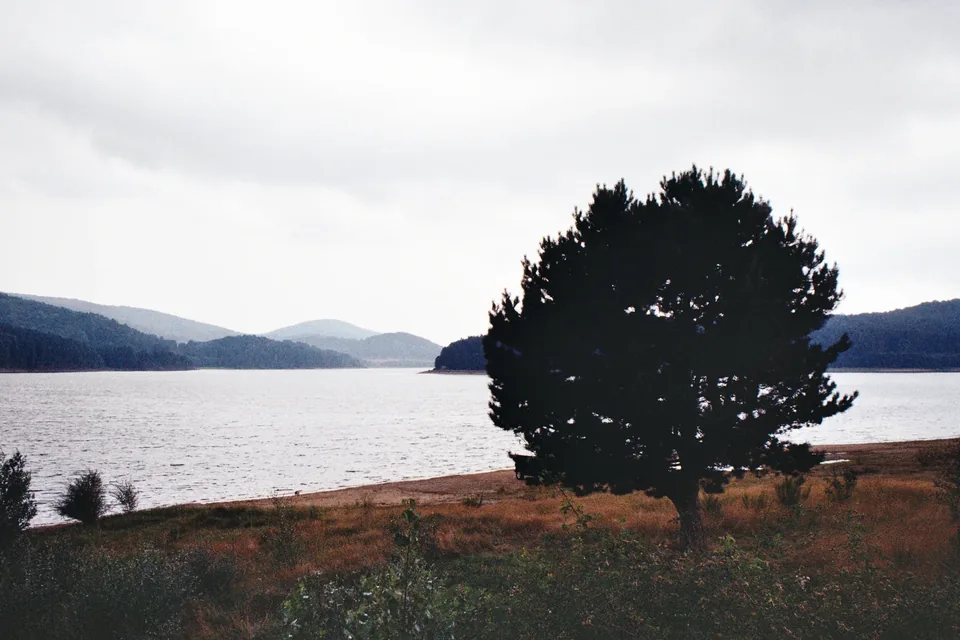

.jpg)
