
Why go
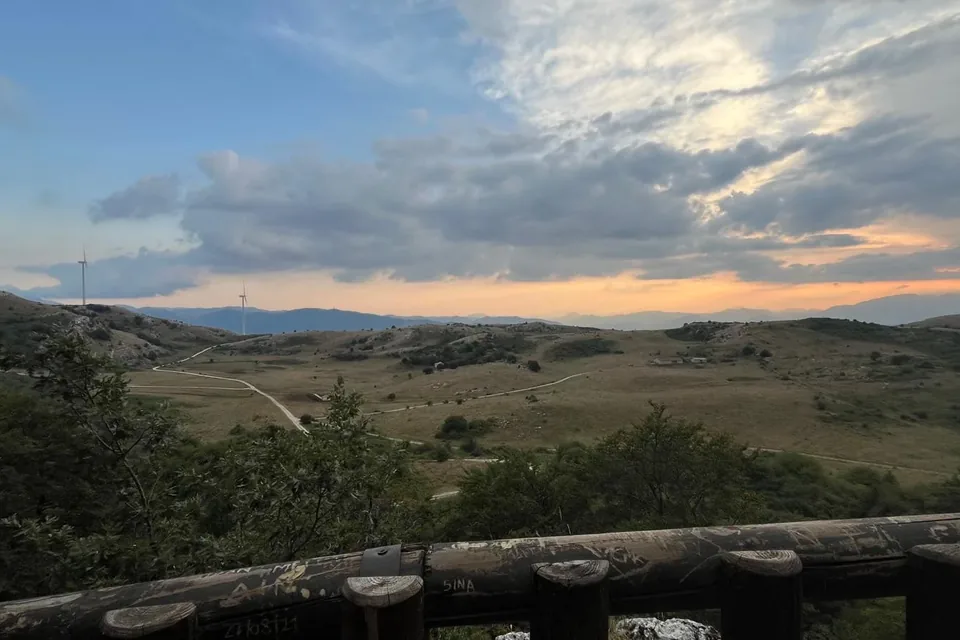
Agnone is a small town in Upper Molise, in the province of Isernia, set at about 840 metres on a hill overlooking the valley of the Verrino river. From the viewpoints of the old centre the eye drops over farmland, woods and scattered houses, and each terrace shows a different side of the mountains. The town’s tourism portal notes that in 2002 the Touring Club Italiano awarded it the Orange Flag.
The best-known reason to come is sound: the Pontifical Marinelli Foundry has been working here for about a thousand years and since 1924 has been allowed to use the papal coat of arms. Yet Agnone is more than its bells. For centuries it was a town of craftsmen, with workshops of coppersmiths, blacksmiths, shoemakers and goldsmiths, some of which are still active. The historic centre holds many churches, palazzi with stone doorways and three of the old medieval gates.
It is a place that rewards those who stay at least one night: a morning between foundry and museum, an afternoon in the lanes, an evening at the table with cheeses and mountain dishes. The nickname “Athens of Samnium”, which local tradition gives it, conveys the cultural weight the town has long had for the whole area.
Sources: Italia.it — Agnone · Visit Agnone (portale turistico collegato dal Comune di Agnone) — La città di Agnone
History
Agnone’s roots are Samnite, and the most famous record of that age is the Oscan Tablet, a bronze plate in the Oscan language dated to 330 BC: the original is kept at the British Museum in London. Around the year 1000, according to local history, a colony of Venetians settled here following Landolfo Borrello, who had served Doge Pietro Orseolo II. Their arrival broadened trades and commerce, and the quarter that bears their name still keeps the layout of that time.
Metalworking is the thread that binds the town’s history together. The Marinelli family trace their craft to before 1339, when Nicodemo Marinelli signed a bell; other sources place the foundry’s origin in the fifteenth century. In 1924 Pius XI granted the use of the papal coat of arms, hence the name “the Pope’s foundry”.
Alongside bronze there was copper. The Statutes of the Land of Agnone of 1456 set strict rules for those who worked it, and in the 1753 land register more than 150 families are listed in this trade, the most widespread in town. Agnone’s coppersmiths toured the neighbouring regions with travelling workshops. On 21 October 1860 the main square, then called Piazza del Tomolo, was renamed Piazza Plebiscito after the vote for Italian unification.
Sources: Visit Agnone — Il quartiere Veneziano · Visit Agnone — La Pontificia Fonderia Marinelli · Visit Agnone — Il museo del rame «Francesco Gerbasi» · Italia.it — Agnone · Visit Agnone — Una piazza racconta: Piazza Plebiscito
What to see
The first stop is the “Giovanni Paolo II” Historical Bell Museum, next to the Pontifical Marinelli Foundry. It shows bells from different periods, documents and manuscripts, among them the “De Tintinnabulis” of 1664, regarded as the founders’ reference text, and recalls the visit of John Paul II, who blessed several bells in 1995. The visit continues inside the foundry, where you follow the stages of the work, from design to casting and testing, among furnaces, stacked wood and the pits dug in the floor for the largest bells.
In the historic centre every street leads to Piazza Plebiscito, with its 1882 fountain in Carrara marble guarded by four cast-iron dragons and the sixteenth-century Governor’s Palace. Sant’Emidio, founded in the fourteenth century, has a sumptuous Gothic doorway in white stone crowned by a large rose window and holds a Last Supper of life-size statues. Sant’Antonio Abate bears the date 1118 carved on its doorway, keeps a Last Judgement signed by Francesco Palumbo in 1793 and has one of the town’s most elegant eighteenth-century bell towers.
It is worth getting lost in the Venetian quarter, reading the keystones carved above the doors as far as the Ripa viewpoint, and ending at the “Francesco Gerbasi” Copper Museum, which reconstructs every stage of working the metal.
Sources: Italia.it — Museo delle Campane Marinelli · Visit Agnone — La Pontificia Fonderia Marinelli · Visit Agnone — Una piazza racconta: Piazza Plebiscito · Visit Agnone — Chiesa di Sant’Emidio · Visit Agnone — Chiesa di Sant’Antonio Abate · Visit Agnone — Il quartiere Veneziano · Comune di Agnone — Museo Storico del Rame Francesco Gerbasi
Food and wine
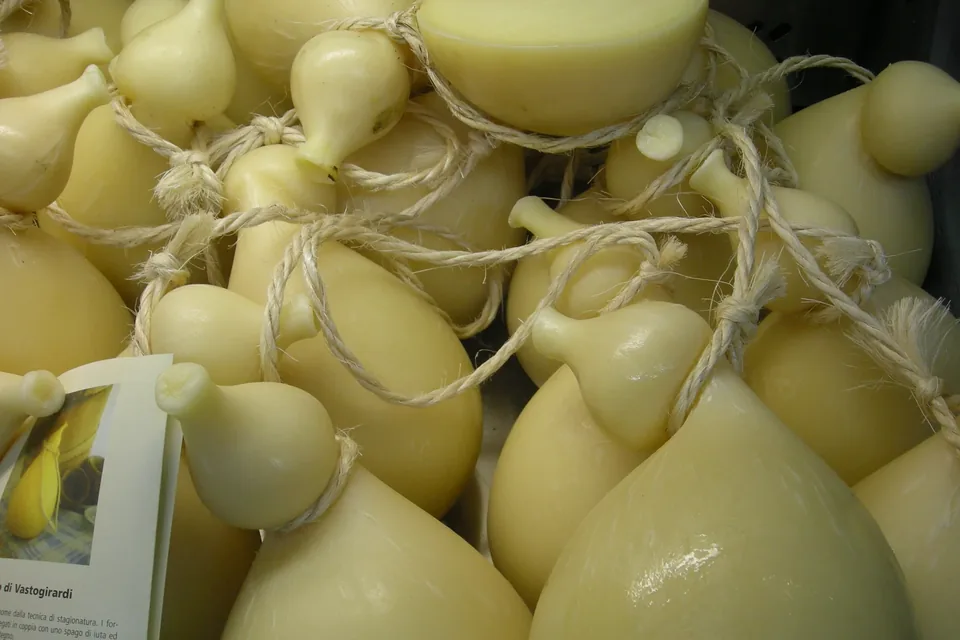
Agnone is above all a land of cheese. Caciocavallo di Agnone is made from cow’s milk, stretched by hand into the classic pear shape and tied in pairs by the neck; after a month drying on poles it begins an ageing that lasts from three months to a year. Alongside it come scamorza, treccia and stracciata, a stretched curd pulled by hand into strips. Several local dairies arrange visits to their workrooms and ageing cellars by booking.
On the table you find sagne a pezzi with lamb sauce, fettuccine with porcini mushrooms and, at Christmas, zuppa alla Santè: chicken broth, stale bread fried or toasted, and small balls of meat and cheese. It is a dish that sums up the cooking of Upper Molise, hearty and tied to the cold seasons.
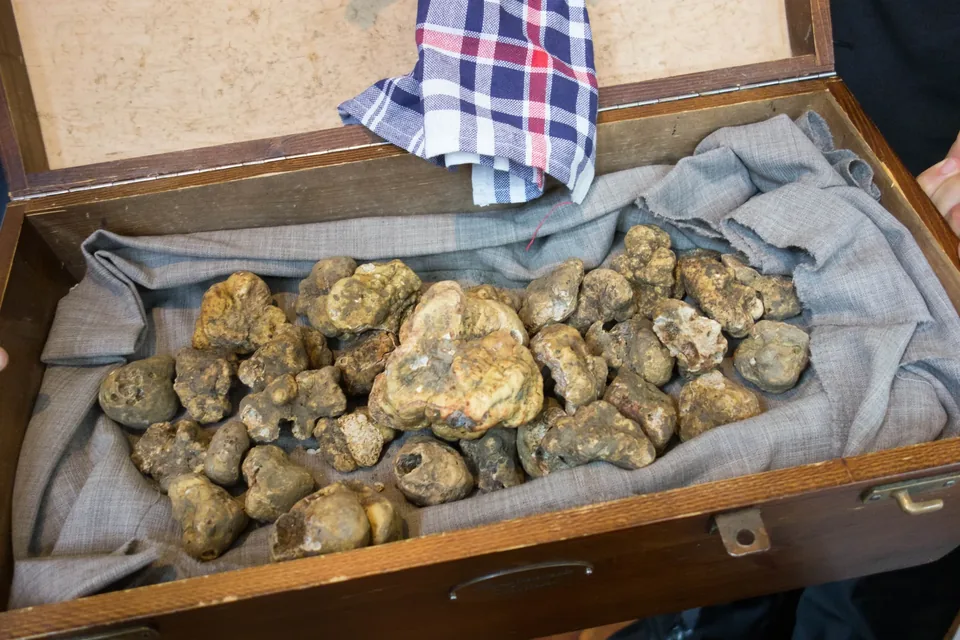
The sweet tradition is just as strong: wafers filled with honey, walnuts, almonds and chocolate, curly sugared almonds (confetti ricci), mostaccioli, pizzelle and the chocolate bell, a tribute to the town’s emblem. More broadly, Molise offers the Tartufo bianco del Molise, Molise PDO extra virgin olive oil and Tintilia del Molise wine, all good companions to a dinner in Agnone.
Sources: Italia.it — Agnone · Italia.it — Molise, prodotti e piatti tipici · Visit Agnone — Il Caciocavallo di Agnone · Visit Agnone (portale turistico collegato dal Comune di Agnone) — La città di Agnone
Things to do
To read the historic centre at a slow pace there is a guided-tour service run by local tourism operators, with information at the Pro Loco. At the foundry the visit can end with a bell concert played in the large workshop, and it is the moment that stays with you most.
The Verrino stream rises in the territory of Capracotta and, in its upper course, leaps over cliffs to form striking waterfalls; its waters once powered mills and copper works. Along the banks you still find the Scatozza mill and an old copper works where water drove hammers and grindstones, goals for easy walks among alders and willows. Those who love forests have the Collemeluccio-Montedimezzo MAB Biosphere Reserve close by, with silver fir and beech woods, a network of trails, the Faione path named after a centuries-old beech, and a visitor centre at Montedimezzo.
In the evening you can drive up to the “Leopoldo Del Re” astronomical observatory, at about 1,350 metres between San Pietro Avellana and Capracotta: the Province of Isernia arranges observation from the dome and planetarium visits by booking. Food lovers can book a visit to a confectioner or a dairy.
Sources: Visit Agnone — Servizio di guida turistica per il centro storico · Visit Agnone — La Pontificia Fonderia Marinelli · Visit Agnone — Il torrente Verrino e le antiche fonderie del rame · Visit Agnone — Riserva MAB Collemeluccio-Montedimezzo Alto Molise · Visit Agnone — Osservatorio astronomico «Leopoldo Del Re» · Visit Agnone (portale turistico collegato dal Comune di Agnone) — La città di Agnone
When to go
Agnone can be visited all year, and each season has its own character. The Apennine winter is cold, but it is when the town shows its most heartfelt traditions. Agnone’s Christmas starts early, on 21 November, feast of Our Lady of Graces, when the Pastorale agnonese by Filippo Gamberale is sung in the church of San Pietro. According to local tradition it was the coppersmiths, who left on those very days for their last long selling trip of the year, who asked the parish priest to bring the Christmas song forward.
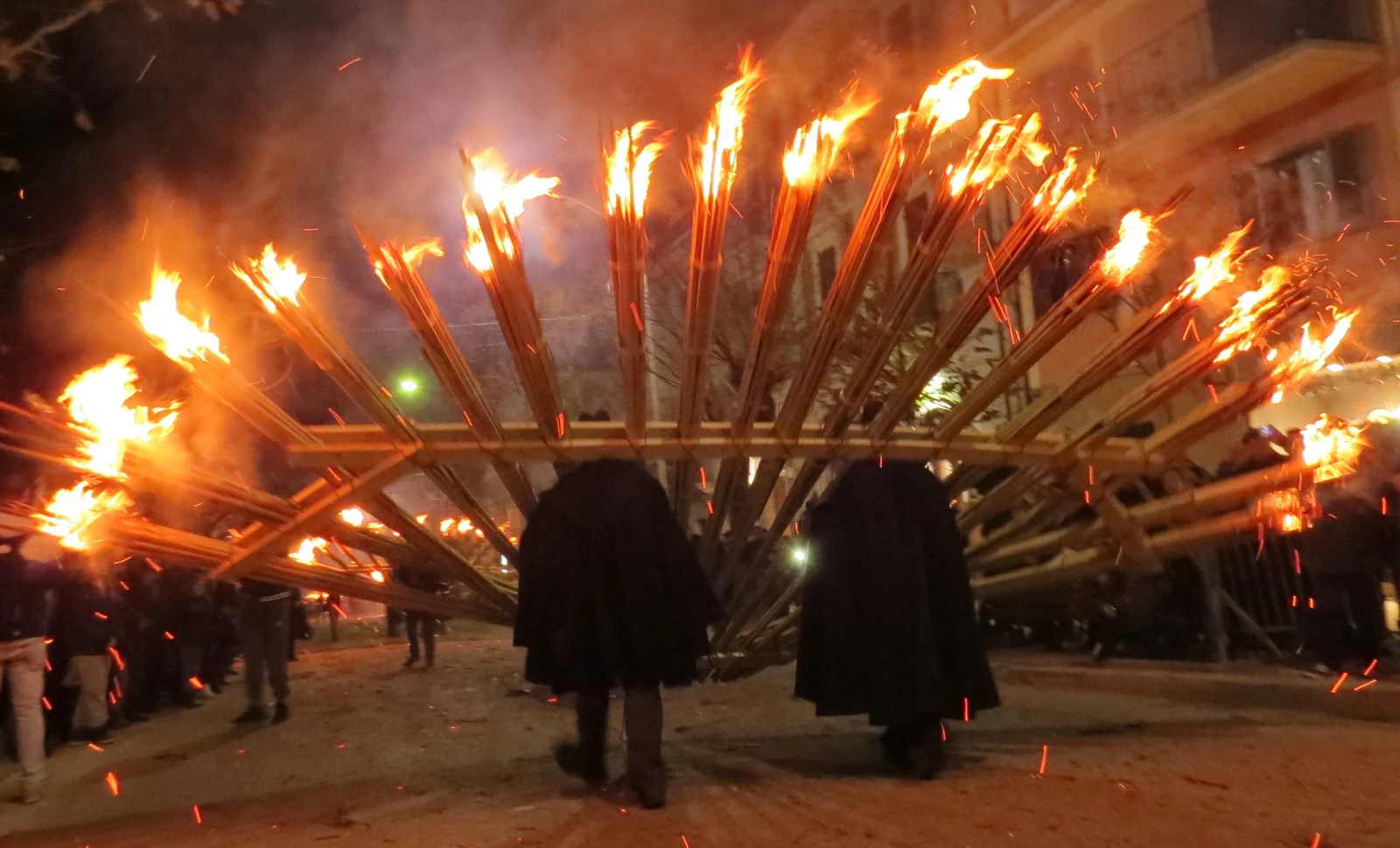
In December the town holds the ’Ndocciata, its best-known event, which received from the Minister of Tourism the “Heritage of Italy for Tradition” award. It is also the season of zuppa alla Santè and filled wafers, made above all around Christmas.
Summer brings a calendar of open-air events: in 2026 the town’s summer programme gathered concerts, shows and evenings devoted to food and wine. Spring and autumn, when the woods change colour, are the best moments to combine the town with walks along the Verrino and in the nearby reserves.
Sources: Visit Agnone — Chiesa di San Pietro Apostolo e il Natale agnonese · Italia.it — Agnone · Visit Agnone — Eventi · Visit Agnone (portale turistico collegato dal Comune di Agnone) — La città di Agnone
Getting there and around
The reference railway station is Isernia, about 42 kilometres away, on the Rome-Campobasso line and with direct links to Rome and Naples. Molise has no airports of its own: the nearest airports listed by the Region are Rome Fiumicino, Rome Ciampino, Naples, Pescara and Foggia, connected to the region by road.
Public road transport is run by regional bus lines: the Region lists coach links from Rome Tiburtina, from Naples and from Pescara railway station, and Agnone’s tourism portal points to the ATM and SATI companies for routes and timetables, to be checked before setting off. Travelling by bus is also a way to watch the inland landscape at leisure.
By car, from Rome and Naples you take the A1 motorway to San Vittore or Caianello, then continue towards Venafro, Isernia and Agnone. From Pescara and Bari you use the A14 with the Vasto Sud exit towards Isernia and Agnone or, from the north, the Val di Sangro exit towards Villa Santa Maria. The old centre is explored on foot; for the Verrino falls, the reserves and the observatory you need your own transport or an organised excursion.
Sources: Visit Agnone — Ufficio turistico e come raggiungerci · Regione Molise, Assessorato al turismo (visitmolise.eu) — Come arrivare in Molise · Italia.it — Tour in Molise in autobus
Where to stay
The town’s tourism portal describes a wide range of accommodation for a place of this size: between hotels, bed and breakfasts and holiday homes Agnone can host more than four hundred people. Many of them occupy old palazzi, family houses in the village or restored farmhouses, some looking onto the lanes of the old centre, others onto the valleys and woods around the town.
In the countryside around Agnone there are agriturismi where the cooking follows home recipes and local produce, and in the town and its outskirts about fifteen restaurants serve traditional dishes and more modern recipes based on local products.
Sleeping in the historic centre lets you enjoy the town in its quietest hours, in the evening and early morning; a farmhouse or an agriturismo suits those who want to spend their days among woods, reserves and rivers. For the dates of the winter festivals it is wise to plan ahead. Up-to-date information on accommodation is available from the town’s tourist office.
Sources: Visit Agnone (portale turistico collegato dal Comune di Agnone) — La città di Agnone · Visit Agnone — Ufficio turistico e come raggiungerci
Nearby
The most natural trip from Agnone leads to the Italic Sanctuary of Pietrabbondante, on Monte Saraceno at about a thousand metres above the Trigno valley: the Samnites built a great religious and political complex there, with a theatre-like cavea and two temples. The town and the sanctuary combine well in the same day.
A short drive away, Capracotta is the village of pezzata, a mutton dish tied to transhumance, of lentil soup with potatoes and chicory, and of a territory rich in white truffles and chestnuts. Higher up, Pescopennataro, at about 1,200 metres, is known as the village of firs and stone and overlooks the whole Sangro valley; nearby, the Abeti Soprani forest of silver firs and beeches hides the hermitage of San Luca.
The Collemeluccio-Montedimezzo MAB Reserve stretches across the municipalities of Pescolanciano and Vastogirardi and offers trails and a visitor centre. Those with an extra day can reach Frosolone, an upland village with a well-kept medieval centre, and so complete an Upper Molise itinerary of crafts, archaeology and forests.
Sources: Italia.it — Santuario italico di Pietrabbondante · Italia.it — Molise, prodotti e piatti tipici · Italia.it — Tour in Molise in autobus · Visit Agnone — Riserva MAB Collemeluccio-Montedimezzo Alto Molise
Local tourist information
Local tourist offices help with opening times, events and transport on the day.
- Ufficio turistico di Agnone (Visit Agnone) · Salita Giuseppe Verdi 9, 86081 Agnone (IS) · +39 0865 7231 · turismo@visitagnone.com · Official website
Source: Visit Agnone — Ufficio turistico e come raggiungerci · checked on
Where to stay
In the municipality of Agnone the national database of the Ministry of Tourism lists 27 accommodation businesses with a verified CIN code: 0 hotels, 5 other licensed accommodation and 22 other types such as B&Bs and private rentals.
Sources: Ministero del Turismo – Banca Dati Strutture Ricettive (dashboard pubblica), 2026-10-12
YOUR JOURNEY
How to shape a journey here
A day of the bell museum, the old centre and craft workshops, easily paired with the Pietrabbondante sanctuary. Visits to be arranged with local operators.
Talk to us about it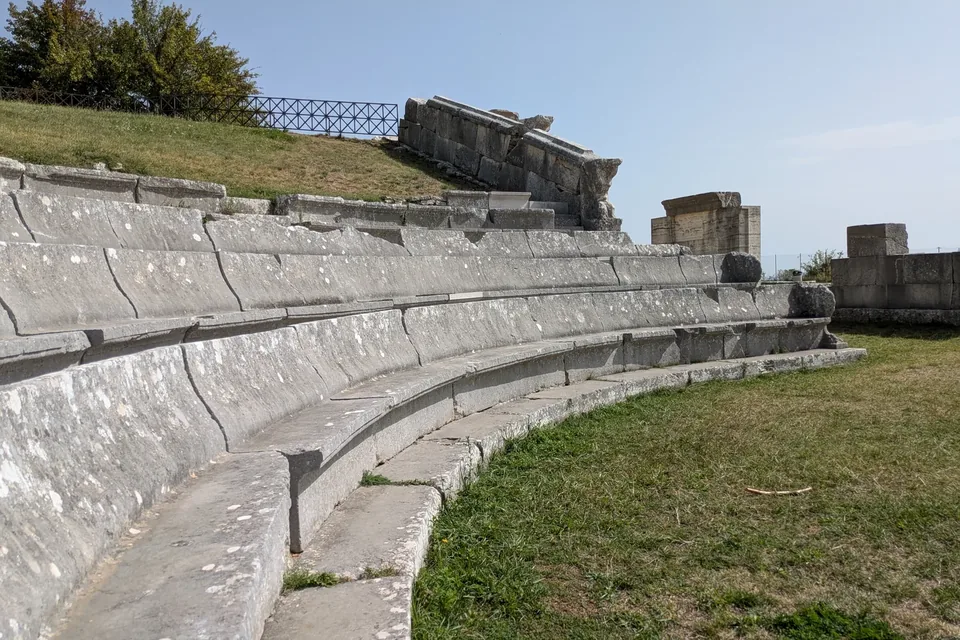
.jpg)


