
Why go
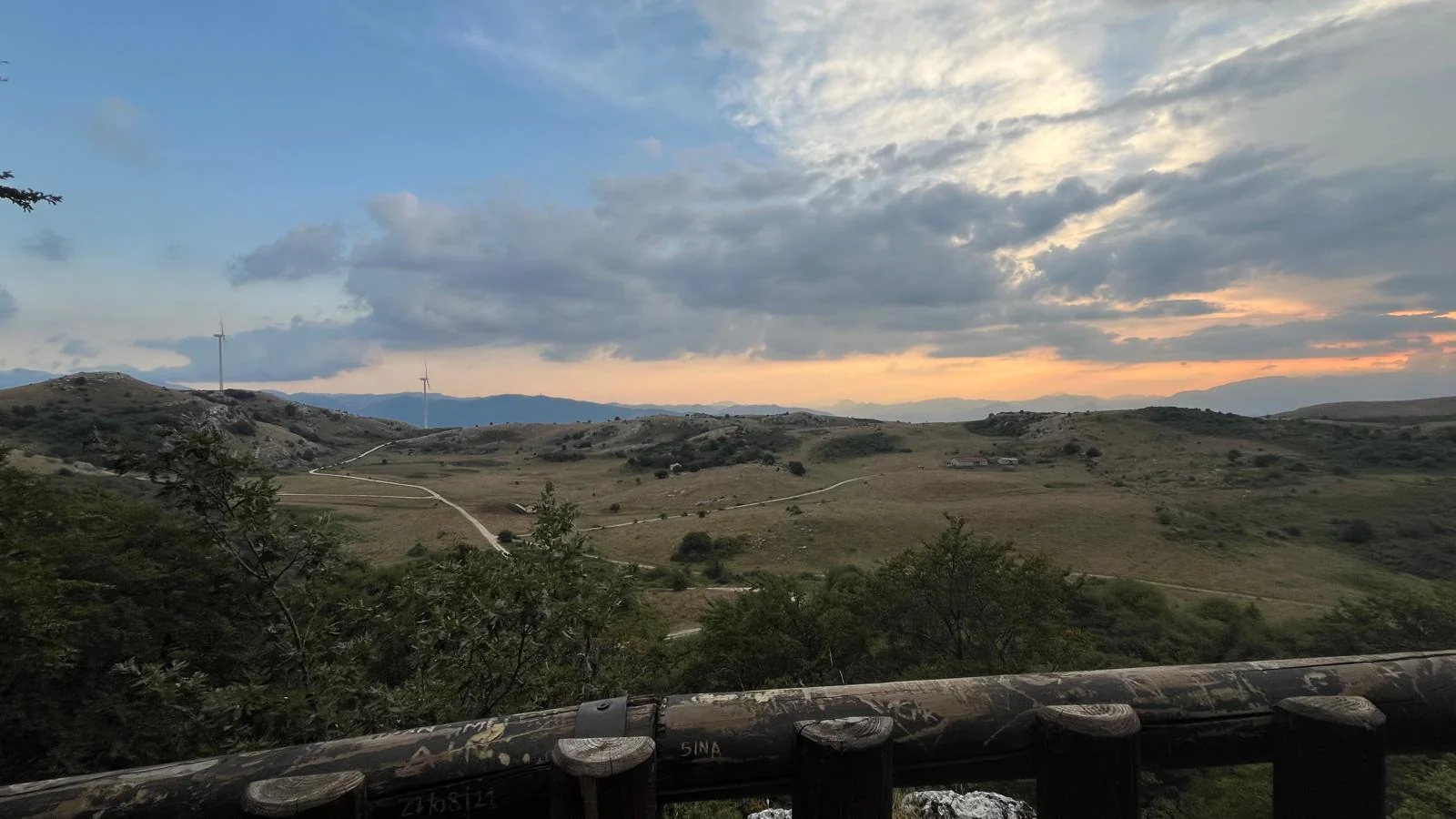
Frosolone stands at about 900 metres on a ridge of the Molise Apennines, surrounded by cliffs, pastures, small ponds and woods. It is listed among the Most Beautiful Villages of Italy and holds the Touring Club Italiano’s Orange Flag, two awards that recognise both the old centre and the landscape around it.
The village lies halfway between Isernia and Campobasso, and it is worth coming with the idea of staying at least one night. There are three reasons, and they hold together: steelwork, which has produced scissors and knives for centuries; mountain cheeses such as scamorza, caciocavallo and ricotta; and transhumance, which still ties the village to the droving tracks and to Puglia.
Visitors find a compact medieval village that can be explored on foot in a few hours, and behind it a broad green mountain open to easy walks, climbing and free flight. It suits a slow journey in which craft work and pasture life can be watched at close range.
Sources: Italia.it — Frosolone · Vivi Frosolone — Il borgo · Comune di Frosolone — Luoghi
History
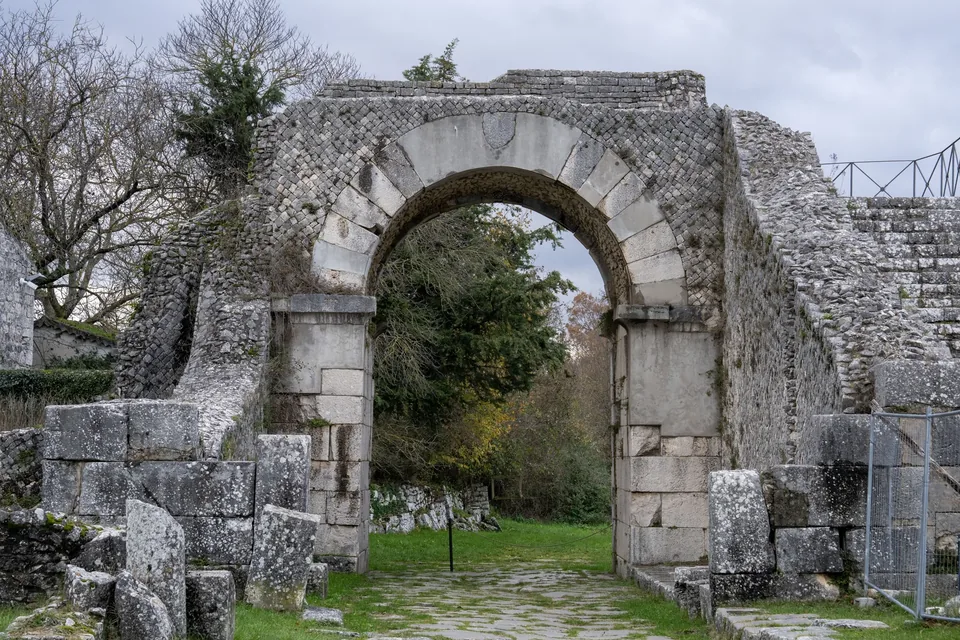
The village has Samnite origins. Frosolone is thought to be ancient Fresilia, taken by the Roman dictator Marcus Valerius Maximus, and on the mountain, at Castellone and Civitella, stretches of cyclopean walls known as Pelasgian walls survive. The first written records date to the eleventh century, when the village belonged to the County of Isernia; it then passed under the Lombards and the Normans and became part of the County of Molise.
From the Middle Ages to the Bourbon period the fief changed hands often, without its lords living there for long: the municipality lists the Borrello counts, the D’Evoli, the Marchesano, the Carafa and the princes of Leporano. The earthquakes of 1456 and 1805 left deep marks; the second destroyed the church of San Pietro that stood in Largo Vittoria.
The story of local work is the story of blades. The municipality suggests that metalworking goes back to Lombard times; in the late nineteenth century it employed hundreds of people, and in the first half of the twentieth there were about eighty workshops. Emigration and later mechanisation reduced the craft workshops, but scissors and knives are still made here and sold in Italy and abroad.
Sources: Italia.it — Frosolone · Comune di Frosolone — Il borgo · Comune di Frosolone — L’artigianato
What to see
The old centre occupies a plateau closed on three sides by steep slopes, entered through the old arched gates of Santa Maria, San Pietro and Sant’Angelo. The streets follow four main axes with smaller lanes at right angles. Largo Vittoria is the largest square: in its centre stands a wayside cross with two column-bearing lions, the last trace of the church of San Pietro that collapsed in 1805.
The church of Santa Maria Assunta dates from the thirteenth century, rebuilt after earthquakes, with a Baroque façade and eighteenth-century canvases by Giacinto Diana on the side altars. The church of San Pietro on Corso Garibaldi holds works by Amalia Duprè, and next to it the former complex of Santa Chiara, founded in 1367, now houses the town hall. San Michele Arcangelo keeps pointed arches from its first phase; Santa Maria delle Grazie, on the eastern edge, has a large altarpiece with nine seventeenth-century Neapolitan paintings.
There are three museums. The Museo dei Ferri Taglienti holds hundreds of historic scissors and knives as well as military blades, with a workshop where forging can be watched by booking. Along the main street visitors find a reconstructed farmhouse kitchen and the museum of traditional dowry linen and costume. Outside the old core, the Fontana dell’Immacolata is a fine piece of limestone worked by local craftsmen.
Sources: Comune di Frosolone — Il borgo · Comune di Frosolone — I musei di Frosolone · Vivi Frosolone — L’itinerario ideale
Food and wine
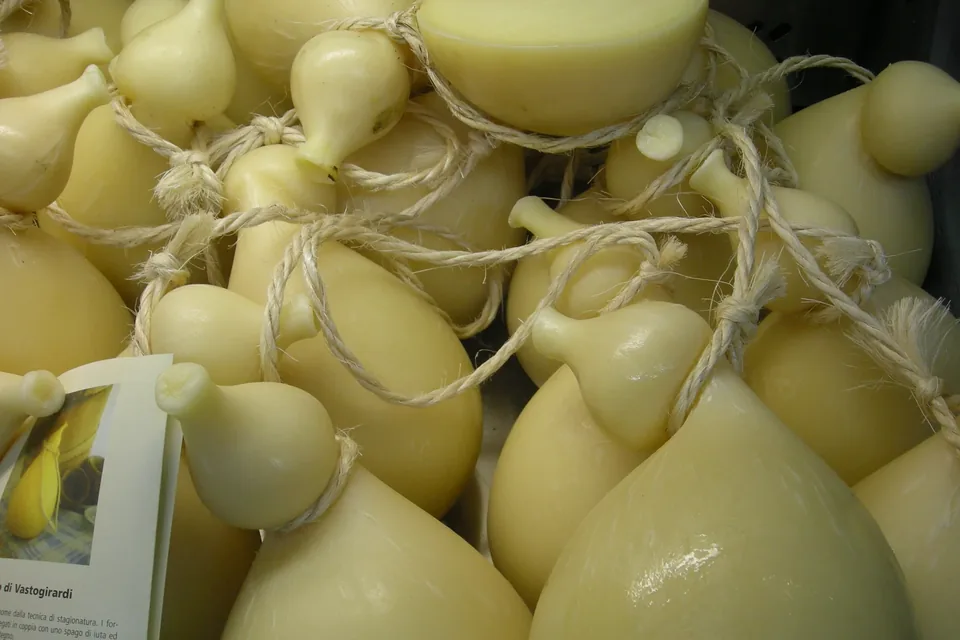
Frosolone’s table comes from its pastures. The municipality links the quality of the milk to the mountain grass and names the village’s caciocavallo, scamorza and pecorino, made with simple methods and long ageing in the fresh air. In the reconstructed farmhouse kitchen on the main street visitors can watch scamorza, caciocavallo, ricotta, treccia and manteca being made, and taste them afterwards.
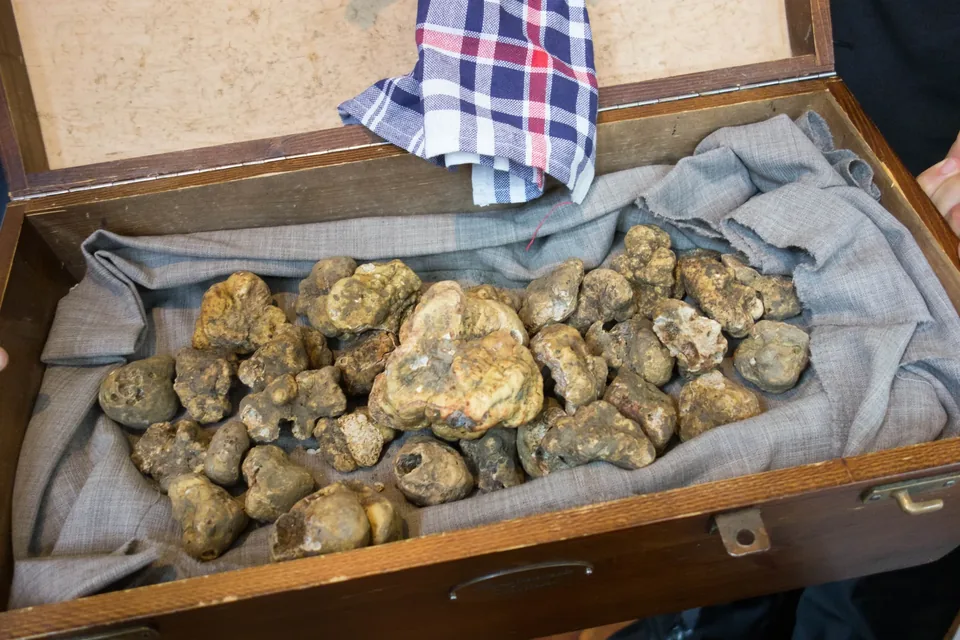
At Acquevive, a hamlet of the village, the Colantuono family makes raw-milk cheeses from free-ranging Podolica cows: the Touring Club describes a Podolica caciocavallo that can age for up to two years, manteca with a heart of butter wrapped in stretched curd, scamorza, caciotta and a soft cheese. White and black truffles are found on the mountain, and the Molise product register includes the Tartufo bianco del Molise.
Among the dishes, the municipality mentions sagne and beans cooked in an earthenware pot, polenta with chicory and vegetable soups. The village tourist centre names pane cotto as its signature dish: stale bread cooked again with mountain greens, eaten by shepherds on the mountain and during transhumance. To drink, Molise offers Tintilia del Molise and its other regional wines, and on the table its PDO Molise olive oil.
Sources: Comune di Frosolone — Prodotti tipici · Comune di Frosolone — I musei di Frosolone · Touring Club Italiano — Carmelina Colantuono, l’avventura della transumanza nel cuore del Molise · Italia.it — Frosolone · Vivi Frosolone — L’itinerario ideale · Italia.it — Molise, prodotti e piatti tipici
Things to do
Frosolone’s mountain is a large green space, partly a European protected area of the Montagnola Molisana. Above a thousand metres grow the beech woods of Monte Marchetta and Colle dell’Orso; the Pedalone beech is more than forty metres tall. In the Grisciata wood the undergrowth fills with cyclamen, snowdrops and mushrooms, and the meadows of the Valle della Contessa are covered with gooseberry and dog rose. Herds, flocks and sometimes free-roaming horses graze the pastures.
Italy’s national tourism portal suggests an easy walk of about five and a half hours from the hermitage of Sant’Egidio, at the foot of Colle dell’Orso, to the Cundra geosite: the route passes the Inghiottitoio del Diavolo sinkhole, the Morgia Quadra crag and the ruins of the monastery of Sant’Onofrio. The crag draws climbers all year round, and the slopes suit paragliding and hang-gliding. From the Colle dell’Orso viewpoint and Monte Gonfalone the Adriatic can be seen on clear days.
In the village the most characteristic experience is stepping into a scissors and knife workshop or factory, or watching a forging demonstration at the museum. For the mountain, the tourist centre lists environmental hiking guides who run walks, family outings and, in winter, snowshoe trips.
Sources: Italia.it — Frosolone · Vivi Frosolone — Attività in montagna · Italia.it — 6 attività nella natura in Molise · Vivi Frosolone — Guide ambientali · Comune di Frosolone — L’artigianato · Comune di Frosolone — La natura
When to go
Frosolone can be visited in every season, and its festival calendar helps to choose. On the night of 16 January, at Acquevive, groups of singers go from house to house for Saint Anthony, protector of animals, and homes stay open with tables laid. On 8 May bonfires are lit in the village and its hamlets for Saint Michael the Archangel, the saint invoked by transhumant shepherds. On Christmas Eve people climb Monte Gonfalone and return to the village carrying lit torches.
Summer is the fullest season. The first of August combines the ‘passate’ around the cross of the church of San Rocco, a parade of floats showing life in the past, and a food festival. Every August since 1996 the old centre has hosted the national scissors and knife fair, with forging demonstrations.
The Colantuono transhumance described by the Touring Club leaves Puglia with the last full moon of May and reaches Acquevive after about five days; it is not a fixed-date show and must be checked with the herders. Transhumance is inscribed on UNESCO’s Representative List of intangible heritage. In summer the cows graze the mountain pastures, while winter brings snow and snowshoe walks.
Sources: Vivi Frosolone — Eventi · Comune di Frosolone — L’artigianato · Touring Club Italiano — Carmelina Colantuono, l’avventura della transumanza nel cuore del Molise · Vivi Frosolone — Attività in montagna · UNESCO — Transhumance, the seasonal droving of livestock
Getting there and around
Frosolone lies halfway between Isernia and Campobasso, in the mountains of central Molise. The municipality gives three road approaches: from the south, from the north coming from Civitanova del Sannio and from the west coming from Macchiagodena. These are mountain roads, and in winter they call for attention to the weather.
For travellers by train, the reference points are the RFI stations of the two provincial capitals, Isernia and Campobasso; from there the journey continues by road, with a hire car or an arranged transfer. Timetables and connections should be checked in advance on the operators’ official channels, as services in inland areas can change with the seasons.
In the village everything is on foot: the old centre is compact, and the tourist centre suggests leaving the car near Piazza Alessandro Volta, by the Fontana dell’Immacolata, and walking on from there. To reach the mountain, the viewpoints and the picnic areas of Colle dell’Orso and Sant’Egidio you need your own transport, or you can rely on the local environmental guides, who also run the excursions.
Sources: Comune di Frosolone — Luoghi · RFI — Stazione di Isernia · RFI — Stazione di Campobasso · Vivi Frosolone — L’itinerario ideale
Where to stay
Accommodation in Frosolone means small places. The list kept by the tourist welcome centre consists mainly of houses and flats in the old centre, often for four to six people and suited to families and small groups, plus a few B&Bs and country houses a few kilometres from the village, with breakfast and parking, set in the countryside.
Sleeping in the village lets you enjoy the quiet hours in the lanes, in the evening and early morning, and reach museums and workshops on foot. A place in the countryside brings you closer to the pastures and the mountain, which helps if you plan to walk or climb. For a longer stay it is worth asking whether a kitchen is available, which some places offer on request.
For meals the village has trattorias and small restaurants serving local farmhouse cooking, and some dishes, such as pane cotto, are made to order. Shops selling local products, bakeries and butchers are enough for a packed lunch on the mountain. Availability changes with the seasons and with work on individual houses, and should be checked when booking with the tourist centre or the operators.
Sources: Vivi Frosolone — Dove dormire · Vivi Frosolone — L’itinerario ideale · Comune di Frosolone — Prodotti tipici
Nearby
Frosolone sits within a network of tratturi, the old grassy droving roads of transhumance that since 1997 have formed the Regional Park of the Tratturi. To the north the Pescasseroli–Candela track passes Castelpetroso, Cantalupo nel Sannio and Bojano and reaches Sepino, where the remains of the Roman town can be visited; the Celano–Foggia track touches the archaeological areas of Vastogirardi and Pietrabbondante.
Upper Molise is the most natural direction for a second day. Pescolanciano is considered the gateway to the area; a little further lie Pietrabbondante, with its archaeological area, and to the north Agnone, known for caciocavallo and its curly sugared almonds, and Capracotta, linked to the cooking of transhumance. To the south, Isernia keeps an old centre of lanes and the Fontana Fraterna, and in its province the sanctuary of Castelpetroso rises among the woods looking like a castle.
Those interested in transhumance can follow the Colantuono route backwards in their minds, to San Marco in Lamis and the Gargano, where the herds set out in spring: a thread that links inland Molise with Puglia.
Sources: Italia.it — I tratturi del Molise · Italia.it — Molise, prodotti e piatti tipici · Italia.it — Molise, guida, storia e curiosità · Touring Club Italiano — Carmelina Colantuono, l’avventura della transumanza nel cuore del Molise
Local tourist information
Local tourist offices help with opening times, events and transport on the day.
- Centro di Accoglienza Turistica “Vivi Frosolone” · Piazza Municipio 1, 86095 Frosolone (IS) · +39 344 740 0799 · cifrosolone@gmail.com · Official website
Source: Comune di Frosolone — Centro di Accoglienza Turistica “Vivi Frosolone” · Vivi Frosolone — Contatti e informazioni · checked on
Where to stay
In the municipality of Frosolone the national database of the Ministry of Tourism lists 15 accommodation businesses with a verified CIN code: 0 hotels, 8 other licensed accommodation and 7 other types such as B&Bs and private rentals.
Sources: Ministero del Turismo – Banca Dati Strutture Ricettive (dashboard pubblica), 2026-10-12
YOUR JOURNEY
How to shape a journey here
Two days between the knife-making village, a walk in the beech woods and a tasting of upland cheeses. Visits to be arranged with local operators.
Talk to us about it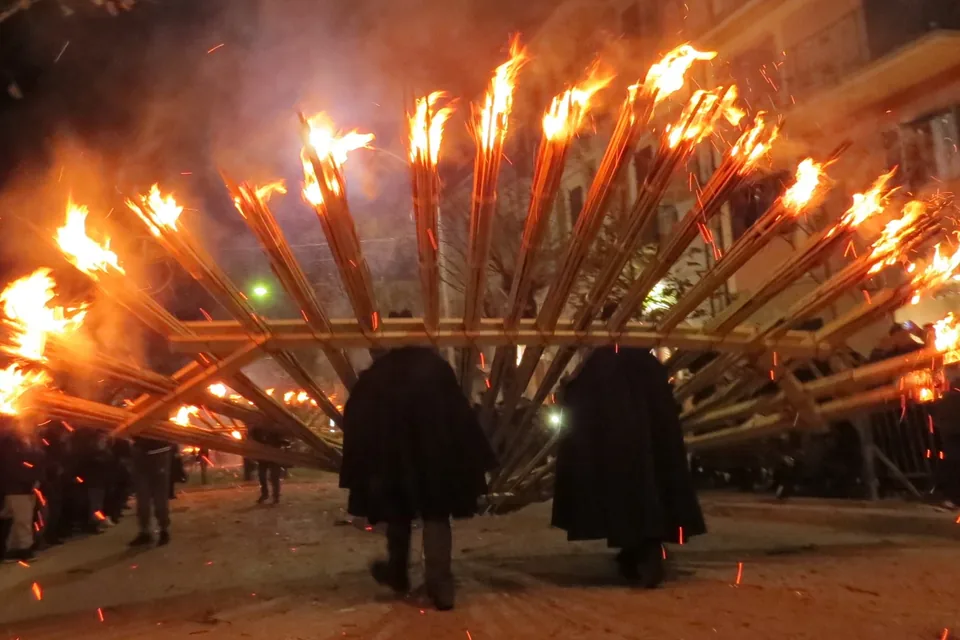


.jpg)
outside.jpg)


