
Why go
In the Tammaro valley, where the last southern peaks of the Matese end, Sepino holds three places and three ages together: the Samnite stronghold of Terravecchia-Saipins on the heights, the Roman town of Saepinum in the Altilia plain, and the medieval village that inherited its name on the mountain slopes. Italy’s national tourism portal calls it a city that is ‘one and threefold’.
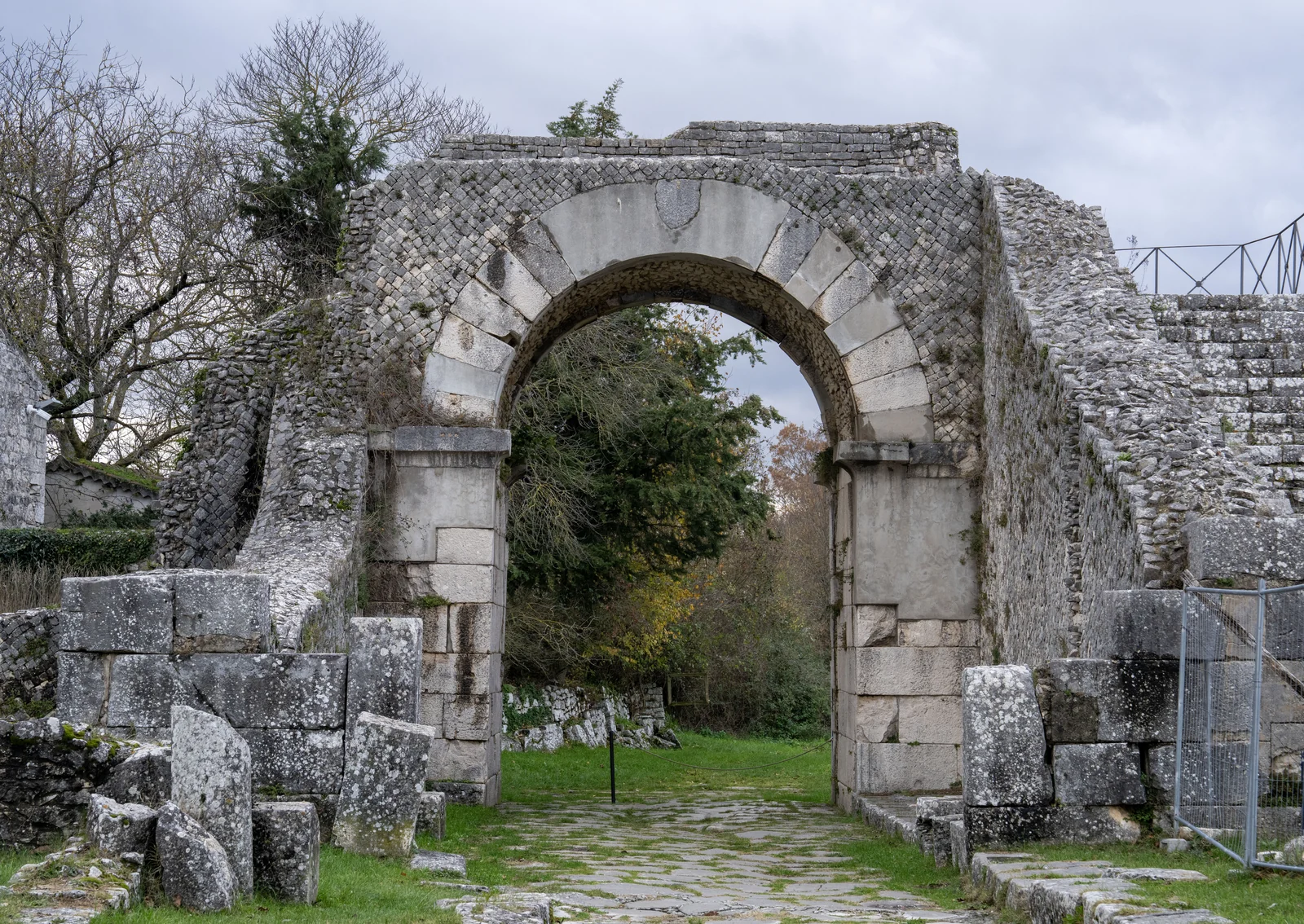
The main reason to come is Saepinum. The regional museums directorate describes it as one of the most beautiful places in Molise: walls, towers, forum, theatre and paved streets set in a rural landscape that runs right into the site, with eighteenth-century farmhouses built on the theatre steps. The town grew up on the Pescasseroli–Candela droving track, and walking through it means following a stretch of the transhumance route.
There is much more around it: a village with medieval gates, the square overlooked by the church of Santa Cristina, the high pastures of Campitello di Sepino among beech woods, and the Tre Fontane spa. It suits travellers who enjoy open-air archaeology and mountain scenery, and it deserves an unhurried visit.
Sources: Italia.it — Itinerario nel Matese molisano tra natura e borghi · Direzione regionale musei nazionali Molise — Museo della città e del territorio, Sepino · Ministero della Cultura — Parco archeologico di Sepino, area archeologica di Altilia-Saepinum
History
Sepino’s name probably comes from saepire, to fence in, a word that points to transhumant herding. The first settlement was the Samnite stronghold on the mountain of Terravecchia, taken by the Romans in 293 BC during the Third Samnite War; the population then moved further down. The lowland settlement had already arisen at the end of the fourth century BC as a place of trade and defence, at the crossing of the track that would become the Pescasseroli–Candela tratturo and the road that runs from the Matese down to the Tammaro plain and linked Campania with Daunia.
The magistrates who founded the Roman town used these two routes to lay out the decumanus and the cardo. Rebuilt in the imperial age, Saepinum long remained a trading centre tied to herding. When its last inhabitants moved to the new settlement, they took the name with them; over the centuries farmhouses rose on the ruins, including those built in a semicircle over the theatre steps.
Today’s Sepino is a medieval foundation, a few kilometres further south at about 700 metres, where streams provided water and gullies offered shelter. Fulling mills and watermills recall a long tradition of wool working. In the nineteenth century the cave-riddled woods of Campitello were a stronghold of brigandage.
Sources: Ministero della Cultura — Parco archeologico di Sepino, area archeologica di Altilia-Saepinum · Direzione regionale musei nazionali Molise — Area archeologica di Altilia-Saepinum · Direzione regionale musei nazionali Molise — Museo della città e del territorio, Sepino · Italia.it — Il Molise del gusto, arte e cultura · Italia.it — Itinerario nel Matese molisano tra natura e borghi · Italia.it — Sepino
What to see
The Altilia-Saepinum archaeological area has a rectangular plan enclosed by walls with dozens of towers and four monumental gates; the best preserved is the Porta di Boxano. In the forum the remains of the basilica, the temple, the market and the baths can still be made out, and the main streets follow the ancient droving track. The theatre is the most evocative point: eighteenth-century farmhouses rest on its steps and follow their curve.
One of these farmhouses holds the Museum of the Town and Territory, part of the archaeological area managed by the Sepino Archaeological Park. The houses keep their sink, hearth, oven and wall niches; the collections run from Palaeolithic stone tools found in the middle Tammaro valley to objects of Roman life, arranged by themes such as the banquet, pastimes, crafts and funerary rites, and on to the Middle Ages.
In the village of Sepino, at the entrance, a large stone mask that perhaps came from a Roman fountain is set into a simpler fountain. Gates and stretches of wall survive, along with the sixteenth-century Palazzo Attilio and Piazza Nerazio Prisco with the town hall. The church of Santa Cristina, probably of thirteenth-century origin and rebuilt several times, has a bell tower with a wrought-iron cupola and, in the Treasury chapel of 1609, saints’ busts in silvered copper and Baroque altars.
Sources: Italia.it — Il Molise del gusto, arte e cultura · Direzione regionale musei nazionali Molise — Museo della città e del territorio, Sepino · Ministero della Cultura — Parco archeologico di Sepino, area archeologica di Altilia-Saepinum · Italia.it — Sepino
Food and wine
Sepino belongs to the cooking of the Matese, built on milk, cheese and meat from the pastures. The national portal mentions caciocavallo and lamb and kid among the massif’s farmhouse flavours. In the nearby Bojano plain, made fertile by the springs of the Biferno, fiordilatte mozzarella is made from cow’s milk and is known far beyond Molise. At Guardiaregia the pignatari, the terracotta makers, produce the pans in which many traditional local dishes are cooked.
Elsewhere in the province of Campobasso the table offers cavatelli and fusilli, ragù with brasciola, meat rolled around eggs, lard and sausage, and at Campitello Matese polenta with sausages or local pulses. Among Molise cheeses stand out Caciocavallo di Agnone, stracciata and manteca; among cured meats, capofreddo and liver sausage.
Molise has a PDO extra virgin olive oil, truffles, above all white truffles, and four appellation wines: Tintilia, Biferno, Molise and Pentro. The product register includes Tintilia del Molise, Molise (olio extravergine di oliva) and Tartufo bianco del Molise. Just outside the village, finally, low-mineral spring waters feed the Tre Fontane spa.
Sources: Italia.it — Itinerario nel Matese molisano tra natura e borghi · Italia.it — Molise, prodotti e piatti tipici · Italia.it — Sepino
Things to do
The simplest and finest experience is to walk through Saepinum along the decumanus, which follows the droving track, and to leave by the gates towards the countryside: the site is open to the landscape and reads best on foot, in morning or late-afternoon light. In summer local agencies and associations run guided visits from the village to the archaeological park and treks to the Samnite site of Terravecchia-Saipins, at about 950 metres, on a height overlooking the Tammaro valley.
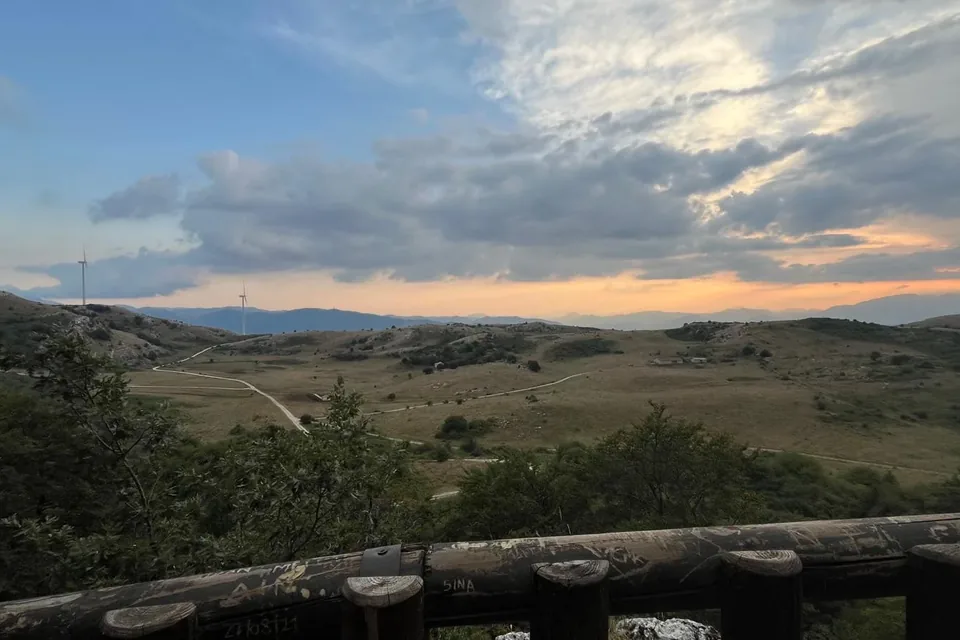
Those who want to climb higher continue towards the border with Campania to the Campitello di Sepino plateau, a pasture above 1,200 metres surrounded by beech woods and tied to herding and to memories of brigandage. The Pescasseroli–Candela tratturo, about 200 kilometres long, crosses Molise through Castelpetroso, Cantalupo nel Sannio, Bojano and Guardiaregia before reaching Sepino: a route to follow in stretches, on foot or on horseback.
The Matese also offers wilder nature: the gorge of the Quirino stream, the San Nicola waterfall and the caves of the Guardiaregia-Campochiaro WWF reserve, and in winter the ski slopes of Campitello Matese. For those seeking rest, the Tre Fontane spa uses low-mineral waters that rise a short distance from the village.
Sources: Italia.it — Sepino · Italia.it — Itinerario nel Matese molisano tra natura e borghi · Italia.it — I tratturi del Molise · Italia.it — Paesaggi del Molise, dal Matese alle coste
When to go
Sepino can be visited all year, and each season has its own character. The village calendar turns around its patron saint, Santa Cristina, who is celebrated twice. From 8 to 10 January comes the ‘Crianzola’, a dinner for heads of household with wines from local producers; on 9 January children receive the ‘cartoccio’ of sweets, girls dressed in white accompany the council to church in the procession of the Verginelle, and the mayor offers the saint gold, frankincense and myrrh. The bells ring from the afternoon of the 9th through the night, entrusted to groups of young people drawn by lot.
From 23 to 25 July the summer feast returns: a market and livestock fair along the road into the village, the procession of the saint’s bust at noon on the 24th, concerts by two bands taking turns and fireworks, and on the 25th the emigrants’ day, bringing together those who come home for the occasion. These are the traditional dates published by the municipality: check the programme for the current year.
Summer is also the season of guided visits and treks to Terravecchia. Spring and autumn are ideal for walking among the ruins and on the pastures, while in winter the Matese is covered in snow and Campitello Matese opens its ski runs.
Sources: Comune di Sepino — Festa di Santa Cristina · Italia.it — Sepino · Italia.it — Paesaggi del Molise, dal Matese alle coste
Getting there and around
Sepino lies in the Tammaro valley, in the province of Campobasso, at the foot of the Molise side of the Matese. Coming from Isernia, the main road is the SS17, known as the road of the Abruzzo and Apulian-Samnite Apennines: it descends to the valley floor towards Bojano, passes below Guardiaregia and, a few kilometres further on, reaches Sepino’s two archaeological areas.
The regional capital, Campobasso, has a station on the RFI rail network and is the most convenient base for those arriving by train; from there the journey continues by road, by car or transfer. Timetables and connections should be checked on the operators’ official channels, as services in inland areas can change during the year.
Locally you need your own transport to move between the three places: the Altilia-Saepinum archaeological area lies in the plain, the village of Sepino a few kilometres further south and higher up, and Terravecchia on the height overlooking the valley, reached on foot. Inside the archaeological park and in the village everything is explored on foot. For access by visitors with disabilities, the Archaeological Park asks people to contact it in advance.
Sources: Italia.it — Itinerario nel Matese molisano tra natura e borghi · RFI — Stazione di Campobasso · Italia.it — Sepino · Ministero della Cultura — Parco archeologico di Sepino, area archeologica di Altilia-Saepinum
Nearby
Heading back up the SS17 towards Isernia you reach Guardiaregia, a village of terracotta makers at the foot of Monte Capraro and gateway to the Guardiaregia-Campochiaro WWF nature reserve, with the gorges of the Quirino. A little further on is Bojano, ancient capital of the Pentri, one of the Samnite tribes: the cathedral of San Bartolomeo keeps a thirteenth-century portal and rose window, and above the town the medieval village of Civita Superiore looks over the plain. Behind it rise Monte Gallinola and Monte Miletto, the highest peak of the Matese, with the ski runs of Campitello Matese.
On the northern side of the massif, Roccamandolfi, an Orange Flag village, is a place of knights and brigands with the Torrente Callora reserve and a rope bridge between rock walls. Following the tratturo north you reach Castelpetroso, where the sanctuary of the Addolorata rises among the woods.
Campobasso, the regional capital, has the Castello Monforte, the Romanesque church of San Giorgio and the Samnite Museum, a good way to complete the story begun at Saepinum and Terravecchia. Those who want to follow the Samnites further can travel on to Upper Molise and Pietrabbondante.
Sources: Italia.it — Itinerario nel Matese molisano tra natura e borghi · Italia.it — Molise, guida, storia e curiosità · Italia.it — I tratturi del Molise · Italia.it — Paesaggi del Molise, dal Matese alle coste
Where to stay
In the municipality of Sepino the national database of the Ministry of Tourism lists 6 accommodation businesses with a verified CIN code: 0 hotels, 4 other licensed accommodation and 2 other types such as B&Bs and private rentals.
Sources: Ministero del Turismo – Banca Dati Strutture Ricettive (dashboard pubblica), 2026-10-12
YOUR JOURNEY
How to shape a journey here
Half a day at Saepinum and a stop in the village of Sepino; for walkers, the climb to Terravecchia. Visits to be arranged with local operators.
Talk to us about it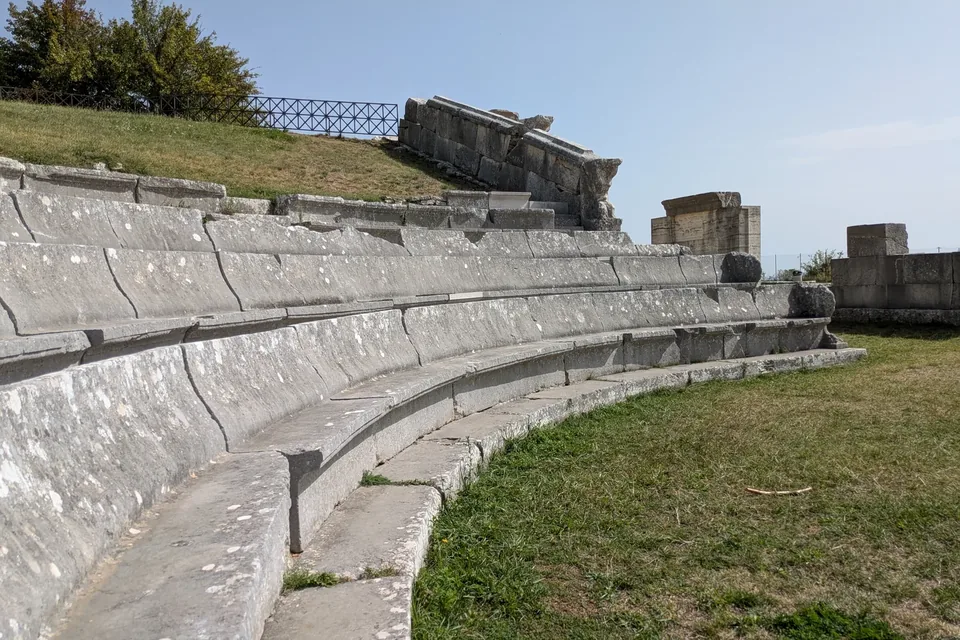
outside.jpg)

