
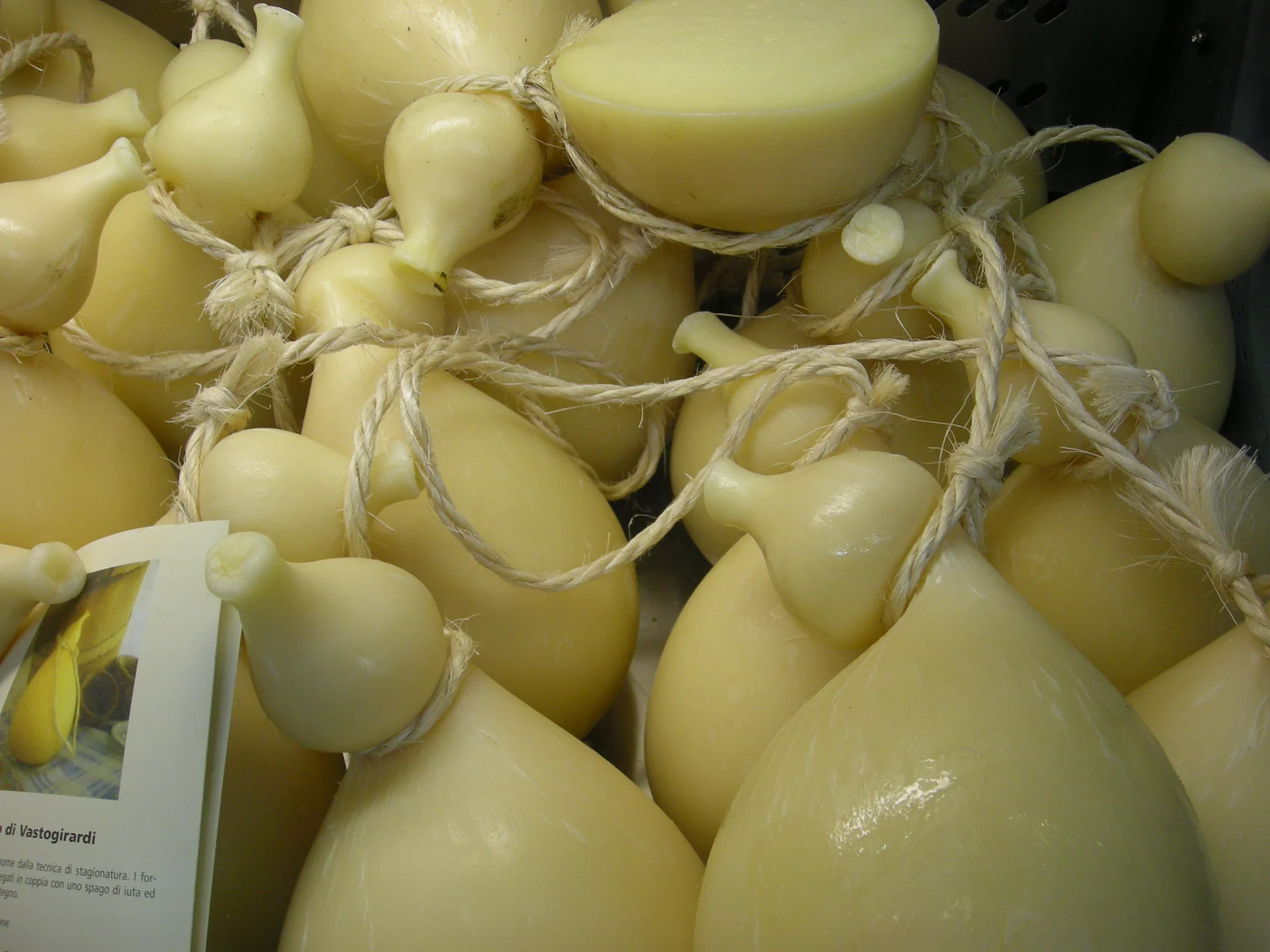
A cheese of Upper Molise
The Molise traditional products atlas, compiled by the regional agricultural development agency, gives the production area as Upper Molise, especially the towns of Agnone, Capracotta and Vastogirardi in the province of Isernia. The cheese is shaped like a large pear with a small head, 18 to 28 centimetres tall, 16 to 22 across and weighing 1.5 to 3 kilos. The rind is hard and thin, hazel-coloured and mottled with mould if aged long; the paste is compact with few cracks. The flavour is sweet and supple when young, then grows ever more intense and sharp. Italia.it describes it as a hard-rinded, straw-yellow cheese and puts it first among the region's cheeses.
Sources: Agenzia regionale per lo sviluppo agricolo del Molise — Atlante dei prodotti tradizionali: Caciocavallo di Agnone (scheda ospitata da ONAF) · Italia.it — Molise, piccolo e gustoso scrigno di pietanze e prodotti identitari
From raw milk to stretching
According to the regional sheet, raw milk from cows mostly kept at pasture is used, with rennet and salt. A natural whey starter is added; coagulation takes place at 36-38 degrees with calf or kid rennet. The curd is broken into lumps the size of maize kernels, the whey is drawn off and part of it, heated to 65 degrees, is poured back over the curd to partly cook it. When the curd is ready to stretch it is sliced and stretched by hand in water at 80-90 degrees, pressed so that the surface stays smooth and the inside full. The pear with its head is shaped, cooled in water and salted in brine for about 24 hours per kilo. Slow Food describes a very similar process and notes that the type of rennet changes the final sharpness.
Sources: Agenzia regionale per lo sviluppo agricolo del Molise — Atlante dei prodotti tradizionali: Caciocavallo di Agnone (scheda ospitata da ONAF) · Fondazione Slow Food — Arca del Gusto: Caciocavallo di Agnone
Hung astride: ageing and name
The name caciocavallo, explains the Molise atlas sheet, comes from the ageing technique: the cheeses are tied in pairs and hung astride a support in a cool, airy room. To be sold, Agnone caciocavallo must age at least two months. Slow Food adds that, after about twenty days of drying, traditional ageing took place in natural caves at a constant temperature, for three months to a year. It is made all year, but the regional sheet singles out spring cheese, when cows graze the mountain meadows, as especially prized. Traditional tools include the tinned copper cauldron, the wooden tub and the poles for hanging the cheeses: equipment that links the cheese to the town's crafts.
Sources: Agenzia regionale per lo sviluppo agricolo del Molise — Atlante dei prodotti tradizionali: Caciocavallo di Agnone (scheda ospitata da ONAF) · Fondazione Slow Food — Arca del Gusto: Caciocavallo di Agnone
Protection: traditional, not PDO
Agnone caciocavallo has no designation of origin of its own. It is recognised as a traditional product in the Molise regional atlas and listed in Slow Food's Ark of Taste, the catalogue of products at risk of disappearing. It should be distinguished from Caciocavallo Silano PDO, which Qualigeo describes as a semi-hard stretched-curd cheese of whole cow's milk, with a very wide area covering inland parts of Calabria, Campania, Puglia, Basilicata and also the provinces of Isernia and Campobasso. Silano has its own rules, such as the Extra and Gran Riserva types and the logo branded on the cheese. Agnone caciocavallo is instead recognised by its tie to a specific district, raw milk, the pear shape and hanging maturation.
Sources: Agenzia regionale per lo sviluppo agricolo del Molise — Atlante dei prodotti tradizionali: Caciocavallo di Agnone (scheda ospitata da ONAF) · Fondazione Slow Food — Arca del Gusto: Caciocavallo di Agnone · Qualigeo — Caciocavallo Silano DOP
Stracciata and Capracotta pecorino
The same Upper Molise dairies make other cheeses. Stracciata, according to the regional atlas, is a fresh stretched-curd cheese from Agnone, Capracotta and Vastogirardi: the curd, stretched for about ten minutes in near-boiling water, is drawn into strips 4-5 centimetres wide and about one thick, then torn into pieces of about half a metre and folded three times, in portions of about 400 grams. It should be eaten at once; kept a few days, it becomes almost spreadable. Capracotta pecorino, in Slow Food's Ark of Taste, is tied to Capracotta, Agnone, Carovilli, Vastogirardi, San Pietro Avellana and Pescopennataro: hard, semi-cooked paste, yellow-brown rind, sharp when aged, much loved dipped in egg and fried. Italia.it also mentions manteca, with a heart of ricotta or butter.
Sources: Agenzia regionale per lo sviluppo agricolo del Molise — Atlante dei prodotti tradizionali: Stracciata (scheda ospitata da ONAF) · Fondazione Slow Food — Arca del Gusto: Pecorino di Capracotta · Italia.it — Molise, piccolo e gustoso scrigno di pietanze e prodotti identitari
Agnone: bells, copper and food
Italia.it presents Agnone as a medieval town best known for its bells: a foundry has worked here for about a thousand years and since 1924 has been entitled to use the papal coat of arms. The historic centre holds Palazzo San Francesco with its antique book exhibition, sixteen churches, copper and wrought-iron workshops, the historical bell museum and the water-mill area. The town council also describes the copper museum, where a family of coppersmiths, heirs to this old craft, has recreated the stages of work and the engravers' finishing. For food, italia.it lists caciocavallo, scamorza and treccia, cured meats, the chocolate bell, ostie and confetti ricci; dishes include sagne a pezzi with lamb sauce, fettuccine with porcini and zuppa alla santè.
Sources: Italia.it — Agnone · Comune di Agnone — Museo del rame
Zuppa alla santè, 'Ndocciata and drove roads
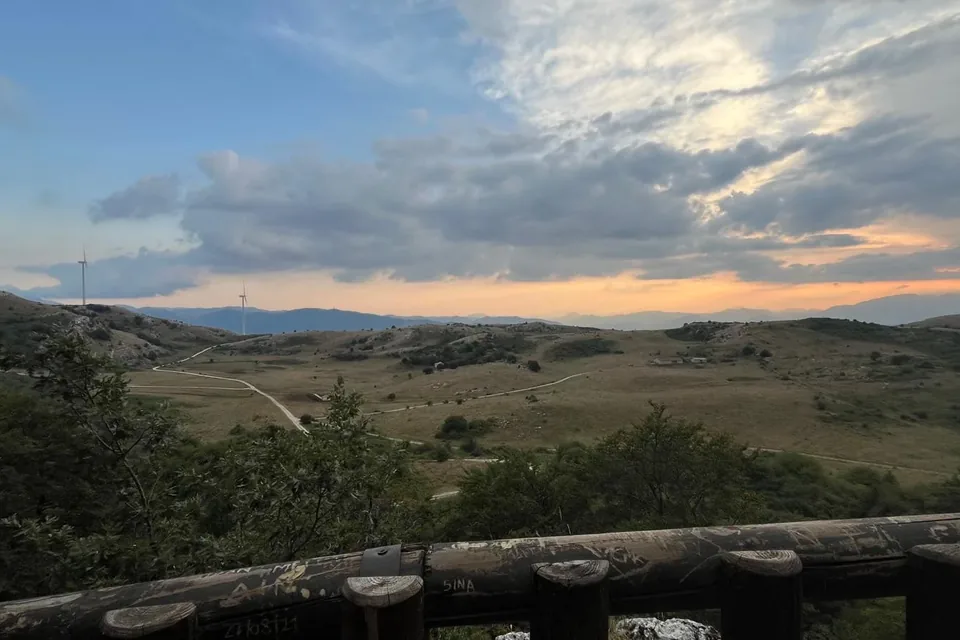
Caciocavallo goes into one of the dishes most tied to Agnone's festivities. Italia.it describes zuppa alla santè, made at Christmas, as an old recipe with chicken broth, caciocavallo, small beef meatballs and stale bread fried or toasted. December is also the month of the 'Ndocciata, the parade of huge torches recognised by the Ministry of Tourism as Italian Heritage for Tradition. The cheese also belongs to the history of transhumance: italia.it recalls that the drove roads, grass tracks up to 11.6 metres wide in their Aragonese form, took flocks from Abruzzo's pastures to the Tavoliere and back, and that a Regional Park of the Tratturi has existed since 1997. Among the main routes is the Celano-Foggia drove road, passing Vastogirardi and Pietrabbondante, not far from Agnone.
Sources: Italia.it — Molise, piccolo e gustoso scrigno di pietanze e prodotti identitari · Italia.it — Agnone · Italia.it — I tratturi del Molise
How to taste it
The most instructive approach is a small comparison: a young caciocavallo of two or three months beside a long-aged one. In the first you taste milk and sweetness, in the second intensity and the sharp note that grows with time. Cut thin slices at room temperature and serve with durum-wheat bread and a few seasonal vegetables. In the kitchen young caciocavallo can be cooked on a griddle or in a pan until a crust forms, while the aged one is grated over pasta with meat sauce. Stracciata, on the other hand, should be eaten freshly made, perhaps at breakfast or lunch, with nothing else beside it. For wine, a Molise mountain red is the most natural partner, but with young cheeses a fresh white also works.
Taking it home
Aged caciocavallo travels well: wrapped in food paper and then a cloth or fabric bag, it lasts several days out of the fridge if it is not too hot. Whole cheeses are heavy but keep a long time hung somewhere cool, just as in the dairy; otherwise ask for a piece. Avoid sealed plastic bags, which make the rind sweat. Stracciata, being fresh, should be eaten on the spot or within a day or two, kept cold. Buying directly from a dairy or a shop in Agnone lets you ask the age of the cheese and when it was made: spring-milk and winter-milk cheeses can differ. Dairy visits must be arranged in advance with operators.
A thread for your journey
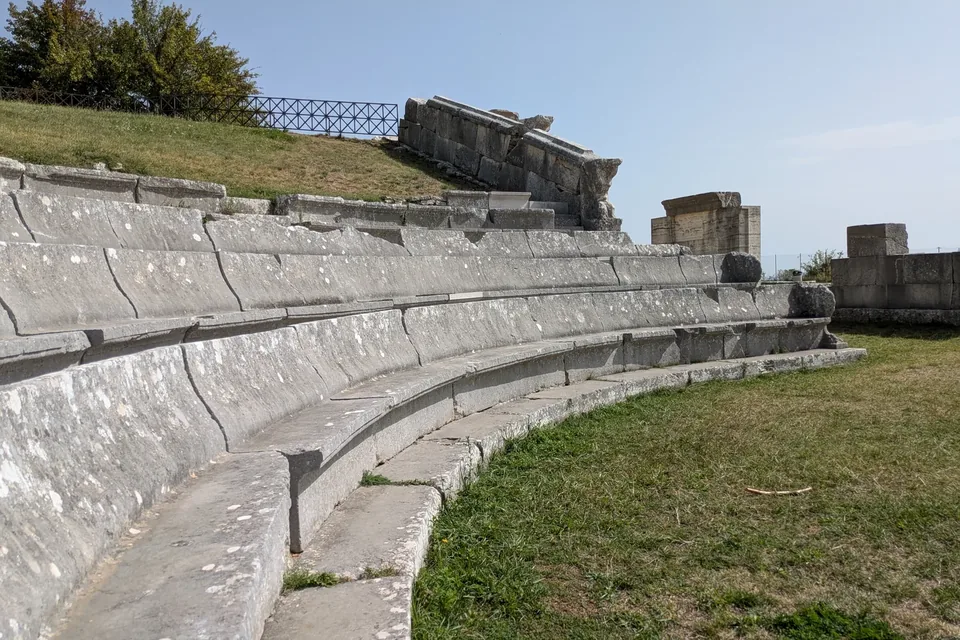
Journey idea: a day in Agnone between the historic centre, the bell museum and the copper museum, with a side-by-side tasting of young and aged caciocavallo and a freshly made stracciata; the next day the drove road towards Pietrabbondante and its Samnite theatre. December travellers can tie the visit to the 'Ndocciata and zuppa alla santè. Dairy visits arranged with operators.
Talk to us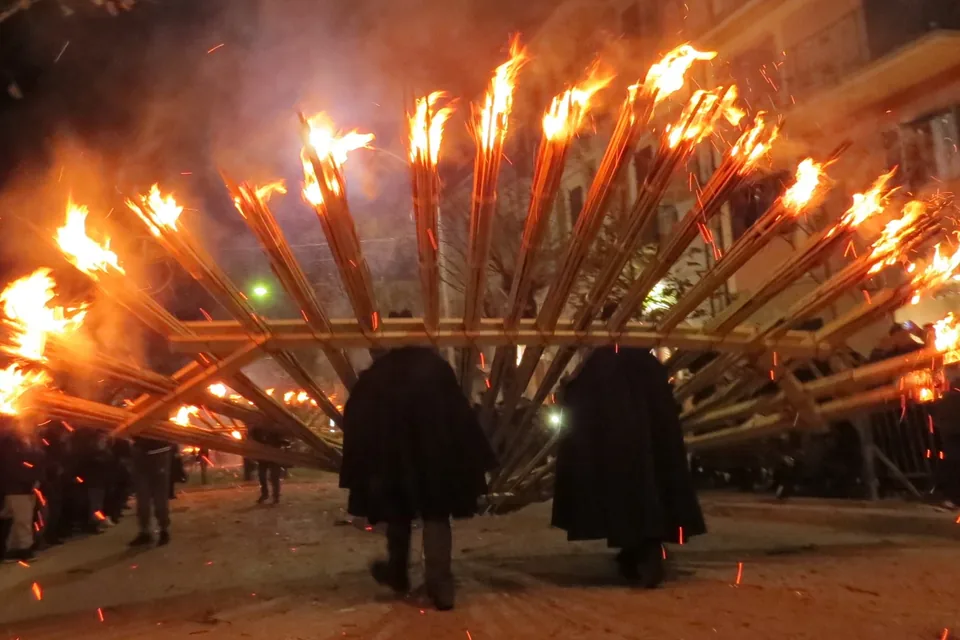

.jpg)

