
APULICA / CHEESES
Caciocavallo di Agnone
PAT · Cheeses · Molise
In brief
- A pasta filata cheese from Alto Molise, in the province of Isernia: the curd is stretched in very hot water and shaped like a pear. (Fondazione Slow Food — Arca del Gusto, Caciocavallo di Agnone)
- After brining the cheeses are tied in pairs, rest for about twenty days and then age in caves for three months to a year. (Fondazione Slow Food — Arca del Gusto, Caciocavallo di Agnone)
- Each cheese weighs 1.5 to 3 kg and has a thin, smooth, light-brown rind. (Fondazione Slow Food — Arca del Gusto, Caciocavallo di Agnone)
- In Agnone, caciocavallo is among the typical cheeses of the local table. (Italia.it — Agnone)
Area and method of production
Caciocavallo di Agnone comes from upper Molise, in the province of Isernia. The milk is warmed to 37 degrees and lamb or kid rennet paste is added, chosen according to the sharpness desired; curdling takes about fifty minutes.
The curd is first broken roughly, draining off part of the whey, then into very small grains, and the mass ripens for several hours in hot whey at 45-50 degrees. Freed from the remaining whey, the paste is sliced and stretched in water at 80 degrees; once it is elastic enough it is shaped into a large pear and placed in brine for 12-20 hours.
The cheeses are tied in pairs and dried in a cool, airy room for about twenty days. Then ageing begins, traditionally in natural caves at a constant temperature, lasting from three months to a year.
Sources: Fondazione Slow Food — Arca del Gusto, Caciocavallo di Agnone
How to recognise it
Caciocavallo di Agnone has the classic pear shape, with curved sides and the head by which the cheeses are tied in pairs. It measures 16 to 22 centimetres across and 18 to 28 in height, and weighs between one and a half and three kilos.
The rind is smooth, thin and hard, light brown in colour. The paste is compact, with the odd rare crack, and straw yellow of varying depth depending on ageing.
The taste depends on the rennet, lamb or kid, which the cheesemaker chooses according to the sharpness wanted, and on time: the stay in the cave ranges from three months to a year, and the colour of the paste deepens with ageing.
Sources: Fondazione Slow Food — Arca del Gusto, Caciocavallo di Agnone · Italia.it: prodotti e piatti tipici del Molise
In the kitchen
In Agnone caciocavallo is one of the typical cheeses on the table, alongside scamorza and treccia; Italia.it places it first in its rich list of Molise cheeses, with its hard rind and straw-yellow colour.
It is also an ingredient of one of the village's most characteristic dishes: zuppa alla santè, an old Christmas-time preparation made with chicken broth, small beef meatballs, stale bread fried or toasted and, of course, caciocavallo.
Agnone's cooking pairs it with other traditional dishes, such as sagne a pezzi with lamb sauce and fettuccine with porcini mushrooms, in a repertoire tied to the mountains of upper Molise. Italia.it also suggests a risotto finished with caciocavallo, a sign of how this cheese lends itself to new recipes.
Sources: Italia.it — Agnone · Italia.it: prodotti e piatti tipici del Molise
Where to taste it
The home of caciocavallo is Agnone, a medieval village in upper Molise at 840 metres, awarded the Touring Club Italiano's Orange Flag. The town is famous for its bells: the Pontifical Marinelli foundry, with its museum, has been based here for a thousand years. The old town has churches, palaces, copper and wrought-iron workshops and old water mills.
At the table caciocavallo comes with the area's other products, from cured meats to sweets such as filled ostie and confetti ricci. The Christmas period is the time for zuppa alla santè.
December is also the month of the 'Ndocciata, an evocative event awarded the title of Italian Heritage for Tradition by the Minister of Tourism: a chance to experience Agnone in the depth of winter and taste its aged caciocavallo.
Sources: Italia.it — Agnone · Italia.it: prodotti e piatti tipici del Molise
Protection
- Traditional agri-food product (PAT) — Molise, n. 40, 26th revision (Masaf — Elenco nazionale dei prodotti agroalimentari tradizionali, XXVI revisione (2026) · Fondazione Slow Food — Arca del Gusto, Caciocavallo di Agnone)
When
- The sources consulted give no months.
Where
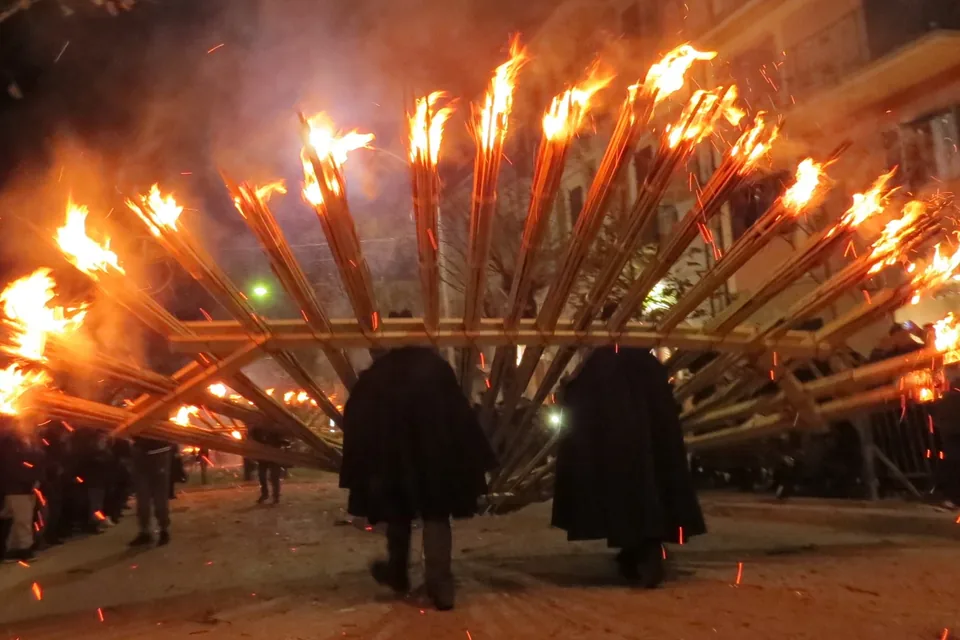
Agnone
The Pontifical Marinelli Foundry and its museum, copper and wrought-iron workshops, and the December ’Ndocciata.
Read the guide →Photo: Gianfranco Vitolo / Wikimedia Commons — CC BY-SA 2.0 · Resized and converted to WebP.
.jpg)
Read more
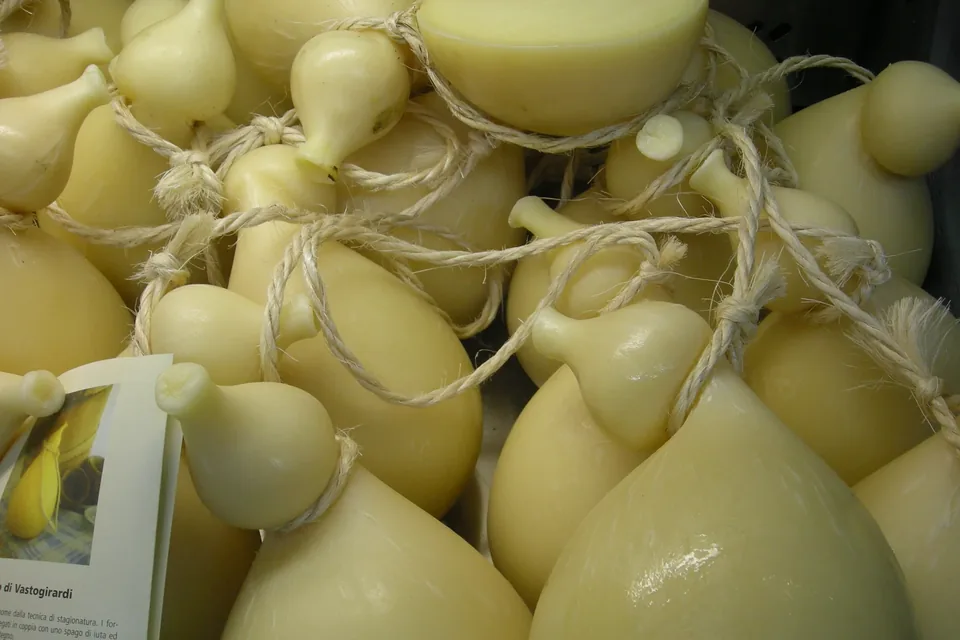
Agnone caciocavallo
Pasture milk, hand stretching, ageing in hanging pairs: the caciocavallo of Upper Molise, with stracciata, Capracotta pecorino, the town of bells and copper and the transhumance trails.
Read the guide →Photo: Jan-Tore Egge / Wikimedia Commons — CC BY-SA 4.0 · Resized and converted to WebP.
