What scamorzone means
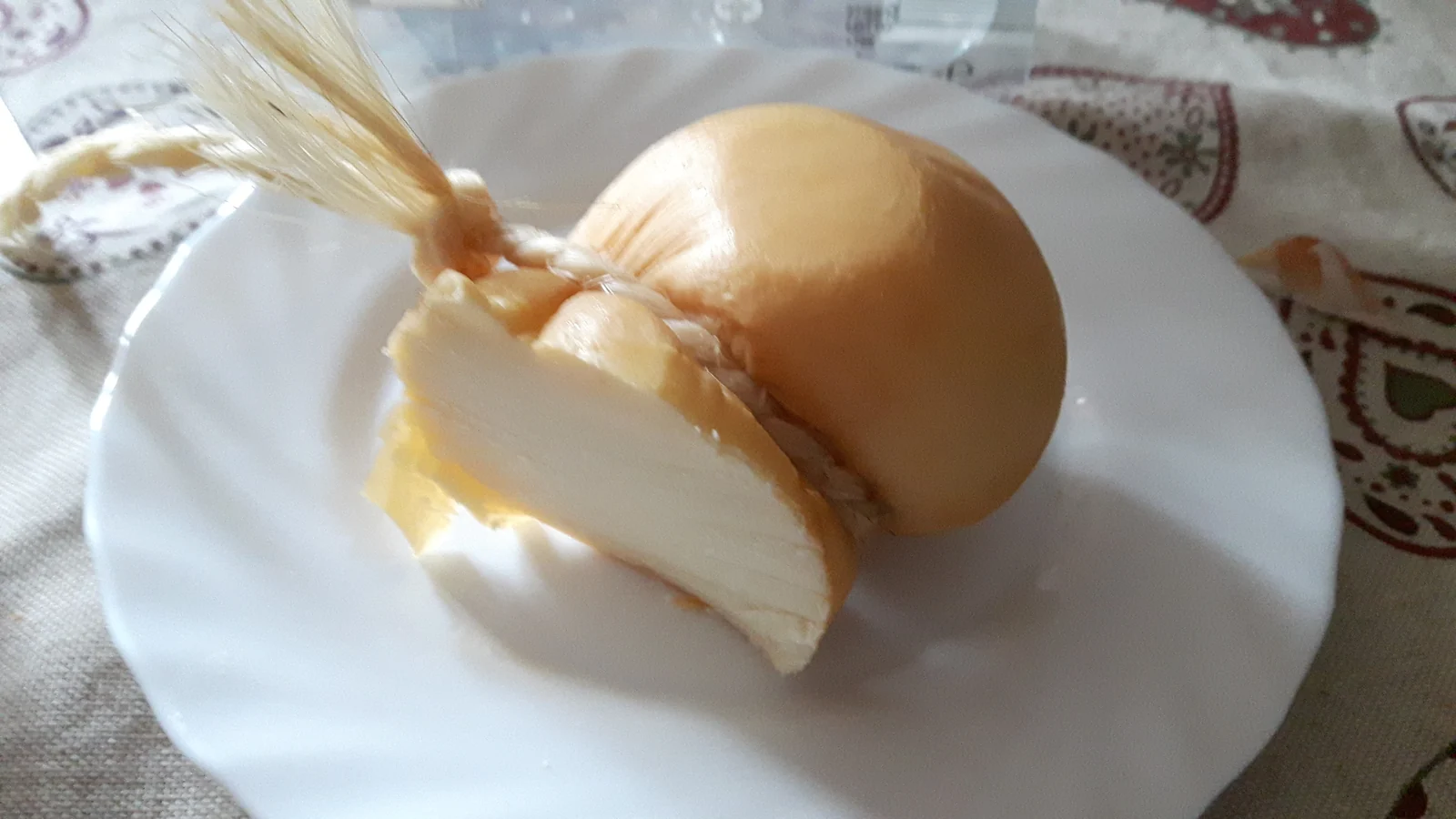
Puglia’s atlas of traditional foods describes scamorza as a fresh stretched-curd cheese made from cow’s milk, matured for only a few days, one to six, and up to three weeks in more aged versions. Its characteristic shape is a pear, with a short neck or small head, and the classic weight is a few hundred grams.
Today, the profile notes, there are different sizes: small scamorze under a hundred grams and, at the other extreme, the larger “scamorzone”, which can approach a kilo. The name therefore refers mainly to size, not to a different cheese.
The rind is thin, white or straw yellow depending on maturation; beneath the rind and in the outer layers the paste is made of overlapping sheets, without holes. The flavour ranges from sweetish to slightly savoury, the aroma is delicate. There is also a smoked version. Production is listed for the whole year and the whole region: a cheese that is easy to find and well suited to a first comparison.
Sources: PAT Puglia — Scamorza
From stretching to the scent of smoke
The PAT profile follows the traditional method. Raw cow’s milk is filtered and warmed in copper or steel vats, with natural whey starter from the previous day’s work; then calf or kid rennet is added. After curdling, the curd is broken by hand with a wooden tool called the “ruotolo” and left to mature for a few hours, sometimes until the next day.
Stretching is done by hand, with a stick, in very hot water, until the paste becomes compact and tough. The cheesemaker shapes it into a pear with its small head, ties it with raffia and dips it in cold water to firm it; a short brining follows, longer or shorter depending on the saltiness wanted.
For the smoked version, the dried scamorze are exposed to the smoke of straw and beech shavings. The surface turns golden and very flavourful, with a smoky finish, while the inside stays soft with a light note. A thin rind and a layered paste distinguish the structure of scamorza.
Sources: PAT Puglia — Scamorza
A name from the cheesemaker’s gesture
On the origin of scamorza the atlas recounts a story. While making caciocavallo, a cheesemaker supposedly cut the curd into smaller pieces and worked it at a slightly lower temperature, obtaining a softer paste: and so it was born almost by chance.
The name comes from the dialect word “scamozzare”, the gesture with which the cheesemaker partly cuts, or nips, the paste by hand to form the small head. The profile also recalls a less flattering figurative use: “scamorza” describes a dull person with a small head. It shows how dairy vocabulary has entered everyday speech.
Finally, the profile stresses its great versatility in cooking, thanks to its texture and melting qualities. Scamorza is found in dairies, specialist shops, farms and agriturismi, and often appears at village festivals and feasts, as a product to taste or an ingredient in traditional dishes.
Sources: PAT Puglia — Scamorza
Sheep’s milk scamorza
Beside cow’s milk scamorza, the atlas records a sheep’s milk version, made seasonally and locally with milk from grazing sheep of native breeds: Leccese, Altamurana and Gentile di Puglia. The method is similar: raw milk warmed in copper vats with whey starter, calf, lamb or kid rennet, curd broken with the ruotolo, hand-stretched in hot water and shaped into a pear with a tied head.
The difference shows on the palate. The profile describes a pleasant, moderately salty flavour, more intense than cow’s milk scamorza and more marked still in the aged product. The paste is tough and moderately elastic, without holes; after a short maturation of a week to ten days it becomes firmer and loses elasticity.
Sizes range from a few hundred grams to just over half a kilo. Among its references the atlas cites a 1992 guide to traditional dairy systems in southern Italy. Finding it next to a cow’s milk scamorza offers a very instructive comparison, because the shape is identical and only the milk changes.
Sources: Atlante dei PAT di Puglia (Regione Puglia, Università di Bari) — Scamorza di pecora
The elder sibling: caciocavallo
Scamorza was born, according to the atlas, from caciocavallo making, so it is worth knowing. The PAT profile describes it as a semi-hard stretched-curd cheese of cow’s milk, pear-shaped with a head, larger than scamorza, with a thin, smooth, straw-yellow rind. Ageing of several months makes the paste firmer and, in older cheeses, flaky; the flavour ranges from very mild to sharp, partly depending on the rennet used.
The name comes from the way the cheeses are aged: tied in pairs and hung “astride”, a cavallo, a wooden pole. The profile also describes “hanged” caciocavallo, a custom born among shepherds during transhumance: the cheese, hung over embers, melts slowly and is spread on a slice of toasted bread.
The atlas mentions dedicated festivals, including one in Monteleone di Puglia, in the Daunian Mountains, and one for hanged caciocavallo in Molfetta. Tasting an aged caciocavallo after a fresh scamorza shows how much time transforms the same stretched curd.
Sources: Atlante dei PAT di Puglia (Regione Puglia, Università di Bari) — Caciocavallo
Mozzarella and fior di latte
The last member of the family is mozzarella, or fior di latte, also recorded by the atlas as a traditional product throughout the region. It is a fresh stretched-curd cheese of cow’s milk, usually round, but there is also the smaller bocconcino, the braid and more recent variations. When cut, the fibrous paste releases a milky liquid; the flavour is delicate and slightly tangy.
The name, the profile explains, comes from “mozzatura”, cutting the stretched curd into the desired pieces: essentially the same gesture that names scamorza. The difference lies in time and shape: mozzarella is eaten very fresh, scamorza matures a few days and takes its pear shape.
The atlas recalls several dedicated feasts, in Gioia del Colle, Sammichele di Bari, Castellana Grotte and the countryside around Monopoli, and notes that Mozzarella di Gioia del Colle has been a PDO since 2020. Placing mozzarella, fresh scamorza and smoked scamorza side by side lets you follow, in three tastings, the passage from freshness to maturation and smoke.
Sources: Atlante dei PAT di Puglia (Regione Puglia, Università di Bari) — Mozzarella o fior di latte
Read the cut surface, then taste
Look at a cut cheese before adding bread or other ingredients. The first question concerns the paste: how does it separate, how much does it resist the bite, how different is the surface from the centre? The profiles describe overlapping layers beneath the rind: looking for them makes the tasting more attentive.
Two tastings from the same family, plain and smoked, make the comparison clearer. Note one detail of texture and one of aroma, rather than stopping at the word “good”. If a sheep’s milk scamorza is available, taste it third, since its stronger flavour would mask the others.
After the plain comparison, add a bite of the same bread to each version: which cheese stays readable, and how much does the smoky taste matter? For a hot dish, let the kitchen choose how to serve it, keeping one recognisable tasting. There is no need to turn every cheese into a show: the contrast between fresh, smoked and aged is enough to tell the family’s story.
A dairy stop between Andria, Murgia and Bari
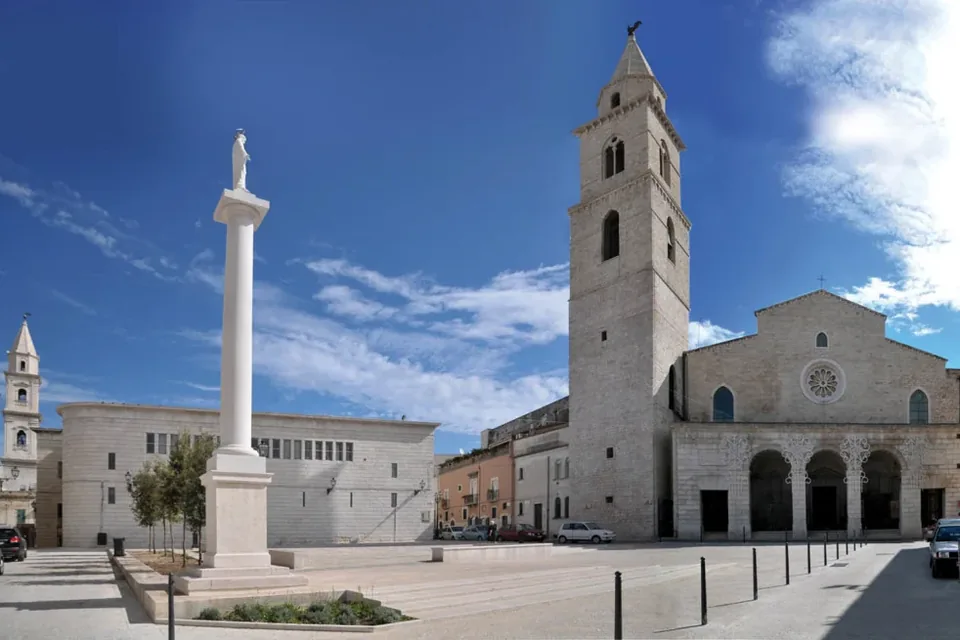
For the journey, pair Andria with a chapter on the Murgia, spreading the cheeses over different days. The Città dell’Olio association presents Andria as the town of olive oil and burrata, in a still-agricultural area, with Castel del Monte on its hill: a good starting point for a day devoted to fresh dairy.
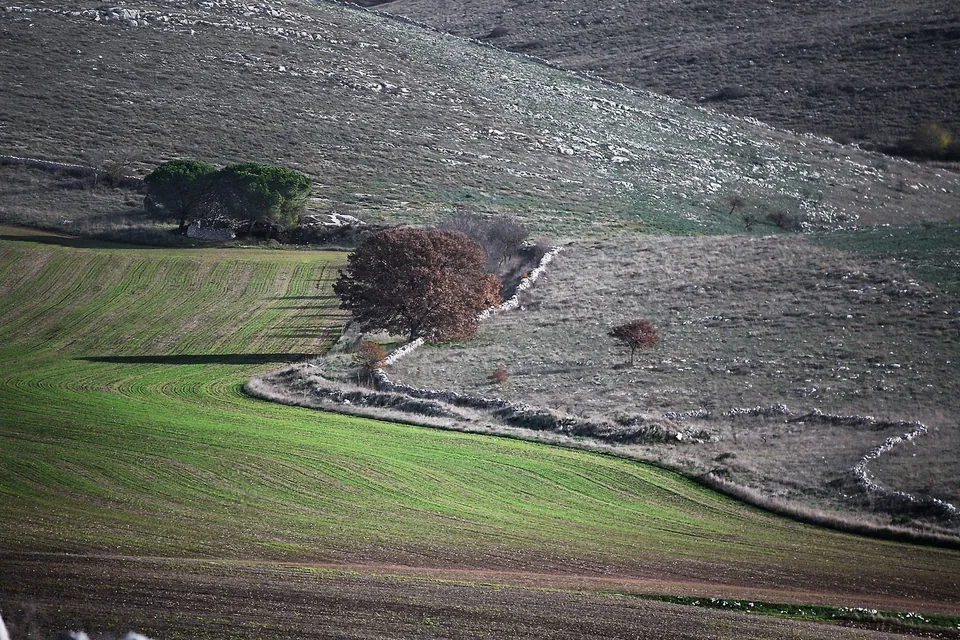
The Murgia offers the landscape of pastures and farmsteads where the milk comes from. Bari, finally, lets you end the route in the city: Italia.it suggests Bari Vecchia, with women making orecchiette by hand, the Basilica of San Nicola and the seafront, and lists dairy products and raw seafood among the flavours to look for.
The timing need not depend on a festival: the year-round production indicated by the PAT leaves you free to choose the landscape and the day’s other interests. The tasting can come before a lunch devoted to a single product or become a short break. Size, finally, poses a concrete question: small scamorza or scamorzone, depending on how you want to use it.
Sources: Associazione nazionale Città dell’Olio — Andria · Italia.it (Ministero del Turismo) — Bari: guida, storia e curiosità · PAT Puglia — Scamorza
A thread for your journey
Journey idea: separate unsmoked and smoked scamorza tastings, followed by a kitchen-selected dish, within a city-and-Murgia day. Recognise stretching, texture and aroma without confusing different cheeses or local names.
Talk to us