Turnip tops
The PAT atlas describes turnip tops as a group of local populations grown throughout the region. The edible parts are the still-closed flower head, a short piece of stem and the youngest leaves; the flavour is described as sweetish, and too marked a bitterness may come from excessive fertilising or watering.
The profile adds a detail of real interest: for centuries, since the early eighteenth century, seed was produced by individual growers, and only in recent years have many turned to specialist seed companies. The populations take their names from the place of cultivation, the length of the cycle, the harvest period or the size of the flower head.
Harvesting means cutting the main flower head with its tender leaves before the buds open; growers then return several times to the same plant for the secondary heads. The season runs from late summer to spring: an agricultural window rather than a fixed restaurant calendar. Dishes include orecchiette, braised greens and soups with pulses.
Sources: PAT Puglia — Cima di rapa
A hundred populations, a long calendar
A feature in the PAT atlas explains that Puglia is the main growing area for turnip tops in Italy, with almost half the national acreage, especially in the province of Foggia. Research by the University of Bari has identified more than a hundred populations in southern Italy, distinguished mainly by the time between sowing and flowering.
Their names form a miniature calendar. “Quarantina” is early and can complete its cycle in a month and a half, with small heads; then come “Cinquantina”, “Sessantina”, “Novantina”, “Centoventina”, “Natalina”, followed by those “of January”, “of February-March” and “of March-April”. Sown at the end of August, the earliest are ready by September or October.
Thanks to this range of cycles and sowing times, the vegetable is available almost all year. The article also recalls that turnip tops followed Puglian emigrants to other countries, where they are known by names such as “broccoli raab” or “rapini”. Asking at the market which population you are buying is a small way into this biodiversity.
Sources: Atlante PAT Puglia (Università di Bari, Regione Puglia) — Nomi e curiosità delle cime di rapa
Minervino Murge and long-stem harvesting
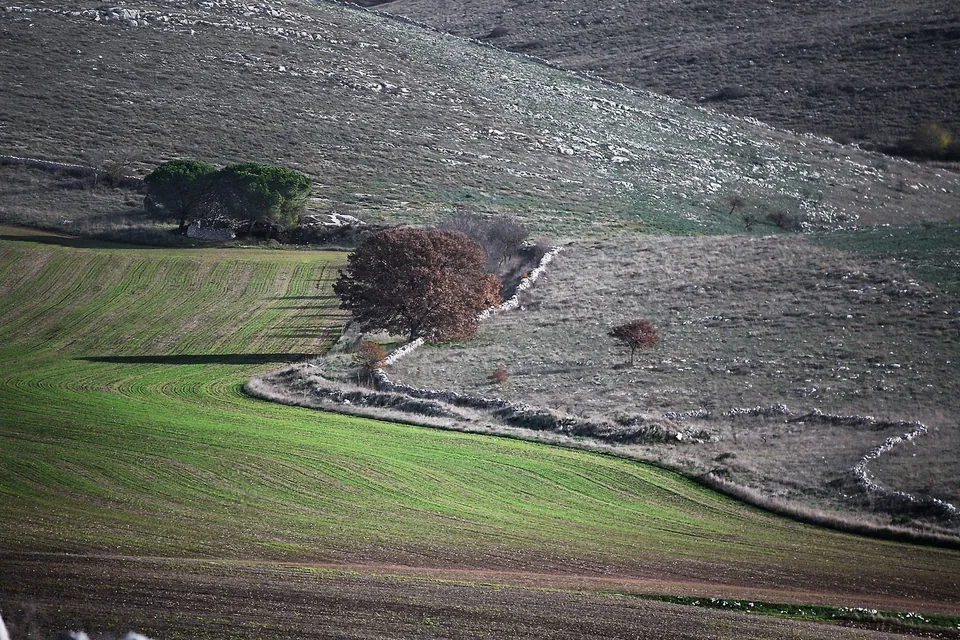
Among local populations, the atlas devotes a profile to the turnip tops of Minervino Murge, an Alta Murgia town overlooking the Ofanto valley. They are grown in small plots and family gardens, often within the Alta Murgia National Park, with few external inputs and often on unirrigated land.
What makes them recognisable is the way they are harvested. Growers cut several long stems with a knife, remove the large leaves and the tough part and tie them into a bunch resembling a bouquet of flowers. The season given runs from October to May.
The profile also records curious evidence of its history: in a 1930 school register kept in Spinazzola, a teacher noted the absences of a pupil busy harvesting and selling turnip tops; old sales licences are preserved in Minervino’s municipal archive. Since 2014 the product has had a municipal designation, supported by a producers’ association. An example of how a common vegetable can have a precise identity.
Sources: Atlante dei PAT di Puglia (Regione Puglia, Università di Bari) — Cima di rapa di Minervino Murge
Orecchiette with turnip tops
The atlas also records the best-known dish linked to this vegetable. Orecchiette, Puglia’s fresh pasta, are cooked in the same pot as the turnip tops, which go in when the water returns to the boil; then everything is tossed in a pan with extra virgin olive oil, garlic, chilli and melted anchovies, sometimes with breadcrumbs.
The profile gathers much written evidence. A 1967 regional cookbook already lists orecchiette with turnip tops among traditional Puglian recipes; a 1987 bulletin of the regional agriculture department describes them by the dialect name “rècchie con cime e acciuga” as a typical Bari dish; a 1989 Easter recipe book from Mola di Bari calls them “recchietiédde ch’i ciéme de repe”.
The season given is all year except summer, in line with the vegetable’s calendar. Finally, the profile recalls the women of Bari Vecchia who still make orecchiette by hand, documented in ethnographic films. It is a good starting point for seeing how the vegetable garden enters the main dish of the Puglian table.
Sources: Atlante dei PAT di Puglia (Regione Puglia, Università di Bari) — Orecchiette con le cime di rapa
The lampascione, a wild bulb
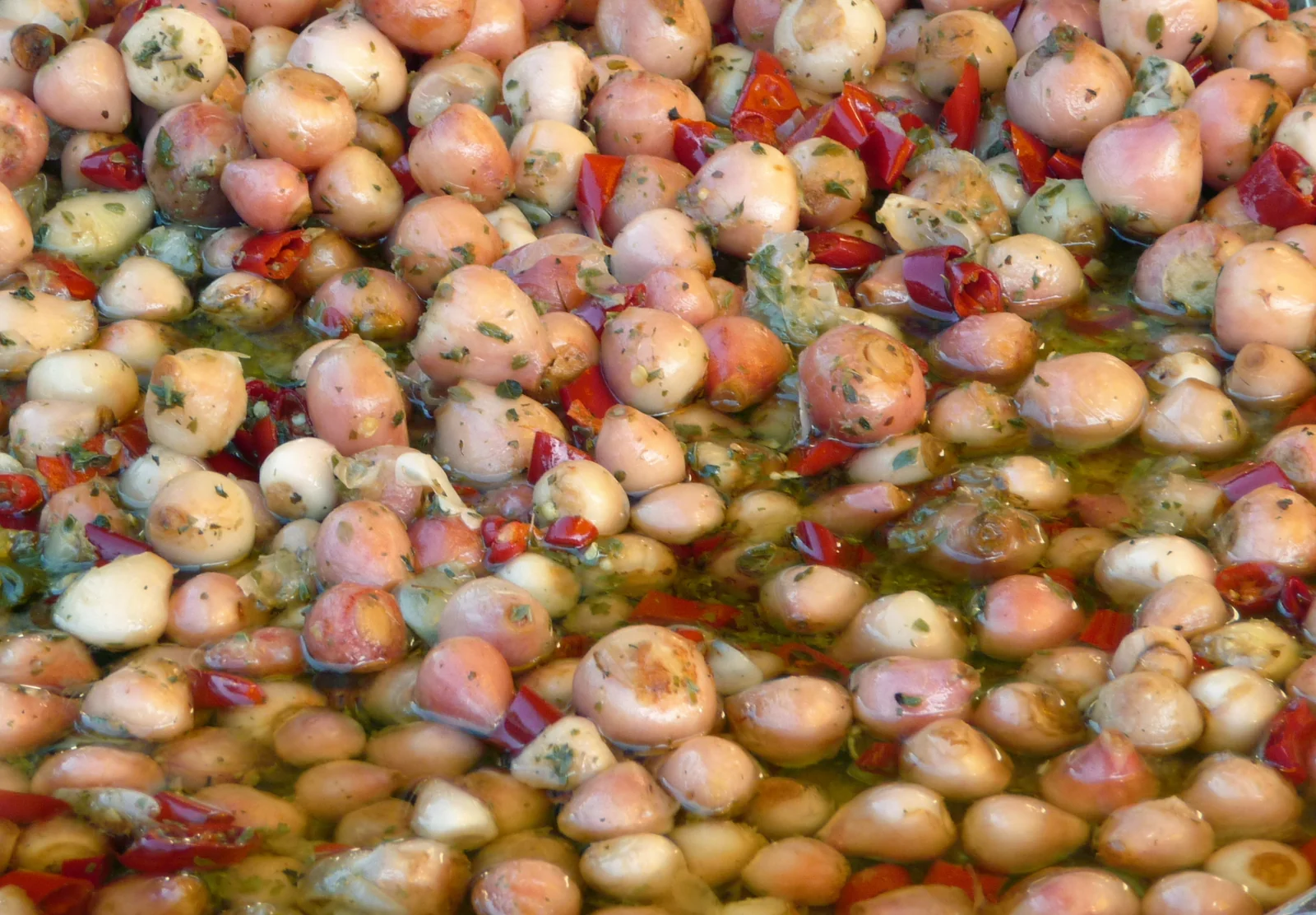
The lampascione, or lambascione, is the bulb of a wild perennial plant, Muscari comosum. The PAT atlas explains that fresh bulbs are harvested from December to April, by hand with a small hoe; for some years it has been common to import them and store them underground, so that they are available all year.
Their use as food and medicine is ancient. The profile cites a treatise by the Byzantine physician Oribasius of Pergamon, who lived in the fourth century and described the bulbs as very nourishing, adding frankly that they cause bloating. For the name, the late Latin “lampadjonem” and the medieval “lampadio” are proposed, and the plant appears in botanical treatises from the sixteenth to the eighteenth century.
Its figurative use is curious too: in some villages near Bari calling someone a “lambascione” means calling them foolish, while in Salento it describes a capable man. Preparations are many: fried, sweet and sour, under the ashes. The atlas mentions festivals in Acaya, a hamlet of Vernole, and San Donato di Lecce, as well as Bitritto’s “Madonna of the lampascioni”.
Under the ashes and at the Bitritto feast
The PAT profile of lampascioni cooked under the ashes describes one of the oldest preparations. In the poorest homes, bulbs gathered on the Murge and in pastures were roasted in hot ashes in the evening and eaten with bread. A Barletta author in 1857 already listed three ways of eating them: boiled with oil and vinegar, fried with flour or egg, and roasted under the ashes. Today, after cooking, they are peeled of their outer layers and dressed with oil, salt, vinegar or herbs.
In Bitritto the lampascione even has a feast. The regional BiodiverSO project explains that the celebrations of the Madonna of Constantinople, on the first Tuesday of March, are also called the “Madonna of the lampascioni”. Large quantities are sold during the feast, and a common recipe involves blanching them, keeping them in water for two days with frequent changes and then mashing them with oil, salt and pepper.
The explanation is amusing: they were eaten at home before mass, for their filling and digestive power, ahead of a long fireworks contest that preceded lunch. An example of how a humble food becomes part of a community ritual.
Sources: Atlante dei PAT di Puglia (Regione Puglia, Università di Bari) — Lambascioni sotto la cenere · BiodiverSO (Università di Bari, PSR Puglia) — La Madonna dei lampascioni di Bitritto
The bitterness of lampascioni in capriata
In the capriata of Martina Franca, recorded in the PAT atlas, fava bean purée meets boiled lampascioni and fried breadcrumbs. Dried, skinned fava beans soak overnight, then cook slowly, ideally in an earthenware pot, until they break down and can be beaten with a wooden spoon into a cream. On top go the boiled bulbs dressed with oil, and a handful of golden breadcrumbs.
The profile highlights the contrast between the sweetness of the beans and the bitterness of the bulbs: a small lesson in balance on the plate. It also recalls that this soup, with chicory, turnip tops or peppers, was for decades the one-dish meal of the Puglian farm worker after a day in the fields, and that today it appears among the starters and first courses of trattorias and restaurants.
The scholar Luigi Sada already listed it in 1979 among Martina Franca’s specialities, and in a 1991 book described a variation in which the bulbs cook together with the beans. Tasting it in Martina Franca links the dish to its town.
Sources: PAT Puglia — Capriata alla martinese
The small flavour of the caper
The PAT profile of Gargano capers, especially from Mattinata, describes buds picked before the flower opens. They are sorted into two sizes: those under five millimetres are considered higher quality. Light green when picked, they darken during processing, and their flavour is very strong, almost pungent.
Processing is simple but slow. The buds are covered with plenty of coarse sea salt for about ten days and stirred often; the water they release forms a brine with the salt, which is later added in small amounts, with a little vinegar, during preservation so that the capers do not dry out. The production season runs from May to September.
The atlas cites the most important historical reference: Gargano capers appear in the “Fisica Appula” by the cleric and naturalist Michelangelo Manicone, published in Naples in 1807. Their pungent taste suggests an accent rather than an ingredient to use in quantity: a few capers are enough to change a vegetable dish.
A meal built on contrasts
Choose a pulse dish, a vegetable with a bitter note and bread, keeping the three first tastes separate. Then combine them in one bite to see what changes. The useful question is which ingredient softens the contrast and which makes it more evident.
For a journey centred on turnip tops, start from the fresh product’s window, between autumn and spring, then ask the kitchen which preparation makes sense during your stay. For fresh lampascioni, winter and early spring are the harvest period; if the interest is preserving, as with capers, the thread changes and you can follow salt, processing and use in the dish.
Do not treat fresh and preserved as competing tastes: they answer different questions and can be two chapters of the same journey. There is no need for an enormous vegetable buffet: a couple of well-explained dishes can tell the story of home cooking and leave room for the traveller’s curiosity.
Martina Franca, Murgia and Bari
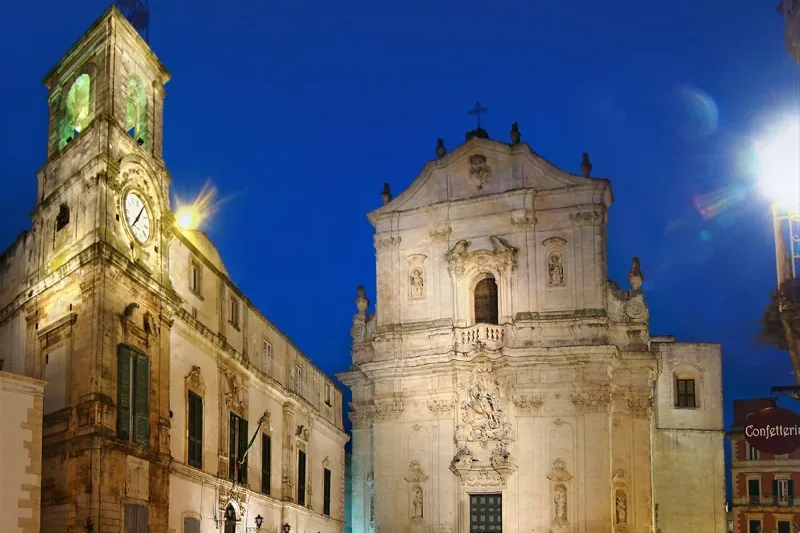
Choose Martina Franca for capriata, the pairing of fava beans and lampascioni in the town to which the recipe is linked. The Murgia can give the theme a landscape: in Minervino Murge, on the edge of the National Park, gardens produce the long-stemmed turnip tops, and the plateau’s pastures are the same where lampascioni were once gathered.
Bari offers the pasta chapter. The atlas recalls the women of Bari Vecchia who still make orecchiette by hand, and the dish with turnip tops and anchovies is described as typical of the city. A simple lunch after a walk through the old town is the most direct way to taste it.
These are three readings to spread over different days. Vegetable cooking changes the rhythm of a food itinerary: after a day of cheese or meat, a meal built on pulses and greens opens another register. If the journey falls in early March, Bitritto, on the edge of Bari, offers the feast of the Madonna of the lampascioni.
Sources: PAT Puglia — Capriata alla martinese · Atlante dei PAT di Puglia (Regione Puglia, Università di Bari) — Cima di rapa di Minervino Murge · Atlante dei PAT di Puglia (Regione Puglia, Università di Bari) — Orecchiette con le cime di rapa · BiodiverSO (Università di Bari, PSR Puglia) — La Madonna dei lampascioni di Bitritto
A thread for your journey
Journey idea: a Murgia or Itria Valley day with two vegetable preparations at lunch, followed by a walk. The thread is balance between bitterness, sweetness and texture, later revisited in a Bari pasta dish.
Talk to us