
APULICA / MEATS AND CURED MEATS
Altamurana sheep
Slow Food Presidium · Meats and cured meats · Puglia
In brief
- A hardy sheep breed of the Murgia, also called moscia, with white fleece and a long head, once kept for milk, wool and meat. (Fondazione Slow Food — Presidio Pecora altamurana)
- It resists ticks and does not contract piroplasmosis. (Fondazione Slow Food — Presidio Pecora altamurana)
- Its decline is due to small lambs, slow growth, single births and little milk. (Fondazione Slow Food — Presidio Pecora altamurana)
- The meat is available all year. (Fondazione Slow Food — Presidio Pecora altamurana)
History and origin
Since antiquity the Murgia has been a land of sheep and goats, grazed freely because its rocky, poorly fertile soil was suited to little else. Over the centuries the Altamurana sheep, also called pecora moscia, adapted to this setting: a very hardy native breed which, according to one hypothesis, descends from Asian or Syrian stock.
Shepherding left clear marks on the landscape. On the plateau you can still pick out the poste, where shepherds sheltered their flocks from bad weather, and the jazzi, sheepfolds built on the most sheltered, south-facing slopes. The masserie, or farmsteads, date from the fifteenth century, when the Regia Dogana della Mena delle Pecore organised farming around grazing, and some transhumance tracks can still be walked.
In the last half century sheep farming on the Murgia went into crisis: the decline of wool for mattresses, livestock theft, the difficulty of finding shepherds and the shift to more profitable crops shrank the flocks, and the Altamurana came close to disappearing.
Sources: Fondazione Slow Food — Presidio Pecora altamurana · Parco Nazionale dell'Alta Murgia — L'ambiente rurale
Area and method of production
The Altamurana is raised throughout the province of Bari and particularly in the Alta Murgia National Park, grazing on the plateau's grasslands. It is a triple-purpose breed, for milk, wool and meat: in the past it was widely used for cheese, while in recent decades it has been selected mainly for meat, often for crossing with more productive breeds such as Comisana and Leccese.
Its weak point is yield. Lambs are born smaller and grow more slowly than those of other Puglia breeds, each birth produces a single lamb, and milk is scarce. These very traits led to its decline.
The Slow Food Presidium aims to reverse the trend by encouraging new flocks and new genetic lines in Puglia. Saving the breed means preserving a genetic heritage valuable for its natural resistance and, at the same time, keeping alive the Murgia pastures, rich in wild herbs that give distinctive aromas to meat and cheese.
How to recognise it
The Altamurana is a medium-sized sheep recognisable by its white fleece and long head. On the Murgia it is also known as pecora moscia.
Its most valuable quality is resistance: it is particularly resistant to tick bites and therefore does not contract piroplasmosis, a disease that quickly kills affected animals. This natural resistance, together with the hardiness that lets it live on poor, rocky pastures, is why its genetic heritage is considered so valuable.
The meat, which the Presidium offers all year round, carries the character of the plateau's pastures, rich in wild herbs that give it distinctive notes.
Where to taste it
The Altamurana's home is the Alta Murgia, the plateau stretching inland from Bari around Altamura, after which the breed is named. The National Park protects a rural landscape where poste, jazzi and masserie still tell the story of shepherding; some farmsteads still raise animals and produce food, while others have opened to tourism to host visitors to the Murgia.
Walking an old droving track or stopping at a masseria is the most direct way to see the flocks in their setting. Altamurana meat is available all year from the Presidium's breeders.
The Murgia calendar also has festivals devoted to meat and the plateau's flavours: in Santeramo in Colle the Sagra della carne arrosto, under the Park's patronage, was held in September with tastings of local oil, wine, cheese and bread.
Sources: Fondazione Slow Food — Presidio Pecora altamurana · Parco Nazionale dell'Alta Murgia — L'ambiente rurale · Parco Nazionale dell'Alta Murgia — 13ª Sagra della carne arrosto a Santeramo in Colle
Protection
- Slow Food Presidium — pecora-altamurana (Fondazione Slow Food — Presidio Pecora altamurana)
When
- Traditionally eaten: all year round (Fondazione Slow Food — Presidio Pecora altamurana)
Where
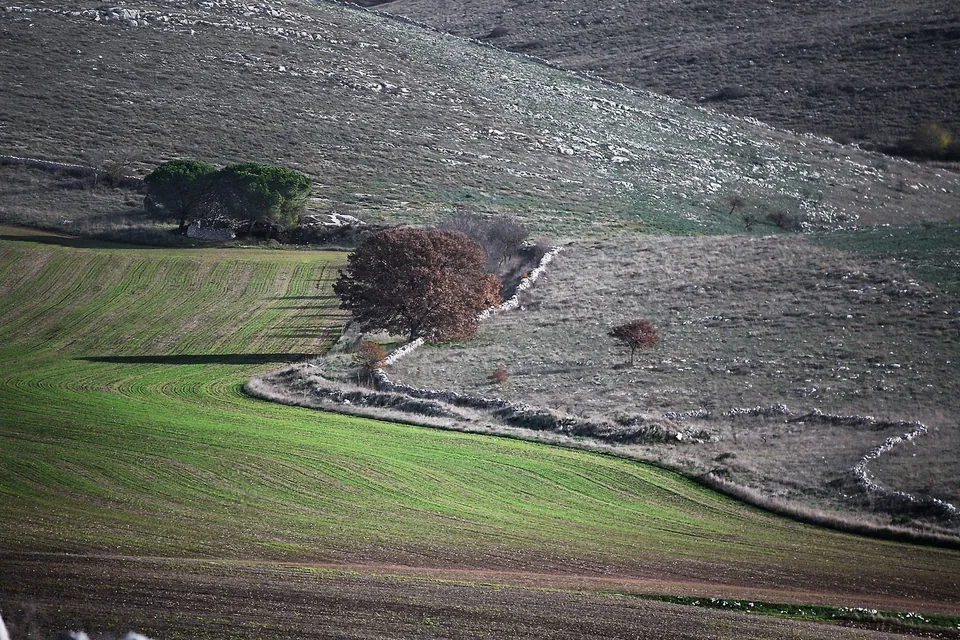
Alta Murgia
Stone, pasture and farming to explore the landscape beyond the towns.
Read the guide →Photo: Acquario51 / Wikimedia Commons — CC BY-SA 4.0 · Resized and converted to WebP.
