APULICA / Food guides
Canestrato Pugliese: the sheep's cheese shaped by woven rush
Canestrato Pugliese is a hard sheep's milk cheese named after the rush baskets in which the curd is pressed: the rind keeps their pattern. It is made throughout the province of Foggia and in some towns of the Bari Murgia and the province of Barletta-Andria-Trani, and was recognised by decree in 1985 before becoming a European PDO in 1996. Its history is tied to transhumance, which brought flocks from Abruzzo to the winter pastures of the Tavoliere. This guide covers its rules, technique and ways to enjoy it.
A cheese of transhumance
Qualigeo links the historical production of Canestrato to transhumance: the old canestrato pugliese was made from December to May, the months when flocks came down from Abruzzo to winter in Puglia. The historian and politician Giustino Fortunato, who lived from 1848 to 1932, recalled it in verses that send the sheep to the Maiella in summer and to Pantanella in winter.
Like other canestrato cheeses of Southern Italy, it long remained known mainly where it was made and became known nationally only after Italian unification. At the 1861 Italian agricultural, industrial and artistic exhibition in Florence, canestrato cheeses were described as highly prized locally but almost unknown in the rest of the country.
Transhumance, the seasonal movement of people and animals along ancient pastoral routes, has been inscribed since 2023 on UNESCO's Representative List of the Intangible Cultural Heritage, in a multinational nomination that includes Italy. UNESCO notes that a whole economic and social system grew up around the practice, from gastronomy to crafts and the festivals marking the start and end of the season.
Sources: Qualigeo (Fondazione Qualivita) — Canestrato Pugliese DOP · UNESCO, Intangible Cultural Heritage — Transhumance, the seasonal droving of livestock
The flocks' routes: droving tracks, poste and farmsteads
The landscape of Canestrato can still be read on the Murgia. The Alta Murgia National Park describes minor architecture born of farming and herding: the poste, where shepherds sheltered their flocks from bad weather, and the jazzi, sheep enclosures built on slopes and protected towards the south.
The farmsteads date back to the 15th century, when the Royal Customs of sheep grazing imposed a strict organisation of farming to use the land as pasture; until the 17th century their number and size were controlled, then they became the centres of large estates. Some still work, raising animals and producing food, while others have opened up to visitors.
Some ancient droving tracks can still be walked: very long grassy and dirt routes that flocks followed to reach their pastures. UNESCO notes that every year, in spring and autumn, herders move their animals on foot or on horseback with their dogs, and that communities along the routes keep the practice alive with festivals and crossings. Walking a stretch of droving track is the most direct way to understand where this cheese comes from.
Sources: Parco nazionale dell'Alta Murgia — L'ambiente rurale · UNESCO, Intangible Cultural Heritage — Transhumance, the seasonal droving of livestock
From the 1985 decree to the PDO
The designation of origin for Canestrato pugliese cheese was recognised by a presidential decree of 10 September 1985, the text that the Puglia Region still publishes as the production specification. European registration as a PDO dates from 20 June 1996, according to the Qualigeo profile.
The production and ageing area covers the whole province of Foggia and, in the 1985 text, the towns of Altamura, Andria, Bitonto, Canosa, Cassano, Corato, Gravina in Puglia, Grumo Appula, Minervino Murge, Modugno, Poggiorsini, Ruvo di Puglia, Santeramo, Spinazzola, Terlizzi and Toritto, all then in the province of Bari. With today's provinces Qualigeo divides them between Bari and Barletta-Andria-Trani.
The Region sums up the designation as follows: an aged, hard, uncooked cheese made only with whole sheep's milk and shaped by pressing in moulds called canestri, which give the rind its wrinkled texture. It is a small PDO, with 12 operators listed by Qualigeo: a figure that explains why it is not easy to find far from its area.
Sources: Regione Puglia — Disciplinare Canestrato Pugliese DOP (DPR 10 settembre 1985) · Regione Puglia, Produzioni di qualità — Canestrato Pugliese DOP · Qualigeo (Fondazione Qualivita) — Canestrato Pugliese DOP
Sheep's milk and natural pastures
The specification requires only whole sheep's milk, from one or two milkings a day. The Region specifies that the animals must be fed on fresh or dried forage from the area's natural pastures, supplemented with hay and only exceptionally with simple concentrated feed: the cheese's flavour thus comes from the grass of the Capitanata and the Murgia.
The 1985 text allows production throughout the year. The seasonal pattern linked to transhumance, described by Qualigeo, is the cheese's historical memory, not a current rule, so it can be found in every season.
The specification sets no compulsory breed. The Puglia traditional products atlas entry on the neighbouring pecorino foggiano notes, however, that in Aragonese times the area's sheep cheeses were made with milk from local merino-type breeds such as the Gentile di Puglia. Today this breed is listed in the Regional Register of Puglia breeds, set up in 2013 to protect native genetic resources threatened by genetic erosion or at risk of extinction.
Sources: Regione Puglia — Disciplinare Canestrato Pugliese DOP (DPR 10 settembre 1985) · Regione Puglia, Produzioni di qualità — Canestrato Pugliese DOP · Qualigeo (Fondazione Qualivita) — Canestrato Pugliese DOP · Atlante dei prodotti agroalimentari tradizionali di Puglia (Regione Puglia e Università di Bari) — Pecorino foggiano
The basket and the wrinkled rind
Whole sheep's milk is heated to between 38 and 45 degrees and curdled with animal rennet. Qualigeo describes the curd broken into grains the size of rice, briefly compacted and enclosed in rush baskets, where it is pressed.
The rushes, called fiscelle, are flexible and easy to shape: woven tightly enough to let only the whey through and remove excess moisture, they give the cheese the look of a rolled-up mat. The specification explains that pressing and baskets are what give the rind its characteristic wrinkled texture, the sign that lets you recognise the cheese at a glance.
After two to four days salting begins, dry or in brine, repeated several times. Taken out of the baskets, the cheeses age for two to ten months in cool, lightly ventilated rooms, and the rind is treated with olive oil, sometimes mixed with wine vinegar. The technique is similar to that of pecorino foggiano described by the regional atlas, with the curd placed in fiscelle and pressed by hand and the cheeses rubbed with oil and vinegar while ageing.
Sources: Qualigeo (Fondazione Qualivita) — Canestrato Pugliese DOP · Regione Puglia — Disciplinare Canestrato Pugliese DOP (DPR 10 settembre 1985) · Atlante dei prodotti agroalimentari tradizionali di Puglia (Regione Puglia e Università di Bari) — Pecorino foggiano
Large wheels, sharp flavour
Canestrato Pugliese is a cylinder with flat faces and a slightly convex side: 25 to 34 centimetres across, 10 to 14 high, weighing 7 to 14 kilos. The rind is brown tending to yellow, more or less wrinkled, hard and thick, and bears the pattern of the basket.
The paste is straw-yellow, deepening with age, compact and rather crumbly, fairly melting, not very elastic, with barely visible small eyes; fat in dry matter is at least 38 per cent. The Region describes a sharp, distinctive and fairly pronounced flavour. Qualigeo distinguishes the young cheese, more delicate and lightly savoury, from the aged one, with a fragrant aroma.
Once it has matured for at least six months, Canestrato is used both at the table and for grating. It is sold whole, in wedges or portioned and pre-packed; the name must appear on the flat face, and the label must show the product name with the words Protected Designation of Origin.
Sources: Regione Puglia — Disciplinare Canestrato Pugliese DOP (DPR 10 settembre 1985) · Regione Puglia, Produzioni di qualità — Canestrato Pugliese DOP · Qualigeo (Fondazione Qualivita) — Canestrato Pugliese DOP
At the table: broad beans, pears and ragù
Qualigeo notes that by tradition Canestrato is cut into wedges with a knife called a pigeon-breast knife, and that cut pieces are kept wrapped in a damp cotton cloth. These are simple gestures that say a lot about how the cheese is used at home.
Young, it is served with fresh broad beans, pears or raw vegetables with an olive oil dip, alongside white or rosé wines, provided they are dry and still. Aged, it is at its best grated freshly over pasta with Puglia-style meat ragù, in traditional regional shapes such as orecchiette, ziti, mezzi ziti or lumache, or over meat rolls. With fresh or stewed vegetables it can also become a main course.
The national list of traditional products records other sheep's cheeses in Puglia, such as generic pecorino, pecorino di Maglie and pecorino foggiano, which the regional atlas describes as one of the longest-established cheeses of the province of Foggia, long used to season local dishes. Setting them beside Canestrato is a good way to grasp the differences between neighbouring sheep's cheeses.
Sources: Qualigeo (Fondazione Qualivita) — Canestrato Pugliese DOP · Masaf — Elenco nazionale dei prodotti agroalimentari tradizionali 2022, allegato I (copia pubblicata dal progetto regionale Biodiversità Puglia) · Atlante dei prodotti agroalimentari tradizionali di Puglia (Regione Puglia e Università di Bari) — Pecorino foggiano
Sheep and cheese festivals
Official sources mention no festival devoted specifically to Canestrato PDO. The Puglia traditional products atlas does, however, list two events linked to sheep's cheeses within the same production area.
In Minervino Murge, one of the PDO towns in the province of Barletta-Andria-Trani, the festival of lamb and pecorino cheese is held on the last Sunday of March. In Cerignola, in the province of Foggia, the SOS Cerignola association organises the festival of pecorino, broad beans and products of the Cerignola lands, echoing the pairing of young cheese and fresh broad beans also suggested for Canestrato.
The atlas also lists where the Capitanata's sheep's cheeses are usually found: dairies, specialist shops, livestock farms, agritourism farms and butchers. Festival dates and editions change from year to year, so it is worth checking them with the municipalities or Pro Loco associations before planning the trip, and perhaps pairing them with a walk along the Murgia's droving tracks.
Where to look for it and how to take it home
With few certified producers, Canestrato PDO needs to be sought patiently, in the dairies of the Capitanata and the Murgia or in shops that can say which farm it comes from. Before buying I would look at the face of the cheese, where the name must appear, and at the rind, which should keep the basket pattern.
Then I would ask its age, to choose between a young piece for the table, to eat with broad beans or pears, and an aged one for grating, to take home for orecchiette with ragù. A visit to a dairy or sheep farm should always be arranged with the operators, who can show the baskets and ageing rooms.
For the journey a vacuum-packed wedge is practical and keeps well for several days. At home take it out of the plastic and wrap it in a lightly damp cotton cloth, as tradition suggests, keeping it somewhere cool. A cheese aged six months or more travels well and stays at its best freshly grated, meal after meal.
A thread for your journey
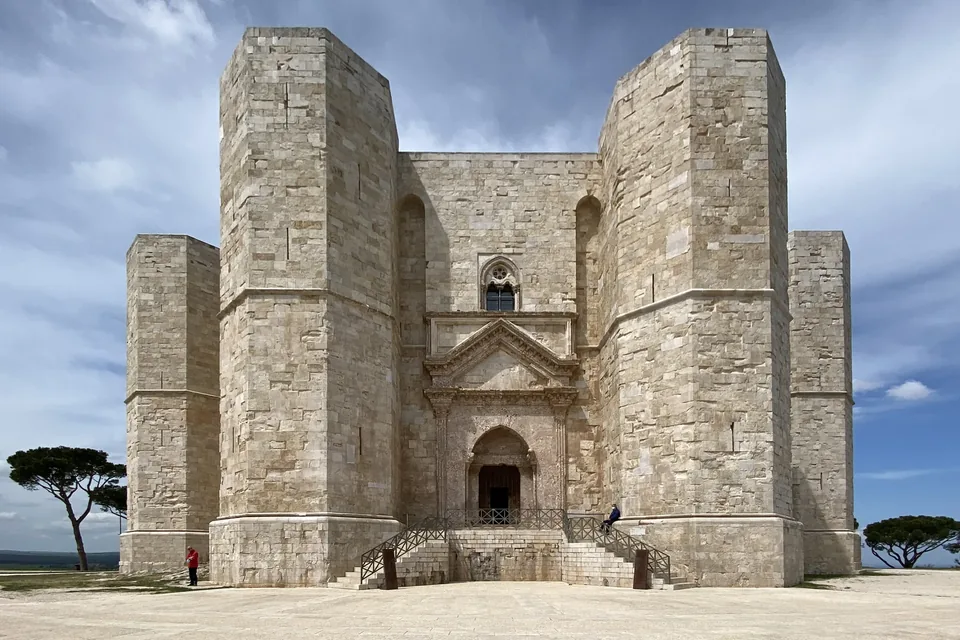
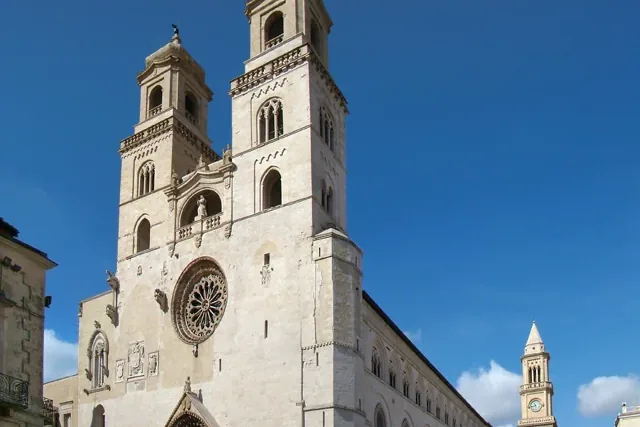
Journey idea: a route across the Tavoliere, the Gargano and the north-western Murgia along transhumance lines, with a visit to a dairy or sheep farm to be arranged with the operators and lunch of orecchiette with ragù and grated aged Canestrato; Castel del Monte and Altamura are natural stops in the same landscape.
Talk to us