

Why go
Barletta is the city of the Disfida, the Challenge: here, in February 1503, the thirteen Italian knights who had defeated thirteen French knights returned in triumph, and the memory of that duel still lives in the name of the main square. Yet its history is older and runs through the sea: it was the port of Canosa in Roman times, a centre of trade with the East in the Middle Ages, and it still has a working port on the Adriatic.
The centre can be seen on foot between the castle with its sixteenth-century bastions, the Romanesque cathedral, the bronze Colossus beside the Santo Sepolcro and Palazzo della Marra, where the picture gallery keeps the works of Giuseppe De Nittis, the Barletta-born painter who exhibited with the Impressionists in Paris.
Barletta is a municipality in the province of Barletta-Andria-Trani, in Puglia. Its ISTAT code is 110002. It is a capital of the province of Barletta-Andria-Trani. On 1 January 2025 it had 92,191 residents. The municipal territory covers 149.45 km² and ranges from -5 to 164 metres above sea level; the town hall stands at about 19 metres.
Barletta is also the city of Pietro Mennea, whom the municipality remembers as the greatest Italian sprinter of all time: Olympic champion and world record holder in the 200 metres, with a record that stood for 17 years. The western seafront bears his name. The law that created the province of Barletta-Andria-Trani in 2004 placed its capital in three cities: Barletta, Andria and Trani.
Sources: Treccani, Enciclopedia Italiana (1930) — Barletta · Treccani, Enciclopedia on line — Barletta · Italia.it (Ministero del Turismo) — Barletta · Ministero della Cultura — Visita al Castello e al Museo (Castello e Museo civico di Barletta) · Ministero della Cultura, Luoghi della cultura — Pinacoteca «Giuseppe De Nittis» · Comune di Barletta, Barletta Musei — Brevi note biografiche di Giuseppe De Nittis · ISTAT, Codici statistici delle unità amministrative territoriali: elenco dei comuni al 21 febbraio 2026 · ISTAT, Popolazione residente per età, sesso e stato civile al 1° gennaio 2025 (POSAS) · ISTAT, Principali statistiche geografiche sui comuni: superficie e altimetria al 31 dicembre 2021 · Comune di Barletta: il documentario «Mennea, l’uomo dei record» (17 settembre 2026) · Comune di Barletta: area pedonale del lungomare Pietro Paolo Mennea (17 maggio 2023) · Normattiva: legge 11 giugno 2004, n. 148, istituzione della provincia di Barletta-Andria-Trani (art. 1)
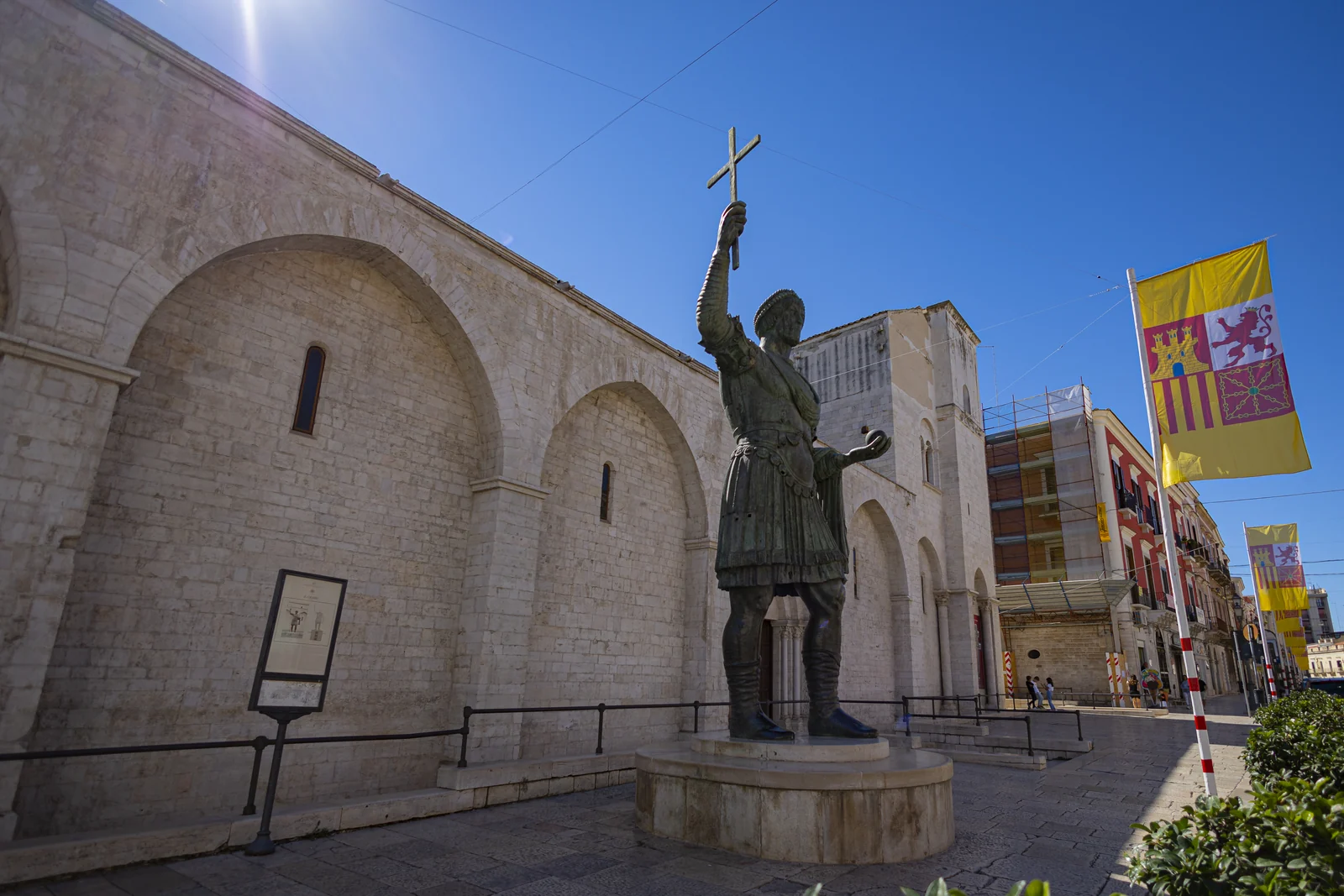
Photo: G.ppe Davide Procacci / Wikimedia Commons — CC BY-SA 4.0 · Resized and converted to WebP.
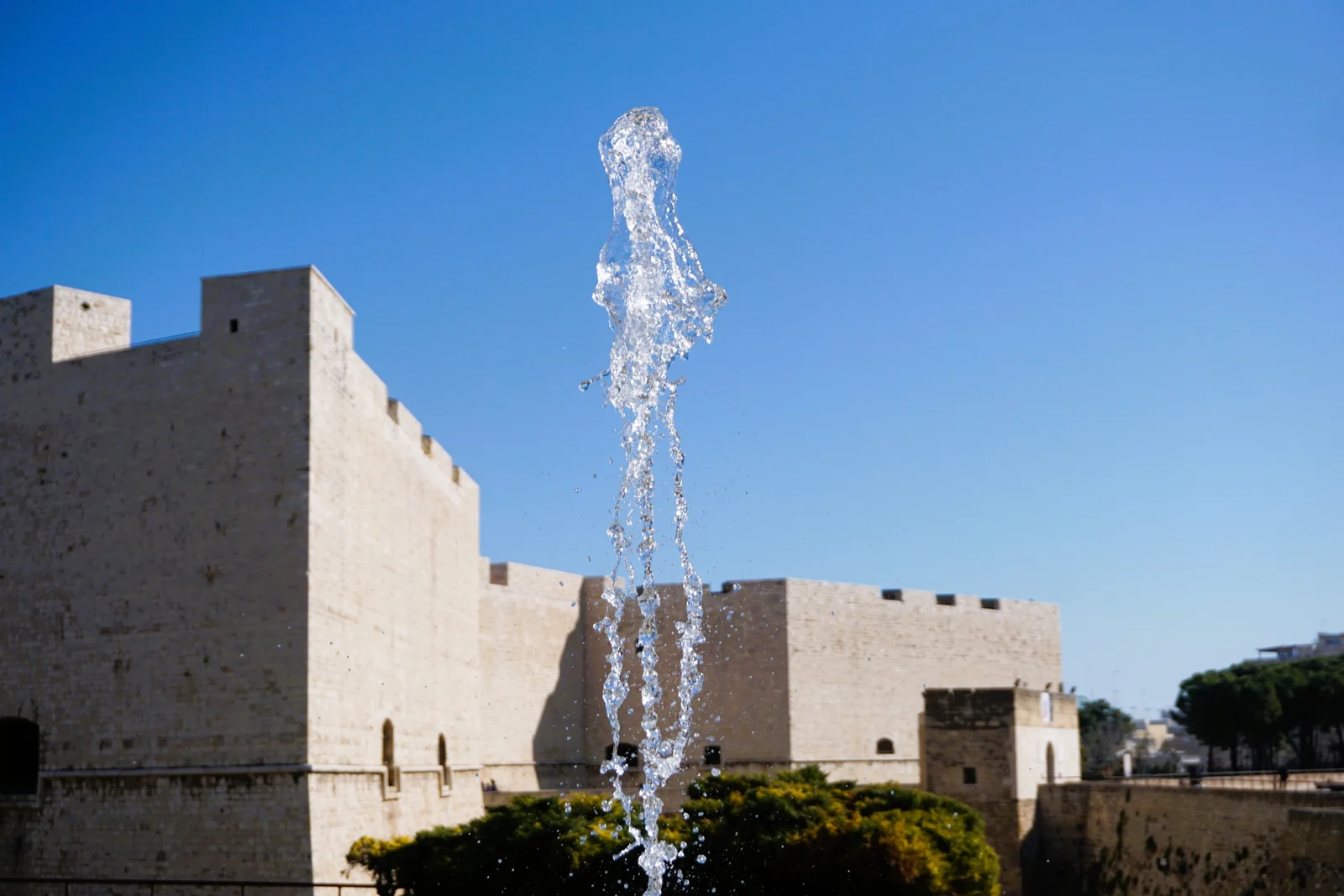
Photo: Giovannasorrenti / Wikimedia Commons — CC BY-SA 4.0 · Resized and converted to WebP.
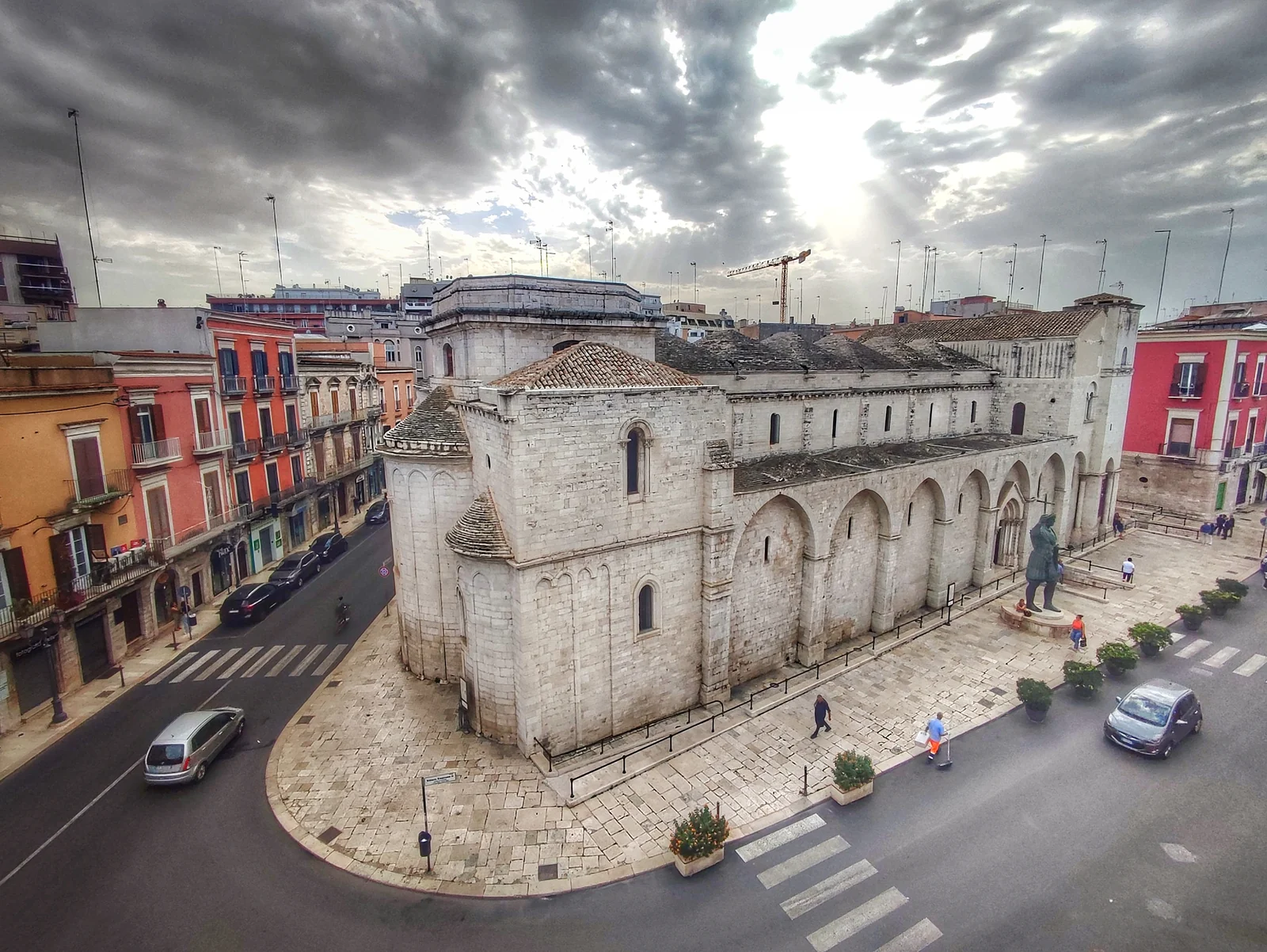
Photo: Fabio Corcella / Wikimedia Commons — CC BY-SA 4.0 · Resized and converted to WebP.
History
The first record of Barletta goes back to the third century BC. In Roman times, under the name of Barduli, it was the port and seaside station of Canosa; after the fall of the Empire it passed to the Goths, the Byzantines and the Lombards. In 1190 the Norman king Tancred gave it the title of city, and in the same year the archbishop of Nazareth took refuge there and set up his see. Under the Swabians it was granted privileges protecting its trade, and its prosperity continued under the Angevins in the fourteenth and fifteenth centuries thanks to trade with the East: its merchant fleet was among the first of the kingdom.
In the struggles between the Spanish and the French in the early sixteenth century, Barletta saw several clashes. The most famous is the Disfida of 13 February 1503: the French captain La Motte, a prisoner in Barletta dining as the guest of the Spaniard Diego Mendoza, accused the Italians of cowardice; the challenge was fought in a field between Andria and Corato by thirteen Frenchmen and thirteen Italians led by Ettore Fieramosca, who won and returned to the city welcomed by bells and artillery salutes. The memory came back to life and became popular thanks to Massimo D'Azeglio.
Plunder, famine, earthquakes and plague reduced the city, by the end of the seventeenth century, to little more than 8,000 inhabitants. Recovery began in the second half of the eighteenth century, and after 1860 the city enlarged its port, opened schools and industries and spread the growing of vines and olives. Until 1927 it was the seat of a district of the province of Bari.
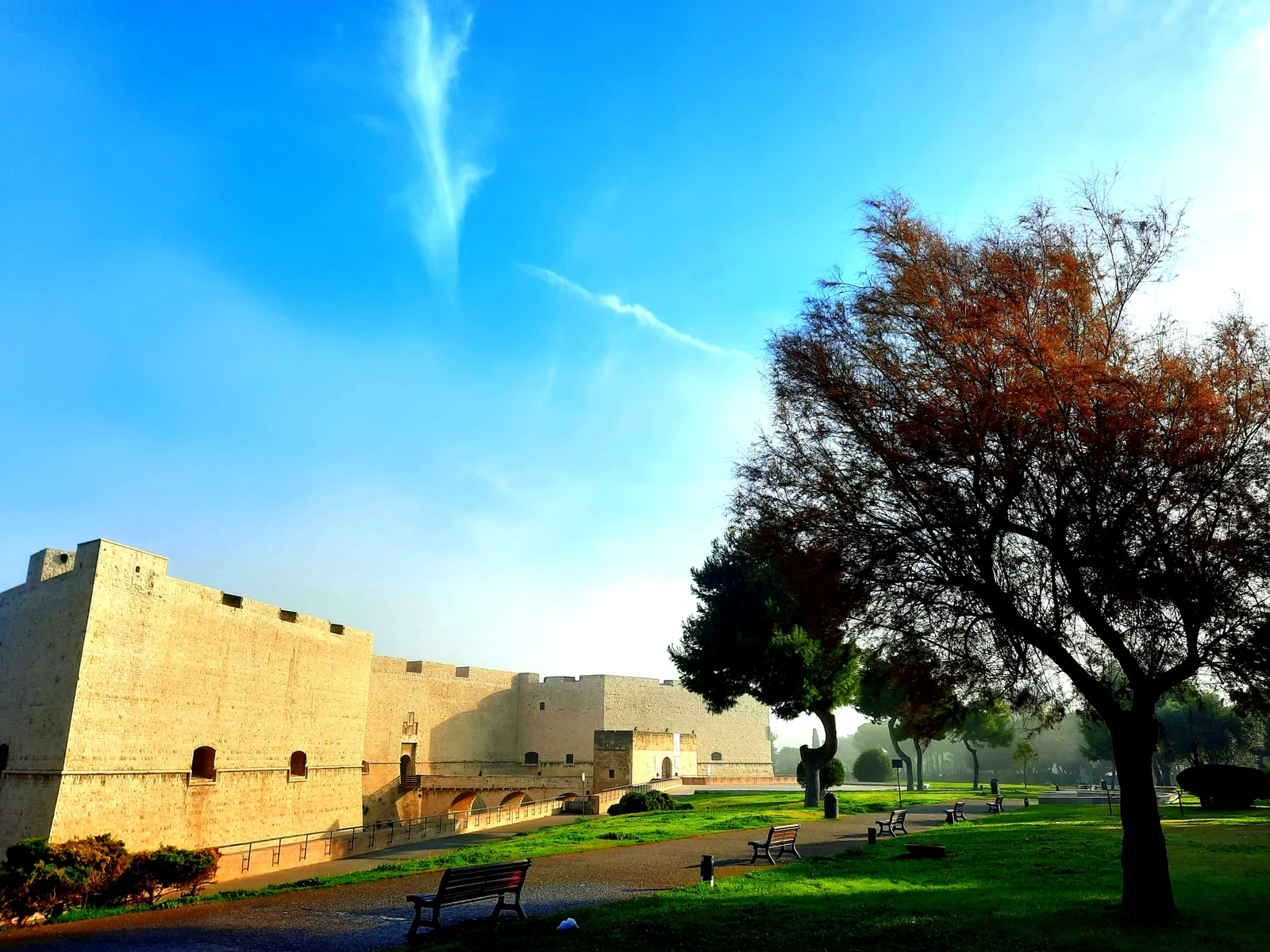
The first written record of the castle is a decree of 1240 in which Frederick II listed it among the castles of the Justiciarate of Terra di Bari; from that time the Swabian eagle survives, set into the lunette of a window in the entrance hall. Under the Angevins the French architect Pierre d'Angicourt altered and enlarged it. In 1461 Ferdinand I of Aragon, just crowned in the cathedral next door, took refuge there, besieged by pro-Angevin armies, until Skanderbeg came to his aid. In 1867 the municipality bought the castle at a public auction for 30,000 lire and granted it to the military, who used it as an arms depot and a prison; the restoration of 1976 consolidated it and set it aside for the city's museum and picture collections.
The city's history also runs through Canne. Around 1100 Canne was a bishop's see and its bishop was Ruggero, the future patron saint of Barletta. Ruggero died on 30 December 1129 and was buried in the small cathedral of Canne; in 1276, almost a hundred and fifty years later, the people of Canne, who had by then moved to Barletta, brought his relics with them. In 2026 the archdiocese marked the 750th anniversary of the translation and proclaimed a «Rogerian Year» for the ninth centenary of his death, from 30 December 2028 into 2029.
The memory of the Disfida has a history of its own. Massimo D'Azeglio's novel was published in Milan in 1833, in two volumes, by Vincenzo Ferrario, and in 1855 Domenico Morelli painted «Ettore Fieramosca (La Disfida di Barletta)»: in the autumn of 2026 the first edition and the painting were shown together in Palazzo della Marra. In February 2025 the municipality celebrated the sixtieth anniversary of the first re-enactment of the Disfida.
Sources: Treccani, Enciclopedia on line — Barletta · Treccani, Enciclopedia Italiana (1930) — Barletta · Italia.it (Ministero del Turismo) — Barletta · Comune di Barletta: Il Castello di Barletta · Comune di Barletta: Canne della Battaglia · Arcidiocesi di Trani-Barletta-Bisceglie: l’Arcivescovo indice l’«Anno Rogeriano» (30 dicembre 2025) · Comune di Barletta: presentata l’edizione 2026 della Disfida di Barletta (15 settembre 2026) · Comune di Barletta: 522° anniversario della Disfida di Barletta (12 febbraio 2025)
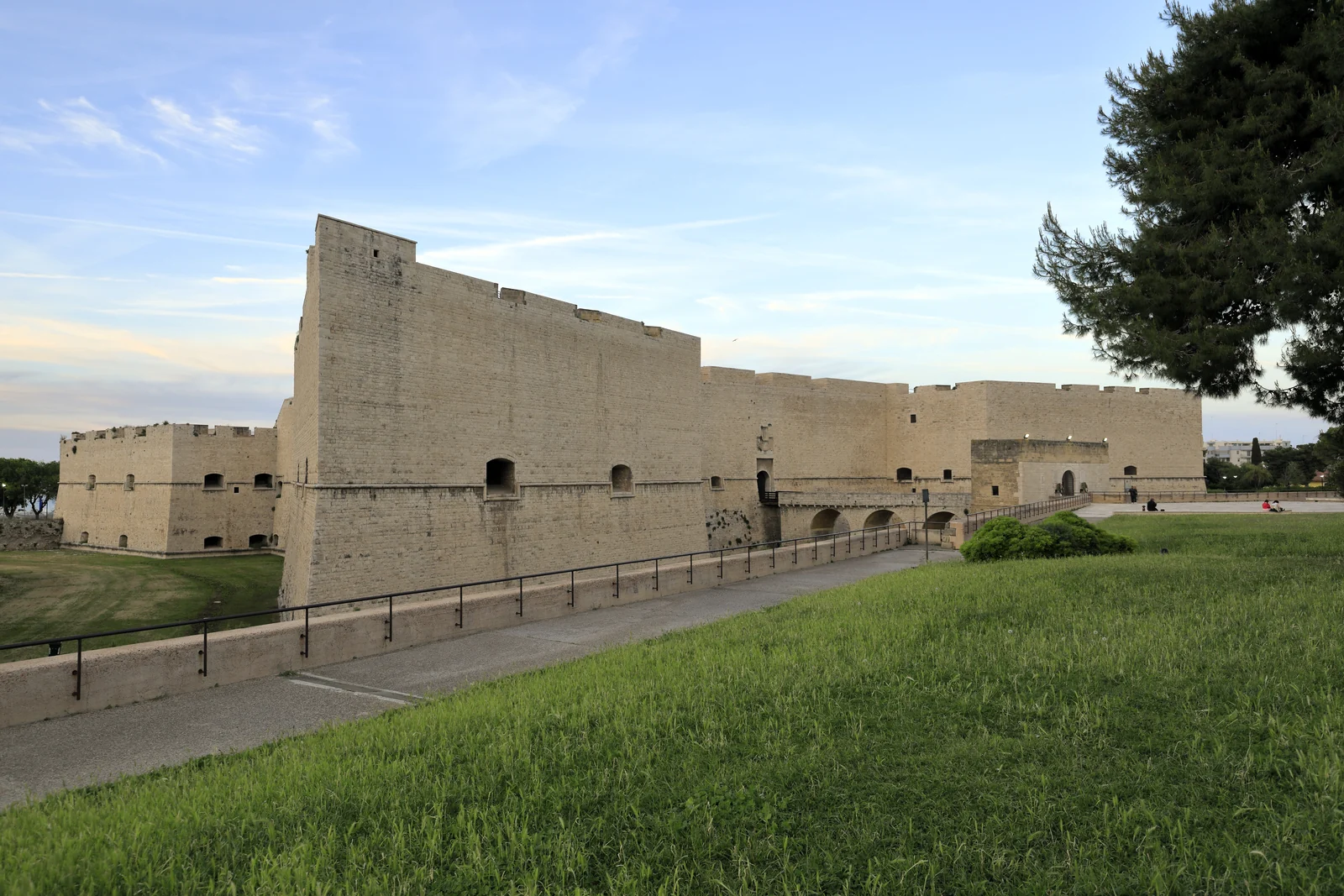
Photo: Falk2 / Wikimedia Commons — CC BY-SA 4.0 · Resized and converted to WebP.
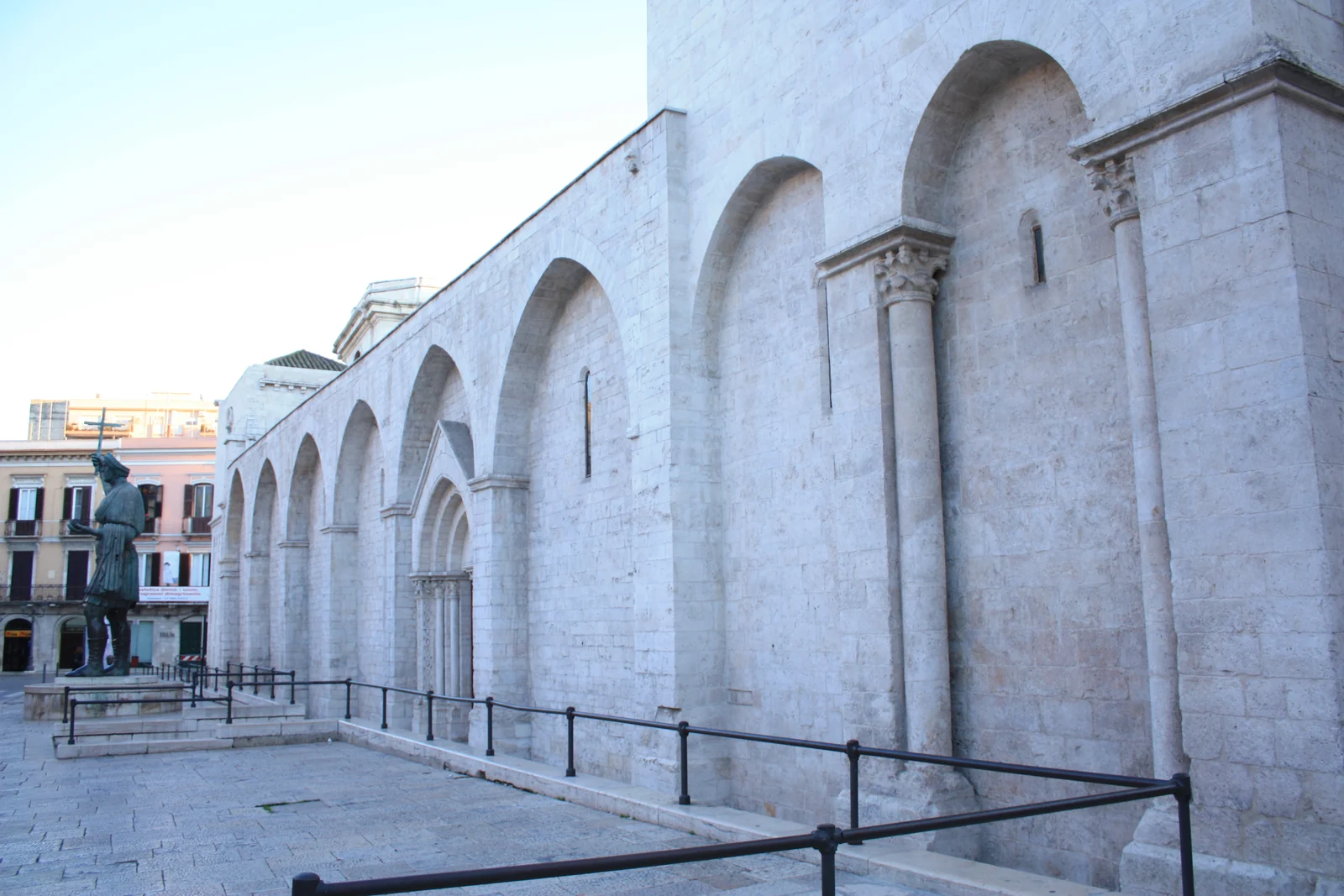
Photo: Achille83 / Wikimedia Commons — Public domain · Resized and converted to WebP.
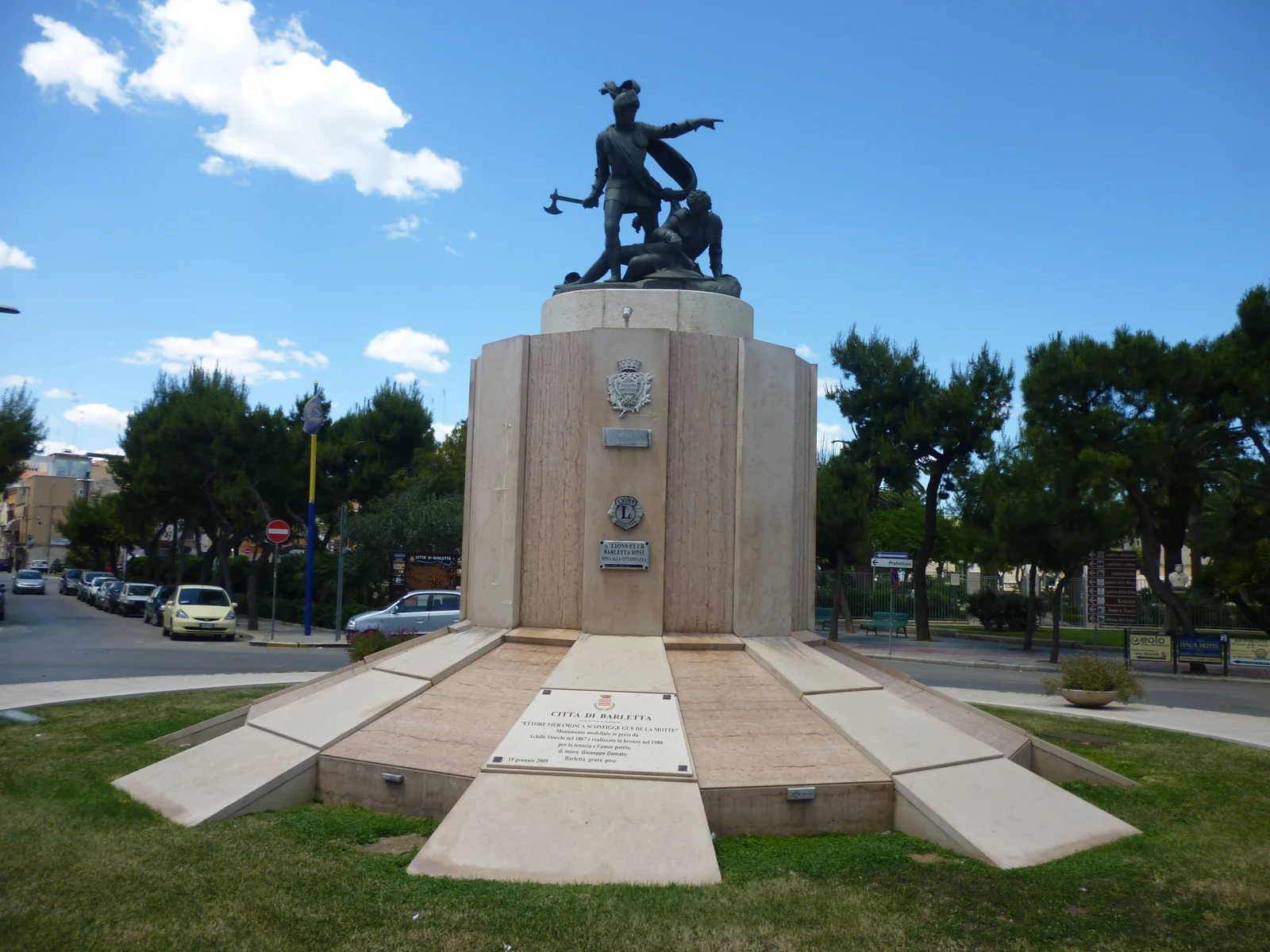
Photo: Daniel Ventura / Wikimedia Commons — CC BY-SA 4.0 · Resized and converted to WebP.
What to see
The castle was built by the Normans in the second half of the twelfth century; Frederick II included it among the castles of the Justiciarate of Terra di Bari, the Angevins turned it into a fortress and the Aragonese, with Charles V, strengthened its defences: between 1532 and 1537 the four spear-shaped corner bastions were built, inside a wide moat. In the courtyard three Swabian pointed windows with eagles in their tympana can still be seen. Since 2003 it has housed the Museo civico: on the first floor the Galleria antica, with works by Luca Giordano, Solimena, Mattia Preti and Tiepolo, the nineteenth-century gallery with the Neapolitan school and the Galleria Cafiero, a cabinet of curiosities of furniture, arms, silver and textiles donated in 1936; on the ground floor the lapidarium with the stone bust of Frederick II. The visit includes the underground rooms and the ramparts.
The cathedral of Santa Maria Maggiore, begun after 1139, brings three eras together: the façade and first bays, Romanesque, from the twelfth century, the naves lengthened in Gothic forms at the start of the fourteenth century, and the presbytery and choir of the fifteenth. Inside are the thirteenth-century ciborium and, on the altar, the panel of the Madonna della Disfida, signed by Paolo Serafini of Modena and dated 1387.
Next to the Santo Sepolcro, a Gothic church of the late thirteenth century that keeps frescoes of the twelfth and thirteenth centuries and a rich treasury, stands the Colossus: a bronze statue about five metres tall of an Eastern emperor of the fourth century AD, which according to tradition came from Constantinople between the thirteenth and fourteenth centuries; its legs and hands were remade at the end of the fifteenth century. The Santo Sepolcro also keeps a Byzantine-style panel of the Madonna of Constantinople. The old centre then has the church of Sant'Andrea, with its thirteenth-century portal signed by Simeone da Ragusa and, inside, a Virgin and Child by Alvise Vivarini of 1483; the church of Sant'Agostino, with two fourteenth-century pointed doorways; Palazzo Bonelli, with its Gothic portico; the Monte di Pietà palace, built by the Jesuits in the first half of the seventeenth century; and the neoclassical Teatro Curci, which the Enciclopedia Italiana counted among the most notable in Puglia and which, with the Giordano in Foggia and the Mercadante in Cerignola, is among the oldest working theatres in Puglia.
Palazzo della Marra, built around the middle of the sixteenth century, has a richly decorated Baroque balcony, a courtyard with a columned loggia and, at the back, a five-arched loggia. On the second floor is the Pinacoteca Giuseppe De Nittis, with the works the painter's wife, Léontine Gruvelle, gave to the city: 146 paintings and 65 drawings, with views of Paris and London, horse races, open-air scenes and portraits.
The cathedral is the result of a thousand years of layers: beneath today's building lie «grotticella» rock-cut tombs of the third century BC, an early Christian basilica of the sixth century and a second basilica of the ninth or tenth century. It reached its greatest splendour at the time of the Crusades, as a stop for pilgrims bound for the Holy Land, and for centuries it was the seat of the archbishops of Nazareth in exile. Restoration work lasted from 1955 to 1996; in 1961 it was given the title of minor basilica.
The Santo Sepolcro, served by the canons and knights of the Holy Sepulchre of Jerusalem, was a stop for pilgrims and crusaders sailing from the port of Barletta to the Holy Land. It has three naves of seven bays; the chapel above the narthex holds the treasury, with a patriarchal cross, a tabernacle with Christ in Majesty, a eucharistic dove in gilded copper and a twelfth-century monstrance. It has been a minor basilica since 1951. The Colossus, known in town as Eraclio, stands on a base about one metre high and wears late Roman and Byzantine imperial dress, with a diadem on its head.
Via Nazareth links Piazza della Libertà with the castle: along the street are the Nazarene Archbishop's Palace, the church of Nazareth and the Cantina della Sfida, the historic tavern linked to the Disfida. Palazzo della Marra, at Via Cialdini 74, is in the municipality's words the only example of Lecce Baroque built outside the Salento: the figures of Old Age and Youth dominate the balcony, which rests on five corbels carved with monsters, dogs and griffins, and above the portal runs the frieze with the name Della Marra among winged cherubs.
Sources: Ministero della Cultura — Visita al Castello e al Museo (Castello e Museo civico di Barletta) · Treccani, Enciclopedia Italiana (1930) — Barletta · Comune di Barletta, Barletta Musei — Collezioni del Museo civico · Comune di Barletta, Barletta Musei — Castello, Museo civico e Cantina della Sfida: orari e tariffe · Italia.it (Ministero del Turismo) — Barletta · Teatro Umberto Giordano di Foggia — Storia · Ministero della Cultura, Luoghi della cultura — Pinacoteca «Giuseppe De Nittis» · Comune di Barletta: Duomo di Barletta · Comune di Barletta: Basilica del Santo Sepolcro · Comune di Barletta: Eraclio, il «Colosso» · Comune di Barletta: Centro storico, via Nazareth · Comune di Barletta: Palazzo della Marra · Comune di Barletta, Barletta Musei — Pinacoteca Giuseppe De Nittis: orari e tariffe
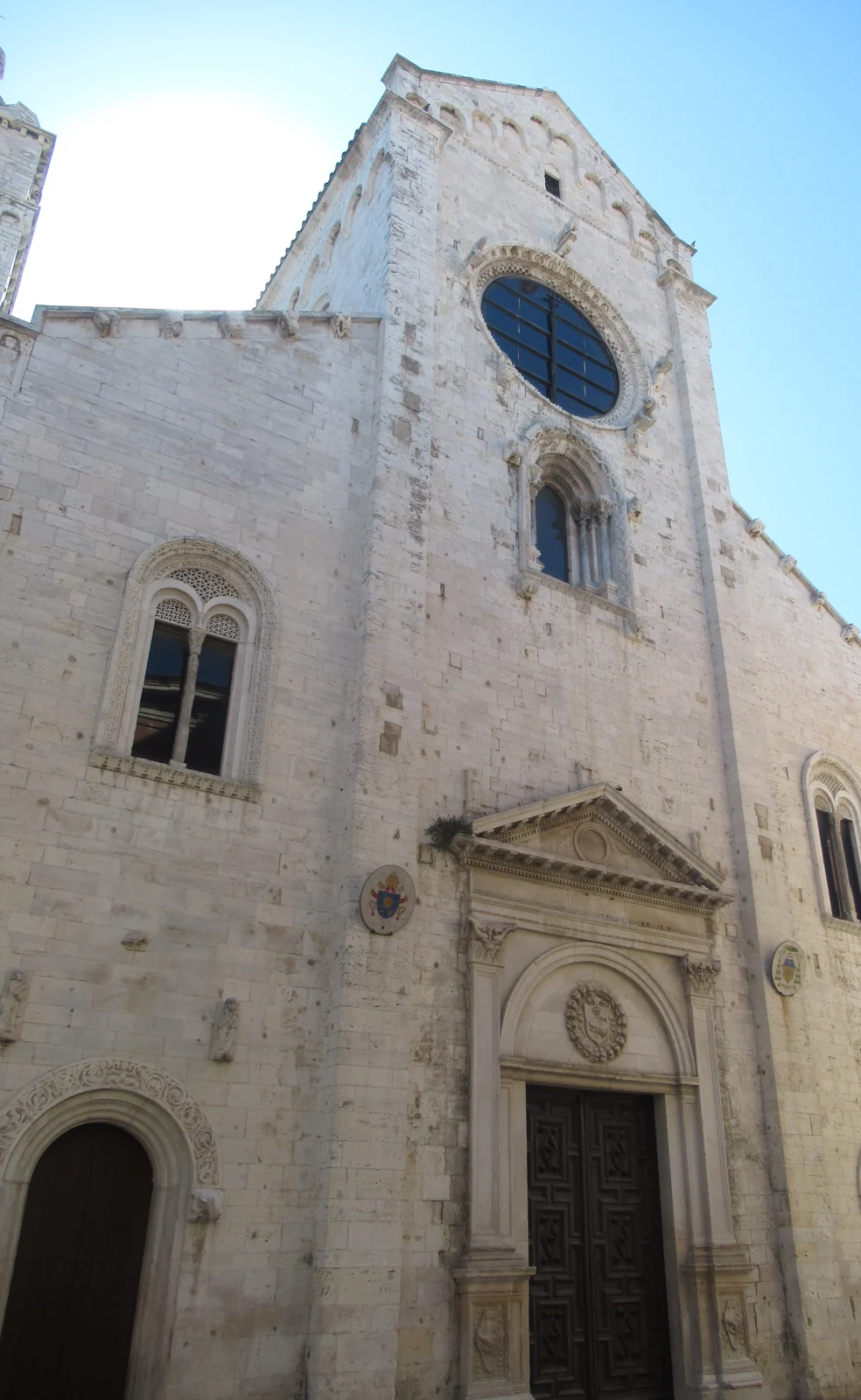
Photo: Avemundi / Wikimedia Commons — CC BY-SA 4.0 · Cropped, resized and converted to WebP.
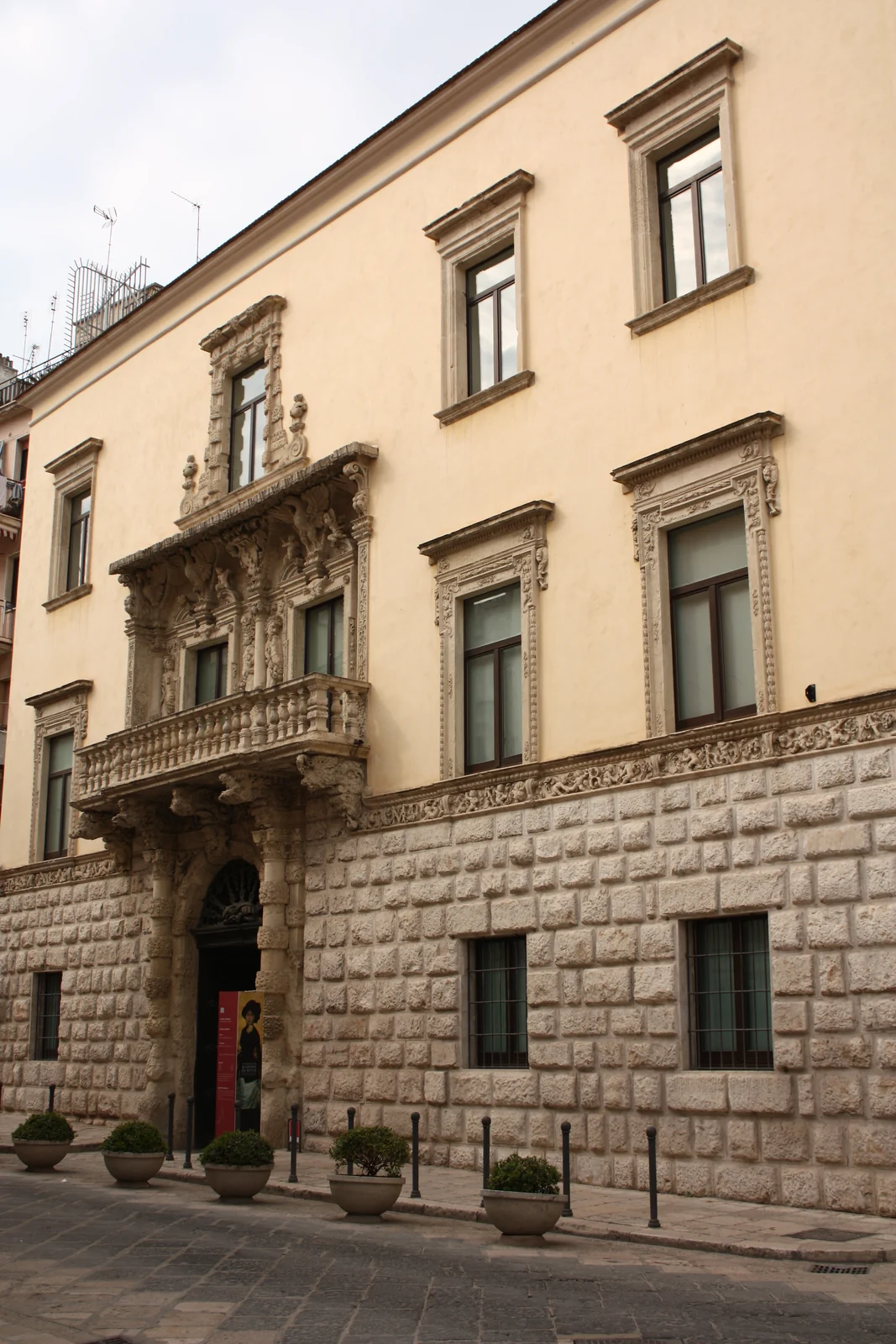
Photo: Achille83 / Wikimedia Commons — Public domain · Resized and converted to WebP.
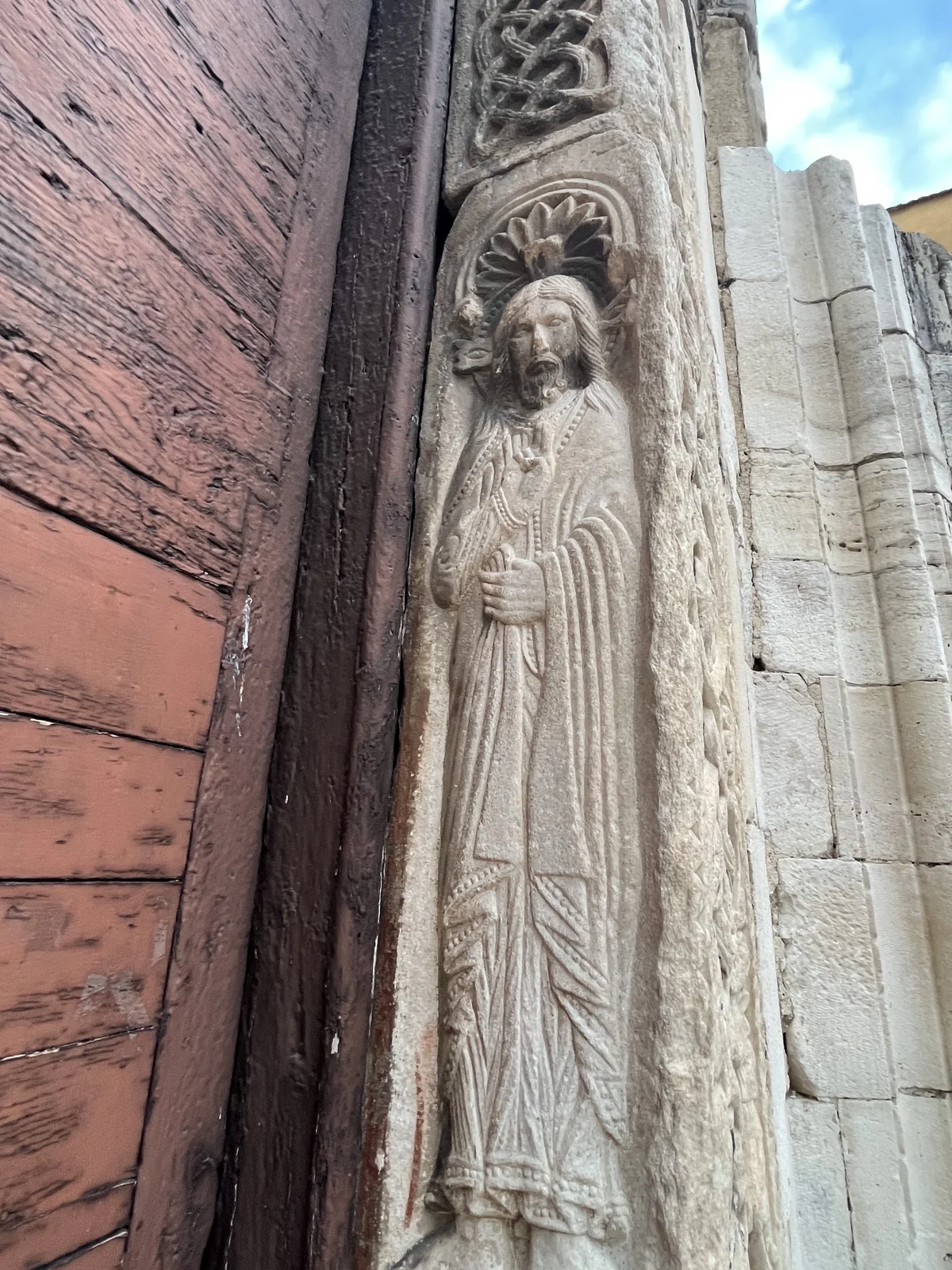
Photo: EnveR / Wikimedia Commons — CC BY-SA 4.0 · Resized and converted to WebP.
Flavours
Barletta's cooking comes from the countryside of the lower Ofanto valley and from the sea. In 1930 the Enciclopedia Italiana described the city as the largest wine market in Puglia: before phylloxera its vineyards were more extensive than in any other municipality in the region. It also mentioned the olive trees, the grain along the Ofanto, the market gardens of the reclaimed Padula, where tomatoes above all were grown, and fishing. Today vineyards and olive groves are still the most widespread crops, and fishing is still a source of income for the city.
Frantoio Paparella (olive mill), one of the food places featured by Apulica, is based in Barletta.
Wine has a place of its own: the Palazzina Reichlin, restored and turned into the museum and library of the former Cantina Sperimentale, once the heart of local wine production. It keeps books and historical documents on viticulture and winemaking, with interactive stations that tell how wine was made in Barletta, which grape varieties were grown and with which techniques. It is open Monday to Friday, from 9:00 to 13:00 and from 16:00 to 19:00.
The weekly market is held on Saturdays, from 7:00 to 14:00; since March 2026 it can also be reached on foot through the Green Park, between Via Oronzo Pedico and Via Gioacchino Rossini.
Sources: Treccani, Enciclopedia Italiana (1930) — Barletta · Treccani, Enciclopedia on line — Barletta · Frantoio Paparella, sito ufficiale · Comune di Barletta: Palazzina Reichlin, museo e biblioteca dell’ex Cantina Sperimentale · Comune di Barletta: attraversamento pedonale nel Green Park per il mercato del sabato (20 marzo 2026)
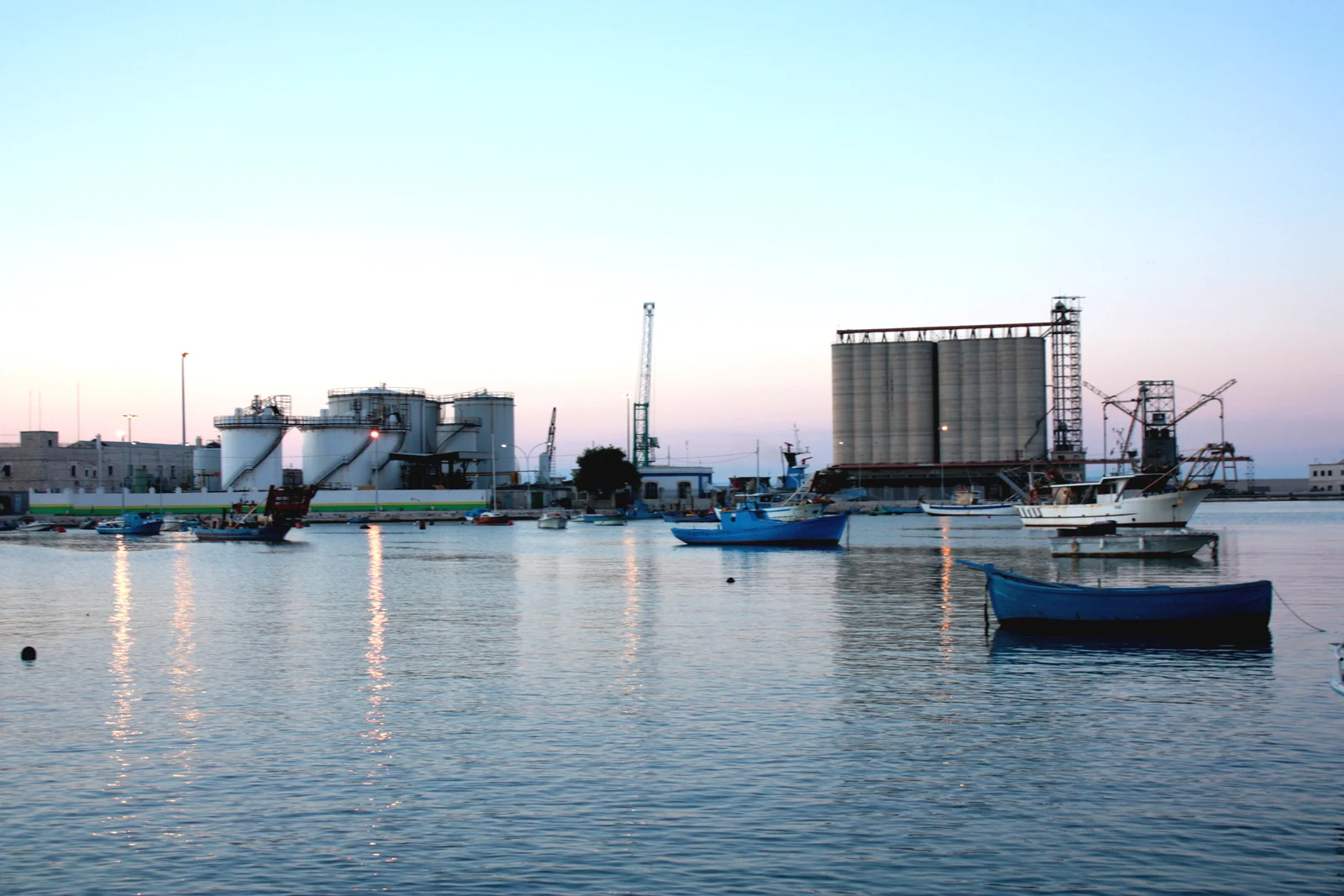
Photo: Achille83 / Wikimedia Commons — Public domain · Resized and converted to WebP.
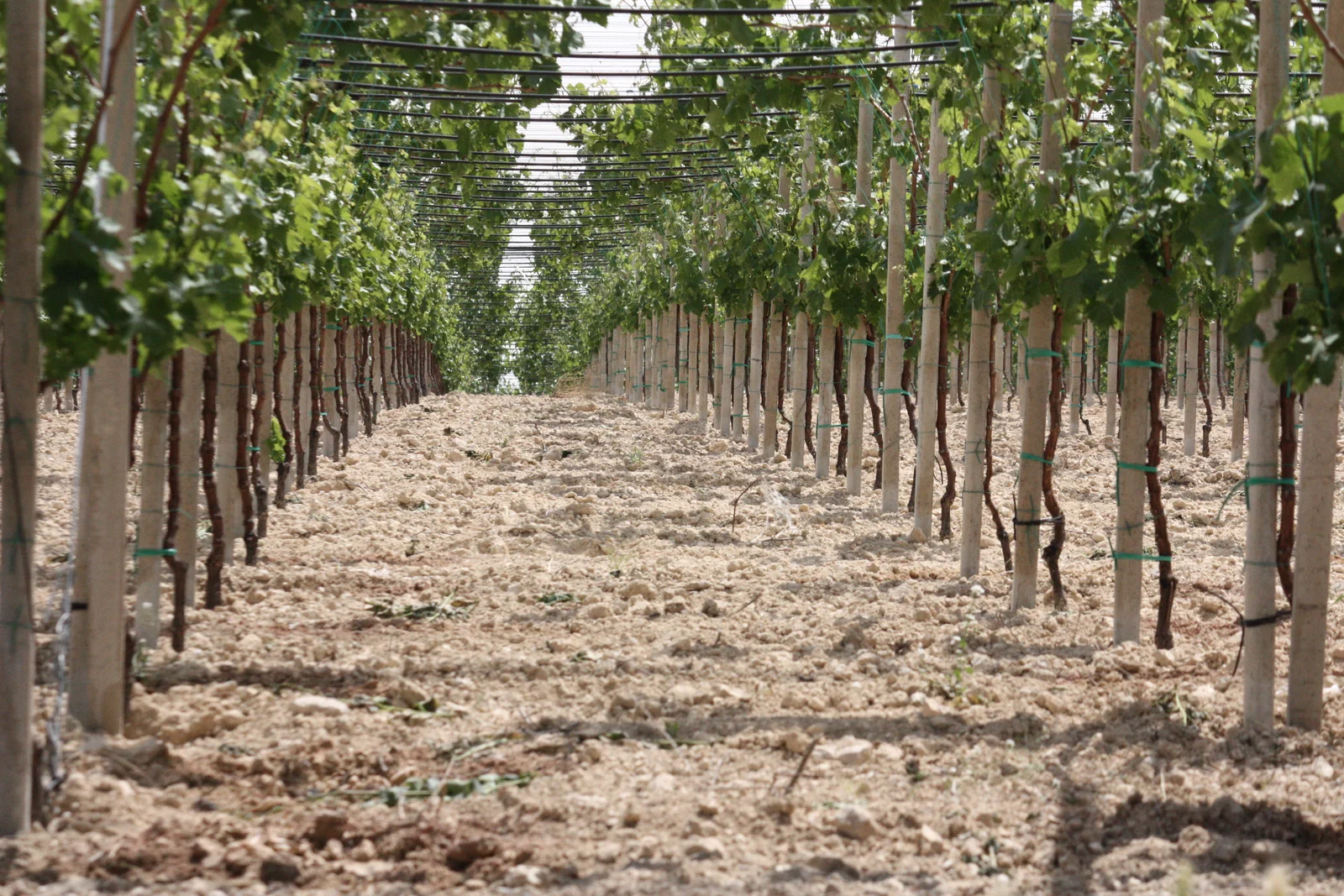
Photo: Achille83 / Wikimedia Commons — CC BY-SA 4.0 · Resized and converted to WebP.
Things to do
The best way to get to know Barletta is a walk through the old centre: from the castle to the cathedral, then to the Colossus and the Santo Sepolcro, and finally to Palazzo della Marra for the picture gallery. The castle ticket includes the ramparts and the underground rooms, and free entry to the Cantina della Sfida.
For those who want to know De Nittis, the Pinacoteca tells the story of a painter born in Barletta on 25 February 1846, who moved to Naples with his family in 1860 and to Paris in 1867. In 1874, invited by Edgar Degas, he showed five works at what was later remembered as the first Impressionist exhibition, with Monet, Renoir, Sisley and Pissarro; in 1878 he won the medal at the Paris Exposition Universelle. He died on 21 August 1884, after painting the versions of «Sull'amaca», his last work.
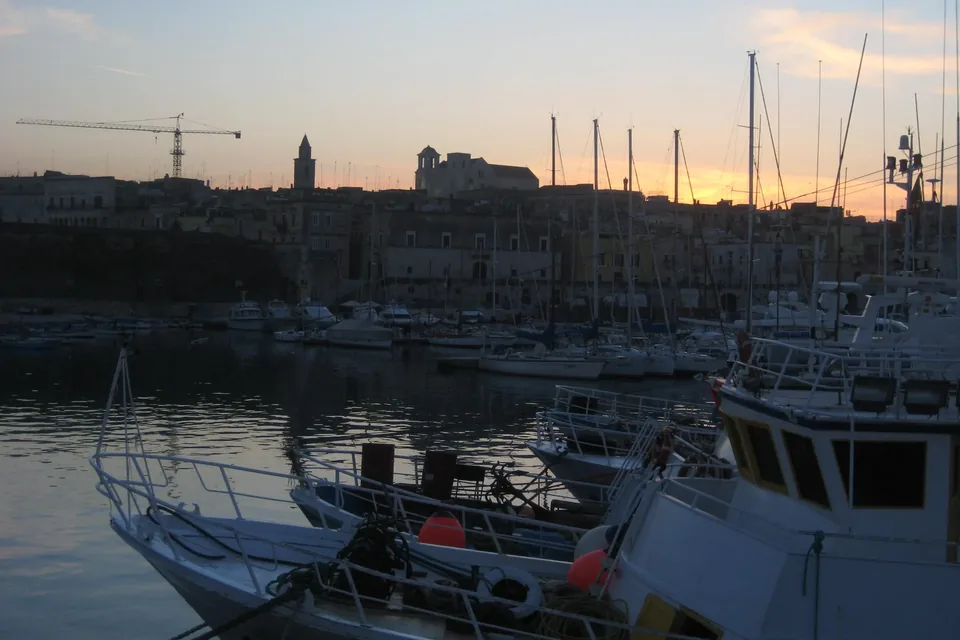
The sea is the other half of the city. Barletta's port, sheltered by two long breakwaters, was in 1930 the second in Puglia for the goods it handled; today it is still busy, together with fishing and tourism.
For an evening there is the Teatro Curci, at Corso Vittorio Emanuele II 71, with drama, dance and classical music in a hall with gilded decoration and a frescoed ceiling. It began as the San Ferdinando theatre, opened on 4 October 1819 with 168 seats in the stalls and 32 boxes; in 1864 part of the structure gave way and the theatre was demolished. The new building, opened in April 1872, was named in 1877 after the Barletta-born musician Giuseppe Curci.
The De Nittis collection came to Barletta at the wish of the painter's wife. In her will of 3 November 1912 Léontine Gruvelle left her estate to the Municipality of Barletta, on condition that nothing would ever be sold; she died on 13 August 1913, and in February 1914 the municipality sent the painter Giuseppe Gabbiani to draw up the inventory and organise the shipment. After many years in temporary homes, the collection found its place in the restored Palazzo della Marra.
The sea is enjoyed from the two coast roads. To the west, the Pietro Paolo Mennea seafront has a pedestrian area on the service road, from the port to Via Luigi Dicuonzo; to the east, near the Spiaggia dei Militari, a walkway with a ramp reaches the water's edge for people with reduced mobility. In summer 2026 the inclusive beaches to the east and west received two floating chairs for getting into the water, and Barletta became the first Italian municipality recognised as a «Friend of the Kentish Plover», the small endangered shorebird that nests on the beaches. In the port, the municipality had announced for 29 May 2026 the handover of the works to extend the outer breakwaters, with the presentation of the project at the «Themis» maritime station and speeches by the Minister of the Environment and the president of the Port System Authority of the Southern Adriatic Sea (Autorità di Sistema Portuale del Mare Adriatico Meridionale).
Sources: Comune di Barletta, Barletta Musei — Castello, Museo civico e Cantina della Sfida: orari e tariffe · Comune di Barletta, Barletta Musei — Brevi note biografiche di Giuseppe De Nittis · Treccani, Enciclopedia Italiana (1930) — Barletta · Treccani, Enciclopedia on line — Barletta · Italia.it (Ministero del Turismo) — Barletta · Comune di Barletta: Teatro Curci · Comune di Barletta, Barletta Musei: breve cronistoria della donazione di Léontine De Nittis · Comune di Barletta: area pedonale del lungomare Pietro Paolo Mennea (17 maggio 2023) · Comune di Barletta: litoranea di Levante, accessibilità al mare (18 agosto 2022) · Comune di Barletta: due sedie galleggianti per le spiagge inclusive di Levante e Ponente (17 luglio 2026) · Comune di Barletta: Barletta primo Comune italiano «Amico del Fratino» (16 giugno 2026) · Comune di Barletta: consegna dei lavori di prolungamento dei moli foranei del porto (28 maggio 2026)
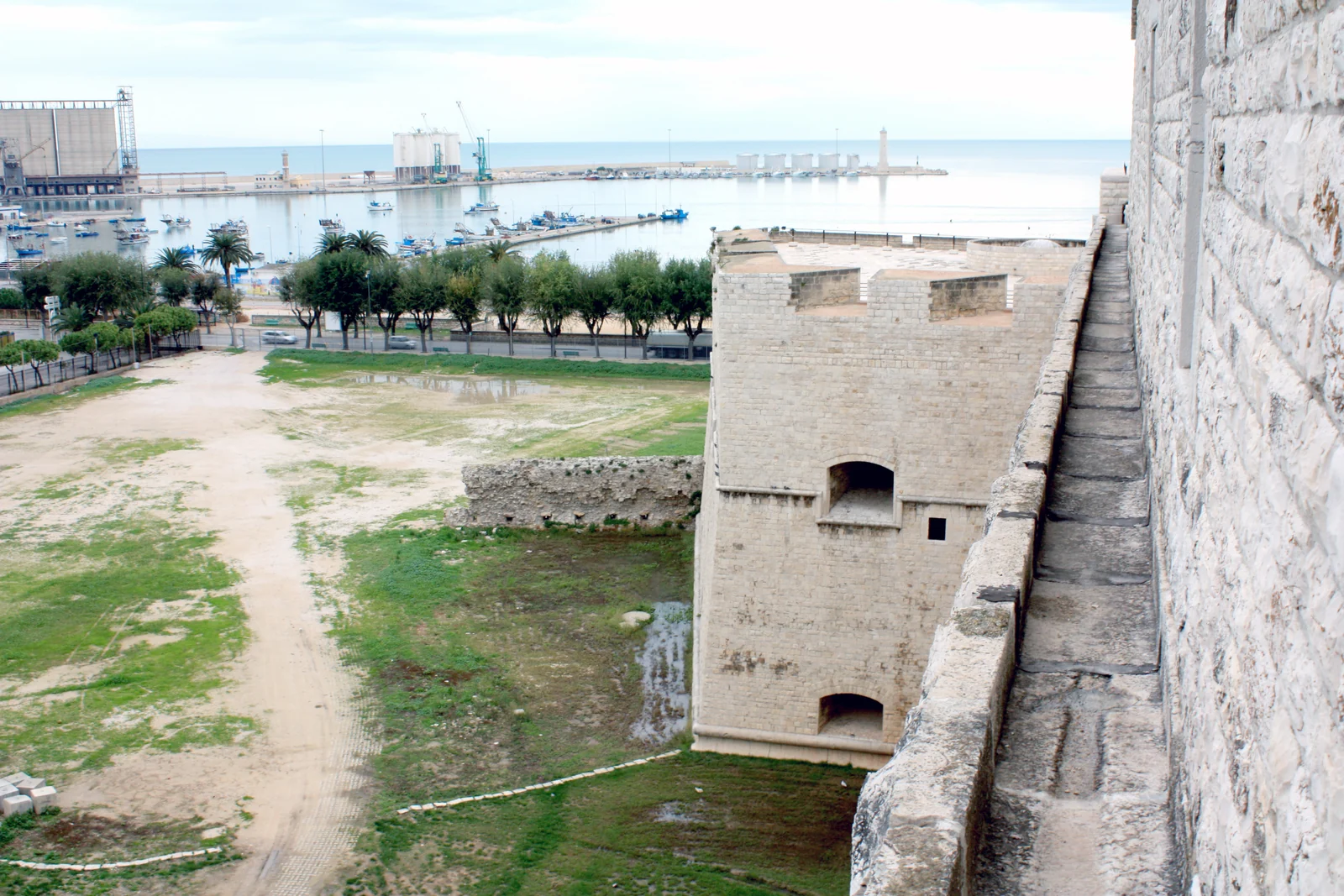
Photo: Achille83 / Wikimedia Commons — CC BY-SA 3.0 · Resized and converted to WebP.
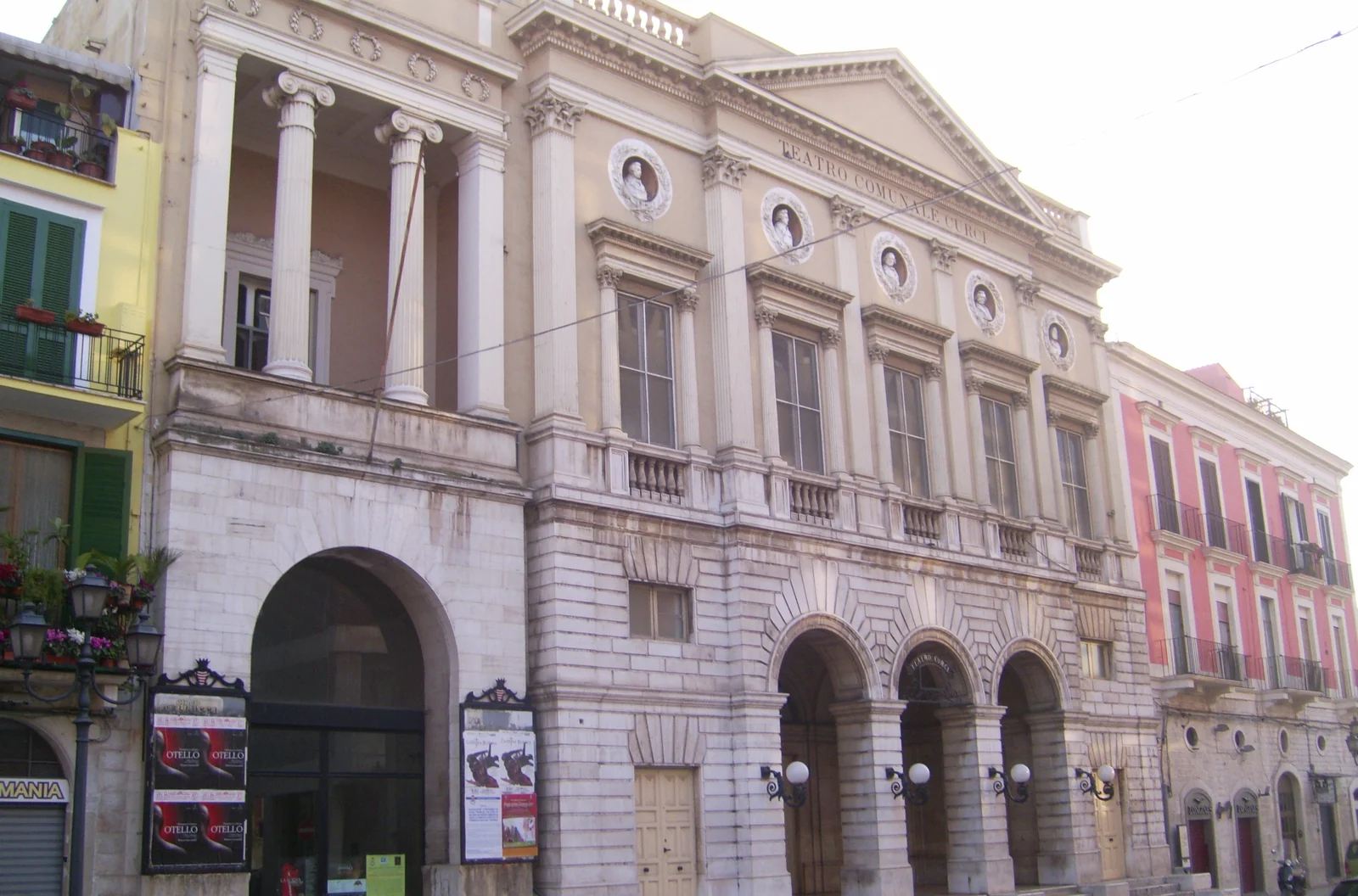
Photo: Achille83 / Wikimedia Commons — Public domain · Cropped, resized and converted to WebP.
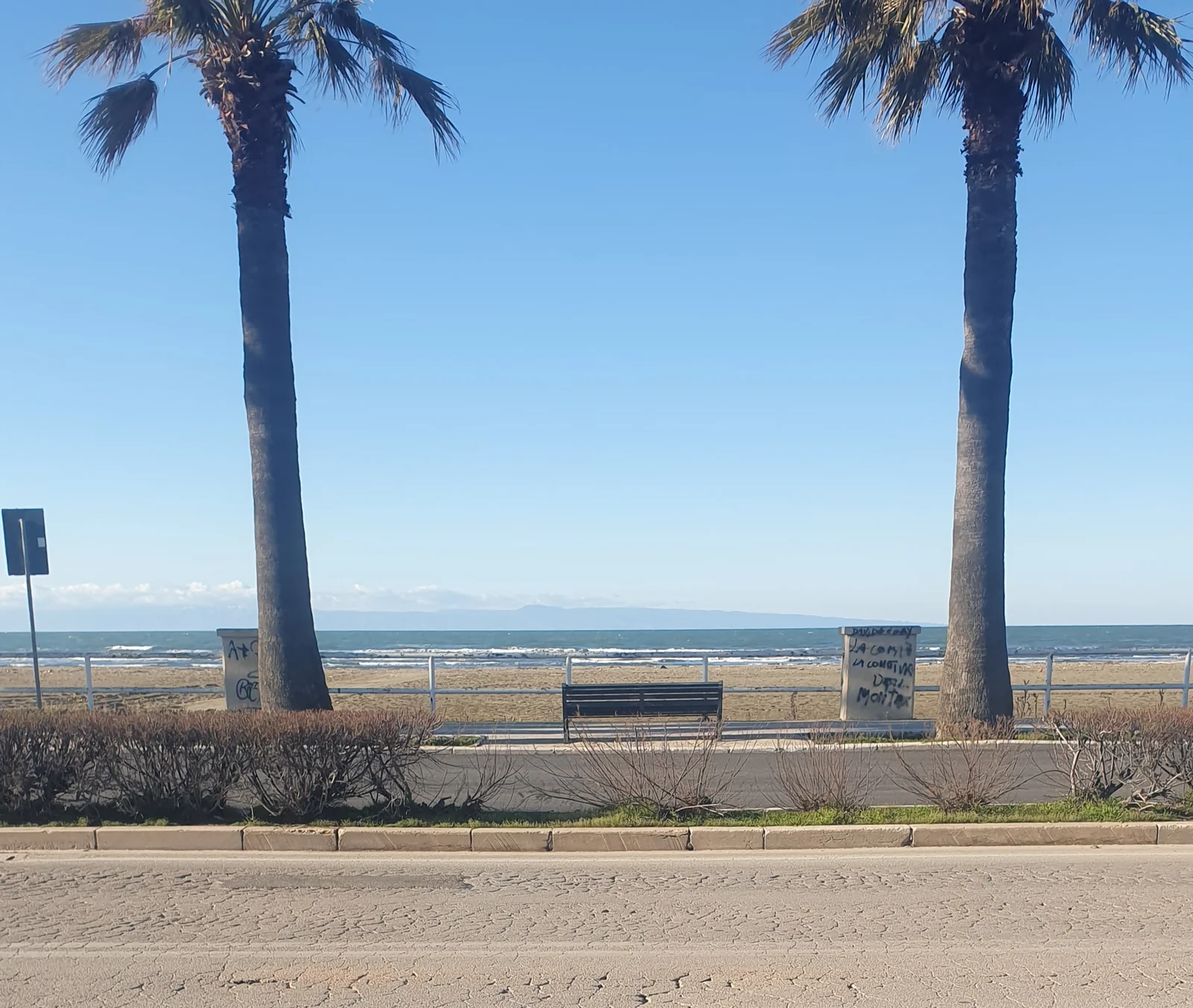
Photo: Bianower / Wikimedia Commons — CC0 · Resized and converted to WebP.
When to go
The castle and the De Nittis picture gallery are open from 9 am to 7 pm from October to April and from 10 am to 8 pm from May to September, and the ticket office closes 45 minutes earlier; they are closed on Mondays, as on 25 December and 1 January. On the first Sunday of the month entry costs €1. The Cantina della Sfida follows the same calendar but closes in the middle of the day: in winter from 9 am to 1 pm and from 3 to 7 pm.
13 February is the anniversary of the 1503 Disfida. Within the municipality, the Canne della Battaglia archaeological park is open Wednesday to Saturday and, in 2026, also on some Sundays with free entry: the last is Sunday 6 December.
The patron saints' feast is in July, in honour of Maria Santissima dello Sterpeto and Saint Ruggero the bishop: in 2025 it ran from 12 to 14 July, in 2026 from 11 to 13, with the Sunday evening procession, the illuminations on Corso Vittorio Emanuele and fireworks from the eastern pier. In 2026 the icon of the Madonna dello Sterpeto was carried in procession to the cathedral on 1 May for the month of Mary and returned to the sanctuary on Via Trani on 2 June. 30 December is the solemnity of Saint Ruggero, with a pontifical Mass and an evening procession through the centre.
September is the month of the Disfida re-enactment: in 2025 the historical parade set off from the castle on Sunday 7 September, and in 2026 the knights' parade was held on Saturday 19 September. On 13 February, the anniversary of the challenge, admission to the castle, Palazzo della Marra and the Cantina della Sfida was free in 2025, and in 2026 the day was marked with a show at the Teatro Curci.
Sources: Comune di Barletta, Barletta Musei — Castello, Museo civico e Cantina della Sfida: orari e tariffe · Comune di Barletta, Barletta Musei — Pinacoteca Giuseppe De Nittis: orari e tariffe · Comune di Barletta, Barletta Musei — Cantina della Sfida · Treccani, Enciclopedia Italiana (1930) — Barletta · Ministero della Cultura, Luoghi della cultura — Parco archeologico di Canne della Battaglia e Antiquarium · Comune di Barletta: gli auguri del Sindaco per la festa patronale (12 luglio 2025) · Arcidiocesi di Trani-Barletta-Bisceglie: programma dei festeggiamenti per i Santi Patroni, 11-13 luglio 2026 (7 luglio 2026) · Comune di Barletta: arrivo dell’icona della Madonna dello Sterpeto (29 aprile 2026) · Comune di Barletta: rientro dell’icona della Madonna dello Sterpeto (28 maggio 2026) · Arcidiocesi di Trani-Barletta-Bisceglie: Barletta celebra San Ruggero, vescovo e patrono (26 dicembre 2025) · Comune di Barletta: la Disfida di Barletta 2025 (3 settembre 2025) · Comune di Barletta: presentata l’edizione 2026 della Disfida di Barletta (15 settembre 2026) · Comune di Barletta: 522° anniversario della Disfida di Barletta (12 febbraio 2025) · Comune di Barletta: uno spettacolo al Curci per il 523° anniversario della Disfida (10 febbraio 2026)
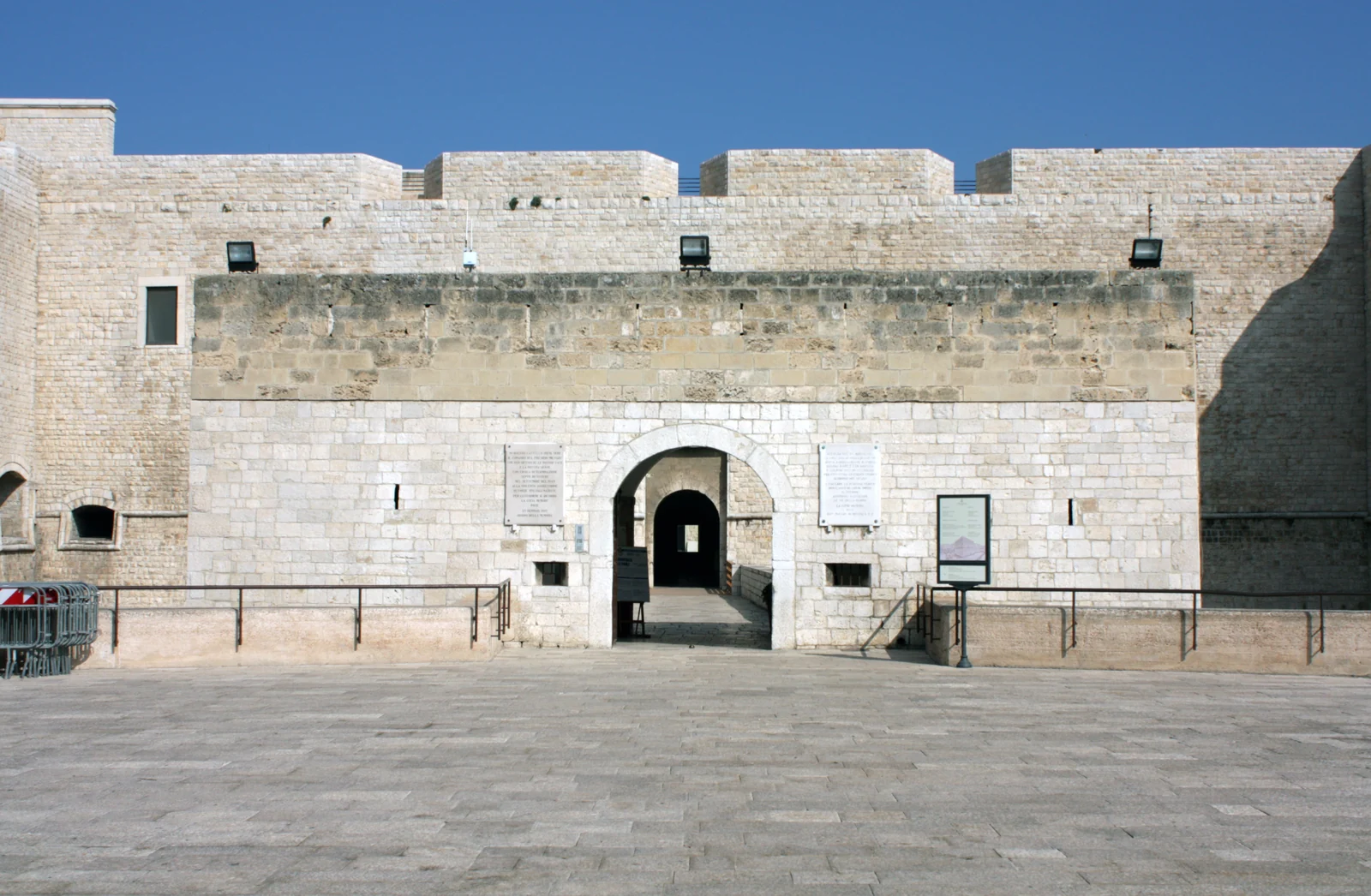
Photo: Achille83 / Wikimedia Commons — Public domain · Resized and converted to WebP.
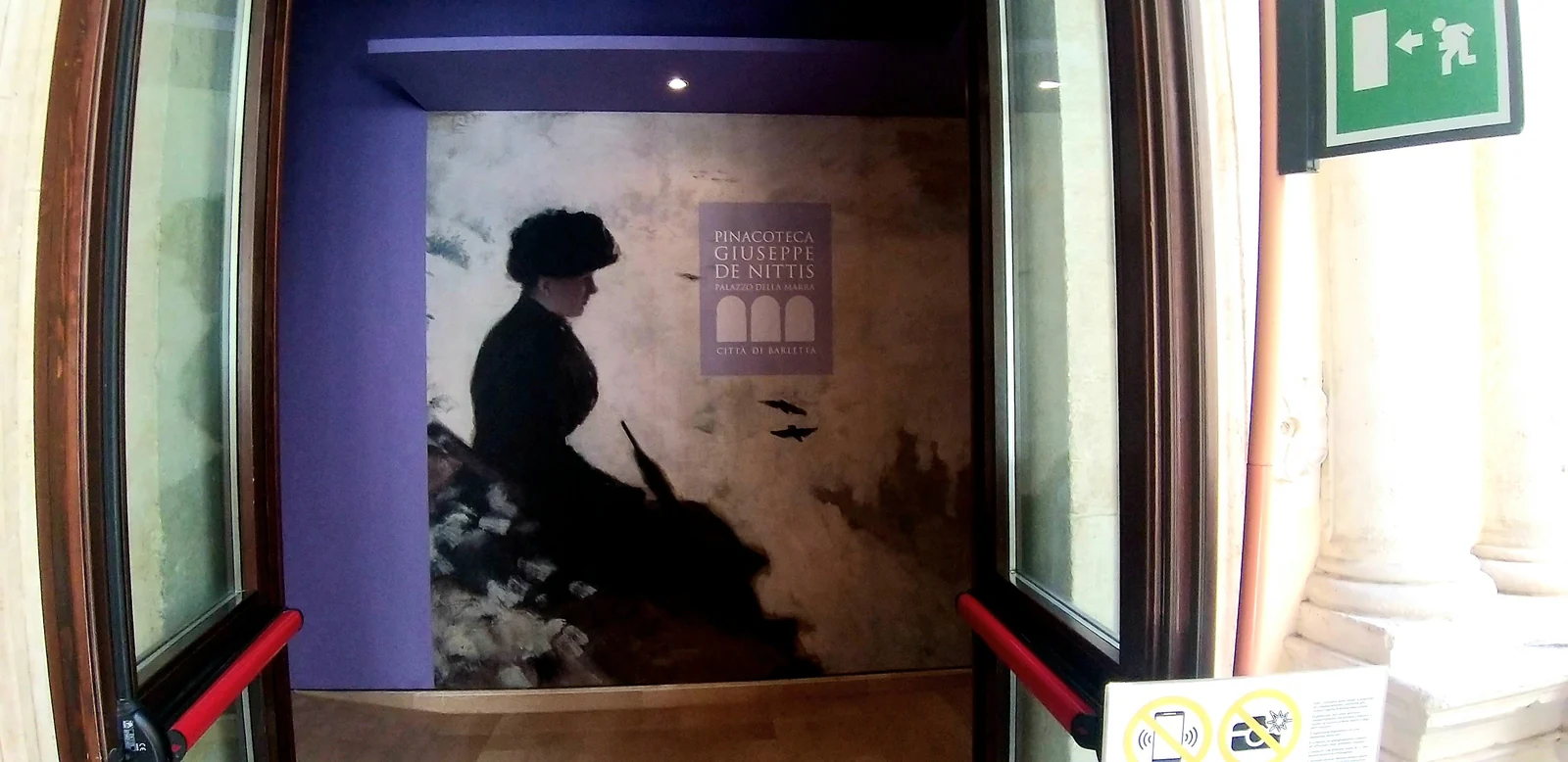
Photo: DinaBenedettoFerrandina / Wikimedia Commons — CC BY-SA 4.0 · Resized and converted to WebP.
Getting there and around
Barletta is a road and rail hub on the Bologna–Lecce line. The station has 6 tracks for passenger trains, with lifts working from 4 am to 1.30 am; assistance for people with disabilities is booked through RFI's Sala Blu in Bari.
The old centre, between the castle, the cathedral and Palazzo della Marra, is best seen on foot; the Canne della Battaglia archaeological park lies in the hamlet of the same name, on the hills above the Ofanto valley.
The official website of the Comune di Barletta, registered in IndicePA, the index of the digital addresses of Italy’s public administrations, is the reference for the town council’s offices, opening hours and news. Its address is listed among the sources of this section.
In town, urban public transport is run by Scoppio Autolinee; in September 2025 two new methane buses with a ramp for people with disabilities entered service. In summer 2026, from 5 July to 13 September, the new free line 7 linked the outskirts with the western coast road every Sunday, every hour from 8:00 to 19:30, and line 3 had extra runs to the eastern coast road; from 26 June to 13 September a free night bus, on Fridays, Saturdays and Sundays, left the Parco dell'Umanità at 22:30 for the beaches to the east and west, with the last return run at 2:35.
For tourist information there is the municipal Info Point (telephone 0883 331331, [email protected]); in summer 2026 it was open without a break from 9:00 to 21:00 at weekends and on public holidays.
Sources: Treccani, Enciclopedia on line — Barletta · RFI — Stazione di Barletta · Ministero della Cultura, Luoghi della cultura — Parco archeologico di Canne della Battaglia e Antiquarium · Comune di Barletta, sito istituzionale · IndicePA (AgID), Indice dei domicili digitali delle pubbliche amministrazioni: dataset Enti · Comune di Barletta: due nuovi bus nella flotta del trasporto pubblico urbano (19 settembre 2025) · Comune di Barletta: ogni domenica estiva 2026 al mare con il bus gratuito (3 luglio 2026) · Comune di Barletta: bus notturno gratuito estate 2026 (25 giugno 2026) · Comune di Barletta: «Estate 2026 nella Città della Disfida», l’Info Point turistico (11 agosto 2026) · Comune di Barletta: 522° anniversario della Disfida di Barletta (12 febbraio 2025)
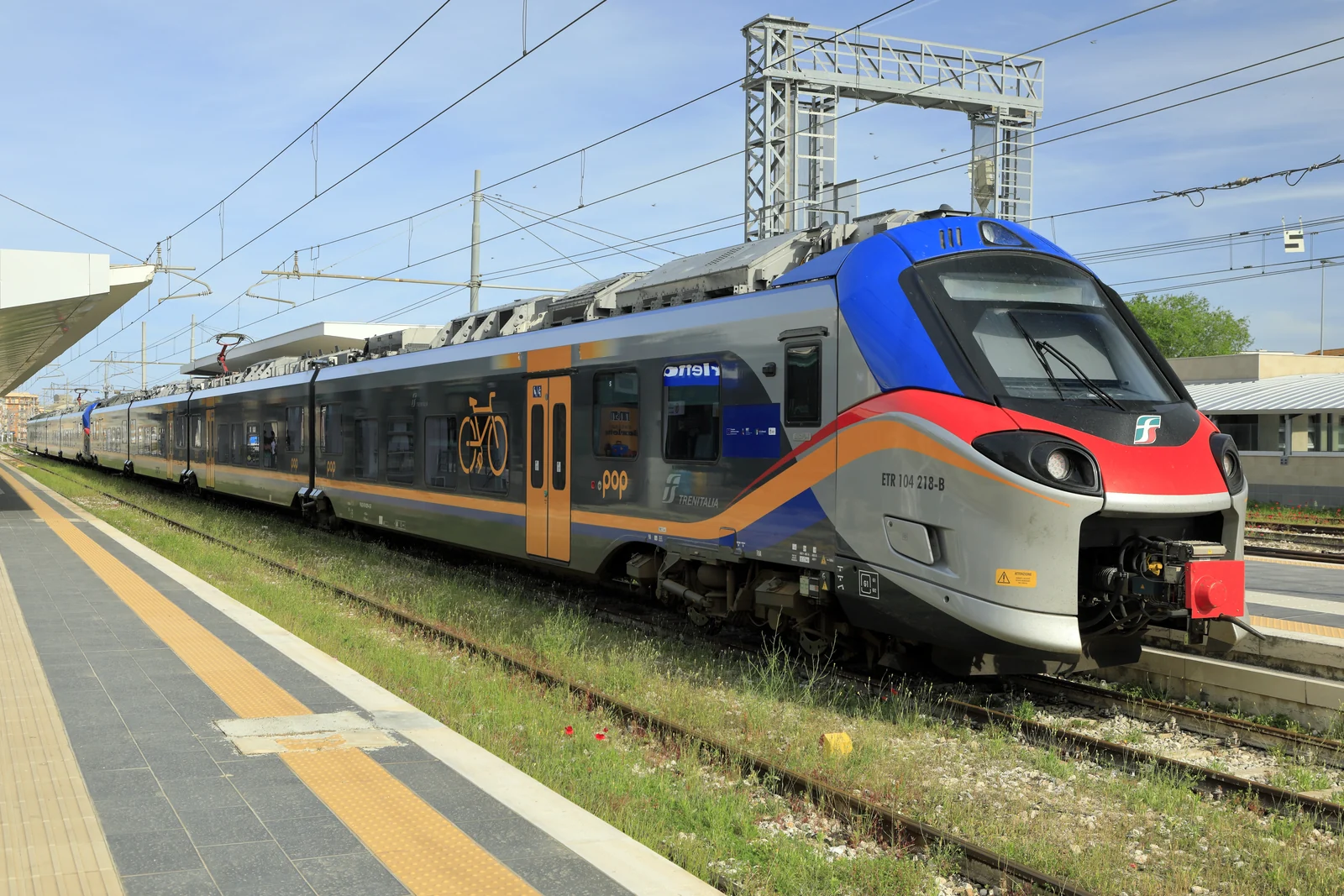
Photo: Falk2 / Wikimedia Commons — CC BY-SA 4.0 · Resized and converted to WebP.
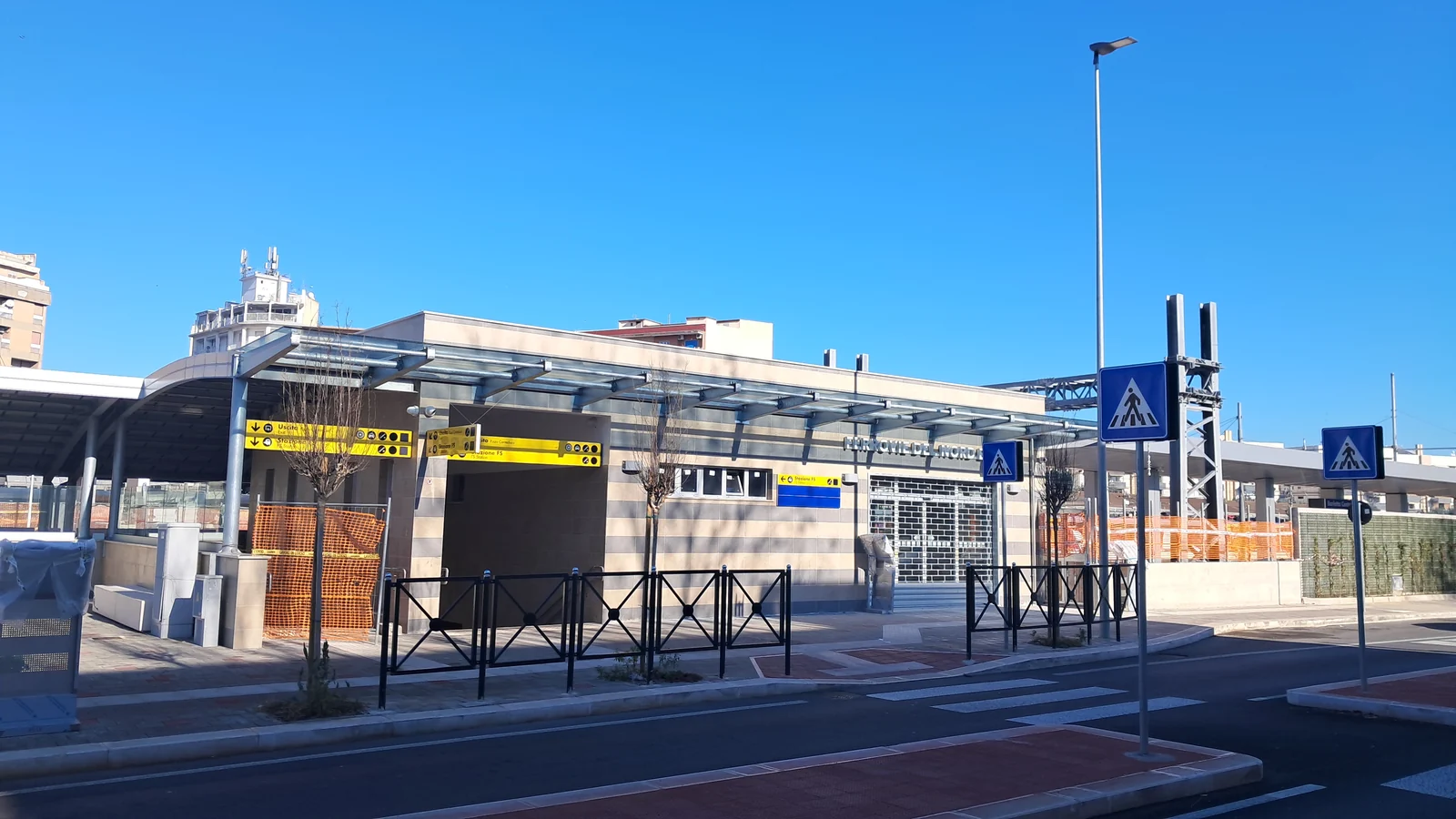
Photo: Adim169 / Wikimedia Commons — CC BY-SA 4.0 · Resized and converted to WebP.
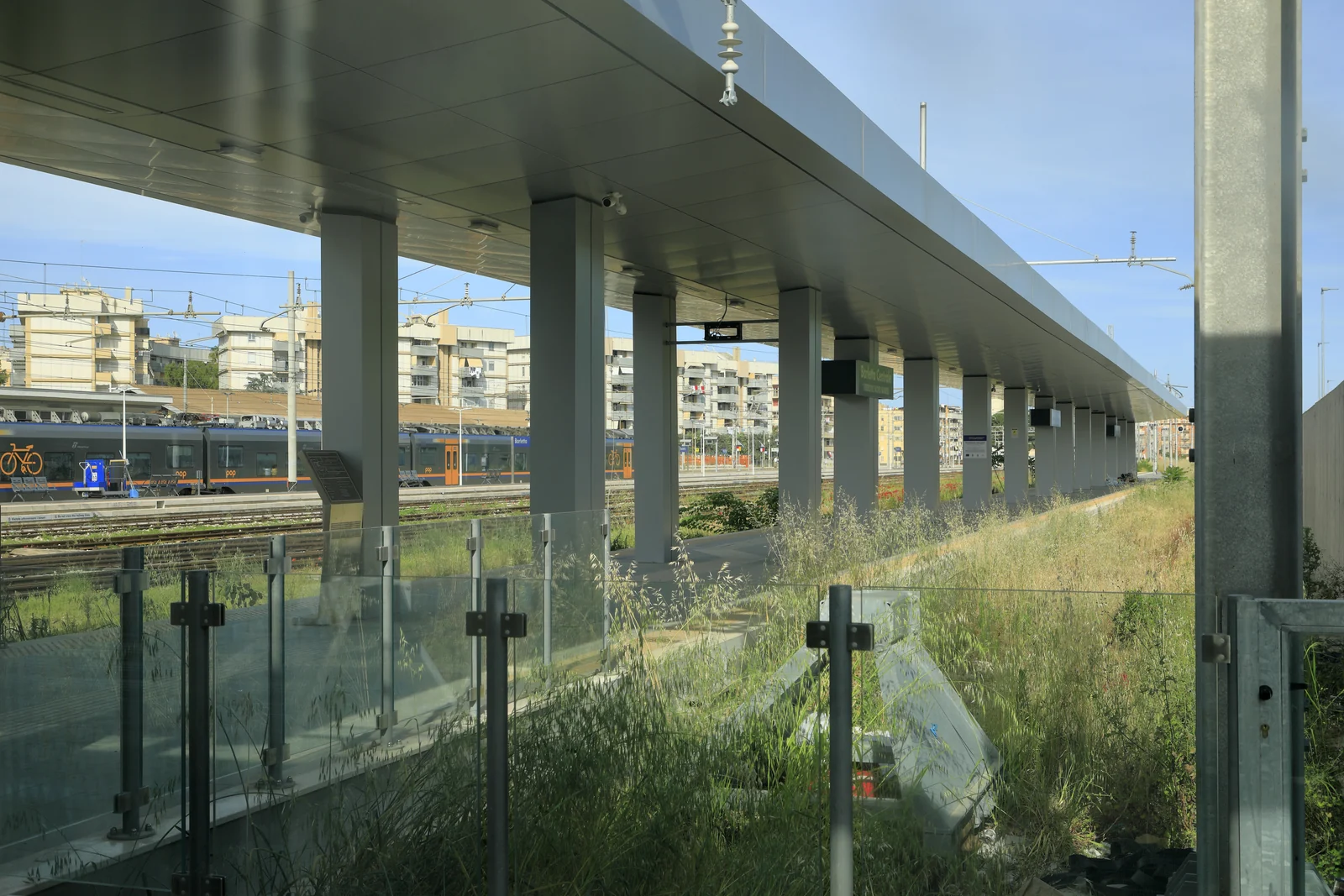
Photo: Falk2 / Wikimedia Commons — CC BY-SA 4.0 · Resized and converted to WebP.
Where to stay
For a visit on foot it is best to stay in or near the old centre, between the castle, the cathedral and Palazzo della Marra.
In the Ministry of Tourism’s national database of accommodation (BDSR), on 12 October 2026, Barletta had 295 establishments with a verified national identification code (CIN): 2 hotel-type establishments, 93 non-hotel establishments and 200 other establishments. Puglia’s regional census of accommodation lists 65 with a verified national CIN, by type: 39 guest rooms, 22 B&B, 2 holiday home and 2 hotel.
A day is enough for the castle and the picture gallery: the combined ticket for the two museums costs €10 (€5 reduced). With an extra day there is time for Canne della Battaglia and the places nearby.
Drivers should bear in mind the limited traffic zone (ZTL) of the old centre, in force since 19 February 2024: Monday to Friday from 21:00 to 2:00, Saturdays from 14:00 to 24:00, Sundays and public holidays all day. There are seven camera-controlled gates, on Corso Vittorio Emanuele II, Corso Garibaldi, Via Cavour and Piazza Marina; permits are issued by the Local Police headquarters at Via Zanardelli 3, and information is available on 0883 3001.
Sources: Comune di Barletta, Barletta Musei — Castello, Museo civico e Cantina della Sfida: orari e tariffe · Ministero del Turismo – Banca Dati Strutture Ricettive (dashboard pubblica) · Regione Puglia – ARET Pugliapromozione (DMS) · Comune di Barletta: ZTL al via, tutte le info (25 febbraio 2024) · Comune di Barletta: ZTL, dal 19 febbraio 2024 attive le telecamere per le sanzioni (6 febbraio 2024)
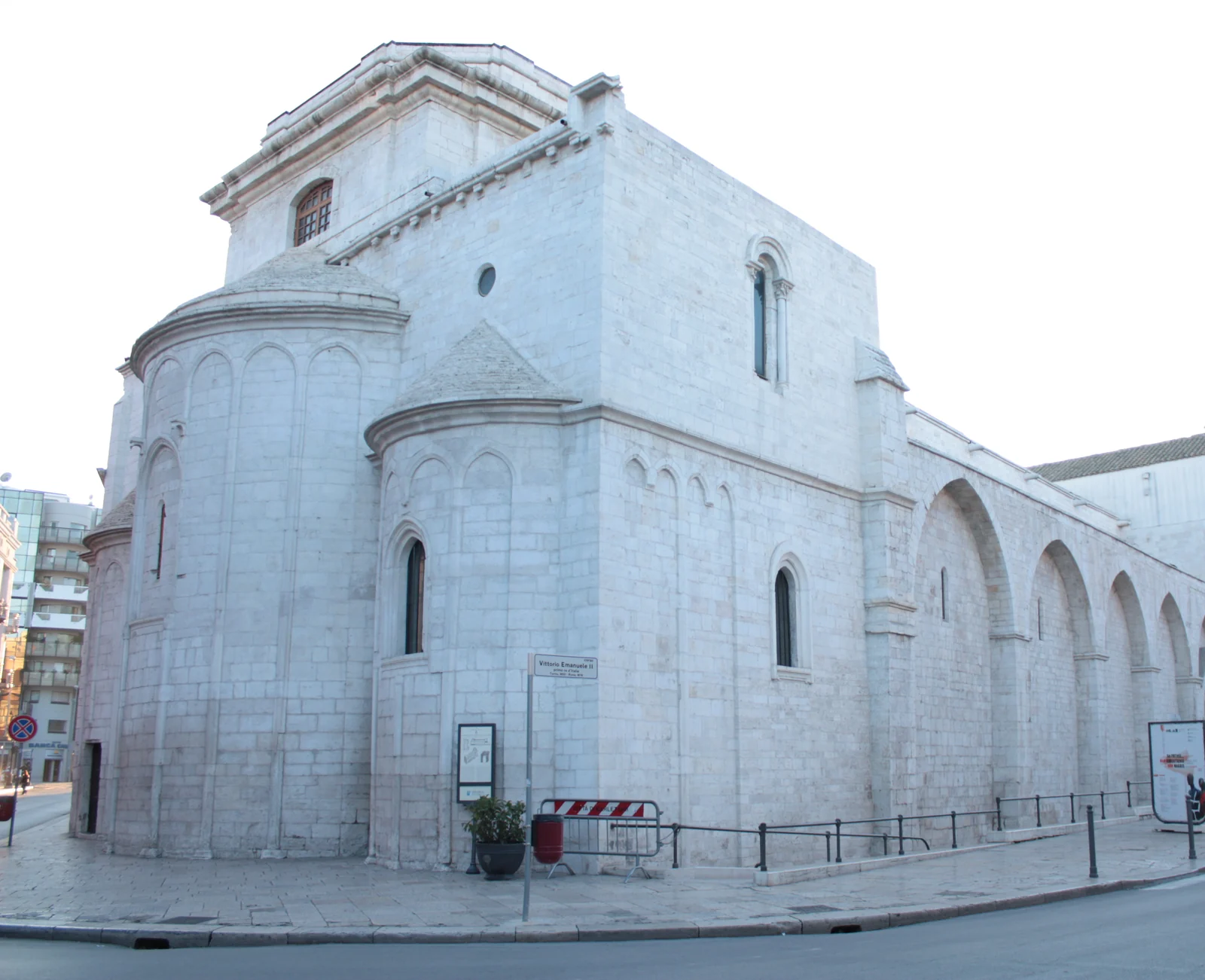
Photo: Achille83 / Wikimedia Commons — Public domain · Cropped, resized and converted to WebP.
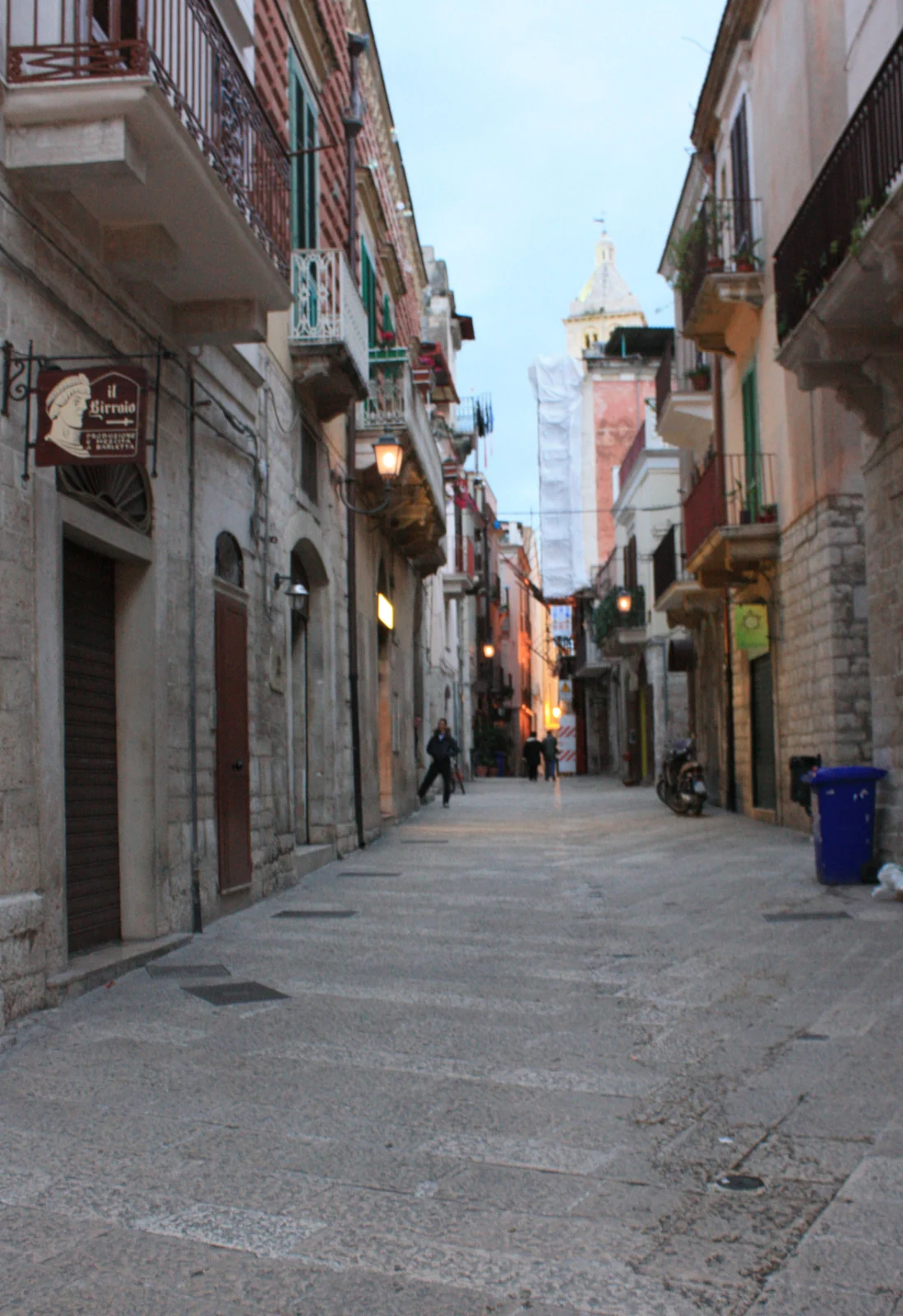
Photo: Achille83 / Wikimedia Commons — Public domain · Resized and converted to WebP.
Nearby
Within Barletta's territory, on the hills overlooking the Ofanto valley, lies Canne della Battaglia: the archaeological park keeps the remains of the medieval citadel, with its castle and basilica, and the Antiquarium displays grave goods; on the hill a column raised in 1938 commemorates the battle of 216 BC. The site is one of the gateways to the Ofanto regional nature park.
Among the places Apulica already covers, the nearest are Andria (about 15 km), Trani (about 16 km) and Bisceglie (about 24 km): straight-line distances between the centres of the municipal territories.
At Canne della Battaglia the medieval citadel is enclosed by walls about a kilometre long. Along the main street are milestone LXXV of the Via Traiana, laid out by the emperor Trajan in 109 AD, and at the end the Christian basilicas, with the crypt where a sarcophagus probably held the relics of Saint Ruggero. The Antiquarium, at the foot of the climb to the citadel, holds among other things a hoard of 760 coins. Since 1 October 2026 the park and the Antiquarium have been open Wednesday to Saturday, from 9:00 to 17:30, last entry at 16:30, and on some Sundays and public holidays.
Beyond the mouth of the Ofanto, in the municipality of Margherita di Savoia, lie the salt works: according to that municipality they stretch for about 20 kilometres along the coast and about 5 inland, over some 4,500 hectares, and are the largest in Italy; salt is produced mainly from June to September.
Sources: Ministero della Cultura, Luoghi della cultura — Parco archeologico di Canne della Battaglia e Antiquarium · ISTAT/Openpolis, confini comunali della regione Puglia (CC BY 4.0, ISTAT/Openpolis) · Comune di Barletta: La Cittadella di Canne · Comune di Barletta: L’Antiquarium di Canne · Comune di Margherita di Savoia: Salina
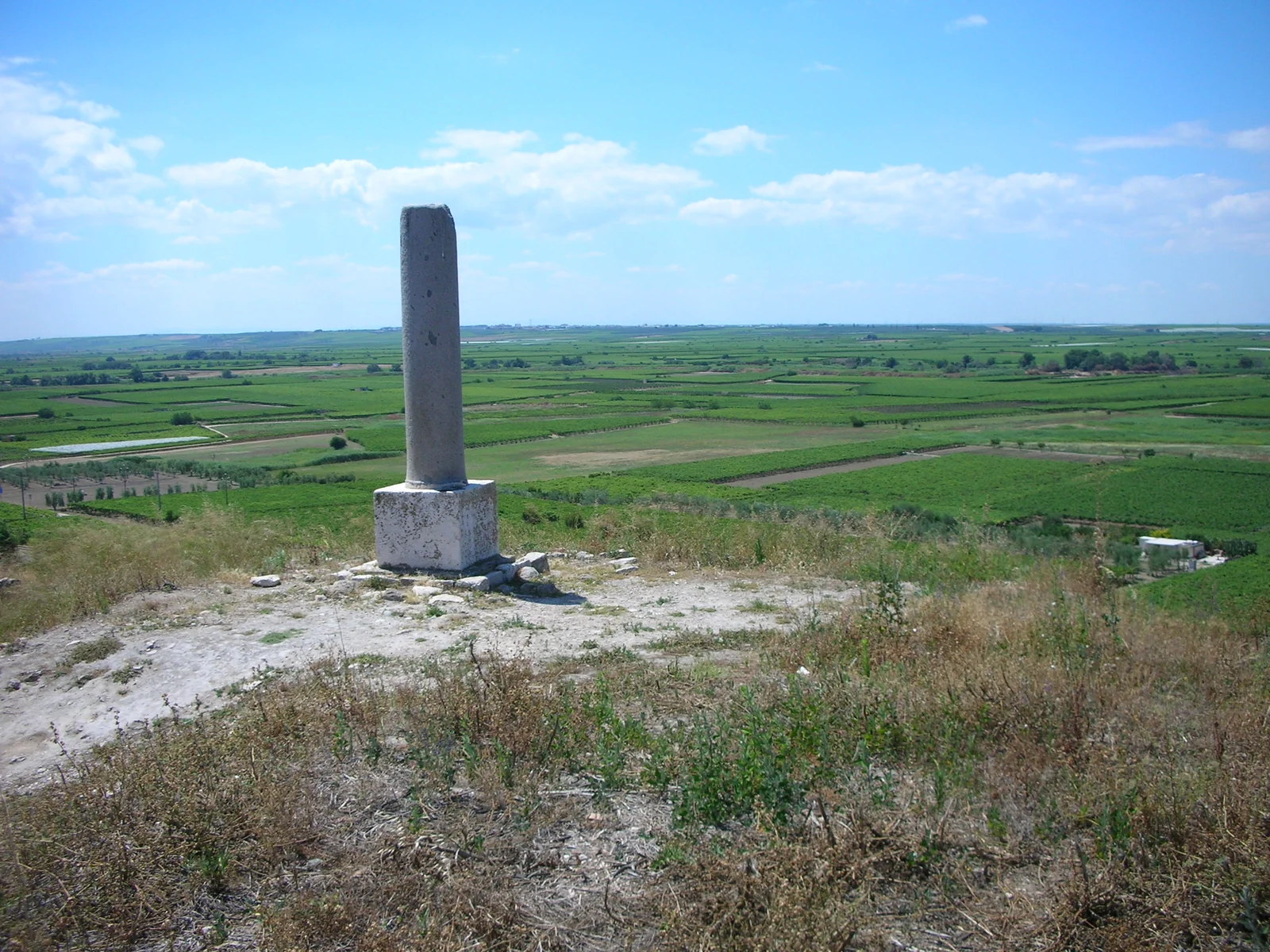
Photo: Jörg Schulz / Wikimedia Commons — CC BY-SA 3.0 · Resized and converted to WebP.
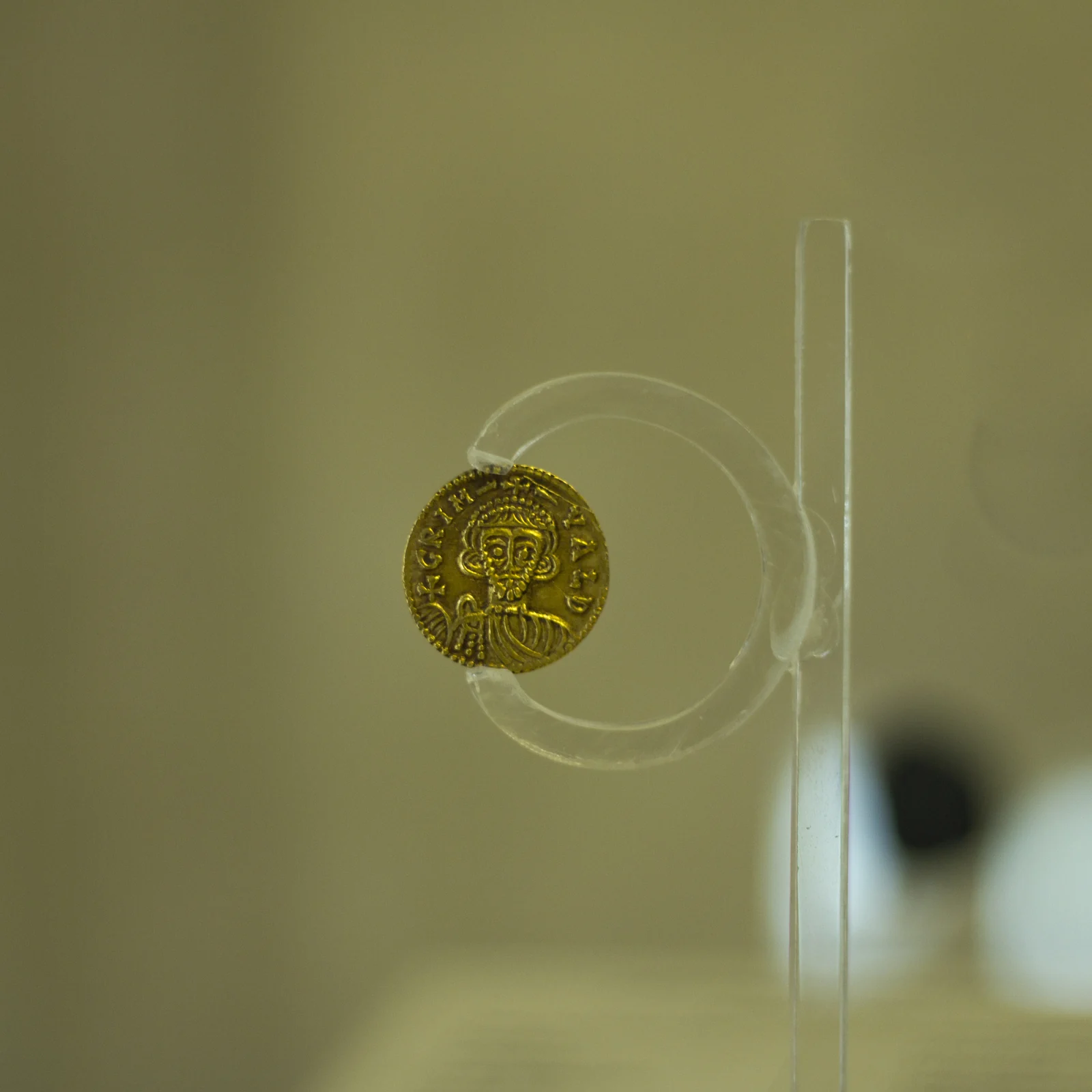
Photo: Roberto Ragno / Wikimedia Commons — CC BY-SA 3.0 · Resized and converted to WebP.
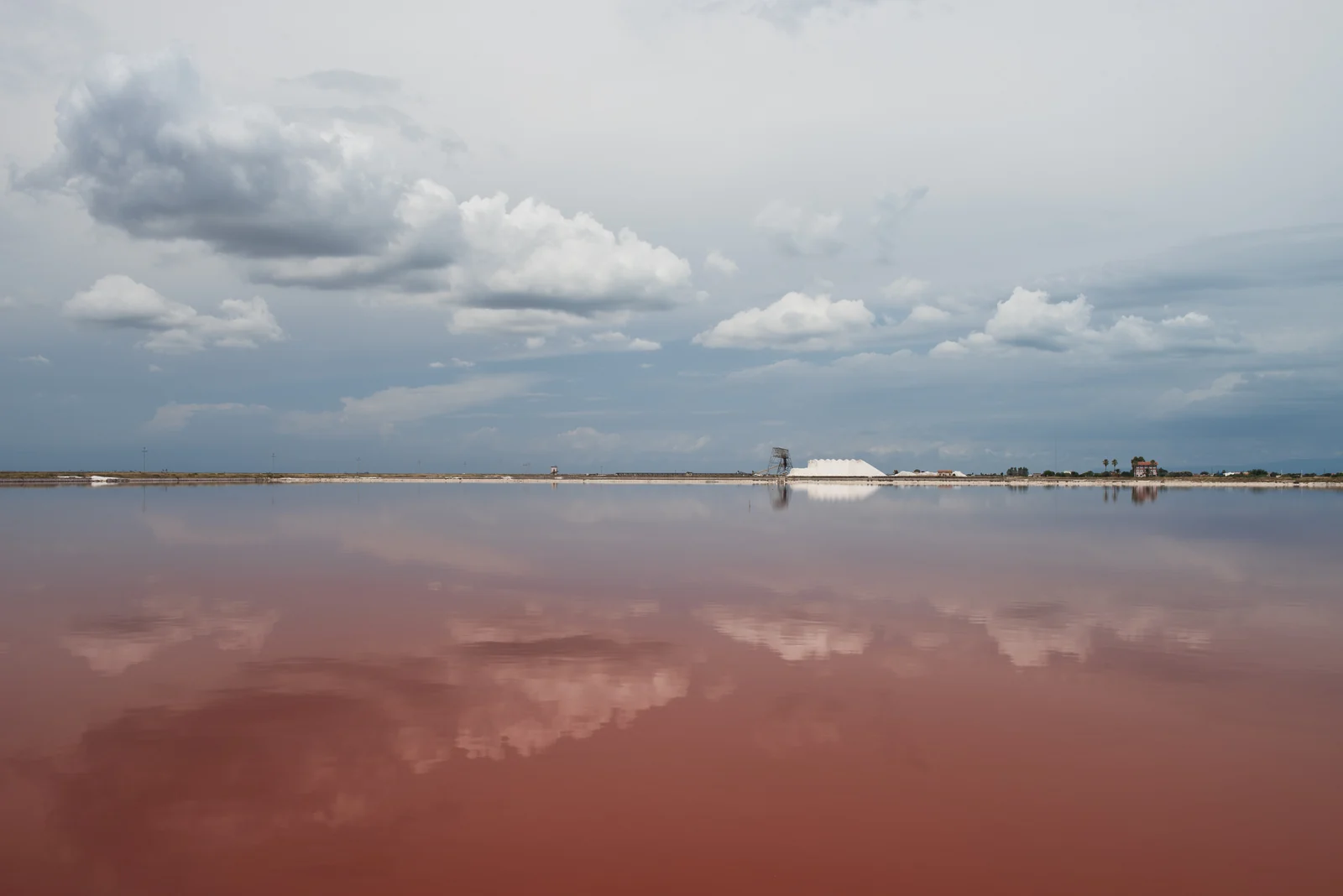
Photo: Flippolis / Wikimedia Commons — CC BY-SA 4.0 · Resized and converted to WebP.
Where to stay
In the municipality of Barletta the national database of the Ministry of Tourism lists 295 accommodation businesses with a verified CIN code: 2 hotels, 93 other licensed accommodation and 200 other types such as B&Bs and private rentals.
Licensed businesses from the official list of accommodation named as the source in this section. Where the list gives it, the property's official identification code appears next to its name: the national CIN code, or the code assigned by the Region or by the body that keeps the list. Private individuals are not listed. This list is the official census of licensed businesses, not a list of Apulica partners: to stay in Barletta you do not have to check one property after another yourself; write to Apulica and we look for the stay that suits your journey, checking availability and conditions before any confirmation.
HOTEL DEI CAVALIERI
Hotel · ★★★★
CIN IT110002A100020579
Al Bastione B&B
B&B
CIN IT110002B400117940
A due passi dal mare
Guest rooms
CIN IT110002B400114235
CASA DE NITTIS
Holiday home
CIN IT110002B400024759
LA TERRAZZA
Hotel · ★★★
CIN IT110002A100020580
Al Borgo Antico
B&B
CIN IT110002B400083760
AFFITTACAMERE D'AZEGLIO
Guest rooms
CIN IT110002B400079108
CASA VACANZA AL CASTELLO
Holiday home
CIN IT110002B400025292
B&B DIMORA VISTAMARE
B&B
CIN IT110002B400080162
Affittacamere d azeglio 2
Guest rooms
CIN IT110002B400079455
First the places that presented themselves to Apulica, the latest first; then one place of each type in turn, by official category and stars, then by name. No position is paid for.
All 65 entries in alphabetical order
Page 1 of 7
| Name | Type | CIN |
|---|---|---|
| A due passi dal mare | Guest rooms | IT110002B400114235 |
| AFFITTACAMERE D'AZEGLIO | Guest rooms | IT110002B400079108 |
| Affittacamere d azeglio 2 | Guest rooms | IT110002B400079455 |
| AFFITTACAMERE FIERAMOSCA | Guest rooms | IT110002B400107784 |
| AFFITTACAMERE GOLD | Guest rooms | IT110002B400100481 |
| AFFITTACAMERE GOLD | Guest rooms | IT110002B400111331 |
| AFFITTACAMERE GOLD | Guest rooms | IT110002B400112157 |
| AFFITTACAMERE GOLD 4 | Guest rooms | IT110002B400122118 |
| AFFITTACAMERE GOLD 5 | Guest rooms | IT110002B400124742 |
| Al Bastione 2 | Guest rooms | IT110002B400126252 |
Ask Apulica for a stay in Barletta We reply shortly, within a few hours at most, with a proposal for you to consider.
Sources: Regione Puglia – ARET Pugliapromozione (DMS), CC BY 4.0, 2026-10-12 · Ministero del Turismo – Banca Dati Strutture Ricettive (dashboard pubblica), 2026-10-12
YOUR JOURNEY
How to shape a journey here
We can organise a guided visit of Barletta, to combine with Canne della Battaglia or with Trani and Castel del Monte, with transfers from the station. For a trip, a guide or a transfer you can write to Apulica with the button below.
Plan your tripKeep exploring
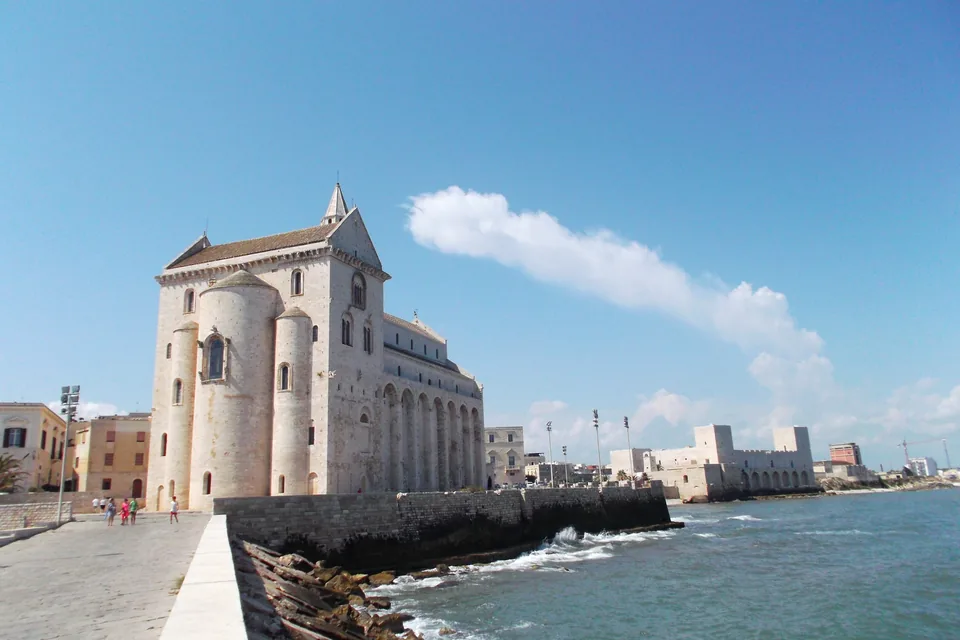
Trani
Cathedral, castle and Jewish heritage for a coastal ending with cultural depth. The Romanesque cathedral on the sea with Barisano’s bronze door, Frederick II’s castle of 1233, the two medieval synagogues of the Giudecca, the harbour and the monastery of Colonna on its peninsula.
Read the guide →Photo: Termauri / Wikimedia Commons — CC BY-SA 4.0 · Resized and converted to WebP.

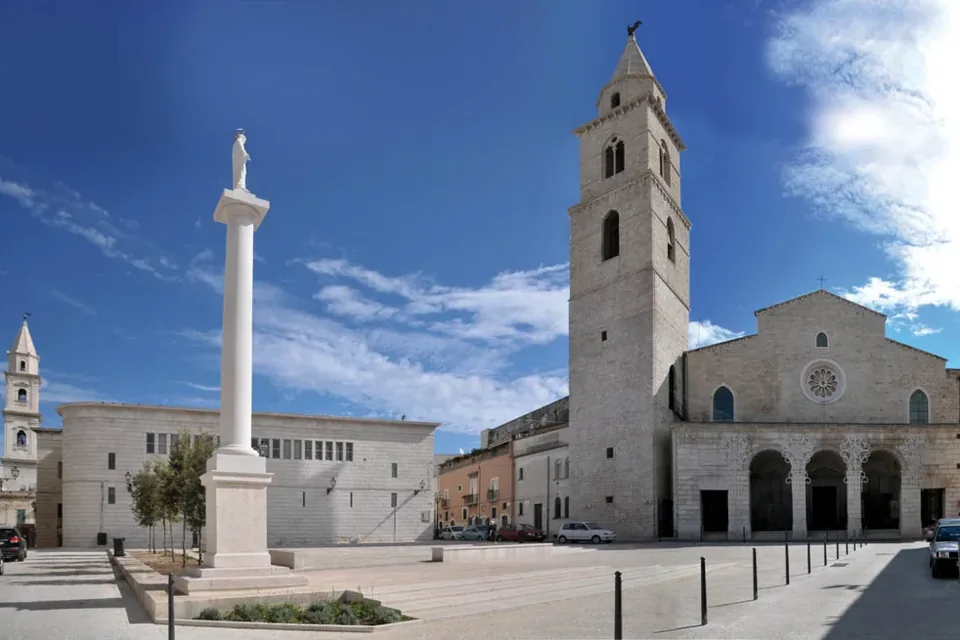
Andria
A town worth exploring beyond its famous castle. Imperial memory, the Cathedral of Santa Maria Assunta, burrata, which was born here, and confectionery.
Read the guide →Photo: Marcoleo11 / Wikimedia Commons — CC BY-SA 4.0 · Resized and converted to WebP.

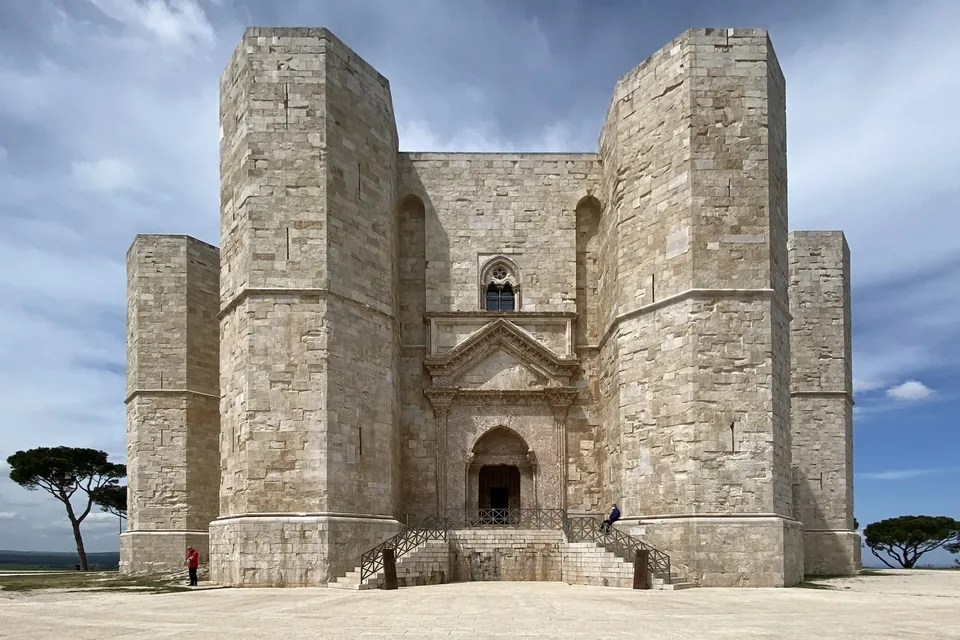
Castel del Monte
Frederick’s architecture within the Murgia landscape. The octagonal castle, on the UNESCO list since 1996, inside the Alta Murgia National Park.
Read the guide →Photo: Bernard Gagnon / Wikimedia Commons — CC0 · Resized and converted to WebP.

Bisceglie
From the La Chianca dolmen to the Romanesque town and harbour. Aragonese walls, a Swabian castle, Romanesque churches and the sospiro, a Slow Food Presidium.
Read the guide →Photo: Geppisimone at Italian Wikipedia / Wikimedia Commons — CC BY-SA 3.0 · Resized and converted to WebP.

“Come to Barletta as a guest, not as a tourist: that is how these places truly let you know them.”