

Why go
People come to Ruvo di Puglia above all for two things. The first is the Museo nazionale Jatta: more than two thousand archaeological finds, almost all discovered in the town’s own territory, collected in the nineteenth century by the Jatta family and still displayed in the rooms of the family palazzo with the cabinets, cupboards and arrangement of the time. Italy’s Ministry of Culture describes it as one of the very rare examples of a nineteenth-century private collection that has kept its original museum concept unaltered. In the last room stands the best-known piece: the krater by the Talos Painter, showing the death of the bronze giant who guarded Crete.
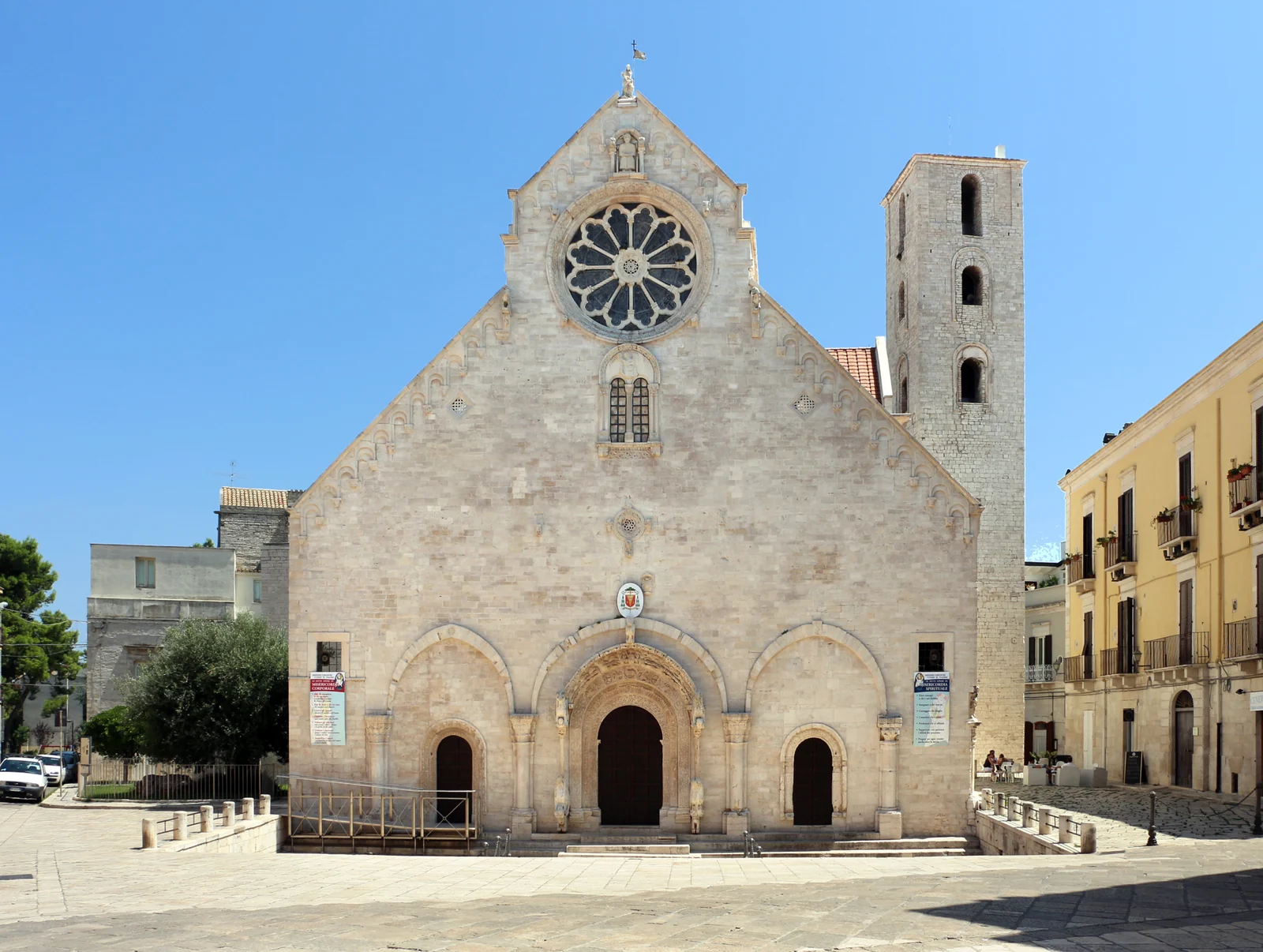
The second is the co-cathedral of Santa Maria Assunta, built between the twelfth and thirteenth centuries, the heart of the old town: the gabled façade with its twelve-spoked rose window, the three portals, the carved lions and griffins, and beside it the bell tower that began life as a defensive tower. Around it, within a few streets, are the Clock Tower of 1604, which has an inscription of ancient Rubi set into its wall, the round towers of the Aragonese walls, the sixteenth-century palazzi and, beneath the church of the Purgatorio, a Roman cistern that became the grotto of San Cleto.
Beyond the built-up area begins a countryside of olive groves and vineyards that climbs towards the plateau: almost ten thousand hectares of the municipal territory lie inside the Alta Murgia National Park. The calendar has its fixtures: the Holy Week rites, the Talos Festival, the cardoncello mushroom festival in autumn. From Bari you arrive by train, on the Bari-Barletta railway.
Sources: Ministero della cultura, Direzione regionale Musei nazionali Puglia — Ruvo di Puglia, Museo Jatta · Ministero della cultura — Luoghi della cultura: Museo nazionale Jatta (aggiornato il 26 giugno 2026) · Comune di Ruvo di Puglia — Concattedrale di Ruvo di Puglia (testo dal Catalogo Generale dei Beni Culturali) · Comune di Ruvo di Puglia, Assessorato alla Cultura e al Turismo — Benvenuti a Ruvo di Puglia · Ente Parco nazionale dell’Alta Murgia — Territorio: superficie nel Parco per comune · Ferrotramviaria S.p.A. — Il servizio ferroviario
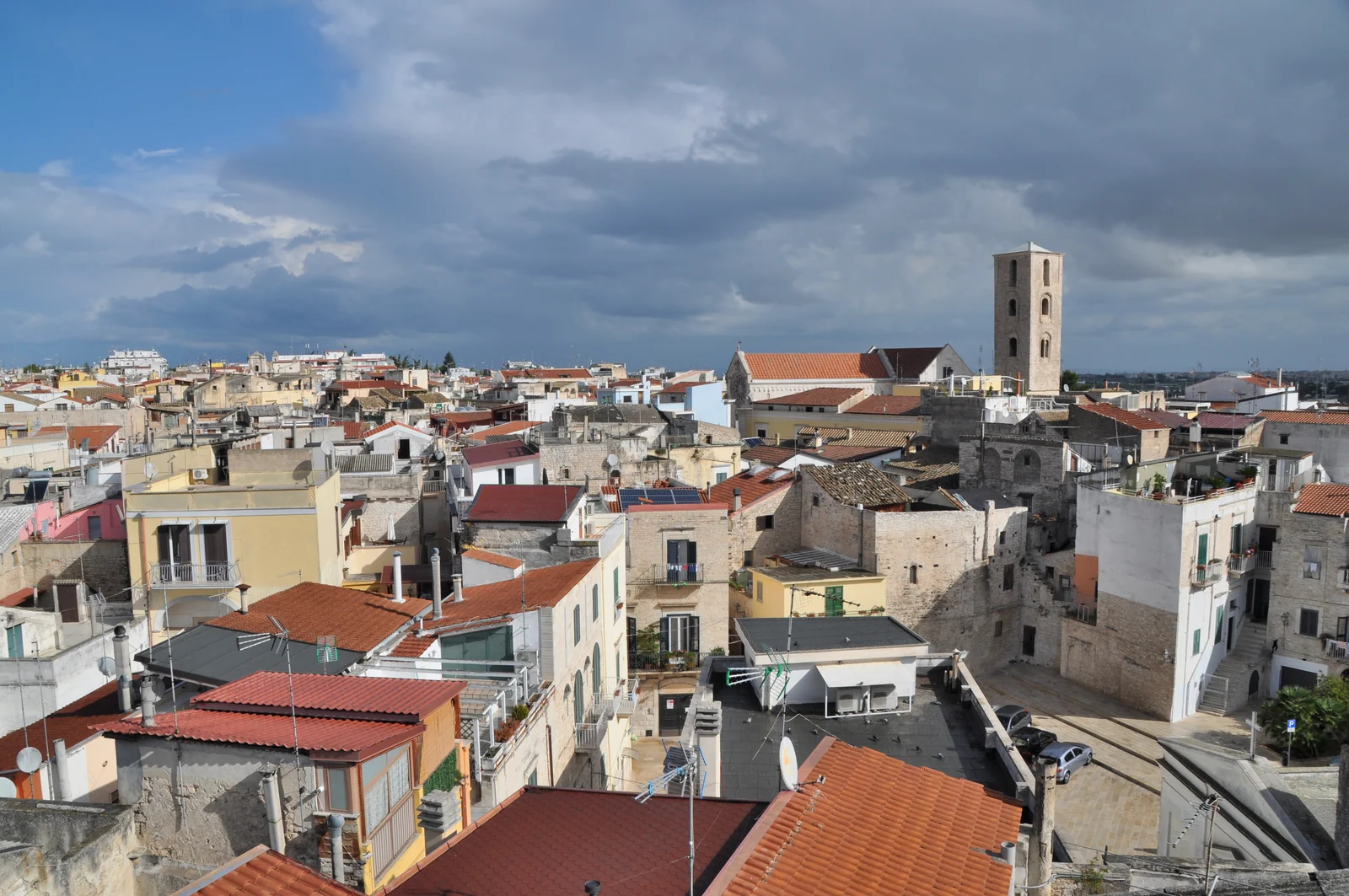
Photo: TONIODELBARRIO6464 / Wikimedia Commons — CC BY-SA 4.0 · Resized and converted to WebP.
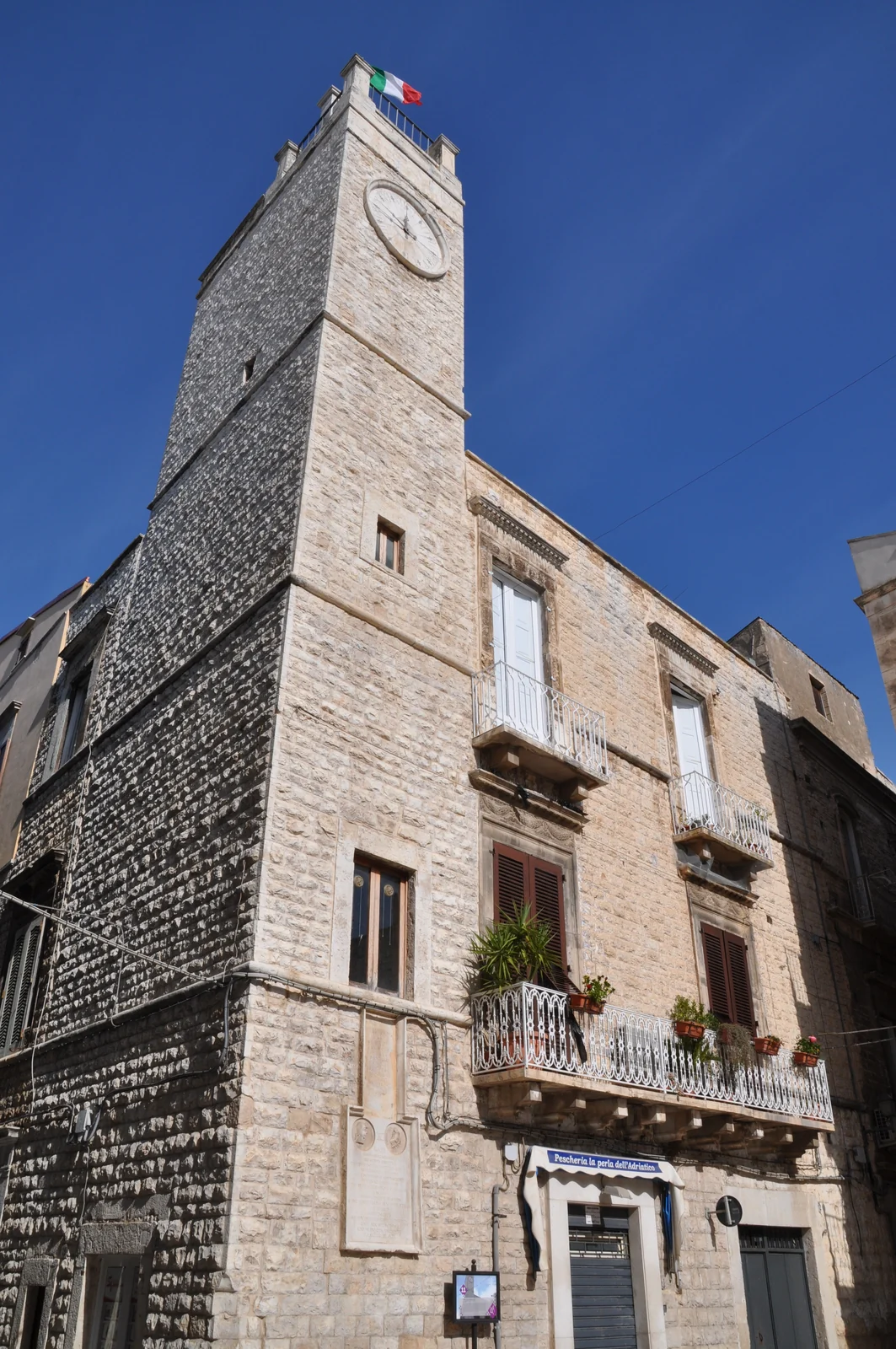
Photo: TONIODELBARRIO6464 / Wikimedia Commons — CC BY-SA 4.0 · Resized and converted to WebP.
The municipality at a glance
Ruvo di Puglia is a municipality in the Metropolitan City of Bari, in Puglia. Its ISTAT code is 072038. On 1 January 2025 it had 24,254 residents. The municipal territory covers 223.83 km² and ranges from 154 to 670 metres above sea level; the town hall stands at about 260 metres.
The town council describes the countryside of Ruvo as one of the largest areas in the province of Bari; according to the park authority, about 9,950 hectares of the municipal territory lie within the Alta Murgia National Park.
Sources: ISTAT, Codici statistici delle unità amministrative territoriali: elenco dei comuni al 21 febbraio 2026 · ISTAT, Popolazione residente per età, sesso e stato civile al 1° gennaio 2025 (POSAS) · ISTAT, Principali statistiche geografiche sui comuni: superficie e altimetria al 31 dicembre 2021 · Comune di Ruvo di Puglia, Assessorato alla Cultura e al Turismo — Benvenuti a Ruvo di Puglia · Ente Parco nazionale dell’Alta Murgia — Territorio: superficie nel Parco per comune
History
According to the town council, the history of Ruvo begins in the Neolithic and the Iron Age. Traces of that presence survive in the countryside: the Vagno caves, where flints possibly of Mousterian date and Upper Neolithic material have been found; the tumulus tombs of the Coppe area, with a tholos tomb of the mid-eighth century BC; the specchie, heaps of stones linked to burials, some of which have yielded metal objects and pottery with geometric decoration now in the Museo Jatta. The vases with geometric decoration of the seventh and sixth centuries BC in the museum’s first room belong to the Peucetian period, and a Peucetian tomb was found beneath the cathedral.
The town flourished between the fourth and third centuries BC, when it traded intensively with Greece and Etruria. The necropolises of its territory produced the vases that made it famous, dated between the sixth and third centuries BC: Daunian and Peucetian vases, red-figure vases made in Apulia and Lucania, vases imported from Attica. The painted slabs of the Tomb of the Dancers, now in the National Archaeological Museum of Naples, were also found at Ruvo, in the early nineteenth century.
In Roman times Rubi was a municipium and stood on the Via Traiana: a fourth-century itinerary records it as a town along that road. A stretch of the paving can still be seen under the floor of a business in the centre, protected by glass. Beneath the church of the Purgatorio, rooms of a bath complex of the first half of the second century AD have been identified, for which the grotto of San Cleto served as the cistern; beneath the cathedral, remains of mosaics from a Roman house. Set into the Clock Tower is an inscription found in 1793 that bears the name of the emperor Gordian III: it must have belonged to a monument in his honour, and suggests that the forum lay nearby.
The Christian community probably became a bishop’s see between the sixth and seventh centuries; no bishops’ names are known before the eleventh century, and a bishop of Ruvo attended the dedication of the basilica of Montecassino in 1071. The town passed under Byzantine, Saracen and Norman rule and became a fief under the Swabians. The castle, of which little remains today, is documented from 1179; the new cathedral, dedicated to the Assumption, was completed around the middle of the thirteenth century. The medieval walls, with their gates, were rebuilt under the Aragonese: their round towers survive.
After passing to the Aragonese and the French, Ruvo was a fief of the Carafa family until 1806. The Dominican convent was founded in 1560 and the Capuchin one in 1607. Epidemics reduced the population from 10,000 inhabitants at the end of the sixteenth century to 4,000 in 1725. In 1818 the diocese was united with that of Bitonto; today Ruvo belongs to the diocese of Molfetta-Ruvo-Giovinazzo-Terlizzi and its cathedral is a co-cathedral.
In the first half of the nineteenth century the treasures emerging from the ground drew scholars and art dealers. To save them from being scattered abroad, many families of Ruvo began to collect them: among them the brothers Giovanni and Giulio Jatta, whose collection was housed in the family palazzo built in the middle of the century. The Italian State bought it through two deeds dated 19 December 1990 and 10 April 1991.
Sources: Comune di Ruvo di Puglia, Assessorato alla Cultura e al Turismo — Benvenuti a Ruvo di Puglia · Ministero della cultura — Luoghi della cultura: Museo nazionale Jatta (aggiornato il 26 giugno 2026) · Ministero della cultura, Direzione regionale Musei nazionali Puglia — Ruvo di Puglia, Museo Jatta · Diocesi di Molfetta-Ruvo-Giovinazzo-Terlizzi — Storia della Chiesa diocesana: l’unione con la diocesi di Ruvo · Comune di Ruvo di Puglia — Concattedrale di Ruvo di Puglia (testo dal Catalogo Generale dei Beni Culturali)
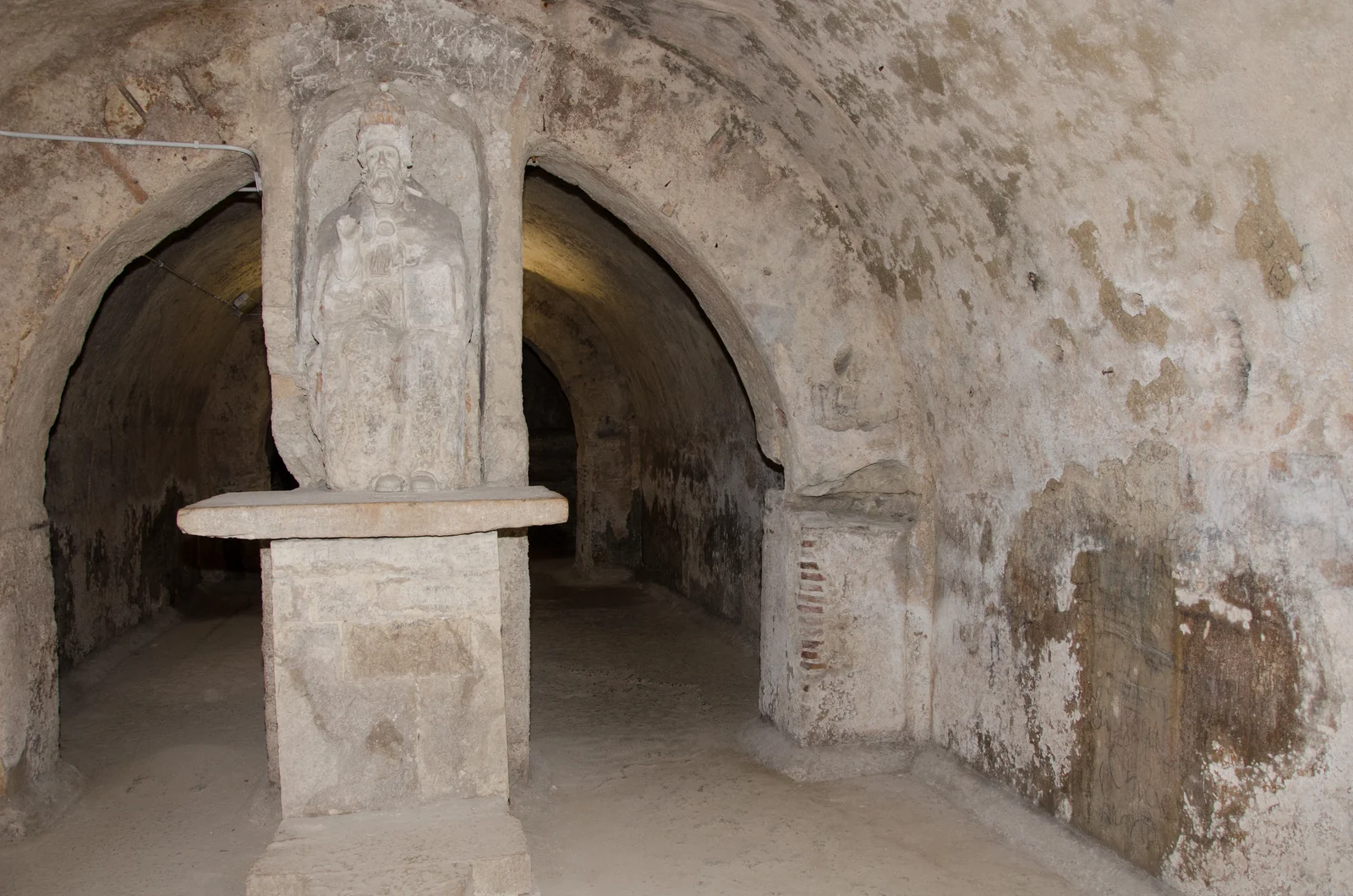
Photo: TONIODELBARRIO6464 / Wikimedia Commons — CC BY-SA 4.0 · Resized and converted to WebP.
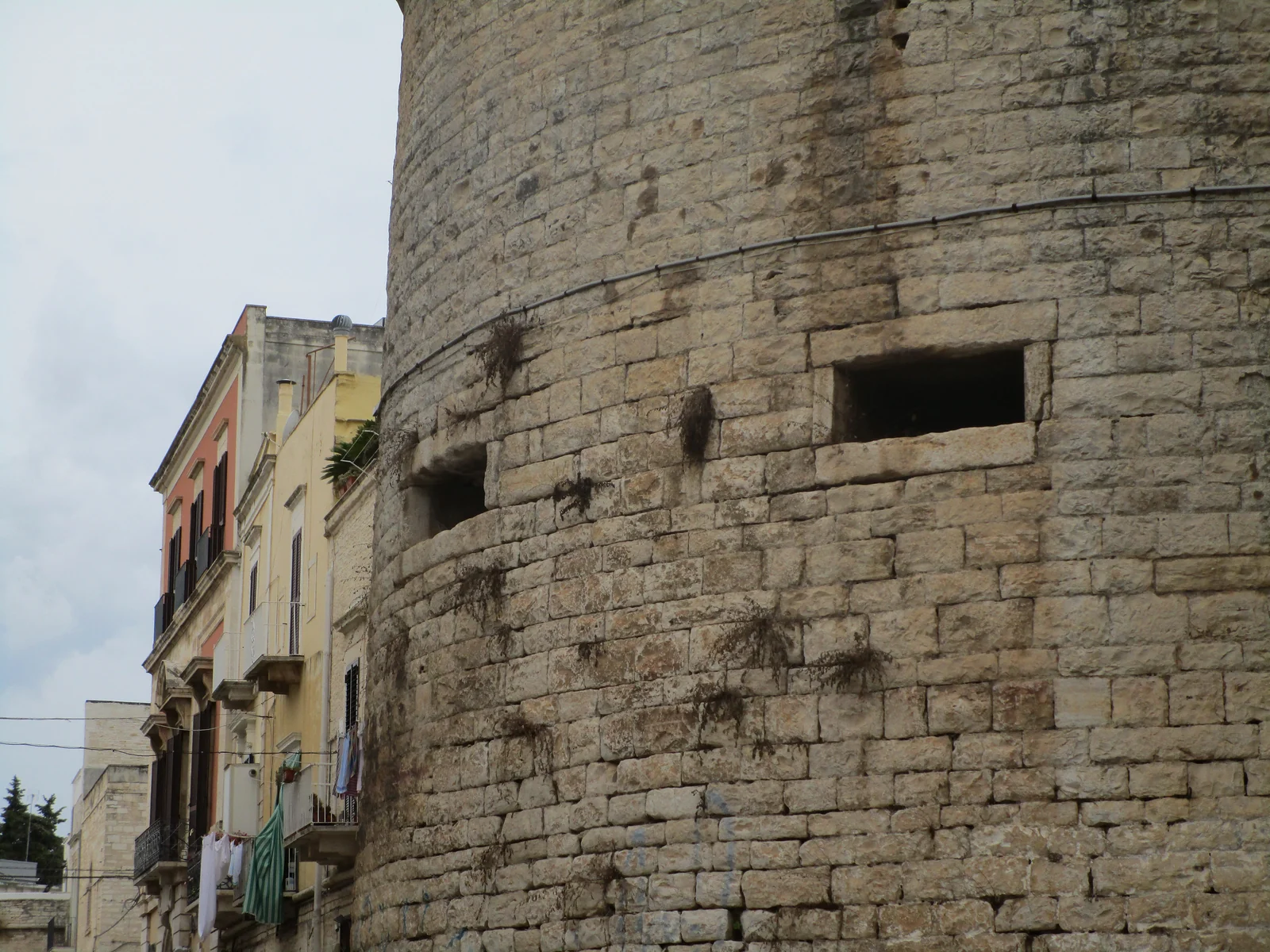
Photo: Stefano0095 / Wikimedia Commons — CC BY-SA 4.0 · Resized and converted to WebP.
What to see
The Museo nazionale Jatta is on the ground floor of Palazzo Jatta, in Piazza Bovio, and is run by the Ministry of Culture’s regional directorate for the national museums of Puglia. The collection was assembled by Giovanni Jatta (1767-1844), a jurist in Naples, and his brother Giulio (1775-1836); the palazzo was built from 1842 at the wish of Giulia Viesti, Giulio’s widow, and the display was arranged by Giulio’s son Giovanni Jatta junior (1832-1895), who wrote the catalogue. The principle is that of the nineteenth century: not chronology, but a progression towards the objects considered most beautiful. There are four rooms. The first holds the vases with geometric decoration of the seventh and sixth centuries BC; the second about 700 red-figure vases, Greek or local, including a large mask krater of the fourth century BC by the Baltimore Painter; the third more than four hundred pieces; the fourth the most precious, with the Attic red-figure krater by the Talos Painter, of the late fifth century BC, showing the Argonauts and the death of the giant Talos. In July 2022 the exhibition “Collezionauta. Capolavori attraverso il tempo” opened in the “Grottone” on the floor below, once a store for grain and almonds. Tickets and bookings are on the museum’s website, listed among the sources; according to the town council the visit is possible for people with disabilities who have sufficient independent mobility and are accompanied.
The co-cathedral of Santa Maria Assunta is in Largo Cattedrale. The gabled façade is decorated with small hanging arches; high up, in a niche, sits a stone figure, “il Sedente”, which according to the town council must have portrayed the person who paid for the church; below it is the sixteenth-century rose window with twelve spokes, then a two-light window with the archangel Michael in relief. The three portals are framed by pointed arches. The central one is carved with Christ, the Virgin and Saint John the Baptist, the twelve apostles, the Lamb of God and the Evangelists; it is surmounted by a griffin and flanked by two columns bearing griffins, resting on lions that in turn rest on telamons. The bell tower was originally a square defensive tower of the eleventh century, to which two storeys were added in the eighteenth. The interior has a Latin-cross plan, with a nave, two aisles and three apses. An underground route shows what was there before: a Peucetian tomb, mosaics from a Roman house, medieval tombs and the remains of a crypt that was never finished.
Between the cathedral and the church of the Purgatorio lies the Fondo Marasco quarter. Beneath the Purgatorio is the grotto of San Cleto, with two aisles and a barrel vault, where the Roman facing of the cistern can still be made out on one wall. In Largo Annunziata the church of the Annunziata, dating from 1377, now houses the diocesan archive. In Piazza Menotti Garibaldi rises the Clock Tower, built in 1604. The nearest of the Aragonese towers are by Piazza Bovio, a short walk from the Baroque church of San Domenico and the Museo Jatta. Of the castle, at the north-western end of the old core, towards Piazza Matteotti, only a small part can be seen.
The palazzi: Palazzo Avitaja, of the sixteenth century, in Piazza Matteotti, is the town hall; Palazzo Caputi, built in 1592 in Via Alcide De Gasperi, with its rusticated façade and its atrium with a carved balustrade, has housed the Museo del Libro - Casa della Cultura and the “Pasquale Testini” municipal library since 2016; Palazzo Spada, of the second half of the sixteenth century, in Via Vittorio Veneto, is private, but you can enter the atrium, where a balustrade tells seven mythological scenes in relief.
The municipal gallery of contemporary art “Domenico Cantatore” is at Via Valle Noè 5, around the cloister of the former Dominican convent of 1560; it has been a gallery since 2015. It holds works by Domenico Cantatore, Michele Chieco and Francesco Di Terlizzi, and those of the winners of the “Premio Pittura Città di Ruvo di Puglia” of 1956, 1959, 1962 and 1967. The town council has announced that the second floor of the building will house the town’s archaeological museum.
Sources: Ministero della cultura — Luoghi della cultura: Museo nazionale Jatta (aggiornato il 26 giugno 2026) · Ministero della cultura, Direzione regionale Musei nazionali Puglia — Ruvo di Puglia, Museo Jatta · Comune di Ruvo di Puglia — Museo archeologico nazionale Jatta · Comune di Ruvo di Puglia — Concattedrale di Ruvo di Puglia (testo dal Catalogo Generale dei Beni Culturali) · Comune di Ruvo di Puglia, Assessorato alla Cultura e al Turismo — Benvenuti a Ruvo di Puglia · Comune di Ruvo di Puglia — Museo del Libro, Casa della Cultura «Palazzo Caputi» · Comune di Ruvo di Puglia — Giornate Europee del Patrimonio 2026 (24 settembre 2026)
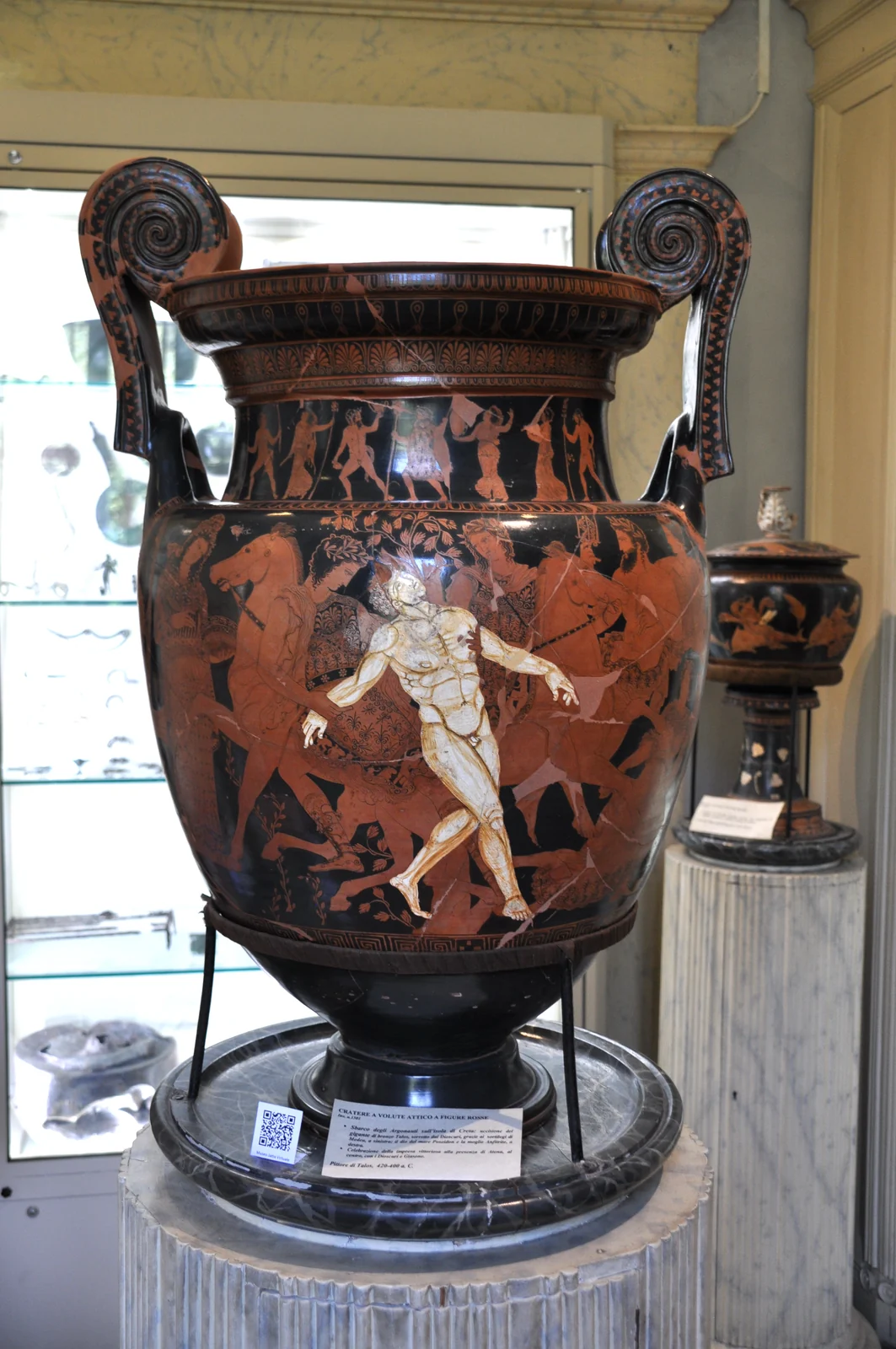
Photo: TONIODELBARRIO6464 / Wikimedia Commons — CC BY-SA 4.0 · Resized and converted to WebP.
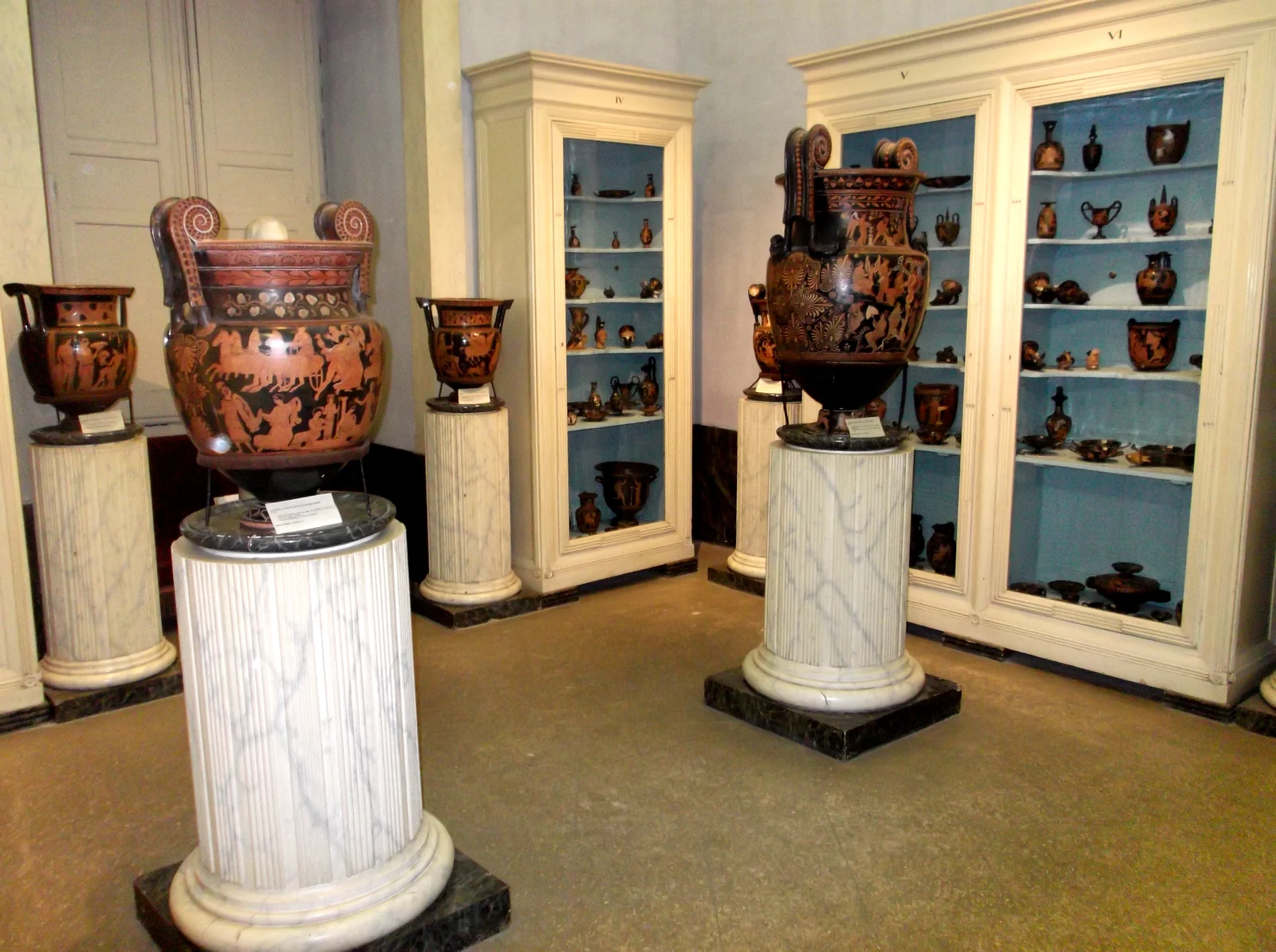
Photo: Forzaruvo94 / Wikimedia Commons — CC BY-SA 3.0 · Resized and converted to WebP.
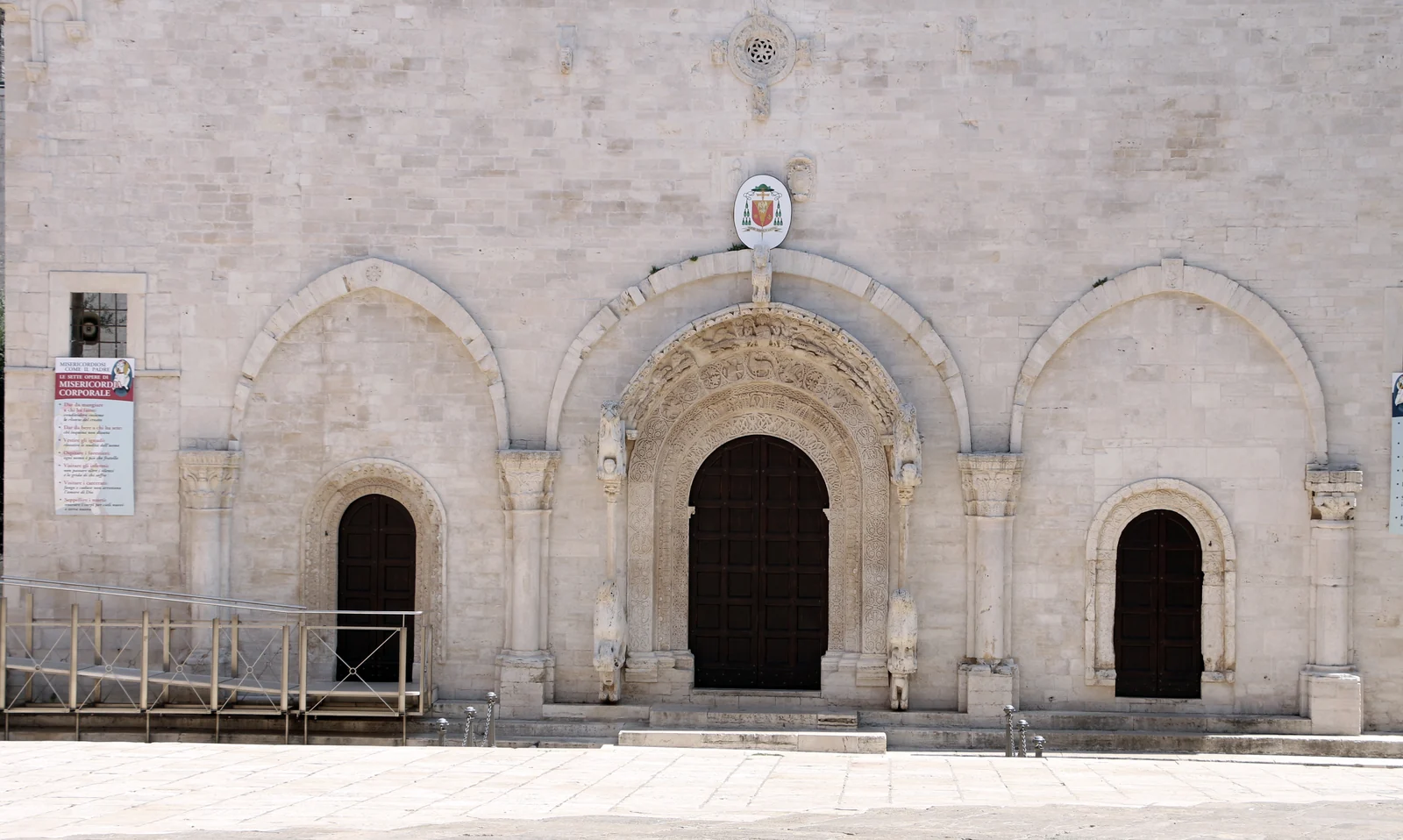
Photo: Sailko / Wikimedia Commons — CC BY 3.0 · Resized and converted to WebP.
The countryside and the Alta Murgia
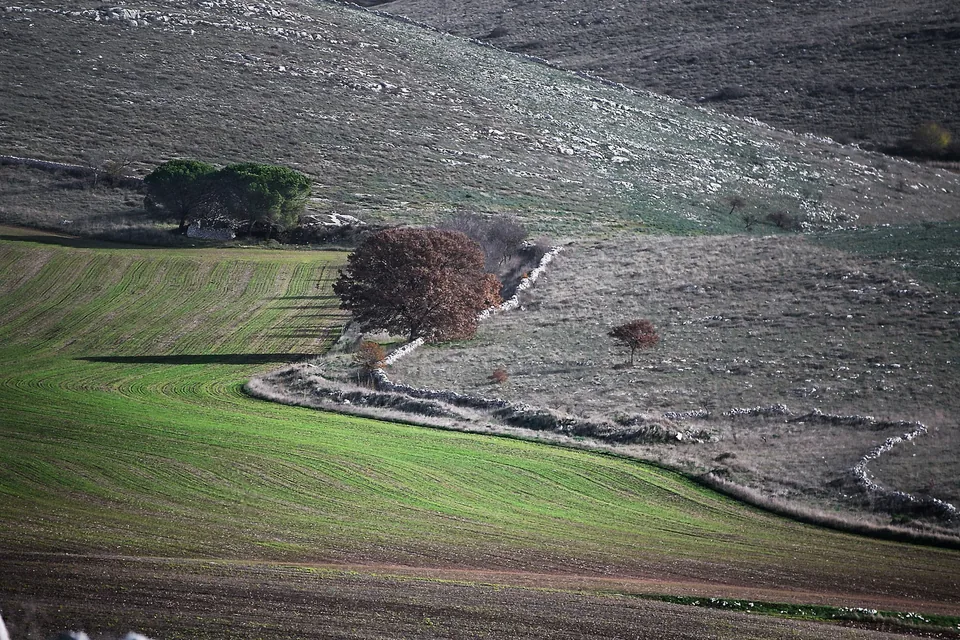
The countryside of Ruvo is, the town council writes, one of the largest in the province of Bari: vineyards, olive groves, arable land and woodland. As it climbs inland it enters the Alta Murgia National Park, established in 2004, one of the largest in Italy with its 68,077 hectares shared among thirteen municipalities. Ruvo contributes about 9,950 hectares: in the park authority’s figures only Altamura and Andria have more.
The landscape is that of the karst plateau: rocky ridges, sinkholes, shallow dry valleys known as lame, swallow holes, natural pastures, oak and conifer woods, and the marks of human work, namely stone farmsteads, enclosures and stalls for flocks, cisterns, ice houses, specchie and miles of dry-stone walls. In the territory of Ruvo the town council points to the Ferratella chasm and the Vagno caves, the most important karst system in the area, along the Lama delle Grotte; the jazzi, the traditional sheepfolds, and the farmsteads; the drove roads of the transhumance, some still passable; and the line of the Via Traiana, which in the countryside is a straight dirt track between dry-stone walls and olive trees.
The park places its first visitor centre in the countryside of Ruvo, at Torre dei Guardiani - Jazzo Rosso, in the broadleaf woods of Bosco Scoparello, in a building owned by the town council; the council describes the Torre dei Guardiani as a municipal property in the heart of the park, run since 2025 for two years by a non-profit body. In town, at Via Valle Noè 5, the park has the Officina del Piano “Don Francesco Cassol”, with a display of botanical specimens and one of geological specimens. One of the routes of the “Jazzo Rosso - San Magno - Castel del Monte” cycleway, about 67 kilometres in all, starts from Ruvo station: the stretch from the station to the Tratturello Regio runs on low-traffic asphalt roads and can be ridden on any bicycle, while the others are designed for mountain bikes. The Alta Murgia is also a UNESCO geopark, a recognition that came in September 2024.
Sources: Comune di Ruvo di Puglia, Assessorato alla Cultura e al Turismo — Benvenuti a Ruvo di Puglia · Ente Parco nazionale dell’Alta Murgia — L’Alta Murgia · Ente Parco nazionale dell’Alta Murgia — Territorio: superficie nel Parco per comune · Ente Parco nazionale dell’Alta Murgia — Ciclovie: Jazzo Rosso, San Magno, Castel del Monte; centri visita · Comune di Ruvo di Puglia — Ruvo di Puglia alla presentazione del Geoparco UNESCO dell’Alta Murgia (10 febbraio 2025)
Flavours
The product Ruvo celebrates is the cardoncello mushroom, which the town council describes as dark, with firm, fleshy flesh, and which the Murgia yields in abundance: between late October and mid-November it is the star of the festival. Olive oil is the other product of the countryside: the whole municipal territory falls within the area of the “Terra di Bari” PDO with the geographical mention “Bitonto”, which the product specification reserves for extra virgin oil obtained for at least 80 per cent from the Cima di Bitonto, or Ogliarola Barese, and Coratina varieties.
Home cooking follows the calendar of feasts. In Lent people make the calzone, a meatless dish: a pastry case filled with onions, salt cod, anchovies, olives and spaghetti. At Easter there is the scarcella, “scarciedd” in dialect: a cake covered with an icing called “giuleppe”, shaped like a doll, a bell, a basket, a dove or other figures, once decorated with a painted hard-boiled egg and sugared almonds, and exchanged among relatives and friends. At Christmas comes the “sesemidde”, a sweet loaf made with flour, vincotto, almonds, eggs, citrus, cloves, cinnamon, cocoa and chocolate. For Saint Blaise small taralli of various shapes, the “frecedduzze”, are blessed; for Saint Lucy, fried chickpeas.
Sources: Comune di Ruvo di Puglia, Assessorato alla Cultura e al Turismo — Benvenuti a Ruvo di Puglia · Ministero dell’agricoltura (MASAF) — Disciplinare di produzione dell’olio extravergine di oliva DOP «Terra di Bari»
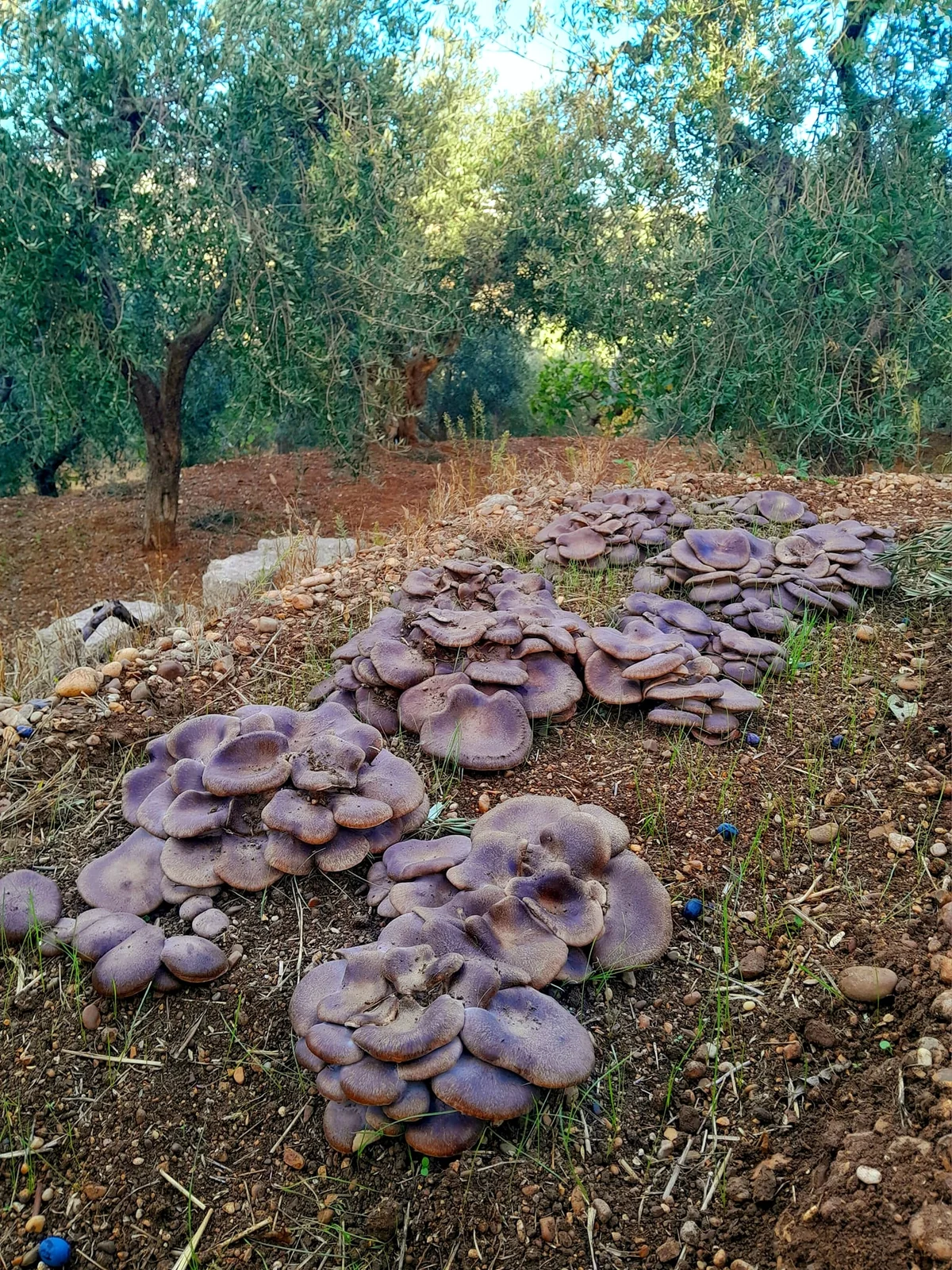
Photo: Giacomo.loiudice / Wikimedia Commons — CC BY-SA 4.0 · Resized and converted to WebP.
What to do
The visit is done on foot. A short walk takes in the Museo Jatta, the towers by Piazza Bovio, the gallery in the former Dominican convent, the Clock Tower, the cathedral with its underground route, the grotto of San Cleto and Piazza Matteotti with Palazzo Avitaja. Those who follow the Via Traiana cross the streets of the old town and find many of its monuments along the way; Ruvo is a stage on the route that retraces the ancient road.
Outside town you can cycle or walk in the park: the cycle link to the Tratturello Regio and the Torre dei Guardiani visitor centre starts from the station, and from there the cycleway continues towards the necropolis of San Magno and Castel del Monte. On its website the park authority publishes the list of the park’s official guides, stating for each the municipality where they work, Ruvo included.
In the evening the town has its festival: the Talos Festival, created in 1993 by the jazz musician Pino Minafra, an event that has broadened from jazz to world music, soul, electronic music, songwriting and contemporary dance, and that gives room to marching bands; the brand belongs to the town council. Between December and January the streets of the old town fill with the light installations of “Luci e suoni d’artista”, a public art project begun in 2016, built in Ruvo in workshops open to residents.
Sources: Comune di Ruvo di Puglia, Assessorato alla Cultura e al Turismo — Benvenuti a Ruvo di Puglia · Ente Parco nazionale dell’Alta Murgia — Ciclovie: Jazzo Rosso, San Magno, Castel del Monte; centri visita · Ente Parco nazionale dell’Alta Murgia — Le guide ufficiali nel Parco · Comune di Ruvo di Puglia — Nasce il Talos Village, dall’11 al 13 settembre in Piazza Matteotti (2 settembre 2026)
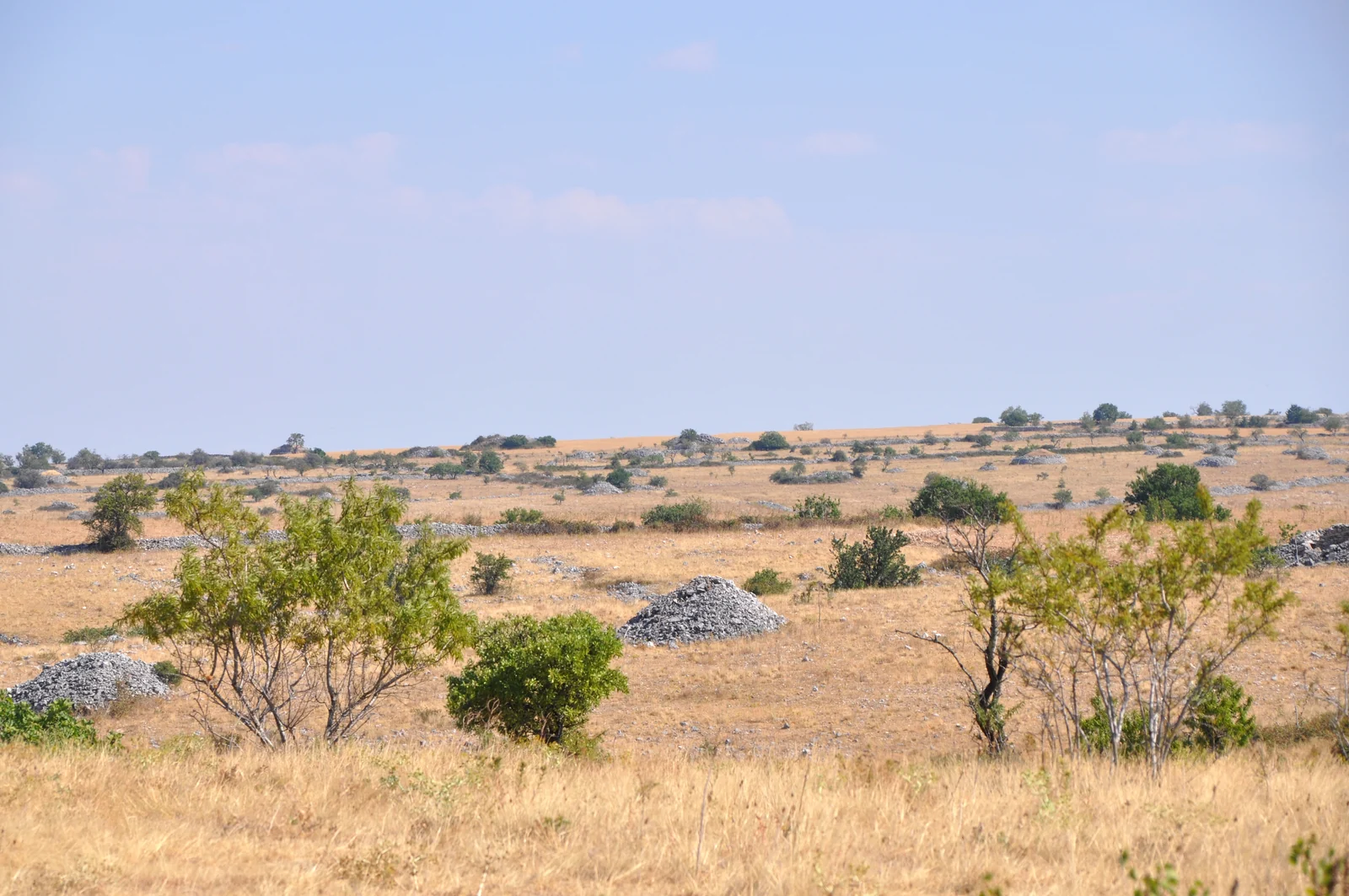
Photo: TONIODELBARRIO6464 / Wikimedia Commons — CC BY-SA 4.0 · Resized and converted to WebP.
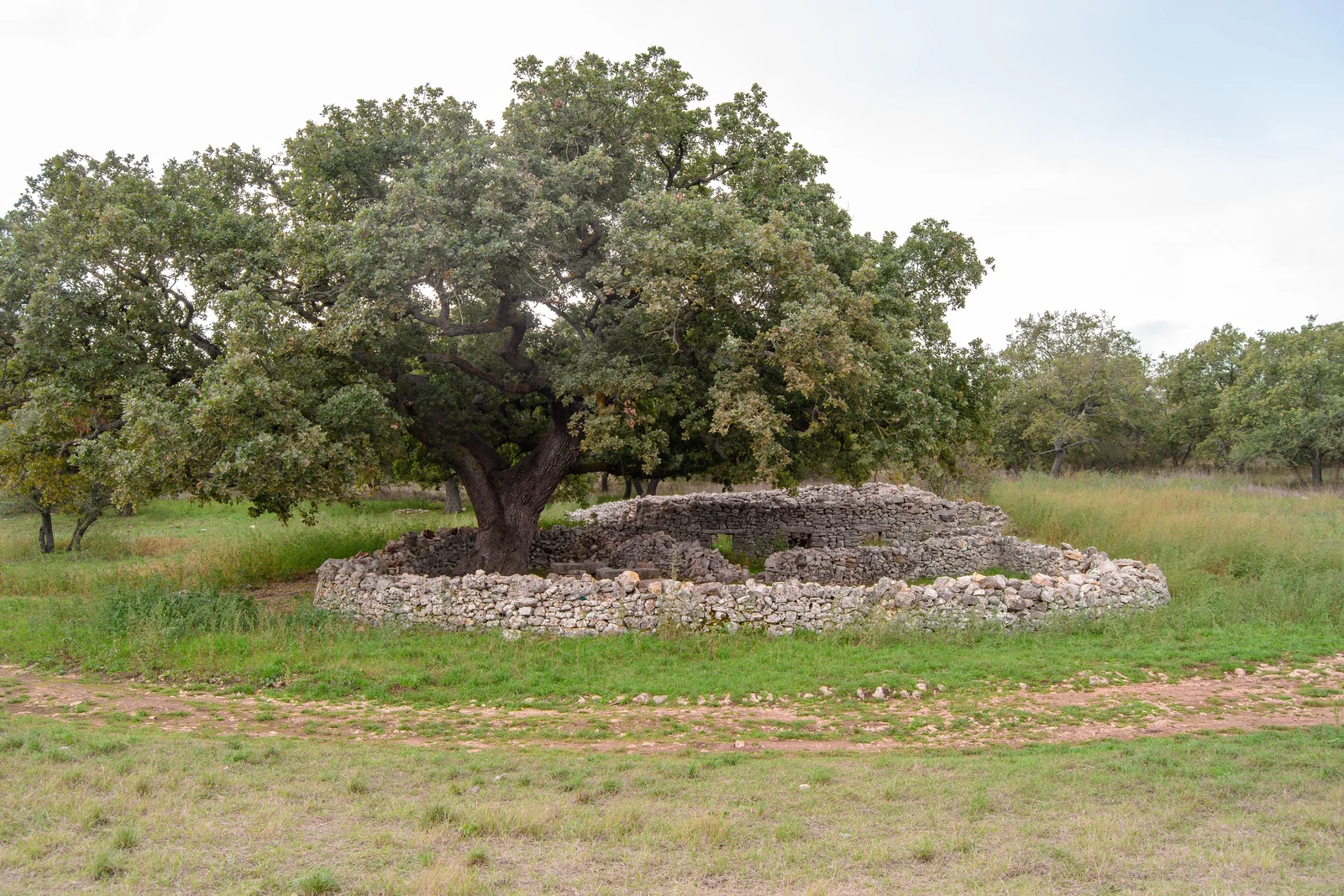
Photo: Ilaria Biancolillo / Wikimedia Commons — CC BY-SA 4.0 · Resized and converted to WebP.
When to go
On 3 February comes the feast of Saint Blaise, patron of the town and of the diocese, whose relics are kept in the cathedral: after the bishop’s Mass the statue is carried in procession, and the ribbons that children wear round their necks and the small taralli are blessed. On 25 March, for the Annunciation, there is the country festival at the sanctuary of Calendano.
In Lent the Quarantane hang between the buildings of the old town: puppets of old women dressed in mourning, the widow of Carnival, hung up on the night between Shrove Tuesday and Ash Wednesday. Holy Week is the most intense time of the year. The town council describes it as follows: on the Friday of Passion week the procession of the Desolata; in the night of Maundy Thursday, from two o’clock, that of the “Otto Santi”, the statue group of the Deposition; on Good Friday the “Misteri”, eight statue groups accompanied by funeral marches; on Holy Saturday the Pietà; on Easter Sunday the Risen Jesus, with the Quarantane set off with a bang. Along the route the faithful hang out white sheets.
The Ottavario is the patronal festival linked to Corpus Christi: a solemn procession with the bishop, the mayor and the confraternities, illuminations, fairground rides, stalls and the launch of hot-air balloons, a tradition that in Ruvo goes back to the mid-nineteenth century. On 16 August comes the feast of Saint Roch, with the silver statue carried from the cathedral to his church. In September there is the Talos Festival: the 2026 edition was scheduled for the 11th to the 13th.
Autumn is mushroom season: the cardoncello festival, a stage of “Cardoncello on the road”, usually falls between late October and mid-November, with tastings, guided tours, excursions and folk music; in 2026 it was scheduled for 13 to 15 November, and in March the town council announced the national “Sagra di Qualità” mark for the festival. On 13 December, for Saint Lucy, the tradition is that of bonfires known as “fanole”, fried chickpeas and a procession accompanied by torches. Between December and January come the lights of “Luci e suoni d’artista”. Dates and programmes change every year: check them on the websites of the town council and the diocese.
Sources: Comune di Ruvo di Puglia, Assessorato alla Cultura e al Turismo — Benvenuti a Ruvo di Puglia · Diocesi di Molfetta-Ruvo-Giovinazzo-Terlizzi — San Biagio, patrono di Ruvo e della Diocesi · Diocesi di Molfetta-Ruvo-Giovinazzo-Terlizzi — Festa dell’Ottavario del Corpus Domini a Ruvo · Comune di Ruvo di Puglia — Nasce il Talos Village, dall’11 al 13 settembre in Piazza Matteotti (2 settembre 2026) · Comune di Ruvo di Puglia — La sagra del fungo cardoncello ottiene il marchio nazionale «Sagra di Qualità» (11 marzo 2026) · Ferrotramviaria S.p.A. — Mobility partner di «Cardoncello on the road 2026» a Ruvo di Puglia, 13-15 novembre
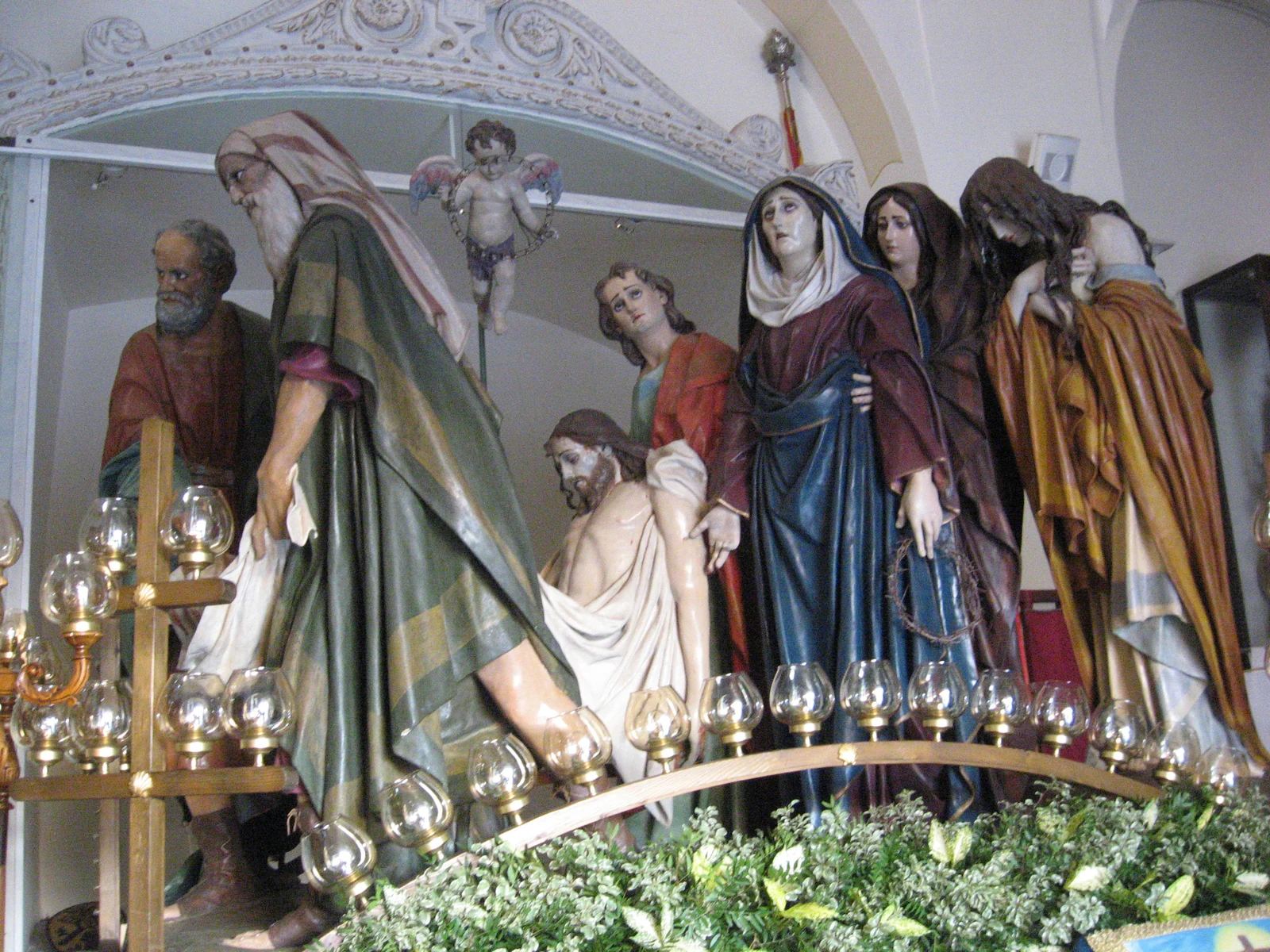
Photo: Forzaruvo94 / Wikimedia Commons — CC BY-SA 3.0 · Resized and converted to WebP.
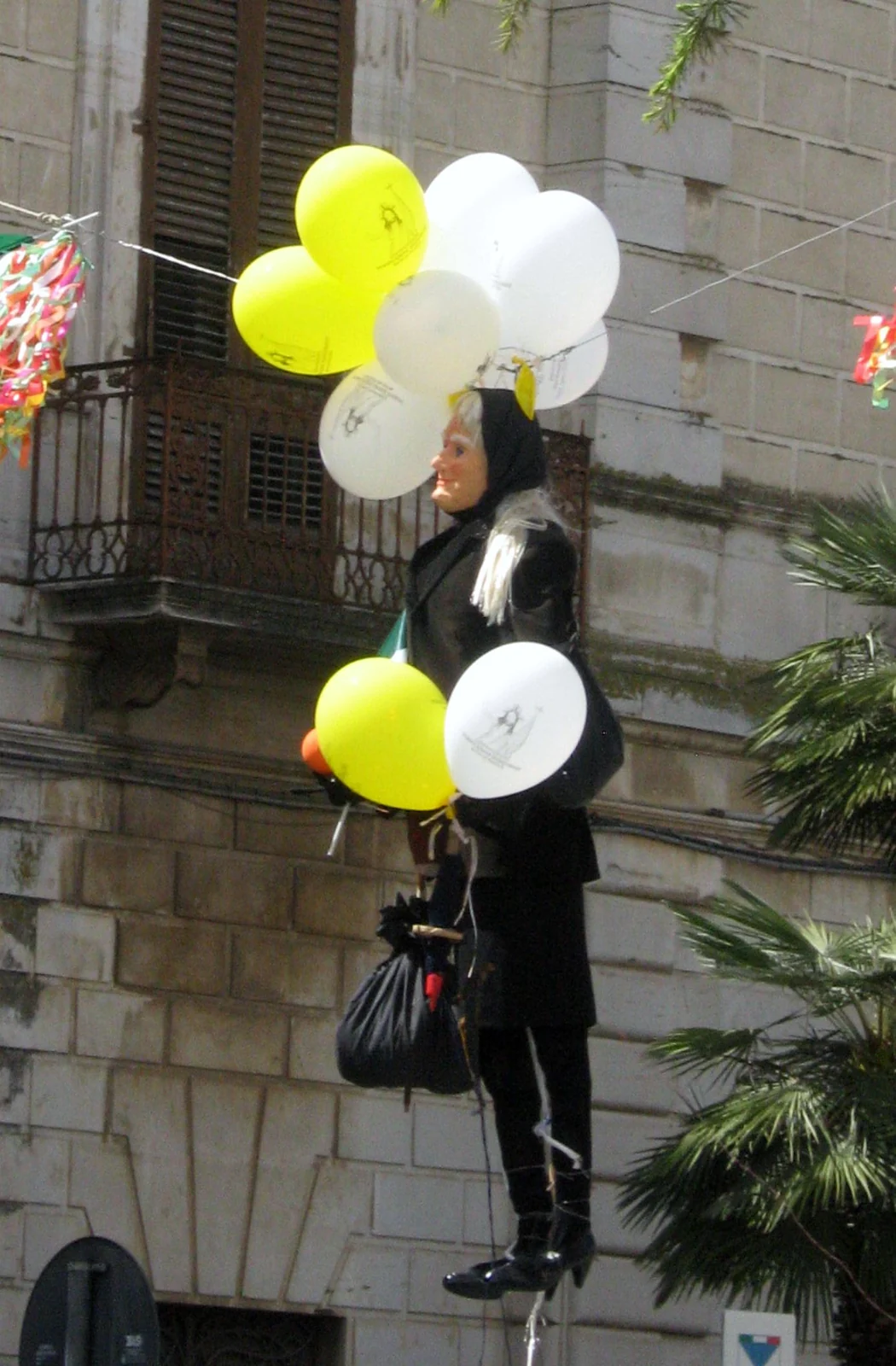
Photo: Forzaruvo94 / Wikimedia Commons — CC BY-SA 3.0 · Resized and converted to WebP.
Getting there and around
By train. Ruvo is on Ferrotramviaria’s Bari-Barletta railway, the electrified line opened in 1965 that links Bari with Bitonto, Terlizzi, Ruvo, Corato, Andria and Barletta. Ferrotramviaria warns that the line is closed beyond Andria, towards Barletta, for works, with replacement buses; a notice of August 2025, still featured on its website, also reports that traffic is suspended on one of the two tracks between Corato and Andria, for upgrading works, until further notice: check the current timetable on the company’s website before you travel.
By air. The airport is Bari. Since 2013 a rail link has connected the terminal to the same line, both towards Bari Centrale and towards Bitonto and Barletta; the stop is inside the airport, joined to the arrivals area by a 300-metre tunnel. At Bari Centrale the Ferrotramviaria station is next to that of the state railways, to which it is joined by a pedestrian underpass.
By car. For the towns of the Alta Murgia the park authority indicates the A14 Bologna-Bari motorway, leaving at exits that include Trani, Molfetta and Bitonto.
In town. The urban bus service has four lines: A and B for the built-up area, C for the cemetery, D for Calentano; the two methane-powered buses have an electric ramp and a wheelchair space. The town council publishes the map of the limited traffic zone with the list of electronic gates: look at it before driving into the centre. The weekly market is held on Saturday; since September 2025 and until further notice, because of the works in Corso Antonio Jatta, some of the stalls have been moved to Via Paisiello, Via Jannuzzi and the car park in Via Pertini, where parking and transit bans apply on Saturdays until the afternoon.
Sources: Ferrotramviaria S.p.A. — Il servizio ferroviario · Ferrotramviaria S.p.A. — Avviso del 26 agosto 2025: lavori di potenziamento della linea Corato-Andria · Ferrotramviaria S.p.A. — Collegamento ferroviario passante per l’Aeroporto Karol Wojtyla · Ente Parco nazionale dell’Alta Murgia — Come raggiungere il Parco · Comune di Ruvo di Puglia — Trasporto Pubblico Locale: nuovo programma di esercizio (23 dicembre 2025) · Comune di Ruvo di Puglia — Dataset: mappa della ZTL con i varchi (21 ottobre 2025) · Comune di Ruvo di Puglia — Mercato settimanale, nuova collocazione per alcune bancarelle (5 settembre 2025)
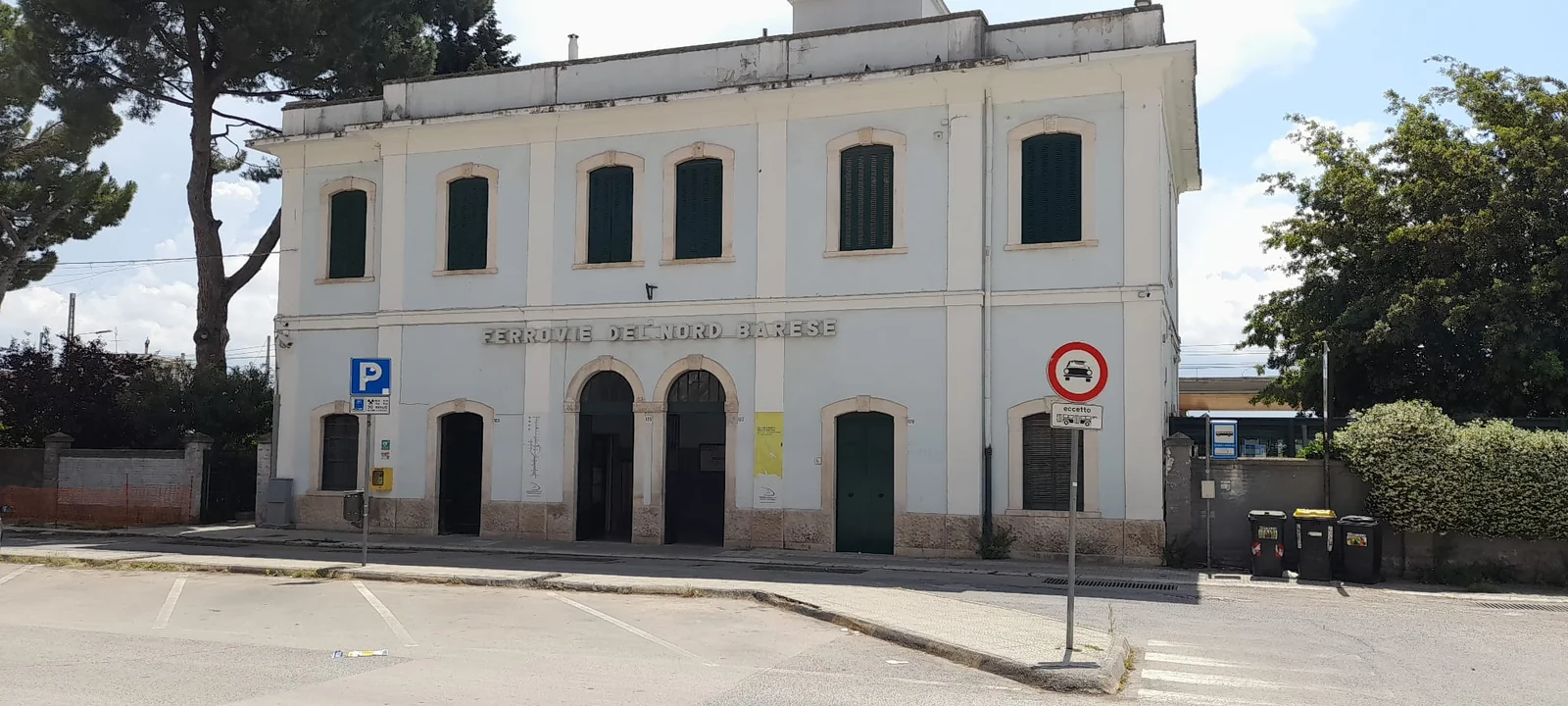
Photo: Dominy Talosyen / Wikimedia Commons — CC BY-SA 4.0 · Resized and converted to WebP.
Tourism
According to the official list of the regional info-point network, updated by Pugliapromozione on 8 July 2026, the Ruvo di Puglia info point is at Via Vittorio Emanuele 48 and can be reached on 379 1281774 and 080 3615419, at [email protected] and [email protected].
“Come to Ruvo di Puglia as a guest, not as a tourist: that is how these places truly let you know them.”
Already on Apulica
Apulica’s events calendar includes «Cardoncello Mushroom Festival in Ruvo di Puglia» in Ruvo di Puglia; the latest recorded edition is 2026.
Accommodation in figures
In the Ministry of Tourism’s national database of accommodation (BDSR), on 12 October 2026, Ruvo di Puglia had 78 establishments with a verified national identification code (CIN): 23 non-hotel establishments and 55 other establishments. Puglia’s regional census of accommodation lists 16 with a verified national CIN, by type: 7 guest rooms, 4 farm stay, 4 B&B and 1 holiday home.
Sources: Ministero del Turismo – Banca Dati Strutture Ricettive (dashboard pubblica) · Regione Puglia – ARET Pugliapromozione (DMS)
Nearby
Among the places Apulica already covers, the nearest are Bisceglie (about 19 km), Molfetta (about 20 km) and Andria (about 21 km): straight-line distances between the centres of the municipal territories.
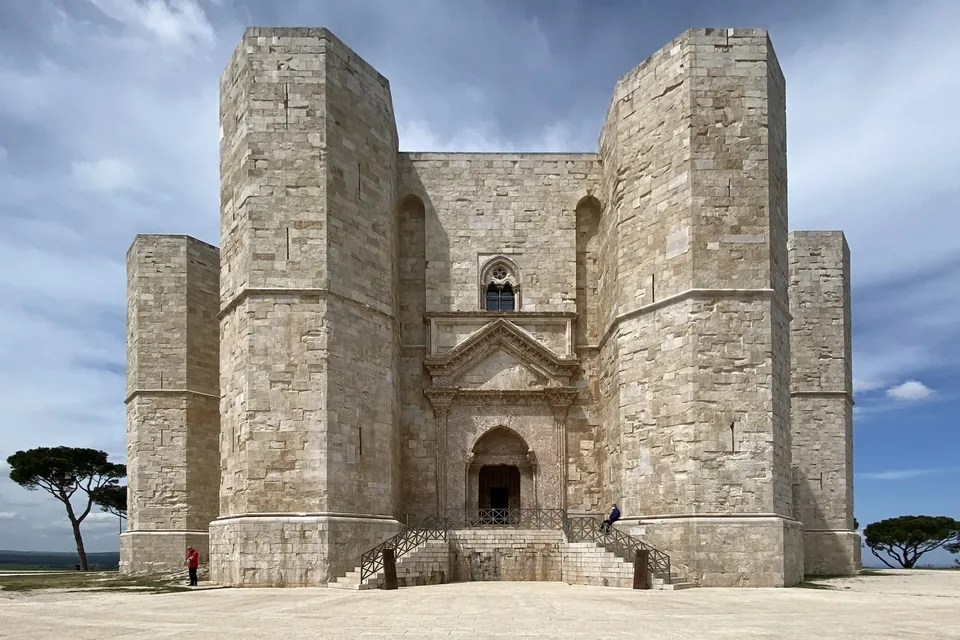
A short distance from the town, in the countryside, is the sanctuary of Calendano, an old hamlet of the fief of Ruvo: the church, said to date from 1392, preserves frescoes of the Virgin and Child, Byzantine in style, of Saint Leonard and of Saint Anthony Abbot. Terlizzi, Bitonto, Corato and Andria are on the same railway as Ruvo. Castel del Monte is the end point of the park cycleway that passes the Torre dei Guardiani visitor centre and the necropolis of San Magno.
Sources: ISTAT/Openpolis, confini comunali della regione Puglia (CC BY 4.0, ISTAT/Openpolis) · Comune di Ruvo di Puglia, Assessorato alla Cultura e al Turismo — Benvenuti a Ruvo di Puglia · Ferrotramviaria S.p.A. — Il servizio ferroviario · Ente Parco nazionale dell’Alta Murgia — Ciclovie: Jazzo Rosso, San Magno, Castel del Monte; centri visita
The town council
The official website of the Comune di Ruvo di Puglia, registered in IndicePA, the index of the digital addresses of Italy’s public administrations, is the reference for the town council’s offices, opening hours and news. Its address is listed among the sources of this section.
The town hall is in Palazzo Avitaja, at Piazza Giacomo Matteotti 31; the switchboard answers on +39 080 9507100. The town’s tourist information point is run by the Pro Loco; in 2026 the Puglia Region funded its summer activities. The “Pasquale Testini” municipal library and the Museo del Libro are in Palazzo Caputi.
Sources: Comune di Ruvo di Puglia, sito istituzionale · IndicePA (AgID), Indice dei domicili digitali delle pubbliche amministrazioni: dataset Enti · Comune di Ruvo di Puglia, Assessorato alla Cultura e al Turismo — Benvenuti a Ruvo di Puglia · Comune di Ruvo di Puglia — Infopoint turistico, dalla Regione 16.000 euro per la stagione estiva (3 luglio 2026) · Comune di Ruvo di Puglia — Museo del Libro, Casa della Cultura «Palazzo Caputi»
Where to stay
In the municipality of Ruvo di Puglia the national database of the Ministry of Tourism lists 78 accommodation businesses with a verified CIN code: 0 hotels, 23 other licensed accommodation and 55 other types such as B&Bs and private rentals.
Licensed businesses from the official list of accommodation named as the source in this section. Where the list gives it, the property's official identification code appears next to its name: the national CIN code, or the code assigned by the Region or by the body that keeps the list. Private individuals are not listed. This list is the official census of licensed businesses, not a list of Apulica partners: to stay in Ruvo di Puglia you do not have to check one property after another yourself; write to Apulica and we look for the stay that suits your journey, checking availability and conditions before any confirmation.
AGRITURISMO IL MELOGRANO
Farm stay
CIN IT072038B500122081
ALFIERI COTTAGE
B&B
CIN IT072038B400023230
CASA DEGLI AMICI AFFITTACAMERE
Guest rooms
CIN IT072038B400064136
CASA DOLCE CASA
Holiday home
CIN IT072038B400022814
COPPA
Farm stay
CIN IT072038B500020793
B&B ARCO CAPUTI
B&B
CIN IT072038B400093678
IL VICOLO
Guest rooms
CIN IT072038B400062291
POGGIO FERRATA
Farm stay
CIN IT072038B500050452
B&B CASA RUBIS
B&B
CIN IT072038B400098044
LA PUGLIA DI CLAUDIA
Guest rooms
CIN IT072038B400024133
First the places that presented themselves to Apulica, the latest first; then one place of each type in turn, by official category and stars, then by name. No position is paid for.
All 16 entries in alphabetical order
Page 1 of 2
| Name | Type | CIN |
|---|---|---|
| AGRITURISMO IL MELOGRANO | Farm stay | IT072038B500122081 |
| ALFIERI COTTAGE | B&B | IT072038B400023230 |
| B&B ARCO CAPUTI | B&B | IT072038B400093678 |
| B&B CASA RUBIS | B&B | IT072038B400098044 |
| CASA DEGLI AMICI AFFITTACAMERE | Guest rooms | IT072038B400064136 |
| CASA DOLCE CASA | B&B | IT072038B400020942 |
| CASA DOLCE CASA | Holiday home | IT072038B400022814 |
| COPPA | Farm stay | IT072038B500020793 |
| IL VICOLO | Guest rooms | IT072038B400062291 |
| LA PUGLIA DI CLAUDIA | Guest rooms | IT072038B400024133 |
Ask Apulica for a stay in Ruvo di Puglia We reply shortly, within a few hours at most, with a proposal for you to consider.
Sources: Regione Puglia – ARET Pugliapromozione (DMS), CC BY 4.0, 2026-10-12 · Ministero del Turismo – Banca Dati Strutture Ricettive (dashboard pubblica), 2026-10-12
YOUR JOURNEY
How to shape a journey here
To include Ruvo di Puglia in a trip, or to ask for a guide or a transfer, you can write to Apulica with the button below.
Plan your tripKeep exploring
Alta Murgia
Stone, pasture and farming to explore the landscape beyond the towns. A national park of Mediterranean steppe, durum-wheat bread and cardoncello mushrooms.
Read the guide →Photo: Acquario51 / Wikimedia Commons — CC BY-SA 4.0 · Resized and converted to WebP.

Castel del Monte
Frederick’s architecture within the Murgia landscape. The octagonal castle, on the UNESCO list since 1996, inside the Alta Murgia National Park.
Read the guide →Photo: Bernard Gagnon / Wikimedia Commons — CC0 · Resized and converted to WebP.

Molfetta
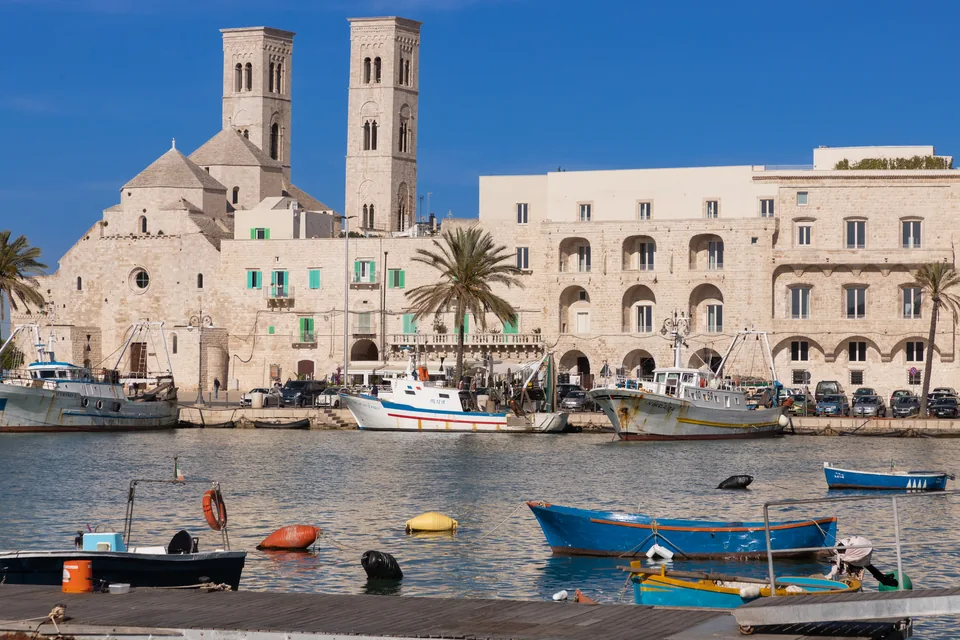
Romanesque architecture and karst landscape beyond the coast. The cathedral on the harbour, a fishing fleet among the lower Adriatic’s largest and the Pulo. In town the cathedral born from the Jesuit church, the Diocesan Museum and the Apulian Regional Seminary; outside the old town the basilica of the Madonna dei Martiri, a pilgrims’ stop since 1162, and the oil of the Terra di Bari PDO.
Read the guide →Photo: Genesis5663 / Wikimedia Commons — CC BY-SA 4.0 · Resized and converted to WebP.

Bisceglie
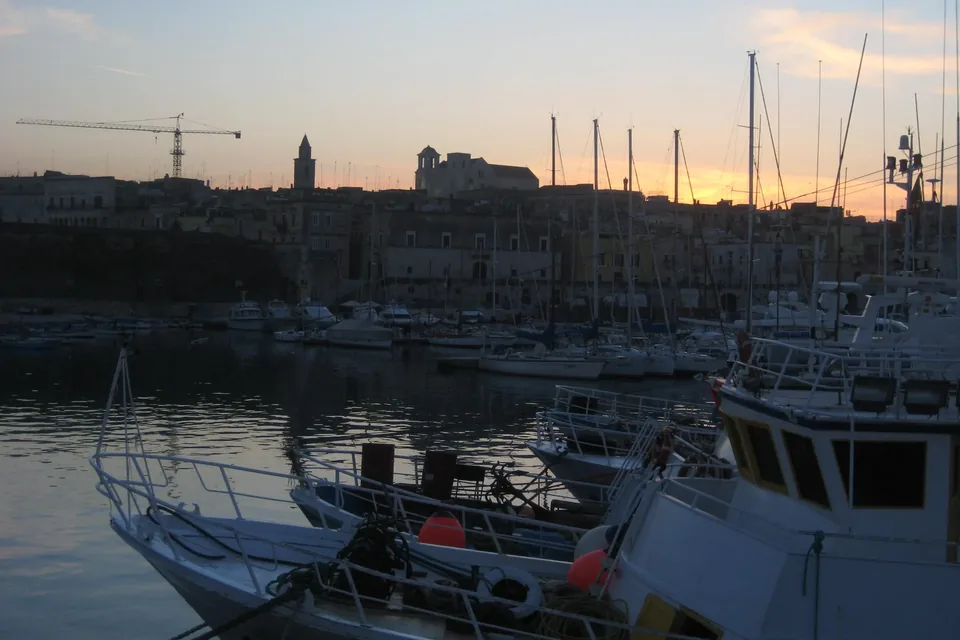
From the La Chianca dolmen to the Romanesque town and harbour. Aragonese walls, a Swabian castle, Romanesque churches and the sospiro, a Slow Food Presidium.
Read the guide →Photo: Geppisimone at Italian Wikipedia / Wikimedia Commons — CC BY-SA 3.0 · Resized and converted to WebP.

Andria
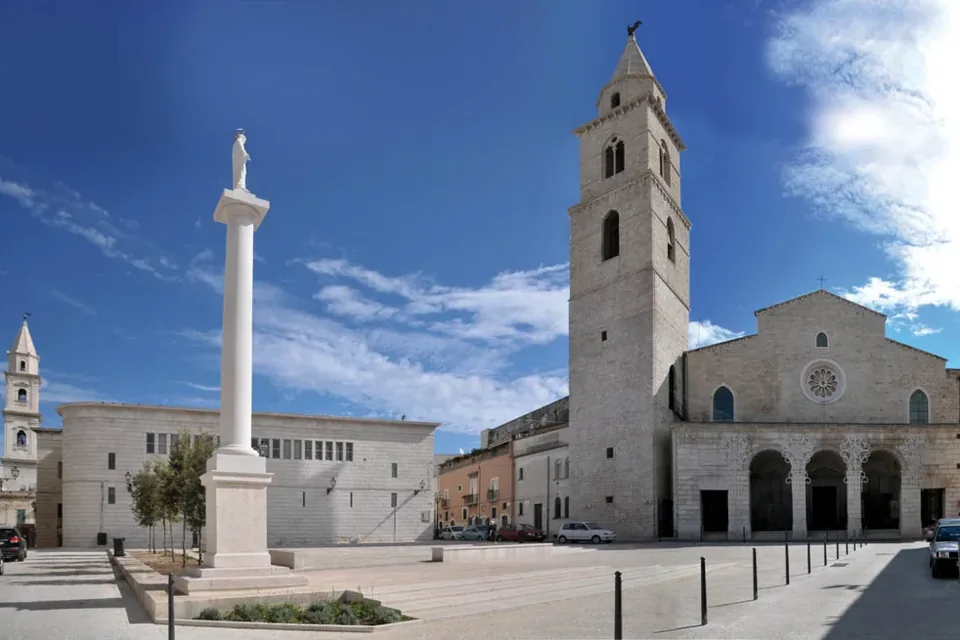
A town worth exploring beyond its famous castle. Imperial memory, the Cathedral of Santa Maria Assunta, burrata, which was born here, and confectionery.
Read the guide →Photo: Marcoleo11 / Wikimedia Commons — CC BY-SA 4.0 · Resized and converted to WebP.

Bitonto
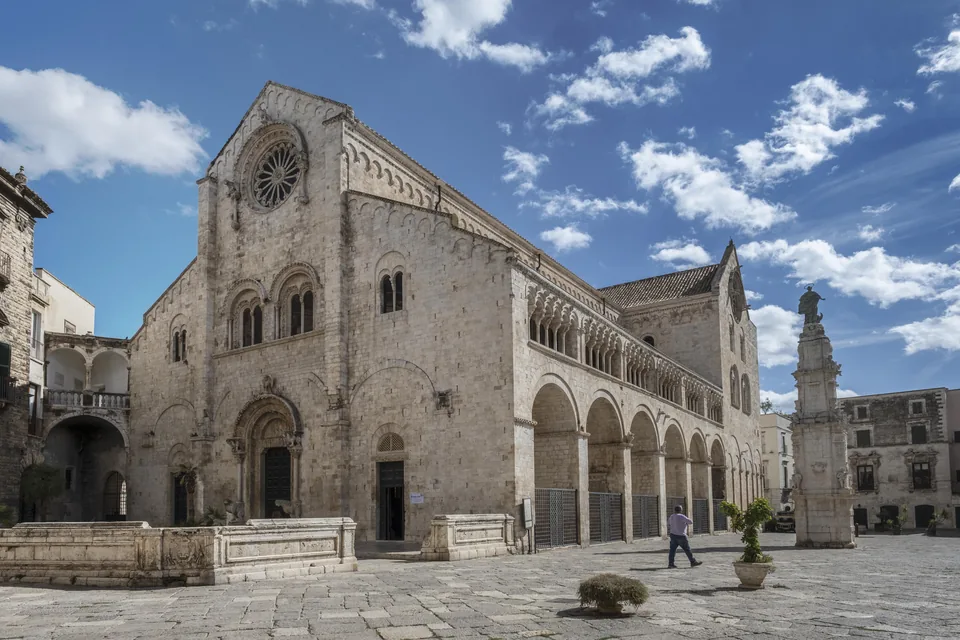
Bitonto (BA), Puglia: 52,958 residents, 174.34 km². The official facts of the municipality, its town council website and its registered accommodation. The Romanesque co-cathedral, the National Gallery of Puglia in Palazzo Sylos Calò, the Angevin round tower, the “Terra di Bari” PDO oil with the “Bitonto” mention, the feast of the Santi Medici and the Lama Balice.
Read the guide →Photo: Giugi30 / Wikimedia Commons — CC BY-SA 4.0 · Resized and converted to WebP.
