Muraglia: Andria, Coratina and Peranzana
The official site of Frantoio Muraglia presents oils from two main varieties, Coratina and Peranzana, described as two very different characters. For Coratina oil it highlights an intense green colour with golden glints, vegetal aromas such as artichoke, fennel and hay, and a peppery finish; it recommends it for raw vegetables, salads and pulse soups. Peranzana gives a golden, more delicate oil, suited to fish and quick cooking.
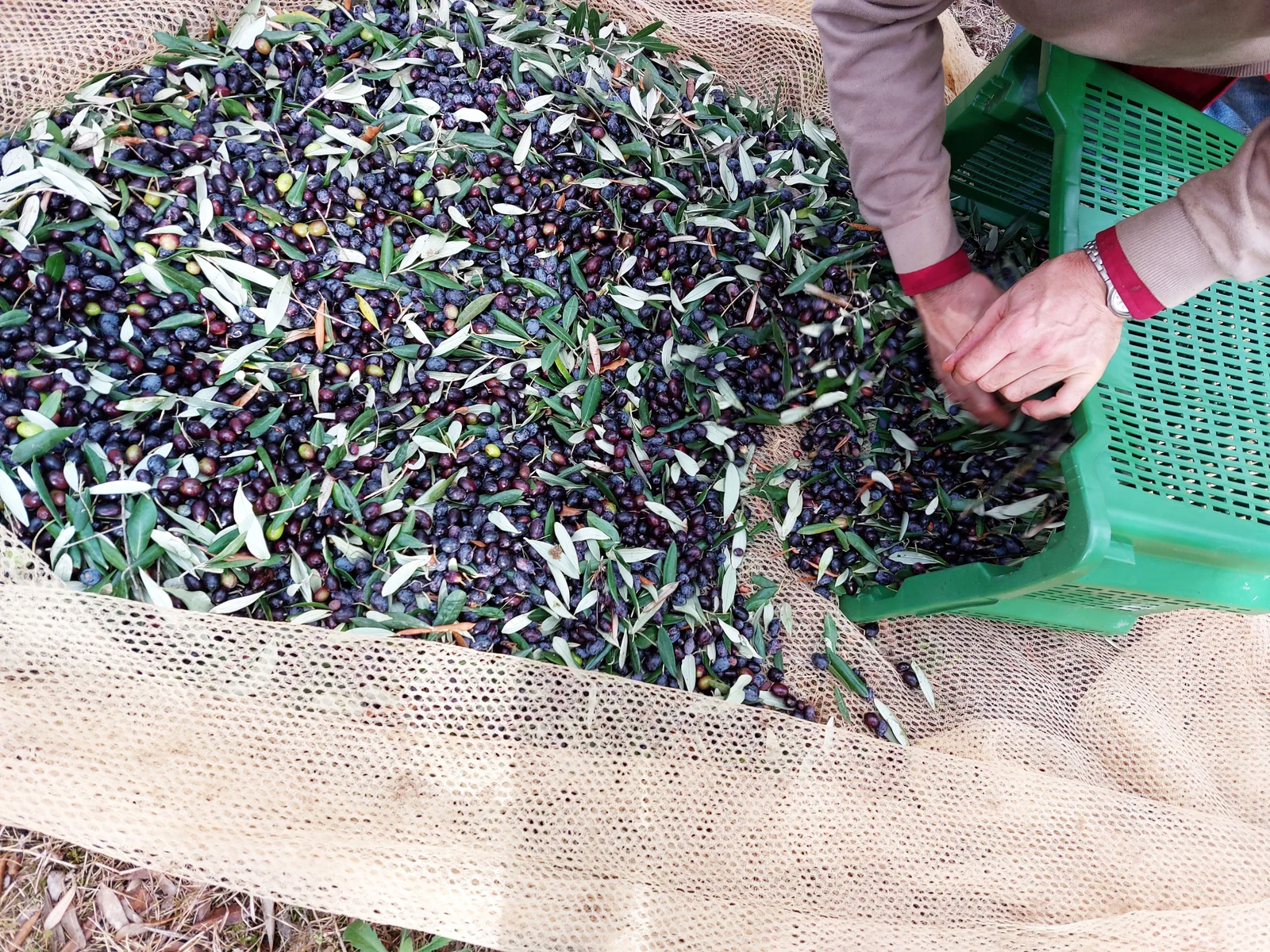
The company states that it tends about sixty hectares of organic groves in the countryside of Andria and Trani, on the Murgia plateau, with hand harvesting. It also offers special versions, such as an oil from olives pitted before crushing, softer in taste, and an oil cold-smoked with beech wood.
A useful detail for buyers: by entering the lot number from the label on the website, you can find the bottling date, variety and location of the grove. It is a good example of reading a bottle beyond the brand, linking it to a precise place in the Murgia.
Sources: Frantoio Muraglia — i suoi oli
De Carlo: a Bitritto story
De Carlo’s corporate catalogue tells a long family story. A notarial deed of 1598 records the purchase of land for olive growing, which the company takes as its starting point; over the following centuries the catalogue marks milestones such as the licence to sell oil wholesale and retail and the purchase of an old mill, now protected by the heritage authorities. By the early twentieth century the company was the most important in the Bitritto area.
Today the catalogue describes about one hundred and thirty hectares with nearly twenty-eight thousand olive trees, among dry-stone walls and red earth. The olives are harvested in autumn and winter and milled in the company’s own mill within a few hours. The certifications listed include the Terra di Bari PDO with the Bitonto mention, as well as the PGI and organic status.
The catalogue also presents vegetables grown beneath the olive trees and preserved in the estate’s oil. Reading the official material lets you distinguish individual lines and oils rather than choosing by brand name alone, and see which oil belongs to which designation.
Sources: De Carlo — catalogo istituzionale
Galantino: the Bisceglie mill
The official contacts page places Frantoio Galantino in Bisceglie, on Via Corato Vecchia, in the countryside just outside town. The site explains that products can be tasted and bought directly at the farm, and also mentions a showroom and a shop in central Bisceglie.
For visits, the site indicates a period of the year reserved for organised groups and invites enquiries by email. Any visit or tasting therefore needs a specific arrangement: it should not be assumed as part of an itinerary without prior confirmation.
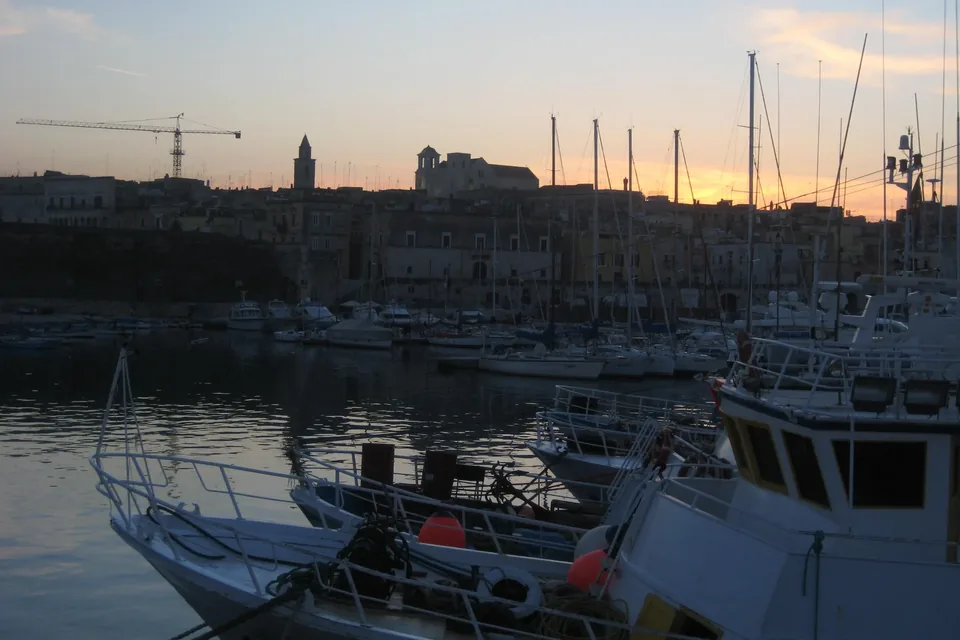
The link with the town makes it possible to combine urban heritage and olive oil culture. Bisceglie, according to the Città dell’Olio association, has an old quarter gathered around the harbour, with castle, keep and cathedral, and Bronze Age dolmens in the surrounding area. A morning at the mill and an afternoon in the historic centre make a balanced day, in which the tasting gains context and the walk gains a thread.
Sources: Frantoio Galantino — contatti ufficiali · Associazione nazionale Città dell’Olio — Bisceglie
Bitritto, ancient mills and castle
Bitritto, on the edge of Bari, is presented by the Città dell’Olio association as a village of medieval lanes and stone courtyards, dominated by the Baronial Castle, now used for cultural events. But the most interesting fact for this theme lies beneath the castle.
Under its foundations, remains of a Roman villa from the first to third centuries AD have come to light, with an underground press room: wells, cisterns and spaces used to make oil and wine. The association describes it as a complex that has survived almost intact, one of the most valuable records of the area’s farming culture. The village’s olive oil tradition therefore has roots reaching back to Roman times.
The same page mentions experiences linked to new oil, with a mill visit and tasting with bread, offered in autumn according to each year’s calendar. For a trip near Bari, Bitritto can become a separate chapter: first the castle and its underground history, then a tasting, without turning the itinerary into a string of purchases.
What PGI and PDO tell you
Many bottles from these producers carry a designation, and it helps to know what it means. The regional profile of Olio di Puglia PGI explains that the indication covers the whole region and values the variety of characteristics arising from many native cultivars, different environments and traditional techniques: olive fruitiness, notes of grass, leaf, almond and artichoke, bitterness and pepperiness of varying intensity.
The Terra di Bari PDO is narrower: it covers the provinces of Bari and Barletta-Andria-Trani and is divided into three mentions. Castel del Monte comes largely from Coratina and has intense fruitiness; Bitonto combines Cima di Bitonto, or Ogliarola Barese, with Coratina for a lighter profile; Murgia dei Trulli e delle Grotte is based on Cima di Mola, with a hint of fresh almond.
Reading the designation beside the producer’s name tells you two different things: the territory of origin and the style of the company. Two oils from the same brand with different mentions can make a more instructive comparison than two brands chosen at random.
Sources: Regione Puglia — Produzioni di qualità: Olio di Puglia IGP · Regione Puglia — Produzioni di qualità: Terra di Bari DOP
Coratina, Andria’s variety
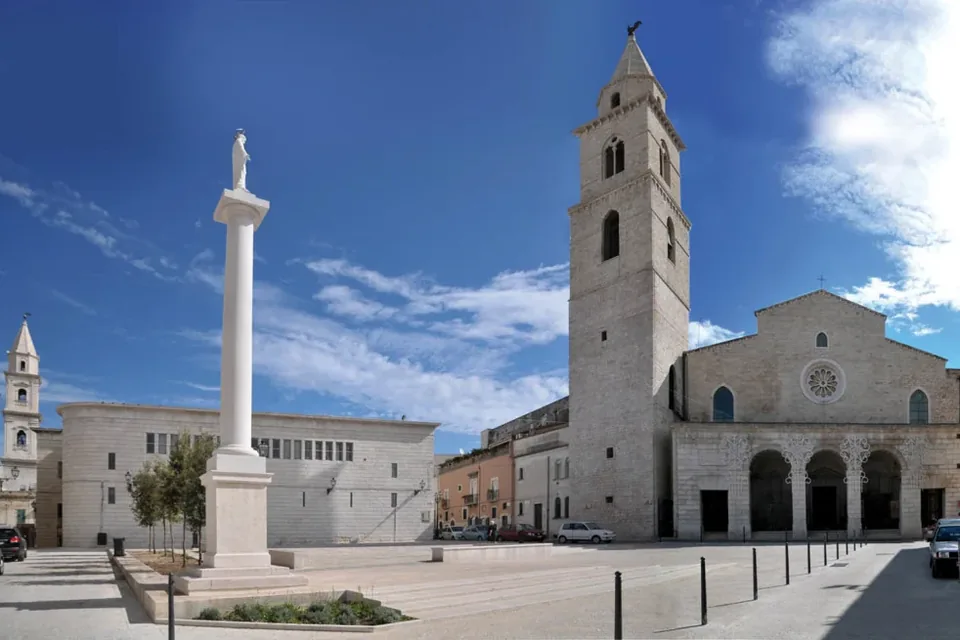
Andria, according to the Città dell’Olio association, is the olive oil town linked to the cultivar known locally as “racioppa”, or Coratina, in an area where agriculture, with olives and vines, remains the main activity. On the nearby hill stands Castel del Monte, Frederick II’s octagonal castle and a UNESCO World Heritage Site.
Puglia’s atlas of traditional foods explains the nickname: the tree bears its olives in small clusters, the “racioppe”. It also recounts how the variety spread. In 1872 Professor Girolamo Caruso observed it on an estate near Barletta, where he was told it came from Corato, and in his monograph on the olive he recommended it for its great productivity; from then on it was planted more and more widely across the provinces of Bari and Foggia.
The atlas describes an oil in which bitterness and pepperiness intertwine with notes of fresh grass, artichoke and almond, and recalls that, when young, it was once used to give character to other oils. Knowing this story helps you read the profiles of Andria’s producers, who often focus on single-variety Coratina.
Sources: Associazione nazionale Città dell’Olio — Andria · Atlante dei PAT di Puglia (Regione Puglia, Università di Bari) — Olio extravergine di oliva coratina
Compare bottles, not reputations
Before choosing an oil, note the name of the line, the declared variety, any designation and the vintage of the sample. Two bottles from the same producer can be a more instructive comparison than two brands chosen at random: you can ask a precise question about the intended result, for example why one line is more intense than the other.
During the tasting, look for one difference in aroma and one in the balance between bitterness and pepperiness. Pour a little oil, smell, taste and wait a few seconds; then move to the second sample. A sip of water or a slice of apple between the two helps cleanse the palate.
The look of the packaging remains a pleasure, but it does not tell you which oil you will truly prefer. Asking the producer which grove the olives come from, when they were picked and how they were processed turns the tasting into a conversation, and lets you take home not only a bottle but also a precise story.
From sample to home kitchen
To decide what to take home, add a concrete use to the tasting: bread, a vegetable or pulses. The comparison should use the same food, so that the oil is the only thing that changes. Producers themselves suggest different pairings for different oils, and trying them shows whether the advice works for your own taste.
Then write beside the bottle’s name the dish on which you preferred it. An intense oil may be perfect on a pulse soup and too strong on steamed fish; a delicate one may do the opposite. You do not need many: two oils with clear uses cover most everyday cooking.
It becomes a small personal map for the return home. Beyond the brand, you keep the flavour, the pairing and the memory of where you tasted it. Storing the bottles in a cool, dark place, as the official profiles recommend, helps you find at home the same profile you tried at the mill, months after the journey.
An urban day with a farming thread
Plan northern Bari between Andria and Bisceglie, choosing a single tasting as the centrepiece. In Andria, a visit to Castel del Monte frames the Murgia landscape where Coratina groves grow; in Bisceglie, the old quarter around the harbour, with castle and cathedral, offers a walk after the tasting.
Bitritto can become a separate chapter near Bari, with its castle and the Roman remains of its press room. Bari itself remains the natural base for moving between these stops, without turning the itinerary into a string of purchases.
A town visit before the tasting and a walk afterwards give the day an understandable rhythm. The farming thread holds the places together, while differences between oils, varieties and designations stay clear thanks to the notes you take. Before setting off, always confirm with the mills that a visit is possible, as it depends on the season and on working periods, especially during harvest.
Sources: Associazione nazionale Città dell’Olio — Andria · Associazione nazionale Città dell’Olio — Bisceglie · Associazione nazionale Città dell’Olio — Bitritto
A thread for your journey
Journey idea: an Andria–Bisceglie chapter and another around Bari, spreading tastings across the trip. Producers provide documented reference points; comparison and place shape the route.
Talk to us