
APULICA / CHEESES
Burrata di Andria
PGI · PAT · Cheeses · Puglia
In brief
- A pasta filata cheese made from cow's milk: a glossy white pouch, closed at the top, filled with shredded curd and cream. (Regione Puglia — Produzioni di qualità, Burrata di Andria IGP)
- It may be made and packed anywhere in Puglia. (Regione Puglia — Produzioni di qualità, Burrata di Andria IGP)
- The name is registered as a PGI by Commission Implementing Regulation (EU) 2016/2103. (eAmbrosia — Burrata di Andria (PGI-IT-01393))
- It is eaten fresh, kept at 4-6 °C, and made and sold all year round. (Qualigeo — Burrata di Andria IGP)
History and origin
Burrata was born on the farms around Andria, and its origin rests on a story handed down by word of mouth. During a heavy snowfall the milk could not be taken to town and had to be processed so as not to waste it, together with the cream rising to the top. The cheesemaker Lorenzo Bianchino took his cue from manteche, pouches of aged stretched curd in which butter was kept, and tried the same with a fresh product: a pouch of stretched curd filled with shreds of curd soaked in cream. The Consortium places the episode in the early decades of the twentieth century; other accounts set it later in the century.
One of the first written mentions dates from 1931, in the Touring Club guide, and success came quickly: tradition counts even the Shah of Persia among its admirers. In the following years the national press described it as one of Puglia's dairy treasures.
In 2016 Burrata di Andria was recognised by the European Union as a Protected Geographical Indication, and since then a protection consortium based in Andria has protected and promoted it.
Sources: Consorzio di tutela della Burrata di Andria IGP — La storia · Qualigeo — Burrata di Andria IGP · Atlante PAT Puglia (Università di Bari, Regione Puglia) — Burrata · Regione Puglia — Produzioni di qualità, Burrata di Andria IGP
Area and method of production
The PGI specification allows Burrata di Andria to be made, processed and packed anywhere in Puglia. The milk is exclusively cow's milk, raw or pasteurised; it is warmed to 35-37 °C and, after acidification with food acids, milk starter or whey starter, coagulated with natural calf rennet.
The curd is broken into hazelnut-sized lumps, drained of whey and left to rest until lactic ripening is complete. It is then stretched with boiling water. Part of the curd is torn by hand into shredded strips, cooled in water and mixed with cream: this is the stracciatella, the filling. The shreds must stay irregular, never minced.
The remaining stretched curd is shaped into pouches, filled with stracciatella and carefully closed at the neck, sealed with boiling water or tied. The cheeses firm up in cold water and may be brined, unless salt was already added to the curd or the cream.
Sources: Qualigeo — Burrata di Andria IGP · Consorzio di tutela della Burrata di Andria IGP — La storia · Regione Puglia — Produzioni di qualità, Burrata di Andria IGP
How to recognise it
Burrata di Andria looks like a small pouch of stretched curd, white, glossy and rounded, with its characteristic closure at the top, which may be very small. The casing is at least two millimetres thick and the weight ranges from 100 grams to one kilo.
Cut open, it reveals its filling, the stracciatella: a spongy mass of hand-torn curd soaked in cream. The filling's very name comes from this gesture, "tearing" the curd into irregular pieces. The flavour is that of fresh or cooked milk combined with butter and cream; the aroma is fragrant and delicate.
Burrata is sold in food-grade bags tied at the top, wrapped in green leaves of approved material, or in tubs, jars or cups, sometimes immersed in its liquid.
Sources: Qualigeo — Burrata di Andria IGP · Regione Puglia — Produzioni di qualità, Burrata di Andria IGP · Atlante PAT Puglia (Università di Bari, Regione Puglia) — Burrata
In the kitchen
There is one main rule: burrata is eaten fresh. Its shelf life is short, and that very brevity is a sign of the link between production tradition and territory. It should be kept at 4-6 °C and is available all year.
The best moment is when it is cut, as the stracciatella and cream spread across the plate. It has become so well known that many restaurants around the world put it on their menus, stating that it comes from Andria.
At the events organised by the Consortium burrata is tasted with traditional Puglia food and wine, while master cheesemakers demonstrate how it is made.
Sources: Qualigeo — Burrata di Andria IGP · Consorzio di tutela della Burrata di Andria IGP — Festa della Burrata
Where to taste it
Andria is the home of burrata. The protection consortium is based here, and here the Festa della Burrata di Andria IGP is held, an evening among olive trees with demonstrations by master cheesemakers, workshops on how to make it, folk music and dancing, and tastings paired with local produce. The Consortium also takes trade visitors to Castel del Monte, a UNESCO site and symbol of the Andria area.
Burrata can be bought at dairies, specialist shops, farms and agriturismi. Since it may be produced throughout Puglia, it is found in many parts of the region: in the Murgia dei Trulli, for example, Noci is known for its handmade mozzarella, burrata and stracciatella.
A journey through central Puglia can therefore link the Andria farms where burrata was born with the dairy towns of the Murgia.
Sources: Consorzio di tutela della Burrata di Andria IGP — Festa della Burrata · Consorzio di tutela della Burrata di Andria IGP — Burrata di Andria IGP Experience · Atlante PAT Puglia (Università di Bari, Regione Puglia) — Burrata · Regione Puglia, ARET Pugliapromozione — Miniguida Valle d'Itria e Murgia dei Trulli
Protection
- Protected geographical indication (PGI) — PGI-IT-01393 (eAmbrosia — Burrata di Andria (PGI-IT-01393))
- Traditional agri-food product (PAT) — Puglia, n. 43, 26th revision (Masaf — Elenco nazionale dei prodotti agroalimentari tradizionali, XXVI revisione (2026))
When
- Production: all year round (Qualigeo — Burrata di Andria IGP)
Where
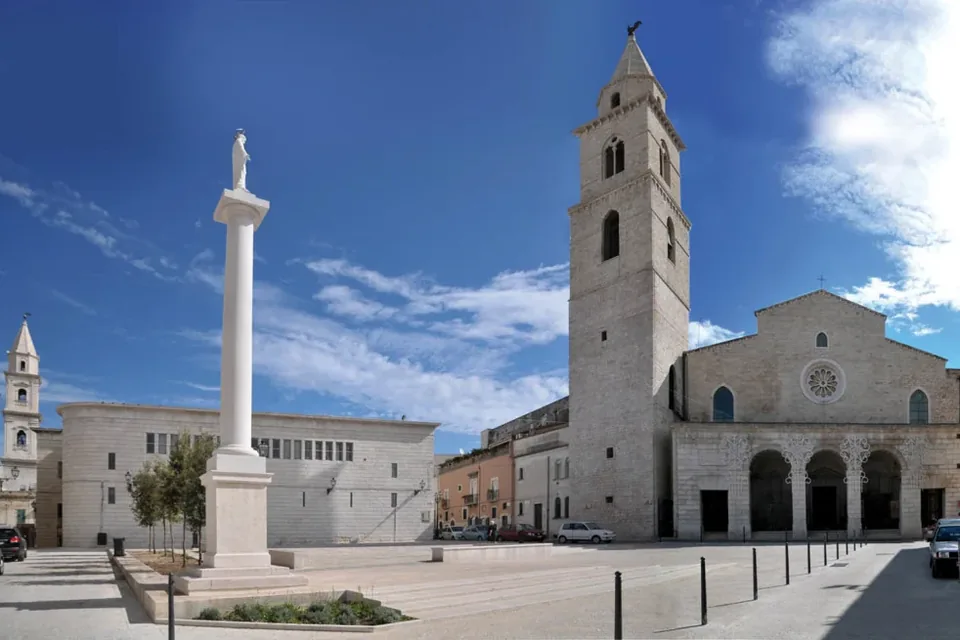
Andria
A town worth exploring beyond its famous castle.
Read the guide →Photo: Marcoleo11 / Wikimedia Commons — CC BY-SA 4.0 · Resized and converted to WebP.

Read more
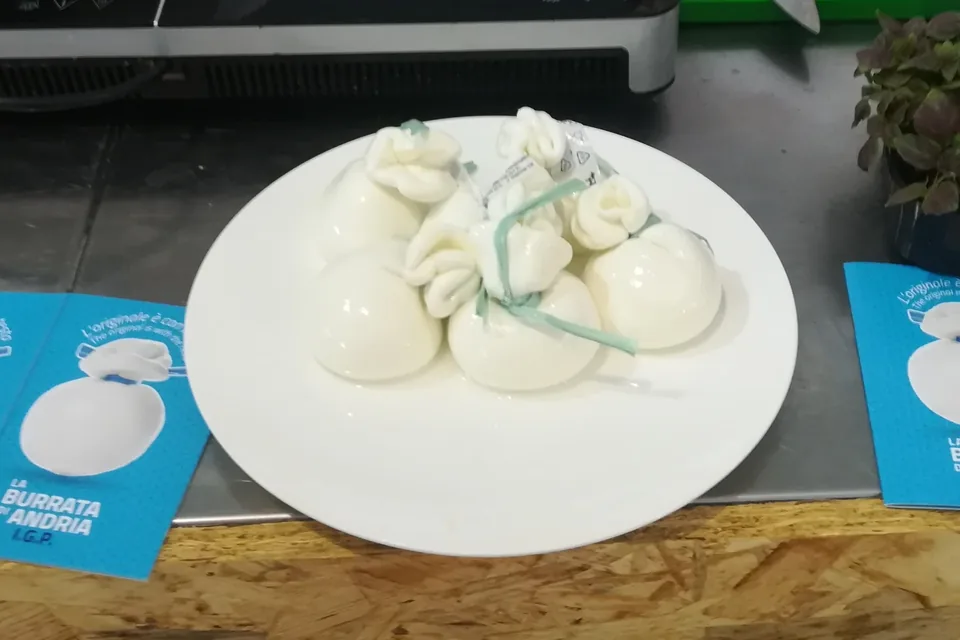
Burrata di Andria PGI
What burrata is, how it is made, the story told in Andria, its PGI protection, Castel del Monte and how to enjoy it fresh.
Read the guide →Photo: FM433 / Wikimedia Commons — CC BY-SA 4.0 · Resized and converted to WebP.

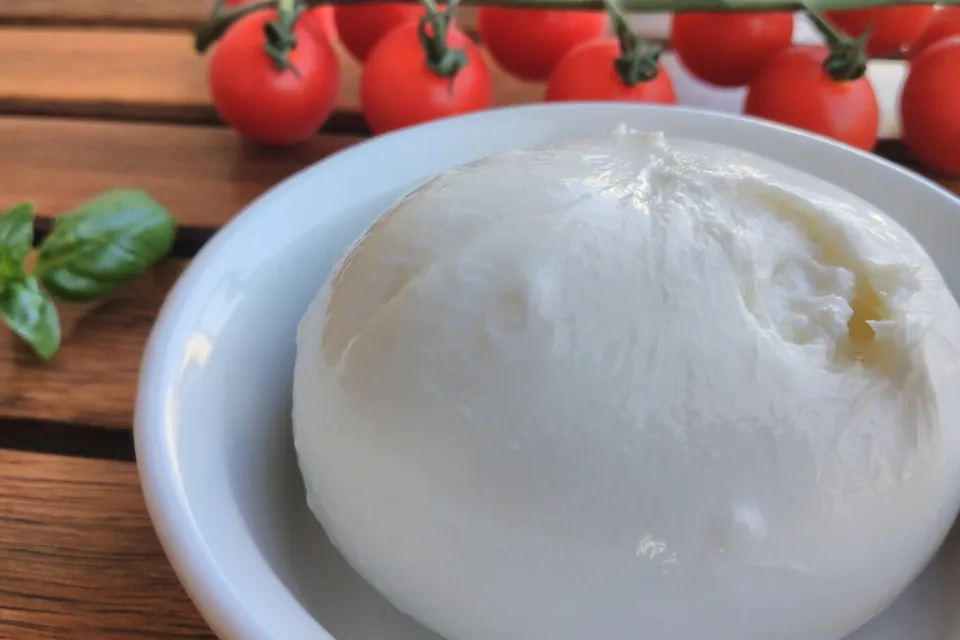
Puglian dairy and cheese
From burrata’s centre to Murgia cheeses: understanding textures, processes and places.
Read the guide →Photo: Popo le Chien / Wikimedia Commons — CC0 · Resized and converted to WebP.
