A stone mound that hid a tomb
The Ministry of Culture website devoted to the archaeological area explains that until the 1960s this place was known as Specchia Scalfanario, after a large mound of stones about 35 metres across and over 4 metres high. In 1961, during partial demolition of the mound to obtain gravel, it was realised that the stones covered a dolmen.
It is a large collective gallery tomb, built about four thousand years ago following architectural models widespread in Europe. With its evident monumentality, the source notes, it was a landmark for the communities of the area, and burial there was perhaps reserved for people of higher status. The area is now in the care of the Ministry of Culture’s regional secretariat for Puglia.
The story of the discovery is already a lesson for visitors: a four-thousand-year-old monument stayed invisible beneath a pile of stones that looked like a mere farm hillock. Looking at the Bari countryside with this awareness changes how you see other mounds along the road.
Sources: Ministero della Cultura — Area archeologica Dolmen San Silvestro
How the dolmen is built
The monument’s entry describes a central gallery oriented north-south, used for burials and originally covered by an elliptical mound of stones. At the southern end a horseshoe-shaped termination survives, rebuilt during restoration in the 1960s; the western sector was also partly restored on the basis of original traces.
The 2016 excavation uncovered a retaining wall that probably bounded the mound, set on Bronze Age occupation levels about half a metre below today’s ground; finds include stone-working debris and pottery fragments typical of the Apulian Middle Bronze Age. According to the source, the gallery was accessible throughout and funeral processions entered from the south side.
The northern chamber yielded the remains of several individuals with local pottery and prestige objects of Mycenaean origin. These details change the reading of the monument: what we see combines ancient remains and modern work, and the outer covering and burial space belonged to a design, not a simple heap of slabs.
Sources: Ministero della Cultura — Dolmen San Silvestro: struttura e scavi
Bronze Age Puglia, between Mycenae and the Adriatic
The ministry website devotes a section to the context. During the Bronze Age, between 2000 and 1000 BC, Puglia was a landing place and transit land for Mycenaean seafarers who came from the eastern Mediterranean seeking metals, amber and places to trade their products, especially pottery. Between 1600 and 1300 BC regular trade routes were established with various regions of southern Italy.
Long-lived settlements arose on the coast, often on promontories beside natural inlets and protected by dry-stone walls; in some cases, the source notes, they coincide with modern towns such as Trani, Giovinazzo, Bari and Monopoli. Inland, on the Murgia uplands, smaller villages devoted to farming and herding developed. Between 1300 and 1000 BC a craft tradition flourished, able to produce wheel-thrown pottery and metal objects.
The dolmen entry recalls that Giovinazzo was then an important trading hub on the Adriatic, and that objects of Aegean origin in the grave goods confirm the local community’s place in Mediterranean exchange networks.
Sources: Ministero della Cultura, Dolmen San Silvestro — L’età del Bronzo · Ministero della Cultura — Dolmen San Silvestro: struttura e scavi
Dolmen, menhir, specchia: the words of stone
The website explains that megalithic refers to buildings made with very large blocks, found throughout Europe between the fifth and first millennia BC and often used as collective tombs or places of worship. The words dolmen (flat stone), menhir (long stone) and cromlech (curved stone) come from Breton, because in Brittany such monuments are numerous and were described as early as the seventeenth century. Only from the 1960s, with radiocarbon dating, did it become clear that similar structures were built by very different societies.
The source suggests some common trends: megaliths appear with farming, could strengthen group cohesion and mark territory, and go with the shift from individual to collective burial.
The specchia is different. In Puglia the term means any heap of stones, ancient or modern; specchiatura is an age-old farming practice of piling up stones cleared from fields. Only in some cases do these mounds hide prehistoric structures. Not every specchia is a tomb: San Silvestro is the exception that proves it.
Sources: Ministero della Cultura, Dolmen San Silvestro — Il megalitismo · Ministero della Cultura, Dolmen San Silvestro — Le specchie
The surrounding landscape: carobs, olives and trulli
A page of the ministry website quotes the description of the site written by archaeologist Gino Felice Lo Porto in 1967. The locality, called San Silvestro, lies on the Giovinazzo plain at about 70 metres above sea level, not far from the road linking Giovinazzo and Terlizzi, among fields of almond and olive trees dotted with trulli. The roots of old carob trees reached into the stone mound.
Lo Porto noted how a trullo built a few metres from the dolmen bore witness to the continuity of a building technique with very ancient roots. He also described the actual mound, of dark earth and small stones, held by a base of limestone slabs and blocks of which a short stretch survives.
The carob tree, the same page recalls, is still present in the area, along with some olive and pine trees. Its pods, once also used as food, and its seeds, linked to the origin of the word carat, add a small botanical story to the monument. Looking at the trees around the dolmen helps you see that the archaeological area is part of a countryside still under cultivation.
Sources: Ministero della Cultura, Dolmen San Silvestro — Natura e paesaggio
The dolmens of Bisceglie: La Chianca and others
Dolmen San Silvestro belongs to a group of similar monuments north of Bari. The Ministry of Culture presents the La Chianca dolmen at Bisceglie as the best-preserved example of a corridor tomb within an elliptical mound, dated between the seventeenth and fifteenth centuries BC, and notes that the same type is documented in the dolmens of Albarosa, Frisari, the Paladini and San Silvestro. La Chianca was identified in 1909 and excavated in the following years: it has a chamber of large slabs with a single capstone and a corridor of about ten metres opening east; several burials were found inside.
The Municipality of Bisceglie, on its page about the farmsteads, dolmens and caves of its territory, describes La Chianca as one of Europe’s most important dolmens for size and state of preservation, and mentions the little that remains of the Frisari dolmen, near the Lama dell’Aglio, and the Dolmen dei Paladini, in Corato territory.
Visiting two dolmens on the same day lets you compare orientation, proportions and state of preservation, and better understand how restoration has shaped what we see today.
Sources: Ministero della Cultura — Dolmen La Chianca · Comune di Bisceglie — I casali, i dolmen, le grotte
Read the construction before the photograph
Start with the arrangement of the slabs: which ones support, which ones cover, where can you recognise the passage? Then change scale, looking for the relationship between the inner structure and the mound described by archaeological research. It is a different reading from hunting for an evocative silhouette.
The interesting question is how a space could be built, entered and closed. The restored parts add a second level: distinguishing what helps us recognise the form today from what belongs to the ancient evidence. A plan beside the view of the monument makes comparison clearer, and the ministry website also offers a virtual tour useful for preparation.
After the dolmen, a walk in Giovinazzo’s old town can pick up the question of thresholds, roofs and routes. The comparison does not seek direct continuity between distant ages, but a difference of use: a collective burial space and the places of daily life. The same material, limestone, thus opens different stories, without turning every stone you meet into a prehistoric find.
Giving time to a single monument
We suggest giving archaeology its own chapter, rather than adding the dolmen as a quick stop before lunch. First read the site description, then observe two or three recognisable features, and finally reconstruct in your mind the relationship between the parts: gallery, chamber, mound, retaining wall.
Choose the time of day to allow this outdoor observation: in the hot months early morning or late afternoon are better, while spring and autumn also let you enjoy the surrounding countryside. Access arrangements should be checked in advance on the official website.
The result to take home is a better-formed question: what do we know thanks to the structure, and what remains a matter of interpreting the excavation? Families with children can turn it into a small observation game, spotting other stone heaps in the landscape and wondering which might be simple farm mounds and which might perhaps hide something. It is a concrete way to understand that the Apulian landscape still holds many stories to read.
A thread for your journey
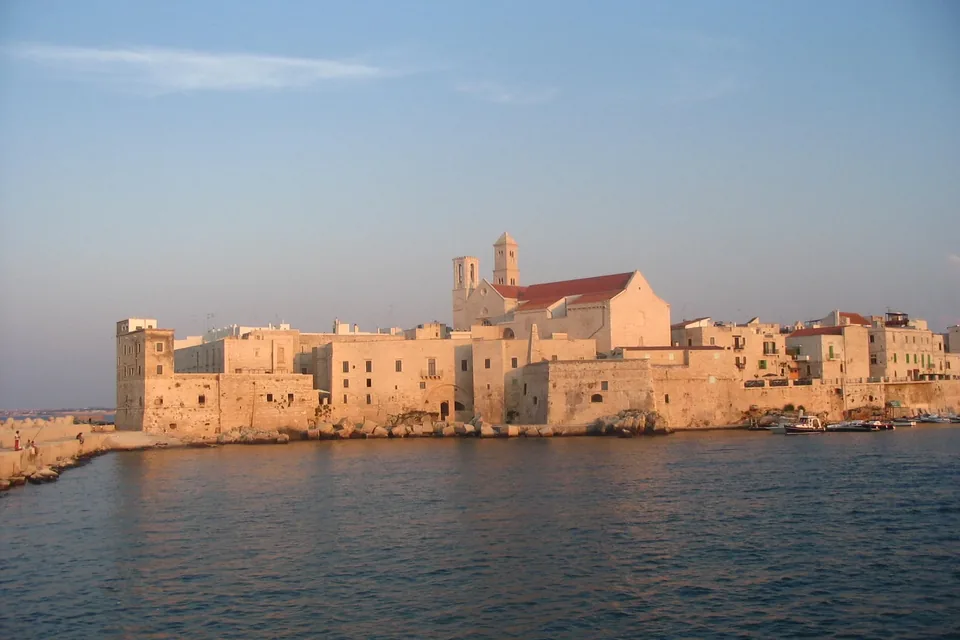
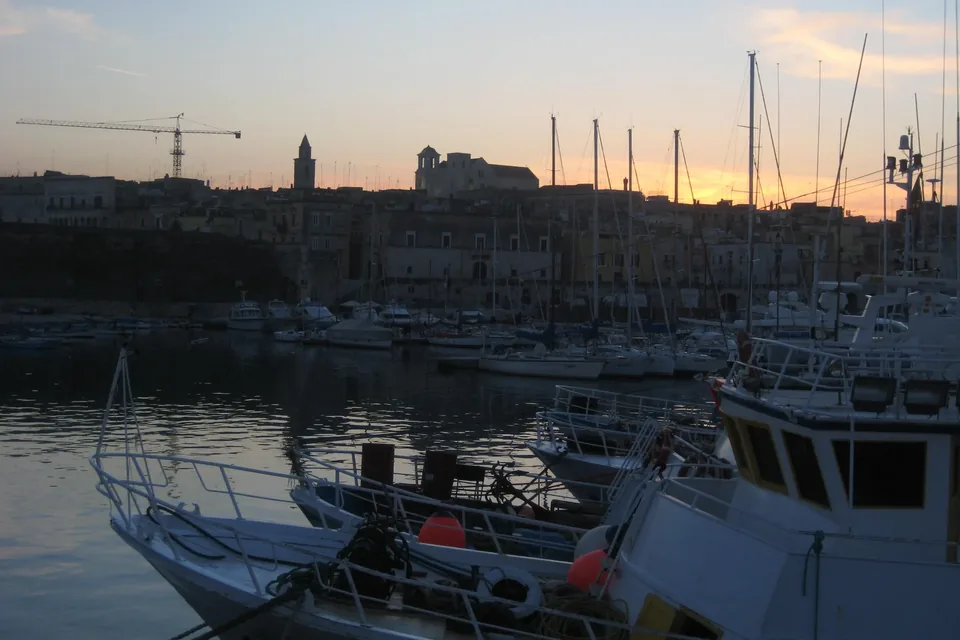
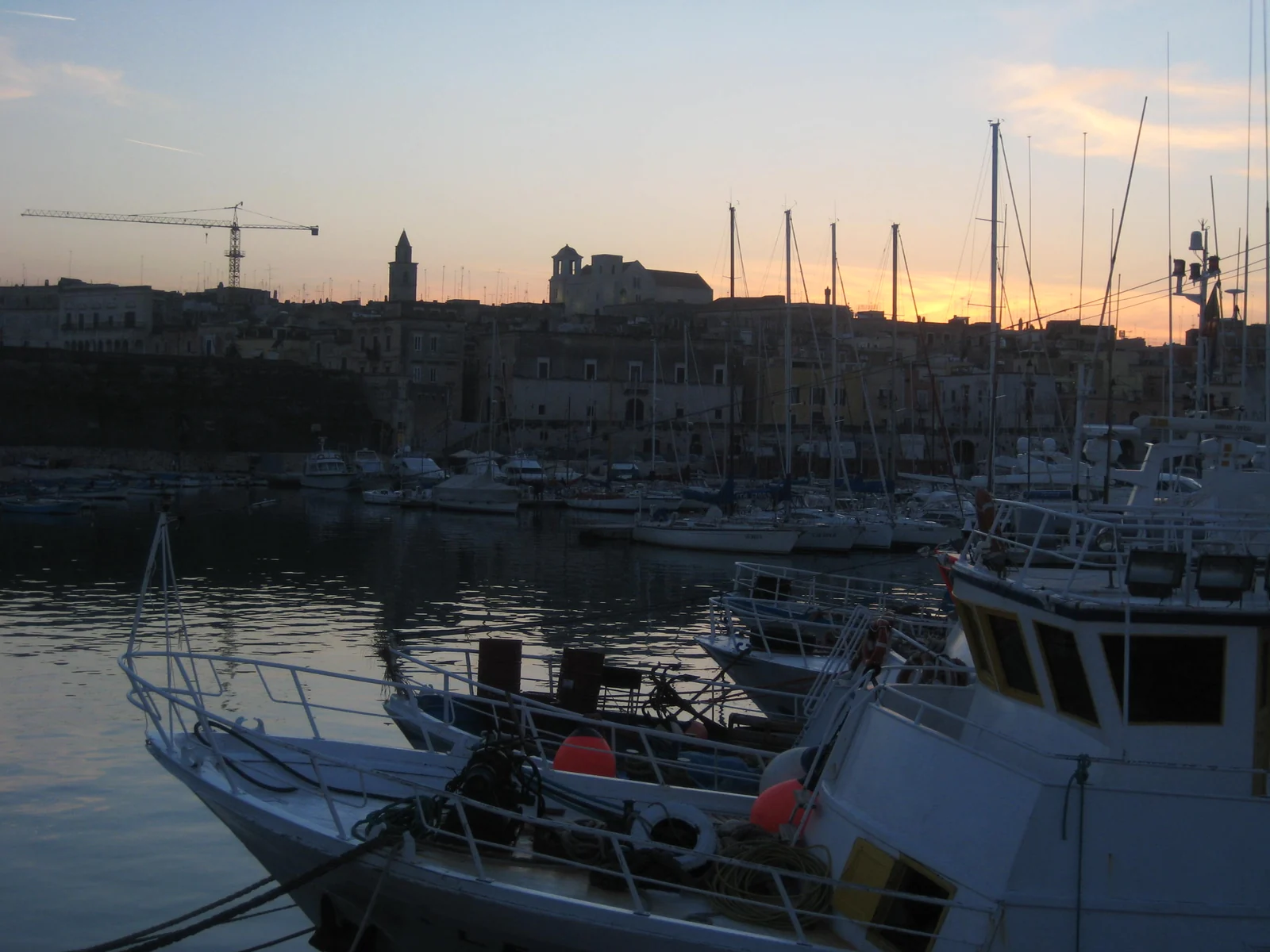
Pair Giovinazzo’s harbour with the inland stone landscape. Notice the difference between a heap of stones and a built structure: not every specchia is a tomb.
Talk to us