What makes them crisp
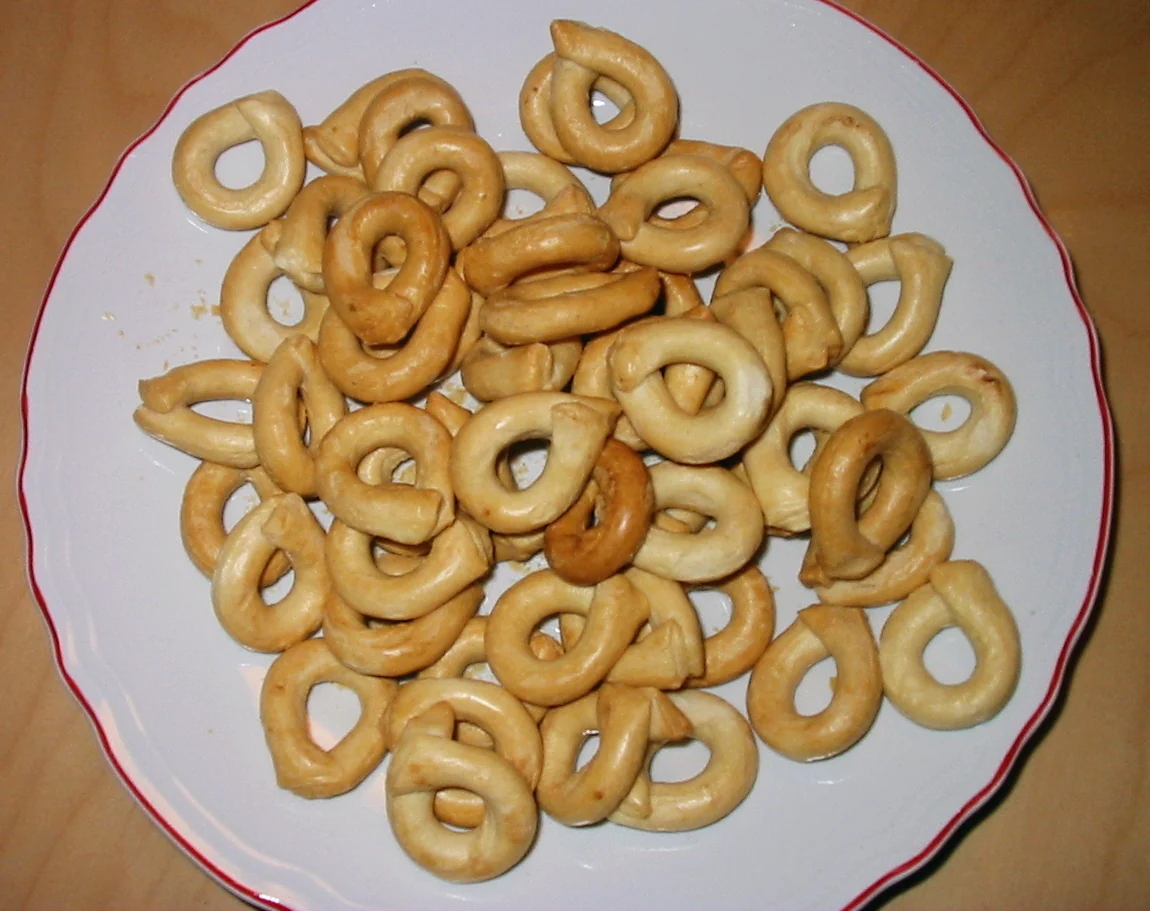
Puglia’s atlas of traditional foods describes taralli as crisp rings made from an unleavened dough of flour, extra virgin olive oil and white wine. The dough is rolled into small cylinders that are closed into rings, then boiled and finally baked. It is this double cooking that gives the dry, crumbly texture you recognise at the first bite.
The profile gives the whole region as the area of origin and records some dialect names, such as picc’latedd, vescottere and taredd. There are many versions: with aromatic herbs, fennel seeds, olives, onion or other vegetables. The ingredients change the taste without erasing the shape, which remains the common sign of the family.
Production is listed as year-round, which makes the tarallo a travel companion in every season. It is found in bakeries, shops and on-farm sales: more than a sweet or a bread, it is a small baked product that accompanies an aperitif, an afternoon snack or a pause during a walk, and travels well in a bag.
A name with many explanations
The origin of the word “tarallo” is uncertain, and the PAT profile itself lists several theories. Some link it to the Latin “torrère”, to toast, because of its golden, crisp look; others to an Italic root meaning to wrap, or to French words for round bread or a drying room. The theory now considered most likely points to the Greek “daratos”, a kind of bread.
Beyond the name, the atlas places the tarallo’s birth in the fifteenth century and records a popular legend. A mother with an almost empty larder supposedly combined what she had, namely flour, oil, salt and white wine, to feed her children, shaping thin strips of dough into rings and baking them.
These stories are not history in the strict sense, but they capture the product’s character: a few household ingredients, no yeast, a shape that keeps for a long time. The profile also mentions dedicated festivals, such as one for tarallucci and wine in Alberobello and another for the “taraddru” in Castiglione d’Otranto, showing how widespread the tarallo is from north to south.
A Foggia comparison: scaldatelli
The PAT profile of scaldatelli concerns the province of Foggia. It describes them as golden, glossy and crisp, with an aroma combining oil and wine and a finish of fennel seed. The typical shape is round, but there are also elongated versions, figures of eight, snails or little “gates”. The dough rests briefly, is divided into sticks and closed with light finger pressure.
The name comes from “scaldatura”, scalding: the rings are dropped into boiling water until they float, then dried in the air for several hours and only then baked. The atlas recounts that, according to tradition, a fifteenth-century farmer’s wife first scalded these little rings of dough and found they became good only after drying and baking.
From the seventeenth century scaldatelli spread among farming families, sometimes in place of bread, and were exchanged as a sign of friendship. The saying “to end up with tarallucci and wine”, meaning to settle an argument amicably, is linked to them. Among its references the profile cites the Pro Loco of Rignano Garganico.
Sources: PAT Puglia — Scaldatelli
Gravina: sweet wedding taralli
In Gravina in Puglia the atlas records two sweet taralli, both added to the national list in 2015. The wine tarallo is crumbly and takes its flavour from Verdeca white wine of the Gravina DOC, combined with flour, sugar and extra virgin olive oil; the small rings are baked in a wood-fired oven. The egg tarallo is a softer ring shaped by hand, with whipped eggs, sugar, oil and an aniseed liqueur.
For the egg tarallo the profile describes a curious detail: the join is marked with the tip of a key. The taralli rise until the next day, are boiled a few at a time, dried on a cloth and scored all round before going into the oven.
Both profiles refer to a 1973 book on Gravina traditions that describes the local wedding. After the ceremony the “tavola di li piccilateddre” was laid, and among the sweets on it were these very taralli. Tasting them today means finding a piece of family celebration inside an everyday baked product.
Sources: Atlante dei PAT di Puglia (Regione Puglia, Università di Bari) — Tarallo al vino · Atlante dei PAT di Puglia (Regione Puglia, Università di Bari) — Tarallo all’uovo
The Immaculate Conception crown
Also in Gravina, the atlas describes the Immaculate Conception tarallo: a large ring-shaped bread scented with fennel seeds, made with durum wheat flour and a little aniseed liqueur. Unlike dry taralli it is leavened and large, and it is baked in a very hot oven.
The profile explains its meaning. The tarallo is prepared on the eve of 8 December and, by tradition, eaten at noon on 7 December instead of lunch, as a form of fasting and a request for the Virgin’s intercession. The crown shape recalls Mary’s halo, the white flour her purity, and wild fennel a link with Mary’s birth in September, when the plant is in flower.
The atlas also mentions a tarallo festival in Gravina, tied to the tradition of preparing it for the Immaculate Conception as an act of thanksgiving. It shows how a baked product can mark a community’s religious calendar: to see it in context, early December is the right time, after checking the local programme for the year.
Sources: Atlante dei PAT di Puglia (Regione Puglia, Università di Bari) — Tarallo dell’Immacolata
Dark taralli with vincotto
In the Foggia area the tarallo also becomes a festive sweet. The PAT atlas describes dark taralli with vincotto as large, crumbly, fragrant and spiced rings, dark brown verging on black. The colour comes from vincotto, cooked grape must, to which cocoa, dark chocolate, almonds, honey, orange zest, cinnamon and cloves are added.
The dough is rolled into a cylinder, cut into pieces and closed into rings, then baked briefly on an oiled tray. The profile places the origin of this sweet in the second half of the sixteenth century, attributing it to cloistered nuns, and notes that it appears frequently in the books of the Puglian food scholar Luigi Sada.
It can be made all year, but production is concentrated at Christmas, when dark taralli appear at fairs and festivals, especially in the province of Foggia. Compared with scaldatelli it is another world: sweet dough, spices, softer texture. Placing them beside the savoury rings shows how wide the family bearing this name really is.
Sources: Atlante dei PAT di Puglia (Regione Puglia, Università di Bari) — Taralli neri con vincotto
Plain first, then flavoured
To begin, take a plain tarallo and one with fennel, preferably from the same bakery, so that the base dough is the same. First notice how it breaks and how it smells, then compare crumbliness and persistence. A strong aroma is not automatically the most interesting: the question is whether you can still taste the oil and wine in the dough.
If comparing products from different bakeries, also note size, shape and declared ingredients, so as not to attribute to flavouring a difference that comes from the method. A smaller, thinner tarallo will be crisper; a larger one may feel denser.
One tasting on its own and one alongside a vegetable preserve, or a glass of wine, are enough to understand what you prefer. Avoid a platter where olives, cheeses and cured meats overlap from the start: first recognise the product, then look for pairings. As a souvenir, choose the flavour you genuinely enjoyed rather than every variant in a mixed pack.
From oven to journey: Bari, Giovinazzo and the Gargano
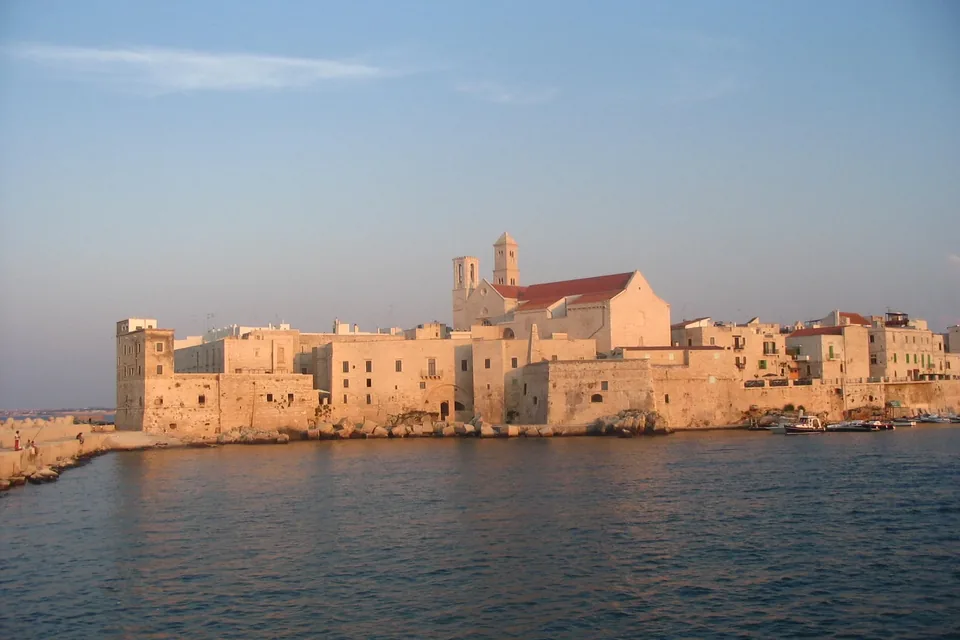
Around Bari, a tarallo can be a pause while discovering Bari or Giovinazzo. For the latter, the Città dell’Olio association suggests a route through the old centre, from the Arco Traiano to the square of the church of the Madonna di Costantinopoli and on to the cathedral of about 1100: a short itinerary, well suited to a bakery stop between monuments.
In a northern chapter of the journey, compare them with the scaldatelli of the Foggia area, perhaps on the Gargano. Italia.it describes the promontory as a mass of karst rock jutting into the Adriatic, protected by a national park that includes the Foresta Umbra, the Tremiti Islands and the lakes of Lesina and Varano. The Park notes that Rignano Garganico, called the “balcony of Puglia”, has a full calendar of feasts and food festivals.
There is no need to collect bakery addresses: a well-explained tasting followed by a walk is more useful. Back home, notes on shape, aroma and texture help you find again what made that product memorable, and recognise it among the many packs on sale.
Sources: Associazione nazionale Città dell’Olio — Giovinazzo · Italia.it (Ministero del Turismo) — Gargano · Parco nazionale del Gargano — Feste e sagre (Rignano Garganico)
A thread for your journey
Journey idea: northern Bari’s towns and a chapter towards the Gargano, with two distinct, light tastings. Dough and baking give the journey a thread, while the towns provide its context.
Talk to us