Why go
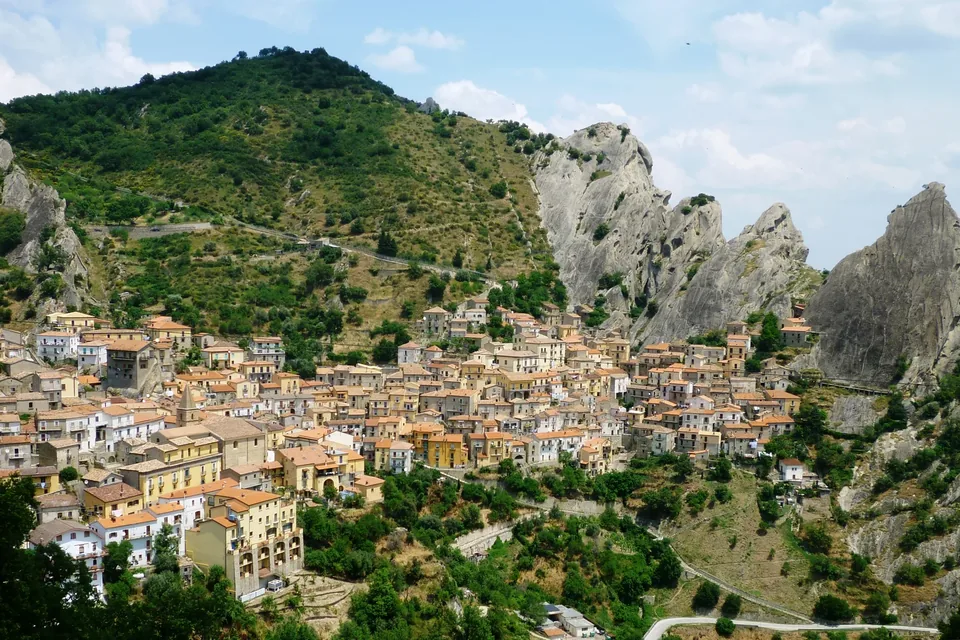
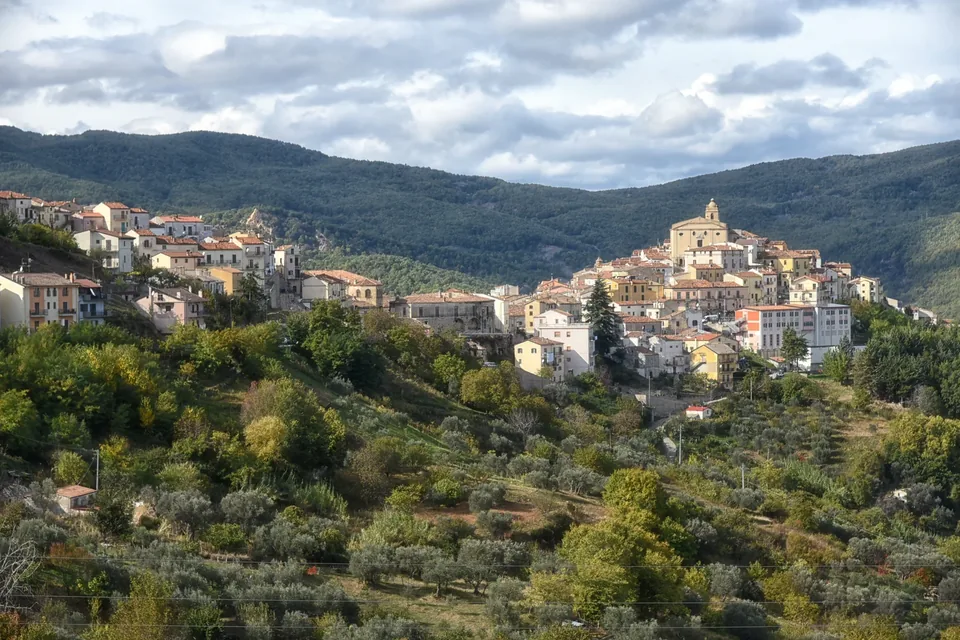
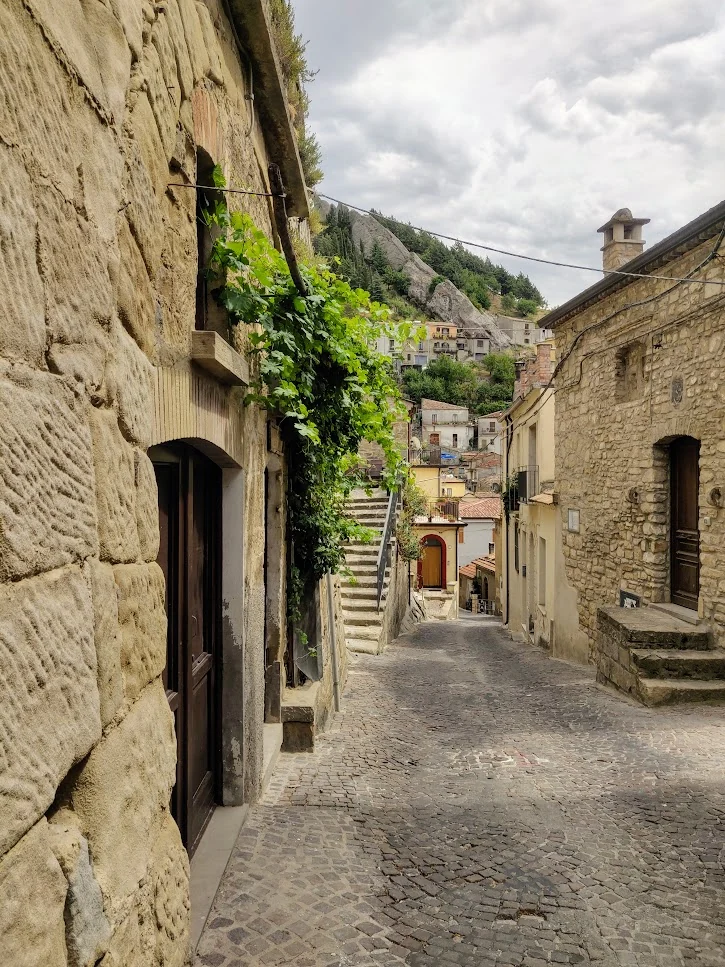
Pietrapertosa is the highest municipality in Basilicata: its houses reach 1,020 metres, resting against the sandstone spires of the Little Lucanian Dolomites in the upper Basento valley. The village does not reveal itself all at once. From outside it seems to blend into the rock; inside it opens into a web of stairways, lanes and small squares where houses and cliff become one.
The oldest quarter, the Arabata, climbs towards the Norman-Swabian castle perched on the summit, overlooking a long stretch of the valley. Around it, the Gallipoli Cognato and Little Lucanian Dolomites regional park offers trails, woods and cliffs inhabited by rare birds of prey. Then there is the Volo dell'Angelo, the steel cable that in the warmer months links Pietrapertosa with Castelmezzano above the gorges.
It is a destination for lovers of mountain villages, nature and layered histories: adventure and slowness live side by side here, as long as you give time to the village and not only to the view.
Sources: Italia.it — Pietrapertosa · Parco Gallipoli Cognato Piccole Dolomiti Lucane — Pietrapertosa · Comune di Pietrapertosa — Il castello · Parco Gallipoli Cognato — Le Piccole Dolomiti Lucane · Italia.it — Il Volo dell'Angelo
History
Human presence in the park area is very ancient: Neolithic finds have come to light on Monte Croccia and, between the sixth and fourth centuries BC, the Lucanians founded a fortified town there with walls over two kilometres long. After centuries of decline, the area was permanently resettled from the tenth century.
According to the municipality, Arabs led by Bomar settled in Pietrapertosa in 838 and made the rock their stronghold. The name of the Arabata, the oldest quarter, comes from them: rectangular houses built against the rock, often used as a wall, with a low door, no windows and a hole in the roof that served as chimney and skylight. Later the castle passed to the Normans and Swabians, after whom it is named; abandoned in the seventeenth century, it was brought back to light by excavations that revealed service rooms and finds.
In the eleventh and twelfth centuries one of the village fortifications was turned into the church of San Giacomo Maggiore, linked to the diocese of Acerenza. In 1474, at the wish of Pope Sixtus IV, the convent of San Francesco was founded; its cloister bears witness to the age of the great religious orders.
Sources: Parco Gallipoli Cognato — Storia del territorio · Comune di Pietrapertosa — L'Arabata · Comune di Pietrapertosa — Il castello · Comune di Pietrapertosa — Chiesa di San Giacomo Maggiore · Comune di Pietrapertosa — Convento di San Francesco
What to see
The climb to the castle crosses the whole Arabata, with narrow lanes and stairways leading to the summit: wear comfortable shoes, as the route can be demanding. At the top remain stretches of the walls built with the diatoni technique, small wooden beams set crosswise into the masonry to strengthen it, together with remains of the tower, the prisons and two rainwater cisterns. Access to the castle is free.
The mother church of San Giacomo Maggiore keeps its basilica plan, a Romanesque bell tower, a crypt and Romanesque capitals uncovered during restoration; it holds seventeenth- and eighteenth-century canvases and frescoes, a small frescoed cell with the Last Judgement and a sixteenth-century wooden choir.
The convent of San Francesco is built around a square cloister with a central well and slender columns with capitals; from the walkway, where cross vaults once frescoed can still be seen, a stairway led up to the friars' cells. The adjoining church, with a single nave, wooden trusses and a large pointed arch, is open for services, while the rest of the complex is being restored.
Sources: Comune di Pietrapertosa — Il castello · Italia.it — Castello normanno-svevo di Pietrapertosa · Comune di Pietrapertosa — Chiesa di San Giacomo Maggiore · Comune di Pietrapertosa — Convento di San Francesco
Food and wine
In the villages of the Gallipoli Cognato park, food comes from livestock and the woods. The park lists among local products cheeses and dairy from podolica milk, traditional cured meats, honey, olive oil, preserves and mushrooms: products tied to a territory where farming, grazing and biodiversity have coexisted for generations.
Among registered products closest to this mountain cooking is caciocavallo podolico della Basilicata, made from the milk of free-grazing podolica cows, whose flavour deepens with ageing. Potenza-area tables also feature handmade pastas such as strascinati and cavatelli, and lucanica, the sausage that symbolises the region.
The festival calendar is also a food calendar: the park notes the "Sapori d'autunno" event in Pietrapertosa over the 1 November holiday, an event devoted to seasonal flavours. It is the right moment to taste the village's cooking in its most seasonal forms.
Sources: Parco Gallipoli Cognato — Prodotti tipici · Fondazione Slow Food — Caciocavallo podolico della Basilicata · Italia.it — Prodotti e piatti tipici lucani · Parco Gallipoli Cognato — Cultura e tradizioni
Things to do
The Volo dell'Angelo is the best-known experience: hanging from a steel cable, you cross gorges and woods between Pietrapertosa and Castelmezzano. The ticket includes an outbound and a return flight on two different lines plus a shuttle; the installations open in the warmer months and booking is online. Among the spires of Castelmezzano there is also a 1,180-metre rail toboggan run.
Walkers will find a dense network of trails in the park, for experienced hikers and gentle strolls alike. From Pietrapertosa, the Path of the Seven Stones, an old farm track of about two kilometres enriched with installations inspired by local legends, leads to Castelmezzano; the start is signposted in the square in front of the post office. Along the ridges you may see red kites, kestrels, peregrine falcons and the rare black stork, studied by the park.
The park also offers a cycle route, orienteering, bouldering and guided visits with the guides' association; the spires, with popular names such as the Golden Eagle, the Anvil, the Great Mother and the Owl, make the best subject for a photographic walk.
Sources: Volo dell'Angelo Dolomiti Lucane — sito ufficiale · Parco Gallipoli Cognato — Slittovia delle Dolomiti Lucane · Parco Gallipoli Cognato — Sentieri · Comune di Pietrapertosa — Dolomiti Lucane · Parco Gallipoli Cognato — Le Piccole Dolomiti Lucane
When to go
The best season runs from spring to autumn. The Volo dell'Angelo operates in the warmer months, with openings extending into early December, and the trails are most pleasant when days are long; in summer the village's altitude ensures a cooler climate than the valleys. In the mountains, however, sudden summer storms are possible: the Volo operator advises bringing a rain jacket on uncertain days.
Festivals follow the rhythm of woods and harvests. Pietrapertosa is one of the park villages that celebrates the Maggio, the tree ritual uniting a Turkey oak, the "maggio", and a holly crown carried into the village with bagpipes, drums and pairs of oxen, ending with the climb of the gift-laden tree. In August "Sulle tracce degli arabi" recalls the history of the Arabata, and around 1 November comes "Sapori d'autunno".
In winter the village, above a thousand metres, can be cold and sometimes snowy, with the Volo closed: a time for those seeking silence and different landscapes, but check road conditions first.
Sources: Volo dell'Angelo Dolomiti Lucane — sito ufficiale · Italia.it — Il Volo dell'Angelo · Parco Gallipoli Cognato — Cultura e tradizioni · Italia.it — Pietrapertosa
Getting there and around
Pietrapertosa is reached by car from the SS407 Basentana, the expressway linking the Sicignano motorway exit with Metaponto via Potenza. According to the park, from Potenza take the exit for Campomaggiore, Accettura, Castelmezzano and Pietrapertosa, about 30 kilometres from the city; from Matera follow the provincial road towards Ferrandina Scalo and then the Basentana to the same exit. Bari is about 130 kilometres away, Naples about 180.
Trains reach Potenza Centrale on the RFI network, and Ferrovie Appulo Lucane link Potenza with Bari and Matera: from there the last stretch to the village must be arranged by road.
In the village you get around only on foot. The Arabata lanes climb steeply and can be slippery, so wear suitable footwear; Castelmezzano is linked by roads, hiking trails and, in the warmer months, by the Volo dell'Angelo, which includes a shuttle for the return.
Sources: Parco Gallipoli Cognato — Come arrivare · RFI — Stazione di Potenza Centrale · Ferrovie Appulo Lucane — Orari e linee · Comune di Pietrapertosa — L'Arabata · Italia.it — Castelmezzano · Volo dell'Angelo Dolomiti Lucane — sito ufficiale
Where to stay
Pietrapertosa offers small-scale, scattered accommodation. The municipality's map of places lists bed and breakfasts, rooms to let, holiday homes, a hotel and agriturismi in the countryside; the park, which records lodgings in the villages of the protected area, also lists campsites and camper stops in nearby municipalities.
Sleeping in the village is the best way to experience it after day visitors have left: in the evening the Arabata and the lanes below the castle regain a quiet atmosphere, and early in the morning you can set off on the trails before the heat. A B&B in the old centre suits those travelling light; an agriturismo suits drivers who want to taste country produce.
On summer weekends and on the busiest days of the Volo dell'Angelo, book ahead; alternatively Castelmezzano and Accettura, in the same park, offer other options a few kilometres away.
Sources: Comune di Pietrapertosa — Luoghi · Parco Gallipoli Cognato — Dove dormire
Nearby
Castelmezzano, across the spires, is Pietrapertosa's natural companion: you enter through a tunnel cut in the rock and reach a small panoramic square overlooking the nature town. The thirteenth-century mother church holds the Madonna dell'Olmo, a fourteenth-century wooden statue; a stairway cut into the rock climbs to the remains of the old castle, while other trails lead towards Pietrapertosa across a single-arch stone bridge.
Accettura, at the heart of the park, hosts the visitor centre at Palazzo and the Museum of Tree Cults, devoted to the Maggio tradition that links the villages of the area. Many excursions start here into the Gallipoli Cognato forest and towards Monte Croccia, home to an anthropological reserve protecting the remains of the fortified Lucanian town.
Potenza, about thirty kilometres away, adds the National Archaeological Museum of Basilicata and the historic centre along Via Pretoria.
Sources: Parco Gallipoli Cognato Piccole Dolomiti Lucane — Castelmezzano · Parco Gallipoli Cognato — Centri visita · Parco Gallipoli Cognato — Sentieri · Parco Gallipoli Cognato — Carta d'identità del Parco · Ministero della Cultura — Museo archeologico nazionale della Basilicata Dinu Adamesteanu
Local tourist information
Local tourist offices help with opening times, events and transport on the day.
- Ente Parco Gallipoli Cognato Piccole Dolomiti Lucane — Centro visita Palazzo · Loc. Palazzo, 75011 Accettura (MT) · +39 0835 675015 · info@parcogallipolicognato.it · Official website
Source: Parco Gallipoli Cognato — Centri visita · Parco Gallipoli Cognato — Sentieri · checked on
Where to stay
In the municipality of Pietrapertosa the national database of the Ministry of Tourism lists 29 accommodation businesses with a verified CIN code: 1 hotels, 7 other licensed accommodation and 21 other types such as B&Bs and private rentals.
Sources: Ministero del Turismo – Banca Dati Strutture Ricettive (dashboard pubblica), 2026-10-12
YOUR JOURNEY
How to shape a journey here
Walk slowly through the steps and notice how the viewpoint changes. Understanding two quarters carefully is better than collecting every viewpoint.
Talk to us about it