
APULICA / MEATS AND CURED MEATS
Calabrian Podolica cattle
Slow Food Presidium · PAT · Meats and cured meats · Calabria
In brief
- Hardy grey cattle with crescent- or lyre-shaped horns, grazed on the Sila plateau and surrounding areas. (Fondazione Slow Food — Presidio Razza podolica calabrese)
- It grazes almost all year on scrub and woodland; the meat is lean and tasty, its fat yellowish from carotene. (Fondazione Slow Food — Presidio Razza podolica calabrese)
- It gives little milk, which is made into caciocavallo. (Fondazione Slow Food — Presidio Razza podolica calabrese)
- Calabrian Podolica beef is on Calabria's list of traditional products. (Masaf — Elenco nazionale dei prodotti agroalimentari tradizionali, XXVI revisione (2026))
History and origin
The Podolica is a cattle breed of very ancient origin, raised along the southern Apennines from Campania to Apulia and on to the mountains of Calabria. In the past it was used mainly as a working animal, and only secondarily for meat and milk.
It is a very hardy breed: it copes with steep ground and finds food where other breeds would struggle, among Mediterranean scrub, bushes, stubble and woodland leaves. For this reason it can play an important role in bringing marginal land and difficult pastures back into use.
To support it, the breeders' cooperative A.PRO.ZOO. launched a project to recover and promote the Calabrian Podolica, involving breeders, butchers, shops and restaurants, which has become a Slow Food Presidium. Calabrian podolica meat is also listed among Calabria's traditional products.
Sources: Fondazione Slow Food — Presidio Razza podolica calabrese · Masaf — Elenco nazionale dei prodotti agroalimentari tradizionali, XXVI revisione (2026)
Area and method of production
The Presidium area is the Sila plateau and surrounding areas, in the provinces of Cosenza, Catanzaro and Crotone. The Podolica must graze outdoors practically all year: it cannot bear the confined spaces of barns.
Breeders follow strict rules that ban silage and genetically modified feed. The pastures lie in areas where no herbicides, pesticides or other chemical treatments are used. The quality of the meat comes from the combination of genetics, feeding, husbandry and careful handling of slaughter.
Growth is slow: young bulls gain just under 900 grams a day, about half the rate of intensively farmed breeds. This makes rearing more costly, and the supply-chain project aims to give breeders a fair income.
Sources: Fondazione Slow Food — Presidio Razza podolica calabrese
How to recognise it
The Podolica is recognised by its grey coat, shading to dark grey and lighter in cows, and by its thin, light horns, crescent-shaped in bulls and lyre-shaped in cows.
Thanks to outdoor grazing the meat is lean, tasty and rich in vitamins and minerals, low in cholesterol and with a good share of essential omega 3 and omega 6 fatty acids. The fat is slightly yellowish because of its high carotene content, and the texture is firmer than that of grain-fed cattle if the meat is not properly hung.
The Podolica gives little milk, about 1,500 kilos a year, but of very high quality, and the caciocavallo made from it is considered outstanding.
Sources: Fondazione Slow Food — Presidio Razza podolica calabrese
Where to taste it
The Calabrian Podolica lives on the Sila plateau and in surrounding areas, across the provinces of Cosenza, Catanzaro and Crotone. Visitors to the Sila can see it grazing in its mountain landscapes, where herds stay outdoors almost all year.
The Presidium's supply-chain project also involves butchers, shops and restaurants affiliated with the cooperative, so the meat reaches the table in its own area, properly hung. The cows' milk also gives a highly prized caciocavallo.
A trip to the Sila thus becomes a chance to taste meat tied to an ancient way of farming, one that keeps mountain pastures and the most difficult areas of the Calabrian Apennines alive.
Sources: Fondazione Slow Food — Presidio Razza podolica calabrese
Protection
- Slow Food Presidium — razza-podolica-calabrese (Fondazione Slow Food — Presidio Razza podolica calabrese)
- Traditional agri-food product (PAT) — Calabria, n. 17, 26th revision (Masaf — Elenco nazionale dei prodotti agroalimentari tradizionali, XXVI revisione (2026))
When
- Production: all year round (Fondazione Slow Food — Presidio Razza podolica calabrese)
Where
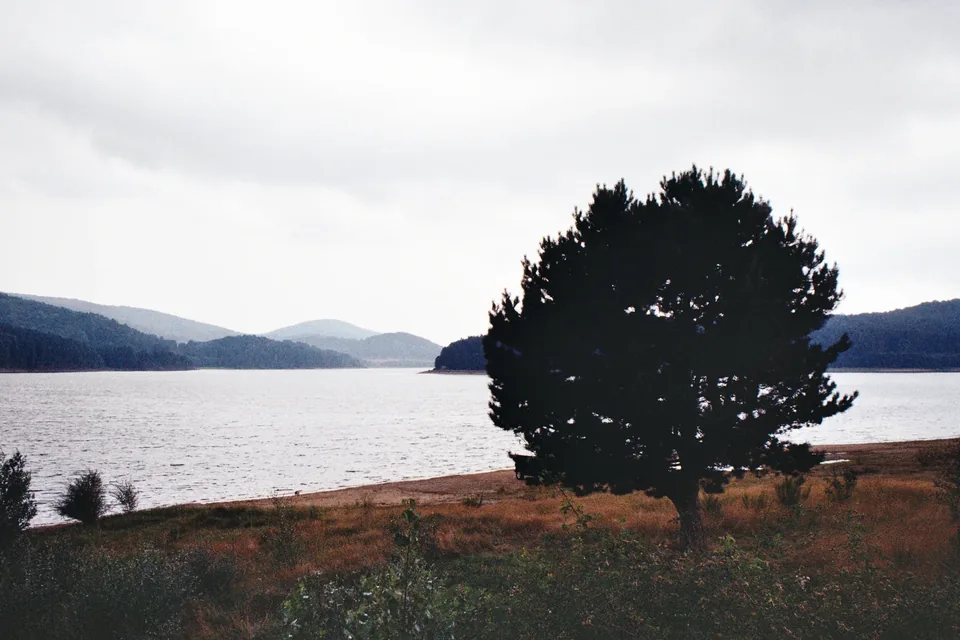
Sila
Sila National Park: a plateau of forests, lakes and pastures between Cosenza, Catanzaro and Crotone, and a UNESCO biosphere reserve.
Read the guide →Photo: Ugo Leonetti / Wikimedia Commons — CC BY-SA 4.0 · Resized and converted to WebP.
