
APULICA / OILS AND FATS
Vulture extra virgin olive oil
PDO · Oils and fats · Basilicata
In brief
- Extra virgin oil from at least 60% Ogliarola del Vulture, with Coratina, Cima di Melfi and other varieties up to 40%. (Qualigeo (Fondazione Qualivita) — Vulture DOP)
- The area includes several towns in the province of Potenza around Mount Vulture. (Qualigeo (Fondazione Qualivita) — Vulture DOP)
- Harvest runs from veraison to 31 December. (Qualigeo (Fondazione Qualivita) — Vulture DOP)
History and origin
In the Vulture area the olive tree has been present since ancient times. This is recorded in documents kept at the State Archive in Potenza: statistics and historical reports describing the land and its olive growing, which follow oil as it gradually became an ever larger part of the local economy.
Vulture is a mountain in the north of Basilicata that the region's tourism agency presents as one of the signature Lucanian landscapes, linked to wine as much as to oil. Among the varieties, the one that gives the area's oil its name and character is Ogliarola del Vulture.
Today Vulture extra virgin olive oil is a Protected Designation of Origin, entered in the European register of geographical indications, with its own protection consortium.
Sources: Qualigeo (Fondazione Qualivita) — Vulture DOP · APT Basilicata — Le collezioni 2018, Basilicata enogastronomica · eAmbrosia — Vulture (PDO-IT-0452)
Area and method of production
The production area covers the whole territory of some municipalities in the province of Potenza, in the Vulture area. At least 60% of the oil comes from Ogliarola del Vulture; up to 40% may come from Coratina, Cima di Melfi, Palmarola, Provenzale, Leccino, Frantoio, Cannellino, Rotondella, Laudiola and Nocellara.
It is grown by the area's traditional methods. Picking runs from the start of veraison, when the olives begin to change colour, to 31 December, using nets; olives fallen to the ground or gathered on permanent nets may not be used. The maximum yield is 8 tonnes of olives per hectare, with a 20% margin in bumper years.
The olives must be processed within 24 hours, using only mechanical and physical methods. Chemical or biochemical aids are not allowed, nor is the ripasso, a second centrifuging of the paste, and the oil yield may not exceed 20%.
How to recognise it
Vulture PDO is amber yellow with green glints. Its flavour is that of fully ripe olives: sweet or slightly bitter, with hints of pungency.
It is especially rich in polyphenols, a feature that seems linked to the rather cool climate of the production area.
It is sold in glass or tinplate containers of up to five litres, and also in single-serve sachets, always with the product logo on the label.
In the kitchen
The Qualivita Foundation recommends it as the ideal dressing for typical Lucanian dishes: cavatelli with turnip tops, salt cod, especially baccalà a ciauredda, broad bean and chicory soup, and lamb alla contadina.
Like every extra virgin oil it is delicate. It should be kept cool and dark, between 14 and 18 degrees, away from heat and strong-smelling products.
It is best used within four to six months of pressing, when its flavour is at its fullest: oil from the autumn harvest is therefore the natural partner of winter and spring cooking.
Where to taste it
Vulture oil is found in the towns of the Vulture area, in northern Basilicata, in the province of Potenza. Several of them belong to the Città dell'Olio network of olive oil towns: the regional tourism agency of Basilicata names Melfi, Barile, Rapolla and Forenza among others, some of which are also Città del Vino.
The area combines olive groves and vineyards on the mountain's slopes: a trip to the Vulture and Melfi offers a chance to taste the oil during the harvest months, which end by late December, and to find it again in Lucanian dishes.
Visitors can pair it with local food, from cavatelli with turnip tops to salt cod, which tradition dresses with the local oil.
Sources: APT Basilicata — Le collezioni 2018, Basilicata enogastronomica · Qualigeo (Fondazione Qualivita) — Vulture DOP
Protection
- Protected designation of origin (PDO) — PDO-IT-0452 (eAmbrosia — Vulture (PDO-IT-0452))
When
- The sources consulted give no months.
Where
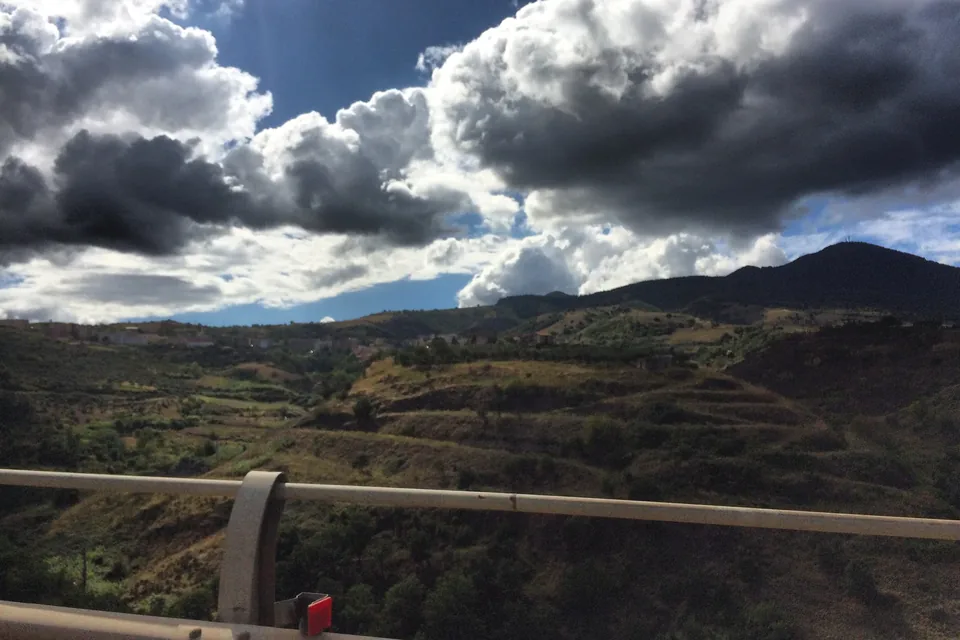
Vulture
Monticchio lakes, Rionero and wine culture: explore Vulture beyond a single tasting.
Read the guide →Photo: Gianmarco Tirico / Wikimedia Commons — CC BY-SA 4.0 · Resized and converted to WebP.
