
APULICA / FRUIT, VEGETABLES AND PULSES
Peperoncino di Calabria (chilli pepper)
PGI · Fruit, vegetables and pulses · Calabria
In brief
- It covers the fruit of many Capsicum annuum varieties, fresh or dried, whole, in pieces, as flakes or as powder. (Qualigeo (Fondazione Qualivita) — Peperoncino di Calabria IGP)
- The production area is the whole of Calabria; only packing may take place outside the region. (Qualigeo (Fondazione Qualivita) — Peperoncino di Calabria IGP · ARSAC — Peperoncino di Calabria IGP)
- The dried chilli is also sold strung in garlands from 20 to 120 cm long. (Qualigeo (Fondazione Qualivita) — Peperoncino di Calabria IGP)
- Its heat is medium to high, between 5,000 and 70,000 Scoville units, with fruity and herbaceous aromas. (Qualigeo (Fondazione Qualivita) — Peperoncino di Calabria IGP)
History and origin
Chilli reached Europe from the Americas, and in Calabria it has over time become one of the most representative vegetable crops and a hallmark of the cuisine. The Municipality of Diamante recalls that the Peperoncino Festival was founded in 1992 precisely for the five hundredth anniversary of the discovery of America, the event that began the arrival of this spice in Europe.
Over the centuries the crop took root in farming across the region, and chilli entered a long list of traditional preparations: Calabria's register of traditional food products includes Calabrian hot chilli, Spilinga chilli, chopped chilli, stuffed chillies and chillies in oil, and strings of dried peppers.
European recognition is recent. With Implementing Regulation (EU) 2026/1273 of 4 June 2026, Peperoncino di Calabria was entered in the register of Protected Geographical Indications, after long work by the growers, now gathered in the Consortium of Peperoncino di Calabria producers.
Sources: Comune di Diamante — Diamante in pillole · ARSAC — Peperoncino di Calabria IGP · ARSAC (Regione Calabria) — I prodotti DOP, IGP e PAT della Calabria · ARSAC — Peperoncino di Calabria, arriva il riconoscimento IGP europeo · eAmbrosia — Peperoncino di Calabria (PGI-IT-03421)
Area and method of production
The production area is the whole of Calabria, in the provinces of Catanzaro, Cosenza, Crotone, Reggio Calabria and Vibo Valentia, and all the key stages of production must take place in the region. ARSAC links the product's quality to strong sunshine, summer heat, good ventilation and suitable, well-drained soils.
The PGI covers only the species Capsicum annuum, in numerous cultivars: among those listed in the specification are Corno di capra, Cayenna, Ciliegia, Sigaretta and Trottolino amoroso, known locally as Naso di cane, along with varieties bearing Calabrian names such as Calabrese.
The chilli is sold fresh or dried. Drying must preserve colour, aroma and flavour; the dried product may be whole, in pieces, ground or chopped, with or without seeds, as flakes or powder. The specification also sets rules on fruit ripeness and on traceability along the whole chain.
Sources: ARSAC — Peperoncino di Calabria IGP · Qualigeo (Fondazione Qualivita) — Peperoncino di Calabria IGP
How to recognise it
Fresh Peperoncino di Calabria PGI is red, with a green stalk and firm, compact flesh; dried, it ranges from brick red to deep carmine. Shapes vary widely: conical, long conical, tapered, sometimes with a curved tip, 3 to 25 centimetres long, or round, 1 to 4 centimetres across.
The aroma is penetrating and intense, with grassy and fruity notes when fresh; dried products may show gentle toasted notes and, depending on the cultivar, hints of ripe pepper, tomato and Mediterranean herbs. Heat is medium to high, between 5,000 and 70,000 Scoville units, lingering and balanced.
Fresh chillies are sold in containers of up to a kilo or loose; dried ones also in strings or ropes 20 to 120 centimetres long, or in containers of up to three kilos when whole or in pieces and up to ten when ground.
Sources: Qualigeo (Fondazione Qualivita) — Peperoncino di Calabria IGP · ARSAC — Peperoncino di Calabria IGP
In the kitchen
Chilli is a hallmark of traditional Calabrian cooking. It turns up in cured meats and preserves: Spilinga's 'nduja, the spicy spreadable salume, Crotone's salted sardella and rosamarina, preserves of baby oily fish with chilli, and chilli tarallini and friselle.
Chopped chilli and stuffed chillies or chillies in oil are recognised among traditional products, and on the coast of Diamante anchovies are preserved under salt and chilli in clay jars called cugnitti; rosamarina is also eaten in fritters, the pitticelle.
The PGI's many cultivars offer a wide range of aromas, flavours and heat levels, from the grassier fresh chilli to the more toasted dried one.
Sources: ARSAC (Regione Calabria) — I prodotti DOP, IGP e PAT della Calabria · Comune di Diamante — Diamante in pillole · ARSAC — Peperoncino di Calabria IGP
Where to taste it
Chilli is grown all over Calabria, and each area has its own varieties and preserves. The symbolic place is Diamante, on the Riviera dei Cedri, which since 1992 has devoted the Peperoncino Festival to the spice: usually in the first days of September, with exhibitions, workshops, cabaret, a film season, book launches, a prize for degree theses on chilli and medical conferences. Diamante is also home to the Accademia italiana del peperoncino.
On the Vibo Tyrrhenian coast, Spilinga, near Tropea, is the home of 'nduja and its chilli, both among Calabria's traditional products.
A trip along the Tyrrhenian coast, from the Riviera dei Cedri to Tropea, offers chilli in its many forms, fresh, dried, powdered or in preserves.
Sources: Comune di Diamante — Diamante in pillole · ARSAC (Regione Calabria) — I prodotti DOP, IGP e PAT della Calabria · Qualigeo (Fondazione Qualivita) — Peperoncino di Calabria IGP
Protection
- Protected geographical indication (PGI) — PGI-IT-03421 (eAmbrosia — Peperoncino di Calabria (PGI-IT-03421))
When
- The sources consulted give no months.
Where
Read more
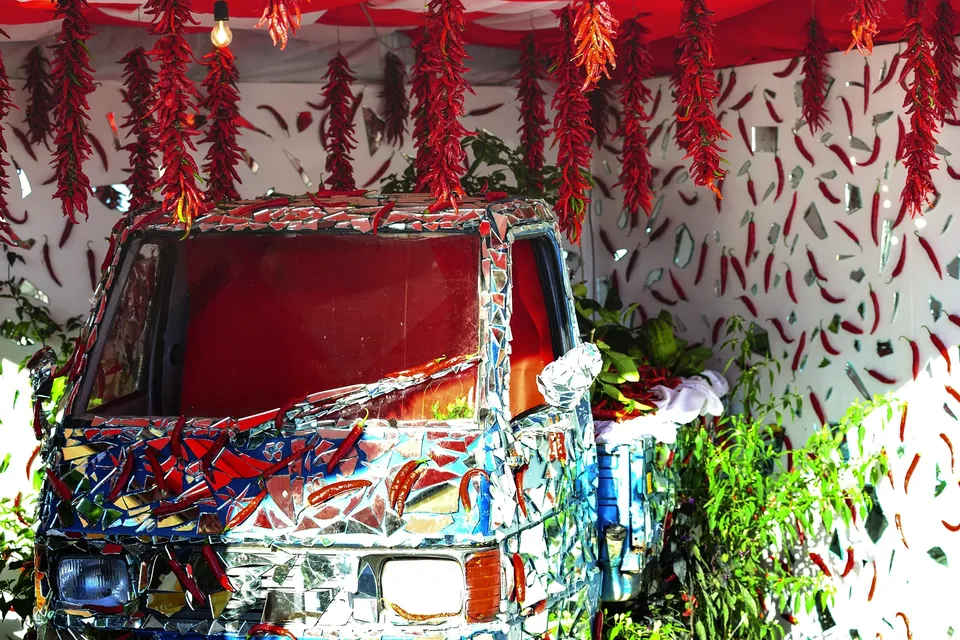
Diamante chilli pepper
Calabria's piparedduzzu between cooking, strings drying in the sun and a September festival: Diamante with its murals and Cirella, the Maierà museum, Cosenza's mùstica and how to taste heat without losing flavour.
Read the guide →Photo: Iosa53 / Wikimedia Commons — CC BY-SA 4.0 · Resized and converted to WebP.
