APULICA / Food guides
Canestrato di Moliterno: the pecorino that matures in the cellars of the Agri valley
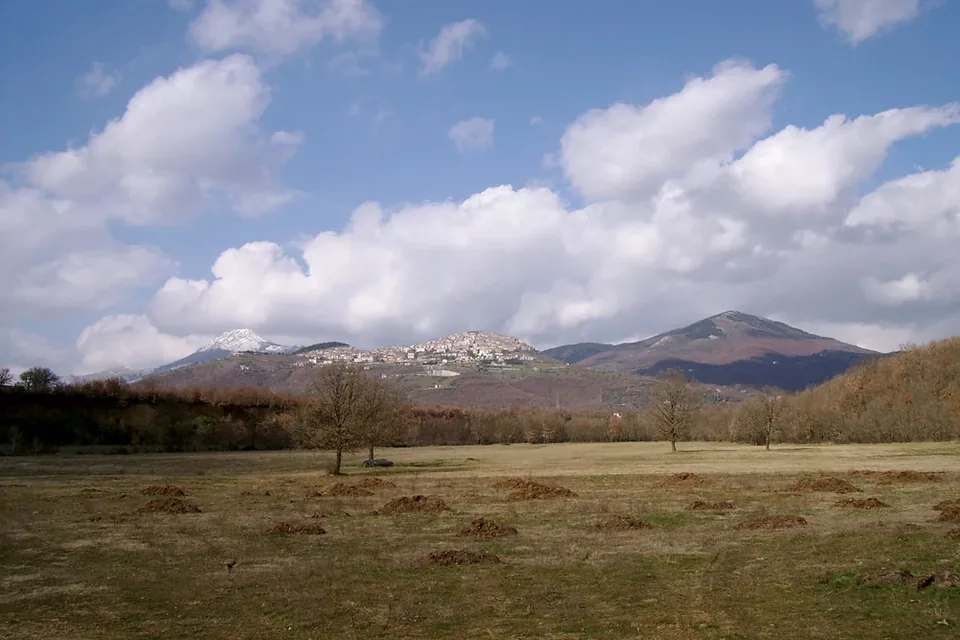
Moliterno, an Agri valley village dominated by a Norman castle, gave its name to one of southern Italy's best-known pecorini. Canestrato di Moliterno PGI is made in many Basilicata municipalities, but it must age only here, in the 'fondaci', cool, ventilated cellars that local people have refined over the centuries. This guide explains how it is made, what distinguishes its three types, why to be wary of 'Moliterno' cheeses made elsewhere, and which other cheese, wrapped in ferns, the valley's shepherds make in summer.
Sheep, goat and basket
Canestrato di Moliterno PGI, Qualigeo explains, is a hard cheese aged at least 60 days, made with 70-90% whole sheep's milk and the rest whole goat's milk. It is produced all year from flocks fed mainly on pasture, fresh forage and hay. The sheep belong to breeds such as Gentile di Lucania, Gentile di Puglia, Leccese, Sarda, Comisana, Grigia Lucana and Rossa Mediterranea; the goats are Garganica, Maltese, Jonica and Camosciata. Qualigeo notes that the Gentile di Lucania, the most common breed in the region, derives from crosses between local ewes and Spanish Merino rams begun in the 15th century. The name 'canestrato' comes from the baskets in which the curd is placed, which leave the characteristic striped pattern on the rind.
Sources: Qualigeo (Fondazione Qualivita) — Canestrato di Moliterno IGP
From milk to cheese
Under the specification summarised by Qualigeo, milk from one or more milkings must be processed within 48 hours of the first and may be raw or thermised. It is curdled with lamb or kid rennet at 36-40 degrees for 25-35 minutes. The curd is broken into rice-sized grains, lifted out of the whey and placed in the baskets. The cheeses are salted dry or in brine and dried for 30-40 days before going to the ageing rooms. The finished cheese is cylindrical, about 20 centimetres across, 10-15 high and weighing 2 to 5.5 kilos; the paste is compact with irregular holes, white or straw-coloured depending on age. Slow Food describes a rind about 2 millimetres thick, yellowish-grey in young cheese and increasingly brown as it matures.
Sources: Qualigeo (Fondazione Qualivita) — Canestrato di Moliterno IGP · Fondazione Slow Food — Arca del Gusto: Canestrato di Moliterno
The fondaci, Moliterno's secret
Ageing must take place exclusively in the municipality of Moliterno, in the fondaci: cold, dry, well-ventilated rooms above 700 metres, with walls at least 40 centimetres thick, at least two sides underground and two openings for air exchange, as Qualigeo specifies. Slow Food's Ark of Taste entry describes traditional fondaci as semi-underground rooms in the village, a single space divided by vaults at different heights to separate cheeses at different stages, so the fresher ones would not disturb the 'cure' of the older ones; the slightly sloping floor drained away brine and washing water. Many fondaci, Slow Food adds, still have these features and remain in use. This is where the microclimate forms that makes canestrato different from any other pecorino.
Sources: Qualigeo (Fondazione Qualivita) — Canestrato di Moliterno IGP · Fondazione Slow Food — Arca del Gusto: Canestrato di Moliterno
Primitivo, Stagionato, Extra
The specification distinguishes three types by age: Primitivo up to six months, Stagionato up to a year and Extra over a year. Qualigeo describes a sweet taste in young cheese and a sharp one in older cheese; Slow Food speaks of an intense, lingering aroma, animal, cooked milk and herbaceous, that becomes fruity with long ageing, and of an elastic texture that hardens over time. Uses follow age. Primitivo is a table cheese and, according to Qualigeo, also suits simple dishes such as a salad with apples from the upper Agri valley. Stagionato is grated over Lucanian recipes such as 'cavuzuni' or 'maccaruni o' firricieddu'. Extra is at its best with Lucanian honey or a red such as Terre dell'Alta Val d'Agri PDO. Whole or in wedges, it should be kept in a cool, dry place.
Sources: Qualigeo (Fondazione Qualivita) — Canestrato di Moliterno IGP · Fondazione Slow Food — Arca del Gusto: Canestrato di Moliterno
A 2010 PGI and fake 'Moliterno' cheeses
According to Qualigeo the protected geographical indication was registered on 21 May 2010, in the cheese category. According to Qualigeo the production area includes 69 municipalities, 54 in the province of Potenza and 15 in Matera, while ageing remains tied to Moliterno; Qualigeo lists the Consortium for the Protection of Pecorino Canestrato di Moliterno as the producers' body. Slow Food warns travellers: the village's fame means that cheeses called 'Pecorino Moliterno' or simply 'Moliterno' are sold that are made in other regions, including Sardinia, legally because the name itself was not protected. To be sure of the origin, look for the full wording 'Canestrato di Moliterno IGP'.
Sources: Qualigeo (Fondazione Qualivita) — Canestrato di Moliterno IGP · Fondazione Slow Food — Arca del Gusto: Canestrato di Moliterno
Casieddu, the summer cheese in ferns
Between July and September, when the ewes go dry and canestrato production stops, the Agri valley shepherds have for centuries made casieddu, 'little cheese', from goat's milk. Slow Food, which included it in the Ark of Taste, describes an unusual process: milk from two milkings is filtered through fern leaves, heated to 90 degrees in the tinned-copper 'caccavo' with a sprig of nepeta, an aromatic herb, then cooled to 38 degrees and curdled with kid rennet; the curd is broken with the 'scuopolo', a wooden stick, and shaped by hand into small balls 10-13 centimetres across. Each casieddu, weighing 400-500 grams, is wrapped in fern leaves tied with broom stems, which keep it white and fresh even for two or three days out of the fridge. There is also a version aged about two months. Casieddo appears in the national list of Basilicata's traditional products.
Sources: Fondazione Slow Food — Arca del Gusto: Casieddu di Moliterno · Elenco nazionale dei prodotti agroalimentari tradizionali, XXVI revisione (DM 6 febbraio 2026), suddiviso per regione — copia pubblicata dalla Regione Campania
Moliterno, the village of milk
The Appennino Lucano Val d'Agri-Lagonegrese National Park, which includes Moliterno, describes a village gathered around its Norman castle, with towers and a crenellated keep, and derives the name from the tower, seen as a 'Mole Eterna', an eternal mass, hence 'Moleterna' and then Moliterno. At the foot of the fortress stands the 18th-century Mother Church, built on the remains of a 14th-century chapel, with a 16th-century panel of Saint Peter; the 16th-century church of the Rosary preserves remains of a Dominican convent. Slow Food and Qualigeo report another etymology, proposed by the historian Giacomo Racioppi, from the Latin 'mulgere', to milk: 'the place where milk is drawn'. Both sources mention finds from the 4th century BC attesting to herding and milk processing in the time of the Oenotrians, while the organised ageing technique took hold in the 18th century.
Sources: Parco nazionale dell'Appennino Lucano Val d'Agri-Lagonegrese — Moliterno · Fondazione Slow Food — Arca del Gusto: Canestrato di Moliterno · Qualigeo (Fondazione Qualivita) — Canestrato di Moliterno IGP
How to taste it in the Agri valley
The clearest way to understand canestrato is a small vertical tasting: a Primitivo, a Stagionato and, if available, an Extra, tasted in that order at room temperature. In the first I would look for milky sweetness, in the last for the sharp, fruity note that the fondaci build over many months. Alongside I would serve rustic bread, a spoonful of honey and a red from the valley. If your trip falls in summer, ask also for fresh casieddu in its ferns, which shows the pastoral, seasonal side of the same community. Seeing a fondaco from the inside is the most instructive experience, but it must be arranged with the operators. To take home, a vacuum-packed wedge of Stagionato travels well; fresh casieddu should be eaten on the spot or in the following days.
A thread for your journey
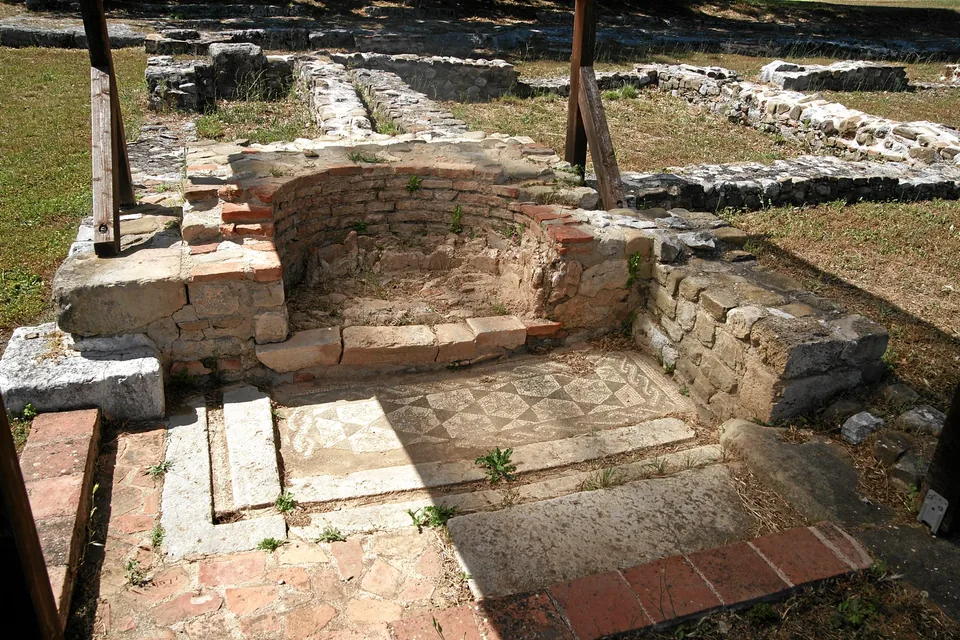
Journey idea: a morning in Moliterno between the Norman castle and the Mother Church, with a visit to a fondaco arranged with a producer and a vertical tasting of Primitivo, Stagionato and Extra; in the afternoon the archaeological site of Grumentum or the sanctuary of Viggiano, in the same Agri valley. In summer you can also ask for fresh casieddu wrapped in ferns.
Talk to us