
Why go
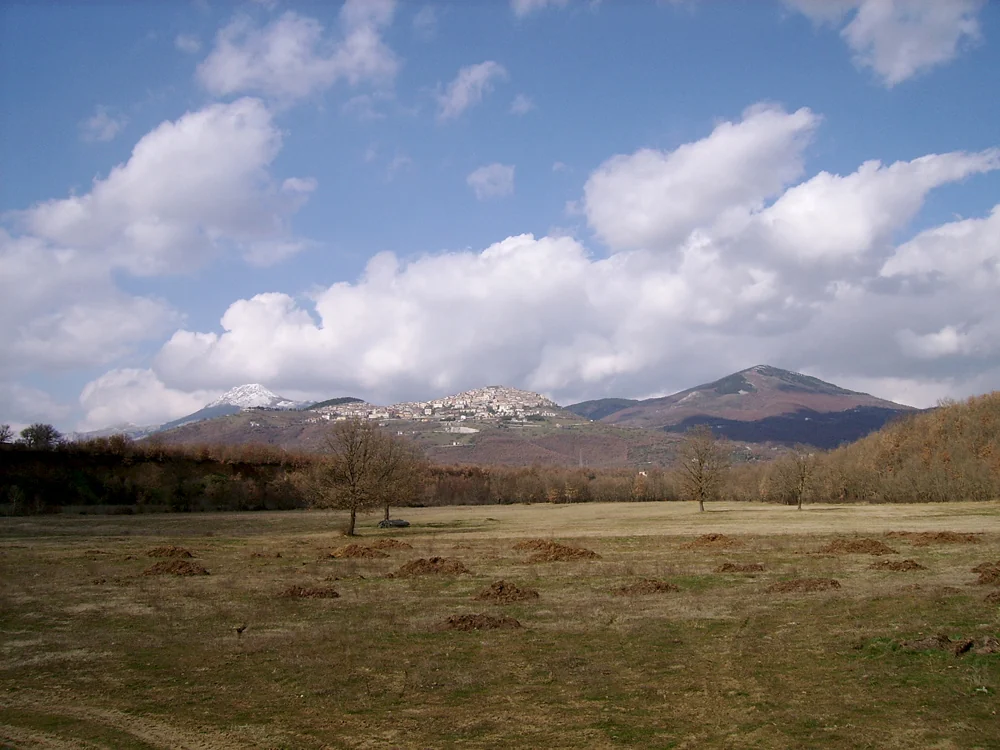
Viggiano stands at almost a thousand metres on the ridge of the upper Val d'Agri, in the Appennino Lucano National Park, overlooking the river valley. It is a town with two voices. The first is devotion: it keeps the Black Madonna of the Sacro Monte, proclaimed patroness and queen of Lucania in 1965, and the sanctuary on the mountain top is regarded as the region's most important Marian shrine.
The second is music. Viggiano is known as the town of the harp: for generations its wandering musicians carried harps and other instruments around Italy and Europe, and in the 19th century local luthiers exported stringed instruments worldwide. This story can still be read in the streets, in doorways, statues and the square shaped like a harp, and it lives on in the civic school where pupils learn to play the instrument the way the travelling musicians did.
Around it lie the mountains, the woods and the villages of the Val d'Agri, with the archaeological park of Grumentum and Lake Pertusillo not far away. The municipality runs an information point and free guided tours of the old centre on request, a good way to discover the town with people who know it.
Sources: Comune di Viggiano — Viggiano città della musica · Parco nazionale dell’Appennino Lucano — Viggiano · Comune di Viggiano — Santuario della Madonna di Viggiano · Comune di Viggiano — Il santuario: la storia · Italia.it — Viggiano · Comune di Viggiano — Informazioni turistiche e visite guidate
History
Viggiano's name is said to derive from a word meaning a healthy place, or from the Roman families of the Vibii and Vettii; rich Lucanian grave goods and mosaics from Roman villas, now displayed in the Grumento Nova museum, have been found in its territory. The town was inhabited by Basilian monks and later fortified under the Lombards; parts of the towers and walls of the feudal castle survive.
The sanctuary's history is tied to the end of Grumentum, the Roman city of the valley, repeatedly raided by the Saracens and destroyed around 1050. According to tradition, the Byzantine statue of the Virgin venerated there was hidden on the mountain top to save it, and was later found by shepherds guided by mysterious lights. Taken to Viggiano, it was kept in the church of Santa Maria del Deposito; a chapel rose on the mountain, later replaced by a 16th-century church, while in the town an 18th-century church was built, now a minor basilica.
Between the 17th and 18th centuries Viggiano became famous for woodworking and for making instruments such as harps and bagpipes. Its wandering musicians spread the instrument far and wide, and the prosperity brought by musicians and luthiers shows in the town's 19th-century doorways. The Salvi family, rooted in Viggiano's instrument-making tradition, founded one of the world's best-known harp makers.
Sources: Comune di Viggiano — Viggiano città della musica · Ministero della Cultura — Museo archeologico nazionale dell’Alta Val d’Agri · Parco nazionale dell’Appennino Lucano — Viggiano · Comune di Viggiano — Il santuario: la storia · Comune di Viggiano — Santuario della Madonna di Viggiano
What to see
In the centre the main stop is the basilica of Santa Maria del Deposito, which for much of the year keeps the wooden statue of the Black Madonna, Byzantine in style with Romanesque influences and reworked over time partly on the model of the Madonna of Montserrat, a shrine twinned with Viggiano. In town you will also find the large bronze Monument to the Madonna and her bearers, by the Potenza sculptor Felice Lovisco.
The music trail suggested by the municipality starts at the Pisciolo viewpoint, with its music balustrade, and climbs through the lanes of the upper town in search of 19th-century doorways and keystones. Going down via Regina Elena you reach the quarter linked to the Salvi family; on corso Marconi stands the Harpist Monument, a life-size bronze of 1958. Villa del Marchese, now the House of Music, hosts a branch of the «Gesualdo da Venosa» Conservatory and the civic school of Viggiano folk harp. In piazza Regina delle Genti Lucane stand the cast-iron and steel bandstand and the small statue of the «Wandering Harpist»; piazza San Giovanni XXIII is shaped like a harp.
Outside the centre, about 12 kilometres away, the Sacro Monte sanctuary stands at 1,725 metres on one of the highest peaks of the Lucanian Apennines, with views reaching the Gulf of Taranto. The new Music Garden tells the story of instrument-making through the plants used to build instruments.
Sources: Comune di Viggiano — Il santuario: la storia · Parco nazionale dell’Appennino Lucano — Viggiano · Italia.it — Viggiano · Comune di Viggiano — Viggiano città della musica · Comune di Viggiano — Santuario della Madonna di Viggiano · Comune di Viggiano — Festa regionale della Madonna del Sacro Monte
Flavours
Viggiano is one of the three towns, with Grumento Nova and Moliterno, of the Terre dell'Alta Val d'Agri PDO. The red is made mainly from Merlot and Cabernet Sauvignon, ruby turning to garnet, with aromas of blackberry and plum and a spicy note, and can become a Riserva after at least two years of ageing; the rosé, with a share of Malvasia di Basilicata, is fresh and fruity.
The valley's table is rich in recognised products. From the Apennine pastures comes Canestrato di Moliterno PGI, a pecorino with some goat's milk, matured in the cool, airy fondaci cellars of Moliterno. A few kilometres away, above 600 metres, Fagiolo di Sarconi PGI is grown, with twenty local ecotypes bearing dialect names and tender flesh that cooks quickly. Nearby Marsicovetere keeps its ham, a Slow Food Presidium, dry-salted, pressed and dried beside a wood fire.
These ingredients turn up in the valley's trattorias and festivals: bean soups, aged cheeses, cured meats and roasts with local wine.
Sources: Qualigeo — Terre dell’Alta Val d’Agri DOP · Qualigeo — Canestrato di Moliterno IGP · Qualigeo — Fagiolo di Sarconi IGP · Fondazione Slow Food — Prosciutto di Marsicovetere
When to go
Viggiano's calendar is marked by the Madonna, who moves twice a year between the town and the mountain. On the first Sunday of May, after a novena of prayer, the statue is carried in procession from the town to the Sacro Monte sanctuary: an intimate, quiet festival that leaves at dawn from the church of San Sebastiano. The statue stays on the summit for about four months, the season when pilgrims climb the mountain.
On the first Sunday of September comes the regional festival. After the dawn mass the procession descends from the summit along a route of about 11 kilometres, with bagpipes and accordions, banners and candle offerings, while the 18th-century casket is carried on the shoulders of teams of men grouped by home town. The municipality estimates tens of thousands of pilgrims from almost 200 towns; some still follow the old pilgrimage routes, such as those from Caggiano, Oppido Lucano, Pisticci and Accettura. Fireworks and concerts complete the civic celebrations.
Outside the festivals Viggiano can be visited all year: the statue is in town from September to May, while the climb to the Sacro Monte is easier in the warmer months.
Sources: Comune di Viggiano — Festa regionale della Madonna del Sacro Monte · Comune di Viggiano — Santuario della Madonna di Viggiano · Regione Basilicata, patrimonio culturale — I Cammini al Sacro Monte di Viggiano · Comune di Viggiano — Il santuario: la storia
Getting there and around
The Appennino Lucano National Park lists the roads into the Val d'Agri. From the Mediterranean motorway, exit at Atena Lucana and follow the SS598 «Val d'Agri»; from Potenza take the Basentana and then the Tito-Brienza link; from Matera, Taranto and Sibari come via the Basentana or the SS106 Jonica and then climb the SS598.
By train, the nearest stations named by the park are Potenza, Sapri, Maratea and Policoro, to be combined with regional bus lines; Potenza has direct links from Italy's main cities. For airports the park cites Pontecagnano, Naples, Bari and Lamezia Terme. Bus services to the valley's villages are limited: check them before travelling or plan on a car.
The old centre is explored on foot, following the music trail through steep lanes and viewpoints. The Sacro Monte sanctuary is about 12 kilometres from town and is reached by mountain road or, on feast days, on foot with the processions. The municipal information point can help with logistics, accommodation and excursions.
Sources: Parco nazionale dell’Appennino Lucano — Come arrivare · Italia.it — Viggiano · Comune di Viggiano — Viggiano città della musica · Comune di Viggiano — Informazioni turistiche e visite guidate
Where to stay
The municipal information point, in the town hall premises on via Roma, is the first port of call for anyone seeking accommodation: staff provide information on local places to stay, services and events, and can sometimes book excursions and guided tours. The municipality also publishes a list of establishments, taken from the APT Basilicata list, spread between the old centre and the rural districts.
The website of the Appennino Lucano National Park gathers accommodation in the protected area's towns, Viggiano included, and lets you filter by type: hotels, agriturismi, bed and breakfasts, guest rooms, holiday houses, mountain huts and other kinds of hospitality. For a stay focused on the town, a base in the centre is best, close to the music sites and the basilica; walkers and those touring the valley may prefer an agriturismo in the countryside.
During the May and especially the September festivals the town welcomes huge numbers of pilgrims: at that time it is wise to book well ahead, or to sleep in one of the nearby Val d'Agri villages.
Sources: Comune di Viggiano — Informazioni turistiche e visite guidate · Parco nazionale dell’Appennino Lucano — Dove dormire · Comune di Viggiano — Festa regionale della Madonna del Sacro Monte
Nearby
Down in the valley lies Grumento Nova and the archaeological park of Grumentum, one of the largest Roman cities of Lucania, with a theatre, forum, baths, a domus with mosaics and one of the oldest masonry amphitheatres, overlooking Lake Pertusillo. The nearby National Archaeological Museum of the Upper Val d'Agri also displays polychrome mosaics from Roman villas in Viggiano and Marsicovetere: a direct link with the town.
On the shores of Lake Pietra del Pertusillo, at Masseria Crisci in the Montemurro area, the park has opened an info point for visitors to the Val d'Agri, with a lakeside path and a permanent land art exhibition. It is a good starting point for excursions and for meeting the park's official guides.
The other villages of the valley complete the trip with their flavours: Moliterno, with its Norman castle and the fondaci where canestrato matures; Sarconi, land of beans; Marsicovetere, perched at a thousand metres and known for its ham. The park's territory, between Monte Sirino and Monte Volturino, offers beech woods, trails and views in every season.
Sources: Ministero della Cultura — Parco archeologico di Grumentum · Ministero della Cultura — Museo archeologico nazionale dell’Alta Val d’Agri · Parco nazionale dell’Appennino Lucano — Info point di Masseria Crisci · Qualigeo — Canestrato di Moliterno IGP · Qualigeo — Fagiolo di Sarconi IGP · Fondazione Slow Food — Prosciutto di Marsicovetere
Local tourist information
Local tourist offices help with opening times, events and transport on the day.
- Punto informativo turistico del Comune di Viggiano · Via Roma 55, 85059 Viggiano (PZ) · +39 0975 1900424 · viggianoturismo@gmail.com · Official website
Source: Comune di Viggiano — Informazioni turistiche e visite guidate · checked on
Where to stay
In the municipality of Viggiano the national database of the Ministry of Tourism lists 25 accommodation businesses with a verified CIN code: 4 hotels, 7 other licensed accommodation and 14 other types such as B&Bs and private rentals.
Sources: Ministero del Turismo – Banca Dati Strutture Ricettive (dashboard pubblica), 2026-10-12
YOUR JOURNEY
How to shape a journey here
A place to listen to as well as look at: notice instruments on the portals and allow separate time for places of devotion.
Talk to us about it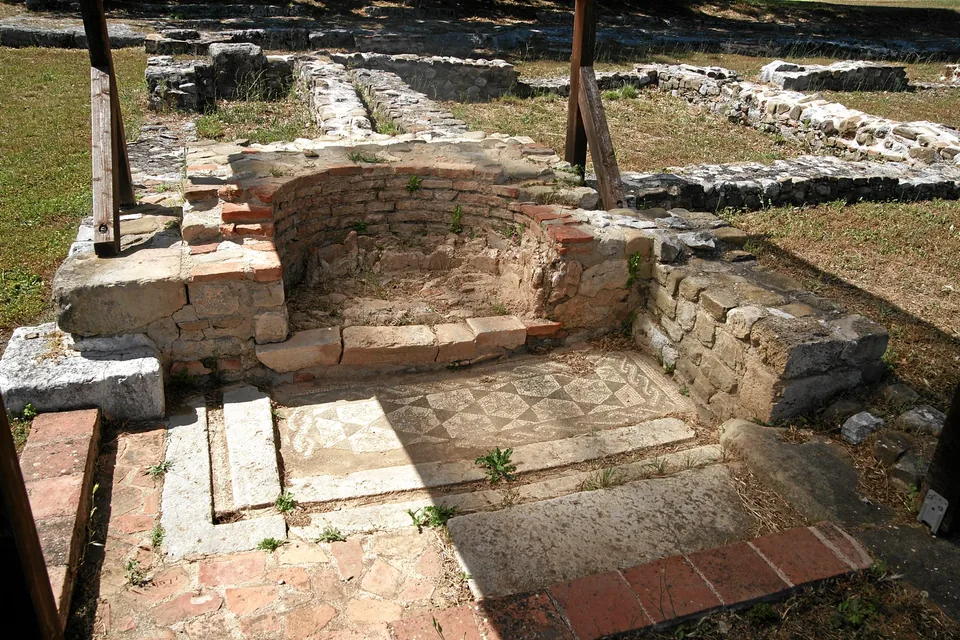


_(2).jpg)