APULICA / Food guides
Sarconi beans: twenty ecotypes in the upper Agri Valley
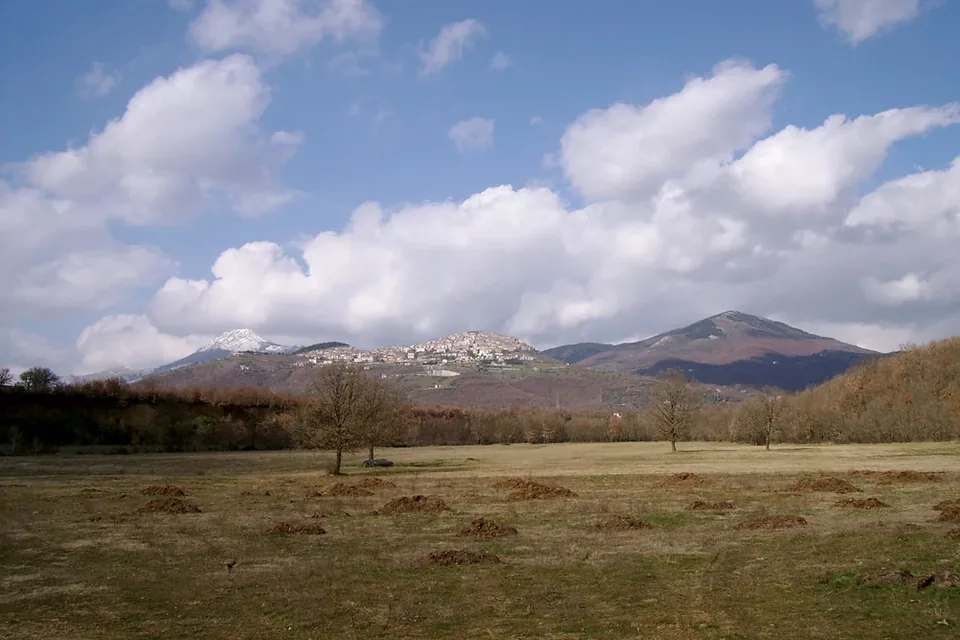
Sarconi is a village of just over a thousand people at 636 metres in the upper Agri Valley, which the Lucanian Apennines National Park presents as the home of PGI beans. The 1996 Geographical Indication covers not a single variety but a family of local cannellino and borlotto ecotypes, with dialect names that describe shape and colour: tuvagliedda, munachedda, tabacchino, ciuoto. This guide explains what they have in common, why water and altitude matter, how they are harvested and how to plan a day in the valley, perhaps in August, during the festival.
Eleven towns in the Lucanian Apennines Park
The Protected Geographical Indication was registered on 1 July 1996 and covers the legume, fresh or dried, grown in eleven towns in the province of Potenza: Sarconi, Grumento Nova, Marsiconuovo, Marsicovetere, Moliterno, Montemurro, Paterno, San Martino d'Agri, Spinoso, Tramutola and Viggiano. All are towns of the upper Agri Valley, inside the Val d'Agri-Lagonegrese Lucanian Apennines National Park.
The Park lists the bean among its local products and notes that it has been grown in these parts of Basilicata for centuries. The areas involved are small, about 50 hectares, and Qualigeo lists 12 operators registered under the designation: small numbers, which explain why the Sarconi bean is found mainly in its own valley.
Qualigeo also recalls that in the past the bean was Sarconi's main crop and the livelihood of farming families, yet its fame remained almost confined to the municipality. It is a product tied to a precise place, better understood on the spot, among irrigated fields and valley villages, than on a shop shelf.
Sources: Qualigeo (Fondazione Qualivita) — Fagiolo di Sarconi IGP · Parco Nazionale dell'Appennino Lucano Val d'Agri-Lagonegrese — Fagioli di Sarconi
A family of ecotypes
The designation does not cover a single variety. It includes Cannellino and Borlotto and some twenty local ecotypes derived from them, which Qualigeo lists: Fasulo rosso, Tuvagliedda in white, brown and red versions, Verdolino, Ciuoto or Regina, Tabacchino, Munachedda, Nasieddo violet, black and red, Maruchedda, San Michele and red San Michele, Cannellino and red Cannellino, Panzaredda, white Riso or Risone, yellow Riso and white Tondino.
The Park adds that both dwarf and climbing plants are grown, for fresh pods as well as dried beans, and mentions other names used in the valley, such as fasuli risi, napulitano vasciu and àvut' and muruseddu. These dialect names describe shape, colour or growing habits.
The shape ranges from oval or round to cylindrical and elongated. Colours are just as varied: from the white of the classic cannellino to the light brown of tabacchino, from the dark-red-streaked beige of the traditional borlotto to the ruby red of red San Michele. What they share, according to Qualigeo, is tender flesh, a delicate flavour and quick cooking.
Sources: Qualigeo (Fondazione Qualivita) — Fagiolo di Sarconi IGP · Parco Nazionale dell'Appennino Lucano Val d'Agri-Lagonegrese — Fagioli di Sarconi
Altitude, cool water and sandy soils
Suitable land lies above 600 metres and must be carefully prepared. Qualigeo attributes the bean's flavour to the climate, to alluvial, sandy soils rich in nitrogen and free of lime, to the quality of the irrigation water, light and only slightly alkaline, and to selected seed.
The Park explains the mechanism: cool, deep and fertile soils and plentiful, cool irrigation keep a high level of simple sugars in the seeds, which turn into starch more slowly. Water, Qualigeo notes, already made the beans of this area special in the past.
The leap in quality came when Sarconi's farmers, after some resistance, gave up traditional flood irrigation for more practical sprinklers: from then on it became possible to improve and increase production. Sowing, with selected seed, by hand or by machine, runs from the last ten days of May to mid-July according to the rules summarised by Qualigeo; the Park speaks more generally of sowing between April and July, depending on the variety.
Sources: Qualigeo (Fondazione Qualivita) — Fagiolo di Sarconi IGP · Parco Nazionale dell'Appennino Lucano Val d'Agri-Lagonegrese — Fagioli di Sarconi
Green, waxy, dry: three harvest stages
Harvesting takes place in summer and by hand, at different times depending on ripeness. Qualigeo distinguishes three stages. At the green stage, pods are picked still green, stringless, with the seeds forming; at the waxy stage, when colours and streaks are clearly marked; at the dry stage, after the plant and pod have dried.
The Park stresses that harvesting, threshing and sorting are done exclusively by hand: lengthy work that partly explains the small scale of production. In cultivation, Qualigeo specifies, only farming practices that respect the product's typical features are allowed.
Fresh beans, in pods to be shelled, are sold in wooden crates of up to 15 kilos; dried beans in cloth, paper or plastic packs of 250 or 500 grams. Fresh beans must be eaten soon: Qualigeo says they keep in the fridge for four or five days. For summer travellers, fresh pods are something to enjoy on the spot; dried beans are the product to take home.
Sources: Qualigeo (Fondazione Qualivita) — Fagiolo di Sarconi IGP · Parco Nazionale dell'Appennino Lucano Val d'Agri-Lagonegrese — Fagioli di Sarconi
Quick cooking and Lucanian cuisine
The most appreciated feature, according to Qualigeo, is cooking a prima acqua, meaning quickly, which gives a smooth texture and a pleasant taste. The skin is tender, the flavour delicate, and the bean is easy to digest.
For a long time beans were poor people's food, a substitute for meat; today they are part of a balanced diet and an ingredient in many dishes. They are used with pasta, in risottos, soups and broths and as a side dish, both in traditional Lucanian recipes and in the great classics of Italian cooking.
The national list of traditional food products records in Basilicata the dish of lagane and beans, along with many other local pulses: the beans of Rotonda, such as Castelluccisa, Occhio di bue, Panzaredda and Za' Vicenza, the yellow and the quarantano beans of Terranova di Pollino, and those of Muro Lucano and San Gaudioso. It is a broad heritage, in which the Sarconi bean stands out for its PGI protection.
Sources: Qualigeo (Fondazione Qualivita) — Fagiolo di Sarconi IGP · Masaf — Elenco nazionale dei prodotti agroalimentari tradizionali 2022, allegato I (copia pubblicata dal progetto regionale Biodiversità Puglia)
August in Sarconi: the bean festival
The Lucanian Apennines National Park reports that every August Sarconi hosts the Festival of the Fagiolo di Sarconi PGI, in the second half of the month: a chance to taste bean dishes and local products. The dates of each edition should be checked with the municipality or the Pro Loco before travelling.
The Park's page on Sarconi adds the historical background. The town's origins are linked to ancient Grumentum, of which some scholars believe it was a suburb: this is suggested by the graves of Carthaginian and Roman soldiers found in the area, the remains of an aqueduct linking the two communities and those of several villas, probably owned by people from Grumentum, at Cammarelle, where the first settlement arose.
In the town, the church of Santa Maria Assunta, of sixteenth-century origin, the chapel of Santa Lucia and the old mansions with stone doorways and wrought-iron balconies are worth a visit. But Sarconi, the Park concludes, is best known as the home of PGI beans.
Sources: Parco Nazionale dell'Appennino Lucano Val d'Agri-Lagonegrese — Fagioli di Sarconi · Parco Nazionale dell'Appennino Lucano Val d'Agri-Lagonegrese — Sarconi
Grumentum and the valley
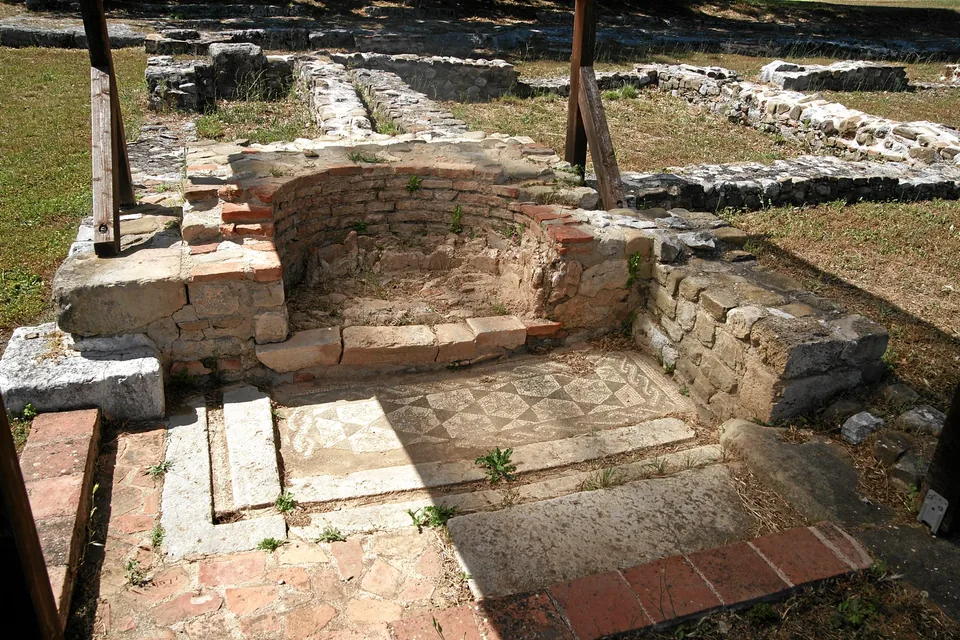
A few kilometres from Sarconi, Grumento Nova keeps the archaeological area of Grumentum, the Roman colony the Park describes as the little Pompeii of Basilicata. It was the scene of clashes between Romans and Carthaginians: here Hannibal and his elephants suffered a heavy defeat against the Roman legions.
Many traces of the past remain in the Archaeological Park: the original town layout, the aqueduct, the theatre built at the end of the 1st century BC, the temple and, from the same period, the Republican baths and the amphitheatre. Walking among these remains helps to grasp how long the valley has been inhabited and farmed.
After Saracen raids the city was abandoned and its inhabitants took refuge on the nearby heights, where the medieval village grew up. Of the fortifications of that time the castle of San Severino survives, its ruins overlooking Grumento Nova. A morning at the excavations and an afternoon in the bean fields make a single day, with short distances.
Sources: Parco Nazionale dell'Appennino Lucano Val d'Agri-Lagonegrese — Grumento Nova
Viggiano and the Agri Valley basket
Viggiano, one of the eleven PGI towns, is perched on the ridge of the upper Agri Valley. Italia.it recommends it to anyone wanting to discover Lucanian history and traditions: here stands the sanctuary of the Black Madonna of the Sacro Monte di Viggiano, on one of the highest peaks of the Lucanian Apennines, 12 kilometres from the town. The 6th-century statue of the Madonna is carried down in procession to the centre every spring.
Viggiano is also the town of the harp, a tradition dating back to the Kingdom of Naples: the large piazza San Giovanni XXIII reproduces its shape, and one of its statues depicts a harpist.
The Park lists other products of the Lucanian basket from the same area: caciocavallo podolico, aged Canestrato di Moliterno, lucanica sausage, Marsicovetere ham, horseradish and Terre dell'Alta Val d'Agri DOC wine. Qualigeo explains that Canestrato di Moliterno PGI, made from sheep's and goat's milk, is aged only within the municipality of Moliterno. With these products a whole valley lunch can be put together.
Sources: Italia.it — Viggiano · Parco Nazionale dell'Appennino Lucano Val d'Agri-Lagonegrese — Produzioni locali · Qualigeo — Canestrato di Moliterno IGP
Tasting and choosing
The best way to understand the Sarconi bean is to taste two or three different ecotypes at the same meal, perhaps a white cannellino and a borlotto or a red San Michele, cooked simply with water, oil and little else. The differences in skin and texture are clear at once.
In August, at the festival, you will find the local preparations; in other months, ask at a valley trattoria or a producer, by arrangement with the operators, whether you can watch the hand shelling and sorting. Those who prefer to avoid crowds can choose September, when the dried harvest has just come in.
When buying, I would look for the name Fagiolo di Sarconi IGP on the 250 or 500 gram pack and the name of the ecotype. Dried beans travel easily and keep for a long time in a dry place, sealed in a jar; fresh pods are worth buying only if you will cook them within a few days. At home, a soup with stale bread is the simplest way to find the valley again.
A thread for your journey
Journey idea: an August day in the upper Agri Valley, with the morning at the Grumentum archaeological area, the afternoon in the bean fields around Sarconi, with a visit to be arranged with the operators, and the evening at the festival; those who prefer to avoid crowds can choose September and look for the new season's dried beans.
Talk to us