APULICA / Food guides
Calitri cannazze: the hand-broken wedding pasta of upper Irpinia
Cannazze are the signature dish of Calitri, the upper Irpinia village the Touring Club Italiano nicknamed the 'Positano of Irpinia' for its terraced houses above the Ofanto valley. They are hand-broken mezzi ziti, dressed with a slow-cooked ragù of meat rolls and grated cheeses: a dish born poor, which became the wedding lunch and is now recognised by the Campania Region as a traditional product. This guide covers the recipe, its documented history, Calitri's other flavours and the festival calendar.
What cannazze are
The Campania Region, in its traditional products profile, defines cannazze as a dish from the municipality of Calitri made with mezzi ziti, also called mezzani, bronze-drawn and broken by hand to roughly the width of a palm. They are dressed with the town's typical slow-cooked meat ragù and a mix of grated cow's-milk and pecorino cheeses. The Municipality of Calitri, on its local food page, describes them more simply as 'broken ziti' served with ragù and grated pecorino, listing them with 'cingul'', similar to cavatelli, as the signature dishes. The Province's Sistema Irpinia portal sums up their social journey: from wedding macaroni they have become the typical dish of every Calitri family.
Sources: Regione Campania — Prodotto tradizionale: cannazze · Comune di Calitri — Gastronomia calitrana · Provincia di Avellino, Sistema Irpinia — Calitri
The recipe: meat rolls and two hours on the stove
The regional profile gives a detailed recipe. Veal slices for braciole are laid out, seasoned with grated cheese, salt, pepper, parsley and chopped garlic, rolled and tied with kitchen string. Chopped onion is softened in extra virgin olive oil and the rolls are browned with bay leaves and white wine. With the meat set aside, tomato concentrate is added to the base, then tomato sauce, preferably made locally, which cooks for thirty minutes before the rolls go back in; cooking continues for at least two hours, depending on the quantity and texture of the meat. The pasta, broken by hand into five pieces, is boiled separately, drained and dressed in layers in a bowl with the mixed cheeses and plenty of sauce. It is served with ground hot chilli.
A notarial deed from 1749
Both the Region and the Municipality trace cannazze back to the 18th century through a specific document. As early as 1749 Calitri had a workshop that used canes on which pasta was hung to dry: the sale of this equipment is recorded in a deed by the Calitri notary Eligio Rinaldi dated 26 September 1749. The equipment was installed in the 'low house in front of the parish church of San Canio', which the sources identify as Calitri's first pasta workshop to make cannazze. It is a precious detail for travellers: in front of the church of San Canio, already standing in the second half of the 15th century according to Sistema Irpinia, you can picture pasta laid out to dry, in a village that then stood higher up and was rebuilt further downhill after the 1694 earthquake.
Sources: Regione Campania — Prodotto tradizionale: cannazze · Comune di Calitri — Gastronomia calitrana · Provincia di Avellino, Sistema Irpinia — Calitri
From peasant dish to wedding lunch
The regional profile explains that cannazze began as a peasant dish: the ragù was made with an old hen, which needed very long cooking. Over time they became more and more the festive dish, above all for weddings, because of a series of symbols linked to the rite. In Calitri dialect, in fact, the bride and groom are called 'zita' and 'zito', like the pasta shape. The roll tied with string recalls the 'ballo r' li zit', in which the couple dance tightly together surrounded by relatives and friends who wrap them in streamers, the 'r'zaharèggh'. It is a rare example of a dish where pasta shape, sauce and celebration tell the same story: the union of two people within a community. Today, Sistema Irpinia notes, cannazze are made in every family and not only for weddings.
Sources: Regione Campania — Prodotto tradizionale: cannazze · Provincia di Avellino, Sistema Irpinia — Calitri
Calitri's other flavours
The Municipality lists many local dishes. Acqua sala is slices of bread soaked in boiling salted water and enriched with hard-boiled eggs and oil fried with garlic and chilli. 'Lahan'' are tagliatelle, sometimes boiled in milk and dressed with tomato and beans; then come 'aurecchj' ru preut'', orecchiette, 'sc'lient'', vermicelli, and salt cod 'ualanegna' style, dressed with oil, garlic and chilli. Among cured meats and cheeses: sausage, soppressata, prosciutto, capicollo, cheese and ricotta. The Campania Region also recognises Calitri bread: round, with a long cut, made of durum semolina and soft wheat flour, kneaded with 'crescente' starter, proved in the dark at 18-20 degrees and baked; loaves weigh 2 to 6 kilos and the largest are called 'cartwheels'. Sistema Irpinia also lists Formicoso guanciale and Irpinian cave caciocavallo, both traditional products.
Sources: Comune di Calitri — Gastronomia calitrana · Regione Campania — Prodotto tradizionale: pane di Calitri · Provincia di Avellino, Sistema Irpinia — Calitri
Calitri, a ceramics village above the Ofanto
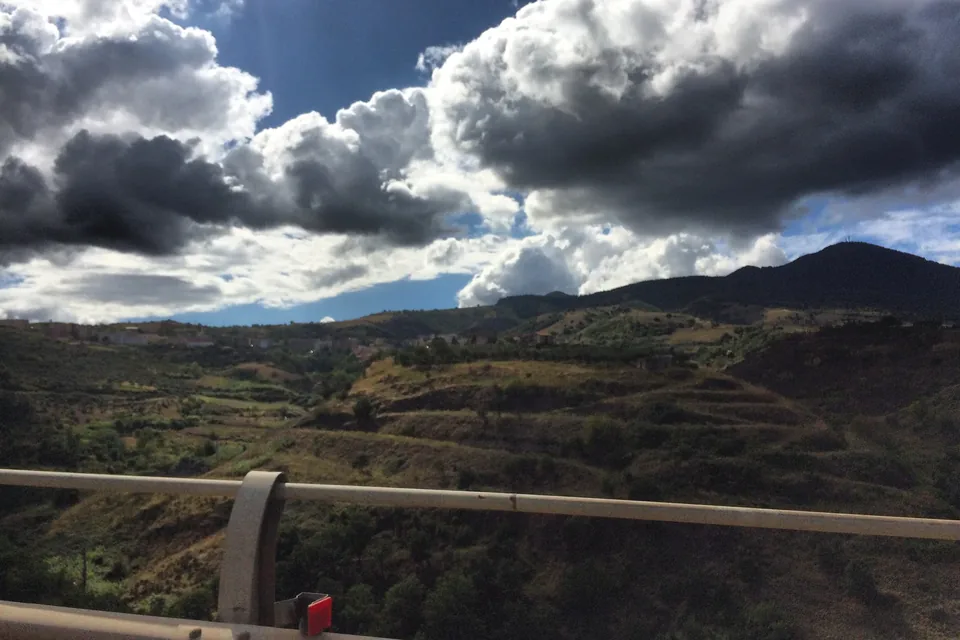
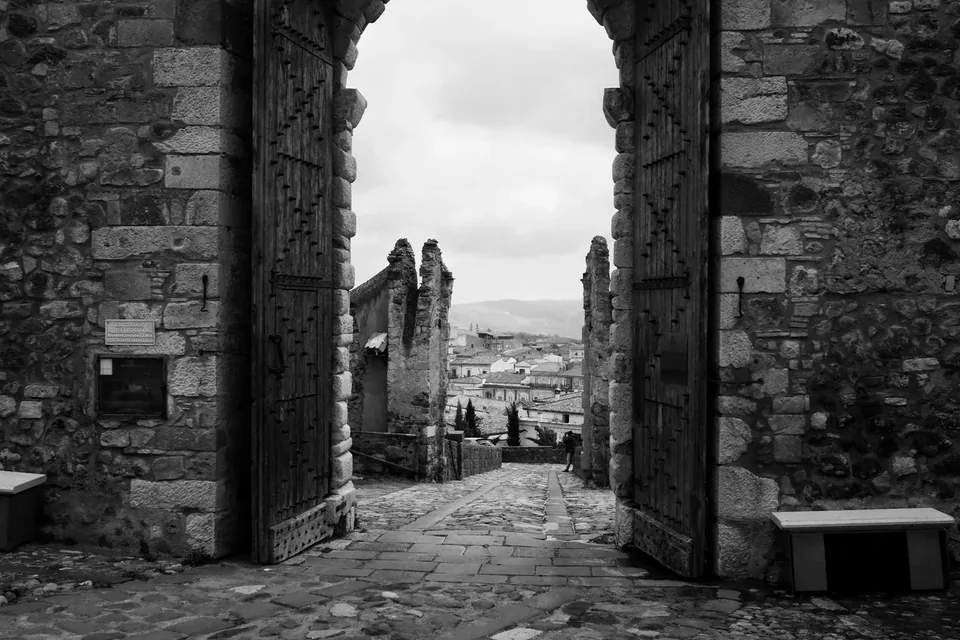
Sistema Irpinia describes Calitri as a town of about 4,500 people at 601 metres, 76 kilometres from Avellino, crossed by the Ofanto river and bordering Basilicata. The 13th-century castle turned the village into a fortified settlement; the Gesualdo family held it for over three centuries, and after the 1694 earthquake the town was rebuilt further downhill, while the fortified residence became today's Borgo Castello, home since 2008 to the Ceramics Museum. Calitri belongs to the network of Italian ceramics towns. The Municipality mentions almost pure, very plastic clays, a first record of kilns in a letter from 1573, streets such as vico Tornillo and via Faenzari recalling the potters, and traditional decorations such as 'sing sing' vertical lines and the 'rosa mascarina', with blue as the most used colour. The portal also mentions visits to caves where cured meats and caciocavallo are aged.
Sources: Provincia di Avellino, Sistema Irpinia — Calitri · Comune di Calitri — La ceramica calitrana
The festival calendar
The Municipality of Calitri publishes an annual calendar of events. At dawn on Good Friday, for about three centuries, a procession has crossed the old centre and climbed to the Calvary hill. On 25 May there is the feast and fair of San Canio, the patron saint, with a procession and a band concert. In August the Calitri summer includes the international folk group gathering and the Sponz Fest, the festival directed by Vinicio Capossela, which Sistema Irpinia places in the last week of the month. Between late August and early September the Interregional Fair of typical products from Campania and neighbouring regions takes place in a purpose-built hall. In December the 'scarpegghia' festival brings tastings and crafts to the old centre, and the living nativity stages traditional trades. The weekly market is on Thursday.
Sources: Comune di Calitri — Manifestazioni e fiere · Provincia di Avellino, Sistema Irpinia — Calitri
How to taste them and make them at home
Cannazze are best understood at the table in the village, on a day without hurry: it is a rich lunch dish that calls for a rest afterwards. I would ask for the version with meat rolls and eat the meat as a main course, as with the braciole of a Sunday ragù. For wine I would choose a red from the area between Irpinia and Vulture, an Aglianico that is not too young, able to stand up to the sauce. To make them at home, the key gesture is breaking the mezzi ziti by hand into irregular pieces: it changes the texture on the plate compared with machine-cut pasta. To take away, Calitri bread with its dark crust keeps for days, and a piece of ceramic from the village workshops is a good souvenir. For a cannazze lunch with a family or at a farm restaurant, book ahead and agree the menu with the operators.
A thread for your journey
Journey idea: a morning in Calitri between Borgo Castello and the Ceramics Museum, with a stop in front of the church of San Canio where pasta dried on canes in the 18th century; for lunch cannazze with meat rolls, booked with the operators, and in the afternoon, if arranged, a visit to an ageing cave. From the village the Vulture and Melfi are a short drive away, across the Lucanian border.
Talk to us