Why go
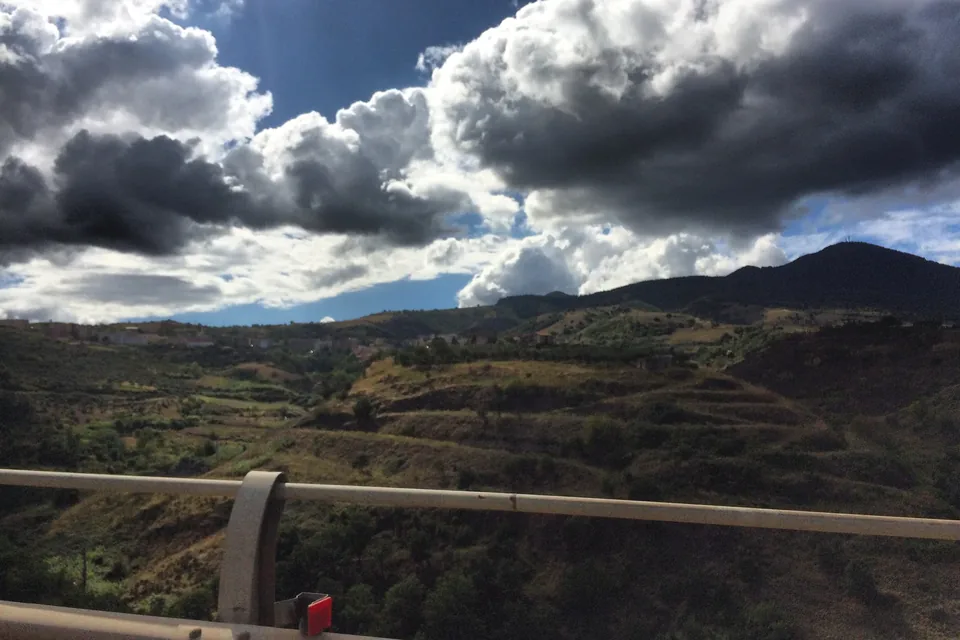
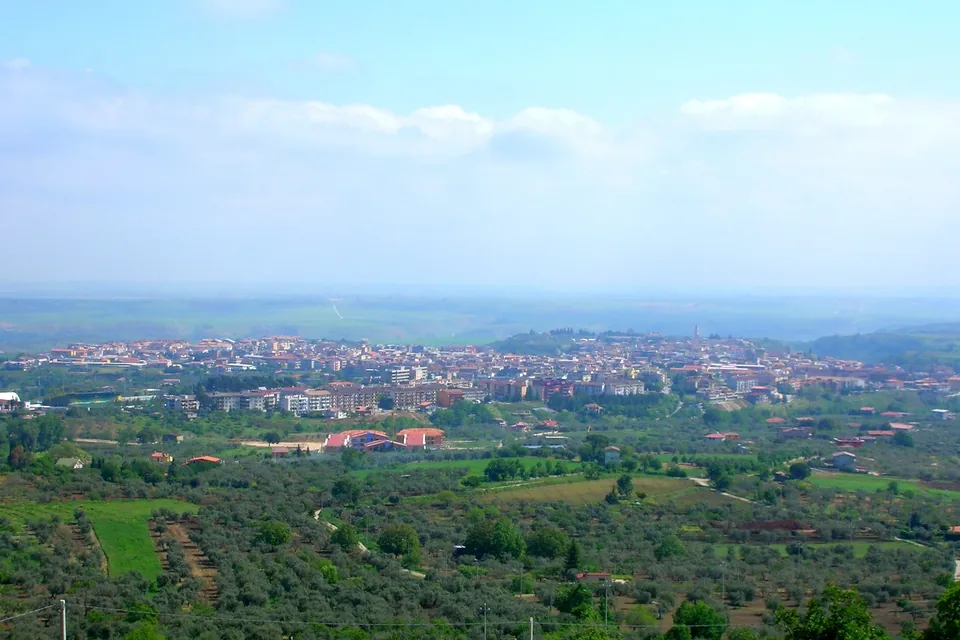
Melfi sits on a hill of volcanic origin on the slopes of Monte Vulture, in northern Basilicata, and the first thing you see on arrival is the outline of the castle, its towers rising above both the old centre and the newer districts. Around the fortress the town has stayed gathered inside its walls, with a medieval core of closely packed houses and lanes that climb and drop.
It is a place where several layers can be read in a single day. Inside the castle is the National Archaeological Museum of the Melfi area, which tells the story of the territory from the first communities of the Archaic period up to modern times; in town you find the cathedral with its Norman bell tower, palaces and churches; just outside, among the woods, there are churches carved into volcanic rock with medieval frescoes.
Then there is the Vulture landscape, with chestnut groves, olive groves and Aglianico vineyards, which makes Melfi a natural base for the Monticchio lakes, Venosa and the other villages of the volcano. In autumn the town celebrates its chestnut with one of the most heartfelt festivals in the region.
Sources: Italia.it — Melfi · Italia.it — Il castello di Melfi · Musei e parchi archeologici di Melfi e Venosa — Museo «Massimo Pallottino» e Castello svevo · Comune di Melfi — Chiesa rupestre di Santa Margherita · Agenzia di stampa della Regione Basilicata — Ottobre Melfitano
History
Melfi's history is bound above all to the Normans, who at the end of the 11th century built the stronghold at a crossing point between Campania and Puglia. The town became capital of the county and then of the duchy of Apulia and Calabria, and hosted five councils called by different popes: the one of 1059, remembered every year in the town's historical pageants, sealed the new order of southern Italy around Robert Guiscard, and in 1130 another council was held in connection with Roger II.
Under the Swabians the fortress grew in importance. Frederick II chose it as a residence and here, in 1231, the Constitutions of Melfi were promulgated; the castle also served as the treasury for taxes collected in Basilicata and as a prison. The Angevins enlarged it with new towers and a second circuit of walls, and in 1284 Charles II of Anjou made it the residence of his wife Mary of Hungary.
In later centuries the stronghold passed to the Acciaiuoli, the Marzano, the Caracciolo and finally the Doria, who between the 16th and 18th centuries turned it into a noble residence. The town walls were strengthened in the mid-15th century by Giovanni II Caracciolo. The earthquakes of 1851 and 1930 struck the town hard, but the castle and the layout of the old quarter have survived.
Sources: Italia.it — Il castello di Melfi · Agenzia di stampa della Regione Basilicata — Ottobre Melfitano · Comune di Melfi — Castello · Italia.it — Melfi
What to see
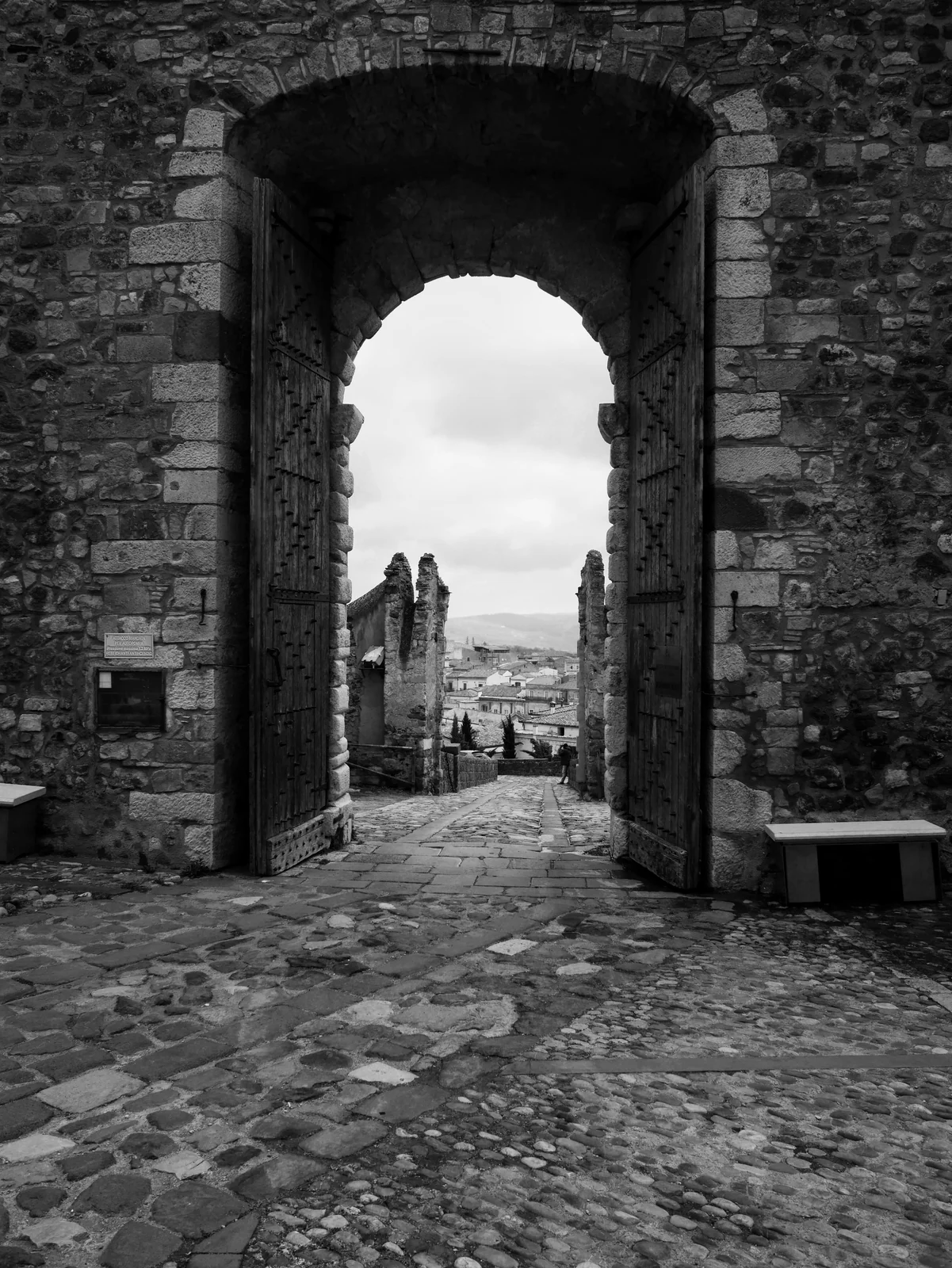
The castle is the heart of the visit: today it is polygonal, surrounded by a moat and has numerous towers, rectangular and pentagonal; you enter over a bridge that was once a drawbridge. In the museum named after Massimo Pallottino the route is divided into classical, medieval and post-medieval sections. Its signature piece is the Rapolla sarcophagus, in marble from Asia Minor, with the deceased woman lying on the lid and gods and heroes of Greek myth in columned niches; alongside are pre-Roman weapons and bronzes, Greek and Italic pottery and medieval glass linked to Frederick II's table. Recent restoration has opened the ramparts and the courtyards of the Armigeri and the Mortorio to the public for the first time.
In town, Porta Venosina is the only one of the old gates still standing after the 1851 earthquake. The cathedral of Santa Maria Assunta, rebuilt in Baroque style, keeps its Norman bell tower of 1153, decorated with white and black stone and fantastic animals. The civic museum in Palazzo Donadoni shows paintings from the 16th to the 19th century and frescoes detached from the Vulture caves, while the small round church of the Madonna delle Spinelle is linked to the tradition of the First Crusade.
Outside town the rock churches are worth the detour: Santa Margherita, from the 13th century, with frescoed sacred scenes; Santa Lucia dei Giaconelli, in a chestnut wood; and Spirito Santo, at about 900 metres among the Vulture forests.
Sources: Comune di Melfi — Castello · Italia.it — Il castello di Melfi · Musei e parchi archeologici di Melfi e Venosa — Museo «Massimo Pallottino» e Castello svevo · Musei e parchi archeologici di Melfi e Venosa — Sala dei sarcofagi · Musei e parchi archeologici di Melfi e Venosa — Il circuito degli spalti · Italia.it — Melfi · Comune di Melfi — Cattedrale · Comune di Melfi — Museo civico a Palazzo Donadoni · Comune di Melfi — Madonna delle Spinelle · Comune di Melfi — Chiesa rupestre di Santa Margherita · Comune di Melfi — Chiesa rupestre di Santa Lucia dei Giaconelli · Comune di Melfi — Chiesa rupestre dello Spirito Santo
Flavours
Melfi's table is that of the Vulture. The product behind the autumn festival is the marroncino, the chestnut of the volcano's woods, which the town celebrates with the Varola festival: for a few days the old centre fills with stalls, tastings and workshops devoted to local dishes and wines. Chestnut groves are part of the landscape outside town too, as around the rock church of Santa Lucia.
The hills around Melfi fall within the area of Vulture PDO olive oil, made mainly from the Ogliarola del Vulture variety; among the permitted cultivars is Cima di Melfi. It is an amber-yellow oil with green glints, sweet or slightly bitter with a peppery touch, which the specification pairs with cavatelli and turnip tops, baccalà a ciauredda, broad bean and chicory soup and lamb. In the glass there is Aglianico del Vulture, the volcano's red, deep ruby with notes of dark fruit and spice.
The table is completed by Lucanian traditional dishes: handmade pasta such as cavatelli, strascinati and lagane, lucanica sausage, cheeses such as Caciocavallo podolico della Basilicata, and peperoni cruschi, crisp dried peppers from the valleys of the south of the region.
Sources: Agenzia di stampa della Regione Basilicata — Ottobre Melfitano · Regione Basilicata — Sagra della Varola 2024 · Comune di Melfi — Chiesa rupestre di Santa Lucia dei Giaconelli · Qualigeo — Vulture DOP olio extravergine di oliva · Qualigeo — Aglianico del Vulture DOP · Italia.it — Prodotti e piatti tipici lucani
Things to do
Melfi is best explored on foot. A good route starts at the castle, enters the town through the streets of the old centre, passes piazza Duomo and the cathedral and continues to Porta Venosina, following the line of the walls. When visiting the castle, allow time for the new rampart circuit too, which shows how the fortress grew over the centuries.
For walkers, the Vulture Regional Nature Park lists among its main trails the route that climbs from Melfi to Monte Vulture, along with paths from Rionero and from the abbey of San Michele. You walk through woodland with views over the volcano's villages; check with the park on trail conditions before setting out.
Another experience is seeking out the rock churches outside town, carved into volcanic tuff and still decorated with frescoes: combining them with a walk through the chestnut groves shows how closely the town is tied to its mountain. Finally, the cellar and the olive mill: in the land of Aglianico and Vulture oil, a tasting with a producer helps you understand the farming landscape you are crossing.
Sources: Italia.it — Melfi · Musei e parchi archeologici di Melfi e Venosa — Il circuito degli spalti · Parco naturale regionale del Vulture — I sentieri · Comune di Melfi — Chiesa rupestre di Santa Lucia dei Giaconelli · Comune di Melfi — Chiesa rupestre dello Spirito Santo · Qualigeo — Aglianico del Vulture DOP · Qualigeo — Vulture DOP olio extravergine di oliva
When to go
Melfi can be visited all year round: the castle and museum are the main draw even in the cold months, and the town is lived-in and lively in every season. In spring and early summer the Vulture's greenery is at its best for walking, and summer on the hill is cooler than on the nearby plains.
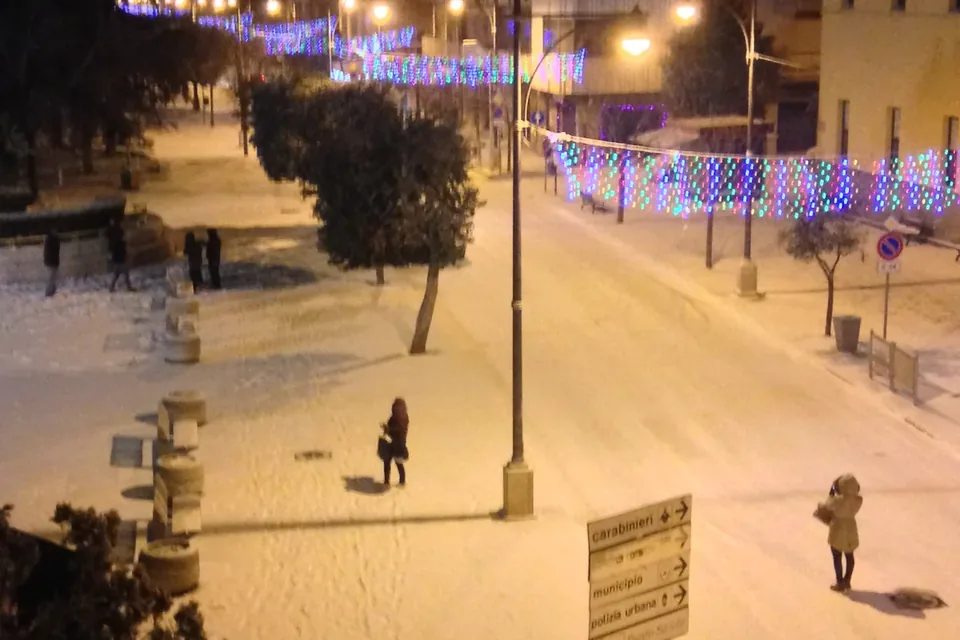
The most characteristic time, though, is October, with the Ottobre Melfitano organised by the municipality. The first weekend hosts the Varola festival, the feast of the marroncino chestnut: the trail of stalls crosses the old centre via piazza Umberto I, piazza Duomo and corso Garibaldi, with produce from the Vulture and all Basilicata, crafts, street performers and folk groups. The following weekend the Medieval and Falconry Days take via Santa Croce and the castle back in time, with a historical camp and costumed parades recalling the papal councils and the Constitutions of 1231.
Dates change from year to year, so check them on the municipality's channels before travelling. Late autumn and winter, instead, are the time of the olive harvest and new oil.
Sources: Musei e parchi archeologici di Melfi e Venosa — Museo «Massimo Pallottino» e Castello svevo · Agenzia di stampa della Regione Basilicata — Ottobre Melfitano · Regione Basilicata — Sagra della Varola 2024 · Qualigeo — Vulture DOP olio extravergine di oliva
Getting there and around
Melfi lies in northern Basilicata, in the province of Potenza, towards the borders with Campania and Puglia. On the RFI rail network the area has two stations, Melfi and Rionero-Atella-Ripacandida, both with a local bus stop for continuing to the villages. Before setting out, check connections and timetables on official channels, as services in inland areas are limited.
To explore the Vulture at leisure, Italy's national tourism portal recommends a car: the villages, the Monticchio lakes, the wineries and the rock churches are spread over the volcano's slopes and linked by provincial roads. For drivers, the municipality points to the SS401 exit towards Melfi, Calitri and the Monticchio lakes, from where you climb to the centre.
Once in town, the old centre is walkable: castle, cathedral, civic museum and Porta Venosina are close together, though the streets are steep. For the rock churches in the surroundings, such as Santa Margherita along the SS303 or Spirito Santo in the woods, you need your own transport. The castle museum has a ramp at the entrance and a lift inside.
Sources: RFI — Stazione di Melfi · RFI — Stazione di Rionero-Atella-Ripacandida · Italia.it — Borghi della Basilicata settentrionale · Comune di Melfi — Castello · Comune di Melfi — Chiesa rupestre di Santa Margherita · Musei e parchi archeologici di Melfi e Venosa — Museo «Massimo Pallottino» e Castello svevo
Nearby
Melfi is the gateway to the Vulture. Not far away, on the volcano's south-western flank, are the Monticchio lakes, Lago Grande and Lago Piccolo, which fill ancient crater mouths; on their shores stands the Benedictine abbey of San Michele, built into the side of the crater, with 11th-century frescoes and the Vulture Natural History Museum. Some of the park's trails also start from the lakes.
To the east lies Venosa, Horace's town, with the archaeological park of ancient Venusia, founded in 291 BC: baths, a domus with mosaics, paved streets and the Unfinished Church of the Holy Trinity. A combined ticket for the state museums of Melfi and Venosa makes it easy to build a multi-day itinerary on the Middle Ages and Roman times in northern Lucania.
To the south, Lagopesole castle is the other great residence of Frederick II in the area: a Swabian fortress with two courtyards, a palatine chapel and an imposing keep, which became part of the Doria's State of Melfi in the 16th century. Rionero in Vulture, Barile and Rapolla, lands of Aglianico and wine cellars, round off a tour of the volcano's villages.
Sources: Parco naturale regionale del Vulture — I laghi · Parco naturale regionale del Vulture — I sentieri · Musei e parchi archeologici di Melfi e Venosa — Parco archeologico di Venosa · Musei e parchi archeologici di Melfi e Venosa — Museo «Massimo Pallottino» e Castello svevo · Musei e parchi archeologici di Melfi e Venosa — Castello di Lagopesole · Qualigeo — Aglianico del Vulture DOP · Italia.it — Borghi della Basilicata settentrionale
Where to stay
In the municipality of Melfi the national database of the Ministry of Tourism lists 58 accommodation businesses with a verified CIN code: 5 hotels, 11 other licensed accommodation and 42 other types such as B&Bs and private rentals.
Sources: Ministero del Turismo – Banca Dati Strutture Ricettive (dashboard pubblica), 2026-10-12
YOUR JOURNEY
How to shape a journey here
Journey idea: pair Melfi with Monticchio’s lakes to contrast history and nature, or with Venosa for an archaeological thread. Time for a walk places the castle within a living town rather than making it an isolated visit.
Talk to us about it