Why go
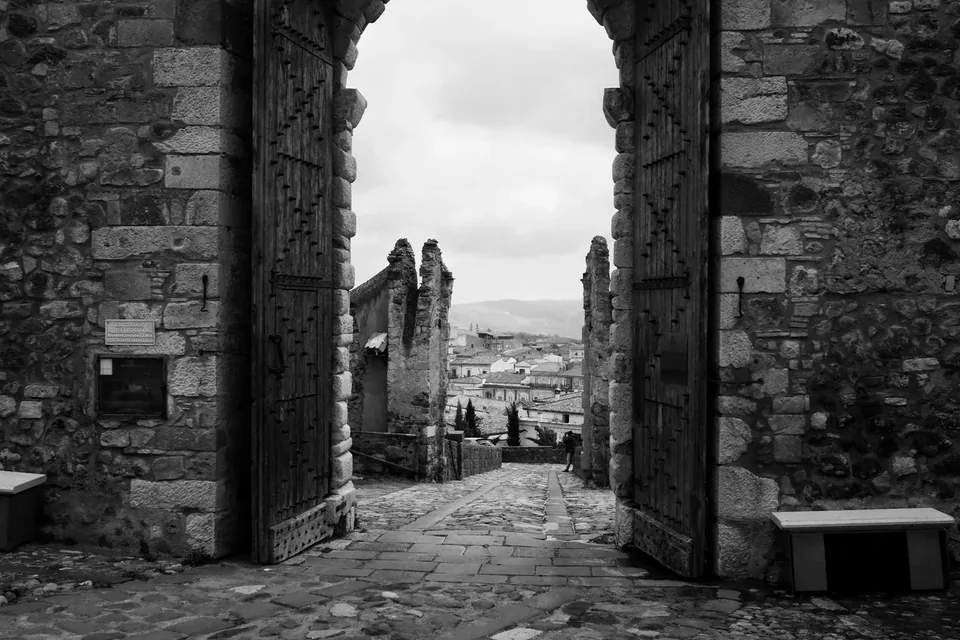
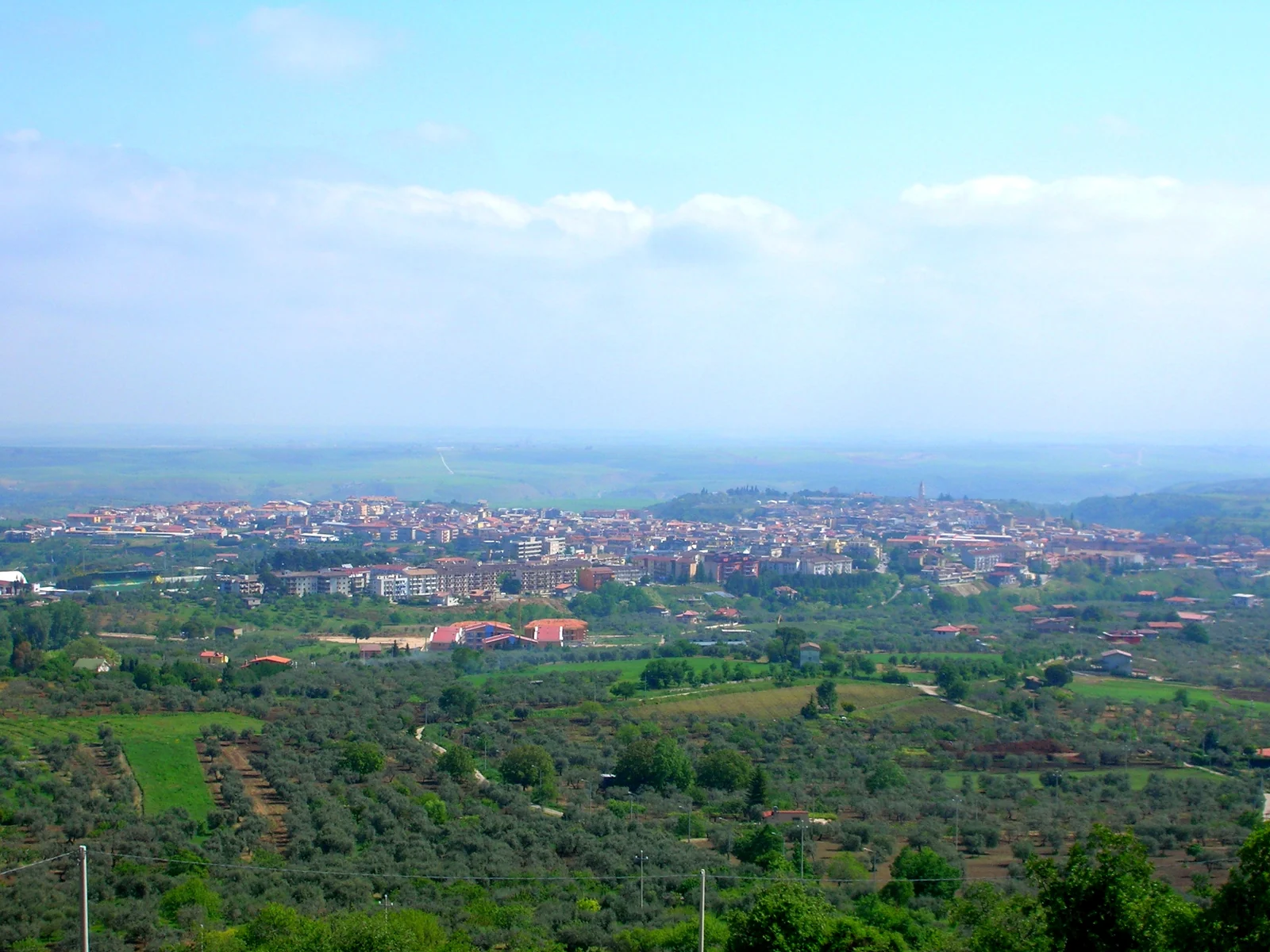
Venosa stands on one of the last hills that slope down from Monte Vulture towards the Ofanto valley, in north-eastern Basilicata. Every era has left tangible evidence here: Palaeolithic traces at Notarchirico, the Latin colony of Venusia, the Benedictine abbey of the Holy Trinity and the Renaissance castle that closes the main square. The historic centre belongs to the Borghi più Belli d'Italia network, and the municipality calls it an open-air museum.
The appeal lies in reading this sequence on a single trip without one phase erasing another. Worked stones from the classical age resurface in the walls of the unfinished church, while plaques, capitals and carved masks appear in the buildings along the lanes of the old town. At the table the story continues with Aglianico del Vulture and with home dishes the town keeps alive.
Give Venosa at least one full day and choose a guiding thread: archaeology, medieval history or the link with Horace, the Latin poet born here.
Sources: Comune di Venosa — Scopri Venosa · Italia.it — Venosa, centro e fontane
History
The Latin colony of Venusia was founded in 291 BC and became a busy trading hub on the Via Appia. The archaeological park shows public buildings, residential quarters and a bath complex built in the first century AD and remodelled until the early fourth. Between the fourth and sixth centuries the town was home to different communities, as the catacombs on the Maddalena hill reveal, with Jewish and Christian burial grounds close to one another.
In the Middle Ages the Benedictines began enlarging the Holy Trinity church between the late eleventh and early twelfth centuries, a project never finished: in 1297 Boniface VIII removed the monks and gave the abbey to the Order of the Knights of St John of Jerusalem, which set up a bailiwick in Venosa. Robert Guiscard lies in the abbey with his brothers and his first wife Aberada; King Manfred, son of Frederick II, was born in the town.
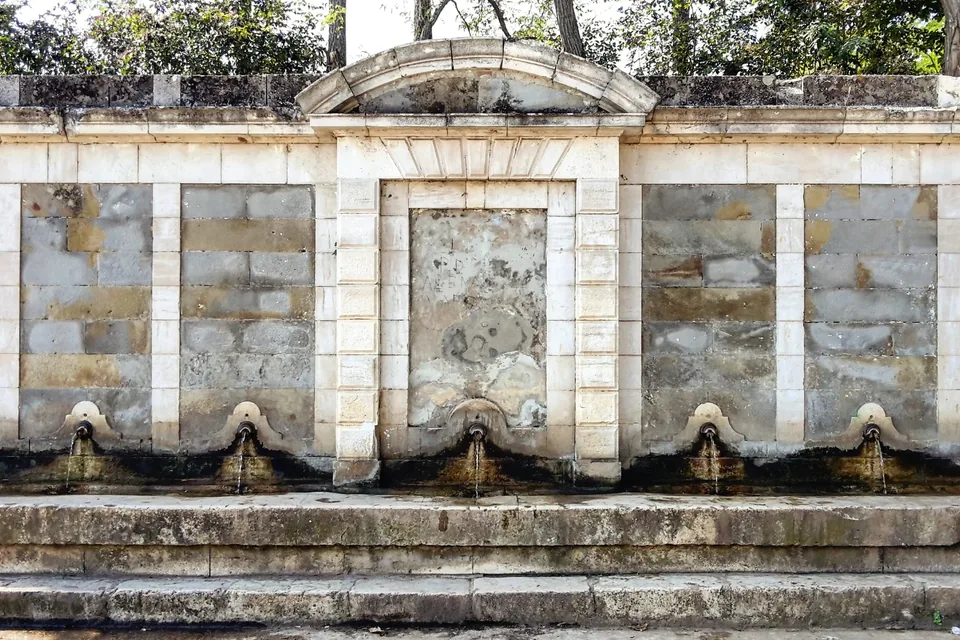
In 1470 Pirro del Balzo built the castle where the madrigal composer prince Carlo Gesualdo was born. Between the late thirteenth and fourteenth centuries Angevin rulers granted privileges that started the construction of the town fountains.
Sources: Ministero della Cultura — Parco archeologico di Venosa · Ministero della Cultura — Catacombe ebraiche e cristiane di Venosa · Comune di Venosa — Scopri Venosa · Comune di Venosa — Il Baliaggio · Comune di Venosa — Le fontane antiche
What to see
The archaeological park, just outside the town on the Ofantina road, lets you walk among the baths, a house with mosaics and a city block bounded by two paved streets. In the area of the so-called early Christian baptistery you can read the overlapping building phases, and the route reaches the unfinished church, never completed. Beside it stands the Holy Trinity abbey, with the old church that the new project was meant to incorporate.
On Piazza Umberto I, the castle of Pirro del Balzo houses the Mario Torelli National Archaeological Museum in its semi-underground walkways, renewed in 2021 with multimedia sections and video mapping. Highlights include the inscribed markers of the Banzi augural precinct, the Tabula Osco-Bantina and a marble head of the Diadumenos type.
From here Via Vittorio Emanuele, a true main street, leads to Sant'Andrea cathedral, next to which the Diocesan Museum displays, among other works, a thirteenth-century icon of the Madonna dell'Idria. Along the way you pass the Messer Oto fountain, with its wash basin topped by a stone lion, Horace's statue and the house tradition links to his birth, visible from outside.
Sources: Ministero della Cultura — Parco archeologico di Venosa · Ministero della Cultura — Museo archeologico nazionale Mario Torelli · Ministero della Cultura — Museo archeologico nazionale Mario Torelli, scheda e contatti · Italia.it — Venosa, centro e fontane · Comune di Venosa — Scopri Venosa
Food and wine
Venosa lies within the Aglianico del Vulture area, the designation-of-origin red that the municipality presents as the town's wine, made from a grape of very ancient introduction. The link with Horace has become almost a motto: his "nunc est bibendum" is recalled whenever a glass is raised. The Vulture area also produces the designation-of-origin Vulture extra virgin olive oil, a good match for pulse and vegetable dishes.
Home cooking revolves around fresh pasta and pulses. Lagane with chickpeas, a semolina pasta wider and shorter than tagliatelle, is finished with crunchy crusco peppers; orecchiette all'oraziana are dressed with sausage sauce and mozzarella; lamb brodetto alla pastora, with eggs and cardoons, is the dish of Easter Monday. Salt cod is also served with crusco peppers.
Among the sweets, the festive calendar guides the choice: pizzicanelli with cocoa, almonds and cinnamon, glazed raffaiul once served at weddings, cooked wheat for 2 November, chickpea and chestnut pastries at Christmas and fried pettole.
Sources: Comune di Venosa — Aglianico del Vulture · Comune di Venosa — I sapori di Venosa, piatti tipici e dolci · Commissione europea, eAmbrosia — Aglianico del Vulture · Commissione europea, eAmbrosia — Vulture DOP (olio extravergine)
Things to do
Venosa is best discovered on foot, alternating indoor visits with walks. The municipality publishes the list of licensed tour guides registered with the regional board, offering Italian, English, French and German: a guided visit helps connect the archaeological park, the museum and the town churches into a single story. To find your way around the park, the Ministry also offers an app with interactive maps and audio content.
One themed route can follow the old fountains, built from the Angevin period onwards and partly still running: in summer they offer refreshment along the way. Another can look for Roman stones reused in house fronts, which appear at almost every corner of the old town.
The municipality also highlights experiences linked to crafts and the farming landscape, such as ceramics workshops and a visit to a local lavender field. In the evening the main square comes alive, and the bars facing it are a good place for a glass of Aglianico.
Sources: Comune di Venosa — Guide turistiche abilitate · Ministero della Cultura — Parco archeologico di Venosa · Comune di Venosa — Le fontane antiche · Italia.it — Venosa, centro e fontane · Comune di Venosa — Esperienze, ceramica e tradizioni
When to go
Venosa can be visited in any season, as the castle museum and the town churches offer shelter in cold or very hot weather. Spring and autumn are the most comfortable times for the open-air archaeological park. In summer the town fountains, some still running, help on the hottest days and the square stays lively into the evening.
The festive calendar follows the liturgical year. On Good Friday the Sacred Representation of the Passion involves costumed participants and visitors in the streets; Easter Monday is the day for lamb brodetto; on 2 November cooked wheat is prepared for the Day of the Dead, and at Christmas chickpea and chestnut pastries appear.
Some sites have special access: the Notarchirico Palaeolithic park opens only on special occasions, while the catacombs were closed for restoration and safety works at the time of checking. Before travelling, check the official pages of the Ministry of Culture.
Sources: Italia.it — Venosa, centro e fontane · Comune di Venosa — Le fontane antiche · Comune di Venosa — Esperienze, ceramica e tradizioni · Comune di Venosa — I sapori di Venosa, piatti tipici e dolci · Ministero della Cultura — Parco paleolitico di Notarchirico · Ministero della Cultura — Catacombe ebraiche e cristiane di Venosa
Getting there and around
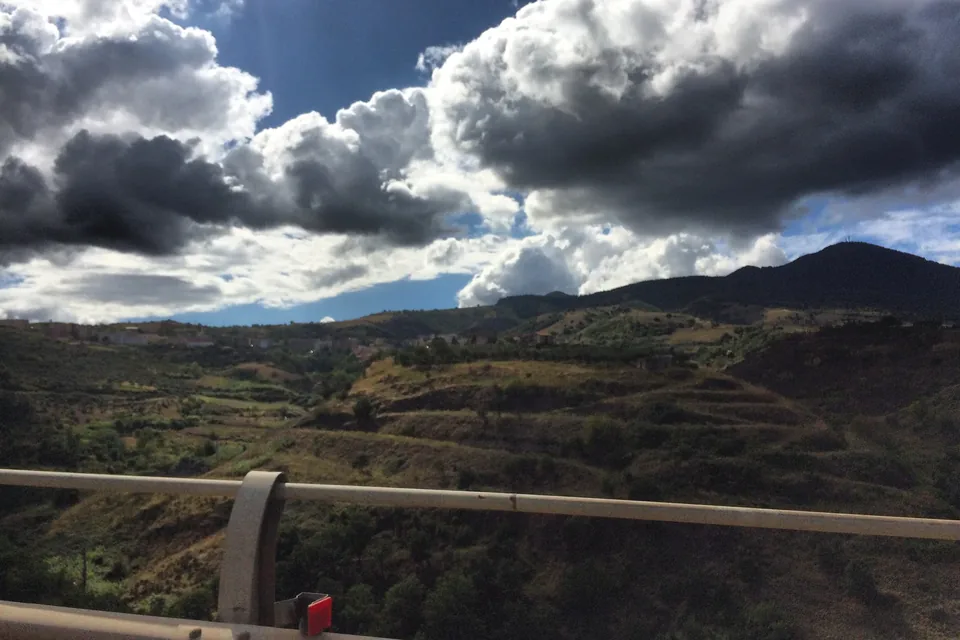
Venosa lies in north-eastern Basilicata, on the hills that descend from Vulture towards the Ofanto valley, and is reached mainly by road. The archaeological sites are spread around the town: the park on the Ofantina provincial road, the catacombs on the SP18 about one kilometre north-east of the centre, and Notarchirico on the SP168 about nine kilometres from town.
Travellers by train will find RFI stations at Melfi and Rionero-Atella-Ripacandida in the Vulture area, both in Basilicata and served by a local bus stop; from there the journey continues by bus or car. Check timetables and connections on official channels before departure.
The old town is easy to explore on foot: from Piazza Umberto I, overlooked by the castle, Via Vittorio Emanuele leads to the cathedral, and the town hall stands on the same street. For the archaeological park and the sites outside town you need your own transport or an organised service.
Sources: Comune di Venosa — Scopri Venosa · Ministero della Cultura — Parco archeologico di Venosa · Ministero della Cultura — Catacombe ebraiche e cristiane di Venosa · Ministero della Cultura — Parco paleolitico di Notarchirico · RFI — Stazione di Melfi · RFI — Stazione di Rionero-Atella-Ripacandida · Italia.it — Venosa, centro e fontane
Where to stay
Staying in the centre lets you enjoy Venosa after the museums close, when the main square fills up and the lanes of the old town grow quieter. The map of places published by the municipality lists hotels and bed and breakfasts among local businesses, as well as restaurants and bars: a good starting point for choosing according to how you travel.
A B&B in the old town is the most convenient option for walking between castle, cathedral and fountains; a hotel may be more practical for those travelling by car who also want to reach the archaeological park, Notarchirico or the Vulture wineries.
As the town suits a two-night stay, choose a base from which to reach Melfi, the Monticchio lakes or Palazzo San Gervasio, returning in the evening for a dinner of traditional Venosa dishes.
Sources: Comune di Venosa — Luoghi e strutture · Italia.it — Venosa, centro e fontane
Nearby
Nearby Melfi completes the story with the castle that houses the Massimo Pallottino National Archaeological Museum of the Melfi area: the route runs from the archaic age to modern times and its signature piece is the Rapolla Sarcophagus, a masterpiece of Roman sculpture. The rooms also hold pre-Roman weapons and parade chariots, Greek and Daunian pottery and a collection of medieval glass linked to the court of Frederick II.
Further south, near Avigliano, Lagopesole castle was the emperor's hunting and leisure residence: it is built around two courtyards, with the Palatine Chapel and a great keep, and houses the Museum of Lucanian Emigration.
Towards Vulture the landscape changes to woods, vineyards and the Monticchio lakes within the regional park. In Palazzo San Gervasio, the D'Errico Picture Gallery keeps an art collection that shows another way of preserving memory. All these places combine with Venosa in a two- or three-day itinerary.
Sources: Ministero della Cultura — Museo archeologico nazionale Massimo Pallottino e Castello svevo · Ministero della Cultura — Castello di Lagopesole · Parco naturale regionale del Vulture — I laghi · Pinacoteca Camillo D'Errico — sito ufficiale
Where to stay
In the municipality of Venosa the national database of the Ministry of Tourism lists 41 accommodation businesses with a verified CIN code: 3 hotels, 8 other licensed accommodation and 30 other types such as B&Bs and private rentals.
Sources: Ministero del Turismo – Banca Dati Strutture Ricettive (dashboard pubblica), 2026-10-12
YOUR JOURNEY
How to shape a journey here
Journey idea: connect Venosa with Melfi to compare archaeology and a town associated with power, or with Vulture to add the wine landscape. Give each place a distinct theme and time of its own.
Talk to us about it