APULICA / Food guides
Aglianico del Vulture: the red of the extinct volcano
At the foot of Monte Vulture, an extinct volcano in northern Basilicata, Aglianico makes a red that can age for a long time. The area brings together vineyards, woods, Frederick II's castles, Horace's Venosa and Arbëreshë villages with cellars cut into tuff. The appellation has two levels, the DOC and the Superiore DOCG with long ageing. This guide keeps official facts apart from travel advice and suggests a day between Venosa, Barile, Rionero and Melfi.
A volcano, many civilisations
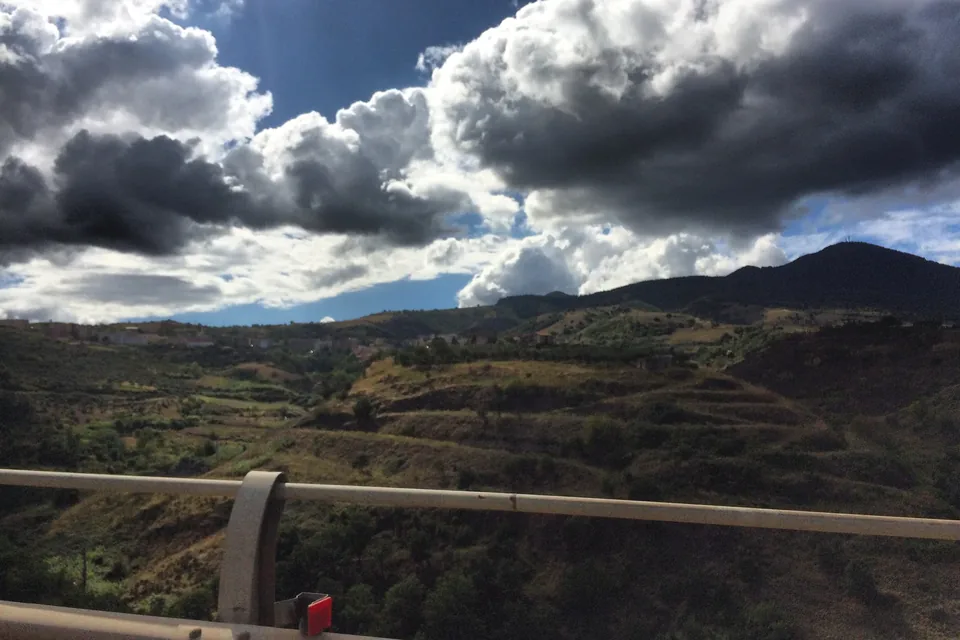
The area takes its name from Monte Vulture, a 1,326-metre massif that the protection Consortium describes as a volcano extinct since prehistoric times. It rises at the northern tip of Basilicata, on the border with Puglia and Campania, and its soils became the setting in which Aglianico, a late-ripening grape that needs time and a suitable climate to mature, found its home.
Daunians, Peucetians, Lucanians and Samnites passed through the area, then Rome and, later, the Normans and Swabians. According to the Consortium the grape arrived with the Greeks under the name Hellenica; the Romans called it Ellenico and used it to improve Falernian wine, and only in the fifteenth century, under the Aragonese, did it take the name Aglianico.
The territory also recalls Horace, born in Venosa, and Frederick II, who issued the Constitutiones Augustales in Melfi castle. The Consortium, founded on 12 April 1986, brings together growers, winemakers and bottlers; the first production rules were approved by presidential decree on 18 February 1971.
The DOC: red and sparkling
Aglianico del Vulture DOC, registered as a PDO, comes from numerous towns in the province of Potenza and has two types, red and sparkling red, both made only from Aglianico grapes. The Qualigeo profile gives an area of 375 hectares and states that the wine may not be sold before 1 September of the year after the harvest.
The red is described as dark ruby, with a first mineral impression followed by blackberry and redcurrant, also jam-like, juniper berries, tobacco and spice; on the palate it has depth, velvety tannins and a long finish. The less familiar sparkling red ranges from ruby to garnet and with time may take on orange glints; on the nose wild flowers join the fruit, and red fruit and spice return in the mouth.
The sparkling wine is made only by natural refermentation in the bottle, in a process lasting at least nine months. On the label the DOC may carry additional geographical mentions referring to towns, hamlets or areas of the zone where the grapes actually come from: a useful detail for understanding which side of the area the glass comes from.
Sources: Qualigeo — Aglianico del Vulture DOP
The Superiore DOCG: three and five years of waiting
The top level is Aglianico del Vulture Superiore, a DOCG that Qualigeo records since 2011 with a single red type, made from Aglianico alone, on an area of 84 hectares. The zone includes the whole of Rionero in Vulture, Barile, Rapolla, Ripacandida, Ginestra, Maschito, Forenza, Acerenza, Melfi, Atella, Venosa, Lavello, Palazzo San Gervasio, Banzi and Genzano di Lucania, excluding a few hamlets of Atella.
The production rules, quoted by the Potenza Chamber of Commerce as control body, require at least 12 months in wood and 12 in bottle, with release no earlier than 1 November of the third year after the harvest. The Riserva rises to 24 months in wood and 12 in bottle and is released from 1 November of the fifth year. Every bottle carries the State seal, and the name may be followed by the mention Vigna with the vineyard's place name.
In the glass Qualigeo describes deep ruby with garnet glints, aromas moving from undergrowth to bark, then mulberry, blackberry, candied orange and spice, and a full, soft mouthfeel with balsamic and mineral echoes.
Sources: Qualigeo — Aglianico del Vulture Superiore DOP · Camera di Commercio della Basilicata — Nota sulla DOCG Aglianico del Vulture Superiore (2014)
Barile and the Sheshë cellars
From a distance Barile's urban park of cellars looks like a small fairy-tale village. Italia.it describes it as a group of about 130 caves and cellars cut into the tuff of the hill called Sheshë, along via delle Cantine, in a landscape where volcanic stone becomes architecture.
Some caves are abandoned, but many are still in use to store Aglianico del Vulture DOC and DOCG. The practice was handed down by the Arbëreshë community, of Albanian origin, which settled in Barile from 1477: the language and traditions of that community are part of the way the town looks after its wine.
The place also has a film history: in 1964 Pier Paolo Pasolini chose this landscape to shoot some scenes of The Gospel According to St Matthew. The official page gives no visiting arrangements or times, and many cellars belong to families or wineries: to step inside a cave it is best to ask locally or arrange it in advance with a producer.
Venosa, Horace's town
In its Basilicata wine itinerary, Italia.it names Venosa as the ideal habitat of Aglianico, most likely introduced by the Greeks in the 5th century BC on land rich in clay and minerals. The wine is presented as the region's most famous, enveloping and pleasantly spicy, finer still in the Superiore and Riserva versions.
The town stands on the bed of a very ancient lake: it was an Apulian settlement and then a Roman colony on the Via Appia under the name Venusia. Outside the town, along the Ofantina road, the Archaeological Park keeps the remains of the Roman city, and beside it stands the Abbey of the Holy Trinity, with its Old Church and the great New Church that was never finished.
In the centre you can see the house tradition links to Horace's birth, visible from outside, and his statue. On piazza Umberto I the fifteenth-century Pirro del Balzo castle houses a library and the National Archaeological Museum; along via Vittorio Emanuele you reach the cathedral of Sant'Andrea, passing the fourteenth-century Messer Oto fountain with its stone lion.
Sources: Italia.it — Wine tour in Basilicata: Venosa, Viggiano e Matera · Italia.it — Venosa
Melfi, its castle and October
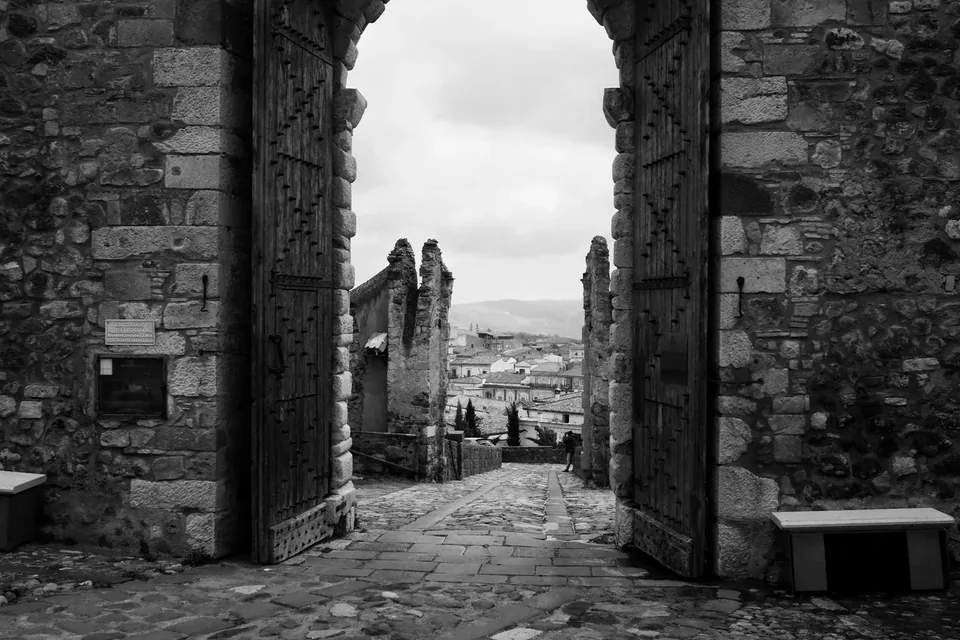
Melfi castle is the emblem of the town on the slopes of the Vulture. Italia.it traces its history: built by the Normans at the end of the 11th century as a stronghold between Campania and Puglia, it was chosen by Frederick II as a residence and the Constitutions of Melfi were issued here. The Angevins enlarged it, the Aragonese altered it, and it later passed to the Acciaiuoli, the Marzano, the Caracciolo and the Doria.
The fortress stands on a hill of volcanic origin, with ten towers, seven rectangular and three pentagonal, and four entrances, one reached by a bridge that was once a drawbridge. The ground floor houses the National Archaeological Museum of the Melfi area, and the Clock Tower displays the Rapolla sarcophagus, a Roman work of the 2nd century found in 1856.
Autumn brings the Ottobre Melfitano. In its notice published in late September 2026 the municipality lists the Sagra della Varola on 16, 17 and 18 October and the Medieval and Falconry Days on 23, 24 and 25 October. The page does not describe the programme, which should be checked on the official website before travelling.
Sources: Italia.it — Il castello di Melfi · Comune di Melfi — Avviso stand Ottobre melfitano 2026
Rionero, Acerenza and the Vulture woods
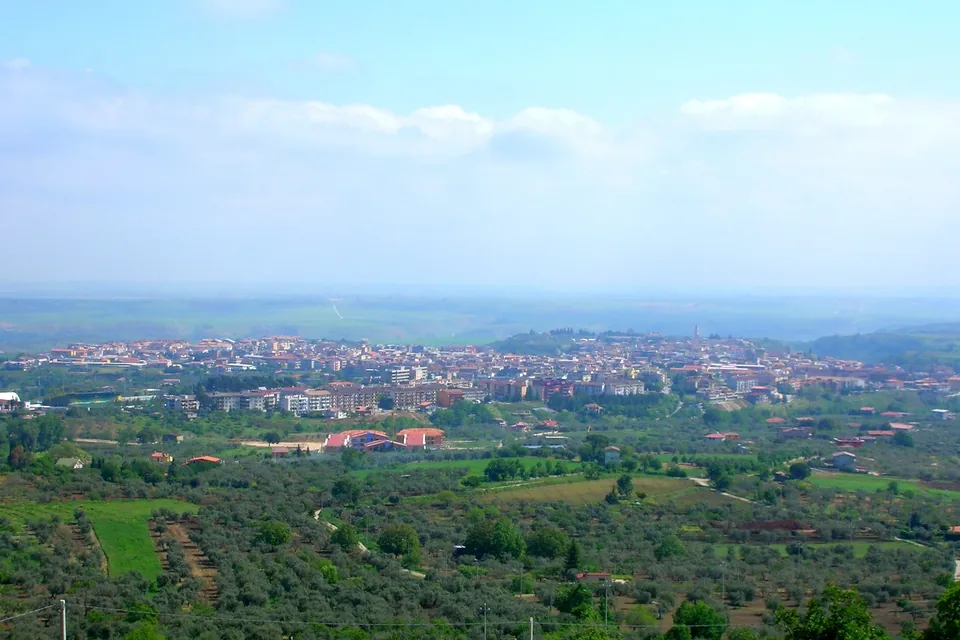
The Vulture is not only vineyards. Italia.it notes that the mountain is now a protected natural area with dense beech and conifer forests, and suggests crossing the Belvedere wood between Venosa and Rionero in Vulture, where sunlit birches create an almost fairy-tale landscape. It is a good way to see up close the volcanic environment that gives the wine its character.
To explore the villages of northern Basilicata, the same guide recommends a car and the low season for a quieter atmosphere. Acerenza, part of the Superiore zone, belongs to the Most Beautiful Villages of Italy and often greets visitors wrapped in fog, because of the nearby lake.
In Venosa, besides the castle and the archaeological park, the Jewish catacombs deserve a stop, with inscriptions in Hebrew, Greek and Latin documenting a community present in the 4th century, as do the murals that enliven the streets of the centre. Combining these places with the cellars turns a tasting into a way of reading the land.
Sources: Italia.it — Wine tour in Basilicata: Venosa, Viggiano e Matera · Italia.it — Acerenza, Venosa e Rionero in Vulture
At the table with Aglianico
Aglianico del Vulture wants substantial food: lamb and kid, Lucanian sausage, Sunday ragù, aged cheeses such as pecorino or caciocavallo. A young DOC red opens quickly and suits a simple lunch; a Superiore with a few years behind it deserves a long dinner, a large glass and time to breathe.
The less familiar sparkling red is a curiosity worth trying with cured meats at the start of a meal: the bubbles lighten the sip and show an unexpected side of the grape. To understand what time adds, on a day in the Vulture I would taste at least two different levels, perhaps from the same winery, side by side.
It also helps to note the town or vineyard named on the label: two bottles from the same year can tell of different slopes of the volcano. And if lunch is in an Arbëreshë town such as Barile, it is worth asking which family dishes accompany the wine at festivities.
When to go and what to take home
Autumn is the richest season: the harvest of a late-ripening grape, the colours of the woods on the volcano's slopes and the October festivals in Melfi. Spring brings mild days for walking and for visiting castles and museums at leisure; in summer the cooler hours of morning and evening are best for the villages.
Winery visits, including Barile's caves, need to be arranged with operators: many are private and open only on certain occasions. A typical day can start in Venosa in the morning, continue to Barile and Rionero and end in Melfi, with short distances but hilly roads that call for a relaxed pace.
To take a bottle home, just read the label: Aglianico del Vulture is the DOC, Aglianico del Vulture Superiore the DOCG, with or without Riserva, and carries the State seal. These wines travel well and can wait for years in a cellar; carry them lying down and away from the heat of the car.
A thread for your journey
Journey idea: a day in the Vulture between Barile's tuff cellars, Venosa's castle and museum and, in October, Melfi's festivals, with a tasting of DOC and Superiore arranged with operators.
Talk to us