Why go
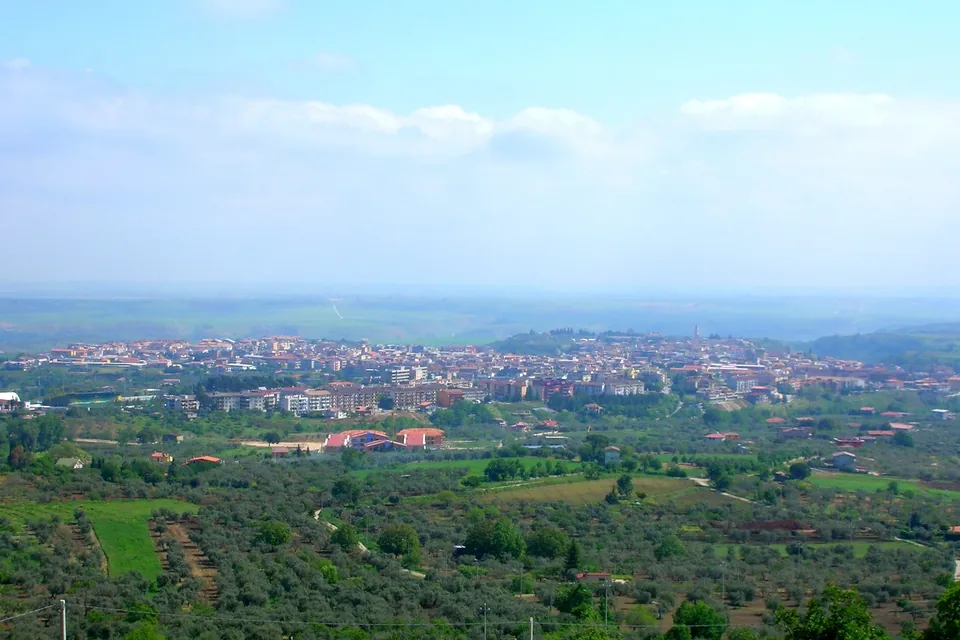
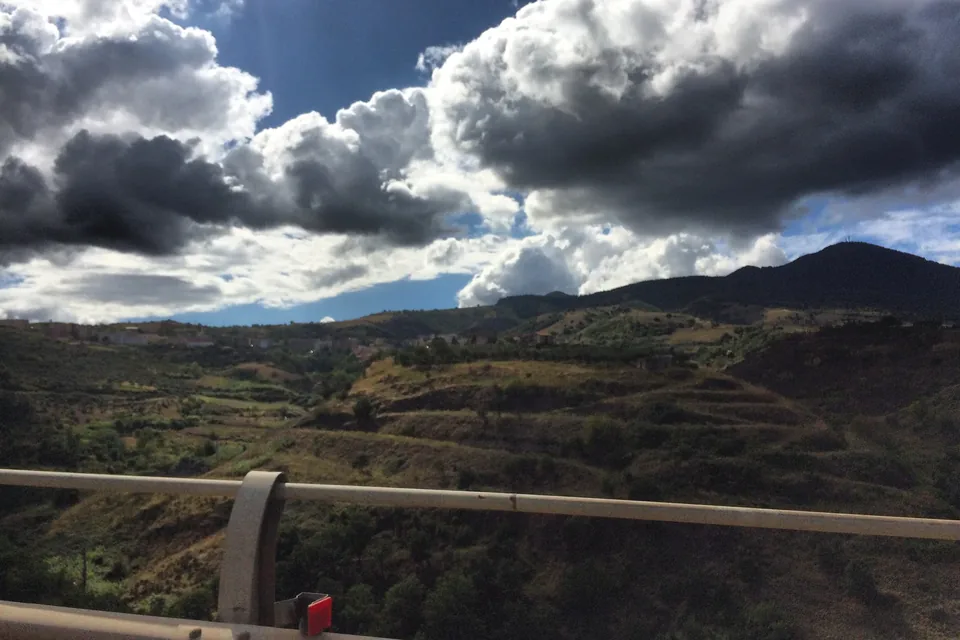
Lavello stands on a hill of about 313 metres in the middle Ofanto valley, at the far north of Basilicata, where the region borders the Apulian provinces of Foggia and Bari. It is a border town in the richest sense: trade once passed along the river, and the transhumance droveways led flocks towards the Tavoliere plain, so its history blends Daunian, Samnite, Roman and medieval influences.
The reason to stop is the depth of its past. On two hills looking towards Puglia sit the Daunian-Roman settlement of ancient Forentum and the medieval town, with the Norman-Swabian castle that now houses the town hall. Necropolises in the area have yielded grave goods of great value, some now displayed in the Melfi museum, and the municipality keeps a civic Antiquarium and a collection devoted to rural life.
Lavello is also home to one of the region's liveliest traditions: the carnival of the Domini, recognised by the Basilicata Region as cultural heritage worth protecting, whose masked dance parties enliven the winter evenings.
Sources: Catalogo generale dei beni culturali (MiC) — Centro storico di Lavello · Comune di Lavello — Storia e archeologia · Regione Basilicata — Lavello, in mostra 100 reperti archeologici di Forentum · Comune di Lavello — Civico Antiquarium · Comune di Lavello — Mostra della civiltà contadina · Regione Basilicata, patrimonio culturale — Il Carnevale lavellese
History
The Lavello area was inhabited long before the town. In the Neolithic, villages along the Ofanto valley produced pottery with impressed decoration or red bands; the burial hypogeum of contrada La Speranza dates from the Bronze Age and was used for a long time, and in the Iron Age the area was home to people of Daunian culture, in contact with the Balkans and the Tyrrhenian world. In the Archaic period came the princely tombs of elites linked to the Greek colonies of the Ionian coast and the Etruscan centres of Campania.
Between the 5th and 4th centuries BC Forentum controlled the whole Melfi area. Drawn into the Second Samnite War, it later probably became a Roman municipium. Excavations in 1988 and 1990 uncovered a small 3rd-century BC sanctuary, with Doric columns, mosaic floors and two cisterns, linked to a water cult.
In the Middle Ages Lavello was populous under the Lombards, a county seat under the Normans and a bishopric; it grew under Frederick II and then passed to the Del Tufo, Pignatelli and Caracciolo families. It suffered its last siege in 1436, had a short-lived republican municipality in 1799 and in 1861 was occupied for two days by Carmine Crocco's bands. The 20th century brought emigration and struggles for land.
Sources: Comune di Lavello — Storia e archeologia · Catalogo generale dei beni culturali (MiC) — Centro storico di Lavello
What to see
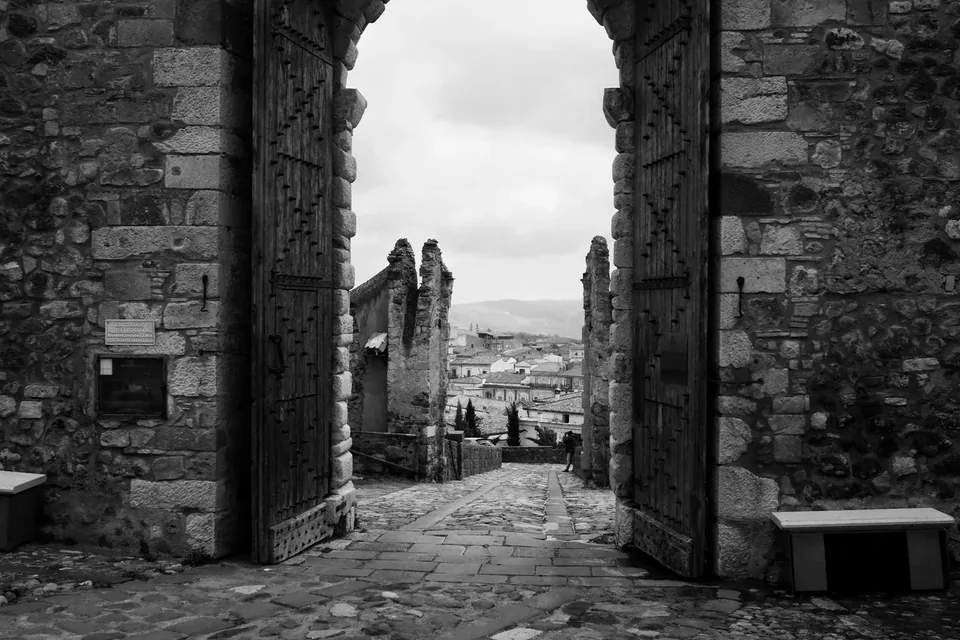
The old centre has an uneven layout, suited to the defensive role it was built for. Of the ancient walls, two gates survive, Porta del Forno and Porta Nuova. The Norman-Swabian castle now houses the town hall, and beside it stands the church of San Mauro, linked to the long period when Lavello was a bishopric. Along corso Vittorio Emanuele II are the churches of the Madonna del Principe and Sant'Antonio, and around town there are four monumental fountains of original design: according to tradition, the town's very name recalls a drinking trough. On the eastern edge of the medieval town stand the ruins of the tower destroyed during the 1436 siege, behind the old church of San Giovanni.
For archaeology, the starting point is the civic Antiquarium, created by a municipal resolution of 1926 to gather inscriptions, pottery and stones found in the area; the municipality has also published the exhibition on 2nd-millennium BC fertility cults linked to hypogeum 1036. The richest grave goods of Forentum, such as those of tomb 952 with jewellery in amber, silver and bronze, are kept in the national museum in Melfi castle.
In the atrium of the Ducal Palace, the town hall, the exhibition of rural life gathers household furnishings and tools used throughout the wheat cycle, with sections on traditional costumes and notarial documents.
Sources: Catalogo generale dei beni culturali (MiC) — Centro storico di Lavello · Regione Basilicata, patrimonio culturale — Il Carnevale lavellese · Comune di Lavello — Storia e archeologia · Comune di Lavello — Civico Antiquarium · Regione Basilicata — Lavello, in mostra 100 reperti archeologici di Forentum · Musei e parchi archeologici di Melfi e Venosa — Museo «Massimo Pallottino» · Comune di Lavello — Mostra della civiltà contadina
Flavours
Lavello belongs to the farming world of northern Lucania, made of wheat, pastures and vines. The municipal exhibition on rural life devotes a whole section to the tools of the wheat cycle, which for centuries set the rhythm of work in the fields around the town, while the history of transhumance recalls the role of sheep in the local economy up to the 19th century.
The municipal territory falls within the production area of Aglianico del Vulture Superiore DOCG, together with Rionero, Barile, Melfi, Venosa and the other villages of the volcano: a structured, long-lived red made from Aglianico grapes. Tasting it in Lavello means getting to know the more open, level side of the appellation, towards the Ofanto valley.
At the table you find the classics of Lucanian cooking: durum wheat bread often baked in wood-fired ovens, handmade pasta such as cavatelli, strascinati and orecchiette, lucanica sausage and grilled lamb and kid, alongside cheeses such as Caciocavallo podolico della Basilicata and local extra virgin olive oil. These are simple, seasonal dishes found in trattorias and village festivals.
Sources: Comune di Lavello — Mostra della civiltà contadina · Comune di Lavello — Storia e archeologia · Qualigeo — Aglianico del Vulture Superiore DOCG · Italia.it — Prodotti e piatti tipici lucani
When to go
Lavello can be visited in any season, but the time that reveals its soul is winter, with carnival. The Lavello carnival has ancient roots and involves the whole community: every Saturday evening Festini are held, dance parties in various parts of town where families, young couples and friends of all ages meet, while groups of masked young people move from one party to the next inviting others to dance. The charm lies in dancing with people whose identity you do not know.
The signature mask is the Domino, a long satin tunic, usually red, with a hood that hides the face. Once the parties were held in private homes in the old centre; today they take place in venues all over town, and every year the municipality and the Pro Loco organise initiatives to preserve the tradition, including a code of conduct. In a recent edition the programme ran from mid-January to early March; dates and events change every year and should be checked on official channels.
In spring and autumn the mild climate favours archaeological visits and excursions in the Vulture; autumn is also harvest time in the Aglianico vineyards.
Sources: Regione Basilicata, patrimonio culturale — Il Carnevale lavellese · Regione Basilicata — Il Carnevale di Lavello e il premio «Rosso Domino» · Qualigeo — Aglianico del Vulture Superiore DOCG · Parco naturale regionale del Vulture — I laghi
Getting there and around
Lavello is about 75 kilometres from Potenza, in the northernmost part of the province, on the border with Puglia. It is an area best travelled by road: Italy's national tourism portal suggests exploring the villages of northern Basilicata with a rental car, so you can move at ease between towns, archaeological sites and wineries.
The town has no station on the RFI network. In the Vulture area the reference stations are Melfi and Rionero-Atella-Ripacandida, both with a local bus stop for continuing to the surrounding towns. Connections and frequencies in inland areas are limited, so check them in advance on the transport companies' official channels.
Once in town, the old centre is easily walked, from the surviving gates to the castle and town hall, the church of San Mauro and the fountains. To reach the sites of the territory, such as the archaeological areas of Forentum or the countryside towards the Ofanto, and to combine Lavello with Venosa and Melfi in a day, you need your own transport or an organised service.
Sources: Catalogo generale dei beni culturali (MiC) — Centro storico di Lavello · Italia.it — Borghi della Basilicata settentrionale · RFI — Stazione di Melfi · RFI — Stazione di Rionero-Atella-Ripacandida · Comune di Lavello — Storia e archeologia
Nearby
Lavello fits well into an archaeological and medieval itinerary of northern Lucania. Not far away is Venosa, Horace's birthplace, with the archaeological park of ancient Venusia: Roman baths, a domus with mosaics, paved streets, the early Christian baptistery and the Unfinished Church of the Holy Trinity. Visiting it after Forentum lets you compare two ancient towns with different destinies.
To the west you climb to Melfi, where the Norman-Swabian castle houses the National Archaeological Museum of the Melfi area, which keeps the grave goods from Lavello's necropolises, including those of tomb 952: seeing the finds after walking the places they came from gives them context. The town also has a cathedral with a Norman bell tower and rock churches nearby.
Further on opens the landscape of Monte Vulture, with the Monticchio lakes formed in the volcano's craters, the abbey of San Michele overlooking the water and the Aglianico villages, such as Rionero, Barile and Rapolla. Near Lavello there is also the Abate Alonia lake, mentioned in the ministry's record among the area's geographical landmarks.
Sources: Musei e parchi archeologici di Melfi e Venosa — Parco archeologico di Venosa · Musei e parchi archeologici di Melfi e Venosa — Museo «Massimo Pallottino» · Regione Basilicata — Lavello, in mostra 100 reperti archeologici di Forentum · Italia.it — Melfi · Parco naturale regionale del Vulture — I laghi · Qualigeo — Aglianico del Vulture Superiore DOCG · Catalogo generale dei beni culturali (MiC) — Centro storico di Lavello
Where to stay
In the municipality of Lavello the national database of the Ministry of Tourism lists 22 accommodation businesses with a verified CIN code: 7 hotels, 3 other licensed accommodation and 12 other types such as B&Bs and private rentals.
Sources: Ministero del Turismo – Banca Dati Strutture Ricettive (dashboard pubblica), 2026-10-12
YOUR JOURNEY
How to shape a journey here
Include Lavello in a Vulture journey with time for less monumental towns: a walk and a local dish can reveal a great deal.
Talk to us about it