
APULICA / Food guides
Rocca Imperiale lemon: the Femminello of a Frederician village on the Ionian
Rocca Imperiale is the first Calabrian village you meet arriving from Basilicata along the Ionian coast: stepped houses below a castle built for Frederick II, surrounded by citrus groves that scent the air. Its lemon, a thin-skinned Femminello, nearly seedless and juicy, has been a Protected Geographical Indication since 2012, with a rare feature: its production area coincides with a single municipality. This guide explains the fruit, the PGI rules, the documented history, kitchen uses and a journey through the upper Ionian area of Cosenza, from Rocca Imperiale's castle to Roseto Capo Spulico and the Sibari plain.
The fruit: a nearly seedless Femminello
According to Qualigeo, the Limone di Rocca Imperiale PGI is the fresh fruit of the Femminello cultivar, species Citrus limon. It is elongated and medium-sized, with skin from light green to yellow, pale yellow flesh almost free of seeds and plentiful clear juice, neither sour nor bitter. The stated parameters are precise: juice yield above 30 per cent, acidity above 4.5 per cent and a limonene content, the essential oil behind its intense, lasting scent, above 70 per cent. Italia.it notes that walking through the village you smell the flowering lemons, almost entirely seedless. It is this balance between fragrant peel and gentle juice that makes the Rocca lemon suit both cooking and desserts.
Sources: Qualigeo — Limone di Rocca Imperiale IGP · Italia.it — Rocca Imperiale
Cultivation and year-round picking
Qualigeo describes the required practices: new plantings or conversion of existing groves to Femminello-group cultivars; pruning towards the end of winter, without running into flowering; irrigation and fertilisation tuned to the season and soil fertility. Fruit is picked all year, by hand, with care, to avoid damage and the entry of fungal parasites. Picking must be done in dry weather or after the night's dew has gone. The lemon is sold in Extra, First and Second classes, in wooden, plastic or cardboard crates and trays, net bags of up to five kilos or cell bins. For travellers this means Rocca lemons are available in every season, even if the countryside changes between blossom and summer.
A one-town PGI
The name Limone di Rocca Imperiale is a PGI registered on 20 February 2012, according to the Qualigeo record. According to Qualigeo, the production area coincides with the administrative territory of the municipality of Rocca Imperiale, province of Cosenza: a choice tying the name to a small, precise place. Italia.it lists it among Calabria's PGIs alongside Tropea red onion, Clementine di Calabria, Patata della Sila, Finocchio di Isola di Capo Rizzuto, Olio di Calabria and Torrone di Bagnara. The same page notes that the region has 13 PDOs and 7 PGIs in all. To recognise the protected product, the label must show the name Limone di Rocca Imperiale with the PGI reference.
Sources: Qualigeo — Limone di Rocca Imperiale IGP · Italia.it — Calabria, gastronomia e prodotti tipici
From the 1600s to the Naples fairs
Qualigeo summarises the documented history of the Rocca lemon. Production dates back to the 17th century; between 1865 and 1870 the first exports were recorded, at the Naples fairs attended by the first merchants. In 1877, by number of trees, Rocca Imperiale was surpassed only by Trebisacce, Corigliano and Rossano, much larger towns. From the 1950s traditional groves were replaced by specialised orchards, still producing today. Use of the name has been documented for over twenty-five years in local firms' trade and transport papers, parish records, local fairs and farmers' organisation meetings. The same source notes that in July and August Rocca Imperiale hosts dedicated events, including a Lemon Fest with tastings of the lemon and its products.
The Frederician village
Italia.it describes Rocca Imperiale as a medieval hilltop village, Calabria's gateway on the border with Basilicata, among the Most Beautiful Villages in Italy. The houses step down below the rock, crowned by the Swabian Castle built for Frederick II, in 1221 according to the upper Ionian itinerary; from its terrace there is a wide view, and the castle was chosen as a film set by director Pupi Avati. A religious route takes in the Mother Church and the church of the Visitation; among the most heartfelt feasts is that of the Madonna della Nova, the town's patron. In August a literary festival leaves a majolica tile with the winning poem on a house wall each year. About four kilometres away, Rocca Imperiale Marina has seven kilometres of pebble and rock beach.
Sources: Italia.it — Rocca Imperiale · Italia.it — Alto Ionio cosentino, tra profumi di agrumi e liquirizia
The upper Ionian coast: roses, rice and clementines
Italia.it's upper Ionian itinerary speaks of a microclimate allowing unique produce, from rice to liquorice, by way of lemons and PGI clementines. About twenty kilometres from Rocca Imperiale lies Roseto Capo Spulico, named after its ancient rose growing, with a Frederician castle on the sea and the Anvil Rock; here you can taste pittaliscia, ring-shaped bread, and cherries celebrated by the Ciliegiando event in May and June. The route continues to Terranova da Sibari, with the Archaeological Park and National Museum of the Sibaritide, Sibari rice and Clementine di Calabria PGI, which according to Qualigeo are picked between October and February. It ends between Corigliano, with its Ducal Castle, and Rossano, home of liquorice and the Codex Purpureus.
Sources: Italia.it — Alto Ionio cosentino, tra profumi di agrumi e liquirizia · Qualigeo — Clementine di Calabria IGP
In the kitchen
Qualigeo suggests using Rocca lemon juice and essential oils in desserts, such as a cake with lemon cream, sorbets and ice cream, and the zest to flavour tea, tonic water and drinks, or grated over meat, fish and first courses such as lemon spaghetti. It also works as a sauce, for instance with cod morsels, and goes into baked goods and liqueurs. At home make the most of its fragrant peel and gentle juice: a fennel and orange salad dressed with lemon and oil, baked fish with zest and parsley, a simple granita. Recommended storage is in the fridge or a cool, dry place, ideally in a paper bag. If you use the zest, choose untreated fruit and wash it well.
When to go and what to take home
Rocca Imperiale can be enjoyed in any season, but each has its character: spring brings citrus blossom and quiet days, summer the sea, the literary festival and lemon events, autumn and winter the clementines of the Sibari plain. Lemons travel well: by car a crate kept in the shade is enough, by air a few well-protected fruits in your luggage. For a longer-lasting souvenir there are lemon marmalades, liqueurs and baked goods, chosen by reading the label to check they use the PGI lemon. Grove visits must be arranged with operators, as these are working farms. Dates of summer events change each year and should be checked with the town council before travelling.
A thread for your journey
Journey idea: a day on the upper Ionian coast of Cosenza. Morning in Rocca Imperiale among the stepped houses and the Swabian Castle, with a lemon granita or sweet; lunch in Roseto Capo Spulico facing the Anvil Rock; afternoon at the Sibari Archaeological Park, and evening in Corigliano-Rossano. Grove visits arranged with operators.
Talk to us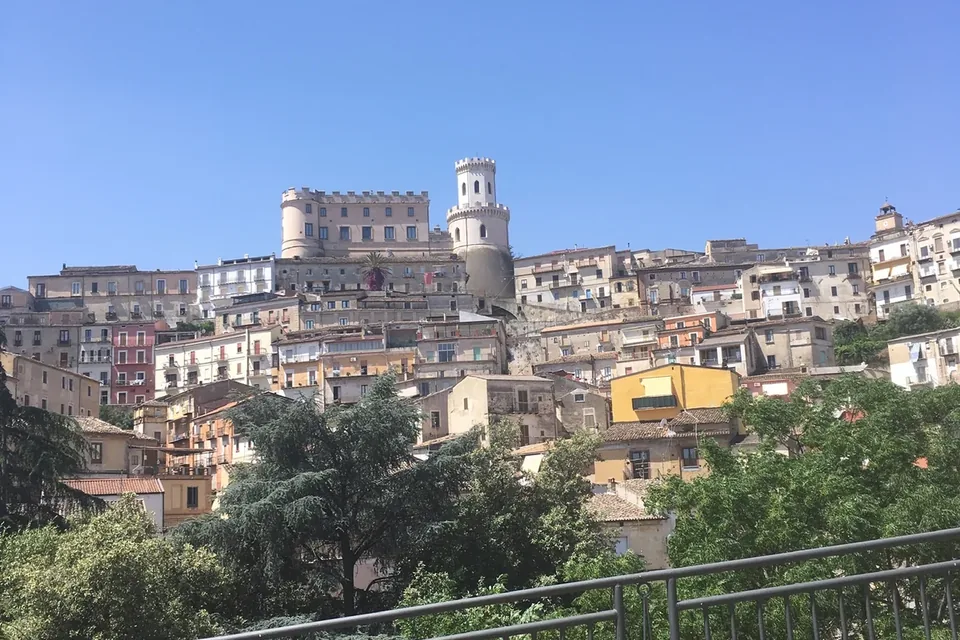

_luglio_2021_f01.jpg)
